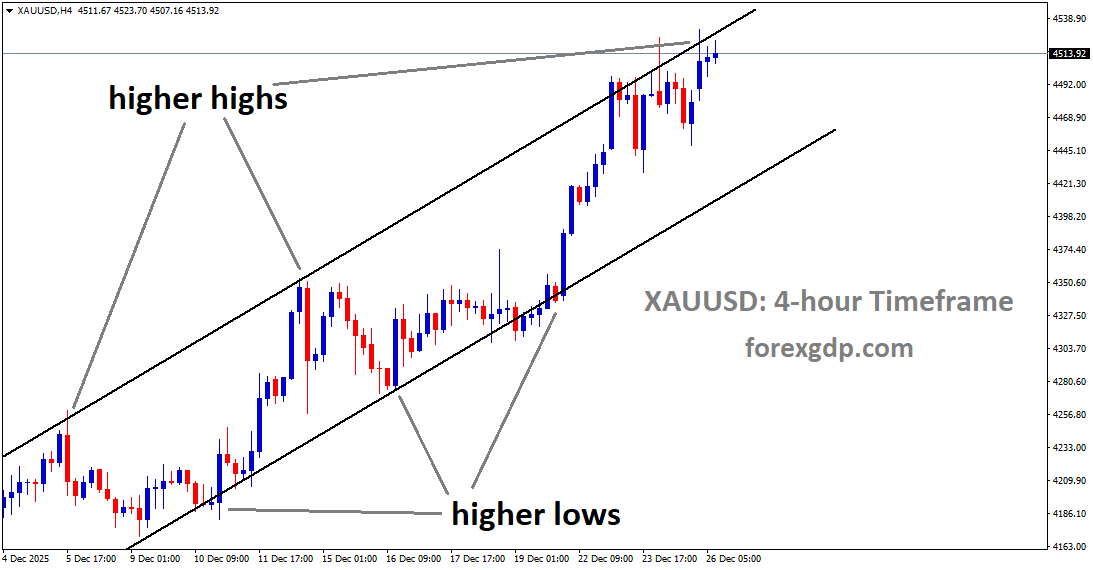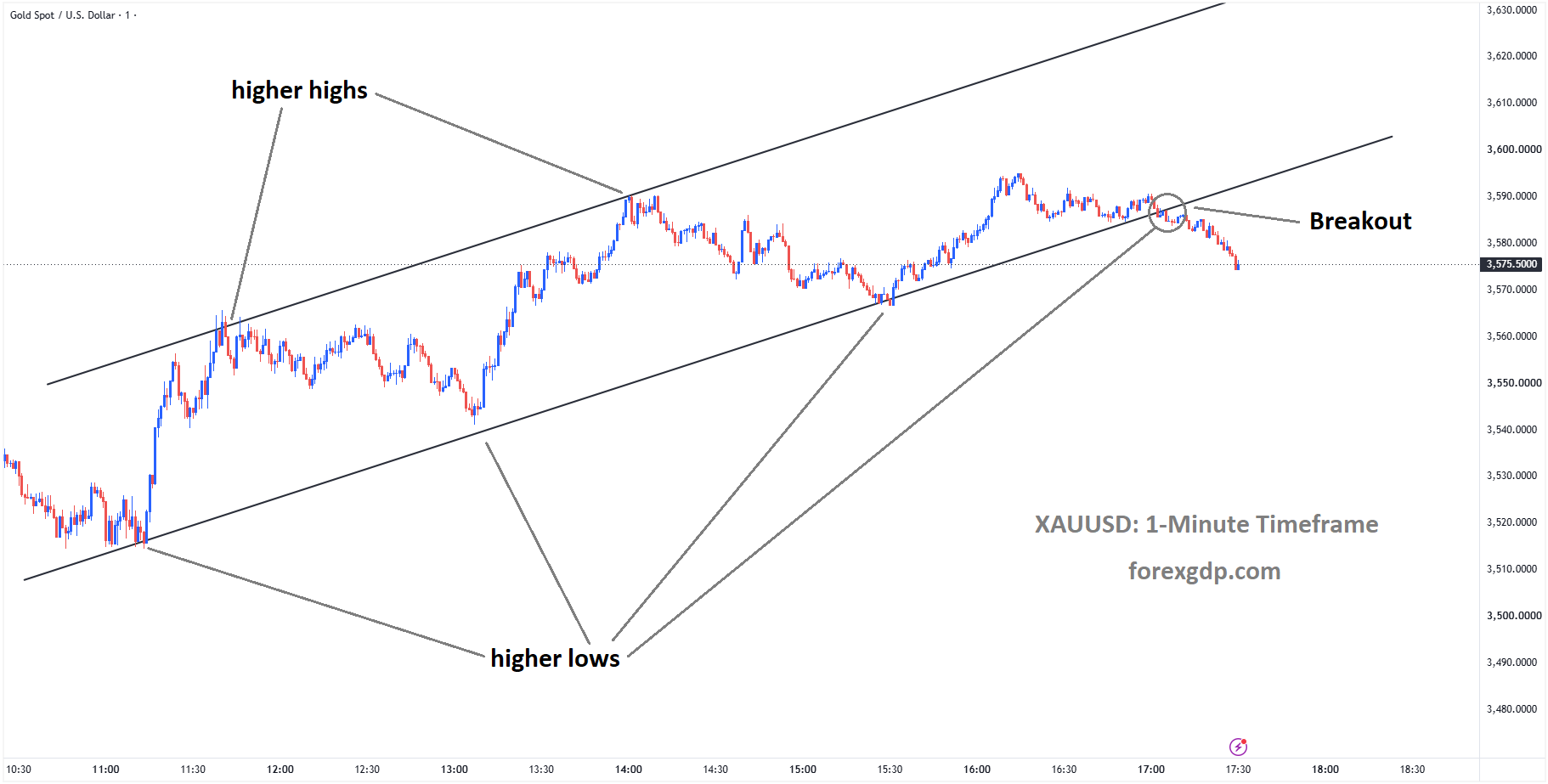
XAUUSD has broken the ascending channel to the downside
Gold continues to face strong pressure as investors prepare for the possibility of more aggressive interest rate increases by the US Federal Reserve. Growing expectations of tighter monetary policy have weakened demand for the precious metal, while uncertainty surrounding relations between the United States and Iran has added another layer of concern for global financial markets.
Although gold has managed to recover some of its recent losses, the broader market environment remains challenging. The US Dollar continues to attract attention as investors consider the impact of higher interest rates and rising geopolitical risks.
At the same time, gold’s recent weakness has raised questions about whether the selling pressure can continue at the same pace. Investors are now closely watching upcoming Federal Reserve decisions, inflation developments, and international political events for clues about the metal’s future direction.
Gold Faces Continued Pressure as Federal Reserve Expectations Strengthen
Gold has experienced a difficult period as expectations of further US interest rate increases continue to influence investor sentiment. The precious metal has struggled to attract sustained buying interest, largely because financial markets believe the Federal Reserve may maintain a restrictive monetary policy for an extended period.
The latest developments suggest that policymakers remain focused on bringing inflation under control, even if doing so requires additional increases in borrowing costs.
Higher interest rates generally create a challenging environment for gold. Unlike savings accounts, government bonds, and several other financial assets, gold does not provide regular interest payments. As a result, investors may find income-generating investments more attractive when borrowing costs and investment yields rise.
This relationship has played an important role in gold’s recent weakness.
Despite the pressure, the precious metal has shown some ability to recover from its sharp losses. A temporary decline in the US Dollar has provided limited support, helping gold regain some investor interest.
However, the recovery has not been enough to remove concerns about the broader economic environment. Market participants remain cautious as they assess whether the Federal Reserve will continue tightening monetary conditions in the coming months.
Federal Reserve Meeting Minutes Signal a Firm Approach to Inflation
One of the main factors affecting gold is the Federal Reserve’s commitment to reducing inflation toward its long-term target of 2%.
Minutes from the October Federal Open Market Committee (FOMC) meeting revealed that nearly all participating officials expected further interest rate increases to be necessary.
The discussion highlighted the central bank’s determination to prevent inflation from remaining elevated for too long.
Federal Reserve officials appear willing to keep monetary conditions restrictive until they gain greater confidence that inflation is moving sustainably toward the desired level.
This position has strengthened expectations that the central bank will continue prioritizing price stability over an early return to easier monetary policy.
December Federal Reserve Meeting Becomes a Major Focus
Investors are paying particular attention to the upcoming December Federal Reserve policy meeting.
According to expectations reflected in the CME Group’s FedWatch Tool, financial markets consider an additional interest rate increase highly likely.
A widely anticipated move would involve raising the benchmark interest rate by 25 basis points.
Such a decision would reinforce the Federal Reserve’s commitment to controlling inflation and could encourage investors to continue favoring assets that benefit from higher interest rates.
For gold, this creates an important challenge.
When investors expect interest rates to remain elevated, the opportunity cost of holding a non-interest-paying asset increases. This can reduce demand for gold, particularly among investors focused on generating regular returns.
However, expectations do not guarantee the outcome of a central bank meeting. Federal Reserve officials will continue evaluating inflation, employment, consumer spending, and other economic developments before making their decisions.
Longer-Term US Monetary Policy Could Influence Gold Demand
The Federal Reserve’s December decision is not the only concern for gold investors.
Financial markets are also considering the possibility that restrictive monetary policy could continue well into 2027.
Expectations of additional interest rate increases in January and April 2027 suggest that investors are preparing for a prolonged period of relatively tight financial conditions.
If these expectations remain firmly established, gold could continue facing competition from interest-bearing assets.
A longer period of restrictive monetary policy may also affect business investment, consumer borrowing, and overall economic activity.
For example, higher borrowing costs can make it more expensive for households to obtain loans and for businesses to finance expansion. These conditions may gradually reduce spending and help ease inflationary pressure.
However, monetary policy decisions involve balancing several economic risks.
The Federal Reserve must consider whether additional tightening is necessary to control inflation without causing excessive damage to economic growth.
Any meaningful change in this balance could influence investor expectations and affect demand for gold.
If inflation begins easing more quickly than anticipated, markets may reconsider the need for further rate increases. Conversely, persistent inflation could encourage policymakers to maintain their firm approach.
Stronger US Dollar Adds Another Challenge for Gold
The US Dollar remains another important influence on the precious metal.
Gold is internationally traded in US Dollars, which means changes in the American currency can affect demand from buyers around the world.
When the Dollar strengthens, gold becomes more expensive for investors using other currencies. This can discourage some international purchases and place additional pressure on demand.
Expectations of higher US interest rates often support the Dollar because investors may seek American financial assets offering more attractive returns.
This connection between monetary policy and currency demand has contributed to the difficult environment facing gold.
However, the relationship is not always straightforward.
Gold and the US Dollar can sometimes attract investment simultaneously, particularly during periods of significant global uncertainty.
The outcome depends on whether investors are more concerned about economic conditions, currency stability, inflation, or geopolitical developments.
A temporary weakening of the Dollar may provide some relief for gold, but a lasting improvement in demand could depend on broader changes in monetary policy expectations and investor confidence.
US-Iran Tensions Increase Uncertainty Across Global Markets

Geopolitical developments are also influencing the outlook for gold.
Concerns about a possible escalation in tensions between the United States and Iran have created additional uncertainty for investors.
Relations between the two countries can affect global confidence, particularly because instability in the Middle East may have consequences for international trade, energy supplies, and diplomatic relations.
During periods of geopolitical uncertainty, investors often seek assets they believe can provide greater stability.
Both gold and the US Dollar have historically attracted safe-haven demand during certain international crises.
However, their performance can differ depending on the circumstances.
If investors respond to rising tensions by increasing their holdings of US Dollars, the resulting currency strength could create additional difficulties for gold.
On the other hand, a significant increase in demand for physical gold and other defensive investments could provide support for the precious metal.
The situation therefore presents competing influences.
While geopolitical uncertainty may increase gold’s appeal as a store of value, a stronger Dollar and expectations of higher interest rates could limit that benefit.
Investors will need to assess how diplomatic developments unfold before drawing firm conclusions about their broader financial impact.
Gold Investors Remain Cautious Amid Changing Economic Conditions
The recent weakness in gold has highlighted how quickly investor sentiment can change when economic expectations shift.
Although selling pressure has been substantial, the speed of the decline may encourage some investors to reconsider whether the market has already responded strongly to expectations of further monetary tightening.
This does not necessarily mean that demand will recover immediately.
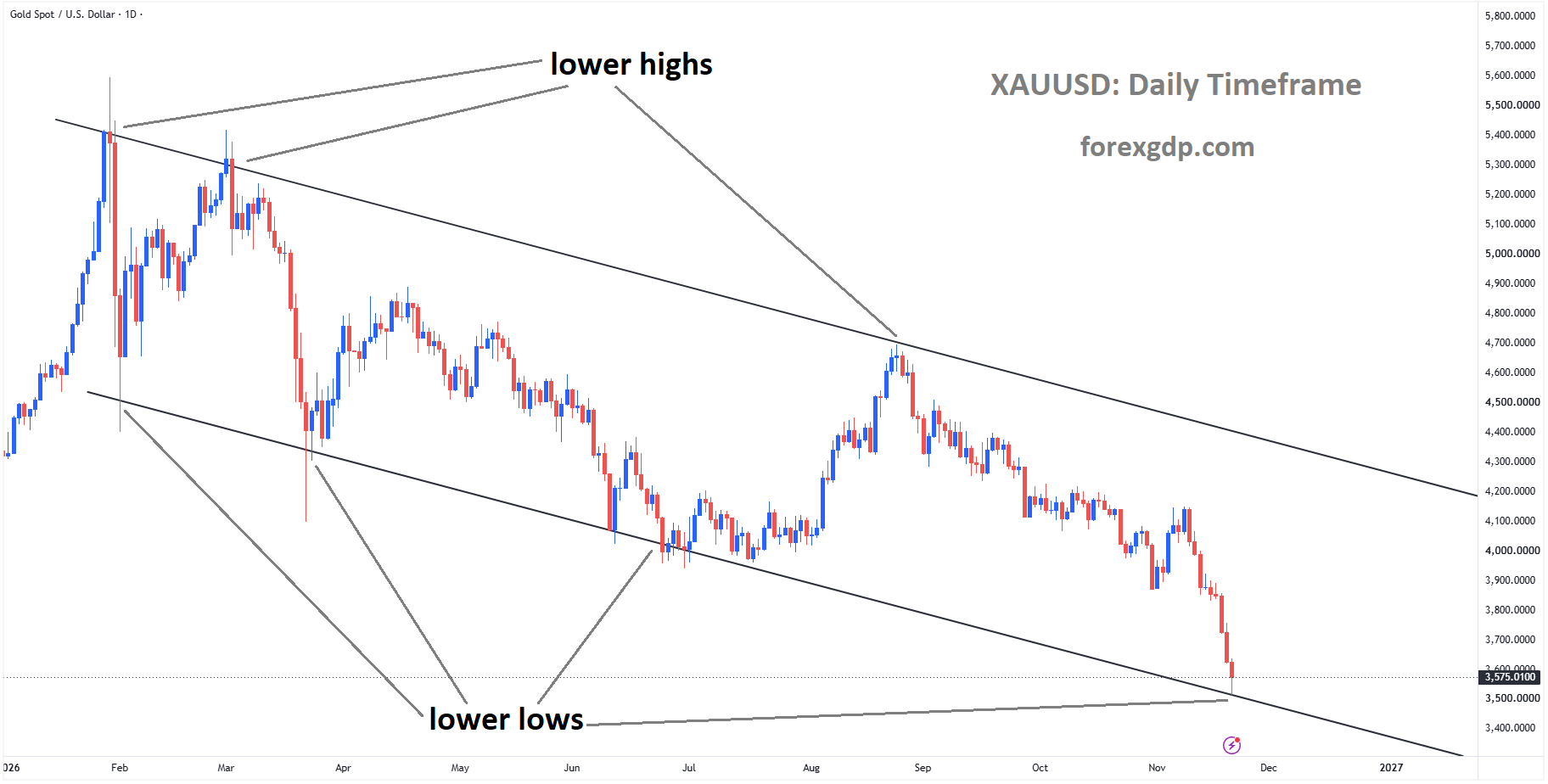
XAUUSD has reached the lower low area of the descending channel
Instead, it suggests that investors may become more selective as they evaluate the risks of making decisions based on short-term market movements.
Several important developments could shape sentiment in the coming months, including Federal Reserve communications, inflation reports, employment data, and geopolitical developments.
The central bank’s future guidance will be especially important because it may help investors understand how long restrictive monetary policy could remain in place.
Gold’s traditional role as a long-term store of value also remains relevant.
Some investors hold the precious metal to diversify their portfolios or reduce their exposure to financial uncertainty. Others view it as a potential safeguard against currency instability and unexpected economic developments.
These longer-term motivations can remain important even when the immediate monetary policy environment is unfavorable.
Summary
Gold continues to face a challenging environment as expectations of further Federal Reserve interest rate increases strengthen the appeal of the US Dollar and income-generating financial assets.
The October FOMC meeting minutes reinforced the central bank’s determination to bring inflation back toward its 2% target, while expectations of additional tightening in December and potentially into 2027 have added to concerns about gold demand.
Meanwhile, possible escalation in US-Iran tensions introduces another source of uncertainty. Although geopolitical risks can increase interest in safe-haven assets, they may also strengthen the Dollar and complicate gold’s recovery.
For investors, the key factors to monitor are Federal Reserve policy decisions, inflation trends, US Dollar developments, and international diplomatic relations.
Gold’s longer-term appeal remains connected to its role in portfolio diversification and wealth preservation. However, its near-term outlook will likely depend on how these economic and geopolitical forces develop.