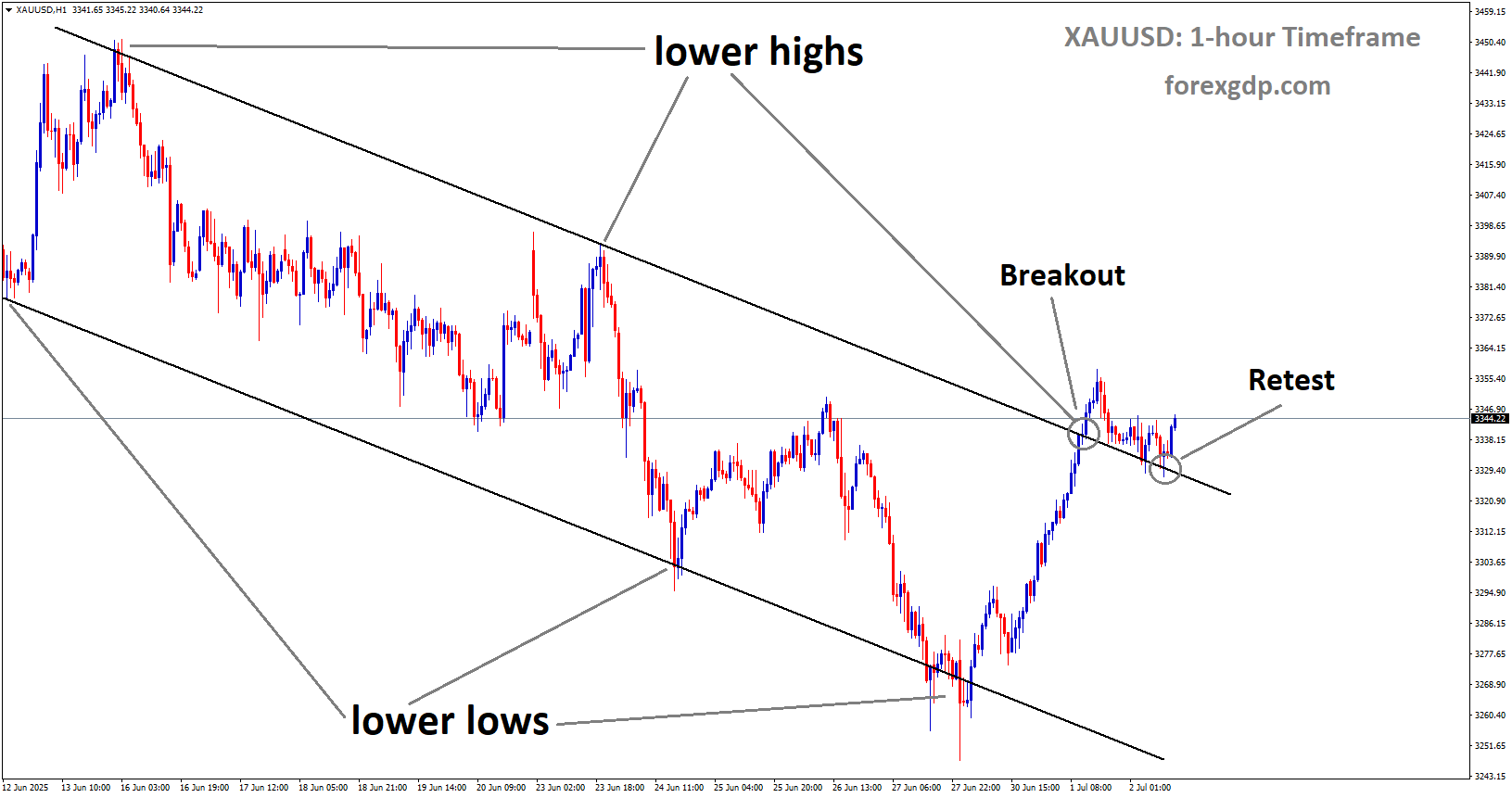

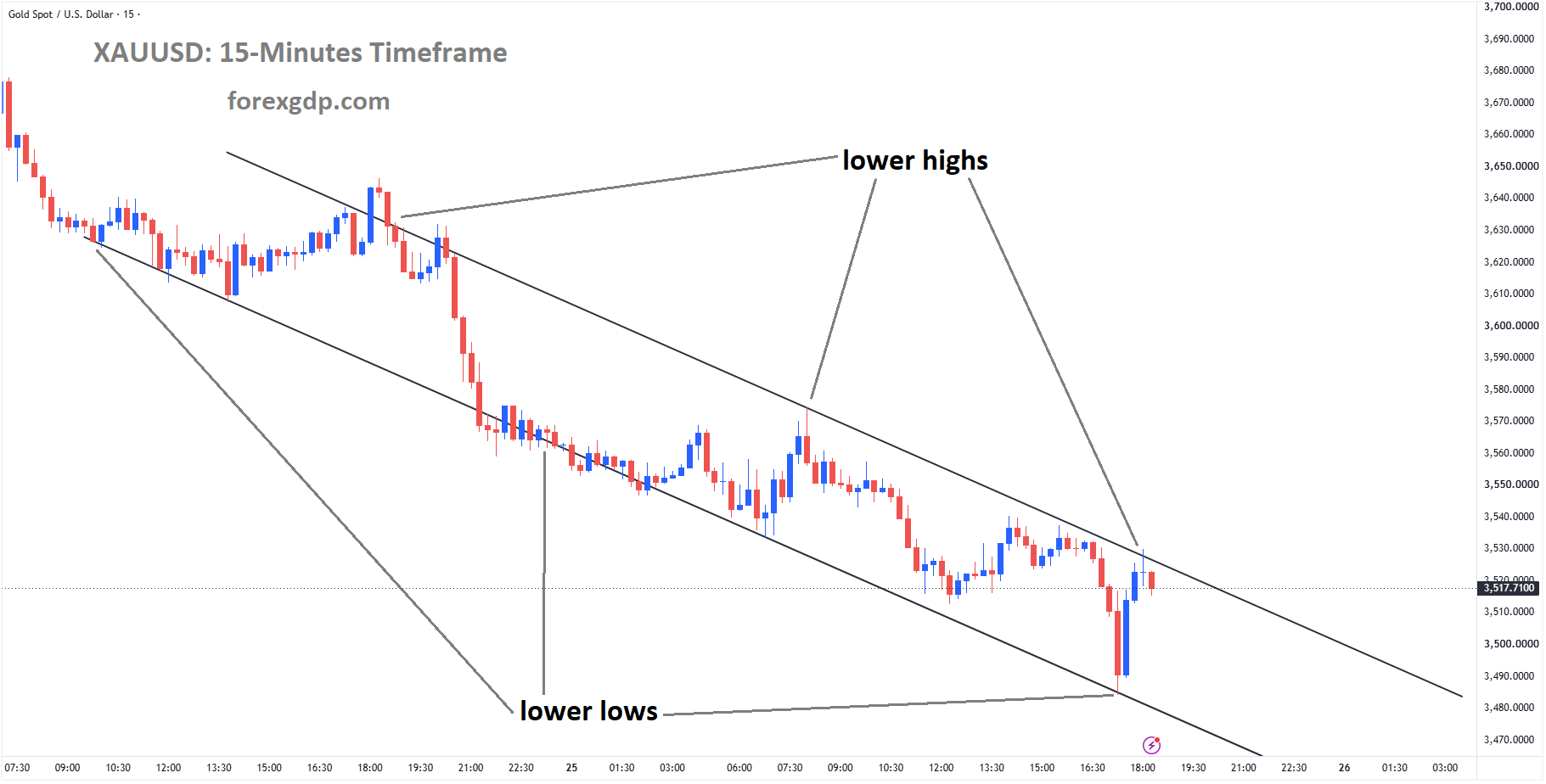
XAUUSD reached the lower high area of the descending channel
Gold continues to face selling pressure on Wednesday as investors adopt a cautious approach ahead of important US economic releases. The precious metal remains close to its lowest level in 14 months, with uncertainty surrounding inflation, interest rates, and global economic conditions influencing market sentiment.
Investors are closely watching the upcoming US Personal Consumption Expenditures (PCE) Price Index and preliminary third-quarter Gross Domestic Product (GDP) figures. These reports could provide valuable clues about the Federal Reserve’s future monetary policy decisions.
Meanwhile, a strong US Dollar, growing expectations of interest rate increases, and renewed concerns about the technology sector are creating a challenging environment for Gold. Although demand for traditional safe-haven assets remains relevant, several economic factors are limiting the precious metal’s recovery potential.
Gold Faces Challenges as Global Market Sentiment Weakens
Gold has surrendered its early-week gains as confidence across global e begins to weaken. Investors are becoming increasingly concerned about the sustainability of the artificial intelligence boom and the long-term growth prospects of major technology companies.
Initial optimism surrounding Nvidia and its leadership developments has gradually faded. Questions about whether technology companies can maintain their impressive growth have encouraged investors to reduce their exposure to riskier assets.
Under normal circumstances, uncertainty in the stock market often benefits Gold because investors consider it a reliable store of value during difficult economic periods. However, the current situation is somewhat different.
Some investors are selling their Gold holdings to raise cash and cover losses from other investments. Others are reducing their overall market exposure as they prepare for potentially volatile trading conditions.
This situation highlights how Gold can experience selling pressure even when broader financial markets are struggling. During periods of financial stress, immediate liquidity needs can temporarily become more important than long-term wealth protection.
Strong US Dollar Limits Gold’s Recovery Potential
The continued strength of the US Dollar remains one of the biggest challenges for Gold. The American currency is holding firm as investors anticipate a prolonged period of restrictive monetary policy from the Federal Reserve.
Gold and the US Dollar generally share an inverse relationship. When the Dollar strengthens, purchasing Gold becomes more expensive for investors using other currencies. This can reduce international demand and create additional pressure on the precious metal.
Meanwhile, US government bonds are attracting increased attention as investors search for relatively stable investment opportunities. Growing demand for government debt has pushed Treasury yields lower.
Although declining bond yields typically create a more supportive environment for Gold, the strength of the US Dollar is limiting those benefits.
Investors are also reluctant to make major investment decisions before receiving greater clarity about inflation and the future direction of US interest rates.
US PCE Inflation Data Takes Center Stage

The upcoming US Personal Consumption Expenditures Price Index is among the most important economic events for Gold investors this week.
The PCE Price Index measures changes in the cost of goods and services purchased by American consumers. It is also the Federal Reserve’s preferred inflation measure, making it particularly important for understanding future monetary policy decisions.
Economists expect October’s headline PCE inflation to increase to 3.8% annually from 3.6% in September. Core PCE inflation, which excludes volatile food and energy costs, is expected to rise to 3.2% from the previous reading of 3.1%.
Analysts at Commerzbank have highlighted the importance of the upcoming inflation report, particularly as Federal Reserve officials prepare for their December policy meeting.
Persistent inflation could encourage policymakers to maintain a restrictive approach for longer than previously anticipated.
How Higher Inflation Could Affect Gold
An inflation reading above expectations could strengthen the case for additional interest rate increases. Such an outcome may support the US Dollar while reducing the attractiveness of non-interest-bearing assets such as Gold.
Although Gold is widely considered a hedge against inflation, expectations of tighter monetary policy can outweigh its traditional inflation protection benefits over shorter periods.
On the other hand, weaker-than-expected inflation could reduce concerns about aggressive monetary tightening. This may ease pressure on Gold and encourage investors to reconsider their expectations regarding future Federal Reserve decisions.
Federal Reserve Interest Rate Outlook Remains a Major Concern
The Federal Reserve’s increasingly hawkish monetary policy outlook continues to influence investor confidence in Gold.
Several policymakers have expressed concerns about persistent inflation, suggesting that additional measures may be necessary to bring consumer inflation closer to the central bank’s long-term target.
Financial markets are currently anticipating a quarter-percentage-point interest rate increase in December. Expectations also suggest that further monetary tightening could follow through the end of 2027.
Higher interest rates generally create a difficult environment for Gold because the precious metal does not provide regular interest payments or dividends.
When interest-bearing investments offer attractive returns, investors may prefer government bonds, savings products, and other fixed-income assets.
However, the Federal Reserve’s future decisions will depend heavily on incoming economic information. Inflation, employment conditions, consumer spending, and overall economic growth will all play important roles in shaping monetary policy.
US GDP Report Could Influence Investor Expectations
Alongside inflation figures, investors are preparing for the release of preliminary US third-quarter GDP data.
Economists expect the American economy to expand at an annualized rate of 3.4%, matching the growth recorded during the previous quarter.
Strong economic growth would suggest that the US economy remains resilient despite ongoing inflation concerns and restrictive financial conditions.
A healthy economy could give the Federal Reserve greater flexibility to increase interest rates without immediately threatening economic stability. This could provide additional support for the US Dollar and create further challenges for Gold.
However, weaker economic growth could raise concerns about the impact of higher borrowing costs on businesses and households.
If economic activity shows unexpected signs of slowing, investors may begin questioning whether further interest rate increases are necessary. Such developments could improve demand for Gold as a defensive investment.
The combination of inflation and GDP figures will therefore be particularly important in determining how investors assess the broader economic outlook.
What Could Shape Gold Demand in the Coming Weeks
Gold’s performance in the coming weeks will largely depend on the balance between monetary policy expectations and global economic uncertainty.
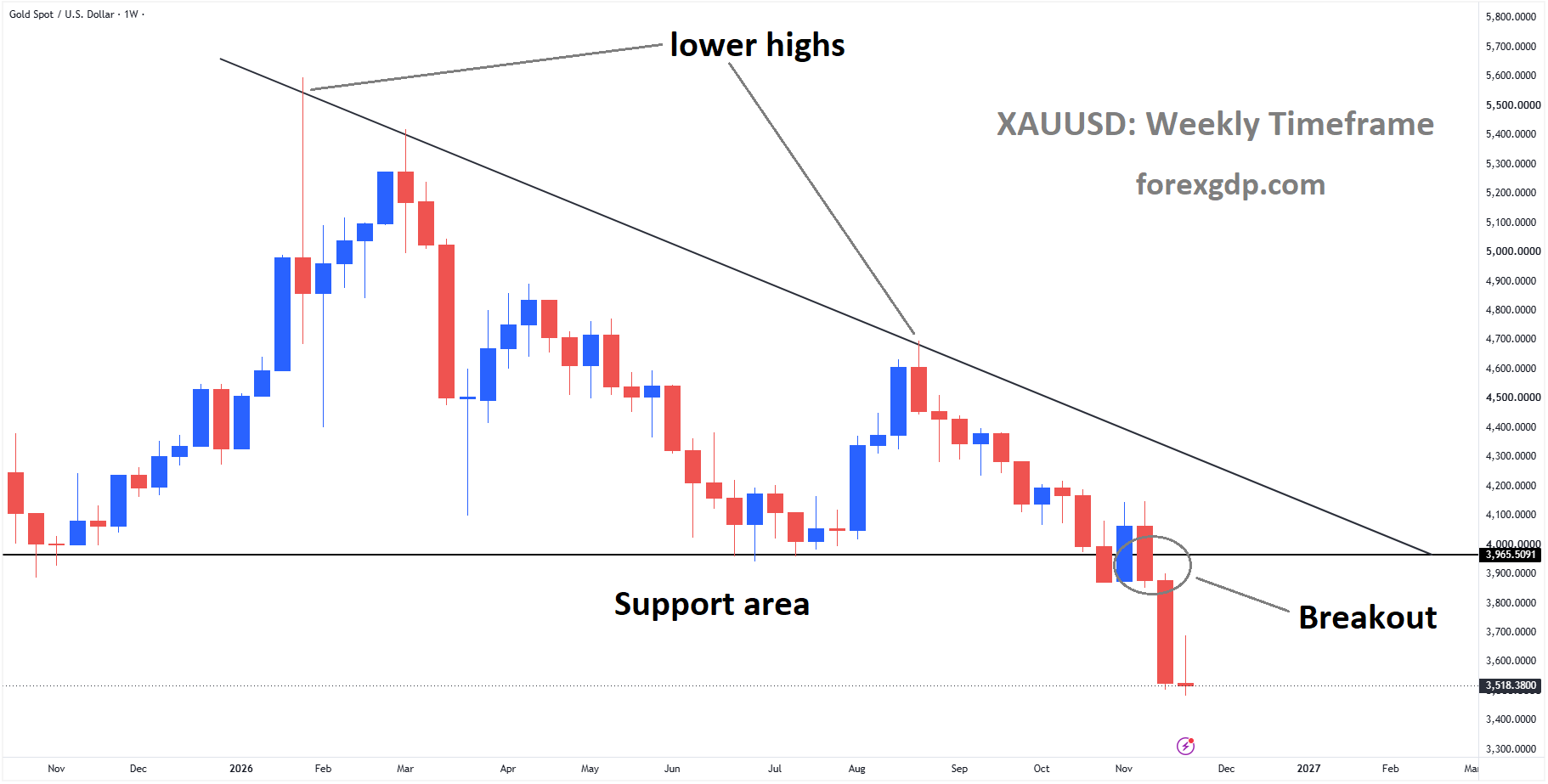
XAUUSD has broken the descending triangle to the downside
Persistent inflation, a resilient US economy, and continued Dollar strength could discourage investment in the precious metal. Meanwhile, growing concerns about financial stability, geopolitical uncertainty, or weaker economic activity could encourage renewed safe-haven demand.
Developments within the technology sector may also influence investor behavior. Further weakness in global equities could lead to additional portfolio adjustments as investors reconsider their exposure to different asset classes.
Despite the current challenges, Gold remains an important component of many long-term investment portfolios because of its historical role in wealth preservation and diversification.
Final Summary
Gold remains under pressure as investors await crucial US inflation and economic growth reports. The upcoming PCE Price Index and preliminary GDP figures could significantly influence expectations surrounding the Federal Reserve’s December policy meeting.
A strong US Dollar, persistent inflation concerns, and expectations of further interest rate increases continue to weigh on the precious metal. Meanwhile, uncertainty surrounding global equities and the technology sector is encouraging cautious investment behavior.
Stronger-than-expected economic figures could reinforce expectations of tighter monetary policy, while softer data may offer Gold some relief.
For now, investors remain focused on incoming economic information and Federal Reserve policy signals as they assess the future direction of Gold demand and broader financial market conditions.