

When most people think about Forex trading, they imagine a simple formula — follow the latest trend, ride the wave, and rake in profits. It sounds easy, right? Unfortunately, that’s one of the biggest misconceptions in the trading world. Many newcomers blindly chase what seems “hot” in the market, assuming that staying with the trend guarantees success. The truth, however, is far more complicated. Forex trading isn’t just about following trends — it’s about understanding why they happen, when they shift, and how to adapt when the market doesn’t play along.

In reality, successful trading requires balance, strategy, and emotional control. Trends can be your friend — until they turn against you. So, let’s break this myth wide open and explore the deeper layers of what truly drives Forex success.
Understanding the Forex Trend Myth
Why Many Traders Fall for the Trend Trap
It’s easy to see why people think Forex trading revolves around trends. Every course, social media post, and YouTube video screams “Trade with the trend!” or “Trend is your friend!” But what they don’t tell you is that the market doesn’t always move in one direction. It oscillates, consolidates, and reverses more often than it trends. Traders who enter late into a trend often find themselves caught at the peak — buying high and selling low.
Another reason traders cling to trends is psychological comfort. Trends feel safe because they follow a visible pattern. However, relying solely on trends is like driving while only watching the rearview mirror — it gives you a false sense of direction.
The Difference Between Following and Understanding Trends
Following a trend means reacting; understanding a trend means anticipating. The real skill lies in knowing why a trend exists — is it driven by economic data, geopolitical tension, or central bank policies? Without this awareness, traders become victims of false breakouts and fake momentum.
When you learn to analyze the underlying factors — such as price structure, market sentiment, and fundamental catalysts — you move from being a follower to being a strategist. That’s where the real profit lies.
Beyond Trend Trading: The Forgotten Strategies

Mean Reversion: When the Market Overreacts
One of the biggest truths ignored by trend chasers is that the market often overreacts. Prices may spike too high or dip too low before correcting back to their average. This is where mean reversion comes in — betting that the market will return to equilibrium.
Mean reversion works beautifully in range-bound markets where price swings between defined levels of support and resistance. Instead of chasing breakouts, traders wait for overbought or oversold conditions and position themselves for reversals. It’s not as glamorous as trend trading, but it’s steady and often more reliable during sideways markets.
Range Trading: Profiting in Consolidation
Markets don’t trend all the time — in fact, studies show they move sideways around 70% of the time. Range traders capitalize on this by buying near support and selling near resistance. It’s simple, logical, and surprisingly effective if managed correctly.
Range trading requires patience and discipline. You’re not looking for massive moves but consistent profits over time. Traders who master this technique learn to recognize “quiet” periods as opportunities, not obstacles.
Breakout and Counter-Trend Trading
Some traders thrive on chaos — they wait for the moment the price breaks out of a range and then ride the new momentum. Others prefer to fade these breakouts, expecting them to fail and revert. Both strategies have their place.
The key difference between success and failure here lies in timing and confirmation. Blindly jumping into a breakout is gambling, but identifying volume spikes, retests, and candle patterns makes it strategic. The same goes for counter-trend trades — they can be profitable when executed with solid technical signals and risk control.
Psychological Pitfalls of Following Trends
The Illusion of Control
Following trends can make traders feel like they’re in control, especially when everyone on social media is shouting the same trade. But in truth, this herd mentality often leads to losses. Markets punish the crowd because by the time “everyone” notices a trend, smart money has already exited.
You might feel confident when trading in the same direction as the majority, but confidence doesn’t equal control. The market moves independently of your emotions, and it doesn’t care how sure you feel about a trend.
FOMO: The Silent Account Killer
Fear of Missing Out (FOMO) is every trader’s worst enemy. You see a pair moving fast — you jump in. It’s human nature. But FOMO often means entering too late, right before the retracement hits.
Traders obsessed with catching every move forget that missing opportunities is part of trading. There’s always another setup around the corner. Learning to say “no” to bad entries is a superpower that separates pros from gamblers.
Technical Tools for Smarter Decision-Making
Using Moving Averages the Right Way
Moving averages are the bread and butter of trend traders. They help smooth out price data and highlight direction. But they’re not perfect. Many traders misuse them by entering trades just because two lines cross. That’s a recipe for disaster.
Instead, use moving averages as a confirmation tool — not a decision-maker. Combine them with price action, support-resistance zones, or volume indicators to confirm real momentum rather than noise.
Support and Resistance Levels: The Market’s Hidden Map
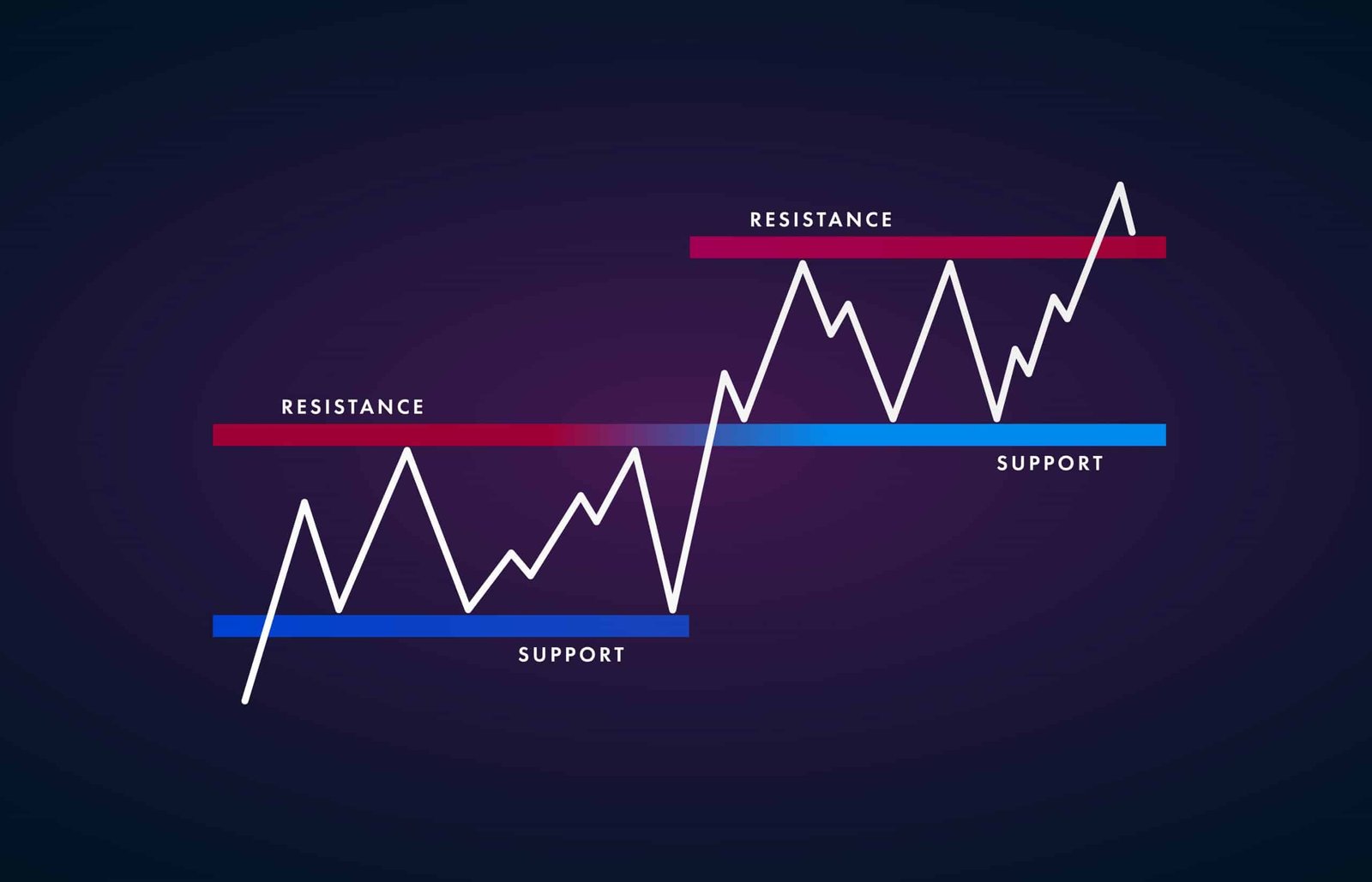
Every trader should know where the big players might act — and support/resistance levels reveal just that. These zones often dictate whether a trend will continue or stall.
Understanding how price reacts near these zones gives traders an edge. Instead of blindly following a trend, you can anticipate potential reversals or breakouts. It’s like reading the market’s body language before it speaks.
Indicators That Complement Trend Analysis
Indicators like RSI, MACD, and Bollinger Bands can help identify overbought or oversold conditions — warning signs that a trend might be losing strength. However, no indicator is foolproof.
The trick is using them in combination. For example, if RSI shows divergence while the trend still looks strong, it might signal an upcoming reversal. Trading becomes less about guessing and more about reading subtle signs.
The Role of Fundamentals in Trend Evaluation
Economic News and Market Sentiment
Trends don’t form in a vacuum — they’re driven by fundamentals. Interest rate decisions, inflation data, employment reports — all influence currency demand. Ignoring these factors is like trying to drive blindfolded.
By understanding the macroeconomic context, traders can spot when a trend is sustainable or when it’s running out of steam. This knowledge turns guesswork into educated strategy.
Central Banks: The Invisible Hands Behind the Market
Never underestimate central banks. When they tweak interest rates or intervene in currency markets, entire trends can shift overnight. Traders who fail to monitor monetary policy often get blindsided.
Keeping tabs on central bank announcements and speeches can provide early clues about potential reversals. It’s not glamorous work, but it’s what professional traders do daily.
Diversifying Strategies for Long-Term Success
Why One Strategy Isn’t Enough
Markets evolve. A strategy that worked last year might fail miserably today. That’s why flexibility is crucial. Having multiple strategies — trend, range, breakout, and reversal — ensures you can adapt to any market condition.
Think of trading like sports: no athlete uses one move to win every game. Similarly, traders who rely on a single method limit their potential and increase risk.
Combining Technical and Fundamental Analysis
Blending technical and fundamental analysis gives you the best of both worlds. Technicals show you when to enter; fundamentals explain why the move is happening.
For instance, if a pair is trending up technically but fundamental data contradicts it, caution is warranted. When both align, it’s usually a high-probability trade setup.
Risk Management: The Unsung Hero
Why Risk Control Beats Trend Prediction
Every trader wants to predict the next big move, but professionals focus on controlling losses instead. Even the best trend-following system can fail — and when it does, stop losses are your safety net.
Risk management ensures survival. Without it, no strategy, no matter how sophisticated, can save your account. It’s the difference between trading and gambling.
Position Sizing and Discipline
Many traders blow accounts not because of bad strategies but because of bad habits. Oversized positions, emotional trades, and revenge trading destroy capital faster than any losing streak.
Smart traders calculate risk before every trade. They accept losses as part of the game, not personal failures. That mindset shift changes everything.
Why Flexibility Wins in Forex
Adapting to Market Conditions
Forex is a living, breathing ecosystem. It changes with global events, political shifts, and investor sentiment. Traders who adapt survive; those who cling to old methods perish.
Being flexible doesn’t mean being inconsistent — it means evolving with the market. When trends fade, shift to range strategies. When volatility spikes, scale back risk. That’s how longevity is built.
Learning from Mistakes and Market Behavior

Every trade teaches something. Even losing ones. The best traders analyze their mistakes ruthlessly — not to dwell on them, but to grow.
By journaling trades and reviewing patterns, you start recognizing recurring errors — entering too early, chasing trends, or ignoring risk rules. Awareness is the first step toward mastery.
The Truth About Forex Success
It’s Not About Winning Every Trade
Most beginners think trading success means never losing. In reality, even top traders lose regularly. What separates them is how they lose — small, controlled, and strategic.
Success in Forex isn’t about perfection. It’s about consistency, discipline, and adaptability. Following trends blindly doesn’t provide any of that.
Building a Trading Plan That Works for You
Every trader is different. Your risk tolerance, goals, and schedule all shape your ideal trading plan. Some thrive on short-term scalps, others on long-term trend positions.
The key is self-awareness. Find a method that aligns with your mindset, then refine it over time. Trading isn’t about copying others — it’s about crafting your own edge.
Conclusion
Forex trading is far more than just following the latest trends. Yes, trends can offer profitable opportunities, but they’re only one piece of the puzzle. True success comes from understanding when to ride the wave and when to step aside. It’s about mastering different strategies, managing risk, and staying mentally strong when the market tests your patience.
Don’t let myths mislead you into thinking that trend-following is a shortcut to riches. Instead, treat it as one tool among many. Combine it with range, mean reversion, and breakout strategies — backed by strong fundamentals and sound psychology. When you trade with awareness instead of emotion, the market stops being your enemy and becomes your teacher.
FAQs
Is trend-following still a profitable Forex strategy?
Yes, but only when used wisely. Trend-following works best when combined with confirmation signals and solid risk management, not as a standalone approach.
Can you make money trading against the trend?
Absolutely. Counter-trend strategies like mean reversion can be profitable in range-bound markets, provided you use proper stop losses and confirmations.
Why do most traders lose money by following trends?
Because they enter too late. By the time a trend is visible to everyone, smart money is already exiting. Blindly following the crowd usually ends in losses.
What’s the best strategy for beginners — trend or range trading?
Range trading is often better for beginners because it’s slower-paced and less volatile. It helps you learn patience and timing before tackling trends.
How do I know when a trend is about to end?
Watch for divergence, volume drops, or reversal patterns like double tops or head-and-shoulders formations. Combine these with fundamental cues to spot turning points early.