

In today’s world, everyone seems obsessed with speed. We want faster results, faster profits, and faster success. Social media constantly shows people achieving goals overnight, making us believe that moving quickly is the only way to stay ahead.
But speed alone doesn’t guarantee success. In fact, rushing often leads to mistakes, stress, and wasted effort. That’s why the message “Be Efficient, Not Fast” is more relevant than ever.
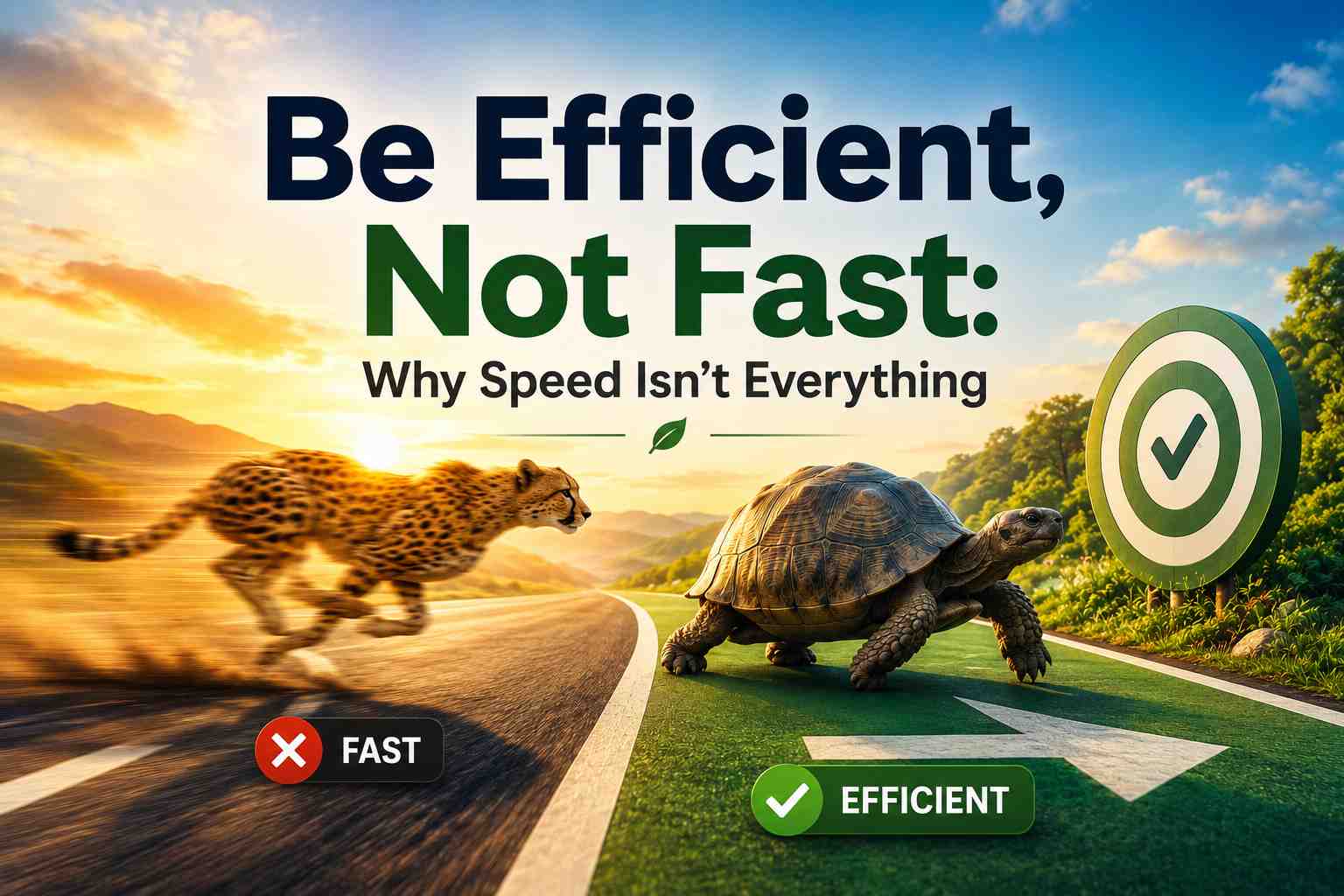
Understanding Efficiency vs. Speed
Many people think efficiency and speed are the same thing. They’re not.
Being fast means completing something quickly. Being efficient means achieving the best result with the least amount of wasted time, energy, and resources.
Imagine driving at full speed in the wrong direction. You’ll move quickly, but you’ll never reach your destination. Efficiency ensures you’re heading the right way before pressing the accelerator.
The Problem With Always Moving Fast
Speed can feel productive, but it often creates hidden problems.
When people rush, they make more mistakes. Those mistakes require extra time and effort to fix. What seemed faster initially often becomes slower in the long run.
Rushing also reduces quality. Whether it’s work, business decisions, or trading, poor-quality execution usually leads to disappointing results.
Why Efficiency Leads to Better Results
Efficiency focuses on outcomes rather than activity.
Instead of asking, “How fast can I do this?” efficient people ask, “What’s the smartest way to do this?” This simple mindset shift improves productivity and reduces unnecessary effort.
The goal isn’t to work harder. The goal is to work smarter.
Efficiency in Business
Successful businesses don’t win because they move the fastest. They win because they operate efficiently.
They streamline processes, eliminate unnecessary tasks, and focus on delivering value. Every hour, employee, and dollar is used strategically.
Customers care about results, not how busy a company appears. Efficient businesses consistently provide better experiences and build stronger reputations.
The Importance of Efficiency in Trading
For traders, speed can be dangerous.
Many beginners believe more trades equal more profits. In reality, overtrading often destroys accounts because decisions are made emotionally rather than strategically.
Efficient traders wait patiently for high-probability opportunities. They focus on quality setups instead of constant activity, which often leads to better long-term performance.
Productivity Is Not About Being Busy
Being busy doesn’t always mean being productive.
Many people spend their day responding to emails, attending meetings, and switching between tasks. At the end of the day, they’ve been active but accomplished very little.
True productivity comes from completing meaningful work that produces results.
The Power of Time Management
Time is your most valuable resource because it can never be replaced.
Efficient people prioritize important tasks first. They avoid distractions and focus their energy on activities that create the greatest impact.
A few minutes of planning can save hours of wasted effort later.

Why Multitasking Hurts Efficiency
Many people believe multitasking improves productivity. The reality is often the opposite.
Constantly switching between tasks forces your brain to refocus repeatedly, reducing concentration and increasing errors.
Focusing on one task at a time allows you to complete work faster and at a higher quality.
Building Systems for Success
Efficient people rely on systems instead of motivation alone.
A system is a repeatable process that consistently produces results. Examples include daily routines, trading plans, content calendars, and automated savings strategies.
Strong systems reduce decision fatigue and help maintain consistent performance over time.
How to Become More Efficient
Improving efficiency doesn’t require major changes.
Start by setting clear goals. Identify the tasks that produce the biggest results and eliminate unnecessary activities. Automate repetitive work whenever possible and regularly review your processes for improvement.
Small improvements made consistently can create massive long-term benefits.
Efficiency Creates a Competitive Advantage
Most people focus on doing more. Efficient people focus on doing what matters most.
This difference creates a powerful competitive advantage. Over time, efficient individuals and businesses achieve better results while using fewer resources.
Like compound interest, the benefits of efficiency continue growing year after year.

Conclusion
The quote “Be Efficient, Not Fast” reminds us that success isn’t about constant movement. It’s about purposeful movement. Speed without direction leads to mistakes, stress, and wasted effort. Efficiency, however, creates sustainable growth, better decisions, and stronger results.
Whether you’re running a business, trading financial markets, or pursuing personal goals, focus on effectiveness rather than urgency. In the long run, efficiency will always outperform reckless speed.
FAQs
1. What does “Be Efficient, Not Fast” mean?
It means focusing on achieving the best results with minimal wasted effort instead of simply completing tasks quickly.
2. Why is efficiency more important than speed?
Efficiency improves quality, reduces mistakes, and creates sustainable success over time.
3. How can I become more efficient at work?
Prioritize important tasks, eliminate distractions, use systems, and focus on high-impact activities.
4. Does efficiency mean working slowly?
No. Efficiency means working intelligently and effectively, not necessarily slowly.
5. How does efficiency help traders?
Efficient traders focus on high-quality opportunities, risk management, and discipline instead of taking unnecessary trades.