

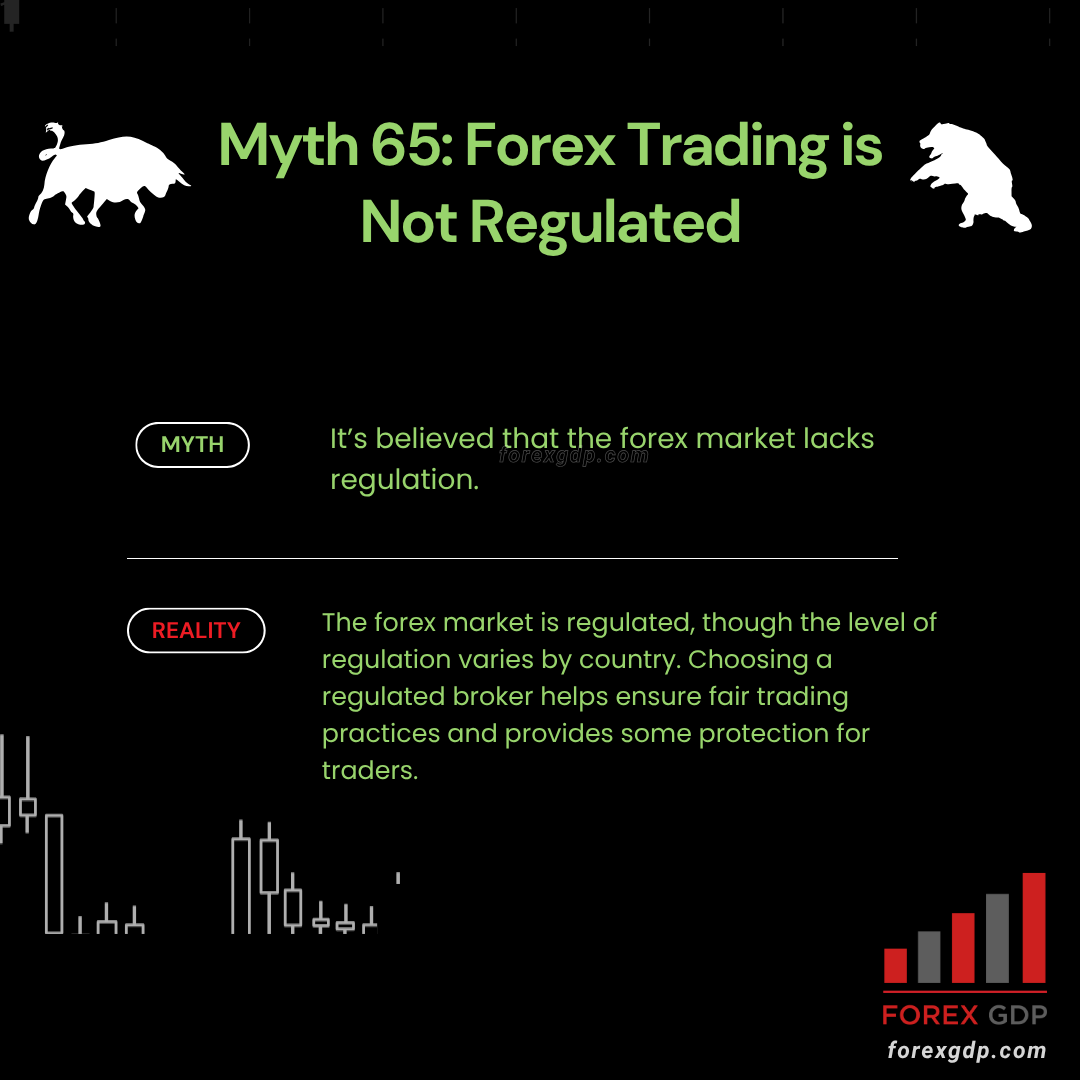
When it comes to forex trading, myths spread faster than wildfire. One of the most common ones? “Forex trading is not regulated.” This misconception makes a lot of people suspicious about getting into the forex market. But here’s the truth—forex trading is regulated, though the level of regulation depends on the country you’re in.
Let’s break down this myth, explore the reality, and uncover everything you need to know about forex market regulations.
Why People Think Forex Trading is Not Regulated
Forex often feels like the Wild West of financial markets. Unlike the stock market, which is tied to centralized exchanges like the NYSE or NASDAQ, forex operates as a decentralized, over-the-counter (OTC) market. That decentralization makes it look like a free-for-all with no rules.
And let’s be honest—scammers and shady brokers don’t help. Many people hear horror stories of traders losing their money to fake brokers and assume the entire market is unregulated. But that assumption is far from the truth.
The Reality: Forex Trading is Regulated
Here’s the fact: the forex market is regulated, but the level of oversight varies depending on where you live.
-
In the U.S., regulators like the Commodity Futures Trading Commission (CFTC) and the National Futures Association (NFA) keep brokers in check.
-
In the U.K., the Financial Conduct Authority (FCA) ensures compliance and protects traders.
-
In Australia, the Australian Securities and Investments Commission (ASIC) oversees forex activity.
These authorities exist to protect traders, enforce transparency, and ensure fair play. So, if you choose the right broker, you’re not swimming in shark-infested waters.
The Role of Regulatory Bodies
So, what exactly do these regulators do? They’re not just sitting in offices writing boring reports. Their job is to:
-
Monitor brokers to make sure they don’t cheat clients.
-
Set capital requirements so brokers can’t just vanish with your money.
-
Audit financial statements for transparency.
-
Resolve disputes between traders and brokers.
Think of them as referees in a football match. Without them, the game would be chaos.
Why Regulation Matters in Forex Trading
Imagine leaving your wallet in the middle of a crowded street. If there are no police around, what do you think happens? Someone grabs it. That’s exactly what unregulated forex trading looks like.
Regulation matters because it:
-
Protects your deposits from fraud.
-
Ensures brokers follow fair pricing models.
-
Gives traders legal recourse if things go wrong.
-
Builds trust in the market.
Without regulation, forex would truly be a casino, not a financial market.

Countries with the Strongest Forex Regulations
Not all countries play by the same rules. Some nations have strict oversight, while others practically let brokers run wild.
-
United States – Extremely strict, traders face high barriers but strong protection.
-
United Kingdom – Well-regulated and transparent under FCA.
-
Australia – ASIC keeps things balanced.
-
Japan – Financial Services Agency (FSA) is highly respected.
-
Cyprus – Regulated under CySEC, popular due to EU laws.
These countries offer relatively safe environments for forex trading, compared to offshore jurisdictions.
The Dangers of Unregulated Brokers
Here’s the dark side: unregulated brokers are everywhere. They lure traders with bonuses, high leverage, and promises of quick profits. But once you deposit your money, good luck getting it back.
Unregulated brokers often:
-
Manipulate spreads and slippage.
-
Refuse withdrawals.
-
Offer “fake” platforms that mimic real trading.
-
Disappear overnight with your funds.
Trading with an unregulated broker is like handing your cash to a stranger in an alley. Don’t do it.
How to Check If a Broker is Regulated
Here’s a simple reality check: always verify a broker’s license. Don’t just take their word for it.
-
Visit the regulator’s official website.
-
Look up the broker’s license number.
-
Make sure the name matches exactly.
-
Watch out for offshore licenses from places like Belize, Vanuatu, or Seychelles.
If you can’t verify it, walk away. It’s better to miss a trading opportunity than to lose everything.
Common Red Flags of Unregulated Brokers
Some signs scream “scam” louder than others. If you notice these, run:
-
Too-good-to-be-true bonuses.
-
Aggressive account managers pushing deposits.
-
Promises of guaranteed profits (there’s no such thing in trading).
-
No clear regulation details on their website.
-
Poor or fake customer reviews.
If it feels shady, trust your gut.
Misconceptions About Forex Regulation
Many myths confuse traders. Let’s debunk a few:
-
Myth: Regulation guarantees profits.
-
Reality: It only ensures fairness, not success.
-
-
Myth: Offshore brokers are always bad.
-
Reality: Some may be legit, but most are high-risk.
-
-
Myth: Regulation is the same everywhere.
-
Reality: Rules differ across countries, some are stricter than others.
-
The Grey Areas of Forex Regulation
Now, here’s the tricky part. Forex is global, but not every country has strict oversight. Some regions are under-regulated or don’t enforce rules well. This creates grey zones where shady brokers thrive.
For example, while Europe has MiFID regulations, certain loopholes allow brokers to operate under weak licenses but still target EU traders. It’s like locking the front door but leaving the window open.
Why Retail Traders Still Get Burned
Even with regulation, retail traders still lose money. Why?
-
Lack of knowledge: Many jump in without learning the basics.
-
Over-leverage: High leverage magnifies losses.
-
Greedy brokers: Some exploit loopholes even while regulated.
-
Trader psychology: Fear and greed cloud judgment.
Regulation can’t protect traders from themselves. Education is the real shield.
How Regulation Shapes Your Trading Experience
Trading with a regulated broker feels different:
-
Your deposits are safer.
-
Spreads are transparent.
-
Withdrawals are smooth.
-
Disputes can be settled legally.
It’s like driving with seatbelts and airbags. You still need to drive carefully, but you have protection in case of accidents.
Is Regulation Enough?
Here’s the brutal truth: even the best regulations can’t eliminate risk. Forex is still a volatile market where losses are part of the game. Regulation simply ensures the playing field isn’t rigged against you.
So yes, it matters, but don’t rely on it as your safety net. Your own trading discipline is just as important.

Tips to Stay Safe in the Forex Market
Want to protect yourself? Follow these rules:
-
Only use brokers regulated by top-tier authorities (FCA, CFTC, ASIC).
-
Avoid brokers with offshore licenses.
-
Never invest money you can’t afford to lose.
-
Read the terms carefully before accepting bonuses.
-
Educate yourself before trading live accounts.
Remember: in forex, being cautious beats being sorry.
Conclusion
The myth that “forex trading is not regulated” is flat-out wrong. The truth is, forex is regulated, but the extent of that regulation depends on where you are and which broker you choose.
The key takeaway? Always pick a regulated broker, verify their license, and never fall for shiny promises. Regulation won’t guarantee profits, but it will give you a safer, fairer trading environment. Combine that with education and discipline, and you’ll stand a much better chance in the forex world.
FAQs
1. Is forex trading completely unregulated?
No. Forex is regulated in most major countries, but the level of oversight varies.
2. Can I trust offshore forex brokers?
Not always. Some may be legit, but most offshore brokers lack strong regulation and are risky.
3. Who regulates forex trading in the U.S.?
The CFTC and NFA oversee forex brokers in the United States.
4. How do I know if my broker is regulated?
Check their license number on the official website of the regulator they claim to be registered with.
5. Does regulation mean I won’t lose money?
No. Regulation ensures fairness but doesn’t protect you from trading mistakes or market volatility.