

Trading isn’t just about numbers, charts, or fancy strategies. It’s also about psychology — and much of that psychology is tied to our instincts and even our genes. If you’ve ever wondered why you panic-sell too soon or hold onto a losing trade longer than you should, it’s not just you being “bad at trading.” It’s thousands of years of human evolution working against you. Let’s dive deep into why our instincts sabotage us in the trading world and how you can fight back.
The Hidden Battle: Instincts vs. Modern Trading
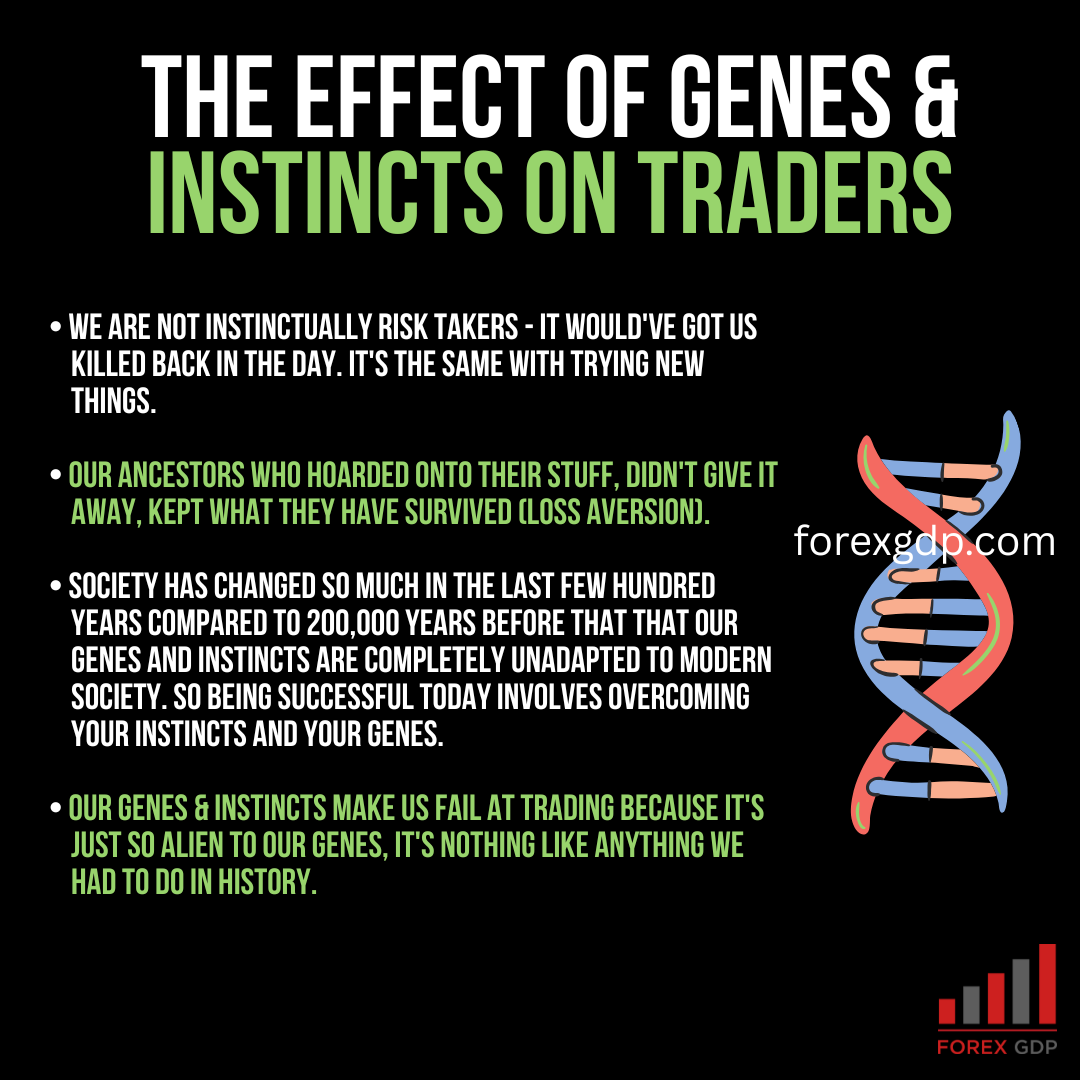
Humans evolved in a world where survival meant avoiding risks. Back then, taking unnecessary chances could get you killed. Trading, however, flips that script. Success often requires taking calculated risks, something our primal brains hate. That constant clash between instincts and strategy is the silent battle every trader faces.
Why We’re Not Natural Risk Takers
Think about it: our ancestors weren’t rewarded for gambling. Taking too many risks back in the wild could mean losing food, shelter, or even life itself. That risk-aversion gene still lingers inside us. So, when we see red candles dropping fast, our brain screams, “Get out now or die!” — even though logically, the best move may be to hold or even buy more.
Loss Aversion: The Ancient Hoarding Instinct
Have you ever kept a losing trade open just because you couldn’t stand the thought of booking a loss? That’s loss aversion, and it’s deeply tied to our ancestors’ survival. They survived by hoarding resources, not giving them away. Letting go of a losing trade feels like handing over your hard-earned food supply in the Stone Age. No wonder it hurts so much.
The Speed of Society vs. The Slowness of Evolution
Here’s the kicker: society has changed in lightning speed compared to evolution. In just a few centuries, we went from hunting mammoths to trading currencies online. But our instincts? They’re still running on Stone Age software. Modern markets move fast, but our survival instincts are painfully outdated, making it harder to adapt.
Why Instincts Betray Traders
Instincts helped us survive as a species, but they sabotage us in markets. For example:
-
Fear makes us close trades too early.
-
Greed makes us over-leverage or chase setups.
-
Herd instinct makes us follow the crowd, often at the worst time.
In trading, instincts are like an old GPS that keeps sending you in the wrong direction. If you follow it blindly, you’re bound to crash.
The Emotional Rollercoaster of Trading
Let’s be honest: trading is emotional. Fear, greed, hope, and regret — all of them run wild. Why? Because money isn’t just money to our brains. It represents food, survival, and security. Losing it feels like losing shelter in the wild. Our genes don’t see pips and profits; they see life or death.
How Our Genes Push Us to Fail
Here’s the dark truth: our genes and instincts practically set us up for failure in trading. They push us to:
-
Avoid risks when we should embrace them.
-
Hold losers too long and cut winners too soon.
-
Seek safety when success requires boldness.
It’s not your fault. It’s your biology. But just because instincts push you one way doesn’t mean you have to follow.
Overcoming Instinct: The Trader’s Real Edge
The real edge in trading isn’t the perfect strategy or the fanciest indicator. It’s the ability to overcome instincts. Successful traders aren’t born fearless. They’ve trained themselves to silence their genes when the market tests them. Think of it like upgrading your mental software while everyone else is still running on prehistoric code.

Practical Ways to Outsmart Your Instincts
So, how do you beat thousands of years of evolution? Here are a few practical steps:
-
Stick to a trading plan: Write it down and follow it like law. This keeps emotions from hijacking your decisions.
-
Use stop-loss orders: They protect you from your own panic or hesitation.
-
Journal your trades: This reveals patterns in your behavior that instincts often hide.
-
Trade smaller: Lower risk per trade reduces emotional intensity, making it easier to stay rational.
Why Instincts Feel So Powerful
If you’ve ever asked yourself, “Why can’t I just trade without emotion?” — it’s because instincts feel real. When fear kicks in, your body literally reacts: faster heartbeat, sweaty palms, tunnel vision. Your brain thinks you’re in danger. To succeed, you need to recognize those signals and remind yourself, “This is just evolution talking, not reality.”
The Mindset Shift: From Survival to Thriving
Survival instincts helped humanity get here, but thriving in trading requires a shift. Instead of hoarding and fearing loss, you need to think in terms of probabilities, not survival. It’s no longer about life or death; it’s about risk and reward. Once you accept that losing is part of the game, instincts lose their grip.
Instincts Can Be Rewired
The good news? Instincts aren’t permanent roadblocks. Just like athletes train their reflexes, traders can train their minds. Over time, discipline and repetition can rewire how you respond. At first, it feels unnatural — like writing with your non-dominant hand. But with practice, it becomes second nature.
The Irony of Trading Success
Here’s the ultimate irony: the very instincts that kept our ancestors alive now kill modern traders’ accounts. To succeed, you must unlearn what evolution drilled into you. Success means ignoring fear when you should risk, and resisting greed when you should walk away. In short, it means doing the opposite of what feels natural.
Lessons from History
History proves this point. Every major financial crash has been fueled by human instincts — panic selling, herd behavior, and greed-driven bubbles. Our collective biology creates the same patterns over and over. That’s why charts repeat. The market isn’t random; it’s human psychology in action.
Why Discipline Beats Talent
You don’t need to be the smartest person in the room to succeed at trading. You just need discipline. The ability to stick to your plan when your instincts scream otherwise is what separates winners from losers. Talent may help, but discipline conquers biology.

The Future of Trading Psychology
As trading evolves, one thing remains constant: our instincts. No matter how advanced technology becomes, the battle with fear and greed will never go away. The traders who thrive will be those who accept this truth and build systems to outsmart themselves.
Conclusion
Trading isn’t a battle against the market — it’s a battle against yourself. Our genes and instincts, once essential for survival, now act as anchors holding us back in the modern world of trading. They push us toward fear, greed, and hesitation when success requires courage, patience, and discipline. The sooner you understand this, the faster you can rewire your brain for trading success. Remember, your ancestors survived by avoiding risks, but your future as a trader depends on embracing them smartly.
FAQs
1. Why do instincts affect traders so much?
Because money symbolizes survival to our brains, instincts like fear and greed become overwhelming when trading decisions are on the line.
2. Can instincts ever help in trading?
Rarely. Instincts may save you from reckless risks, but most of the time, they push you in the wrong direction.
3. How do I stop panicking during trades?
By following a written trading plan and using stop-losses, you can reduce the emotional weight of every decision.
4. Is loss aversion really genetic?
Yes, it’s deeply tied to human evolution. Our ancestors survived by hoarding, not giving away resources — and that bias still lives in us today.
5. What’s the key to beating instincts in trading?
Discipline. Training yourself to follow logic and probability over emotion is the ultimate way to overcome evolutionary programming.