

Trading is often marketed as a golden road to riches, with countless self-proclaimed gurus promising astronomical returns if you just “follow the right strategy.” Sounds tempting, right? But here’s the bitter pill: no strategy can guarantee high returns. Period. This article dives deep into why that belief is nothing more than a dangerous myth, what really drives success in trading, and how you can avoid falling into the same trap that wipes out countless accounts every year.
Let’s break this down into bite-sized, brutally honest truths.
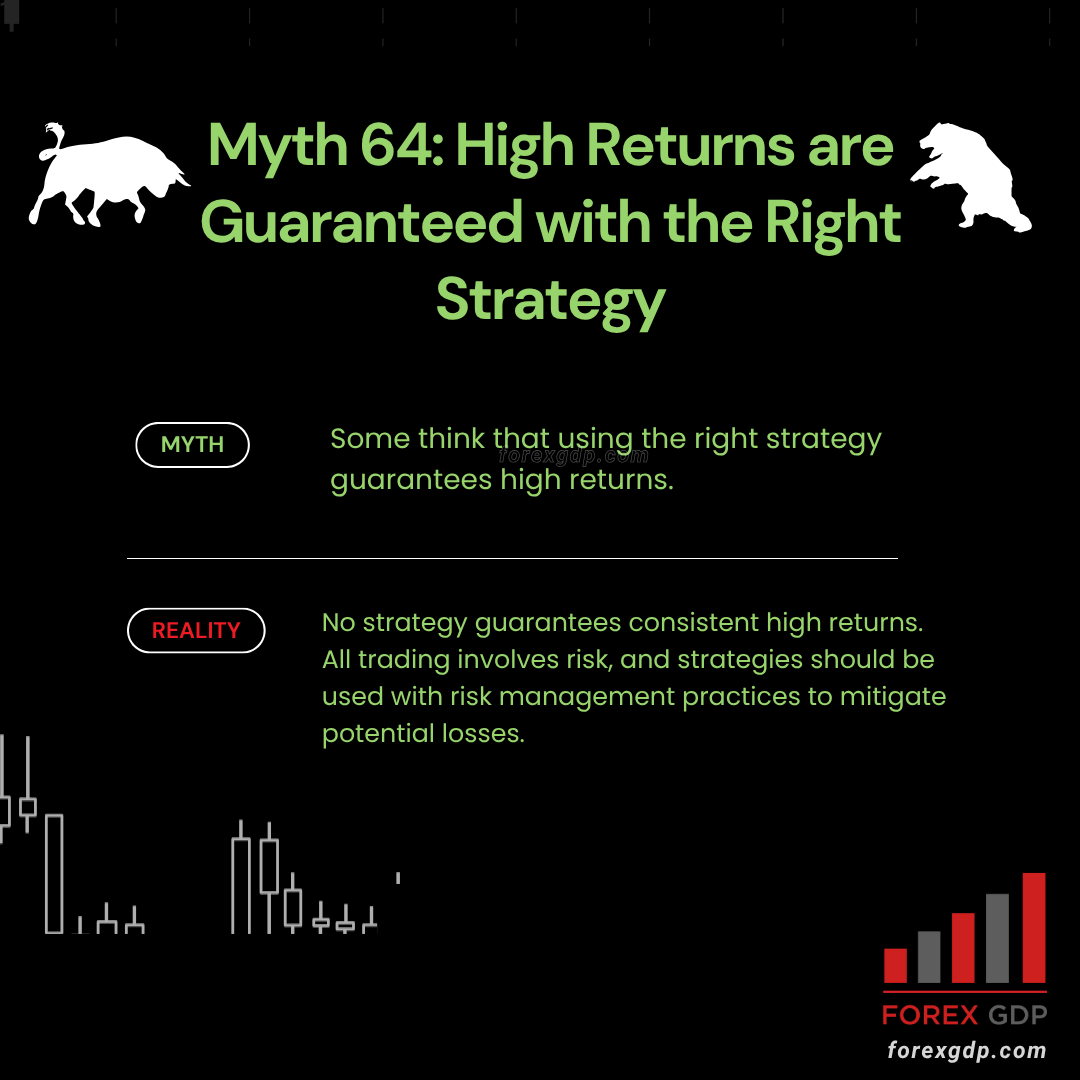
The Seductive Myth of Guaranteed High Returns
The idea seems logical at first glance: if you find the perfect trading strategy, you’ll print money consistently. It’s the classic “holy grail” illusion. But let’s ask ourselves—if such a strategy existed, wouldn’t everyone be rich already?
The truth is, strategies can help guide decision-making, but markets are unpredictable beasts. They don’t bow down to formulas or algorithms.
Why Traders Fall for This Illusion
So, why do so many fall into this trap? Simple—hope and greed.
-
Hope whispers: “Maybe this system will finally make me rich.”
-
Greed shouts: “Don’t waste time, others are cashing in already!”
Combine these emotions with flashy marketing showing Lambos, yachts, and “overnight millionaires,” and it’s easy to see why so many people get hooked.
The Harsh Reality of Trading
Here’s the unfiltered truth:
-
No system guarantees profits.
-
Losses are inevitable.
-
Risk is part of the game.
Every trader, even the greats, faces losing streaks. If someone tells you they’ve cracked the code to endless gains, they’re either lying or selling you something.
Markets Are Wild, Not Mathematical Formulas
Unlike math, trading isn’t fixed. A formula might work brilliantly today but fail miserably tomorrow. Why? Because markets are influenced by:
-
Political turmoil
-
Natural disasters
-
Unexpected human behavior

It’s like predicting the weather—sometimes accurate, but often unpredictable.
The Role of Risk Management
Here’s the part most new traders ignore: risk management is more important than the strategy itself.
You can survive a bad strategy with solid risk control, but no strategy can save you if you blow your account with reckless risk. Think of it like driving a car: speed is fun, but brakes are what save your life.
Strategies vs. Execution
Even the best strategy in the world will crumble in the wrong hands. Why? Because execution matters. Traders often:
-
Enter too late
-
Exit too early
-
Ignore signals due to fear
-
Overtrade due to greed
A good strategy is only as strong as the discipline behind it.
The Myth of Consistency
“Consistent profits” sounds amazing, but let’s get real—markets don’t move consistently. Expecting the same returns week after week is like expecting summer sunshine in the middle of winter. It just doesn’t happen.
Over-Optimization: The Silent Killer
Many traders spend months “perfecting” a strategy using backtests. The result? A system that looks flawless on past data but collapses in live trading. This is called curve fitting—a dangerous illusion that tricks traders into thinking they’ve struck gold.

Why High Returns Usually Mean High Risk
Here’s a truth nobody likes to hear: if returns are sky-high, the risk is equally high. There’s no escaping this balance. If someone promises huge profits with little or no risk, you’re not looking at a strategy—you’re looking at a scam.
Trading Psychology: The Invisible Factor
Even if a strategy has potential, most traders sabotage themselves through poor psychology. Fear of missing out (FOMO), revenge trading, and panic-selling destroy more accounts than bad strategies ever could.
Trading isn’t just numbers—it’s mental warfare.
Building Realistic Expectations
Instead of chasing unicorns, smart traders focus on:
-
Small, steady gains
-
Limiting drawdowns
-
Preserving capital
It’s not glamorous, but it’s sustainable. Remember, trading is a marathon, not a sprint.
The Safer Path: Focus on Risk, Not Returns
If you flip your mindset and start thinking, “How can I lose less?” instead of “How can I win more?”, your chances of survival skyrocket. The truth is, most pros don’t chase high returns—they chase longevity.
Spotting the Red Flags of “Guaranteed” Systems
Want to protect yourself? Watch out for these lies:
-
“Zero losses strategy”
-
“Guaranteed 10% per week”
-
“100% win rate”
The moment you hear these, run the other way.

Real Traders Accept Uncertainty
At the end of the day, real traders don’t look for guarantees. They embrace uncertainty, manage their risks, and grind patiently. The dream of guaranteed riches is nothing but a mirage in the desert of trading.
Conclusion
The myth that the “right strategy” guarantees high returns is not only false but dangerously misleading. Trading is messy, unpredictable, and filled with risk. No system is bulletproof, no profits are guaranteed, and anyone promising otherwise is either delusional or deceptive.
Instead of chasing fantasies, focus on risk management, discipline, and realistic expectations. Trading isn’t about quick riches—it’s about surviving long enough to let your edge play out. Remember, markets don’t care about your dreams. They reward patience, discipline, and humility.
FAQs
1. Can I really make money trading without a perfect strategy?
Yes, as long as you focus on risk management. Even an average system can be profitable if paired with solid discipline and money management.
2. What’s the biggest mistake new traders make?
Believing in “guaranteed” profits and risking too much too soon. They blow their accounts before they even learn the ropes.
3. Is it possible to trade with a 100% win rate?
No. Anyone claiming a 100% win rate is lying. Even top professionals face losses regularly.
4. How much return is realistic in trading?
Anywhere between 5%–15% annually is already exceptional in real-world trading. Anything more usually comes with extreme risk.
5. Should I buy a trading system that promises high returns?
Absolutely not. If it sounds too good to be true, it is. Focus on learning, practicing, and building your own skillset instead of chasing shortcuts.