

The Brutal Reality of Trading
Trading in financial markets is exciting, but it’s also brutally unforgiving. Many new traders come in with dreams of doubling their money overnight. They hear stories about someone who placed one high-risk trade, hit it big, and walked away with massive profits. Sounds tempting, right? But here’s the ugly truth—high-risk trades are more likely to drain your account than make you rich.
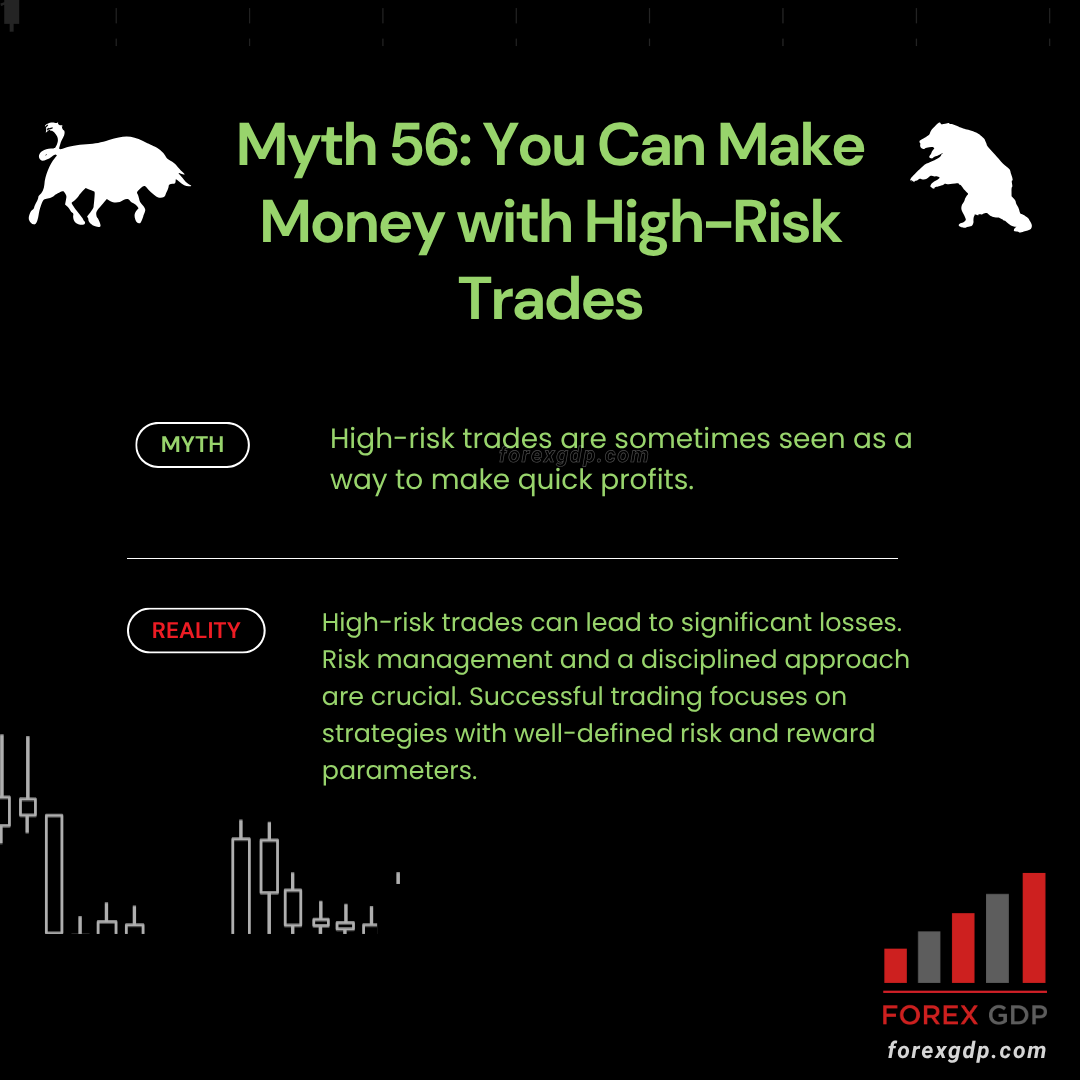
In this article, we’re going to rip apart the dangerous myth that you can consistently make money through high-risk trades. We’ll uncover why this belief is destructive, what actually happens when you gamble with the markets, and how you can protect yourself with smarter, more disciplined approaches. Get ready—this isn’t sugar-coated advice. It’s the reality check most traders need.
The Seduction of High-Risk Trading
The idea of making quick money has always been seductive. In trading, high-risk strategies promise huge payouts with just one “perfect” move. That’s why so many beginners fall for it. They think, “If I risk big, I’ll win big.”
But here’s the harsh reality: high-risk trades are like jumping into shark-infested waters with the hope of catching a golden fish. Sure, it’s possible, but the odds are overwhelmingly against you.
The market doesn’t reward reckless gambling. It rewards consistency, patience, and strategy. High-risk trading is nothing more than financial Russian roulette.
The Myth: High Risk = High Reward
This myth comes from a twisted version of the truth. In investing theory, higher risk can bring higher returns—but only if it’s calculated and backed by strong analysis. Traders misinterpret this as “bet big and win big.”
What really happens? High-risk trades often spiral into devastating losses. Yes, you might win once or twice, but eventually, the market will catch up with you. And when it does, it wipes out not just your profits, but your entire trading account.
It’s like playing poker against the house—you might win a hand, but in the long run, the odds are stacked against you.
The Reality: High Risk Leads to High Losses
Let’s be blunt—most traders blow up their accounts because of poor risk management. When you risk too much on one trade, you’re exposing yourself to financial disaster.
Markets are unpredictable. Even the best strategies lose sometimes. That’s why professional traders always manage their risk. They don’t put all their money on one bet. Instead, they spread it out and protect themselves from the inevitable losing streaks.
The truth is simple: high risk doesn’t guarantee high reward—it guarantees high exposure to losses.
Why Traders Fall for This Myth

So why do people keep chasing high-risk trades if the odds are terrible? The answer lies in human psychology.
We crave instant gratification. We see success stories online—traders flashing cars, watches, and luxury lifestyles—and we assume they got rich overnight. Social media fuels this illusion. Influencers show the win but hide the 99 losses that came before it.
Add in greed and fear of missing out (FOMO), and you’ve got the perfect recipe for reckless decisions. The sad part? By the time traders realize the danger, their account balance is already bleeding.
Risk Management: The Trader’s Lifeline
If there’s one rule in trading that separates winners from losers, it’s risk management. Without it, you’re gambling. With it, you’re protecting your capital and giving yourself a chance to survive the long game.
Risk management means never putting more than a small percentage of your account on a single trade. Most professionals risk 1–2% per trade. Why? Because even if they hit a losing streak, their account survives. They live to fight another day.
High-risk traders ignore this and end up with margin calls, account blowouts, and shattered confidence.
Discipline Over Excitement
Let’s be real—disciplined trading is boring. High-risk trading feels exciting, like a rollercoaster. That’s why people prefer it. But excitement is not a strategy.
A disciplined trader follows a plan. They know when to enter, when to exit, and when to walk away. They don’t chase trades out of boredom. They treat trading like a business, not a casino.
The ones chasing excitement? They’re usually the ones crying over blown accounts.
Stories of Traders Who Lost It All
History is full of cautionary tales. Countless traders, both retail and professional, have lost millions by taking on reckless risks. Even legendary traders admit they’ve blown accounts in their early days because they couldn’t control greed.

Think about it—if Wall Street veterans with decades of experience can get burned by high risk, what chance does the average beginner have?
These stories aren’t exceptions. They’re warnings. Ignore them, and you’ll probably become one of them.
The Illusion of “One Big Win”
Many traders believe that one big win will change everything. They think, “If I just risk it all this time, I’ll make back my losses.” This mindset is toxic.
Even if you win big once, it creates overconfidence. That win tricks you into thinking you’ve cracked the code. But the market doesn’t care. The very next trade could wipe you out.
It’s like winning the lottery—you celebrate today, but the odds of repeating it are almost zero.
Smart Trading Is About Survival
The key to successful trading isn’t making quick profits—it’s surviving long enough to compound small wins into big results.
Survival means avoiding unnecessary risks. It means focusing on strategies with proven consistency. A trader who risks small and survives for years will always outperform the gambler who blows up in months.
High-risk traders don’t survive. They burn out fast.
The Role of Emotions in High-Risk Trading
Emotions are the enemy of traders. High-risk trading feeds directly into fear, greed, and desperation. When you’re risking big, every tick of the chart feels like life or death. Your judgment gets clouded. You panic. You revenge trade.
This emotional rollercoaster is why most high-risk traders lose. They’re not making rational decisions—they’re reacting emotionally to every price movement. That’s a recipe for disaster.
Building a Safer Trading Strategy


So, what’s the alternative? Building a safe, sustainable strategy. That means:
-
Using strict risk management rules
-
Setting clear stop-loss and take-profit levels
-
Sticking to a tested plan instead of chasing “gut feelings”
-
Focusing on consistency rather than excitement
Safe trading might not feel glamorous, but it builds steady growth. And unlike high-risk gambling, it keeps you in the game.
The Truth About Professional Traders
Want to know what separates pros from amateurs? It’s not secret indicators or magical predictions. It’s discipline and risk management.
Professional traders don’t risk everything on one move. They don’t chase the market out of greed. They treat trading like a marathon, not a sprint. That’s why they last while others quit.
If high-risk trading really worked, every pro would be doing it. The fact that they don’t should tell you everything you need to know.
Conclusion
The myth that you can make money with high-risk trades is one of the most dangerous lies in trading. While the idea of fast profits is tempting, the reality is brutal—high risk usually leads to high losses. Successful traders aren’t gamblers; they’re disciplined, patient, and strategic.
If you want to survive and thrive in trading, forget the quick-money dream. Focus on protecting your capital, managing your risks, and building consistency. Remember—trading is a long game. High-risk trades might give you excitement, but disciplined strategies give you survival.
FAQs
1. Can I ever take a high-risk trade?
Yes, but only if it’s calculated and you can afford to lose that money. Think of it as entertainment, not a strategy.
2. Why do beginners prefer high-risk trading?
Because it feels exciting and promises quick money. Unfortunately, it usually ends in losses.
3. How much should I risk per trade?
Most experts recommend 1–2% of your trading account per trade. Anything higher is gambling.
4. Do professional traders ever gamble with high-risk moves?
Rarely. When they do, it’s usually with extra profits, not their main capital.
5. What’s the safest way to trade?
Focus on risk management, discipline, and tested strategies. Slow, steady growth beats risky bets every time.