

Investing can feel like a maze—confusing, risky, and full of dead ends if you don’t know where to turn. One big mistake many people make? They try to invest the same way at 25 as they do at 55. That’s like wearing the same pair of sneakers to run a marathon and to attend a wedding—it just doesn’t fit. Your financial goals, risks, and opportunities shift dramatically as you age. So, if you’ve been wondering “How should I invest based on my age?”—you’re in the right place.
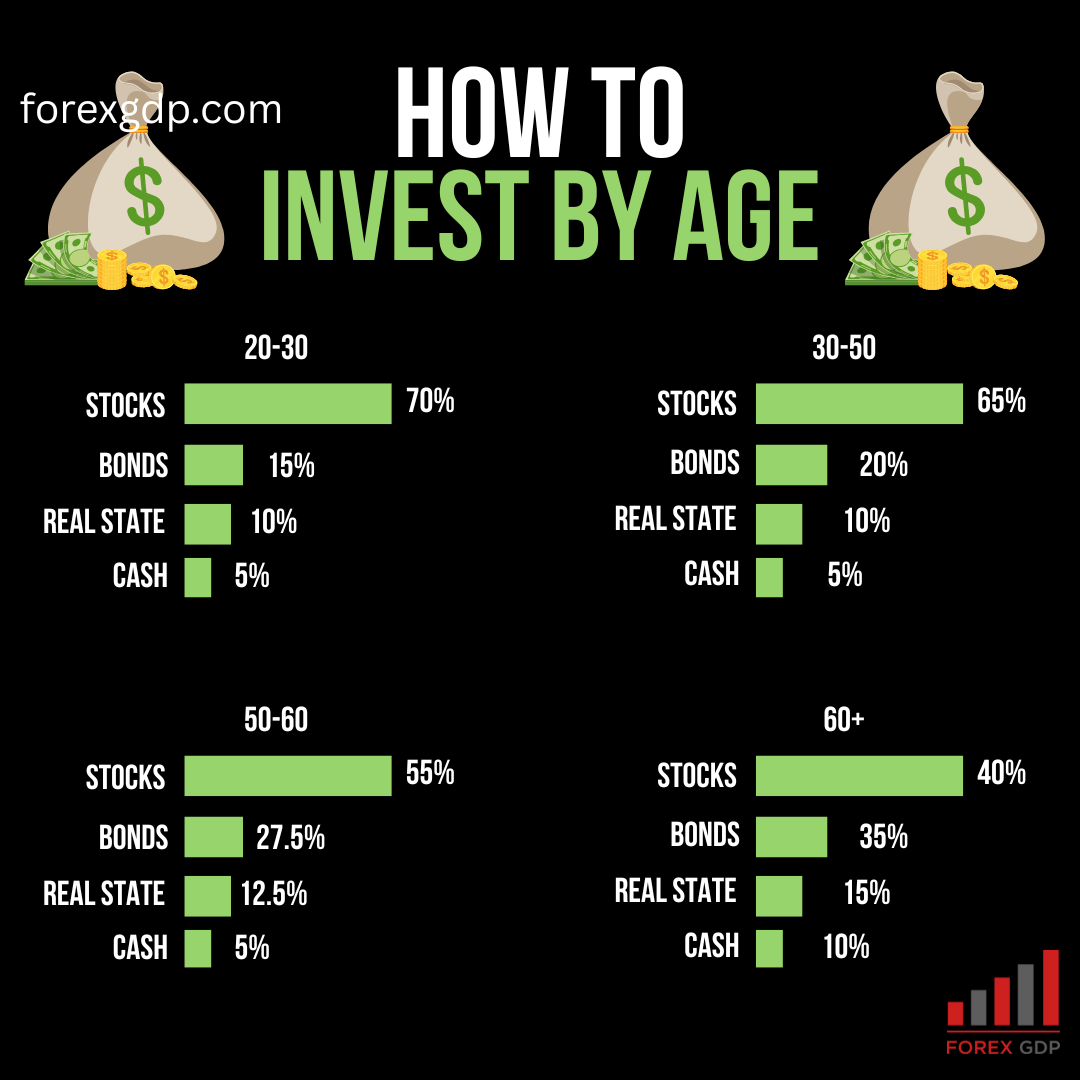
This article breaks down investing strategies for every stage of life, from your 20s to retirement, and gives you a clear picture of how to balance stocks, bonds, real estate, and cash without losing your sanity.
Why Age Matters in Investing
Think of your age as your investment compass. When you’re young, you’ve got time on your side. You can take risks, recover from losses, and ride the ups and downs of the stock market. But as you get older, that safety net of time shrinks. At 60, you don’t have the luxury of waiting 20 years for your portfolio to bounce back after a crash.
This is why investment allocations change with age. Younger investors lean heavier on stocks for growth, while older investors shift toward bonds and real estate for stability and income.
The Core Four: Stocks, Bonds, Real Estate, and Cash
Before diving into each age bracket, let’s get the basics straight:
-
Stocks: High-risk, high-reward. Perfect for growth when you’re young.
-
Bonds: Lower risk, steady returns. Ideal for balancing volatility.
-
Real Estate: Tangible asset that offers long-term stability and potential passive income.
-
Cash: Your safety net. Low returns, but essential for emergencies.
Your age determines how much of each you should hold.
Investing in Your 20s (20–30): Planting the Seeds
When you’re in your 20s, time is your biggest weapon. You can take risks others can’t afford because you’ve got decades to recover from mistakes.
-
Stocks (70%): This is your playground. Focus on growth stocks, index funds, or ETFs. If the market dips, you’ve got time to bounce back.
-
Bonds (15%): Just a small slice to add a bit of stability.
-
Real Estate (10%): You might not buy a house yet, but consider REITs (real estate investment trusts) to dip your toes in.
-
Cash (5%): Keep an emergency fund but don’t hoard too much. Inflation eats cash alive.
Reality Check: Most people in their 20s waste money on things that don’t grow—fancy gadgets, trips they can’t afford, or chasing get-rich-quick schemes. Don’t be that person. Invest early, and compound interest will work like magic.
Investing in Your 30s (30–50): Building Momentum
Now you’re earning more, maybe starting a family, or saving for a house. Your responsibilities grow, so your portfolio needs balance.
-
Stocks (65%): Still your main driver, but slightly reduced from your 20s.

-
Bonds (20%): A bit more stability because you’ve got more to lose now.
-
Real Estate (10%): If you can afford it, owning property is a smart long-term play.
-
Cash (5%): Emergency fund should cover at least 6 months of expenses.
Pro Tip: This is when lifestyle inflation sneaks in. You start making more money, so you spend more. Keep investing consistently instead of blowing cash on unnecessary upgrades.
Investing in Your 40s and 50s (50–60): Protect and Grow
By this point, retirement is no longer some distant dream—it’s a real target. You can’t afford reckless risks anymore.
-
Stocks (55%): Still important, but tilt toward safer options like dividend-paying stocks or index funds.
-
Bonds (27.5%): These provide predictable returns and reduce volatility.
-
Real Estate (12.5%): Investment properties or REITs can bring extra income.
-
Cash (5%): Keep it liquid for emergencies.
Watch Out: Many people in their 50s panic when the market dips and sell everything. Big mistake. Stick to your plan, rebalance if needed, but don’t let fear drive decisions.
Investing After 60: Playing Defense
Retirement is here or right around the corner. Now the goal isn’t growth—it’s preservation and income.
-
Stocks (40%): Focus on safer, dividend-paying stocks.
-
Bonds (35%): These should now form a large chunk of your portfolio.
-
Real Estate (15%): Keep generating passive income.
-
Cash (10%): More liquid funds to cover immediate needs.
Truth Bomb: If you’re still gambling with high-risk stocks at 65, you’re asking for trouble. At this stage, your portfolio should pay you, not scare you.
The Psychology of Investing by Age
Investing isn’t just about numbers—it’s about mindset. In your 20s, you might be overconfident. In your 40s, fear of losing it all can paralyze you. By your 60s, you’re terrified of running out of money. Recognizing these biases helps you stay disciplined and make rational decisions.
Why Stocks Dominate Early On
Think of stocks as the rocket fuel of your portfolio. They’re volatile, yes, but over the long run, they outpace bonds and real estate by miles. Young investors need that rocket fuel to build wealth fast. Without it, you’ll be playing catch-up forever.
The Role of Bonds as You Age
Bonds may feel boring, but boring is good when you’re older. They don’t skyrocket, but they also don’t crash like stocks. They’re your shock absorbers, smoothing the ride when markets get bumpy.
Real Estate: A Double-Edged Sword

Owning property is a dream for many, but don’t kid yourself—it’s not always the golden ticket. Real estate ties up capital, comes with maintenance headaches, and isn’t easy to sell. That said, rental income and long-term appreciation can be fantastic, especially as you age.
Cash: Your Lifeline, Not Your Investment
Here’s the truth: cash is not an investment. It’s protection. Inflation eats away at it year after year. But you still need it—for emergencies, opportunities, and peace of mind. The key is balance: enough to keep you safe, but not so much that it drags down your returns.
Rebalancing: The Secret Sauce
Life changes. Markets change. That’s why rebalancing is non-negotiable. Every year or two, check your portfolio. If stocks shot up and now make up 80% of your holdings, trim them down. If bonds lagged, add more. Rebalancing keeps your risk level aligned with your age and goals.
Common Mistakes People Make
-
Chasing trends: Crypto, meme stocks, or the next “hot” thing.
-
Ignoring diversification: Putting all eggs in one basket.
-
Not starting early: Waiting until your 40s to invest is financial suicide.
-
Panic selling: Letting fear dictate your moves.
-
Forgetting inflation: Your money loses value sitting idle.
The Power of Compounding
Albert Einstein called compounding the eighth wonder of the world, and he wasn’t wrong. A dollar invested at 25 has decades to snowball into thousands. Wait until 45, and you’ll need to invest triple the amount just to catch up. Time is the magic ingredient—don’t waste it.
Retirement Isn’t the End of Investing

Here’s a myth: once you retire, you stop investing. Wrong. Retirement just changes your strategy. You still need growth to beat inflation, income to live on, and safety to sleep at night. Your money should keep working for you long after you stop working.
Conclusion
Investing isn’t a one-size-fits-all game. The best strategy for a 25-year-old would be a disaster for a 65-year-old. By adjusting your mix of stocks, bonds, real estate, and cash as you age, you can maximize growth when you’re young, protect wealth in middle age, and preserve income in retirement. Remember—time is your greatest asset when you’re young, but discipline and caution become your allies as you age.
So, don’t wait. Start where you are, invest according to your age, and let your money grow smarter—not harder.
FAQs
1. Should I invest in stocks after 60?
Yes, but keep it conservative. Focus on dividend-paying stocks for steady income, not high-risk growth stocks.
2. Is real estate better than stocks for retirement?
Not necessarily. Real estate provides passive income, but it’s less liquid than stocks. A mix of both often works best.
3. How much cash should I keep as I age?
In your 20s–40s, 5% is enough. By your 60s, increase it to 10% for safety and liquidity.
4. When should I rebalance my portfolio?
At least once every year or two. If your stock allocation drifts more than 5–10% from your target, it’s time to rebalance.
5. What if I start investing late, like in my 40s?
It’s tougher but not impossible. You’ll need to save and invest aggressively, focus on safer growth assets, and avoid unnecessary risks.