

There’s a long-standing belief in the trading world that people with full-time jobs can’t be successful forex traders. This myth has scared off countless individuals who might have become skilled traders if they hadn’t listened to the noise. The assumption is simple — if you’re working a 9-to-5 job, you don’t have the time or energy to trade. But is that really true?
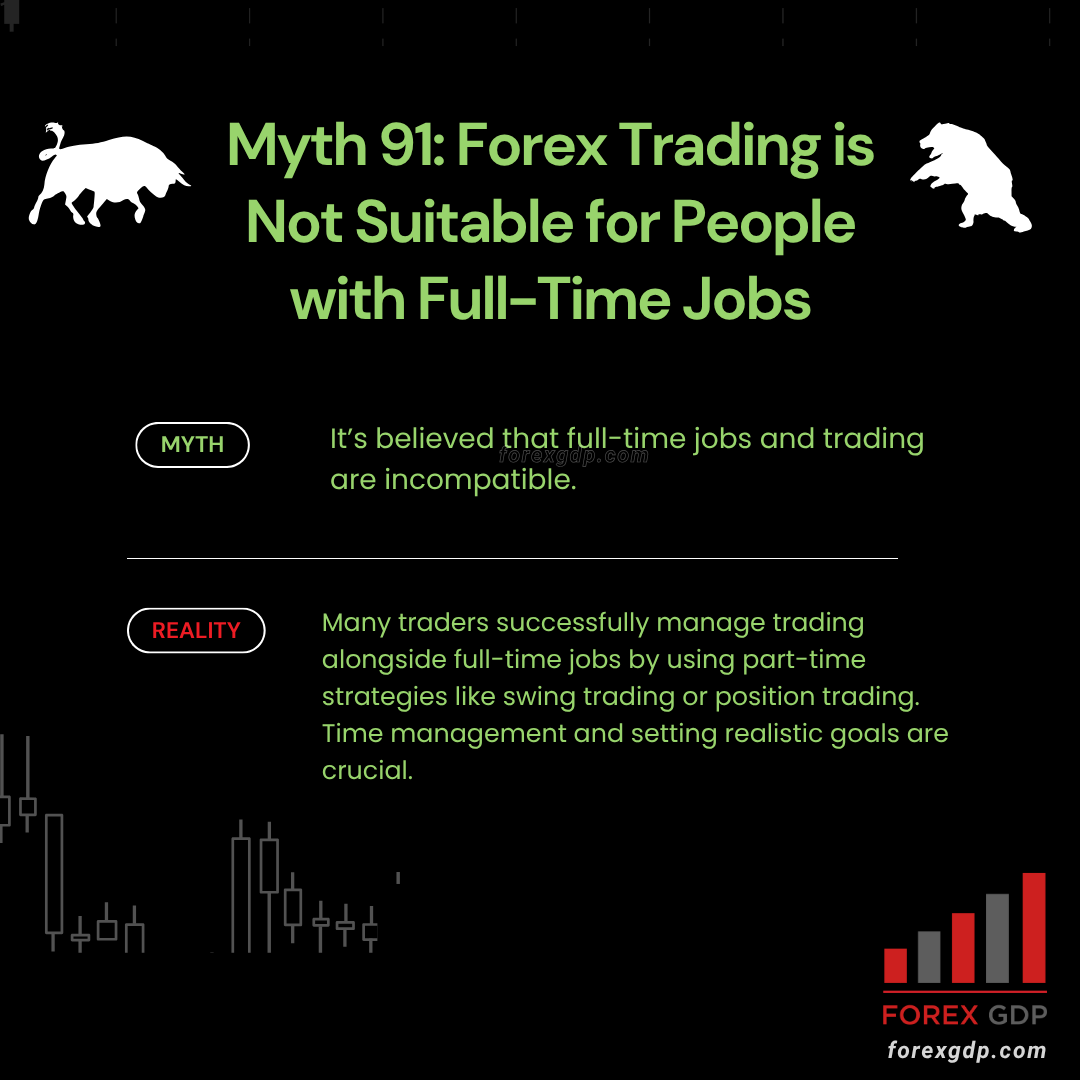
The reality is far from it. Many traders have proven that forex trading can be done efficiently even with a full-time job. They use smarter strategies, automate certain aspects of trading, and focus on consistency rather than constant screen time. The idea that you must quit your job to trade is not just misleading — it’s dangerous advice that can ruin your financial stability before your trading journey even begins.
Understanding Forex Trading in a Realistic Light
Forex trading isn’t about sitting in front of your screen 24/7 and making split-second decisions. While day traders often do that, it’s not the only way to trade. Forex is open 24 hours a day, five days a week, which makes it flexible enough for anyone to participate.
The key lies in understanding that forex trading can be approached differently depending on your schedule and risk appetite. You don’t need to be glued to charts all day; you just need to know when to engage and when to step back. For those working full-time, this flexibility is a blessing.
Breaking Down the Myth
Why People Think Trading and Jobs Don’t Mix
One of the biggest misconceptions about forex trading is that it requires your undivided attention every minute of the day. Movies and social media have painted traders as caffeine-fueled people shouting at screens, glued to price charts, and sweating over every pip movement.
In reality, most successful traders aren’t like that at all. The myth persists because many beginners try to trade without a plan. They jump in unprepared, lose money, and blame their jobs for their failures. The truth? Lack of discipline and knowledge is the real culprit, not employment.
The Fear of Time Constraints
Another reason people hesitate is the fear of missing out on opportunities. They believe trading demands being online when the market moves. But trading isn’t about catching every move — it’s about catching the right ones. Time constraints can actually force discipline, helping you avoid impulsive decisions.
A full-time job provides structure, which can help you trade with a clearer mind. Instead of overtrading, you focus on high-quality setups — something even full-time traders struggle to do.
Why Having a Full-Time Job Can Be an Advantage
Financial Stability Equals Less Emotional Pressure
When you rely solely on trading income, every loss feels like a personal disaster. But if you have a job that pays the bills, you’re not trading out of desperation. You can take losses in stride and stick to your strategy instead of trying to “win it all back.”
That emotional buffer is powerful. It helps you stay calm, follow your trading plan, and grow steadily without financial panic dictating your every move.
Forced Discipline and Structure
Having a day job limits your time — and that’s actually a good thing. It forces you to trade strategically instead of randomly. When you know you only have a few hours to analyze charts or set trades, you make those hours count.
Instead of staring at your screen waiting for miracles, you focus on the highest probability setups. Less time often means fewer bad trades — and that’s a win.
Trading Strategies That Fit a Full-Time Schedule
Swing Trading: The Perfect Balance
Swing trading involves holding positions for several days or even weeks, capitalizing on larger market trends. It’s ideal for people who can’t monitor charts constantly. You can analyze the market in the evening, set your trades, and let them play out over time.
It’s not about quantity; it’s about quality. With proper stop-loss and take-profit orders, your trades can run without supervision while you’re at work. Many part-time traders have built successful portfolios through this very approach.
Position Trading: The Long-Term Path
Position trading takes patience but pays off big for busy individuals. You’re essentially trading based on long-term fundamentals and macroeconomic trends. Think of it as investing rather than fast-paced trading.
Since positions can last weeks or even months, there’s minimal daily management required. It’s ideal for professionals who want to build wealth gradually while maintaining their career focus.
Automated and Copy Trading Options
Technology has changed the game. With trading bots, expert advisors (EAs), and copy trading platforms, you can automate much of your trading activity. You still need to understand what’s happening behind the scenes, but automation handles the execution.
This means you can set predefined rules or copy trades from seasoned professionals while focusing on your day job. It’s a smart way to participate in the market without constant manual effort.
Time Management: The Hidden Weapon of Part-Time Traders

Scheduling Your Trading Routine
Successful traders don’t find time — they make it. The forex market runs 24 hours, giving you flexibility to trade before or after work. For example, if you’re in Asia, you can trade during the London or New York sessions in the evening.
All you need is a routine. Allocate time for chart analysis, trade planning, and review. Even an hour a day can make a huge difference if used wisely.
Avoiding Burnout While Balancing Work and Trading
Burnout is real, and it’s one of the biggest reasons people quit trading. Trying to juggle both work and forex without boundaries will exhaust you. The trick is to separate your work mindset from your trading mindset.
Keep weekends or specific evenings for backtesting or market study. Don’t overextend yourself — consistency beats intensity in the long run.
Mindset: The Deciding Factor in Part-Time Trading
Patience Over Perfection
Trading while working a job requires patience. You won’t become a millionaire overnight, and that’s okay. The focus should be on learning, adapting, and improving slowly.
Many traders give up too soon because they expect instant success. In reality, steady, small gains add up faster than you think. Patience is your most valuable trading asset.
Controlling Emotional Triggers
It’s easy to let emotions rule your trades — especially when you’re tired after work. The key is automation and planning. By setting stop-losses and take-profits in advance, you take emotions out of the equation.
Remember, every trader experiences losses. What separates winners from losers is how they respond. A calm mind and realistic expectations go a long way.
Tools That Make Trading Easier for Busy People
Using Alerts and Notifications
Modern trading platforms allow you to set alerts for price levels or market movements. Instead of staring at charts all day, your phone or laptop will notify you when action is required.
This saves hours of wasted time and ensures you don’t miss key opportunities. It’s like having a personal assistant keeping an eye on your trades while you work.
Leveraging Mobile Trading Apps
Gone are the days when traders were chained to desktops. Mobile apps from brokers like MetaTrader and TradingView give you full access to your account from anywhere. You can modify trades, analyze charts, or check performance during lunch breaks or commutes.
Technology has removed the biggest excuse — time. If you have a smartphone, you have a trading station in your pocket.
Common Mistakes Full-Time Workers Make in Forex

Overtrading and Impulsive Entries
One of the worst habits part-time traders fall into is overtrading. When you finally sit down after work, you feel the need to “make something happen.” That’s when you force trades that don’t align with your plan.
The market doesn’t reward desperation. Learn to sit on your hands if the setup isn’t clear. Sometimes, the best trade is no trade at all.
Ignoring Risk Management
Having limited time shouldn’t mean ignoring risk control. Setting proper stop-loss and take-profit levels is non-negotiable. Risking more than you can afford to lose leads to emotional burnout.
Smart traders follow the golden rule: never risk more than a small percentage of your account per trade. Protecting capital is always more important than chasing profits.
How to Create a Realistic Trading Plan
Defining Goals That Match Your Schedule
If you only have two hours a day, your trading plan should reflect that. Set achievable targets based on your availability and experience. Maybe it’s one or two trades a week — that’s perfectly fine.
Your plan should outline when you’ll trade, which markets you’ll focus on, and what risk level you’re comfortable with. The clearer the plan, the easier it is to stay disciplined.
Tracking Performance Consistently
Keep a trading journal. Write down every trade — why you took it, what went right, and what went wrong. Reviewing this weekly will reveal patterns in your behavior.
Data doesn’t lie. Once you know what works, double down on it. Once you know what fails, eliminate it. This habit turns an average trader into a consistent one.
Dealing With Setbacks and Doubt
When Losses Feel Personal
Losing trades can sting, especially after a long workday. But you need to remember — losses are part of the process, not the end of it. Even professional traders lose frequently.
What matters is how you bounce back. Review your strategy, learn from mistakes, and move forward without emotional baggage. The worst thing you can do is quit too soon.
Silencing the Critics
You’ll hear people say trading while working is impossible. Most of them have never tried or gave up early. Don’t let their negativity dictate your journey.
Success in forex trading comes from consistency, not conformity. Focus on your growth, not others’ opinions. Every professional trader started somewhere — often while juggling another career.
Conclusion: The Myth Has Been Busted
The idea that forex trading isn’t suitable for full-time workers is outdated and misleading. The truth is, it’s entirely possible — and often advantageous — to balance both. With the right mindset, strategy, and discipline, your full-time job can become the foundation that supports your trading journey, not the obstacle that blocks it.
So, stop buying into the myth. Start planning smartly, trade efficiently, and let your journey unfold. After all, trading success isn’t about having all the time in the world — it’s about making the best use of the time you have.
FAQs
Can I really trade forex while working a full-time job?
Absolutely. Many traders balance both successfully by focusing on strategies like swing or position trading that don’t require constant monitoring.
What’s the best trading time for someone with a 9-to-5 job?
Evenings during the London–New York overlap (around 7–10 PM your local time) often have good volatility, making it ideal for part-time traders.
Is automation reliable for part-time trading?
Yes, when used wisely. Automated systems can help execute trades based on your strategy, but they still require supervision and understanding of market behavior.
How do I manage my emotions while trading and working?
Keep risk low, use stop-loss orders, and never trade when you’re stressed from work. A calm mind makes better decisions.
Should I quit my job to trade full-time?
Not until your trading income consistently exceeds your job’s income for several months. Use your job as financial support while you grow your trading skills safely.