

Trading can be thrilling. It’s a game of strategy, timing, risk, and reward. But let’s face it—we’ve all been there. You enter a trade with high hopes, the chart looks promising, indicators are flashing green, and then… the price turns against you. But instead of cutting the loss, you hold. You hope. You pray. And before you know it, your account is bleeding.
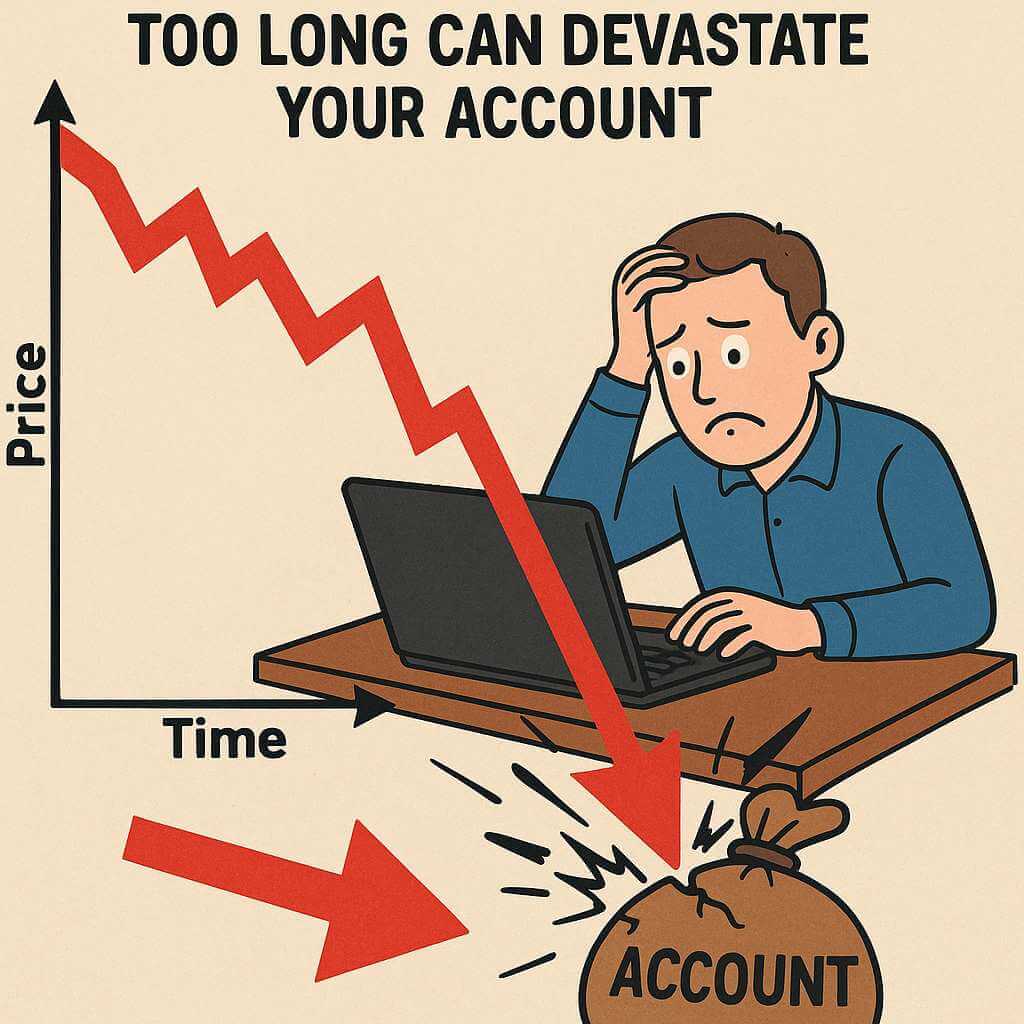
In this deep-dive article, we’re going to talk about why clinging to losing trades is one of the worst habits you can develop as a trader. We’ll break it down, expose the psychology behind it, and explain how this one mistake can wreck your account beyond repair.
The Silent Killer: Hope in Trading
Hope sounds like a good thing, right? In everyday life, it keeps us going. But in trading?
Hope is poison.
When you’re watching a trade go south and you hope it’ll bounce back, you’re not analyzing. You’re not strategizing. You’re gambling. You’re basically closing your eyes and crossing your fingers while your account burns.
Instead of being a disciplined trader, you’ve turned into a desperate gambler. And that’s the beginning of the end.
Why Do We Hold Onto Losing Trades?
1. Ego – Your Worst Trading Partner
Let’s be brutally honest. One of the biggest reasons traders hold onto losers is ego. You don’t want to admit you’re wrong. You’d rather let your account take a hit than accept a small loss and move on.
But here’s the deal—trading is not about being right, it’s about making money. And your ego doesn’t pay the bills.
2. Fear of Loss – Twisted Logic
Ironically, the fear of loss leads to bigger losses. You’re afraid of losing a small amount now, so you let it balloon into a massive hole. It’s like refusing to fix a leaking pipe because the plumber costs money—only to end up with a flooded house and a $10,000 bill later.
3. The “It Will Come Back” Myth
This is probably the biggest lie traders tell themselves. “It will come back.”
Sure, sometimes trades do reverse. But hoping for a miracle is not a strategy. Markets don’t owe you anything, and if you’re holding based on faith, you’re already losing.
How Losing Trades Snowball Into Disaster
1. Capital Destruction
Let’s say you risk 10% on one trade. It goes against you. Now you need an 11.1% gain just to break even. If you lose 50%? You need 100% to get back to square one. It’s math—and it’s brutal.

2. Missed Opportunities
While your capital is tied up in a losing position, you’re missing winning opportunities. That dead weight drags your portfolio and your mindset down. Imagine holding a sinking rock while boats full of profit sail past.
3. Emotional Drain
Holding onto losers is emotionally exhausting. You check your phone constantly, stress over the charts, lose sleep, and start questioning every decision. Trading becomes a nightmare instead of a skill.
The Psychology Behind the Pain
1. Loss Aversion
This one’s deep-rooted in human psychology. Studies show people feel the pain of losses twice as intensely as the joy of gains. That’s why you’d rather hold onto a loser than close it out and admit the loss. It hurts. But ironically, by avoiding pain, you cause more of it.
2. The Sunk Cost Fallacy
You’ve already invested time, money, and emotional energy into the trade. Letting it go feels like admitting failure. But guess what? The market doesn’t care about your investment. The only thing that matters is where it’s headed next.
3. Confirmation Bias
You look for reasons to justify your losing trade. You find obscure indicators, Twitter “gurus” who agree with you, and news articles that feed your belief. This is dangerous. You’re not looking for truth; you’re looking for comfort.
The Account-Killing Cycle
Let’s paint a common (and painful) picture:
-
You enter a trade. Looks good.
-
It starts to go red.
-
You say, “It’ll bounce.”
-
It drops more.
-
You say, “It’s just a pullback.”
-
Now it’s down 30%. You panic.
-
You move your stop loss or remove it completely.
-
Now you’re stuck.
-
Price collapses further. Account is drained.
Sound familiar?
This isn’t an isolated case. This is the story behind 90% of blown accounts.
Why Small Losses Are Your Best Friend
This might sound crazy, but losing small is a win.
Here’s why:
-
Small losses are manageable.
-
They keep your capital safe.
-
They preserve your mental clarity.
-
They allow you to learn and adapt.
Think of small losses as tuition. You’re paying to learn the market. But holding onto losers? That’s not tuition. That’s donating your account to the market.

Strategies To Stop Holding Losing Trades
1. Set Hard Stop Losses – And Stick to Them
This is trading 101. Set a stop loss before you enter. And never, ever move it backward. A stop is your safety net. Respect it or prepare to crash.
2. Use Position Sizing
Risk a small percentage of your account—1% to 2% per trade. That way, even if the trade hits your stop, it’s a scratch, not a scar.
3. Journal Every Trade
Write down why you entered, where you’ll exit, and how you’ll react if things go south. This keeps you accountable and helps you learn from your mistakes.
4. Review Your Losing Trades
Look at your losers not with regret, but with curiosity. Why did it go wrong? Did you break your rules? Did you ignore a signal? Every loss has a lesson.
5. Master Your Emotions
Meditation, deep breathing, stepping away from the screen—whatever works for you, do it. Emotional control is a superpower in trading.
Risk Management Isn’t Sexy, But It’s Necessary
Nobody brags about the trades they didn’t take. But avoiding a bad trade is just as important as nailing a good one. Risk management is what separates pros from gamblers.
Remember, your number one job as a trader isn’t to make profits—it’s to protect capital.
The Ripple Effect of Holding Losers
1. It Destroys Confidence
You start doubting yourself. You hesitate. You overthink. That one losing trade infects the rest of your decisions. You spiral.
2. It Breeds Revenge Trading
You try to “make back” the loss with a bigger, riskier trade. And guess what? That one goes south too. Before you know it, you’re in a pit, digging deeper with every trade.
3. It Impacts Your Real Life
Stress, anxiety, relationship issues, financial pressure—bad trades bleed into your real world. And that’s when trading becomes a toxic cycle.
Why Cutting Losses Is a Power Move
There’s strength in walking away.
Cutting a loss quickly shows discipline. It shows maturity. It shows that you value long-term success over short-term pride.
Great traders lose all the time. But they lose small. And when they win, they win big. That’s the game.

Account Survival > Daily Profits
Let’s put it simply: if your account dies, you’re out of the game.
No more trades. No more chances. Game over.
Holding onto losers for too long is like playing Russian roulette with your account. You might survive a few times. But eventually, you’ll hit the bullet.
The goal isn’t to win every trade. The goal is to stay in the game long enough to let your edge play out.
Conclusion: Learn to Lose, So You Can Win
Every trader loses. That’s part of the game. But it’s how you handle those losses that defines your trading journey.
Holding onto losing trades feels natural—but it’s deadly. It’s a trap dressed as hope. The longer you hold, the deeper the hole. And sometimes, the best trade is no trade at all.
So next time you’re tempted to “wait it out,” ask yourself—are you being strategic or just scared to take the hit?
Cut the loss. Clear your mind. Protect your account. Live to trade another day.
FAQs
1. What’s a good rule of thumb for setting stop losses?
A common approach is the 1-2% rule—never risk more than 1-2% of your total account on any single trade. Set stops based on key technical levels, not just random numbers.
2. Can you recover from holding a bad trade too long?
Yes, but it depends on how bad it is. The bigger the loss, the harder the recovery. It’s crucial to stop the bleeding first, reassess, and re-enter with a solid plan.
3. Is there ever a good reason to hold a losing trade?
Rarely. Unless you’re a long-term investor with a high-conviction thesis (not a short-term trader), holding losers often causes more harm than good.
4. How do I overcome the fear of taking a loss?
Practice. Use a demo account. Understand that small losses are part of the game. Reframe them as lessons, not failures.
5. Should I always close a losing trade at my stop loss, even if I think it will recover?
Yes. Sticking to your plan is more important than wishful thinking. If it recovers, you can always re-enter with a better setup and a clear mind.