

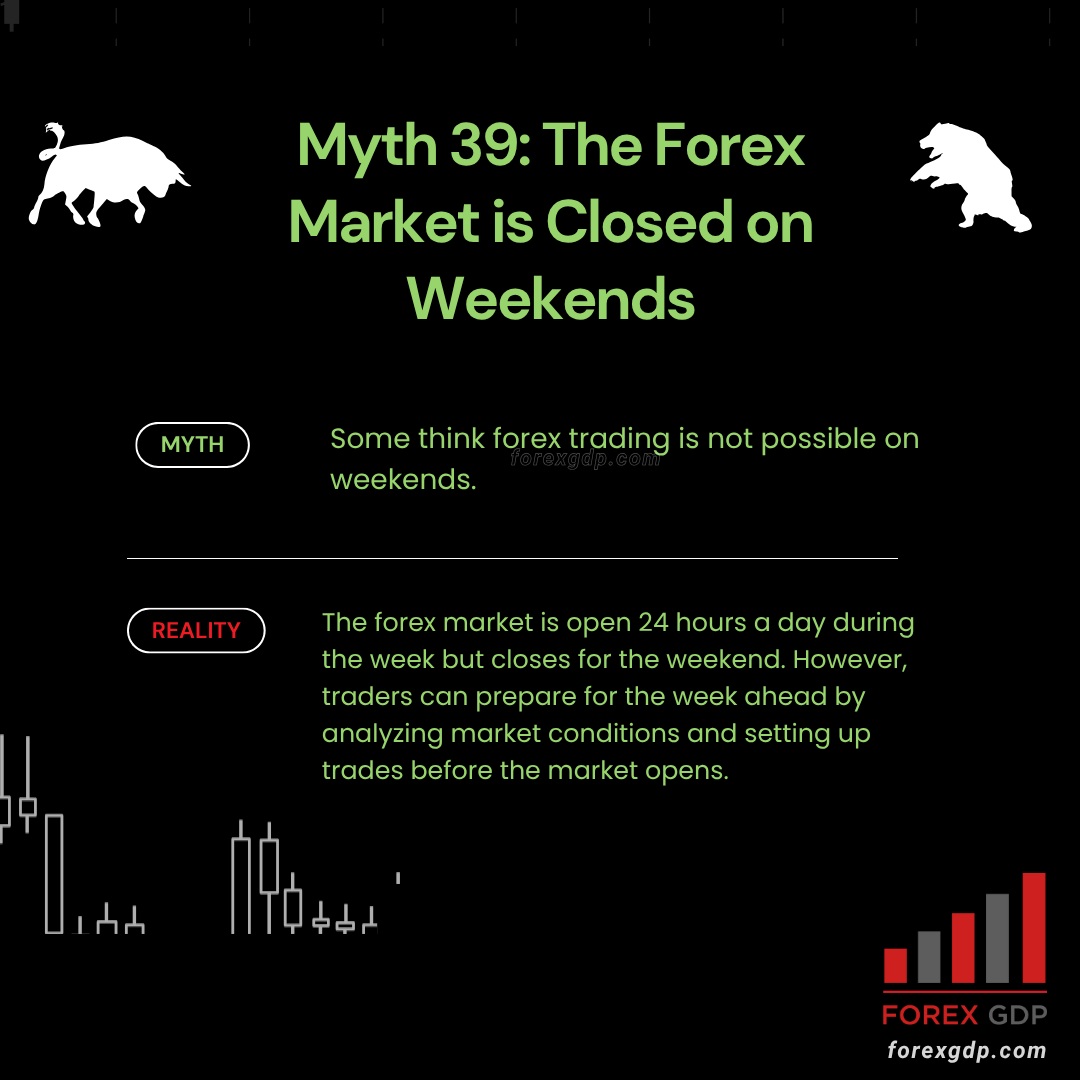
The world of forex trading is surrounded by countless myths. One of the most common? The belief that the forex market is completely shut down and useless during weekends. At first glance, it may seem logical—after all, banks and institutions do not operate on Saturdays and Sundays. But here’s the truth: while the forex market is technically closed for active trading on weekends, that doesn’t mean traders should shut off their screens and forget about the market. In fact, weekends can be some of the most valuable times to prepare, analyze, and strategize.
In this long, detailed, and engaging article, let’s break down the reality behind this myth, explore what really happens when forex “closes,” and discover why weekends might be the hidden goldmine for smart traders.
Understanding the Forex Market Structure
The forex market is unlike stock exchanges. It’s a decentralized, over-the-counter (OTC) market where currencies are traded globally through a network of banks, brokers, and institutions. It runs 24 hours a day, five days a week, beginning Sunday evening (GMT) and ending Friday evening.
So, yes—forex shuts its doors on Friday night. But unlike stock traders, who wait helplessly for Monday, forex traders have a different kind of weekend opportunity: preparation.
Why the Forex Market Closes on Weekends
Think of forex as a global relay race. Sydney hands the baton to Tokyo, Tokyo passes it to London, and London hands it to New York. This cycle continues seamlessly during weekdays.
But on weekends? Banks and financial institutions—the backbone of forex liquidity—close. Without their participation, there’s simply not enough liquidity to support trading. That’s why brokers shut down access until Sunday evening.
The Myth: “Forex is Dead on Weekends”
Here’s the false belief: many assume weekends equal complete inactivity, leaving traders powerless. They think there’s no point in even looking at charts.
Reality check? Weekends are not dead time. They’re the perfect time to reset, analyze, and plan ahead. The market may not be moving, but your strategy can.
The Weekend Trading Trap
Some brokers offer “weekend trading” for instruments like cryptocurrencies or synthetic indices. New traders often mistake this as regular forex. But beware: liquidity is thinner, spreads widen, and risks skyrocket.
Think of it like driving on an icy road—you can move, but you’re more likely to crash.
Why Smart Traders Use Weekends Wisely
Professional traders don’t waste weekends. Instead, they:
-
Review the past week’s trades – What worked? What failed?
-
Analyze charts – Spot key support, resistance, and patterns.
-
Prepare watchlists – Identify potential currency pairs for the upcoming week.
-
Refine risk management – Adjust stop-losses, position sizes, and goals.

The Psychological Edge of Weekend Preparation
Imagine two traders:
-
Trader A shuts off his computer on Friday and relaxes until Monday.
-
Trader B spends Sunday reviewing charts, setting alerts, and preparing plans.
When the market opens, Trader A reacts emotionally to sudden moves, while Trader B executes calmly with a plan. Who do you think has the edge?
Weekend Gaps: Hidden Opportunities
Ever noticed how prices sometimes open significantly higher or lower on Sunday evening compared to Friday’s close? That’s called a weekend gap.
These gaps often occur because of global news events, geopolitical tensions, or unexpected announcements during the weekend. Smart traders analyze these gaps to predict early-week momentum.
Long-Term Traders Love Weekends
If you’re a swing trader or position trader, weekends are golden. Why? Because your trades last weeks or months. You don’t need minute-by-minute movement—you need strong analysis.
Weekends allow you to zoom out, focus on the bigger picture, and refine your long-term strategy without the noise of intraday charts.
The Biggest Mistake Traders Make on Weekends
Here’s the trap: many traders use weekends to overthink and overanalyze. They redraw charts, add unnecessary indicators, and second-guess trades. By Monday, they’re paralyzed by “analysis paralysis.”
The goal is preparation, not obsession. Keep it simple.
Weekend Routines of Successful Forex Traders
Want to know how pros spend their weekends? Here’s a peek:
-
Saturday morning: Quick review of past week’s journal.
-
Saturday afternoon: Step away—give your brain a rest.
-
Sunday morning: Fresh eyes on charts, look for clean setups.
-
Sunday afternoon: Create a trading plan for the week.
-
Sunday evening: Check global news and economic calendar.
Should You Ever Trade on Weekends?
For traditional forex pairs? No. Liquidity is dead, spreads are nasty, and risks outweigh rewards.
For crypto or synthetic indices? Only if you understand the unique risks. But even then, many pros avoid it to prevent burnout.
Preparing for the Market Reopen
Sunday evening is when the fun begins. Brokers reopen, spreads are wide, and liquidity slowly trickles in. Here’s how to prepare:
-
Avoid jumping in immediately—wait for spreads to normalize.
-
Watch how the market reacts to weekend news.
-
Be cautious with gap trading strategies.
Weekend News and Its Impact
From surprise elections to natural disasters, weekends can be packed with market-moving events. While you can’t trade during the closure, you can stay updated. When markets reopen, you’ll already know what to expect.
Forex vs. Stock Market: Weekend Advantage
Stock traders? They’re stuck. No analysis affects their Monday open.
Forex traders? They can use weekends to set alerts, draft strategies, and prepare positions. It’s like having a cheat sheet before the exam.
The Negative Side of Weekend Myths
Believing forex is “dead” on weekends creates complacency. Traders who ignore preparation often:
-
Miss Monday opportunities.
-
React emotionally instead of strategically.
-
Lose consistency over time.
Weekend Preparation Tools
If you’re serious, here’s what to use:
-
Economic calendars (to track upcoming events).
-
Trading journals (to review wins and losses).
-
Charting platforms (for technical analysis).
-
News feeds (to stay updated on global events).
The Hidden Benefit of Taking a Break
Not everything is about analysis. Sometimes, the best weekend move is rest. Trading is mentally draining. Burnout leads to mistakes. A relaxed mind on Monday is sharper than an overworked one.

The Myth Busted
So, is forex closed on weekends? Technically yes, but practically no. The market may sleep, but your trading journey doesn’t have to. Weekends separate amateurs from professionals—the ones who use downtime to sharpen their edge.
Conclusion
The myth that “forex is closed on weekends, so there’s nothing to do” is misleading. While active trading halts, preparation, analysis, and strategy development thrive during this downtime. Smart traders embrace weekends as their secret weapon. They review, analyze, rest, and prepare—so when the bell rings on Sunday night, they’re ready to act with confidence instead of hesitation.
In forex, success isn’t about being the fastest. It’s about being the most prepared. And weekends? They’re the perfect time to sharpen your sword.
FAQs
1. Why does the forex market close on weekends?
Because major banks and institutions shut down, reducing liquidity and making trading unfeasible.
2. Can I trade forex pairs on weekends?
No, forex pairs are unavailable. Some brokers offer crypto or synthetic instruments, but risks are higher.
3. How do weekend gaps affect traders?
Weekend gaps can create sudden price differences, offering opportunities or risks depending on your strategy.
4. What’s the best way to use weekends as a trader?
Review your trading journal, analyze charts, prepare strategies, and rest your mind.
5. Should beginners trade weekend markets like crypto?
Not recommended. Beginners should focus on preparation and learning rather than high-risk weekend markets.