

Why Traders Feel Like the Market Hates Them
If you’ve ever stared at a chart, watched your stop-loss hit, and muttered, “The market’s out to get me,” you’re not alone. Every trader — whether a beginner or seasoned pro — has felt that sting. It’s almost personal, right? You analyze, you plan, and yet the market turns the other way. But here’s the truth: the market doesn’t even know you exist.
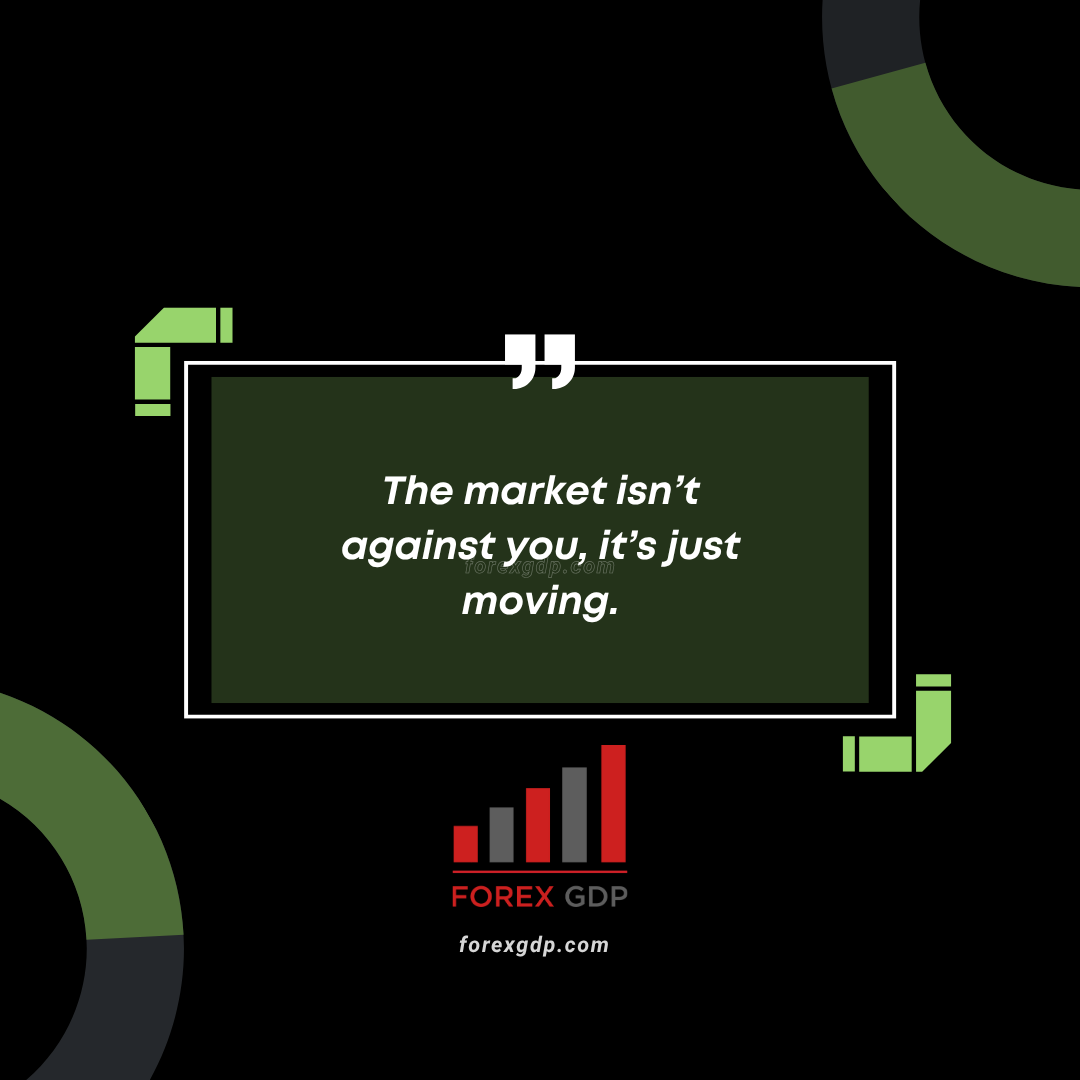
The quote “The market isn’t against you, it’s just moving” captures one of the deepest realities of trading. The market is neutral. It reacts to collective sentiment, economic events, and probabilities — not to your entries or emotions. Understanding this can be the line between emotional chaos and steady progress.
The Market Has No Emotions
Let’s be honest — markets don’t hold grudges. They don’t seek revenge or favor anyone. Price action is just the result of buying and selling pressure. When buyers dominate, prices rise; when sellers dominate, they fall. Simple as that.
Traders often project their emotions onto the market. You lose three trades in a row, and suddenly, the market feels “unfair.” But in reality, the market doesn’t even notice. It’s like blaming the ocean for waves — they just happen, whether you’re ready or not.
Once you remove emotional bias, trading becomes clearer. You stop taking losses personally and start viewing them as part of the game.
Movement Is Natural, Not Personal
Markets move constantly — it’s their nature. Trying to control that is like trying to stop the wind. Whether it’s news, data releases, or institutional orders, prices fluctuate all the time.
When traders see a sudden reversal against their position, they panic. “Why did it reverse just after I entered?” The truth? You’re just one small spec in a massive sea of orders. The market was going to move anyway — your entry didn’t cause it.
Accepting that movement is random (in the short term) helps you focus on long-term consistency instead of emotional reactions.
Understanding Market Structure: The DNA of Movement
Every chart tells a story — higher highs, lower lows, consolidations. Understanding this story is crucial. Markets move in cycles: accumulation, markup, distribution, and markdown.
When you understand where you are in the cycle, movement stops feeling random. For example, a pullback in an uptrend isn’t an attack — it’s a natural correction. Similarly, a false breakout isn’t a betrayal — it’s liquidity hunting.
Once you see these movements as patterns instead of punishments, your trading mindset evolves from reactive to strategic.
Your Mindset vs. Market Reality
Your biggest enemy isn’t the market — it’s your perception of it. Many traders enter positions based on hope, not logic. When things go south, frustration takes over. But here’s the twist: it’s your mindset interpreting market movement as “against you.”

If you expect the market to behave according to your analysis 100% of the time, disappointment is guaranteed. The market’s job is to move — not to validate your analysis. Your job is to adapt, not to expect.
A strong mindset turns chaos into opportunity. The key? Detachment. Trade the chart, not your emotions.
The Psychology of Blame in Trading
Humans love control. When we can’t control something, we blame it. Traders blame brokers, spreads, “market manipulation,” or the market itself. This blame feels comforting, but it’s deadly.
Blame distracts you from learning. If every loss has an external excuse, growth becomes impossible. The market isn’t your enemy — it’s your mirror. It reflects your discipline, patience, and consistency.
Stop blaming and start analyzing. The moment you take full responsibility, you take full control.
Price Action: The Pure Language of the Market
Forget fancy indicators for a moment — price action is the market’s raw voice. Candlesticks, wicks, and volume show where buyers and sellers battle.
When you understand price action, you realize the market doesn’t “hunt” your stop-loss — it’s just liquidity seeking. Big institutions need volume to enter trades, so they push prices to trigger pending orders. It’s not personal; it’s business.
Learning to read this “language” helps you anticipate moves instead of fearing them.
Emotions: The Real Reason Traders Lose
Fear, greed, and impatience — these three emotions ruin more traders than bad analysis ever will. You can have the best strategy in the world, but if your emotions aren’t in check, you’ll sabotage yourself.
Fear makes you exit too early. Greed makes you hold too long. Impatience makes you overtrade.
The result? You end up blaming the market again.
But think of trading like driving. If you panic at every turn, you’ll crash — not because the road is bad, but because you lost control of the wheel. Learn emotional stability, and suddenly, the market seems calmer.
How Institutional Traders View Movement
Institutional traders — the so-called “smart money” — see market movement differently. They don’t see chaos; they see opportunity. Every pullback, breakout, and consolidation is a piece of a bigger puzzle.

Retail traders panic at retracements, while institutions prepare to enter. The difference lies in understanding. Smart money knows the market must move to collect liquidity — that’s how large positions get filled.
When you adopt this mindset, stop-loss hits stop feeling like betrayal. You start playing with the market, not against it.
The Illusion of Control in Trading
Let’s face it — traders love the illusion of control. You set a perfect plan, draw support and resistance, and think you’ve “predicted” the market. Then boom — price ignores your levels completely.
Frustrating? Sure. But expecting control over an uncontrollable environment is self-sabotage. The only thing you can control is your reaction.
The goal isn’t to predict — it’s to prepare. Trading success comes from reacting to what the market does, not what you want it to do. That shift in perspective is everything.
How to Stop Taking Market Moves Personally
So how do you detach emotionally? Start with mindset training. Every loss, every win, every missed entry — treat it as feedback, not judgment.
Keep a trading journal. Write down what you felt, why you entered, and how you reacted. You’ll quickly see patterns — not in the market, but in yourself.
Once you realize your emotional patterns, you can correct them. The market doesn’t need to change. You do.
Building Resilience: Learning From Market Movement
Resilience is what separates survivors from quitters. Every loss can teach you something — if you let it. Instead of asking “Why me?”, ask “What can I learn?”
Maybe your entry was too early. Maybe your risk-to-reward was off. Maybe your bias was wrong. That’s fine. Every trader has bad trades. The problem isn’t losing — it’s refusing to learn from it.
The market moves. It always has. The key is learning to move with it, not fight against it.
Developing a Movement-Based Strategy
A movement-based strategy acknowledges that the market doesn’t follow your expectations — it follows flow. This means you must adapt your methods to movement.
Price Flow Awareness
Watch how price reacts to zones, not just whether it touches them. The reaction tells you more than the level itself.
Adaptive Risk Management
Don’t risk the same percentage in every trade. Adjust based on volatility and structure. When the market moves faster, reduce risk.
Patience as a Strategy
Waiting is underrated. The market rewards patience more than prediction. Sometimes, the best trade is no trade.
Once your strategy aligns with movement, the market feels less hostile — because you’re finally flowing with it.
The Myth of Market Manipulation


Ah, the favorite excuse — “the market is manipulated!” Yes, institutions move markets. But that’s not manipulation; that’s just scale. Big players have the capital to shift prices.
The problem isn’t manipulation — it’s misunderstanding. Retail traders often enter right where smart money exits because they’re following obvious setups. It’s not a conspiracy. It’s mechanics.
Stop chasing every spike thinking “they’re out to get me.” Instead, study liquidity traps, stop hunts, and order flow. Once you understand why those moves happen, you stop fearing them.
How Patience Helps You Respect Market Movement
Impatience kills good trades. You might enter early because you “feel” the move is about to happen, only to watch the market sweep your stop before flying your way.
Patience is the quiet superpower of great traders. When you wait for confirmation, you’re aligning with the market — not trying to force it. Think of the market like a river. You can’t swim against it; you wait for the right current.
When you respect timing, you stop seeing movement as chaos. It becomes rhythm — and you dance with it instead of tripping over it.
Detachment: The Ultimate Trader’s Skill
Detachment doesn’t mean you don’t care about outcomes — it means you don’t depend on them emotionally. Whether it’s a win or a loss, you stay neutral.
The best traders don’t celebrate wins too hard or mourn losses too long. They know both are part of the same process. Every move of the market is just data — not a personal attack.
When you master detachment, trading becomes peaceful. And ironically, that peace leads to better decisions — and better results.
The Role of Probability in Market Movement
Trading isn’t about certainty; it’s about probability. Every trade you take is just one of many possible outcomes. Even perfect setups fail sometimes — that’s just how probabilities work.
If you flip a coin 100 times, it won’t land 50/50 every time. Similarly, your edge plays out over many trades, not one. Losing streaks don’t mean the market’s against you — they’re just the downside of probability.
Once you embrace that, frustration fades. You start thinking like a statistician, not a victim.
Emotional Recovery After a Bad Trade
We’ve all been there — that gut-punch after a big loss. You close the chart, swear you’ll never trade again… until you’re back the next day, chasing revenge trades.
Recovery starts with acceptance. You lost because the market moved — not because it hates you. Then analyze. What went wrong? Were you over-leveraged? Overconfident? Distracted?
Every bad trade has a lesson. The quicker you find it, the faster you recover. The market moves on instantly — so should you.
How to Align With the Market Instead of Fighting It

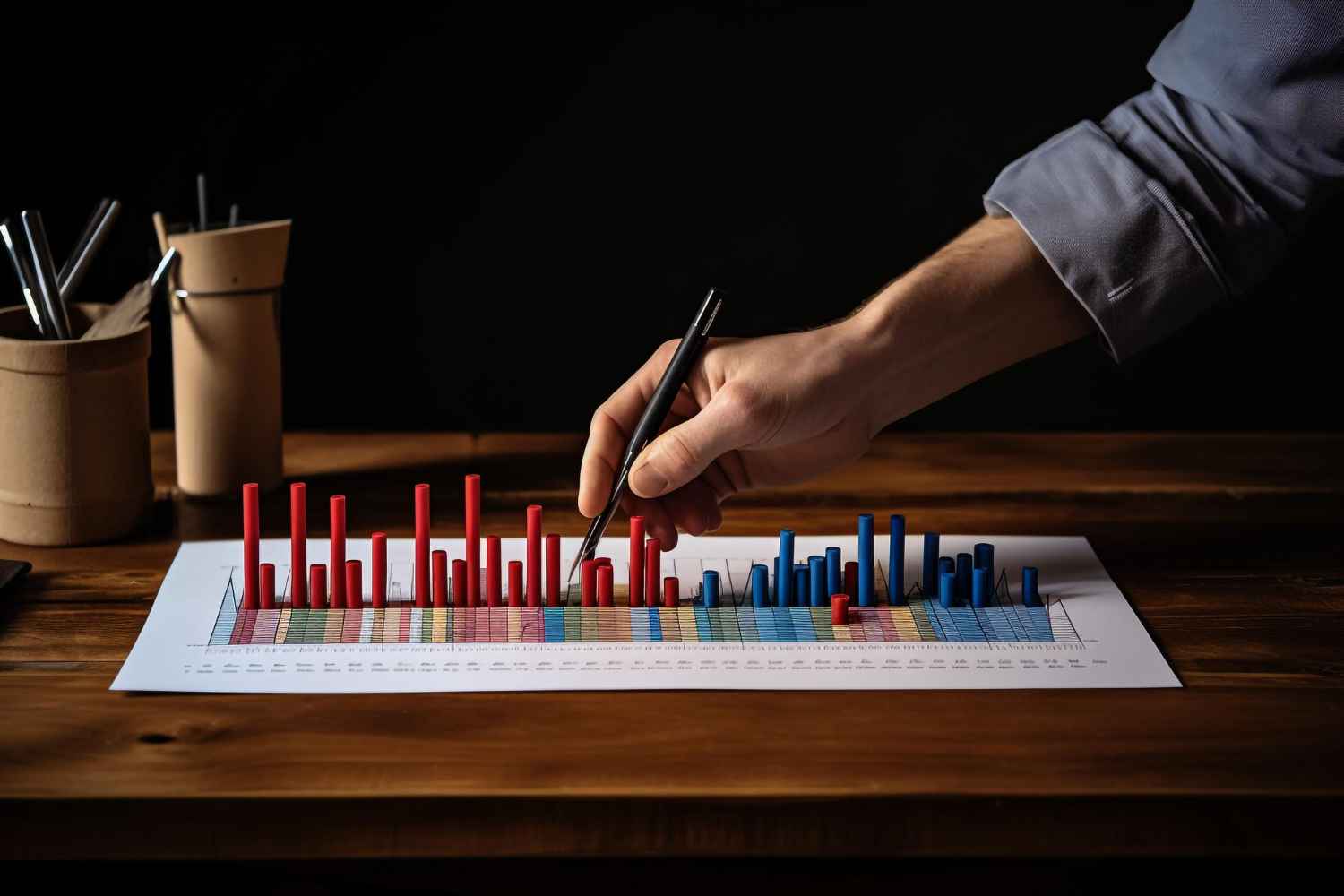
You can’t control the market, but you can control your approach. To align with it:
-
Trade with trend, not against it.
-
Wait for confirmation, not hope.
-
Use stop-loss wisely, not emotionally.
-
Focus on process, not outcome.
When you trade with the flow, the market feels like a partner, not an enemy. That’s when consistency begins.
Long-Term Perspective: The Market Always Moves
Zoom out on any chart — you’ll see movement everywhere. It’s not chaos; it’s evolution. Short-term traders often forget that a small dip or rally is just noise in a bigger wave.
Having a long-term view keeps you grounded. You stop panicking over intraday volatility and start seeing structure. The market moves — but it always offers another opportunity tomorrow.
Trading becomes less about revenge and more about rhythm.
Accepting Uncertainty as a Trading Superpower
Uncertainty isn’t your enemy; it’s the foundation of trading. Without it, there’d be no opportunities.
If you knew exactly where price was heading, so would everyone else — and no one would profit. Embrace uncertainty. Learn to operate within it instead of resisting it.
Great traders don’t predict — they prepare. They’re like surfers waiting for the next wave, knowing not every wave will be perfect, but there will always be another one.
Conclusion: The Market Moves — You Adapt
The market doesn’t hate you, and it’s not trying to destroy your account. It’s just doing what it’s designed to do — move. Your job is to adapt to that movement, not fight it.
Once you stop personalizing market behavior, trading becomes logical. Losses become data, not drama. Wins become validation of discipline, not luck.
So next time the market turns against you, remember — it’s not personal. It’s just moving. And the best traders? They move with it.
FAQs
1. Why do I feel like the market always goes against my trades?
Because you’re emotionally attached to your entries. The market moves based on collective order flow, not your position. Focus on probabilities, not perfection.
2. How can I stop blaming the market for my losses?
Start journaling your trades. When you analyze your own decisions, you’ll realize most losses come from execution errors, not market manipulation.
3. What’s the best mindset for consistent trading?
Detach emotionally. See the market as a neutral environment, not a battleground. Wins and losses are both feedback — not personal attacks.
4. Do big players really manipulate the market?
They influence it through liquidity, yes — but not personally against you. Learn to understand institutional behavior, and you can trade alongside it instead of fearing it.
5. What’s the most important lesson from “The market isn’t against you, it’s just moving”?
It teaches you emotional neutrality. The market doesn’t owe you anything. It’s your job to adapt, stay patient, and let movement work in your favor.