

Have you ever stared at a losing trade, hoping it would turn around? You’re not alone. Every trader, at some point, has fallen into the trap of “maybe it’ll bounce back.” But let’s be real—hope isn’t a trading strategy. That’s where stop losses come in. Think of them as your loyal best friend—the one who pulls you out of bad decisions before they spiral out of control.
Stop losses are not just a trading tool; they’re your safety net, your emotional stabilizer, and your shield against financial disaster. In this article, we’ll dive deep into why stop losses are essential, how they work, and how mastering them can separate professional traders from gamblers.
What Exactly Is a Stop Loss?
A stop loss is a predefined price level where your trade automatically closes to prevent further losses. It’s like telling your broker, “If this trade goes south, get me out—no questions asked.”
For example, if you buy EUR/USD at 1.1000 and set a stop loss at 1.0950, you’re willing to risk 50 pips. If the price drops there, your position closes automatically. This isn’t weakness—it’s discipline. It’s your line in the sand that protects your capital.
The Emotional Trap: Why Traders Avoid Stop Losses
Why do so many traders hate using stop losses? Simple—ego and fear. No one likes admitting they were wrong. Traders convince themselves the market will “eventually” go their way. That’s not strategy—that’s denial wrapped in optimism.
Without a stop loss, emotions take over. You start moving your stop further away, hoping for a miracle. Before you know it, your small manageable loss becomes a nightmare. A stop loss removes emotion from the equation. It makes decisions for you when your judgment is clouded by panic or greed.
The Psychology Behind Stop Losses
Trading isn’t just about charts—it’s about psychology. Stop losses protect you from your own impulses. Humans are wired to avoid pain and chase pleasure, and losses hurt more than wins feel good. That’s called loss aversion, and it’s deadly in trading.
Setting a stop loss acknowledges that losing is part of the game. It’s not failure; it’s control. When you accept that losses are inevitable, you trade smarter, freer, and more confidently.
The Math That Saves You: Risk Management 101
Here’s the ugly truth—most traders blow up their accounts not because of bad strategies, but because of bad risk management. A stop loss is the cornerstone of that management.
Imagine risking 2% of your capital on each trade. If you lose five in a row, you’re down 10%, but you’re still in the game. Without stop losses, one bad trade could wipe out 50% or more of your account. Recovering from that takes a miracle—mathematically speaking. Lose 50%, and you’ll need a 100% gain just to break even.
Different Types of Stop Losses

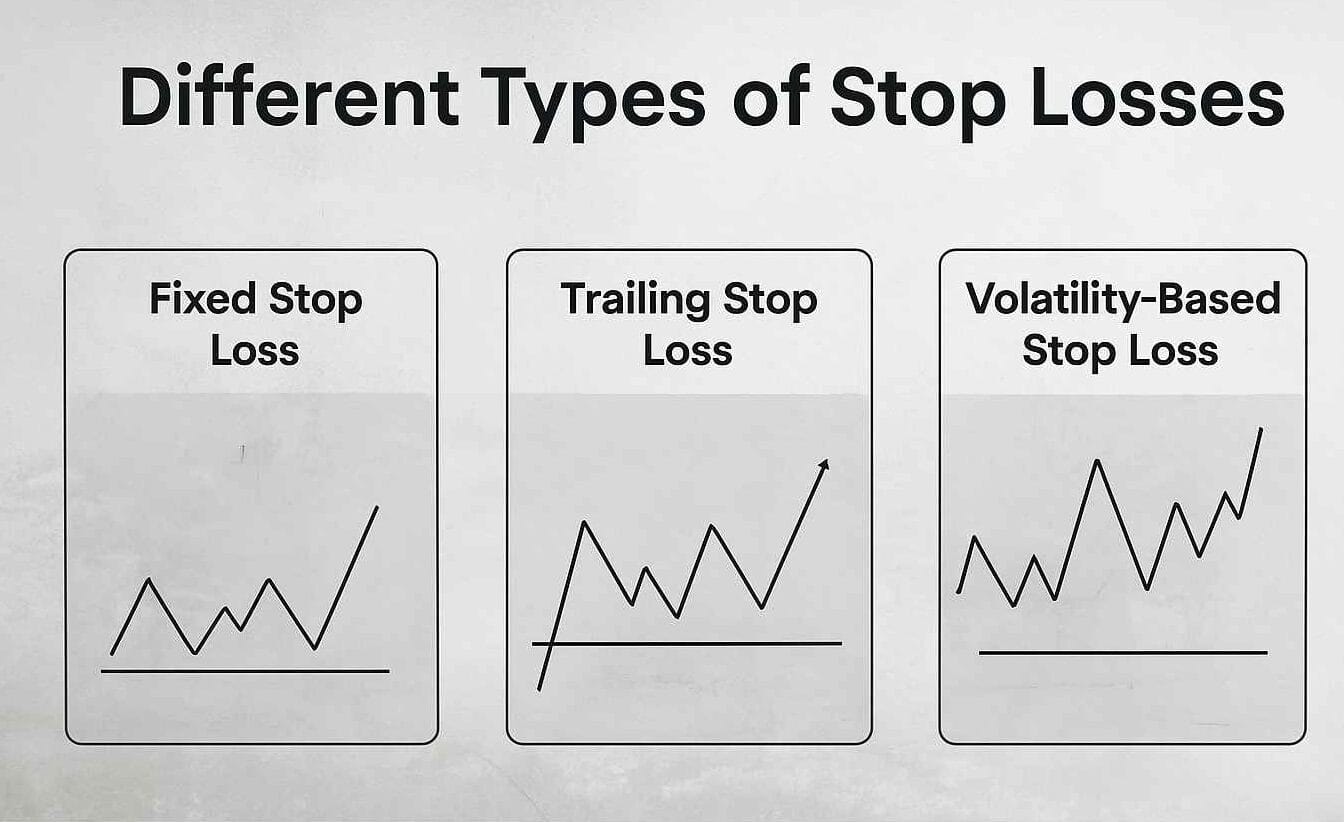
Not all stop losses are created equal. Let’s break down the main types so you can choose the one that fits your style.
a. Fixed Stop Loss:
You decide the exact price or pip amount you’re willing to lose. It’s simple, predictable, and ideal for beginners.
b. Trailing Stop Loss:
This one moves with the market. If your trade moves in your favor, the stop loss adjusts to lock in profits. It’s like having a flexible safety rope that tightens as you climb.
c. Volatility-Based Stop Loss:
This one adapts to market conditions. If the market is more volatile, the stop widens; if it’s calm, it tightens. It prevents you from getting stopped out too early during high volatility.
How to Set the Perfect Stop Loss
There’s no magic formula, but there is logic. Setting a stop loss isn’t about picking random numbers—it’s about strategy. Look at key support and resistance levels. A good rule of thumb is to place your stop beyond these points so the market has room to breathe.
Also, consider average volatility. Tools like the ATR (Average True Range) help you gauge how much the market typically moves. A stop too tight can kick you out too soon; too wide, and you risk too much. Balance is everything.
Common Stop Loss Mistakes to Avoid
Even experienced traders mess this up. The biggest mistakes?
a. Setting stops too close:
You’re suffocating your trade. Give it some room to breathe.
b. Not setting a stop at all:
This is the fastest way to lose your account. No exceptions.
c. Moving your stop loss further away:
It’s a trap. You’re not adjusting—you’re panicking.
d. Risking too much per trade:
Never risk more than 1-2% of your total capital on a single position. It’s not bravery—it’s recklessness.
The Power of Stop Loss Discipline
Having a stop loss is one thing—sticking to it is another. The market will tempt you to interfere, to “just wait a little longer.” Don’t. Discipline is what separates pros from amateurs.
Think of your stop loss as a fire alarm. When it rings, you don’t argue with it—you act. Ignoring it only makes the damage worse. Trust your plan more than your emotions.
The Role of Stop Loss in Different Trading Styles

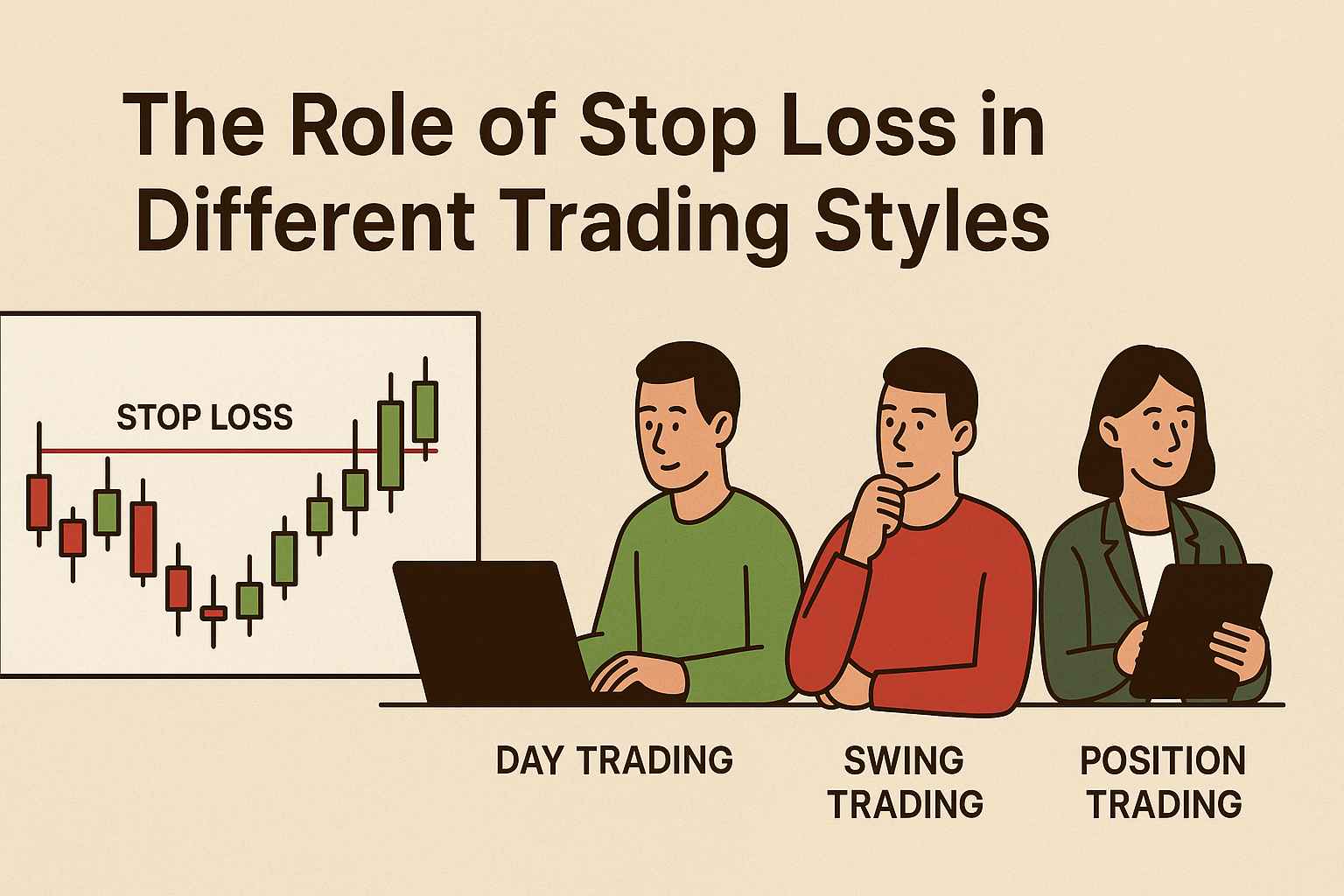
Your stop loss strategy should match your trading style.
a. Day Traders:
Tight stops, fast decisions. You’re in and out quickly, so precision is key.
b. Swing Traders:
Wider stops, longer holds. You’re playing short-term trends, so give the market space to move.
c. Position Traders:
Even wider stops, long-term focus. You’re thinking in weeks or months, not minutes.
Each approach requires understanding how much risk you can stomach. No two traders are the same, and neither should their stop losses be.
The Hidden Benefits of Stop Losses
Stop losses don’t just protect money—they protect peace of mind. You can step away from your screen without fear of a market meltdown. They also make your trading measurable. You know exactly how much you’re risking before entering a trade.
This allows you to calculate risk-to-reward ratios, an essential part of any solid trading strategy. If you’re risking $100 to make $300, that’s a 1:3 ratio—a smart, calculated move. Stop losses make those numbers possible.
Stop Losses vs. No Stop Loss Trading
Some traders brag about “trading without stops.” Don’t be fooled—it’s gambling, not trading. Sure, they might get lucky a few times, but when the market turns against them, it’s game over.
Stop loss traders live to trade another day. No-stop traders eventually face a day they’ll never recover from. It’s like driving without brakes—you might enjoy the speed until you hit a wall.
Using Stop Losses to Build Long-Term Success
Long-term success in trading isn’t about how much you make—it’s about how much you keep. Consistency comes from capital preservation, not reckless wins. Stop losses ensure that even if you lose today, you can trade tomorrow.

Think of trading as a marathon, not a sprint. Stop losses help you pace yourself, manage your stamina, and survive the market’s inevitable ups and downs. They’re your ticket to longevity in a game designed to eliminate the careless.
Automating Stop Losses: The Smart Trader’s Secret
Technology has made life easier for traders. Most platforms allow you to automate stop losses with precision. This means no second-guessing, no emotions, and no manual intervention.
Automated stops also ensure that you never lose more than intended, even if you’re asleep or away from the charts. It’s like having a 24/7 guardian watching over your trades.
The Connection Between Stop Losses and Trading Psychology
Stop losses also build confidence. When you know your downside is capped, you trade with clarity. You’re no longer paralyzed by fear. You can focus on setups and execution, not survival.
Confidence born from control leads to better decision-making. You stop chasing losses and start managing them strategically. That’s when trading becomes less stressful and more professional.
Why Professional Traders Swear by Stop Losses
Every professional trader—from hedge fund managers to seasoned scalpers—uses stop losses. Why? Because they understand that the market doesn’t owe them anything. It’s unpredictable, ruthless, and indifferent to your emotions.
Stop losses turn unpredictability into structure. They allow pros to focus on high-probability trades without fearing catastrophe. If the best in the world use them, why shouldn’t you?
The “Stop Hunt” Myth: Should You Worry?
You’ve probably heard traders complain about “stop hunting”—when the market supposedly targets stop loss zones before reversing. While this happens sometimes, it’s not a reason to ditch your stop loss.
Instead, use smart placement. Avoid obvious levels where everyone piles their stops. Study price behavior, and place stops strategically beyond common traps. The goal isn’t to hide your stop—it’s to position it intelligently.
How to Recover After Hitting Stop Losses
Losing trades hurt, but how you react matters more. Instead of revenge trading, analyze what went wrong. Was your entry flawed? Was the stop too tight? Or did the market simply shift?
Every stop loss hit is a lesson in disguise. Review your trades, adjust your strategy, and move on. The key is not avoiding losses—it’s learning from them.
The Ultimate Goal: Turning Stop Losses Into Strength


In the beginning, stop losses might feel restrictive. But over time, you’ll see them as your greatest ally. They enforce discipline, improve consistency, and prevent catastrophic losses.
When used correctly, stop losses don’t limit your potential—they unleash it. You’ll start trading with more confidence, clarity, and control, knowing your capital is safe even in the face of uncertainty.
Conclusion: Stop Losses Aren’t the Enemy—They’re the Hero
At the end of the day, stop losses aren’t about avoiding risk—they’re about managing it. Every trade carries uncertainty, but stop losses give you power over that uncertainty. They turn chaos into structure and fear into confidence.
If you truly want to survive—and thrive—in the trading world, make stop losses your best friend. They’ll never betray you, never get emotional, and always have your back. The traders who ignore them eventually learn the hard way. The traders who embrace them? They stay in the game long enough to win.
FAQs
1. Should I always use a stop loss in every trade?
Absolutely. No matter how confident you feel, every trade carries risk. A stop loss ensures that a single bad move doesn’t wipe out your account.
2. How tight should my stop loss be?
It depends on your trading style and market volatility. Generally, avoid placing stops too close. Allow your trades room to move, but don’t risk more than 1–2% of your capital.
3. Can I trade without a stop loss if I monitor my trades constantly?
Even the most vigilant traders can’t predict sudden news events or market spikes. A stop loss acts faster than human reaction—it’s your automatic shield.
4. Why do my trades often hit stop loss before moving in my favor?
You might be setting stops too close to market noise or common support/resistance levels. Analyze your charts and adjust your stop placement strategy.
5. Are trailing stop losses better than fixed ones?
Both have their place. Trailing stops help lock in profits as the market moves your way, while fixed stops provide simplicity and structure. Use what suits your trading plan best.