

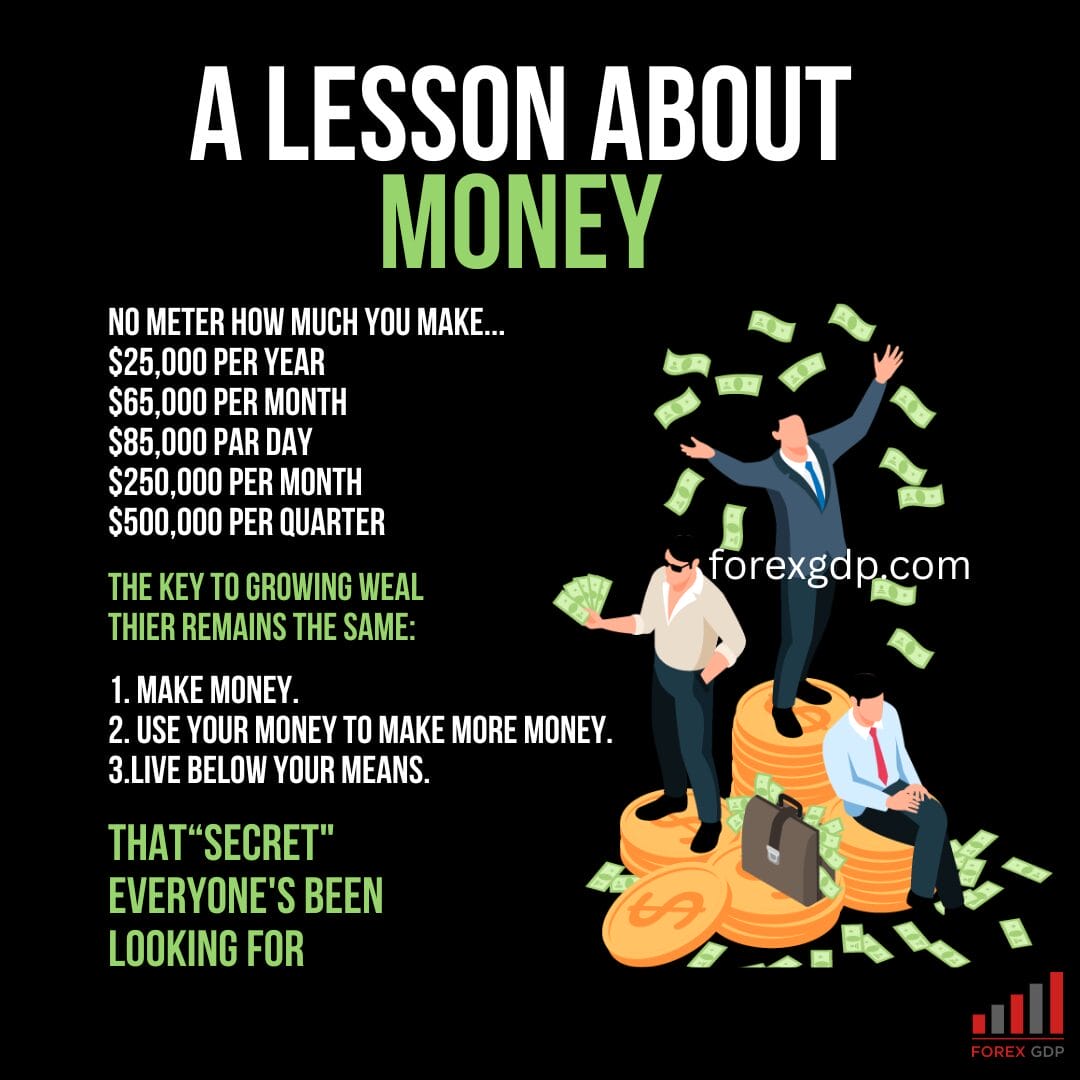
Money—it’s that one thing we’re all chasing but never seem to get enough of. You can earn $25,000 a year or $500,000 a quarter, and still find yourself stressed out, broke, and wondering where it all went. Sounds familiar? Yeah, because here’s the ugly truth: the amount you make doesn’t matter as much as what you do with it.
This is the part nobody likes to hear. People love to daydream about bigger salaries, promotions, or that magical business idea that will make them rich overnight. But if you’re terrible with money now, guess what? You’ll still be terrible with it when the zeros multiply in your bank account. It’s like pouring water into a bucket with holes—it doesn’t matter how much you pour, it’s going to leak out anyway.
So, let’s strip down the fancy financial jargon and talk about the real lessons about money that no one wants to admit.
The Harsh Reality of Money
Here’s the brutal reality: most people suck at handling money. And I don’t mean just broke college students living off instant noodles—I mean adults with high-paying jobs who still can’t manage to save a dime.
Think about it. How many people do you know who suddenly got a raise or bonus, only to be just as broke as before, maybe even worse? That’s because the problem isn’t income—it’s behavior. Money management isn’t about how much you make; it’s about how much you keep and what you do with it.
Money is like fire. Controlled, it can keep you warm, cook your food, and light up your home. Out of control, it burns everything to ashes. Sadly, most people don’t respect money enough to control it, and they end up getting burned.
Why More Income Doesn’t Mean More Wealth
Here’s a bitter pill: making more money won’t automatically make you wealthy. Sounds wrong, right? But it’s the truth.
We live in a society that glorifies higher salaries, bigger businesses, and multiple income streams. Sure, earning more is great—it gives you options. But here’s the catch: if you’re financially reckless, a higher income just gives you more room to make bigger, costlier mistakes.
Imagine a leaking pipe. Pouring more water into it won’t fix the leak. In fact, the more you pour, the faster you flood the place. That’s what happens when you earn more but never learn how to manage it. Wealth isn’t built on income; it’s built on discipline.
The Biggest Lie We Tell Ourselves About Money
We’ve all told ourselves this lie: “I’ll start saving when I make more money.” Spoiler alert—you won’t.
Why? Because habits don’t magically change with income. If you can’t save when you make $2,000 a month, you won’t save when you make $20,000 a month. You’ll just upgrade your lifestyle, spend more, and find new excuses.

It’s like saying you’ll start eating healthy once you can afford organic food. If you can’t control yourself around cheap junk food, expensive healthy food won’t fix that. The problem isn’t money—it’s you.
Living Paycheck to Paycheck on a Six-Figure Salary
Here’s something depressing: plenty of six-figure earners live paycheck to paycheck. Yep, you read that right.
You’d think someone making $120,000 a year is financially free, right? Wrong. Many of them are drowning in credit card debt, car loans, and inflated mortgages. They buy the biggest house they can get approved for, lease flashy cars to impress strangers, and swipe credit cards like they’re playing Monopoly.
It’s a vicious cycle. The more they make, the more they spend. And in the end, their “rich life” is nothing more than a carefully decorated financial prison.
The Illusion of Lifestyle Inflation
Lifestyle inflation is that sneaky little monster that eats away at your money without you noticing.
Got a raise? Great, now you need a better car. Got a promotion? Time to upgrade your apartment. Got a bonus? Let’s blow it on the latest gadgets, vacations, and nights out. Before you know it, your expenses have grown as fast as your income, leaving you back at square one.
It’s like running on a treadmill—you’re sweating, moving, and exhausting yourself, but you’re not actually going anywhere. Lifestyle inflation tricks you into thinking you’re leveling up, but in reality, you’re just running faster toward financial ruin.
Why Saving Alone Will Never Make You Rich
Don’t get me wrong—saving is important. But if you think saving alone will make you rich, you’re in for disappointment.

Inflation laughs at your savings account. While you’re proudly stacking a few hundred bucks every month, the value of that money is slowly shrinking. A thousand dollars today won’t buy the same things ten years from now. Saving without investing is like collecting buckets of water while ignoring that the bucket has holes.
We’ve been brainwashed with the “save, save, save” mantra. But the real secret isn’t just saving—it’s growing your money. And that only happens when you make your money work for you.
The Real Secret: Making Money Work for You
Here’s where the game changes: stop working for money and make money work for you.
Money is like an employee. If you let it sit idle, it does nothing. But if you put it to work—through investments, businesses, or assets—it starts multiplying. And the best part? Money doesn’t complain, doesn’t take sick days, and doesn’t ask for a raise.
The sad reality? Most people never put their money to work. They park it in a savings account, where it earns next to nothing, and then wonder why they’re stuck. If your money isn’t making money, you’re not building wealth—you’re just treading water.
Living Below Your Means—The Rule Nobody Follows
This one’s simple but painful: live below your means. Spend less than you earn. Period.
But do people follow it? Nope. Instead, they max out their income with car payments, credit card bills, and rent they can barely afford. They confuse looking rich with being rich, and in the process, they trap themselves.
Living below your means isn’t glamorous. It doesn’t look good on Instagram. But it’s the foundation of wealth. Without it, all the investing and side hustling in the world won’t save you.
Why Most People Fail at Investing
Investing is supposed to be the ticket to wealth, right? So why do most people fail miserably at it?
The answer is simple: impatience and greed. People treat investing like gambling. They chase quick wins, panic when markets dip, and follow every hot tip they see online. And when they lose money, they blame the market instead of their own stupidity.
The truth is, successful investing requires discipline, patience, and strategy. But most people can’t sit still. They want riches overnight. And that’s why they lose.
Debt: The Silent Wealth Killer


Debt is like a parasite. It slowly drains you until there’s nothing left.
Sure, some debts (like a mortgage or business loan) can be strategic. But most people don’t use debt strategically—they use it recklessly. Credit cards for vacations, loans for luxury cars, buy-now-pay-later schemes for pointless gadgets.
Here’s the dark truth: debt robs you of your future income. Every time you borrow, you’re committing your future paychecks to the past. And the interest? That’s just financial quicksand pulling you deeper.
Why Financial Discipline Feels Like Punishment
Here’s why people fail with money: financial discipline feels like punishment.
Nobody wants to skip the latest iPhone, avoid that weekend getaway, or drive a modest car when their friends are showing off. We live in a culture that glamorizes spending. Being frugal isn’t sexy—it’s boring.
But discipline is the price of freedom. Would you rather look rich now and be broke later, or look modest now and be free forever? Sadly, most people pick the first option, and they pay for it dearly.
Breaking Free from the Money Trap
So, how do you actually escape this endless money trap? It boils down to three simple but brutal rules:
-
Make money. Not just from one job—explore multiple income streams.
-
Use your money to make more money. Invest smartly, build assets, and let your money work while you sleep.
-
Live below your means. This is the hardest, but without it, nothing else matters.
It’s not flashy, it’s not sexy, and it definitely isn’t easy. But it’s the only way to stop being a slave to money and start being its master.

Conclusion
At the end of the day, the lesson about money is brutally simple: it’s not about how much you make, it’s about what you do with it. People chase higher salaries, better jobs, and quick riches, but they ignore the basics. Without discipline, even a million-dollar income will vanish.
Money is a tool, not a trophy. If you respect it, control it, and put it to work, it will build you a life of freedom. If you abuse it, ignore it, or worship it blindly, it will destroy you. The choice is yours.
FAQs
1. Why do people stay broke even with high salaries?
Because they spend everything they earn and fall into lifestyle inflation instead of building wealth.
2. Is saving money enough to become rich?
No. Saving is important, but without investing, your money loses value to inflation.
3. What’s the biggest money mistake people make?
Living above their means and taking on unnecessary debt.
4. Why is financial discipline so hard?
Because society glamorizes spending, making frugality look boring and unattractive.
5. How can I break free from the money trap?
Follow three rules: make money, make your money work, and live below your means.