

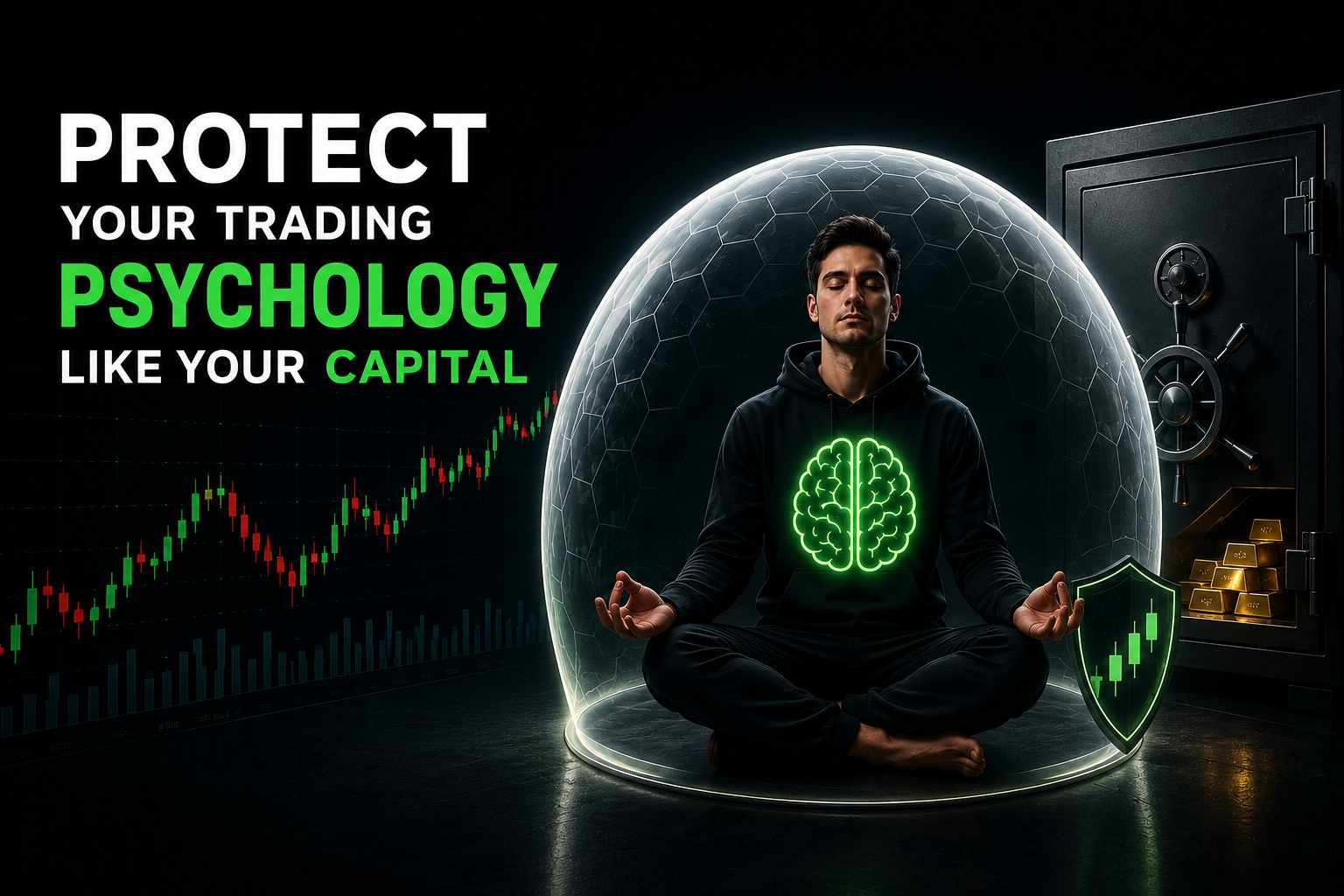
Trading success is often associated with strategies, indicators, and market analysis. However, many traders overlook the factor that has the greatest impact on long-term profitability: trading psychology. The quote, “Protect your trading psychology like your capital,” highlights a truth that every trader eventually learns—your mindset can either protect your account or destroy it.
Why Trading Psychology Matters
Many traders spend months searching for the perfect strategy, believing that success depends entirely on technical skills. In reality, even the best trading system can fail when emotions take control. Fear, greed, impatience, and frustration often lead traders to ignore their plans and make costly mistakes.
The market constantly tests emotional discipline. A trader who can control emotions has a significant advantage over someone who reacts impulsively to every market movement.
The Link Between Money and Mindset
Capital and psychology are closely connected. When traders experience losses, their confidence often declines. As confidence decreases, decision-making becomes weaker, leading to even more mistakes and losses.
This cycle can quickly spiral out of control. A trader who protects their mindset during difficult periods is more likely to recover and remain consistent over the long term.
Fear: A Major Trading Obstacle
Fear affects traders in many ways. Some hesitate to enter valid setups because they worry about losing money. Others exit winning trades too early because they fear giving back profits.
Another common form of fear is FOMO, or Fear of Missing Out. Traders often chase market moves after they have already happened, entering at poor prices and increasing their risk unnecessarily.
The Dangers of Greed
While fear keeps traders from taking opportunities, greed pushes them toward excessive risk. Greedy traders often increase position sizes, remove stop losses, or continue trading after reaching profit targets.
The desire for quick wealth can lead to poor decisions. Successful trading is built on consistency, not on trying to hit a home run with every trade.
Revenge Trading Can Destroy Accounts
After experiencing losses, many traders feel an urge to recover their money immediately. This emotional reaction often results in revenge trading, where decisions are driven by frustration rather than logic.
Revenge trading typically leads to overtrading, larger losses, and emotional exhaustion. Professional traders accept losses as a normal part of the business rather than treating them as personal failures.
Why Risk Management Protects Psychology
Most traders view risk management as a way to protect money, but it also protects emotional stability. Risking too much on a single trade creates unnecessary pressure and stress.
When position sizes remain reasonable, traders can think clearly and follow their strategies. Smaller losses are easier to accept, making it easier to maintain confidence and discipline.
The Importance of Discipline
Discipline is the foundation of successful trading. It means following a trading plan regardless of emotions or market conditions. Disciplined traders respect stop losses, follow entry rules, and avoid impulsive decisions.
Although discipline may seem boring, it is often the difference between long-term success and repeated failure.
Developing Emotional Resilience
Losses are unavoidable in trading. Even the most successful traders experience drawdowns and losing streaks. What separates professionals from amateurs is their ability to recover emotionally.
Resilient traders view losses as learning opportunities. Instead of focusing on short-term setbacks, they focus on improving their process and maintaining consistency.

The Value of a Trading Plan
A trading plan provides structure during emotional moments. It outlines when to enter trades, when to exit, how much risk to take, and how to manage positions.
Without a plan, emotions often become the primary decision-maker. A well-designed trading plan helps traders remain objective even during periods of uncertainty.
Patience Is a Competitive Advantage
Many traders lose money simply because they cannot wait. They feel compelled to trade constantly, believing that more trades create more profits.
In reality, successful traders understand that quality matters more than quantity. Waiting for high-probability opportunities often produces better results than forcing trades out of boredom or impatience.
Taking Breaks Improves Performance
Trading for long hours without rest can lead to mental fatigue. When traders become emotionally exhausted, their ability to make rational decisions declines significantly.
Stepping away from the charts after stressful sessions allows the mind to reset. Sometimes the best decision is not to trade at all but to return later with a clear perspective.
Building a Psychology Protection System
Just as traders use stop losses to protect capital, they should create systems to protect their mindset. Daily loss limits, trading journals, pre-trade checklists, and regular breaks can all help maintain emotional balance.

Monitoring psychological health is just as important as monitoring account performance. A healthy mindset supports better decision-making and long-term consistency.
Conclusion
Trading is not just a financial challenge—it is a psychological one. Fear, greed, revenge trading, and impatience can damage both profits and confidence if left unchecked. Protecting your trading psychology means maintaining discipline, managing risk effectively, following a clear plan, and developing emotional resilience. While capital can often be recovered, rebuilding a damaged mindset is much harder. By treating your psychology as a valuable asset, you increase your chances of achieving sustainable success in the markets.
FAQs
1. Why is trading psychology important?
Trading psychology influences every decision a trader makes. Poor emotional control often leads to costly mistakes, even when using a profitable strategy.
2. How can I improve my trading discipline?
Create a trading plan, follow strict risk management rules, maintain a journal, and avoid making emotional decisions.
3. What is revenge trading?
Revenge trading occurs when a trader tries to recover losses immediately through emotional and impulsive trades.
4. How much should I risk per trade?
Many experienced traders risk only 1–2% of their account on a single trade to maintain emotional stability and protect capital.
5. Can trading psychology be improved?
Yes. Through practice, journaling, self-awareness, discipline, and experience, traders can strengthen their psychological resilience and decision-making abilities.