

Owning a business isn’t just about money. It’s about control, freedom, frustration, late nights, small wins that feel huge, and failures that sting more than you expect. It’s about choosing uncertainty over boredom and responsibility over comfort. In a world that keeps telling people to play it safe, owning a business is a quiet rebellion.
The ideas in the image are simple on the surface, but they carry weight. No boss. Income tied to action. Freedom of location. More time. Diversified income. Strong relationships. Even the bold claim of building wealth without college. These aren’t fantasies. They’re reasons people keep choosing entrepreneurship, even when it’s hard.
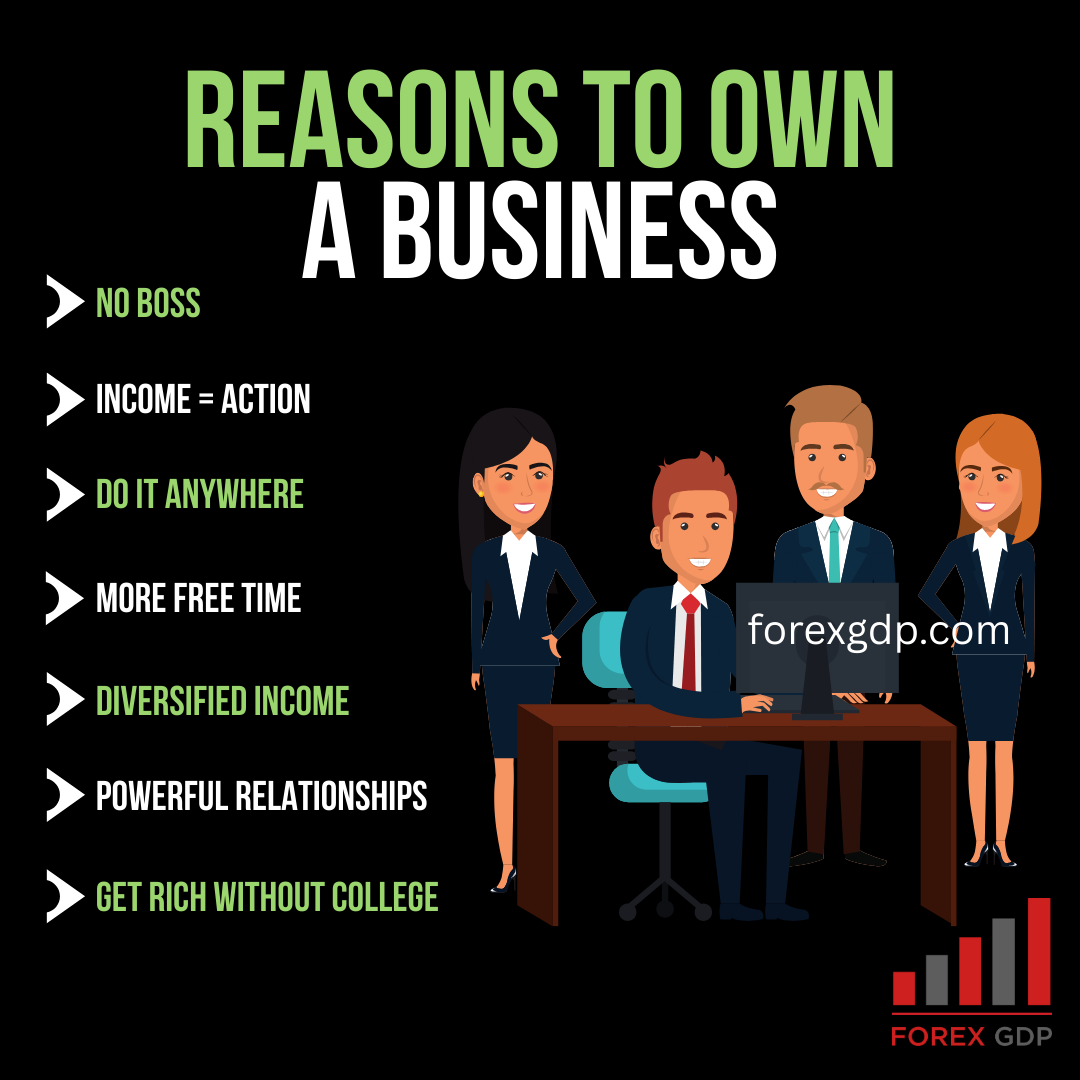
Let’s talk about what those reasons actually mean in real life, without sugarcoating the parts that don’t look good on motivational posters.
The Freedom of Having No Boss
Escaping the Invisible Leash
Not having a boss doesn’t mean not having pressure. It means choosing where that pressure comes from. A boss is an invisible leash. It doesn’t always pull hard, but it’s always there. Meetings you don’t need. Deadlines that don’t make sense. Decisions made by people who won’t deal with the consequences.
When you own a business, that leash disappears. You still answer to clients, customers, and the market, but that relationship feels different. You’re not asking for permission to live your life. You’re negotiating value. There’s dignity in that, even when it’s uncomfortable.
Responsibility Replaces Permission
Here’s the part people don’t say out loud. No boss also means no excuses. When something goes wrong, there’s no one to blame. That can feel heavy. Some days, it feels unfair. But it’s also empowering. Responsibility sharpens you. It forces growth in ways comfort never will.
Instead of waiting for approval, you act. Instead of hoping someone notices your effort, you create results that speak for themselves. That shift alone changes how you see yourself.
Income That Matches Your Action
Breaking the Fixed-Pay Ceiling
A salary is predictable, and predictability can be a trap. You can work harder, smarter, faster, and still earn the same amount at the end of the month. Over time, that reality chips away at motivation. You stop giving your best because your best doesn’t change anything.
Business flips that equation. When income is tied to action, effort matters again. The connection between what you do and what you earn becomes painfully clear. It’s not always fair, but it’s honest.
Effort Becomes an Investment
Every action in a business feels like planting seeds. Some grow quickly. Others take time. Some never sprout at all. That uncertainty can be frustrating, but it also makes success deeply satisfying. When money comes in, you know exactly why it happened.
There’s no mystery bonus structure or vague performance review. You don’t need to be liked. You need to be effective. That clarity is refreshing in a world full of corporate politics.
The Ability to Work From Anywhere


Location Stops Defining Your Life
Owning a business can untie you from geography. You’re no longer building your life around an office address. Your work fits into your life instead of the other way around. That freedom doesn’t always mean beaches and laptops, but it does mean choice.
Choice to travel. Choice to stay home. Choice to work late or early. Choice to design days that match your energy instead of fighting against it.
Freedom Comes With Discipline
Working anywhere sounds glamorous until you realize distractions don’t disappear just because you changed locations. Freedom demands structure. Without it, days slip by quietly and productivity evaporates.
But when discipline is in place, location freedom feels like breathing fresh air after years in a windowless room. You realize how much energy you were wasting just showing up somewhere you didn’t want to be.
Time Becomes Yours Again
Owning Time Instead of Renting It
A job often feels like renting your own life back in small chunks. You trade hours for money and hope what’s left over is enough. Owning a business changes that relationship. Time becomes something you manage, not something you surrender.
Early on, business can demand more hours than a job ever did. That’s the uncomfortable truth. But over time, smart systems and leverage can give you something jobs rarely offer: flexibility without permission.
Time Gains Meaning
When you control your schedule, time starts to feel valuable again. You notice how you spend it. Wasted hours hurt more because they’re yours to waste. That awareness sharpens focus and intention.
Free time stops being an escape from work and becomes part of a balanced life. That shift alone can improve mental health in ways no raise ever could.
Diversified Income Creates Stability


One Paycheck Is a Fragile Plan
Relying on a single source of income is risky, even if it feels safe. Jobs end. Companies downsize. Industries change. When your livelihood depends on one paycheck, you’re one decision away from instability.
Business opens the door to diversification. Multiple income streams create resilience. When one slows down, others can carry the weight.
Control Replaces Hope
Diversified income isn’t about greed. It’s about control. Instead of hoping nothing goes wrong, you prepare for when it does. That mindset reduces stress and builds confidence.
Knowing you’re not trapped by one source of money changes how you negotiate, how you plan, and how you sleep at night.
Building Powerful Relationships
Business Connects You to Builders
Owning a business introduces you to a different kind of person. People who take risks. People who think in terms of solutions instead of excuses. These relationships matter more than most realize.
Conversations shift from complaints to ideas. From gossip to strategy. That environment pushes you to grow, whether you want to or not.
Value Creates Stronger Bonds
Business relationships are built on mutual benefit. When you help someone succeed, they remember it. When they help you, trust forms. These bonds often run deeper than workplace friendships held together by shared frustration.
Over time, your network becomes one of your greatest assets. Not because of what people can give you, but because of what you’ve built together.
Rethinking Wealth Without College


Education Isn’t One-Size-Fits-All
College works for some people. For others, it’s an expensive detour. Owning a business offers an alternative path, not an easy one, but a real one. Skills learned through action often stick deeper than theory learned in classrooms.
Experience has a way of teaching lessons no textbook can. Mistakes become teachers. Failures become feedback.
Learning Becomes Practical
When you own a business, learning is immediate and applied. You don’t study for a test. You study to survive. That urgency accelerates growth in surprising ways.
Wealth doesn’t come from diplomas alone. It comes from solving problems, creating value, and staying persistent when results lag behind effort.
The Mental Shift of Ownership
Confidence Grows Through Challenge
Owning a business changes how you see yourself. Each problem solved builds confidence. Each obstacle overcome reinforces belief. You stop waiting to be chosen and start choosing yourself.
That mindset spills into every area of life. Decisions become easier. Fear loses its grip. You realize you’re capable of more than you were taught to believe.
Failure Stops Being Personal
In business, failure is information. It hurts, but it teaches. Over time, you learn to separate your identity from outcomes. You fail at something, not as someone.
That emotional resilience becomes a quiet superpower. It allows you to try again without carrying shame.
The Hidden Cost of Playing It Safe
Comfort Can Be Expensive
Staying safe feels smart until you calculate the long-term cost. Missed opportunities. Untapped potential. Years spent wondering “what if.” Comfort has a price tag, and it’s often paid in regret.
Business isn’t safe, but it’s honest. It shows you exactly where you stand.
Risk Builds Awareness

Taking risks wakes you up. You become more aware of your choices, your habits, and your limits. Life feels sharper, more real. Even the bad days carry meaning.
That awareness is addictive. Once you taste it, going back to autopilot feels impossible.
Designing a Life, Not Just a Career
Work Fits Into Life, Not Vice Versa
Owning a business gives you the chance to design work around life instead of squeezing life into leftover hours. That doesn’t happen overnight, but it’s possible with intention.
You decide what matters. You build systems that support those priorities.
Legacy Becomes Possible
A business can outlive you. It can support families, communities, and ideas. That sense of legacy adds depth to daily work.
You’re not just earning. You’re building something that matters.
Final Thoughts on Choosing Ownership
Owning a business isn’t for everyone. It’s stressful. It’s uncertain. It demands patience and humility. But for those who crave freedom, meaning, and control over their time and income, it offers something rare.
It replaces permission with responsibility. It turns effort into opportunity. It challenges you to grow or quit. And for many, that challenge is exactly the point.
FAQs
1.Is owning a business more stressful than having a job?
It can be, especially in the beginning. The difference is that the stress comes from your choices, not someone else’s demands.
2.Can you really make money without a boss?
Yes, but it requires discipline and accountability. Freedom doesn’t remove responsibility; it multiplies it.
3.Is working from anywhere realistic or just marketing hype?
It’s realistic for many business models, but it still requires structure and focus to avoid distractions.
4.Do businesses really give you more free time?
Eventually, they can. Early stages often demand more time, but long-term flexibility is possible with the right systems.
5.Is college unnecessary if you want to own a business?
College can help, but it’s not mandatory. Skills, experience, and persistence often matter more than formal credentials.