

Why Your Opinion Doesn’t Matter in Trading
Let’s be brutally honest — your opinion means nothing in the markets. The charts don’t care about how “certain” you are, how much research you’ve done, or how confident you feel. The only thing that matters is price action — the raw, unfiltered movement of the market. Traders who survive and thrive are the ones who respect the charts, not their emotions or personal beliefs.
If you’ve ever caught yourself thinking, “It has to go up from here,” you’re not alone. That’s your ego talking, not your trading strategy. This article dives deep into how to detach your emotions and opinions from your trades, why respecting charts leads to consistent profits, and how to rewire your mindset for disciplined, data-driven trading.
The Market Doesn’t Owe You Anything
The first and most painful truth: the market doesn’t care about you. It doesn’t care if you’ve lost five trades in a row or if you “need” a win. The market is like the ocean — beautiful, vast, and completely indifferent. You can’t argue with it; you can only learn to navigate it.
When you start treating the market as an unpredictable force instead of something you can outsmart, your trading perspective changes. You stop trying to “win” against the market and start trying to flow with it. That shift in attitude alone separates professionals from amateurs.
The Problem with Opinions in Trading
Everyone has an opinion — that’s the problem. You might think a currency pair is “overbought” because of some news article, while another trader believes it’s about to break higher. Both of you could be wrong because opinions don’t move prices; orders do.
When traders base their entries or exits on opinions, they’re gambling, not trading. Opinions lead to overconfidence, overtrading, and emotional decision-making. The chart, on the other hand, shows you where the money actually is — where traders are buying and selling. That’s the truth you should follow.
Chart Reading: The Language of the Market
Charts are not just lines and candles — they’re the market’s language. Each candle tells a story of struggle between buyers and sellers. When you learn to read charts, you’re essentially learning to listen to what the market is really saying.
Price action, support and resistance, trends, and volume — these are the clues that reveal market behavior. Opinions come and go, but patterns like double tops, breakouts, and retracements repeat because human psychology doesn’t change. Master the charts, and you master the crowd.
Emotional Trading — The Silent Account Killer
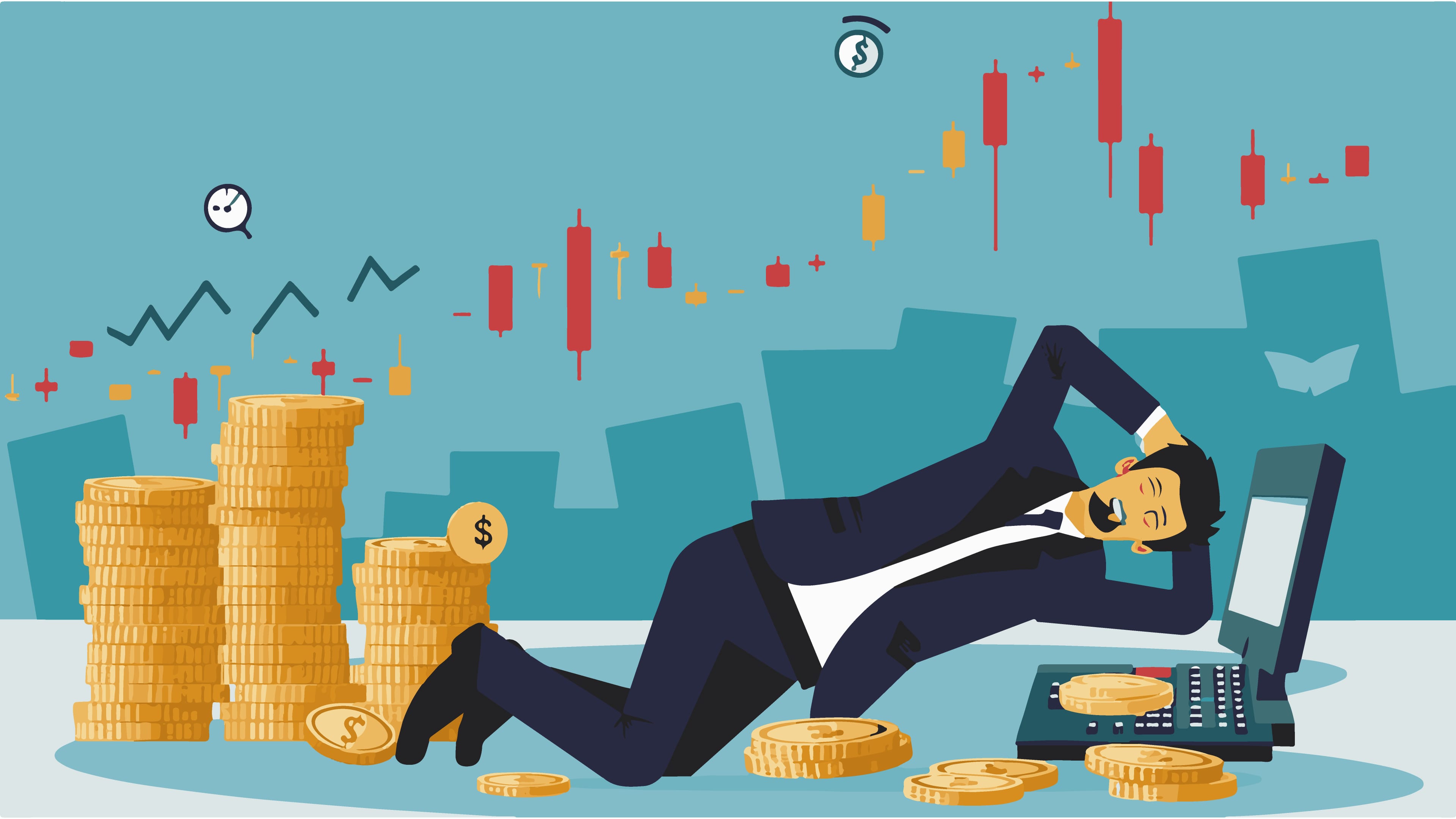
Let’s call it what it is: emotional trading is account suicide. You know that feeling when you move your stop loss “just a little further” because you’re sure the market will reverse soon? That’s emotion. And it’s lethal.
The best traders are not the smartest — they’re the calmest. They accept that losses are part of the game. They respect their stop losses and never argue with what the chart says. If the chart breaks structure, they exit. No “what ifs.” No begging the market to change.
Why Technical Analysis Beats Gut Feelings
Your gut might help you choose what to eat for dinner, but in trading, it’s useless. Technical analysis, on the other hand, gives you an objective framework to make decisions. It strips away emotion and replaces it with logic.
Support zones, Fibonacci retracements, moving averages — these tools aren’t just fancy indicators; they’re the structure behind every smart trading decision. When used correctly, they give you the ability to act based on facts, not feelings.
Confirmation Bias — The Trap You Don’t See Coming
Ever notice how you only pay attention to analysis that supports your bias? That’s confirmation bias — the silent killer of rational trading. You might ignore bearish signals just because you want the price to rise.
The chart might scream “sell,” but you’ll convince yourself to “wait for a reversal.” The longer you cling to your opinion, the faster your account balance shrinks. Respecting charts means respecting data, even when it contradicts your expectations.
The Power of Simplicity in Chart Analysis
Here’s a harsh truth: most traders lose because they overcomplicate things. They drown their charts in 10 different indicators, hoping one will predict the future. But markets aren’t puzzles to be solved — they’re patterns to be recognized.
Simplicity wins. Focus on price action, trend direction, and key zones. These alone can make you profitable if you follow them consistently. Remember — complexity is often just a disguise for confusion.
The Ego Problem — Your Biggest Enemy
Your biggest enemy in trading isn’t the broker, the market, or the news — it’s your ego. Ego makes you hold losing trades longer, double down on bad positions, and ignore stop losses. It whispers lies like, “It’ll come back,” or “You can’t be wrong again.”

But charts don’t care about ego. They’re brutally honest. When you start respecting them, you’ll realize that being wrong is not a failure — it’s feedback. Ego traders blow accounts; humble traders grow them.
Risk Management — Respecting the Chart Means Respecting Risk
Respecting charts isn’t just about reading patterns; it’s about managing risk. Every trade should have a clear stop loss and target based on chart structure, not hope. Traders who ignore risk management are like drivers speeding with no brakes — it’s only a matter of time.
You can’t control the market, but you can control how much you lose when you’re wrong. Limiting losses is how professionals stay in the game long enough to profit. Remember: capital preservation is step one to profitability.
Trading Discipline — The Bridge Between Knowledge and Results
You can learn every strategy on YouTube, but without discipline, you’ll still lose. Discipline means following your plan even when it’s boring. It’s resisting the urge to “just check” one more trade setup after three losses in a row.
Respecting charts requires patience. Sometimes the best trade is no trade at all. Waiting for the perfect setup — even if it takes days — is what makes consistency possible. Discipline turns chaos into control.
The Psychological Shift: From Prediction to Reaction
Most losing traders try to predict the market. Winning traders react to it. There’s a massive difference. Predictors think they know what will happen next. Reactors wait for confirmation and trade what they see.
By reacting to price action instead of predicting it, you align yourself with the flow of the market. You stop fighting it and start following it. The moment you switch from guessing to observing, your entire trading experience transforms.
Building a Trading Mindset That Lasts
A successful trader’s mindset is built on acceptance and adaptability. You accept losses, you adapt to market changes, and you evolve with experience. Traders who respect charts are like sailors — they adjust their sails instead of cursing the wind.
Developing that mindset takes time. Journaling trades, reviewing mistakes, and focusing on process over profit are all ways to grow. Remember, your goal isn’t to win every trade — it’s to make smart decisions consistently over time.
Respecting the Chart Doesn’t Mean Blind Following
Now, don’t confuse “respecting charts” with “blindly following signals.” Respect means understanding why a pattern is forming and making informed choices. Even the best setups can fail — that’s normal.
A professional trader respects the chart by preparing for all outcomes. They know their invalidation levels, manage risk, and stay emotionally detached. Respect doesn’t mean worship — it means trust, paired with caution.
Case Study: How Ignoring Charts Destroys Accounts
Let’s paint a scenario. Imagine a trader named Alex. He buys EUR/USD because he “feels” it’ll go up after the news. The chart, however, clearly shows resistance at that level. But Alex ignores it. Within hours, price crashes — stop loss hit. Instead of accepting the loss, he doubles his position to “recover.” The result? Account wiped.
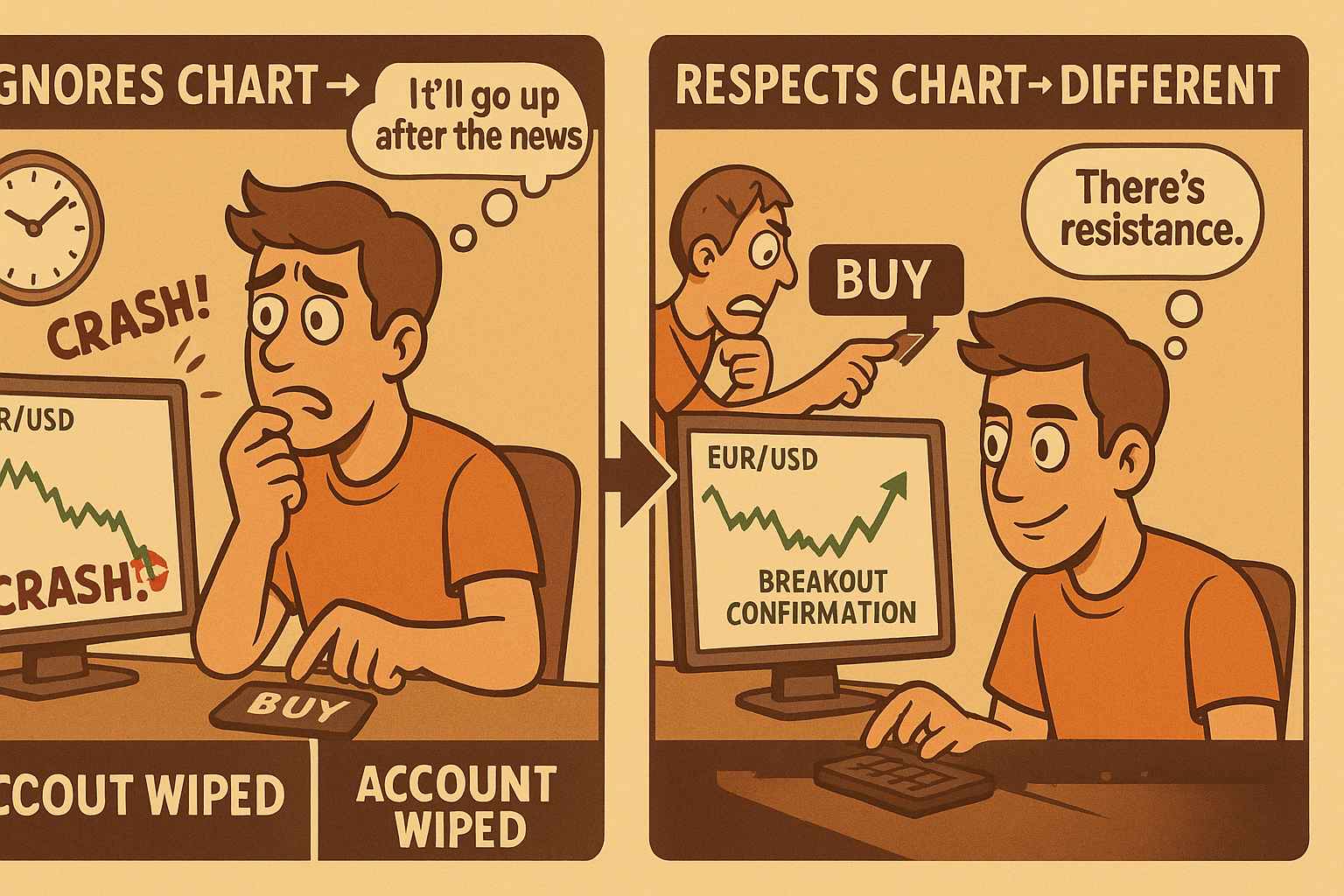
Now imagine if Alex had respected the chart. He would’ve noticed the resistance, waited for a breakout confirmation, and managed his position size properly. Same chart, different outcome — because of respect, not opinion.
How to Train Yourself to Respect the Charts
You can’t develop discipline overnight, but you can train it. Start by journaling every trade — the reason, the setup, and how you felt. Over time, you’ll spot patterns in your behavior that lead to losses.
Another technique is backtesting. When you see how your strategy performs historically, your confidence in the system grows, and your reliance on “feelings” decreases. Eventually, you’ll stop asking, “What do I think?” and start asking, “What does the chart say?”
The Role of Patience in Profitable Trading
Patience is underrated but crucial. Most traders lose not because their analysis is wrong, but because they enter too early or too late. The chart often shows where the setup is forming — you just need to wait for confirmation.
Think of patience as your secret weapon. It helps you avoid impulsive trades and ensures you only risk money when probability favors you. Impatient traders chase moves; patient traders catch them.
How Chart Respect Builds Long-Term Success
Long-term trading success isn’t about one big win — it’s about surviving long enough to stack small wins. Respecting charts builds consistency, and consistency compounds into profit.
Once you start trusting price action over personal bias, you’ll notice fewer emotional swings. Trading becomes less stressful, more systematic, and surprisingly peaceful. That’s the real sign of mastery — calm confidence rooted in data.
Common Mistakes Traders Make Ignoring Charts


Ignoring charts can take many forms: trading against the trend, forcing trades, skipping confirmations, or holding losing positions out of hope. Each of these mistakes stems from ego or emotion.
The market punishes arrogance. Every ignored signal is a lesson waiting to be learned the hard way. Respecting charts means learning from those lessons — not repeating them.
Why Respect Equals Profit
It’s simple: when you respect the chart, you respect the truth. And in trading, truth equals money. Every candlestick tells you where buyers and sellers are battling. When you align with that reality, you trade with the tide instead of against it.
Profit doesn’t come from prediction — it comes from reaction. The more you listen to what the chart says, the less you’ll lose trying to argue with it.
The Final Lesson: The Chart Is Always Right
You can argue, complain, or rationalize all you want, but the chart is always right. It reflects real-time market behavior — not your hopes or beliefs. The sooner you accept that, the sooner you’ll stop fighting losing battles.
Trading is not about being right; it’s about making money. Respecting the chart means accepting that sometimes, being wrong is the most profitable lesson you can learn.
Conclusion: Trade What You See, Not What You Think
At the end of the day, the secret to consistent trading success lies in five words: Respect the charts, not opinions.
Your emotions, predictions, and gut feelings have no place in trading. The chart is your compass, your map, and your teacher. When you learn to trust it — and only it — you move from emotional chaos to logical consistency.
So the next time you’re tempted to “hope” for a reversal, pause and look at the chart. The answer is already there — if you have the humility to listen.
FAQs
1. Why is respecting charts more important than following news?
Because charts show real market behavior, while news reflects delayed information that’s already priced in. The market moves before the headlines, not after them.
2. How do I stop trading based on emotions?
Create a strict trading plan, stick to your stop losses, and journal your trades. The more structure you add, the less room there is for emotional decisions.
3. Can opinions ever help in trading?
Only if they’re backed by chart evidence. Opinions without data are just noise; opinions supported by structure can guide strategy.
4. What’s the best way to learn to “respect the chart”?
Start with price action. Learn to identify key zones, trends, and patterns. Practice reading charts daily until analysis becomes instinct.
5. Why do most traders ignore the charts even when they know better?
Because ego and impatience override logic. Many traders know what they should do but fail to do it. The key is emotional discipline — not knowledge.