

When people first step into the world of Forex trading, one of the most common misconceptions they encounter is the belief that all brokers provide the same trading conditions. Sounds simple, right? Just pick any broker, fund your account, and start trading. But here’s the hard truth—this is one of the biggest traps new traders fall into.
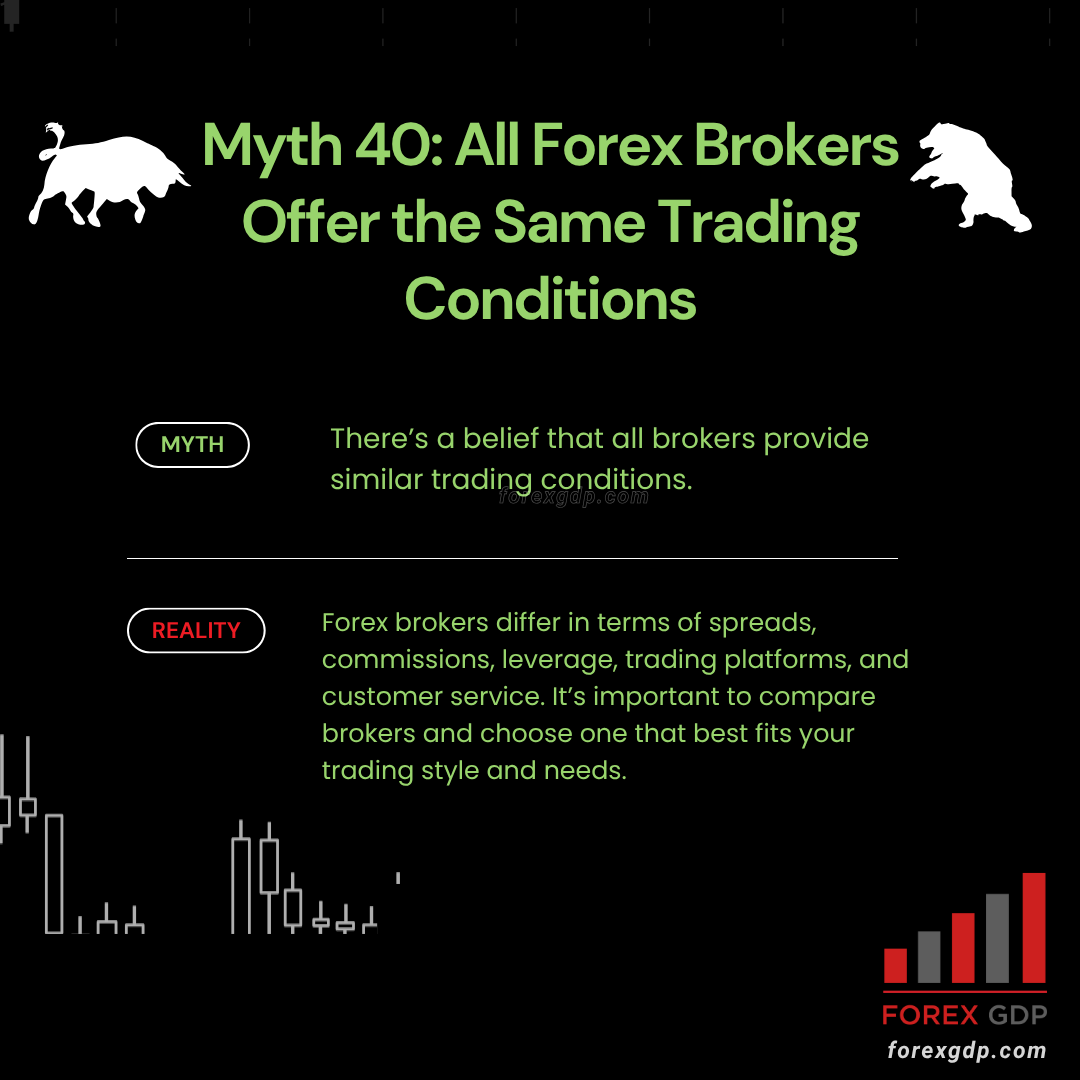
In this article, we’re going to break down why this myth is dangerous, explore the real differences between Forex brokers, and guide you on how to pick a broker that actually aligns with your trading style. So buckle up—because the broker you choose could be the difference between success and frustration in your trading journey.
The Origin of the Myth
So, where does this idea even come from? Most beginners assume Forex brokers are like banks—regulated, standardized, and basically identical. They believe that once they sign up, they’ll get the same spreads, same leverage, and the same overall trading experience no matter which broker they pick.
This myth is reinforced by flashy broker ads that promise “tight spreads,” “no commissions,” and “lightning-fast execution.” Spoiler alert: many of those claims are exaggerated or misleading.
Why Believing All Brokers Are the Same is Dangerous
Imagine walking into a car dealership and assuming all cars drive the same way. Would you blindly buy the first one? Of course not. Some cars are reliable, others are lemons, and a few are straight-up scams. Brokers work the same way.
Believing all brokers are the same can lead to:
-
Overpaying on spreads and commissions.
-
Trading with unfair slippage or slow execution.
-
Getting trapped with shady brokers who make withdrawals nearly impossible.
In short, this myth can cost you money, time, and a lot of stress.
Key Differences Among Forex Brokers
Now, let’s dive into the real differences you’ll face when comparing brokers.
Spreads and Commissions
Some brokers offer fixed spreads, while others offer variable spreads. The difference might look small, but over hundreds of trades, that extra 0.5 pip can eat up your profits.
Leverage Options
One broker might give you leverage of 1:30, while another tempts you with 1:1000. Sounds exciting, but higher leverage is a double-edged sword—it amplifies both profits and losses.

Trading Platforms and Tools
Not every broker offers MetaTrader 4 or MetaTrader 5. Some push proprietary platforms that lack advanced tools. The wrong platform can cripple your trading strategy.
Execution Speed and Slippage
Ever clicked “buy” and realized your order executed at a worse price? That’s slippage. Some brokers excel at fast execution, while others lag and quietly drain your account.
Regulations and Licensing
A regulated broker under authorities like the FCA (UK) or ASIC (Australia) offers more protection compared to an offshore broker registered on a tiny island.
Customer Support Quality
When things go wrong, will you get a real human or just a chatbot sending copy-paste replies? Support quality varies dramatically across brokers.
Market Makers vs. ECN/STP Brokers
This is a big one. Not all brokers operate the same way:
-
Market Makers: They take the other side of your trade. Sometimes, your losses are their profits.
-
ECN/STP Brokers: They act as middlemen, passing your orders to liquidity providers. Usually more transparent, but not always the cheapest.
If you think all brokers are neutral middlemen—you’re in for a rude awakening.
Hidden Costs Traders Overlook
Brokers don’t just make money from spreads and commissions. Hidden fees include:
-
Overnight swap rates.
-
Inactivity fees.
-
Deposit and withdrawal charges.
You might not notice these at first, but they stack up over time.
The Role of Broker Reputation
Ever wondered why some brokers get glowing reviews while others are flooded with complaints? Reputation matters. A broker with years of consistent payouts and transparency is worlds apart from a broker drowning in withdrawal scams.

How Trading Style Impacts Broker Choice
Your broker should match your strategy:
-
Scalpers need low spreads and lightning-fast execution.
-
Swing traders care more about overnight swap rates.
-
Long-term traders prioritize stability and safety of funds.
Using the wrong broker for your trading style is like running a marathon in flip-flops—it just doesn’t work.
Red Flags to Watch Out For
Want to avoid disaster? Look out for:
-
Unrealistic leverage promises (1:5000, really?).
-
Bonuses that lock your funds until impossible trading volumes are met.
-
Brokers with no clear regulation or vague “global licenses.”
-
Delays in withdrawals or endless excuses from support.
The Impact of Regulation on Broker Reliability
Regulation isn’t just red tape—it’s your shield. Regulated brokers must follow strict rules, segregate client funds, and undergo audits. Unregulated brokers? They can vanish overnight with your money.
Why Research is Your Best Weapon
Here’s the harsh truth: if you don’t research your broker, you’re gambling, not trading. Comparing spreads, reading user reviews, checking regulation status—this isn’t optional. It’s survival.
Steps to Choosing the Right Broker
Let’s simplify the process:
-
Check regulation first—non-negotiable.
-
Compare spreads and commissions.
-
Test their trading platform with a demo account.
-
Evaluate customer support response time.
-
Read real trader reviews—look for consistent red flags.
The Harsh Truth About “Perfect” Brokers
Bad news—there’s no such thing as a perfect broker. Each has pros and cons. Your goal isn’t to find perfection—it’s to find the one that sucks the least while meeting your specific needs.

Case Study: Two Traders, Two Brokers, Two Very Different Outcomes
-
Trader A joins a flashy offshore broker offering insane leverage and “zero commissions.” Within weeks, they face slow execution, random slippage, and endless withdrawal delays.
-
Trader B chooses a regulated broker with slightly higher commissions but transparent terms. Execution is fast, withdrawals are smooth, and while they don’t get rich overnight, they avoid the nightmare.
The difference? One believed the myth. The other didn’t.
Conclusion
The myth that all Forex brokers offer the same trading conditions is not just wrong—it’s dangerous. Every broker has unique spreads, fees, execution speeds, regulations, and levels of transparency. If you blindly trust any broker without research, you’re setting yourself up for losses that could have been avoided.
So, stop falling for the illusion. Take the time to compare brokers, dig deep into their reputation, and choose wisely. In Forex, your broker is your battlefield partner. Pick the wrong one, and you’re fighting uphill. Pick the right one, and you’ve got a real shot at surviving—and thriving—in the market.
FAQs
1. Are all regulated brokers safe?
No. Regulation helps, but even regulated brokers can have issues. Always double-check their history and user reviews.
2. Why do some brokers offer insanely high leverage?
High leverage is a marketing trick. It attracts new traders but often leads to blown accounts.
3. Can I use multiple brokers at once?
Yes. In fact, some traders diversify between brokers to reduce risk and compare execution quality.
4. What’s the biggest red flag when choosing a broker?
Withdrawal delays and vague regulation details. If you see either—run.
5. Do spreads really make a big difference?
Absolutely. A small difference in spreads can add up to hundreds or even thousands of dollars over time, especially for active traders.