

Let’s face it — trading isn’t just about winning. It’s about surviving. Most new traders enter the market with dreams of making a fortune overnight, only to watch their accounts shrink faster than they can say “stop-loss.” The truth? Trading is a game of probabilities, not guarantees. Every trader, even the most skilled one, faces losses. The difference between a professional and an amateur lies in how they manage those losses.
“Keep losses small” isn’t just a catchy phrase; it’s the golden rule that separates long-term success from quick failure. When you learn to minimize losses, you’re not only protecting your capital — you’re giving yourself the chance to stay in the game long enough to win big later.
Why Keeping Losses Small Matters More Than Chasing Wins
Many traders obsess over finding perfect entries or predicting market tops and bottoms. But here’s the uncomfortable truth — even the best strategies fail sometimes. What really keeps your account alive isn’t the size of your wins but the size of your losses. A trader who loses 2% per trade can recover easily. A trader who loses 50%? Needs a miracle.
Think of it this way: if you lose 50% of your capital, you’ll need a 100% gain just to break even. That’s like climbing a mountain twice as tall as the one you fell from. Keeping losses small is about preserving energy, capital, and most importantly — your trading mindset.
The Psychology Behind Small Losses
Trading is 80% psychology and 20% strategy. When you take small losses, you’re not just protecting your money — you’re protecting your mental state. Large losses hurt more than your balance sheet; they crush your confidence and cloud your judgment.
Small losses, on the other hand, are manageable. They allow you to stay calm, analyze your mistakes objectively, and come back stronger. It’s like taking a jab in boxing — it stings but doesn’t knock you out. Big losses? Those are the knockout punches that send you out of the ring.
Understanding Risk Per Trade
So how small is “small”? Most professional traders risk 1–2% of their total capital per trade. That means if your account is $10,000, you should never lose more than $100–$200 on a single position. It sounds boring, right? But boring is good. Boring keeps you consistent.
This approach ensures that even a streak of losing trades won’t blow up your account. Let’s say you lose 10 trades in a row — at 2% risk, you’ve lost 20%. Painful? Yes. Fatal? No. You can recover that. But if you risked 10% per trade, you’d be wiped out after just a few bad trades.
Stop-Loss: Your Lifeline in Trading
A stop-loss is like the seatbelt of your trading car. You don’t put it on expecting to crash, but you’d be a fool not to wear it. Setting a stop-loss ensures that even if the market moves against you, you won’t lose more than you can handle.
Too many traders ignore stop-losses out of ego or fear of being wrong. But the market doesn’t care about your ego. It’s ruthless, and it punishes stubbornness. Using stop-losses properly helps you live to trade another day — and that’s what longevity in trading is all about.
Position Sizing: The Hidden Key to Survival


Even with a perfect stop-loss, poor position sizing can ruin your risk management. Position sizing means adjusting your trade size based on how much you’re willing to lose. For example, if you’re risking 2% per trade and your stop-loss is 50 pips away, you calculate the lot size accordingly.
It’s not glamorous, but it’s how professionals stay in control. Trading without proper sizing is like driving without brakes — you might enjoy the thrill until the crash happens.
Why Traders Hate Taking Small Losses
Let’s be honest — nobody likes losing, even if it’s small. Our brains are wired to avoid pain, and a loss, no matter how minor, triggers that emotional discomfort. That’s why so many traders hold on to losing positions, hoping they’ll “turn around.”
But hope isn’t a strategy. Every minute you stay in a losing trade, you’re letting the market bleed your account. Accepting small losses is an act of discipline. It’s the price of admission to the world of consistent trading.
The Compounding Power of Small Wins and Small Losses
Imagine you’re a trader who wins 6 out of 10 trades, with each win doubling your risk reward (2:1). If you risk $100 per trade, you lose $400 total (4 losses × $100) but gain $1,200 (6 wins × $200). Your profit? $800. You didn’t need to win all the time — you just needed to keep losses small and let your winners run.
That’s the magic of compounding consistent, disciplined behavior. Small losses are part of a larger system designed to protect you from ruin while allowing growth over time.
Emotional Control: The Real Game-Changer
Controlling your emotions is harder than analyzing charts. One big loss can make you revenge-trade, double your lot size, and spiral into even bigger losses. It’s a dangerous trap that many traders fall into — and it starts with not respecting small losses.
By committing to small, predefined losses, you take emotion out of the equation. You stop reacting and start responding. It’s the difference between being a gambler and being a professional.
How Big Losses Destroy Confidence
Confidence in trading is like oxygen — once it’s gone, everything suffocates. When you suffer a big loss, it’s not just your account that takes a hit; it’s your mindset. You begin second-guessing every move, hesitating on entries, and fearing another loss. That’s how paralysis sets in.
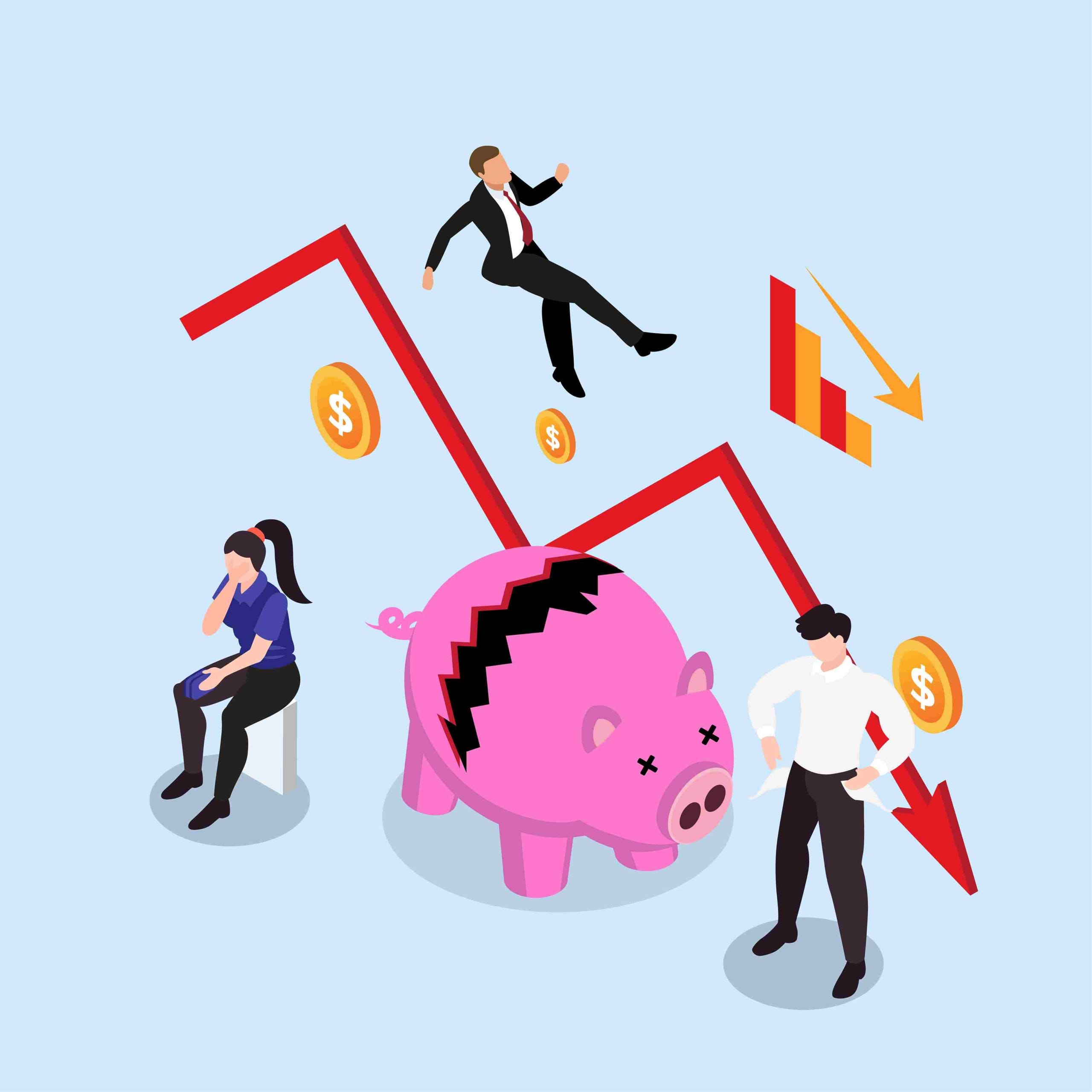
Keeping losses small keeps your confidence intact. You’re not scared of losing because you know you can recover. It’s not about avoiding pain entirely; it’s about keeping it small enough that you can handle it and learn from it.
Real-Life Example: Two Traders, Two Outcomes
Let’s compare two traders — Alex and Ben. Both start with $10,000.
-
Alex risks 10% per trade, aiming for quick profits.
-
Ben risks just 2% per trade, focusing on consistency.
After 10 losing trades:
-
Alex’s account drops to $3,486.
-
Ben’s account is still at $8,171.
Now tell me — who has a better chance of making a comeback? Exactly. Ben’s still in the game, while Alex is stuck climbing out of a deep hole.
This simple math illustrates the power of keeping losses small. It’s not about being conservative — it’s about being smart.
The Market Rewards Survivors, Not Heroes
Too many traders want to be heroes — catching tops, bottoms, or making “the big trade.” But the market doesn’t reward heroes. It rewards survivors. Those who preserve their capital through storms are the ones still standing when the sun shines again.
In trading, survival is success. Keeping losses small ensures that no single trade defines your career. It’s your ability to manage risk over hundreds of trades that truly matters.
Learning From Small Losses: Turning Pain Into Progress
Every loss is a lesson — if you choose to learn from it. When you take small losses, you can analyze what went wrong without emotional devastation. Maybe your entry timing was off, or you ignored market news. Whatever it is, small losses give you valuable feedback without draining your resources.
Big losses, however, often teach you nothing because they’re too overwhelming. You end up reacting emotionally rather than reflecting logically. Small losses are your tuition fees in the school of trading. Pay them wisely.
How to Build a Risk Management Plan
A good risk management plan includes:
-
A fixed percentage of capital risked per trade (1–2% max).
-
A clear stop-loss and take-profit ratio (ideally 1:2 or better).
-
A rule to reduce trade size during drawdowns.
-
A trading journal to track emotional and financial performance.
Stick to these, and you’ll naturally keep losses small. Risk management isn’t sexy — but it’s what keeps you profitable long after others quit.
Adapting to Market Conditions


Markets change — trends end, volatility spikes, and news events shake things up. Traders who fail to adapt often take bigger losses than they should. Keeping losses small allows flexibility. You can pivot strategies, test new setups, or stay out of the market without devastating consequences.
Adaptability is a luxury only disciplined traders can afford. If you blow up your account, you lose that freedom.
Discipline: The Ultimate Trading Skill
No strategy in the world can save a trader without discipline. Discipline means cutting losses when your plan says so — not when you “feel like it.” It means walking away when emotions take over.
Think of discipline as your anchor. The markets are unpredictable waves. Without an anchor, you drift aimlessly and eventually capsize. Keeping losses small is the rope that ties you to discipline.
The Myth of the Perfect Strategy
Many traders waste years searching for a “holy grail” — a strategy that never loses. Newsflash: it doesn’t exist. Even the best strategies lose sometimes. What separates winners from losers is not accuracy, but risk control. A 60% win rate can make you rich if your losses are small and your winners are big.
So stop chasing perfection. Start mastering protection.
How to Mentally Accept Losing
Accepting loss is the hardest part of trading psychology. It’s easy to say, “I’ll cut losses early,” but when the chart moves against you, denial kicks in. The best way to handle this is to treat trading as a business, not a casino. Losses are expenses — just like rent or inventory costs. They’re part of doing business.
Once you accept that losses are inevitable, you stop fearing them. You start focusing on what you can control — position size, entries, and exits.
Keeping a Trading Journal
If you’re not journaling your trades, you’re flying blind. A journal helps you spot patterns, emotional triggers, and recurring mistakes. It’s your personal roadmap to improvement.
Document every trade — why you entered, where you exited, and how you felt. Over time, you’ll notice trends in your behavior. Maybe you lose more when you trade after work, or when you skip breakfast. Self-awareness is the foundation of growth.
The Long Game: Thinking Like a Pro


Professional traders don’t think in days or weeks. They think in years. They understand that consistent small gains compounded over time create wealth. They also know that large losses can erase months of hard work. That’s why they protect their capital like a lion guards its cubs.
When you keep losses small, you’re playing the long game — and that’s where real success lies.
Conclusion: Small Losses, Big Future
At the end of the day, trading isn’t about being right — it’s about staying alive. Keeping losses small is your insurance policy against disaster. It’s the quiet, disciplined habit that builds strong, resilient traders.
Every time you take a small loss, remind yourself: this isn’t failure — it’s preservation. The key to long-term success isn’t avoiding losses altogether but controlling them so they never control you.
FAQs
1. Why is keeping losses small so important in Forex trading?
Because Forex markets are highly volatile. Small losses prevent emotional burnout and ensure your account survives long enough to catch profitable trades.
2. What’s the best risk percentage per trade?
Most pros recommend risking 1–2% of your total capital per trade. Anything above that increases your risk of ruin dramatically.
3. How can I train myself to accept small losses?
Use stop-losses religiously, journal your trades, and remind yourself that small losses are a normal business expense — not personal failures.
4. What if my stop-loss always gets hit before price reverses?
It’s likely your stop is too tight or your entry is poorly timed. Analyze your trade history and adjust, but never remove the stop-loss entirely.
5. Can I still make money if I lose more trades than I win?
Absolutely. As long as your average win is larger than your average loss, you can be profitable even with a 40% win rate.