

Trading looks glamorous, doesn’t it? Charts, strategies, money flowing in and out—it all feels like a golden ticket to freedom. But here’s the harsh reality: most traders fail not because they lack strategies, but because they ignore confirmations. They jump into trades like gamblers throwing dice, hoping luck will save them. Spoiler alert: it doesn’t.
In this article, I’ll walk you through how confirmations work, why they matter, and why ignoring them is like driving blindfolded on a highway. By the end, you’ll see that confirmations aren’t just some fancy technical jargon—they’re your survival kit in this brutal trading jungle.
What Are Confirmations in Trading?
Confirmations are simply signals or confluences that back up your decision before entering a trade. Think of them like safety checks before flying a plane. Would you take off without checking the engine, fuel, or weather? Of course not. Yet many traders enter trades without a single confirmation, then act surprised when their account crashes.
A confirmation could be as simple as a candlestick pattern, a moving average crossover, or a retest of structure. Each one is like a friend whispering, “Hey, this trade actually makes sense.” Without them, you’re just rolling the dice in Vegas.
Why Most Traders Ignore Confirmations
Here’s the ugly truth: traders are impatient. They want fast results, quick profits, and zero waiting. Waiting for confirmation feels boring, like watching paint dry. But do you know what’s worse than boredom? Watching your account balance bleed out because you jumped in too early.
Impatience kills more traders than bad strategies ever will. They see the price moving, their emotions scream “Don’t miss out!” and boom—they’re in. No confirmation, no plan, just fear of missing out. And you know what happens next? The market humbles them instantly.
The Role of Confluences
If confirmations are safety checks, confluences are reinforcements. Confluences happen when multiple strategies align. For example, you might see a support level lining up with a Fibonacci retracement and a bullish candlestick. That’s not coincidence—that’s a green light.

One signal can fail, but when two or three point in the same direction, your chances of success increase dramatically. It’s like having three witnesses vouch for you in court instead of one. The more confirmations, the stronger your case. Ignore them, and you’re basically defending yourself with zero evidence.
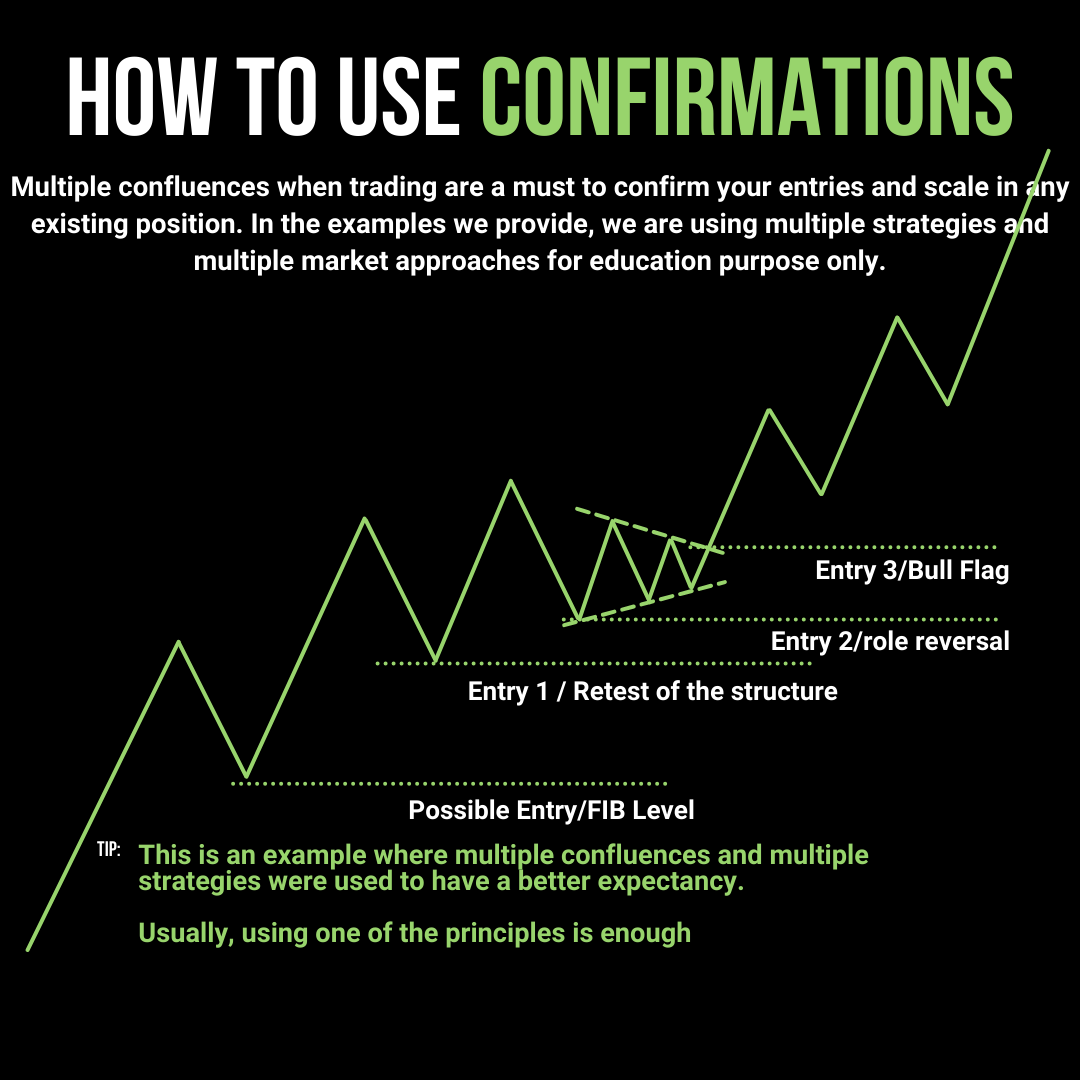
Entry 1: The Retest of Structure
One of the most reliable confirmations is the retest of structure. After a breakout, traders who rush in get trapped, while patient ones wait for the price to come back and test the level. That’s when the real entry shines.
It’s like testing a bridge before driving across it. You don’t just assume it’s stable; you wait to see if it holds under pressure. The retest proves whether the breakout is legit or just a fake-out designed to trap greedy traders.
Entry 2: Role Reversal
Ever notice how old resistance often turns into new support? That’s role reversal, and it’s a powerful confirmation. When the market respects that flip, it’s like the universe handing you a neon sign that says, “This trend is real.”
Traders who ignore role reversal end up buying too high or selling too low. They miss the golden chance to ride the trend from a position of strength. It’s the difference between joining a marathon at the starting line or hopping in after the runners are already at the finish.
Entry 3: The Bull Flag Pattern
Another strong confirmation comes from continuation patterns like the bull flag. After a strong move up, the price consolidates in a flag-like structure before breaking out again. Traders who know how to spot it can ride the next wave with confidence.
But here’s the kicker: most traders don’t wait for the breakout. They see the flag and jump in too early, only to get chopped up in the consolidation. It’s like trying to surf before the wave has even formed—you’ll just end up underwater.
The Fibonacci Level Trap


Fibonacci retracements are a popular tool for identifying potential entries. The problem? Too many traders blindly place trades at Fibonacci levels without waiting for confirmations. Just because the price touches the 61.8% level doesn’t mean it will reverse.
That’s like assuming every cloud will bring rain. Sometimes the sky clears up, sometimes it doesn’t. Without confirmation, you’re gambling, not trading. Fibonacci works best when combined with other signals, not on its own.
Scaling into Positions with Confirmations
Scaling in sounds fancy, but it’s just adding to your position as the market proves you right. Instead of dumping your full capital on the first entry, you test the waters with a small position. Then, as confirmations line up, you add more.
It’s like building a house brick by brick instead of gambling on prefabricated walls. Traders who skip confirmations often scale in recklessly, only to watch the entire structure collapse. Slow and steady isn’t sexy, but it saves accounts.
Why One Confirmation Is Sometimes Enough
Let’s be real—not every trade requires five layers of confirmations. Sometimes, one solid signal is enough. The problem comes when traders can’t tell the difference between a strong confirmation and a weak one.
Think of it like medicine. Sometimes one pill cures the headache. Other times, you need antibiotics, rest, and hydration. The trick is knowing when to rely on one confirmation and when to stack multiple confluences for safety. Ignoring this balance is where traders get wrecked.
The Danger of Over-Confirming


Yes, confirmations are essential, but there’s a trap: over-confirming. Some traders pile on so many confirmations that they never take a trade. They’re stuck waiting for the perfect setup that never comes. Paralysis by analysis—it’s real.
It’s like waiting for a bus but refusing to get on until every passenger, driver, and inspector approves your ticket. By the time you decide, the bus is gone. Over-confirming kills opportunities just as much as under-confirming kills accounts.
Confirmations and Emotions: The Real Battle
Let’s face it—confirmations aren’t just about strategy, they’re about controlling emotions. Fear and greed are louder than any candlestick pattern. Confirmations give you the confidence to act logically instead of emotionally.
When you see multiple signals aligning, it feels like armor protecting you from self-doubt. Without them, you’re naked in a battlefield, hoping luck will shield you. And in trading, luck runs out fast.
Why Most Traders Will Still Ignore This
Here’s the sad part: even after reading this, most traders will still ignore confirmations. They’ll think they’re smarter than the market, that they can outguess price action. They’ll chase every move, convinced this time will be different. Spoiler: it won’t.
Trading without confirmations is like skydiving without checking your parachute. You might survive once or twice, but eventually, gravity wins. And in the market, gravity always wins.
The Bottom Line: Confirmations Save Accounts
At the end of the day, confirmations aren’t optional—they’re survival tools. They separate gamblers from disciplined traders. They protect you from emotional decisions, fake-outs, and reckless entries.
Ignore them, and you’ll keep donating money to the market like it’s a charity. Respect them, and you’ll finally trade with clarity instead of chaos. The choice is yours, but remember: confirmations aren’t there to make you rich overnight. They’re there to keep you in the game long enough to actually succeed.
Conclusion
Trading is already hard enough without shooting yourself in the foot. Confirmations are the guardrails that stop you from driving off a cliff. Ignore them, and you’ll keep repeating the same painful cycle—entering too early, exiting too late, and blaming “bad luck.”
If you truly want to survive this game, stop chasing shiny setups and start respecting confirmations. They won’t make every trade a winner, but they’ll make you a smarter trader. And in a world where most traders lose, being smarter is your only real edge.
FAQs
1. Can I trade with just one confirmation?
Yes, but it needs to be a strong one like a retest of structure or a clear candlestick reversal. Weak signals alone are risky.
2. What happens if I ignore confirmations?
You’ll enter trades too early or too late, get trapped in fake-outs, and watch your account balance shrink.
3. Are more confirmations always better?
Not always. Too many confirmations lead to analysis paralysis where you never pull the trigger. Balance is key.
4. Can confirmations guarantee success?
No. They improve probabilities, not certainties. Think of them as a shield, not a magic wand.
5. How do I know which confirmations to trust?
Test them on charts, backtest strategies, and focus on signals that consistently align with market structure.