

The Alluring Start of Trading
So, you’ve decided to become a trader? Maybe you saw someone on Instagram flashing profits and thought, “This is it! I’m going to be a millionaire in months.” Don’t worry—you’re not alone. Most traders begin their journey riding a high wave of excitement and hope. But here’s the kicker: that high doesn’t last long. Trading is one of the most emotionally and mentally challenging pursuits out there. It’s not just charts and candles; it’s a full-blown psychological rollercoaster.
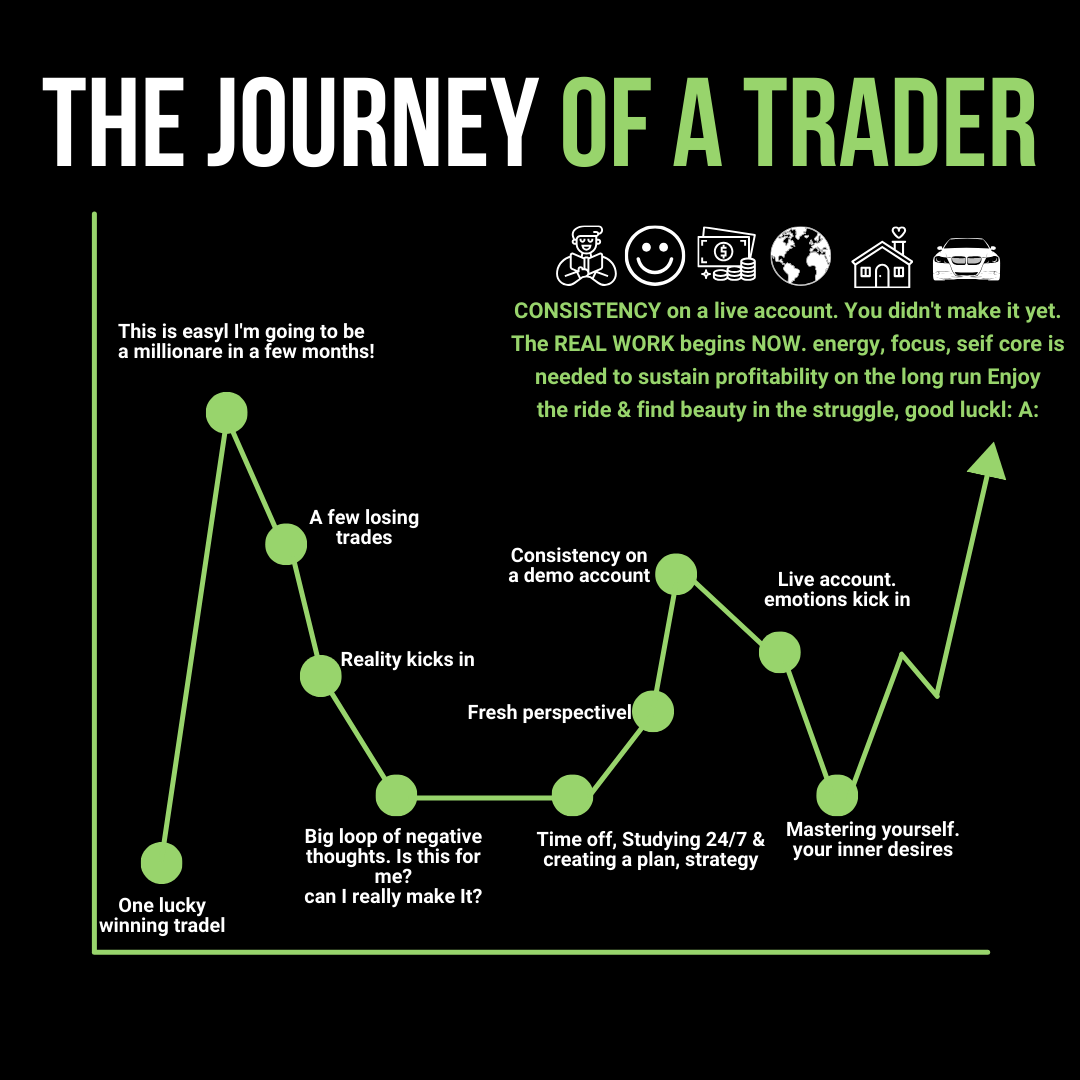
Let’s take a brutally honest look at the real journey most traders go through. This isn’t a sugar-coated article. This is the ugly truth no one wants to talk about—but everyone needs to hear.
One Lucky Winning Trade – The Illusion Begins
Every trader remembers that first lucky win. You press the “Buy” button, walk away, and come back to see a decent profit. You feel unstoppable—like you’ve cracked the code. You might even screenshot the trade and send it to a few friends.
But here’s the problem: it was luck. That win tricks your brain into believing that trading is easy money. Spoiler alert—it’s not. That first win creates unrealistic expectations, setting you up for a nasty fall.
“This is Easy! I’m Gonna Be a Millionaire!”
With the early success fueling your ego, you start dreaming big. Lambos, penthouses, quitting your job—it all seems within reach. You start trading more often, risking more, and ignoring rules.
This phase is pure dopamine. You’re high on wins, even if you’re not following a strategy. The emotional attachment to making money becomes toxic. But don’t worry, reality’s about to humble you.
A Few Losing Trades – The First Gut Punch
And then it happens. A few red trades. That early confidence? Gone. You start questioning your skills, the market, and even your broker. “Is the market rigged?” you wonder.
The thing is, every trader loses. Even the pros. But because your foundation was built on unrealistic expectations, the first losses hit like a ton of bricks.
Reality Kicks In – You Realize It’s Not That Easy
Now you begin to see the truth: trading isn’t about getting lucky. It’s a game of probability, discipline, and psychology. The market doesn’t care about your feelings or how badly you want to win.
This is where most people quit. The dream starts to fade, and reality sets in. It’s no longer about easy money—it’s about survival.
The Negative Thought Loop – Doubt Creeps In

The losses pile up. You’re in your head now. You start thinking, “Maybe I’m not cut out for this.” The self-doubt spirals. You compare yourself to others. You consider giving up.
This is a dangerous stage. Many aspiring traders walk away here, convinced they can’t make it. But guess what? Everyone feels this way at some point. It’s part of the process.
Time Off – You Step Back to Breathe
Eventually, you hit pause. You realize you’re burning out. So, you take some time off to regroup. This break is crucial. It helps you clear your mind and stop the bleeding.
More importantly, you start to accept that you don’t know everything. You begin to approach trading with humility instead of arrogance. And that’s a turning point.
Studying 24/7 – The Grind Phase Begins
Armed with humility, you dive into the learning phase. You start consuming books, videos, courses, and podcasts like your life depends on it. You’re creating a plan and strategy.
This is the part that separates the gamblers from the traders. You begin to respect risk management, journaling, and psychology. It’s no longer about chasing wins—it’s about building skill.
Fresh Perspective – The Rebirth of a Trader
With a new mindset, you return to the charts. You’re not revenge trading or gambling. You’re executing a plan. You’ve stopped worshiping profits and started respecting the process.
This fresh perspective is liberating. You feel more grounded, more aware. You’ve taken a few punches, but you’re still standing—and now, you’ve got a better defense.
Consistency on a Demo Account – The First Taste of Discipline
You start practicing your strategy on a demo account. It’s not real money, but it builds habits. You begin to see patterns. You follow your rules. You take notes. You stay calm.
This is where your trading personality forms. You learn what works for you. And more importantly, you learn what doesn’t. You start to understand the game on a deeper level.
Live Account – Where Emotions Come to Play
Feeling confident, you go live again. But here’s the thing: demo trading is easy. Live trading? That’s where your heart races, palms sweat, and doubt returns.
The emotional rollercoaster begins. Every pip feels like a personal attack or a victory parade. Your psychology is tested like never before. But you keep going—because you’re not who you were at the start.
Mastering Yourself – The Inner Battle


You realize that the biggest enemy isn’t the market—it’s you. Your fear, greed, impatience, and ego are the real obstacles. So, you begin the work of mastering your mind.
Meditation, journaling, mindfulness—these aren’t just buzzwords anymore. They’re tools. Because until you master yourself, you’ll never master trading.
Consistency in Live Trading – The REAL Game Begins
Now you’re trading with consistency. You’re not over-leveraging. You’re sticking to your plan. You take losses like a pro and wins with humility.
But here’s the harsh truth: you still haven’t “made it.” Real success in trading isn’t about hitting one big win. It’s about staying profitable over the long run—and that takes everything you’ve got.
Conclusion: Embrace the Ugly Truth, Love the Process
If you’ve made it this far, congrats. You’ve survived the emotional battlefield most people never talk about. Trading isn’t glamorous. It’s gritty. It’s lonely. It’s humbling.
But it’s also empowering. Because once you strip away the illusions, what’s left is a game of growth—both financially and personally. So, embrace the struggle. Find beauty in the chaos. And never stop learning.
Remember, every successful trader once stood exactly where you are—broken, confused, and ready to give up. The only difference? They didn’t.
FAQs
1. How long does it take to become a consistently profitable trader?
It varies for everyone. Some get there in 1–2 years, others take 5–6. What matters is how committed you are to learning, practicing, and evolving.
2. Can I make a living from trading alone?
Yes, but not right away. It takes time, a solid strategy, emotional control, and consistent execution. Don’t quit your day job too soon.
3. What’s the biggest mistake new traders make?
Chasing profits without a plan. Most newbies overtrade, ignore risk management, and rely on emotions rather than systems.
4. Is trading gambling?
It can be—if you treat it that way. Trading becomes a business only when you have rules, a system, and discipline.
5. Do I need a mentor to succeed in trading?
A mentor can fast-track your growth, but it’s not mandatory. Many traders learn solo. What’s crucial is honest self-review and persistent learning.