

If you’re new to trading, it can feel like being dropped into a foreign city without a map. Everyone’s talking about charts, brokers, strategies, and profits, but where do you even start? Don’t worry—this guide will walk you through the basics of trading step by step, breaking down the process into simple and practical terms. By the end, you’ll not only understand how to begin but also avoid some of the common mistakes that wipe out beginners.
1. Understanding What Trading Really Is
Trading is the act of buying and selling financial instruments—like stocks, forex, ETFs, futures, or options—to make a profit. Sounds simple, right? But here’s the kicker: the market doesn’t care about your expectations. Prices move based on global news, investor psychology, supply and demand, and sometimes pure chaos.
Think of trading like sailing. You can’t control the wind, but you can learn to adjust your sails. That’s exactly what successful traders do—they learn to ride the waves rather than fight them.
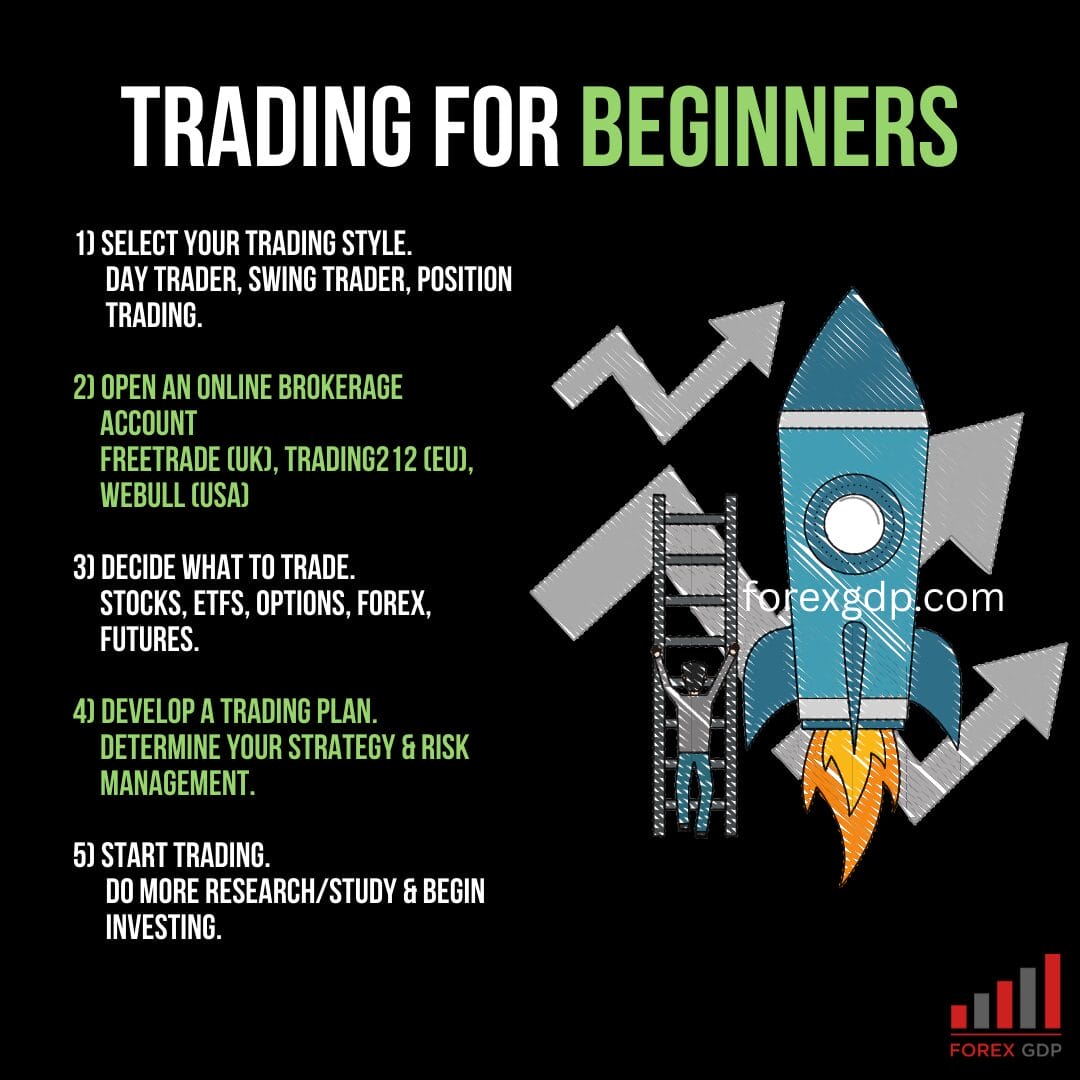
2. Choosing Your Trading Style
Before you even think about opening an account, you need to ask: What kind of trader do I want to be?
-
Day Trader – Buys and sells within a single day. High risk, high adrenaline. It’s like sprinting.
-
Swing Trader – Holds positions for days or weeks, trying to capture short- to medium-term trends. More like middle-distance running.
-
Position Trader – Holds trades for months or years. Patience is key here—think marathon running.
Choosing your style depends on your personality. If you hate sitting in front of a screen all day, day trading will drain you. If you’re impatient, long-term investing might bore you to death.
3. Setting Up Your Brokerage Account
You can’t trade without a broker. A broker is simply the middleman who connects you to the market. Thankfully, online brokers make it easy to get started.
-
Freetrade (UK) – Good for beginners, simple interface.
-
Trading212 (EU) – Commission-free trading with lots of assets.
-
Webull (USA) – Offers advanced charts and data for more serious traders.
When picking a broker, don’t just chase the one with the flashiest app. Look at fees, ease of use, customer support, and whether they’re regulated. Remember, a shady broker can steal your money faster than a bad trade.
4. Deciding What to Trade
This is where things get exciting. You have options—literally.
-
Stocks – Ownership in a company. Can bring huge returns if you pick winners.
-
ETFs – Bundles of assets, safer than betting on a single stock.
-
Options – Contracts that give you the right (but not the obligation) to buy/sell. Complex and risky.
-
Forex – Trading global currencies. The world’s largest market.

-
Futures – Contracts to buy/sell at a set price later. High leverage, high danger.
If you’re new, start with stocks or ETFs. Forex and options sound cool, but they can chew beginners up and spit them out.
5. Developing a Trading Plan
Jumping into the market without a plan is like driving blindfolded. A trading plan outlines:
-
Entry Rules – What conditions must be met before you buy?
-
Exit Rules – When do you take profits? When do you cut losses?
-
Risk Management – How much are you willing to lose on a single trade?
Pro tip: Never risk more than 1–2% of your account on a single trade. Blow-ups happen when traders bet the farm on one “sure thing.”
6. Risk Management: Protecting Your Capital
Here’s a harsh truth: trading isn’t about making money—it’s about not losing it. Beginners focus on profits, pros focus on risk. Think of risk management as wearing a seatbelt. You hope you won’t need it, but it’s there to save you when things go wrong.
-
Always use stop-loss orders to limit losses.
-
Don’t put all your eggs in one basket—diversify.
-
Avoid using too much leverage. Borrowing money to trade can double your gains but also double your losses.
7. The Psychology of Trading
The hardest part of trading isn’t the charts—it’s your brain. Emotions wreck more traders than bad strategies ever will.
-
Fear makes you exit too early.
-
Greed makes you hold too long.
-
FOMO (Fear of Missing Out) pushes you into bad trades.

-
Revenge Trading happens when you chase losses.
A cool head beats fancy tools every time. Remember, discipline pays more than excitement.
8. Reading the Charts
Charts are the language of the market. You don’t need to become an expert overnight, but learn the basics:
-
Candlestick Charts – Show price movement with highs, lows, opens, and closes.
-
Support and Resistance – Key levels where price tends to bounce or break.
-
Indicators – Tools like Moving Averages, RSI, MACD that help spot trends.
Don’t drown in too many indicators. Pick one or two and actually learn them.
9. Common Beginner Mistakes
Here’s where most newbies mess up:
-
Trading without a plan.
-
Overtrading—thinking more trades = more profit.
-
Ignoring risk management.
-
Blindly following tips from social media “gurus.”
-
Expecting to get rich overnight.
If you can avoid these, you’re already ahead of 80% of beginners.
10. Practicing with a Demo Account
Would you jump into a boxing ring without sparring first? Of course not. That’s why demo accounts exist. They let you trade with fake money but real market conditions. This is your chance to practice strategies without losing your shirt.
But here’s the catch: trading fake money feels different than risking real cash. Your emotions kick in only when your money’s on the line.
11. Building Good Trading Habits
Trading success isn’t about one big win. It’s about consistency. Here are some habits worth building:
-
Keep a trading journal—log every trade, the reason behind it, and the outcome.
-
Review your trades weekly.
-
Stick to your plan, even when tempted to deviate.
-
Learn continuously. The market changes, and so should you.
12. Starting Small and Growing Slowly
Rome wasn’t built in a day, and neither is a trading career. Start small. Trade with money you can afford to lose—think of it as tuition for your trading education. Once you build skill and confidence, you can scale up.
Remember, the goal at the beginning is not to make money but to not lose money while learning.
13. Doing More Research and Studying
Trading isn’t a one-time course—it’s a lifelong education. Read books, watch webinars, follow credible sources. Stay updated on global news, because politics, wars, and economic reports move markets more than charts sometimes.
Think of yourself as both a detective and a student. The more information you have, the better your chances of survival.
14. Should You Even Start Trading?

Here’s the uncomfortable question: should you even bother with trading? It’s not for everyone. If you’re impatient, hate losing money, or can’t handle stress, trading might chew you up. Many people are better off investing long-term in index funds instead of chasing short-term profits.
Conclusion
Trading can be thrilling, rewarding, and yes—dangerous. Beginners often rush in, blinded by the promise of quick riches, only to get burned. But if you take your time, choose the right style, manage risk, and keep your emotions in check, you stand a fighting chance. Remember, trading isn’t a sprint—it’s a marathon. And those who last are the ones who respect the game, not those who try to outsmart it.
FAQs
1. How much money do I need to start trading?
You can start with as little as $100 depending on your broker, but realistically, $500–$1000 gives you more flexibility.
2. Can I trade part-time while working a job?
Yes. Swing trading or position trading works well if you can’t watch the market all day.
3. Is trading the same as investing?
No. Trading is short-term and active. Investing is long-term and focused on growth.
4. How long does it take to become profitable?
On average, most beginners take 6–12 months of consistent learning before seeing steady profits.
5. What’s the biggest secret to trading success?
There is no secret. It’s discipline, risk management, and patience—all boring but powerful.