

Trading is a tricky beast. Some traders swear by holding trades for days, while others can’t sleep unless they close everything before the day ends. Welcome to the never-ending debate: Swing Trading vs Day Trading.
Both styles promise profits, but each comes with its own headaches. If you’ve ever wondered which path might be right for you, buckle up. In this deep dive, we’ll rip apart the myths, expose the risks, and break down the real differences between these two popular strategies.
What Exactly Is Swing Trading?
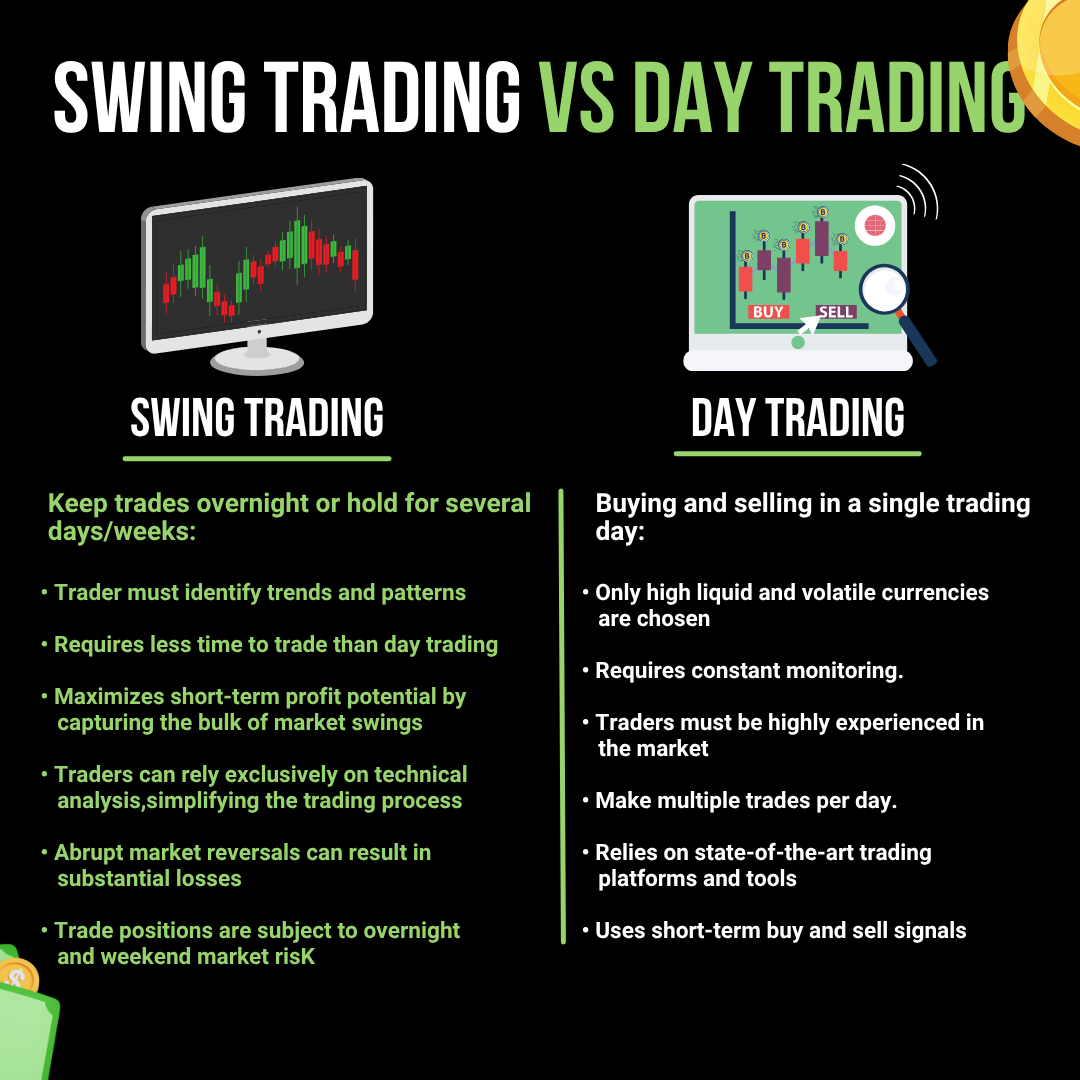
Swing trading is all about catching those medium-term price moves. Instead of stressing about what happens every five minutes, swing traders aim to ride trends that last a few days or even weeks.
Think of it as surfing. You’re not chasing every small wave—you’re waiting for the big one, then holding on until it crashes.
Swing traders rely heavily on technical analysis, looking for chart patterns, moving averages, and indicators that scream “trend.” They want to grab a piece of the market swing, whether it’s up or down.
But here’s the catch—holding overnight means you’re at the mercy of news events. A surprise central bank announcement while you sleep? Your carefully planned trade could crash harder than a bad first date.
What Is Day Trading Really About?
Day trading is fast, intense, and not for the faint of heart. You open and close positions within the same day—sometimes within minutes. No overnight risks, but also no room for hesitation.
It’s like playing speed chess. Blink, and you miss the move. Day traders thrive on volatility and liquidity, hunting for small but frequent profits.
The upside? You sleep peacefully knowing you don’t have open trades haunting you overnight. The downside? You’ll probably spend more time staring at charts than hanging out with your friends or family.
And let’s be honest—most beginners lose money here because it requires razor-sharp focus, lightning-fast decisions, and a thick skin.
Time Commitment: Which Eats More of Your Life?
Day trading is basically a full-time job. You’re glued to screens, watching every tick, waiting for opportunities. Miss a moment, and you could miss the trade of the day.
Swing trading, on the other hand, is far less demanding. You analyze the market, place trades, and check them occasionally. It’s more like setting a slow cooker—you prep, wait, and check back later.
If you’ve got a 9-to-5 job or a family to care for, swing trading won’t suffocate your life. Day trading will. Period.
Profit Potential: Who Wins the Money Game?


Day traders chase quick profits multiple times a day. A successful day trader might rake in small gains that add up fast. But let’s be real—most people fail here because commissions, spreads, and stress eat into profits.
Swing traders go after bigger moves. A single trade could deliver way more than a day trader’s multiple small wins. But you wait longer for setups, and losses can sting harder if markets reverse unexpectedly.
Here’s the ugly truth: both can make you money, but both can also wipe you out if you’re reckless.
Risk Exposure: Sleeping Easy vs Losing Sleep
Day traders avoid overnight risk, which is huge. No surprise news wrecks their trades while they’re dreaming. But intraday volatility is brutal. One bad move, and your account could shrink before lunch.
Swing traders, meanwhile, face overnight and weekend risks. Global events, political chaos, or economic data can flip the market in seconds. You wake up, and boom—your stop loss is hit.
So ask yourself: Do you prefer the stress of constant monitoring, or the anxiety of overnight uncertainty?
Required Skills: Who Needs More Expertise?
Day trading demands insane discipline, quick thinking, and flawless execution. You’ve got to read charts like a pro and act without hesitation.
Swing trading, while less intense, still requires skill in spotting trends, timing entries, and setting proper stop-loss levels. You don’t need to be lightning-fast, but you do need patience.
Think of it this way: day trading is sprinting, swing trading is running a marathon. Both require training—just different types.
Tools of the Trade: What You Need to Survive
Day traders lean on advanced trading platforms, real-time data, and multiple monitors. They need execution speed and the ability to analyze market depth.
Swing traders can get away with simpler setups. A decent charting platform, a couple of indicators, and reliable internet are usually enough.
If your budget is tight, swing trading wins here. Day trading gear isn’t cheap, and without it, you’re roadkill.
Stress Levels: Which Will Break You Faster?


Let’s be blunt—day trading is stressful. You’re making split-second decisions with real money on the line. It’s not just about strategy; it’s about managing your emotions when everything goes sideways.
Swing trading is calmer. Sure, you might wake up to bad news, but you’re not sweating every second of the day. It allows for a more balanced lifestyle.
Ask yourself: Do you want adrenaline rushes that feel like gambling, or a steadier pace with fewer emotional meltdowns?
Costs and Fees: The Hidden Killer
Day trading racks up costs fast. Every trade has spreads, commissions, and slippage. Do it dozens of times a day, and you’ll bleed money if you’re not consistently profitable.
Swing trading involves fewer trades, so fees eat up less of your profits. But beware—holding overnight may mean swap or financing fees, depending on your broker.
If you’re starting small, fees alone can crush your day trading dreams before they even start.
Personality Fit: Which Style Matches You?
This is where most traders mess up—they pick a strategy that doesn’t match their personality.
If you’re impatient, crave action, and thrive under pressure, day trading might suit you. But if you’re more analytical, patient, and okay with waiting for the right setup, swing trading is your game.
The market doesn’t care who you are, but your mindset determines whether you survive or not.
Common Pitfalls in Swing and Day Trading
Swing traders often fall into the trap of ignoring news. They think technicals are enough, then get blindsided by events. Another common mistake? Holding losers too long, hoping the market “comes back.”
Day traders usually overtrade. They chase every tiny move, ignore risk management, and blow up their accounts. Many also underestimate the mental fatigue that comes with constant monitoring.

Both groups often forget the golden rule: capital preservation is more important than chasing profits.
Which Strategy Is Better for Beginners?
Neither swing nor day trading is “easy.” But swing trading gives beginners more breathing room. You don’t need lightning-fast reactions, and you’re less likely to get destroyed by fees.
Day trading is brutal for newbies. The learning curve is steep, the stress is insane, and the odds are stacked against you. Most beginners who jump into day trading end up quitting within months.
If you’re just starting out, swing trading is the safer entry point.
The Long-Term Perspective
Day trading can burn you out fast. Few traders can sustain the energy, focus, and discipline needed for years.
Swing trading is more sustainable. It allows for balance, less screen time, and more consistent opportunities. Over the long haul, it’s easier to stick with.
If you’re thinking about trading as a lifelong skill, swing trading is the smarter bet.
Conclusion
At the end of the day, neither swing trading nor day trading is “better” for everyone. It comes down to your lifestyle, risk tolerance, and personality.
Day trading is like drinking espresso shots all day—fast, intense, and exhausting. Swing trading is like sipping a glass of wine—slower, steadier, but still risky if you overdo it.
If you crave speed and can handle stress, go for day trading. If you value balance and patience, swing trading is your friend. But remember—both can empty your wallet if you skip discipline and risk management.
FAQs
1. Is swing trading more profitable than day trading?
Not necessarily. Both can be profitable, but swing trading tends to favor those with smaller accounts, while day trading can yield higher profits if executed perfectly.
2. Can I do swing and day trading at the same time?
Technically yes, but it’s a recipe for confusion. Each requires a different mindset. Mixing them often leads to bad decisions.
3. Which is riskier: swing trading or day trading?
Day trading carries intraday volatility risk, while swing trading carries overnight and weekend risk. The danger depends on your discipline.
4. Do I need a lot of money to start day trading?
Yes. In many countries, regulations require higher minimum balances. Plus, small accounts get eaten alive by fees.
5. What’s the easiest way to start swing trading?
Start with demo accounts, learn chart patterns, use proper stop losses, and trade small until you gain confidence.