

Trading without a plan is like driving blindfolded—you might move forward, but you’re bound to crash sooner or later. If you’ve ever felt lost in the world of trading, constantly reacting to the market without a clear strategy, chances are you don’t have a solid trading plan. And trust me, that’s a recipe for disaster.
In this guide, we’ll break down everything you need to know about trading plans: what they are, why they matter, and how you can build one that actually helps you succeed. Grab your coffee (or energy drink, if that’s your style), because this is going to be detailed, practical, and eye-opening.
What Exactly is a Trading Plan?
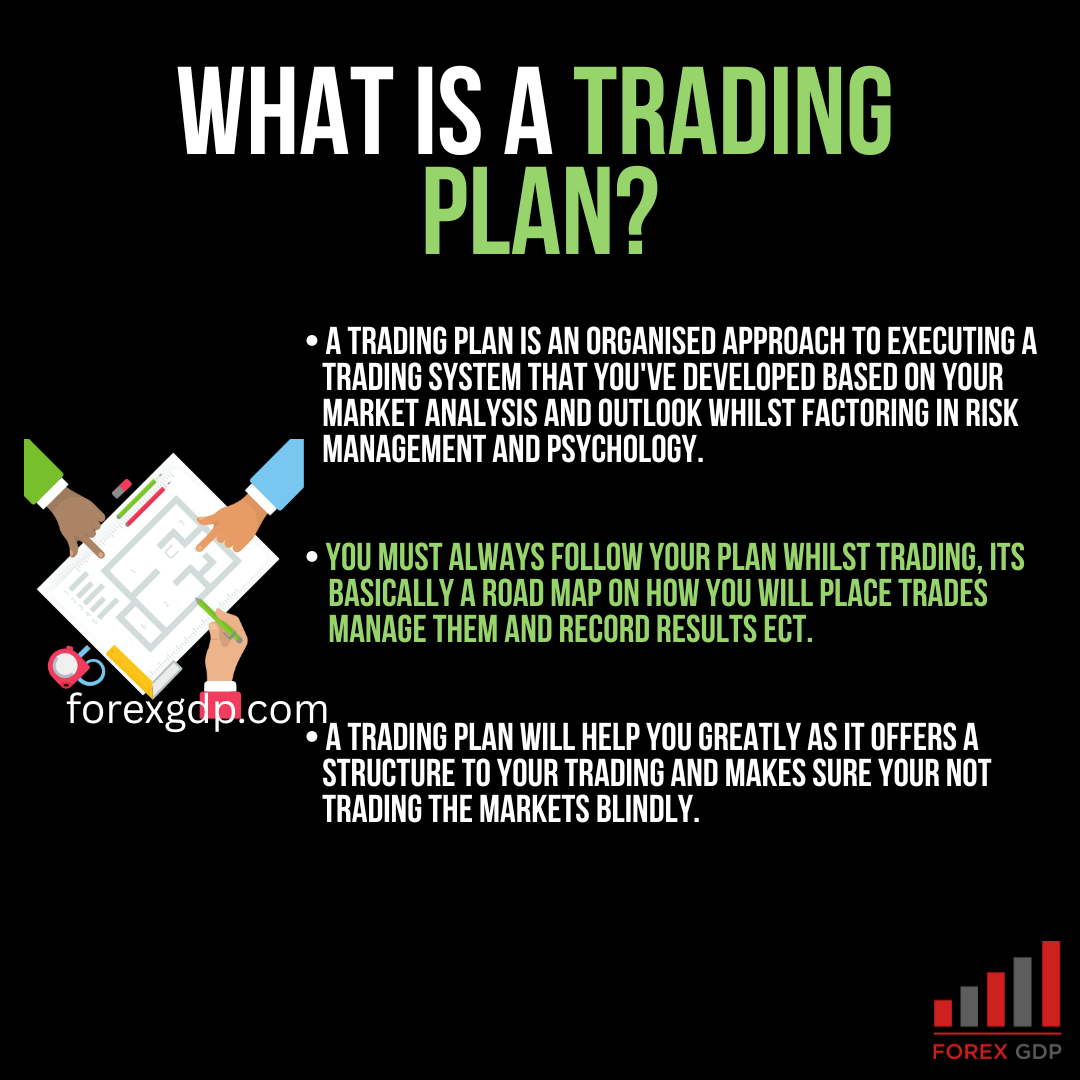
A trading plan is your personal roadmap for navigating the financial markets. It’s not just about when to buy or sell—it’s about having a structured system that covers entry, exit, risk management, and even your mindset.
Think of it like a GPS: instead of wandering aimlessly and hoping you arrive at your destination, the plan tells you where to go, when to turn, and how to avoid roadblocks. Without it, you’re just guessing—and guessing in trading usually ends with losses.
Why Every Trader Needs a Trading Plan
Here’s the cold truth: the market doesn’t care about you. It doesn’t care about your feelings, your bills, or your dreams of becoming the next Warren Buffett.
If you don’t have a trading plan, you’ll fall victim to emotions. Fear makes you exit too early. Greed makes you stay too long. Impulse makes you chase trades you should’ve ignored.
A trading plan gives you structure, discipline, and consistency. It forces you to trade logically, not emotionally. In other words—it saves you from yourself.
The Core Elements of a Trading Plan
Before you start scribbling ideas, let’s cover the non-negotiables your plan needs:
-
Market selection – Which assets do you trade? Forex, stocks, crypto, commodities?
-
Timeframe – Are you scalping, day trading, or swing trading?
-
Entry criteria – What exact signals trigger your trades?
-
Exit rules – When do you take profits? When do you cut losses?
-
Risk management – How much of your account do you risk per trade?
-
Trade size – How do you calculate lot size or position size?
-
Mindset rules – How do you control emotions and avoid revenge trading?
Without these, your plan is incomplete.
Common Mistakes Traders Make Without a Plan
Let’s be brutally honest: most traders blow their accounts because they wing it. Some typical mistakes include:
-
Overtrading – Jumping into every move because “it looks good.”
-
Revenge trading – Doubling down after a loss to “get back at the market.”
-
Ignoring stop-losses – Hoping trades magically turn around.
-
Changing strategy mid-trade – Entering as a scalper but exiting like a swing trader.
-
Chasing news – Trading based on rumors and hype instead of facts.
Sound familiar? These bad habits are exactly what a trading plan prevents.

How to Build a Trading Plan from Scratch
Alright, let’s roll up our sleeves. Here’s a step-by-step breakdown:
Step 1: Define Your Goals
Why are you trading? Is it for financial freedom, extra income, or just the thrill? Your goals dictate your strategy.
Step 2: Choose Your Market
Don’t try to trade everything. Focus. Master one or two markets instead of spreading yourself thin.
Step 3: Select a Trading Style
-
Scalper – Dozens of trades per day.
-
Day trader – In and out within a day.
-
Swing trader – Holding trades for days or weeks.
-
Position trader – Long-term, big-picture moves.
Pick one that suits your lifestyle.
Step 4: Develop Your Strategy
This is your “if this, then that” rulebook. Example:
“If the moving average crosses upward and RSI is below 70, I enter long with a stop-loss below the last swing low.”
Step 5: Risk Management Rules
The golden rule? Never risk more than 1-2% of your account per trade.
Step 6: Record Everything
Use a journal. Write down your trades, mistakes, and lessons. If you don’t track, you don’t improve.
The Role of Risk Management in a Trading Plan
Risk management is the backbone of your trading plan. Without it, even the best strategy will fail.
Here’s why: imagine you win 6 trades out of 10, but on the 4 losses you blow half your account. Congrats—you’re still broke.

Risk management ensures that one bad trade doesn’t destroy months of progress. That means:
-
Using stop-losses.
-
Setting realistic risk/reward ratios.
-
Limiting daily losses to avoid spiraling.
Psychology: The Silent Killer of Traders
Even with the perfect trading plan, your brain can sabotage you. Fear, greed, hope—they’re always lurking.
That’s why your plan should include psychological rules:
-
Don’t trade when angry or tired.
-
Walk away after two consecutive losses.
-
Stick to your system—no “gut feeling” trades.
Think of your trading plan as a shield against emotional sabotage.
Backtesting: Proof That Your Plan Works
Would you fly in a plane that’s never been tested? Of course not. So why trade a plan you’ve never tested?
Backtesting means running your strategy on historical data. If it shows consistent results over hundreds of trades, it’s worth using. If not—back to the drawing board.
The Importance of Journaling
A trading journal is like a mirror. It shows you your habits, strengths, and weaknesses.
Record every detail:
-
Why you entered.
-
Where you exited.
-
How you felt.
-
What went right or wrong.
Over time, patterns emerge—and that’s how you improve.
The Dark Side: Why Most Traders Fail
Let’s face it: most traders lose money. The main reasons?
-
No plan.
-
Poor risk management.
-
Emotional trading.
-
Unrealistic expectations (like turning $100 into $1,000 overnight).
The market punishes dreamers who don’t prepare. But with a solid plan, you can avoid being part of the 90% that fail.
Adapting and Updating Your Plan
Here’s a reality check: no trading plan lasts forever. Markets change. Volatility shifts. Strategies that worked last year may flop today.
That’s why you need to review and adapt regularly. Think of your plan as a living document—it evolves as you grow.

Why Discipline is the Key Ingredient
You can have the best trading plan in the world, but if you don’t follow it, it’s worthless.
Discipline means:
-
Taking only the trades your plan allows.
-
Accepting losses without trying to “fix” them.
-
Showing up consistently, even when bored.
Without discipline, your plan is just words on paper.
Conclusion
A trading plan isn’t optional—it’s survival. It’s the difference between gambling and professional trading. Without one, you’re trading blind, driven by emotions and luck. With one, you have structure, discipline, and a real chance at consistent profits.
The market will always be unpredictable, but your reaction doesn’t have to be. Build your plan, stick to it, and let it guide you like a roadmap through the chaos of trading.
FAQs
1. Can beginners create a trading plan, or is it only for pros?
Absolutely! In fact, beginners need a plan even more to avoid blowing their accounts.
2. How often should I update my trading plan?
At least once every few months—or anytime you notice your strategy isn’t performing well.
3. Do I really need a trading journal?
Yes. Without one, you’ll repeat the same mistakes without realizing it.
4. Can I trade successfully without a plan?
Maybe for a short while, but eventually, emotions will wipe out your gains.
5. What’s the #1 rule in a trading plan?
Risk management. Protecting your capital is more important than chasing profits.