

Trading sounds glamorous, doesn’t it? Charts, signals, profits, and the dream of financial freedom. But let’s be brutally honest—most traders crash and burn because they don’t have a solid plan. A trading plan isn’t some boring checklist; it’s your survival kit in the jungle of the markets. Without it, you’re like a ship sailing without a compass—you’re bound to get lost and sink.
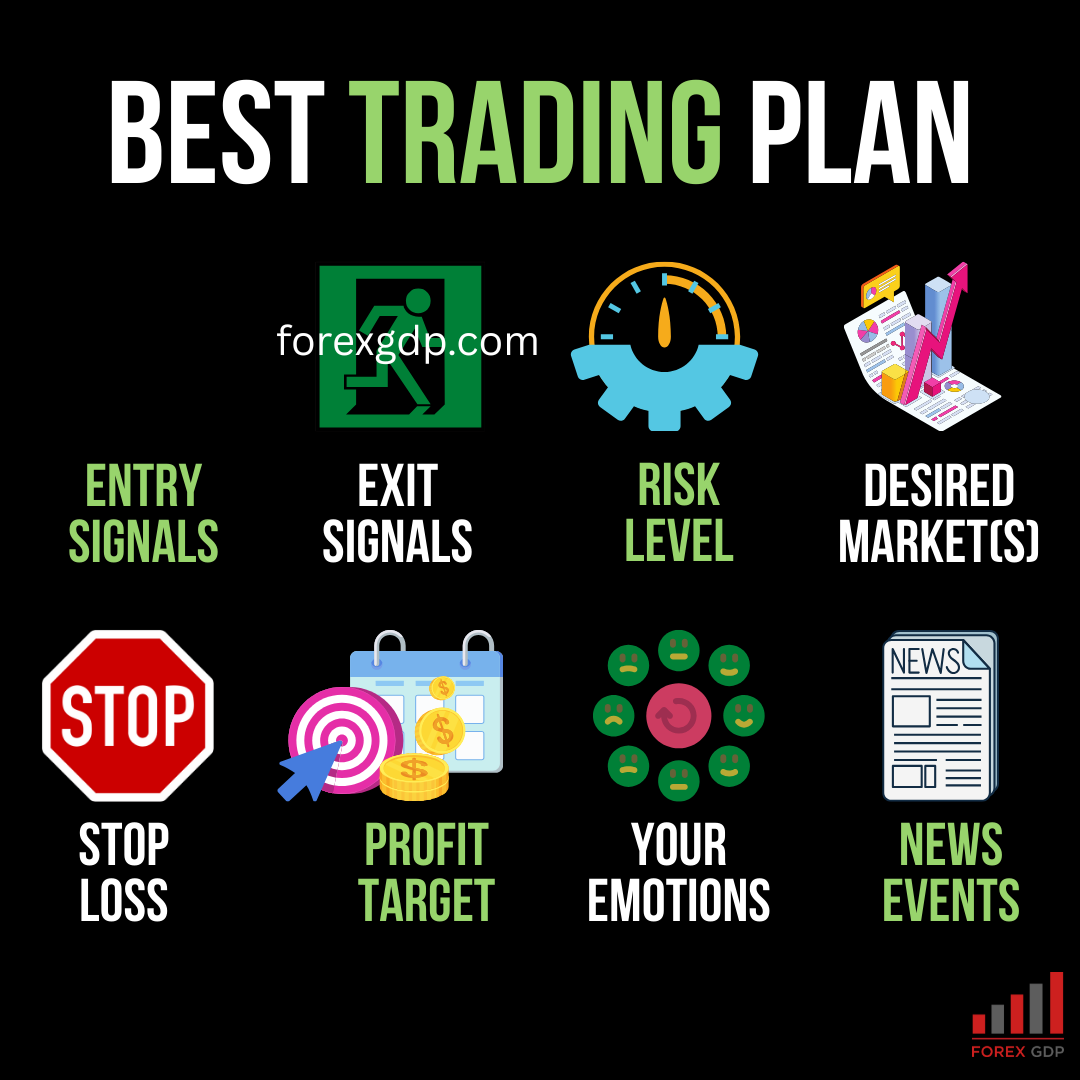
So, let’s tear apart the illusion and get real about what makes a trading plan the difference between winning and losing.
Why You Can’t Survive Without a Trading Plan
Every beginner thinks trading is about predicting price moves. Wrong. It’s about managing yourself, your risks, and your decisions. Without a structured plan, your trades are just random guesses. And in case you didn’t know, random guessing in forex is a recipe for blowing up accounts.
Imagine trying to build a house without a blueprint. That’s exactly what you’re doing if you enter trades without a plan. You’re gambling, not trading. The market doesn’t care about your feelings, hopes, or confidence—it only respects discipline.
Entry Signals: The First Trap Traders Fall Into
One of the biggest mistakes traders make is jumping into trades without clear entry rules. They see a candle move, and boom—they’re in. But entry signals aren’t about guesswork; they’re about specific conditions you define beforehand.
If you don’t define your entry signals, you’ll always chase the market. You’ll buy when it’s too late and sell when the trend is almost over. It’s like showing up to a movie halfway and expecting to understand the plot. Spoiler: you won’t.
Exit Signals: The Most Ignored Part of Trading
Funny enough, most traders obsess over entries but forget exits. And this ignorance costs them money. Exit signals determine when you should get out—profit or loss. Without them, greed and fear take over, and you either hold too long or bail too early.
Think of it like driving a car without brakes. Sure, the entry (the gas pedal) gets you moving, but if you can’t stop at the right time, you’re going to crash. The exit is just as important as the entry—if not more.
Risk Level: The Silent Killer of Accounts

Here’s the ugly truth: most traders blow up their accounts not because they’re always wrong, but because they risk too much on each trade. If you risk 20% of your account on one trade, it only takes five bad trades to wipe you out.
A good trading plan defines your risk per trade—usually 1% to 2%. That way, even if you lose 10 trades in a row (which happens, by the way), you’re still alive to fight another day. But most traders don’t get it. They think, “I’ll risk big and win big.” Nope—you’ll risk big and lose bigger.
Desired Markets: Stop Trading Everything That Moves
Another trap? Trading every market under the sun. Forex pairs, gold, crypto, stocks—you name it. But spreading yourself too thin kills your focus. Each market has its own personality, rhythm, and news impact.
Without a defined market, you’re just wandering around looking for action. A trading plan forces you to choose your battleground. It’s like being a soldier—you can’t fight every war. You pick your battlefield wisely, or you end up dead.
Stop Loss: The Lifeline Most Traders Ignore
Let’s be blunt—if you don’t use a stop loss, you’re basically asking the market to humiliate you. One bad move, and poof—your account is gone. A stop loss isn’t just a tool; it’s your insurance against disaster.
But here’s the problem: many traders set their stop losses too wide or too tight. Too wide, and you lose big. Too tight, and you get stopped out by normal market noise. Your plan should define your stop loss based on structure, not emotions. Because let’s face it—emotional stop losses are just panic buttons.
Profit Target: Because Greed Will Destroy You
Everybody loves profits. But here’s the kicker—most traders never actually take them. They keep holding on, hoping for more, until the market reverses and wipes them out. That’s greed in action.
A profit target saves you from yourself. It’s like knowing when to leave the casino while you’re ahead. Without it, you’ll stay glued to the slot machine until your winnings are gone. A trading plan forces you to lock in profits at predefined levels, not at random moments when your gut says so.
Your Emotions: The Invisible Enemy


You know what destroys traders more than bad signals? Emotions. Fear, greed, impatience—these feelings hijack your brain and ruin your trades. You start moving stop losses, skipping signals, or doubling down on losing trades because your ego can’t accept being wrong.
A trading plan acts like a shield against your emotions. It tells you what to do before the heat of the moment. Without it, your trades are run by panic and overconfidence, not logic. And let’s be honest—emotions are the worst trading partners you could ever have.
News Events: The Market’s Landmines
Ignore news events at your own risk. Interest rate decisions, inflation reports, or political chaos can blow up even the best-looking trade. How many times have you seen your perfect setup collapse because of “unexpected” news?
A solid trading plan includes checking the economic calendar before entering a trade. It’s like knowing the weather forecast before going hiking. Without it, you’ll walk straight into a storm and wonder why you got drenched.
The Illusion of Flexibility: Why “Winging It” Fails
Some traders pride themselves on being flexible. They say, “I don’t need a rigid plan, I’ll just adapt.” Sounds smart, right? Wrong. In reality, “winging it” is just an excuse for having no discipline.
Markets are unpredictable. Without a framework, you’ll confuse flexibility with chaos. A plan doesn’t chain you—it frees you. It gives you structure, so when chaos hits, you don’t freeze like a deer in headlights.
Tracking and Reviewing: The Part Nobody Wants to Do
You can’t improve what you don’t measure. Yet most traders never track their trades. They don’t write down why they entered, where they exited, and what went wrong. So they keep repeating the same mistakes.
Your trading plan should include journaling. Yes, it’s boring. But it’s also the only way to see your bad habits in black and white. Without reviewing, you’re like a student who keeps failing the same test but never studies the wrong answers.
Discipline: The Glue That Holds It All Together


You can have the best trading plan in the world, but if you don’t follow it, it’s worthless. Discipline is what separates the winners from the losers. The problem? Most traders don’t have it.
They create a plan, break it on the very first trade, and then wonder why they lost. It’s like going on a diet and eating a cake on day one. A plan without discipline is just paper. And paper won’t save you when the market turns against you.
The Harsh Reality: Why Most Traders Quit
Here’s the cold truth: most traders don’t fail because the markets are unbeatable. They fail because they refuse to stick to a plan. They let excitement, fear, and greed run the show. They treat trading like a lottery ticket instead of a business.
The result? Blown accounts, frustration, and eventually giving up. If you don’t want to be another statistic, you need to build and follow a plan religiously. Not sometimes. Every. Single. Time.
Conclusion: The Market Doesn’t Care About You
At the end of the day, the market doesn’t care about your dreams, your bills, or your confidence. It rewards discipline and punishes recklessness. A trading plan isn’t optional—it’s survival.
If you think you can trade without one, just remember: the graveyard of failed traders is filled with people who thought the same. Build your plan, stick to it, and maybe—just maybe—you’ll survive long enough to call yourself a trader.
FAQs
1. Why do most traders fail without a plan?
Because emotions take over, leading to reckless decisions, poor risk management, and blown accounts.
2. How much should I risk per trade?
Most professionals risk only 1–2% of their account balance on a single trade to survive losing streaks.
3. Is journaling really necessary?
Yes. Without tracking your trades, you’ll keep repeating mistakes without realizing what went wrong.
4. Can I trade multiple markets at once?
You can, but it’s a bad idea. Focus on mastering one or two markets instead of chasing everything.
5. What’s the biggest emotion that ruins trades?
Greed. It makes you hold too long, ignore your plan, and eventually lose what you had gained.