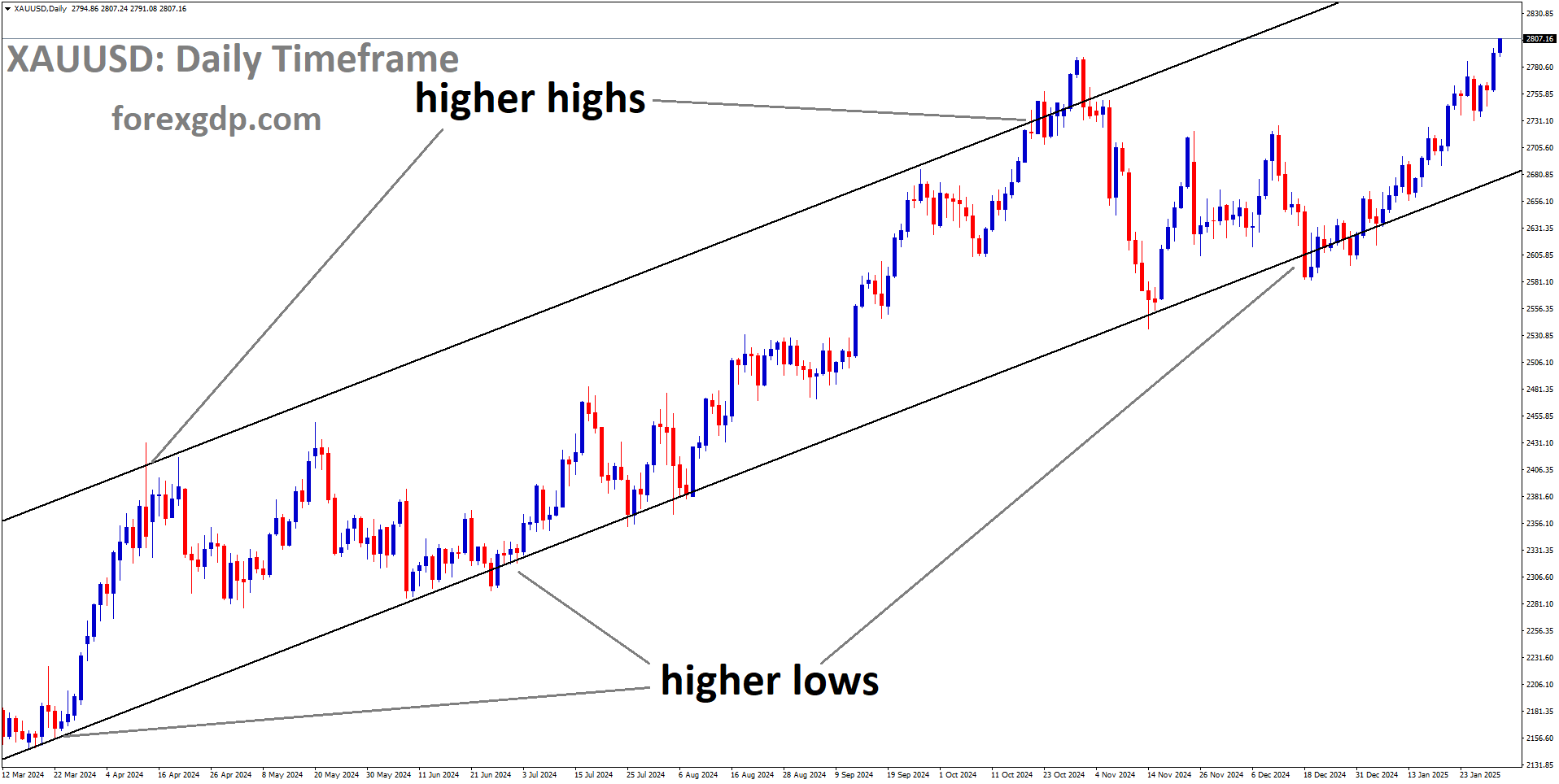


XAUUSD stabilizes as traders focus on Trump–Putin meeting and fading Dollar strength
Gold has always been more than just a shiny metal. For centuries, it has been seen as a store of value, a safe haven during uncertain times, and a way to protect wealth when currencies stumble. Recently, gold prices have managed to hold firm even as traders juggle mixed signals from the U.S. economy, global politics, and shifting market expectations. Let’s dive deeper into what’s happening with gold right now and why it continues to draw attention.
Why Gold Is Holding Its Ground
The past few trading sessions have been interesting for gold. Despite movements in the U.S. economy and rising Treasury yields, gold has managed to remain steady. One major reason for this is the lack of strength in the U.S. Dollar. Normally, when the dollar weakens, gold benefits, as it becomes cheaper for buyers using other currencies. That’s exactly what we’re seeing now—investors are showing more interest in gold as the dollar struggles to gain momentum.
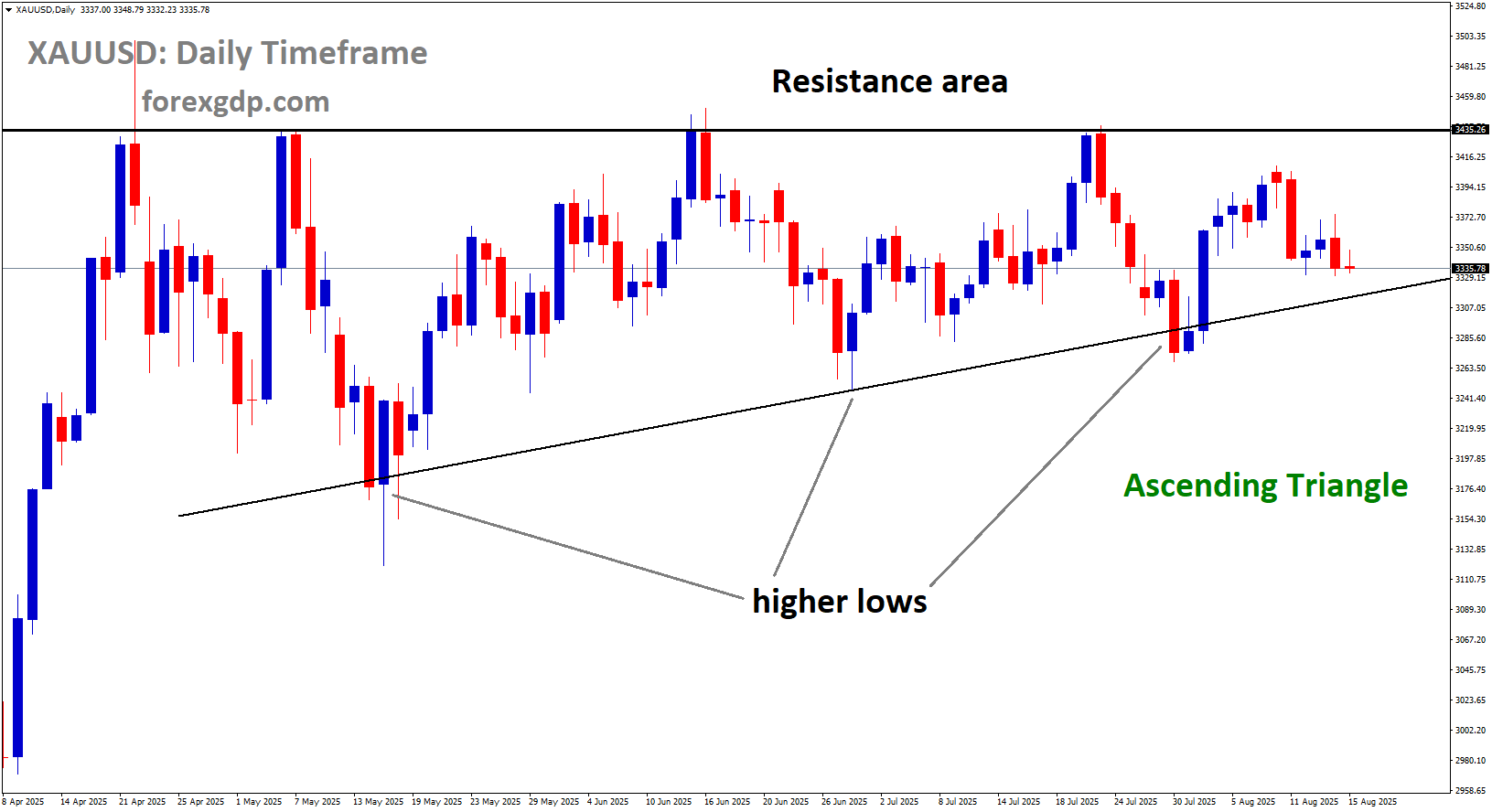
XAUUSD is moving in an Ascending Triangle pattern
At the same time, there’s a cautious mood in the markets. Global investors are paying close attention to political developments, particularly high-level meetings between world leaders. With tensions still lingering in international relations, traders are naturally keeping some of their investments in safer assets like gold.
The U.S. Economy: Data That’s Sending Mixed Signals
Recent U.S. economic updates haven’t painted a clear picture. On one hand, retail sales figures matched expectations, suggesting that American consumers are still spending. On the other hand, other data is less encouraging. Consumer sentiment has slipped, inflation expectations are rising, and industrial production has dipped.
This kind of mixed data creates uncertainty. If the economy slows down further, the Federal Reserve could face pressure to cut interest rates sooner. When rates drop, gold usually gains appeal, since lower yields reduce the opportunity cost of holding a non-yielding asset like bullion. Traders are already watching closely, with many betting on a rate cut in the coming months.
High Treasury Yields Still a Challenge for Gold
While the weaker dollar has given gold some support, higher U.S. Treasury yields have been holding it back. Yields represent the return investors get on government bonds, and when they climb, gold tends to lose some shine. Why? Because gold doesn’t pay interest, so when yields rise, investors may see bonds as a more attractive option.
Right now, Treasury yields have inched up again, creating a bit of a tug-of-war. Gold is trying to push higher thanks to safe-haven demand and a weaker dollar, but those higher yields are acting like a ceiling, keeping its momentum in check.
What’s Coming Up: Events Traders Can’t Ignore
Looking ahead, several key events could play a big role in shaping gold’s direction.

Federal Reserve Signals
Next week, traders will be glued to the release of the Federal Open Market Committee (FOMC) meeting minutes. These minutes often give clues about how policymakers see the economy and whether they’re leaning toward more rate cuts or a wait-and-see approach. If the Fed sounds cautious or signals easing, gold could get a boost.
Jerome Powell at Jackson Hole
Another big event is Federal Reserve Chair Jerome Powell’s upcoming speech at Jackson Hole. This annual gathering is closely watched by global markets. Any hint from Powell about policy changes or concerns about inflation could set the tone for gold prices in the weeks ahead.
PMI Readings
Flash PMI data will also be released, giving insight into business activity in the U.S. If growth looks weaker, it could strengthen the case for policy easing, once again putting gold in the spotlight.
Investor Sentiment: Why Safe-Haven Demand Matters
Even beyond economic numbers, gold’s role as a safe-haven asset remains strong. Whenever global uncertainty rises—whether from politics, trade tensions, or geopolitical risks—investors tend to seek out gold. Right now, with important international meetings happening and no clear resolution to global tensions, that safe-haven demand hasn’t gone away.
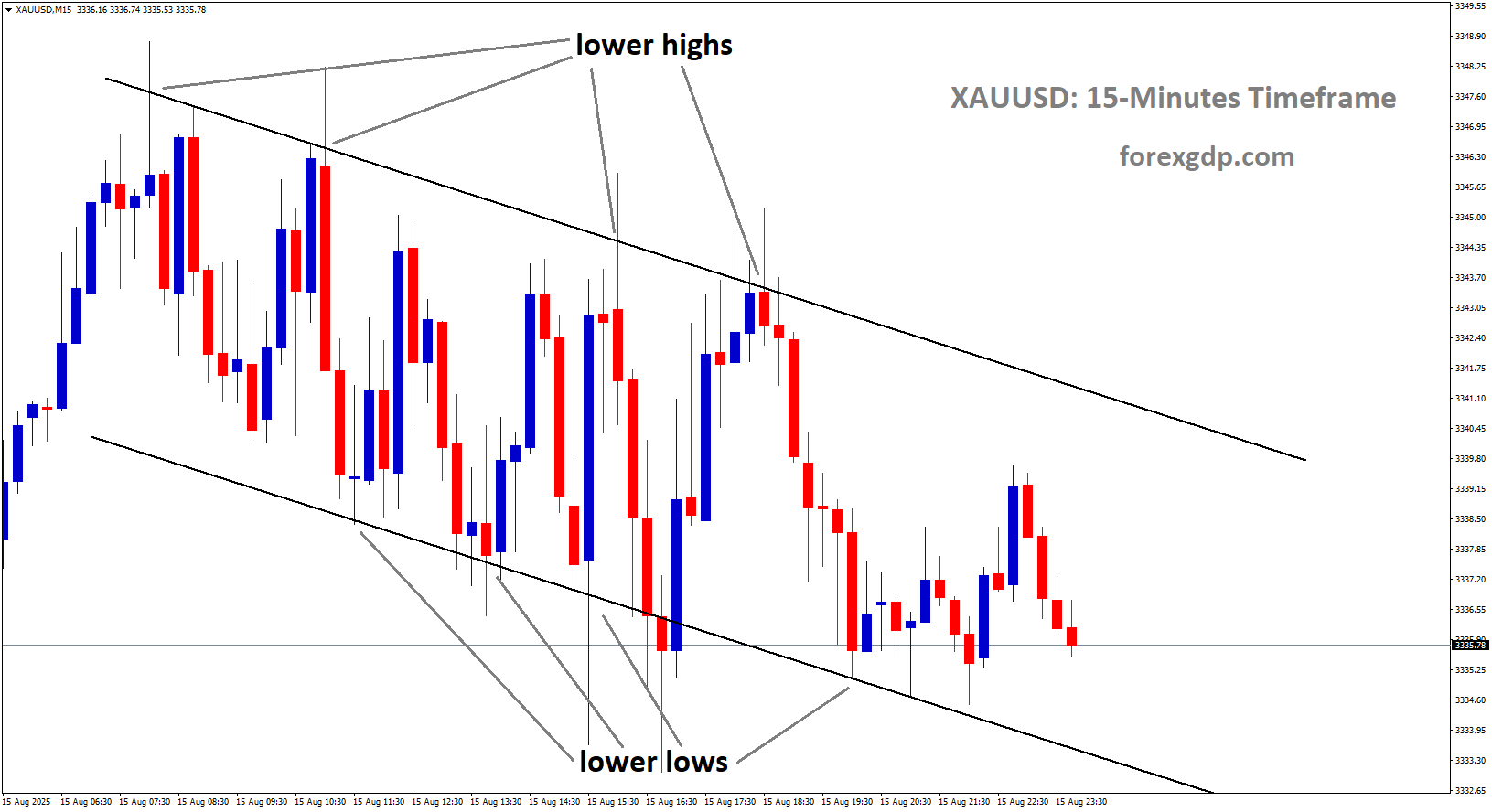
XAUUSD is moving in a downtrend channel
Households in the U.S. are also feeling the pinch of rising inflation expectations. When people believe that prices will keep climbing, they often look for assets that can hold value over time. Gold fits that description perfectly, which helps explain why interest in the metal remains steady despite other market challenges.
Final Summary
Gold is in an interesting position at the moment. On one side, a weaker U.S. Dollar and global uncertainty are giving it solid support. On the other side, higher Treasury yields are acting as a barrier, limiting just how much it can move higher. Traders are now waiting for the next big wave of economic and policy signals—from the Fed minutes to Jerome Powell’s Jackson Hole speech—that could shape the path ahead.
For everyday investors, the key takeaway is this: gold continues to play its traditional role as a safe haven during uncertain times. Whether you’re closely watching global politics or trying to make sense of U.S. economic data, gold remains a reliable option for balancing risk and protecting value. And as long as uncertainty lingers, you can bet it will keep shining in the eyes of cautious investors.
EURUSD Rises as Traders Balance U.S. Economic Signals with Political Tensions
When it comes to the financial markets, there are always multiple factors at play that drive the movement of major currencies. Recently, the EUR/USD pair has been making headlines as it rose strongly despite mixed signals from both the U.S. and Europe. The situation has been interesting because even though U.S. data showed strength in some areas, the Euro continued to gain ground. Let’s take a deeper look into what’s happening and why this matters for traders, investors, and anyone watching global economic developments.
Why the Euro Is Moving Higher
The movement of the Euro against the U.S. Dollar hasn’t been entirely about data releases alone. Instead, it has been influenced by a combination of political events, investor expectations, and global economic sentiment.
One of the biggest factors in play was the summit between U.S. President Donald Trump and Russian President Vladimir Putin in Anchorage, Alaska. This event caught the attention of markets worldwide. While many analysts were skeptical that the meeting would lead to a breakthrough on critical issues—especially regarding a possible ceasefire in Ukraine—it still carried significant weight in shaping investor sentiment.
For the Euro, the possibility of even a partial truce was seen as a supportive development. Why? Because geopolitical stability in Europe tends to attract more confidence in the Eurozone’s economy. Some financial experts even predicted that if peace talks moved in a positive direction, the Euro could strengthen considerably by the end of the year.
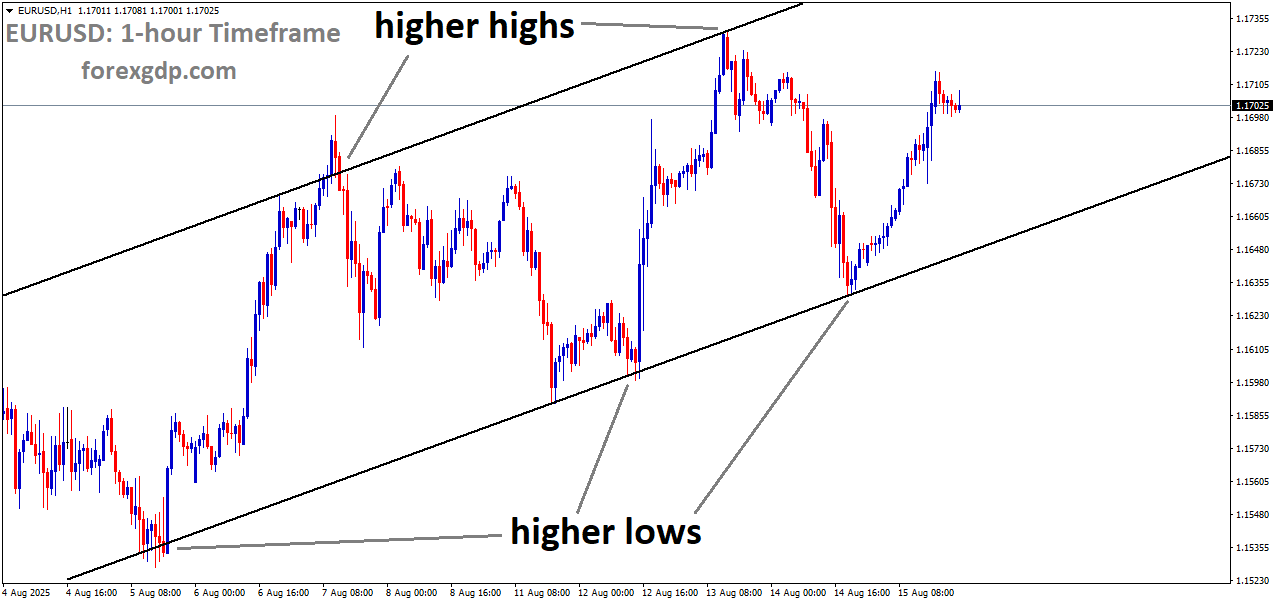
EURUSD is moving in an Ascending channel, and the market has rebounded from the higher low area of the channel
The U.S. Story: Strong Spending, Weak Sentiment
On the U.S. side, the situation looked somewhat mixed. Retail sales data from July painted a picture of strong consumer spending, which usually signals a healthy economy. The upward revision of previous figures only added to the sense that Americans were still opening their wallets despite global uncertainty.
However, this strong spending was not the whole story. At the same time, surveys on consumer confidence showed a clear decline in sentiment. Households reported growing worries about inflation, with many expecting prices to keep rising in the near future. For a consumer-driven economy like the U.S., this matters a lot. When people start worrying about inflation, it often affects how they plan their purchases, savings, and even investments.
This contrast—solid spending but weak sentiment—created a confusing picture for investors. On one hand, the numbers looked good. On the other hand, the mood of the people behind those numbers suggested trouble ahead.
Expectations Around the Federal Reserve
Another major influence on the EUR/USD exchange rate is the U.S. Federal Reserve’s policies. At the time, many traders were still pricing in a rate cut for the upcoming September meeting. That expectation alone weighed heavily on the U.S. Dollar, as lower interest rates typically make a currency less attractive to global investors.
When interest rates drop, the returns on assets tied to that currency also fall. For international investors, that’s a signal to look elsewhere—often to currencies like the Euro. This is part of why the Dollar’s weakness became a major driving force behind the Euro’s rise.
What’s Happening in Europe
Across the Atlantic, Europe’s economic landscape has also been shaping the Euro’s momentum. Investors were paying close attention to upcoming reports, particularly the Flash PMI surveys that track the health of the manufacturing and services sectors. These indicators help provide a snapshot of how the economy is performing in real time.

At the same time, inflation figures from both the Eurozone and Germany were under the spotlight. If inflation showed signs of stabilizing or improving, it would give the European Central Bank (ECB) more reason to pause its easing cycle. In simple terms, if the economy looks healthy enough, the ECB doesn’t need to pump extra money into the system. That pause in easing is typically supportive of a stronger Euro.
The Bigger Picture: Dollar Weakness vs. Euro Resilience
If we zoom out, the Euro’s rise can be understood as part of a larger trend. The U.S. Dollar had been facing broad weakness, not only against the Euro but also compared to a basket of other global currencies. Investors were questioning the sustainability of the Dollar’s strength as economic challenges and rate cut expectations weighed on its outlook.
Meanwhile, the Euro benefitted from a combination of factors:
-
Geopolitical hopes of stability in Europe.
-
Supportive economic data pointing to resilience in the region.
-
Reduced pressure on the ECB to cut rates further.
This mix gave the shared currency a solid foundation, even in the face of strong U.S. data points like retail sales.
Looking Ahead: What Traders and Investors Should Watch
For anyone following the EUR/USD pair, the future direction will depend heavily on upcoming events and reports. A few key areas to watch include:
Federal Reserve Announcements
Any official comments or policy moves from the Fed can quickly shift investor expectations. If the central bank signals a slower approach to cutting rates, the Dollar might regain strength. But if it leans toward more easing, the Euro could continue to climb.
Geopolitical Developments
The Trump–Putin summit was just one example of how politics can sway markets. Future talks, agreements, or conflicts could have a similar impact, especially when they touch on European stability.
European Economic Data
Reports on manufacturing, services, and inflation will remain important. Strong results could build the case for a stronger Euro, while weaker numbers might revive pressure on the ECB to act.
Final Summary
The recent rise of the Euro against the U.S. Dollar shows just how complex currency movements can be. Despite strong retail sales in the U.S., the Dollar faced pressure from weak consumer confidence and growing expectations of a Federal Reserve rate cut. Meanwhile, the Euro gained support from geopolitical hopes, upcoming economic data, and the perception that the ECB may not need to take further action in the near term.
For traders, this dynamic market environment highlights the importance of keeping an eye on both sides of the Atlantic. Political events, central bank policies, and consumer behavior all play a role in shaping currency trends. Right now, the Euro is showing resilience, and its future path will depend on whether this momentum can be sustained in the face of shifting global developments.
GBPUSD Gains Momentum While Dollar Slips After Economic Reports
When we look at the foreign exchange market, the story is often about the battle between two currencies. This week, the spotlight was firmly on the British Pound (GBP) and the US Dollar (USD). The GBP found some strength after the release of fresh US economic numbers that painted a mixed picture of the American economy. With the Greenback under pressure, GBP/USD managed to regain lost ground and move higher. Let’s break down why this happened and what it could mean for traders and investors.
A Closer Look At US Retail Sales And Spending
The performance of the US economy is often judged by the strength of consumer spending, as it represents a significant share of overall economic activity. The latest retail sales data revealed an interesting story.
On a monthly basis, retail sales grew modestly, but the pace was noticeably slower compared to the previous month. While it still showed growth, the slowdown suggested that consumers were becoming more cautious with their spending.
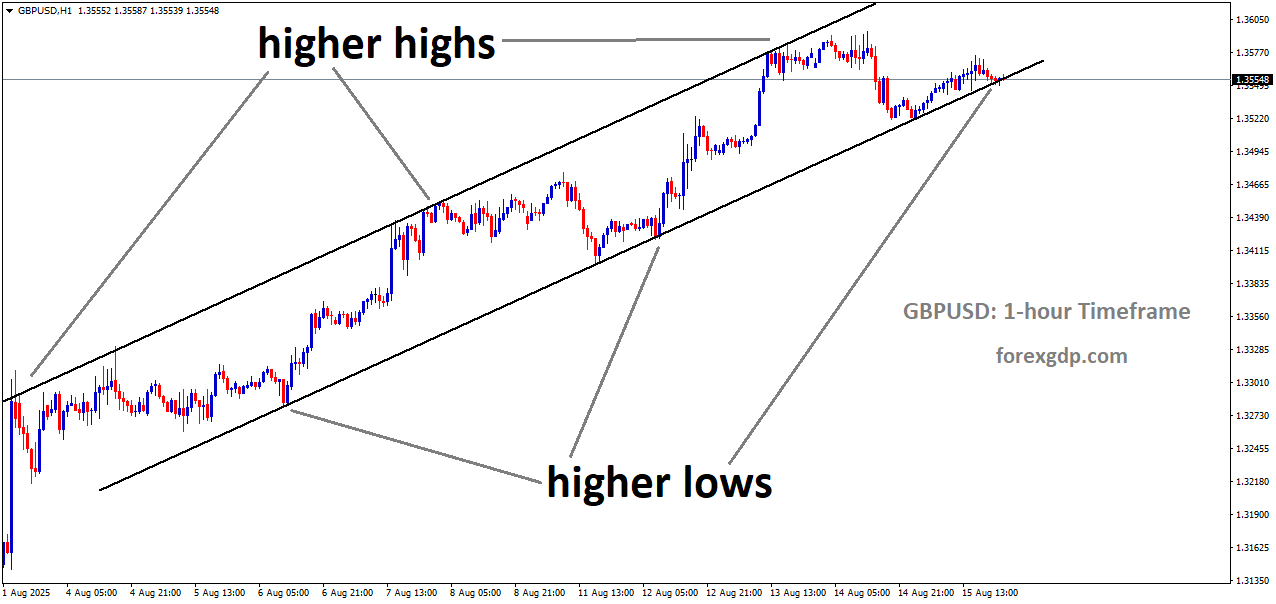
GBPUSD is moving in an Ascending channel, and the market has reached the higher low area of the channel
On a yearly basis, the number also eased, highlighting that household spending activity might be losing momentum. For an economy so heavily dependent on consumers, this can be an early warning sign. The fact that spending slowed despite expectations indicates that people are either saving more, worried about future economic conditions, or feeling the pinch of higher costs in everyday life.
Why Retail Sales Matter
Retail sales aren’t just numbers on a report. They affect everything from company earnings to employment rates. A slowdown here can ripple through different sectors of the economy and influence how policymakers, like the Federal Reserve, react in terms of interest rates.
Industrial Production Shows Weakness
Another important piece of data came from the industrial production report. Unlike retail sales, which reflect consumer demand, this one tells us about the health of factories, manufacturers, and utilities.
In July, production slipped slightly, missing expectations. This decline suggested that factories are struggling with demand or perhaps facing higher input costs that reduce output. Industrial production is often seen as a measure of economic momentum, and the slowdown raised concerns that the US economy might not be as resilient as it appeared earlier in the year.
The Broader Impact Of A Weaker Industrial Sector
When industries slow down, it can affect exports, job creation, and even wage growth. If factories are producing less, it means fewer goods are being shipped out, and companies may become reluctant to expand or hire. Over time, this can feed into the broader economy and influence overall growth rates.
Consumer Confidence Adds To The Uncertainty
While spending and production numbers are concrete, consumer confidence tells us how people feel about the economy. And feelings often translate into actions.
The University of Michigan’s Consumer Sentiment Index revealed a weaker-than-expected reading. People reported being less optimistic about current conditions, though expectations for the future showed a slight improvement.
This mixed outlook means households may still be worried about inflation, job stability, or other economic factors. A cautious consumer is less likely to spend big, and when millions of households take that approach, it directly slows economic momentum.

Expectations Vs Reality
What’s particularly interesting here is that while expectations edged up slightly, the overall sentiment still missed forecasts. This gap between what people hope for and what they are currently experiencing highlights the fragile state of confidence in the economy.
Why The Dollar Is Under Pressure
So, how do these numbers tie back to the US Dollar? Simply put, weaker economic data makes investors question how aggressive the Federal Reserve will be with its monetary policy.
The Dollar often gains strength when the Fed signals higher interest rates. But when data shows slowing growth and weaker consumer activity, it fuels speculation that the Fed might ease off or even cut rates sooner than expected. This shift in expectations is exactly what put pressure on the Greenback and allowed the British Pound to climb.
Market Expectations For The Federal Reserve
Traders closely watch tools like the CME FedWatch, which reflects the market’s view of potential rate changes. Recently, the probability of a rate cut at the Fed’s upcoming meeting remained high, though not as certain as before. The fact that markets still see a strong chance of policy easing underlines why the Dollar has been struggling.
What It Means For GBP/USD
For the Pound, the weaker Dollar acted as a boost. Even though the UK has its own set of challenges, ranging from growth concerns to inflation pressures, the GBP managed to take advantage of the Greenback’s softness.
This doesn’t mean the Pound is out of the woods. Its strength against the Dollar right now is less about domestic economic performance and more about what’s happening in the United States. In other words, it’s not that the UK economy is shining bright, but rather that the US is showing cracks in its outlook.
The Bigger Picture For Global Markets
Whenever the Dollar weakens, it tends to have ripple effects across global markets. Commodities like oil and gold, which are priced in USD, can see shifts in demand. Emerging market currencies also feel the impact, as a softer Dollar often gives them some breathing room.
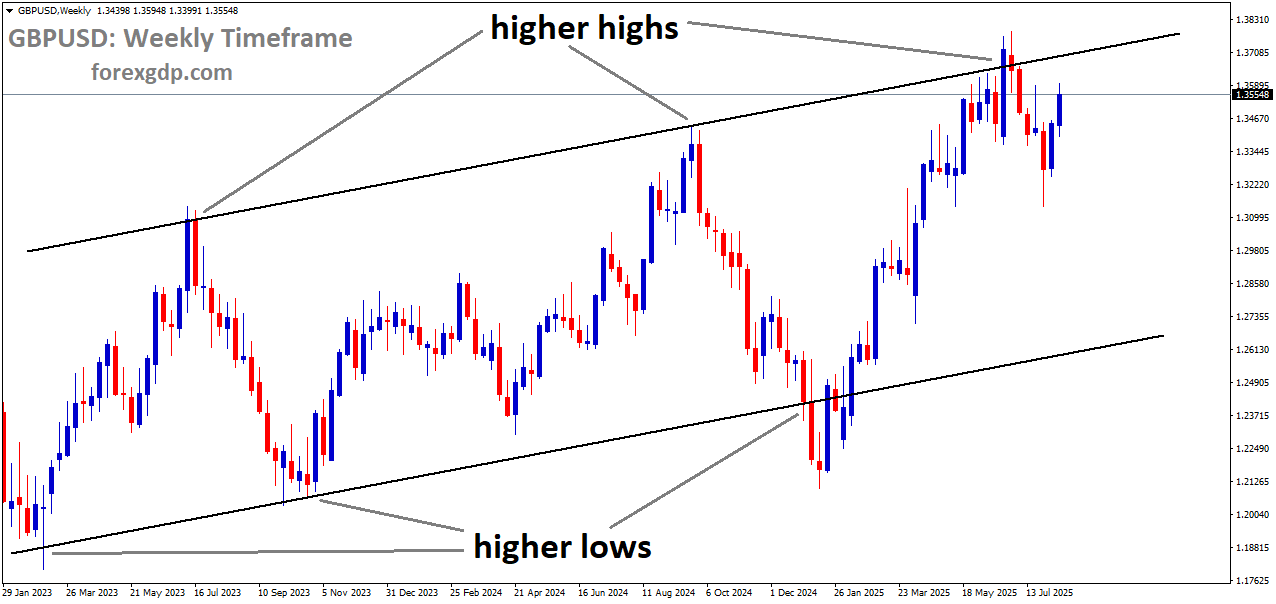
GBPUSD is moving in an uptrend channel
For businesses and investors, these moves highlight the importance of paying attention not just to one economy, but to how different data points around the world connect. The GBP/USD pair is just one example of how global currencies respond to shifting economic signals.
Final Summary
The recent rise of GBP/USD highlights how quickly market sentiment can shift when economic data doesn’t match expectations. US retail sales showed slowing consumer activity, industrial production slipped, and consumer confidence weakened, all adding to concerns about the strength of the American economy.
With the Federal Reserve’s next move still in focus, the Dollar came under pressure, giving the British Pound room to recover. While this may provide short-term relief for GBP/USD, the longer-term outlook will continue to depend on how both the US and UK economies perform in the months ahead.
At the end of the day, the foreign exchange market is about balancing risks and opportunities. Right now, the Pound’s strength is less about its own success and more about the Dollar’s struggles, reminding us once again how interconnected global economies truly are.
USDJPY Retreats with Yen Boosted by Robust Japanese Growth, US Slows Down
The foreign exchange market has once again turned its focus toward the Japanese Yen (JPY) and the US Dollar (USD), with the USD/JPY pair slipping as economic data from both countries shape investor sentiment. The story isn’t just about numbers—it’s about the broader outlook for both economies and how traders interpret shifting momentum between two of the world’s biggest markets. Let’s break down what’s happening and why it matters for anyone following currencies, investments, or global financial trends.
Japan’s Economic Growth Sparks Optimism
Japan surprised markets with stronger-than-expected growth figures for the second quarter. Instead of posting a sluggish result, the economy expanded 0.3% quarter-on-quarter, which translates to a 1.0% annualized growth rate. This exceeded expectations and gave the Yen a much-needed push against the US Dollar.
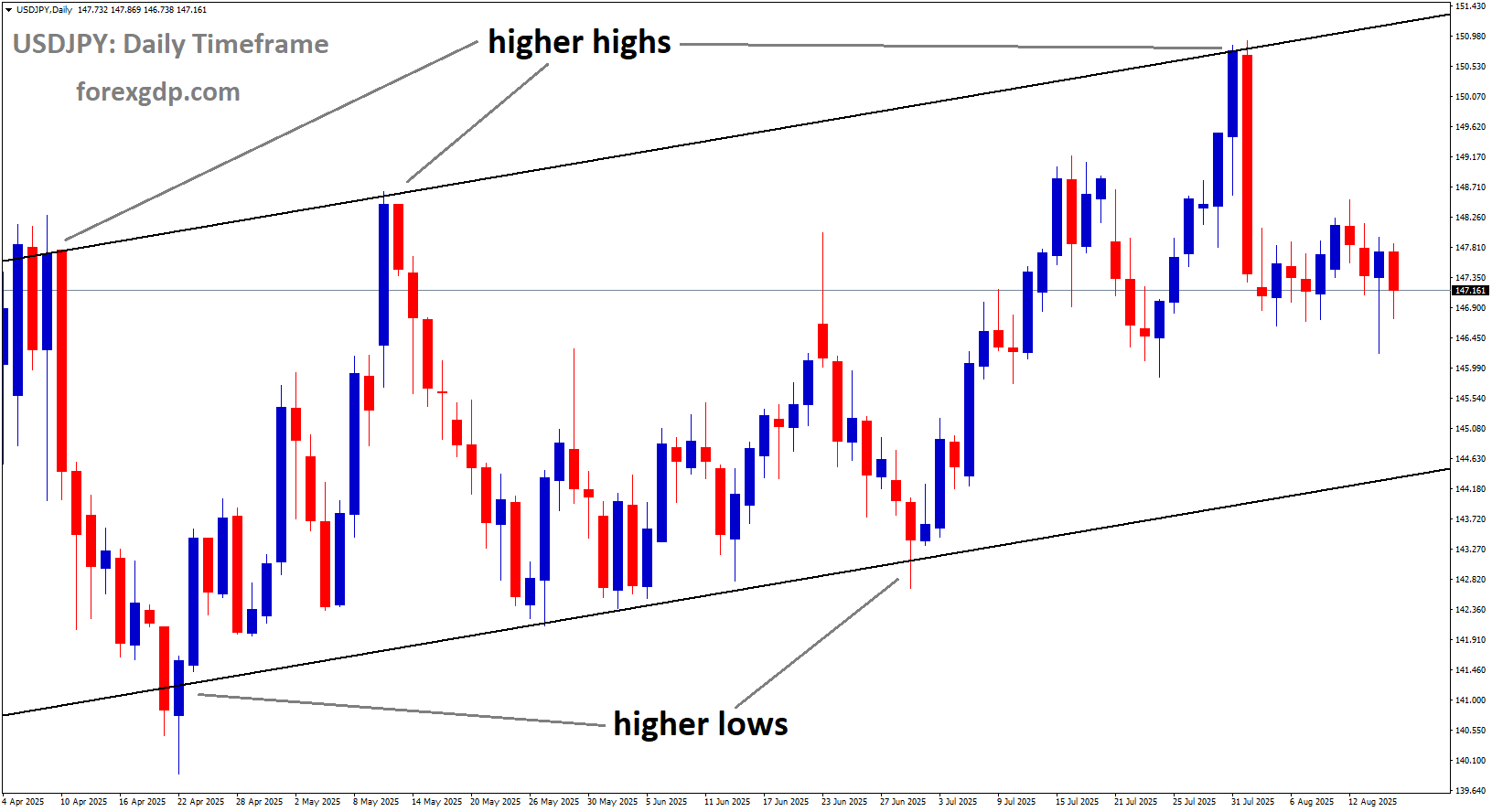
USDJPY is moving in an uptrend channel, and the market has fallen from the higher high area of the channel
What Drove the Growth?
-
Capital Expenditure: Japanese companies have increased their investments, signaling confidence in long-term growth prospects.
-
Exports: Despite global challenges, Japan’s export sector held up well, helping balance weaker private consumption at home.
This stronger performance suggests that Japan may be on firmer ground than many analysts previously thought. Investors are now speculating that the Bank of Japan (BoJ) could take a more confident stance in the coming months, which naturally makes the Yen more attractive to traders looking for a safe haven.
US Data Sends Mixed Signals
On the other side, the US economy is showing a less consistent picture. A string of economic reports in recent weeks has left markets uncertain about the true strength of the American recovery.
Key US Indicators
-
Retail Sales: Growth slowed to 0.5% in July, a step down from June’s stronger rebound. Consumers are still spending, but the pace has cooled.
-
Industrial Production: Instead of growth, production slipped by 0.1% in July, suggesting that factories and manufacturers are feeling the pinch.
-
Consumer Sentiment: The University of Michigan survey revealed weaker confidence, slipping to 58.6 from a previous 61.7. This shows that everyday Americans are feeling less optimistic about the economic outlook.
Inflation Concerns Still Linger
While some inflation indicators have eased, others remain stubbornly high. Short-term and long-term inflation expectations both edged up, raising questions about whether the Federal Reserve (Fed) can afford to cut rates aggressively. Traders now expect a strong likelihood of a small rate cut in September, but the case for deeper or faster cuts seems weaker than before.

Why the Yen is Gaining Ground
The shift in momentum is clear: while the US is showing mixed signs, Japan is producing surprisingly positive growth numbers. This divergence is giving the Yen a lift, particularly since it is often seen as a safe-haven currency during uncertain times.
When global investors feel nervous about economic trends, they often buy into the Yen, believing Japan’s stability offers a buffer against turbulence elsewhere. With the US Dollar facing pressure from weaker sentiment and inconsistent data, it’s no surprise that the Yen has found fresh support.
What Could Happen Next?
Looking ahead, investors will be keeping a close eye on a few key developments that could shape the next move for USD/JPY:
1. Federal Reserve Outlook
The release of the FOMC minutes and upcoming data on US business activity (such as the S&P Global PMIs) will provide clues about the Fed’s stance. If policymakers sound cautious about growth, the Dollar may remain under pressure.
2. Japan’s Inflation Data
Japan’s national CPI report will be another major factor. If inflation shows signs of rising more strongly, it could push the BoJ to consider policy adjustments. That would further strengthen the Yen and add pressure to the USD/JPY pair.
3. Market Sentiment
Beyond the data, global risk appetite matters. If investors turn risk-averse, they tend to pile into safe-haven assets like the Yen. Conversely, if risk appetite improves, the Dollar could see some relief.
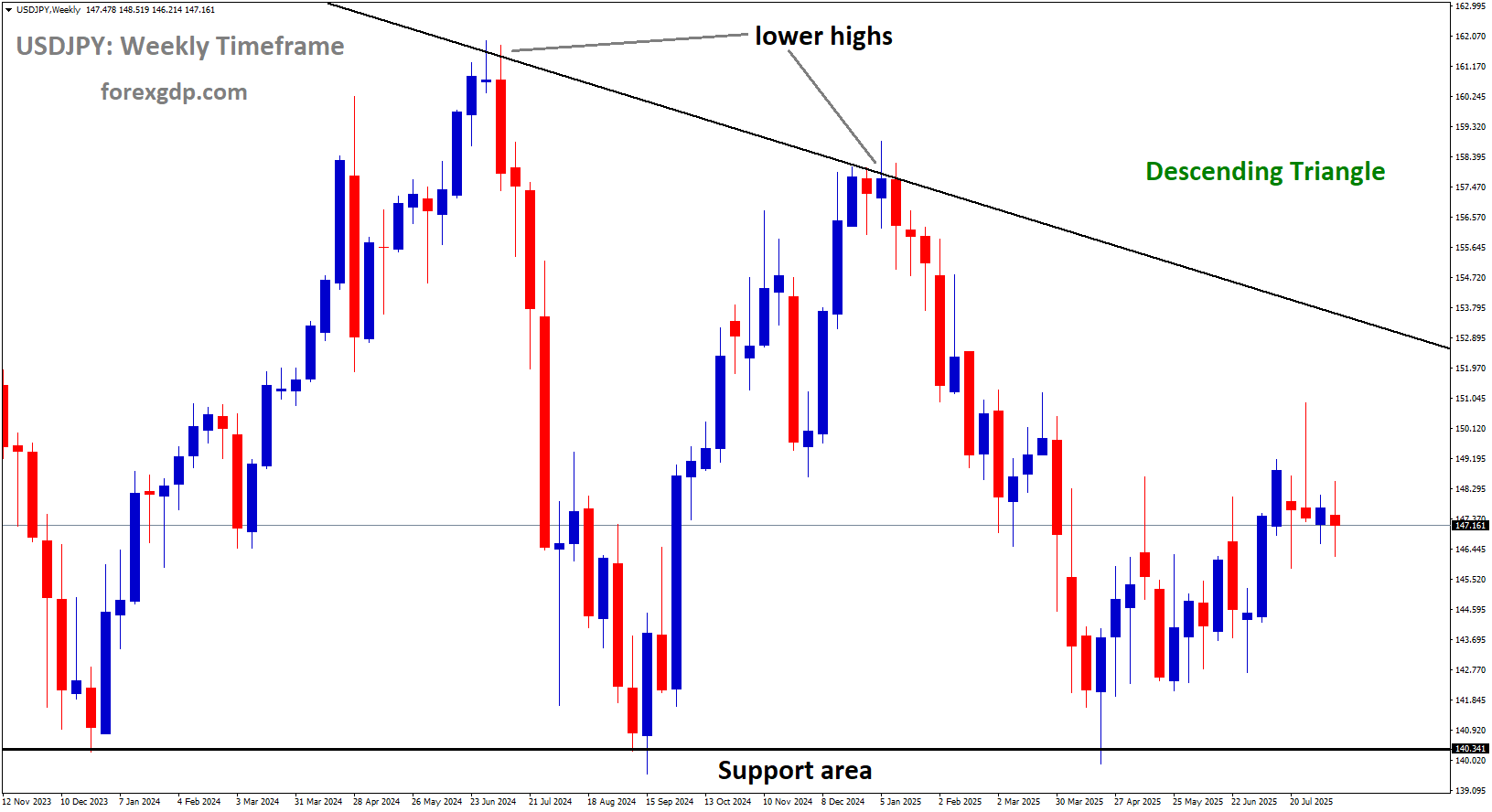
USDJPY is moving in a descending triangle pattern, and the market has rebounded from the support area of the pattern
Final Summary
The recent movement in USD/JPY tells a story bigger than just a few economic releases—it reflects a shifting balance between two major economies. Japan’s stronger-than-expected growth has boosted confidence in the Yen, while mixed US economic data and uncertain inflation signals have taken some shine off the Dollar.
In the near term, the Yen may continue to benefit from its safe-haven status and Japan’s improving fundamentals. At the same time, the Dollar faces ongoing challenges as traders weigh the Fed’s next moves against a backdrop of slowing momentum in the US economy.
For investors, traders, or even casual observers, this is a moment to watch closely. The tug-of-war between the Yen and the Dollar could set the tone for global markets in the weeks to come.
USDCHF under pressure with fading US demand and weaker Swiss GDP
When it comes to global currencies, the relationship between the US Dollar (USD) and the Swiss Franc (CHF) has always been interesting to watch. Recently, the USD/CHF pair moved lower as the Greenback faced pressure from weaker-than-expected US economic data. At the same time, the Swiss Franc gained support thanks to its reputation as a safe-haven currency and modest domestic growth. Let’s break down what’s happening, why it matters, and what this tug-of-war between the two currencies could mean going forward.
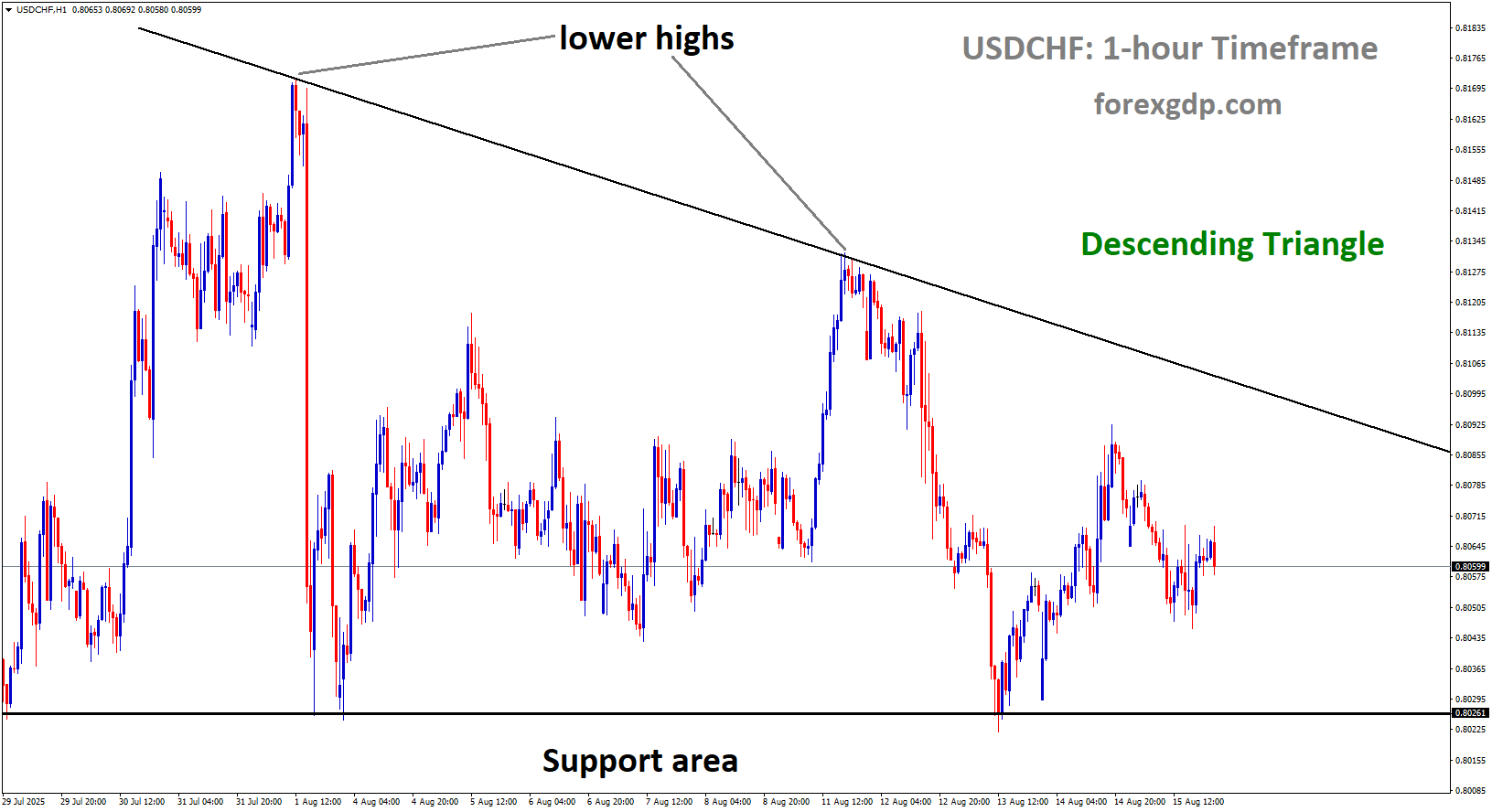
USDCHF is moving in a descending triangle pattern, and the market has rebounded from the support area of the pattern
US Economic Data: Cracks in the Consumer Story
The US economy has long been fueled by consumer spending, but fresh data suggests that momentum might be fading.
-
Retail Sales Losing Steam
July’s retail sales rose 0.5% compared to the previous month and 3.9% compared to a year earlier. While growth is still positive, the slowdown from earlier months shows households are becoming more cautious. Rising living costs and high borrowing rates are likely pushing consumers to tighten their wallets, and that’s not a good sign for the world’s largest economy. -
Mixed Inflation Signals
Inflation in the US has been a puzzle lately. The headline Consumer Price Index (CPI) looked soft, hinting that inflationary pressures may be easing. However, core inflation, which excludes food and energy, stayed sticky. Services costs in particular remain high, keeping pressure on households. Then came the Producer Price Index (PPI), which surged at its fastest pace since mid-2022. This mix of cooling consumer prices and rising producer costs has left policymakers in a tricky spot. -
Consumer Sentiment Weakening
The University of Michigan’s consumer sentiment survey also revealed some concerning trends. Confidence dropped to its lowest point in months, reflecting unease about the future. Even more worrying, people’s expectations for inflation climbed. The one-year outlook jumped to nearly 5%, and the five-year outlook rose close to 4%. Rising inflation expectations can become a self-fulfilling prophecy if consumers and businesses start acting as though higher prices are inevitable.
These combined factors point to a US economy that isn’t collapsing but is definitely showing signs of stress. And when the US stumbles, the dollar often stumbles with it.
The Federal Reserve’s Balancing Act
With so many conflicting signals, all eyes are on the Federal Reserve (Fed). The central bank has been walking a fine line between supporting growth and controlling inflation.
-
Why Policy is Tricky Right Now
On one hand, slowing consumer demand and weaker sentiment support the idea that the Fed should cut rates soon to keep the economy from sliding further. On the other hand, sticky core inflation and the recent surge in producer prices suggest that easing policy too quickly could backfire by fueling more price pressures. -
What’s Next?
A small rate cut in September still seems likely, but expectations for a long cycle of aggressive cuts are fading. Instead, the Fed may adopt a wait-and-see approach, adjusting policy only if incoming data justifies it. That means every new piece of economic information—whether it’s jobs data, inflation readings, or consumer surveys—could swing market expectations sharply.
This uncertainty weighs on the US Dollar, making it less attractive to investors compared to currencies backed by more stable or safer environments.
Switzerland’s Economy: Small Growth but Strong Currency
While the US struggles with its own challenges, Switzerland is dealing with a slowdown of its own.
-
GDP Growth Slows
In the second quarter, Switzerland’s economy grew by just 0.1%, a sharp drop from the 0.8% expansion in the first quarter. The slowdown was mainly due to weaker external demand, with US tariffs creating headwinds for Swiss exports. For a country that relies heavily on global trade, this kind of pressure can’t be ignored. -
Domestic Stability Holds Firm
Despite slower exports, Switzerland’s domestic economy remains steady. The country’s strong financial system, disciplined fiscal policies, and relatively low inflation continue to give investors confidence. -
Safe-Haven Appeal
Above all, the Swiss Franc benefits from its status as a safe-haven currency. In times of global uncertainty—whether from shaky US data, geopolitical tensions, or market volatility—investors tend to flock to assets they consider safer. The Franc, along with gold and the Japanese Yen, is often at the top of that list.
This safe-haven demand has allowed the CHF to strengthen even when Switzerland’s own economic growth slows down.
What This Means for USD/CHF
The tug-of-war between the US and Swiss economies is playing out directly in the USD/CHF pair. With the US Dollar under pressure from weaker data and uncertain Fed policy, and the Swiss Franc supported by its safe-haven role, the balance is tilting in favor of the Franc.
-
Short-Term Outlook
In the near term, the pair may continue to drift lower if US data keeps disappointing and if consumers show further weakness. Any hint of the Fed leaning toward easing could also add to downward pressure on the Greenback. -
Long-Term Picture
Looking further ahead, the story is less clear. If US growth finds its footing and inflation truly eases, the Dollar could recover. But if inflation stays stubborn and consumer demand continues to weaken, the Fed’s room for maneuver will remain limited, keeping the USD in check.
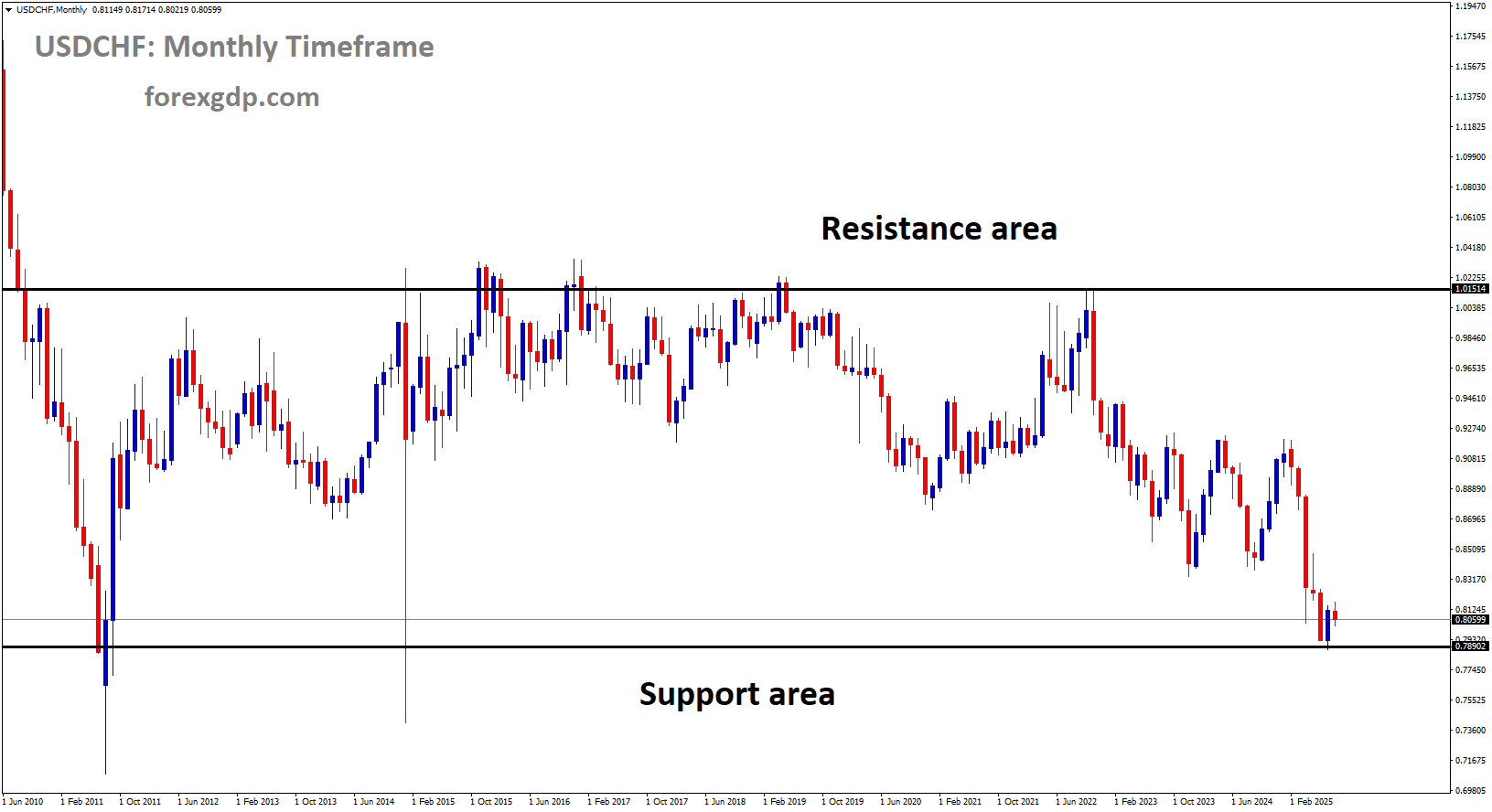
USDCHF is moving in a box pattern, and the market has reached the support area of the pattern
For Switzerland, steady domestic conditions and safe-haven flows should keep the Franc supported. However, prolonged weakness in global demand could eventually weigh more heavily on the small, export-driven economy.
Final Summary
The USD/CHF movement highlights how closely currency markets are tied to the bigger economic picture. In the US, slowing retail sales, sticky inflation, and weak consumer confidence are pressuring the Dollar and raising tough questions for the Federal Reserve. Meanwhile, Switzerland’s modest growth is offset by its safe-haven appeal, keeping the Franc firm against the Greenback.
For now, the balance favors the Swiss Franc, as investors prioritize stability in uncertain times. But the story is far from over. Future shifts in inflation, consumer behavior, and central bank decisions will shape where USD/CHF goes next. In today’s interconnected world, currencies don’t just tell us about money—they tell us the deeper story of global economic health.
USDCAD slips lower before crucial US retail sales report
The Canadian Dollar (CAD) has been moving cautiously against the US Dollar (USD), showing signs of recovery but still stuck within familiar trading ranges. Even though the US Dollar has faced moments of weakness, the Canadian Dollar hasn’t been able to fully capitalize. Let’s break down what’s happening, why the CAD feels “trapped,” and what factors are holding it back.
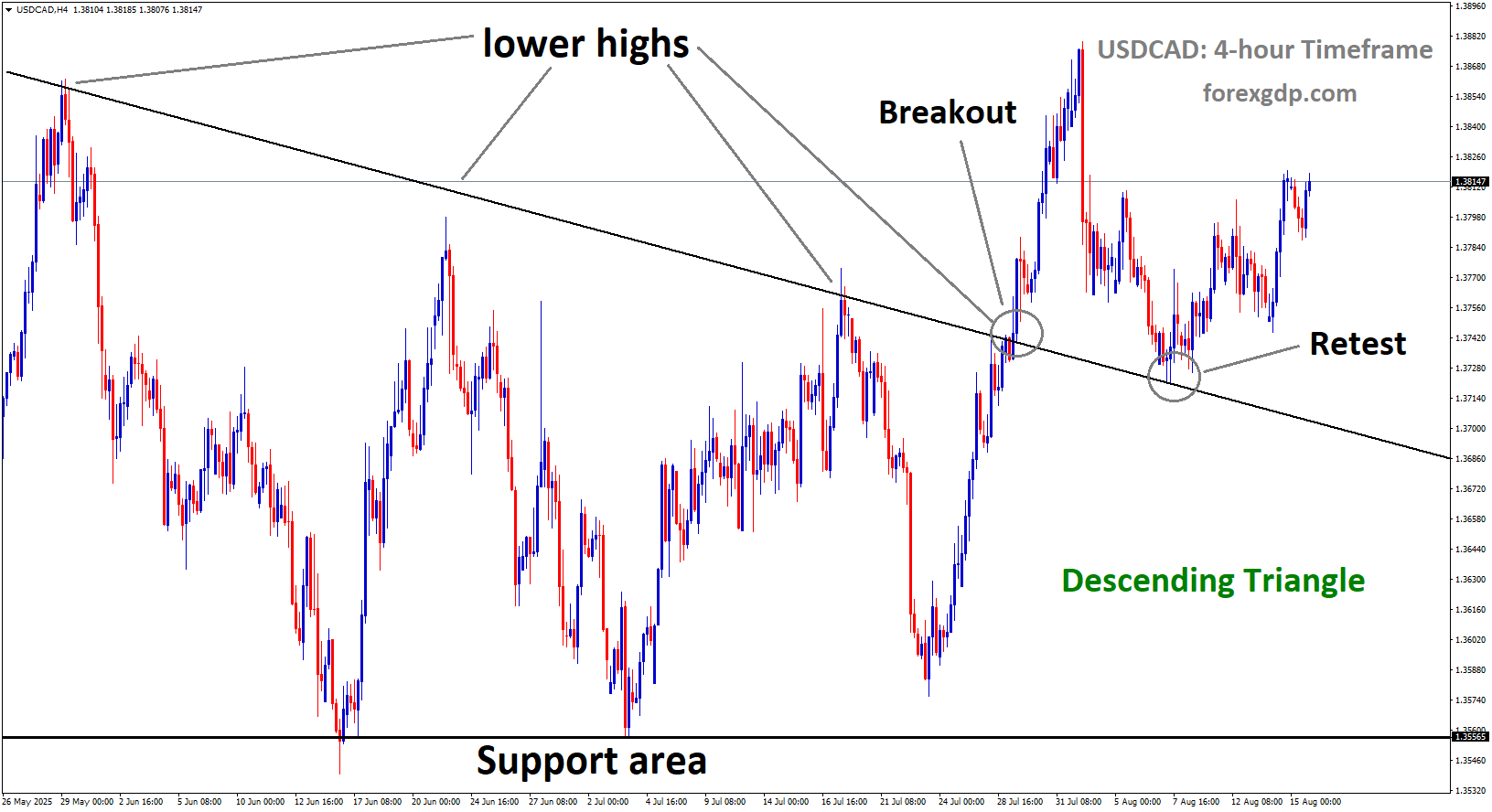
USDCAD is rebounding from the retest area broken descending triangle pattern
Why the Canadian Dollar is Struggling
One of the biggest reasons behind the CAD’s limited progress is the drop in oil prices. Since Canada is a major exporter of oil, the value of the Canadian Dollar is closely tied to global crude markets. When oil prices fall, the CAD often loses momentum because investors expect lower returns from Canada’s energy-driven economy.
Recently, oil has fallen sharply—by more than 10%—and this has put the Canadian Dollar in a difficult spot. Even when the USD weakens, the CAD hasn’t been able to mount a strong rally because of the negative impact from the commodity side.
The Role of the US Federal Reserve
Another major influence on this currency pair is the Federal Reserve’s policy outlook. Investors are keeping a close eye on whether the Fed will cut interest rates in the coming months.
Earlier in the week, softer inflation data had raised hopes of more aggressive Fed cuts. However, stronger-than-expected producer price numbers quickly cooled those expectations. This created some volatility for the USD, as traders tried to figure out how the Fed might respond.
At the moment, most market participants believe that the Fed is still on track for a 25-basis-point cut in September. That belief has stopped the USD from strengthening too much, but at the same time, it hasn’t given the Canadian Dollar enough fuel to surge ahead either.
Risk Appetite and Market Sentiment
Currency markets aren’t only about hard data—they’re also influenced by how investors feel about risk. When global markets show risk appetite, meaning investors are more willing to take chances in stocks and other assets, the US Dollar often weakens. That’s because the USD is seen as a safe-haven currency, and money tends to flow out of it when confidence rises.
On the other hand, when risk sentiment is shaky, the USD usually gains ground as investors look for safety. Recently, risk appetite has been moderate, which has kept the USD from fully rallying but hasn’t given the CAD much of a push either.
Why Oil Matters So Much for the Canadian Dollar
Oil deserves a closer look because it’s not just a side factor—it’s central to the CAD’s movements.

Canada’s Reliance on Oil Exports
Canada is one of the world’s largest crude oil exporters. That means its currency often acts like a “petro-currency.” When oil prices rise, Canada earns more revenue from exports, boosting economic growth and making the CAD more attractive to investors.
When Oil Prices Drop
The reverse is also true. A sharp decline in oil makes investors worry about Canada’s export revenues and overall growth. Recently, oil prices have slipped to multi-month lows, which has directly weighed on the Canadian Dollar. Even when the US Dollar has shown weakness, the CAD hasn’t been able to turn that into a clear advantage.
The Tug of War Between USD and CAD
At the moment, the USD/CAD pair is essentially in a tug of war. On one side, the Canadian Dollar is being dragged down by falling oil prices. On the other side, the US Dollar is being held back by expectations of Fed rate cuts.
This combination has left the pair stuck within a range. Neither side has enough strength to push decisively higher or lower, creating a kind of standstill in the market.
What Could Break the Stalemate?
Looking ahead, a few key developments could finally push the USD/CAD pair out of its tight range:
-
Federal Reserve Policy Updates: Any change in expectations about rate cuts could shift momentum for the USD.
-
Oil Price Recovery: If oil prices rebound, the CAD could regain some lost ground.
-
Canadian Economic Data: New domestic data, such as employment or GDP numbers, could give the CAD a stronger direction.
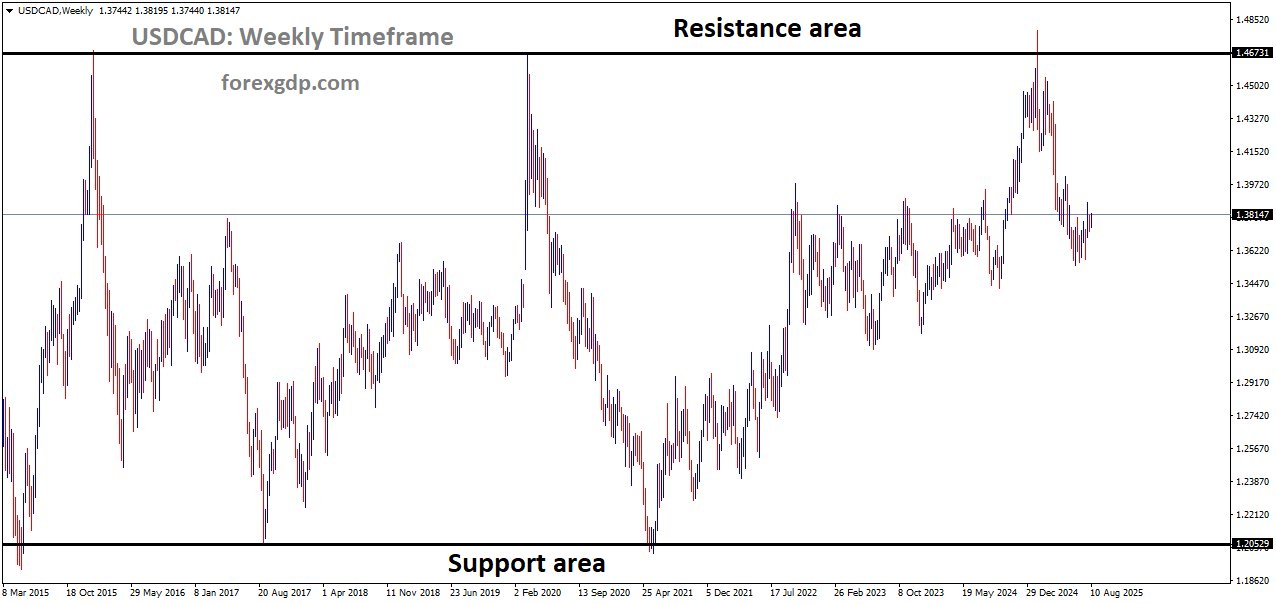
USDCAD is moving in a box pattern, and the market has fallen from the resistance area of the pattern
For now, though, the market seems to be waiting for one of these catalysts before committing to a new trend.
Final Summary
The Canadian Dollar has trimmed some of its earlier losses but remains stuck in a narrow range against the US Dollar. While the Fed’s expected September rate cut keeps the USD from gaining too much, the CAD hasn’t been able to shine due to falling oil prices and lack of fresh Canadian data.
This situation has created a tug of war, with neither currency showing enough conviction to break free from the current pattern. Until oil prices recover or new economic signals emerge, the Canadian Dollar is likely to stay in this cautious, range-bound mode.
GBPJPY Slips While Japan’s Economic Surge Raises Talk of BoJ Rate Hike
The currency market is buzzing again, and one of the hot topics right now is the GBP/JPY pair. Recently, this pair has been moving lower after struggling to hold its ground above the 200.00 mark. What’s really driving this shift is not just a one-off movement but a series of economic updates, especially from Japan, that are making traders rethink their positions. Let’s break it all down in simple terms and explore what’s happening behind the scenes.
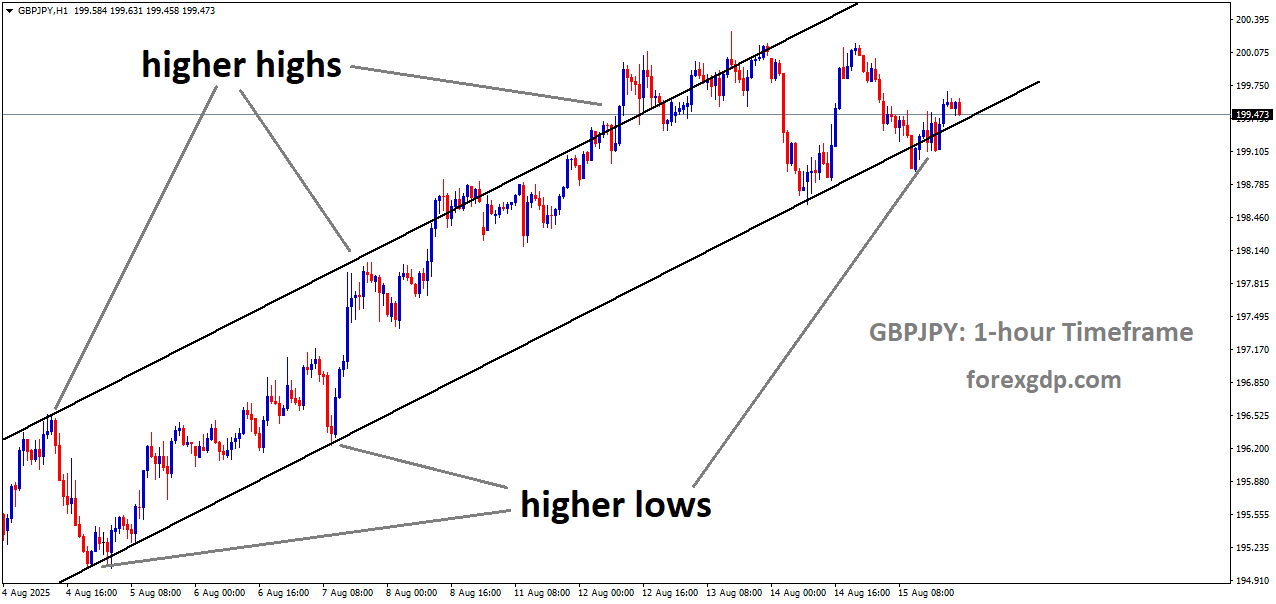
GBPJPY is moving in an Ascending channel, and the market has reached the higher low area of the channel
Japan’s Growth Story is Changing the Game
Japan’s economy has long been described as slow-growing, but the recent GDP numbers surprised almost everyone. The country’s preliminary Q2 data showed the economy expanding much faster than expected. Instead of the modest growth analysts predicted, Japan delivered a strong performance that suggested businesses and consumers are regaining confidence.
What made this data so important is that it wasn’t just about headline growth. On a quarterly basis, Japan’s economy also did better than forecasts, which gave investors even more reasons to back the Japanese Yen. For a long time, the Yen had been under pressure because of Japan’s extremely loose monetary policy. Now, stronger growth figures are fueling speculation that things may finally be shifting.
Why GDP Numbers Matter for Currencies
Whenever a country shows stronger economic growth than expected, it often changes how investors view its central bank. In Japan’s case, these numbers suggest the Bank of Japan (BoJ) might be pushed closer to tightening its policies after years of keeping interest rates near zero. If the BoJ even hints at a move toward higher rates, the Yen becomes more attractive to investors, and that directly impacts pairs like GBP/JPY.
The Inflation Puzzle in Japan
Growth is only part of the story. Inflation trends are also in focus. Recent data from a Reuters poll suggests Japan’s core Consumer Price Index (CPI) is expected to stay around 3.0%. While that’s a slight dip from the previous month, it’s still well above the BoJ’s official target of 2%.
Sticky Inflation and Policy Pressure
Even if inflation is easing a little, it hasn’t dropped enough to calm concerns. Persistent price pressures mean everyday goods and services are costing more for Japanese households, and that’s exactly what central banks usually respond to with tighter monetary policy.
For Japan, which has spent decades fighting low inflation and weak demand, this shift is huge. Investors are now betting that the BoJ might finally act sooner rather than later. Some even see the possibility of a rate hike as early as October. That’s a big deal because Japan has resisted raising rates for years, making this a potential turning point in monetary history.

The UK’s Mixed Economic Picture
On the other side of the GBP/JPY equation is the British Pound. The UK’s economy recently showed a bit of resilience, with growth in Q2 stronger than many had expected. Key sectors like construction and services helped offset uncertainties following political changes and global trade tensions.
But there’s another layer to this story — the Bank of England’s (BoE) policy stance. The BoE recently cut its main rate, signaling a cautious shift toward easing. At the same time, strong GDP numbers may force them to pause and think twice before rushing into more cuts.
Caution at the Bank of England
The BoE’s challenge is balancing inflation risks with the need to support growth. Policymakers are split, with some worried about lingering price pressures and others pushing for more support for businesses and households. That internal divide makes the Pound’s outlook less clear-cut, especially when compared to Japan’s new wave of optimism.
GBP/JPY: A Tug of War Between Two Stories
When you look at both sides — Japan’s strong growth and sticky inflation versus the UK’s cautious central bank approach — it’s not hard to see why GBP/JPY has been sliding. Investors are finding the Yen more appealing as Japan looks like it may finally join the global trend of tightening monetary policy.
The British Pound, on the other hand, is caught in a more uncertain space. While the economy is holding up, the BoE’s recent cut and mixed messaging make it less attractive compared to a suddenly stronger Yen.
What This Means for Traders and Investors
If you follow currencies, GBP/JPY is a perfect example of how global economic data directly drives market sentiment. A few key takeaways stand out:
-
Japan’s growth and inflation are finally pointing in the same direction, pushing the BoJ toward policy tightening.
-
The Yen is gaining strength as investors believe Japan might step away from its ultra-loose stance.
-
The UK remains uncertain, with growth surprising on the upside but central bank policy signaling caution.
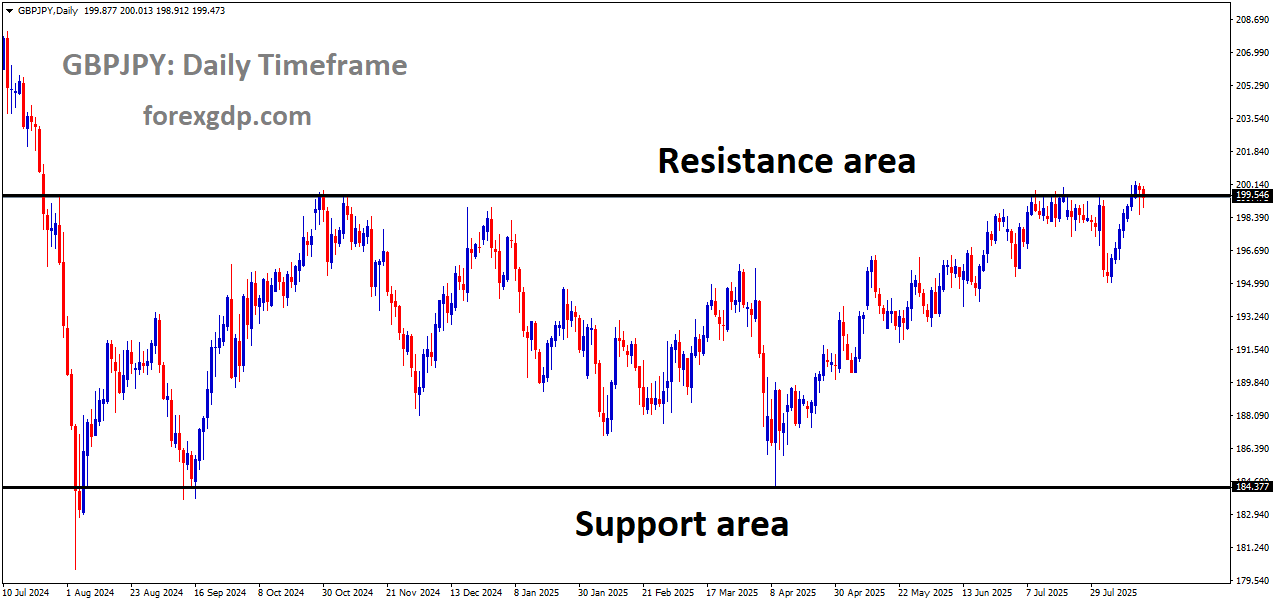
GBPJPY is moving in a box pattern, and the market has reached the resistance area of the pattern
In simple terms, this is shaping up to be a period where the Yen could keep strengthening while the Pound struggles to keep pace.
Final Summary
The latest moves in GBP/JPY aren’t just about technical levels or short-term market swings — they’re about deeper shifts in the economic outlook of both Japan and the UK. Japan’s surprisingly strong growth and persistent inflation pressures are fueling expectations that the Bank of Japan may tighten policy sooner than anyone thought possible. That’s giving the Yen fresh strength.
Meanwhile, the British Pound is dealing with its own mix of cautious central bank policy and uncertain growth prospects. While the UK economy is showing resilience, the BoE’s recent decisions and ongoing debates about inflation leave the Pound on shakier ground.
In the end, GBP/JPY reflects a tug of war between a newly confident Yen and a cautious Pound. For traders and investors, it’s a reminder that currency markets aren’t just about numbers on a screen — they’re about real economic stories that shape the value of money across the globe.
EURGBP edges upward but momentum stalls before key political summit
When it comes to global currencies, the relationship between the Euro and the British Pound has always been fascinating. Both represent powerful economies, and any shift between them often signals deeper global or regional changes. Recently, the Euro has been trying to climb back up against the Pound after a sharp drop. While this move has attracted attention, the broader outlook still carries a sense of caution. Let’s take a closer look at what’s really going on behind this tug-of-war between two of the world’s most watched currencies.
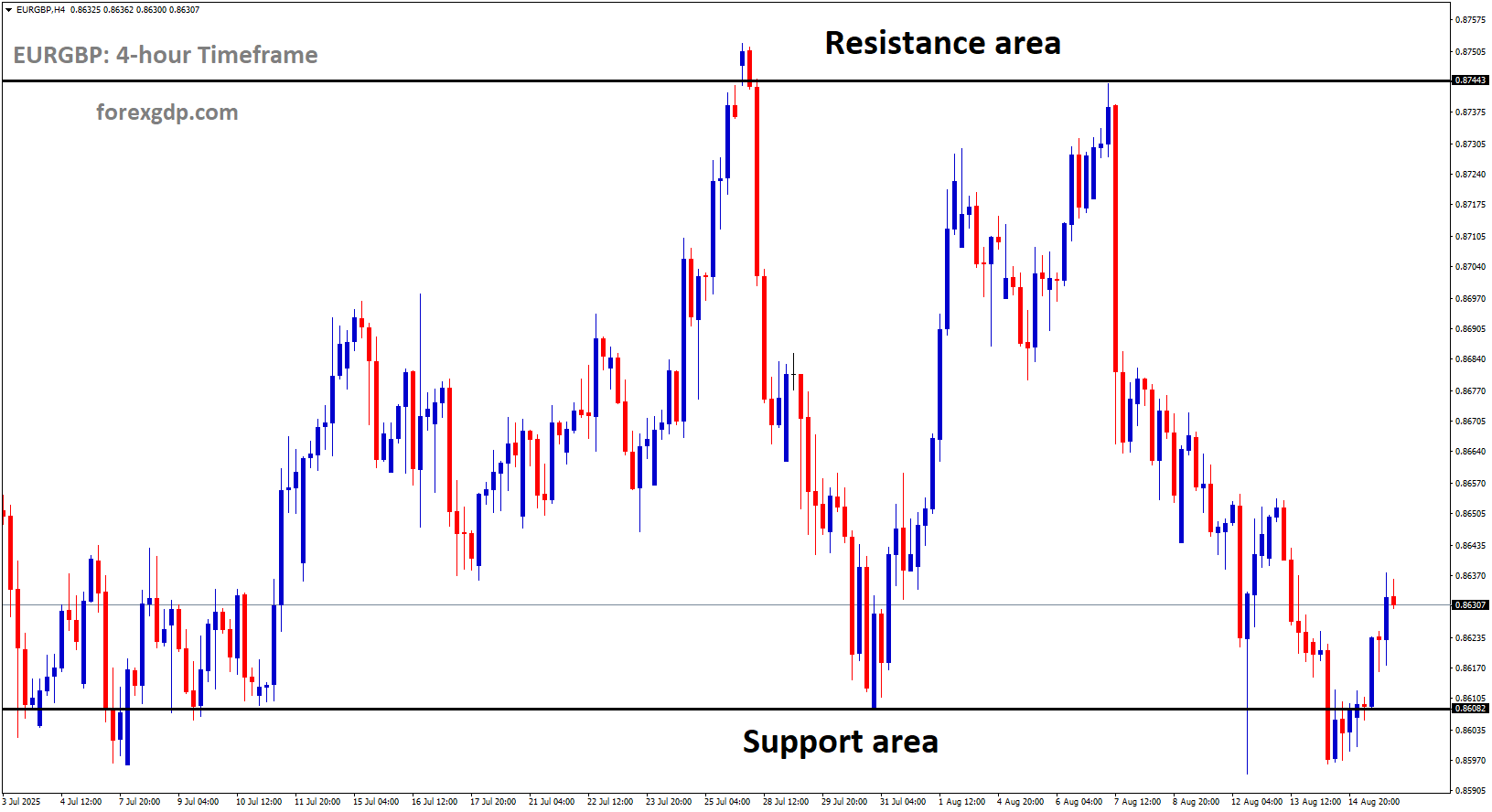
EURGBP is moving in a box pattern, and the market has rebounded from the support area of the pattern
A Brief Look at the Recent Euro-Pound Story
Over the past week, the Euro slipped nearly 1.4% against the Pound. This may not sound dramatic, but in the currency market, such moves matter a lot. On Monday, however, the Euro found a little strength, bouncing back slightly. This recovery is less about technical trading numbers and more about global politics shaping investor sentiment.
The optimism stems from renewed talks involving global leaders about the war in Ukraine. Any signal of peace or at least progress toward negotiations can ease tensions in the market. Investors, always quick to react, see such developments as a reason to reduce risk. As a result, the Euro managed to hold on to modest gains, although it hasn’t fully escaped the pressure of last week’s losses.
The Role of Global Politics in Currency Moves
Why Peace Talks Matter
The main driver behind the Euro’s rebound is the hope for peace in Ukraine. The war has had a heavy impact not just on the people directly affected but also on Europe’s economy. Energy prices, trade disruptions, and uncertainty have all weighed on the Euro. That’s why even the smallest hint of progress in negotiations sparks some relief in the markets.
A recent meeting between former U.S. President Donald Trump and Russian President Vladimir Putin stirred cautious optimism. While no one expected an immediate breakthrough, the idea of a follow-up meeting including Ukrainian President Volodymyr Zelenskyy gave markets something positive to latch onto. The prospect of dialogue—even if fragile—creates a perception that stability might return someday.
Confidence vs. Reality
Political leaders often speak with confidence before or after such meetings, but investors know words are not enough. For currencies like the Euro, what truly matters is whether actions follow. Still, confidence statements can temporarily fuel hope. Trump’s upbeat tone about the talks, even without concrete results, was enough to give the Euro some breathing room.

Investor Sentiment and Market Psychology
The currency market is not just about numbers; it’s about emotions, perceptions, and expectations. Traders and investors constantly try to predict the next move, and often, that prediction is based on how they feel about the news.
-
Optimism creates short-term strength. When talks of peace hit the headlines, investors reduce their risk aversion, allowing the Euro to gain.
-
Caution maintains long-term pressure. The broader bearish trend for the Euro remains intact because underlying challenges—like energy dependence and slower growth compared to the UK—haven’t disappeared.
This explains why the Euro’s bounce is only seen as a correction rather than a major shift. It’s like a runner catching their breath during a long race; they may speed up for a bit, but it doesn’t mean they’ve taken the lead.
How the Pound Fits Into the Picture
While the Euro reacts to European and global political developments, the British Pound has its own story. The UK has faced its share of economic hurdles, including inflation and political uncertainty. Yet, in recent times, the Pound has shown resilience compared to the Euro.
Why? The UK, despite its challenges, has seen some stronger economic indicators. Additionally, investors often view the Pound as a safer bet when uncertainty looms in continental Europe. This relative strength is part of the reason why the Euro’s attempts to recover have been limited.
What Could Happen Next?
No one can predict currencies with complete certainty, but there are a few scenarios worth thinking about:
-
Progress in Peace Talks
If genuine steps toward resolving the Ukraine conflict emerge, the Euro could strengthen further. Markets thrive on stability, and peace would ease many of the economic pressures Europe currently faces. -
Stalled Negotiations
If the talks stall or tensions rise again, optimism may vanish quickly. In that case, the Euro could struggle to hold its ground against the Pound. -
Economic Data Surprises
Apart from politics, routine data releases—like employment figures, inflation rates, and growth numbers—will also influence both currencies. If the UK outperforms Europe economically, the Pound will likely stay strong.
The Bigger Picture: Why This Story Matters
At first glance, a small change in the Euro-Pound exchange rate might seem like just another piece of financial news. But in reality, it connects to broader themes that affect everyday life.
-
Energy Costs: A weaker Euro makes imported energy more expensive, directly influencing household bills in Europe.
-
Trade Relations: Businesses that trade between the UK and Europe closely watch these shifts, as currency changes impact their costs and profits.
-
Investor Confidence: Global investors use currency performance as a reflection of economic and political stability. A weaker Euro may signal hesitation about Europe’s future growth.
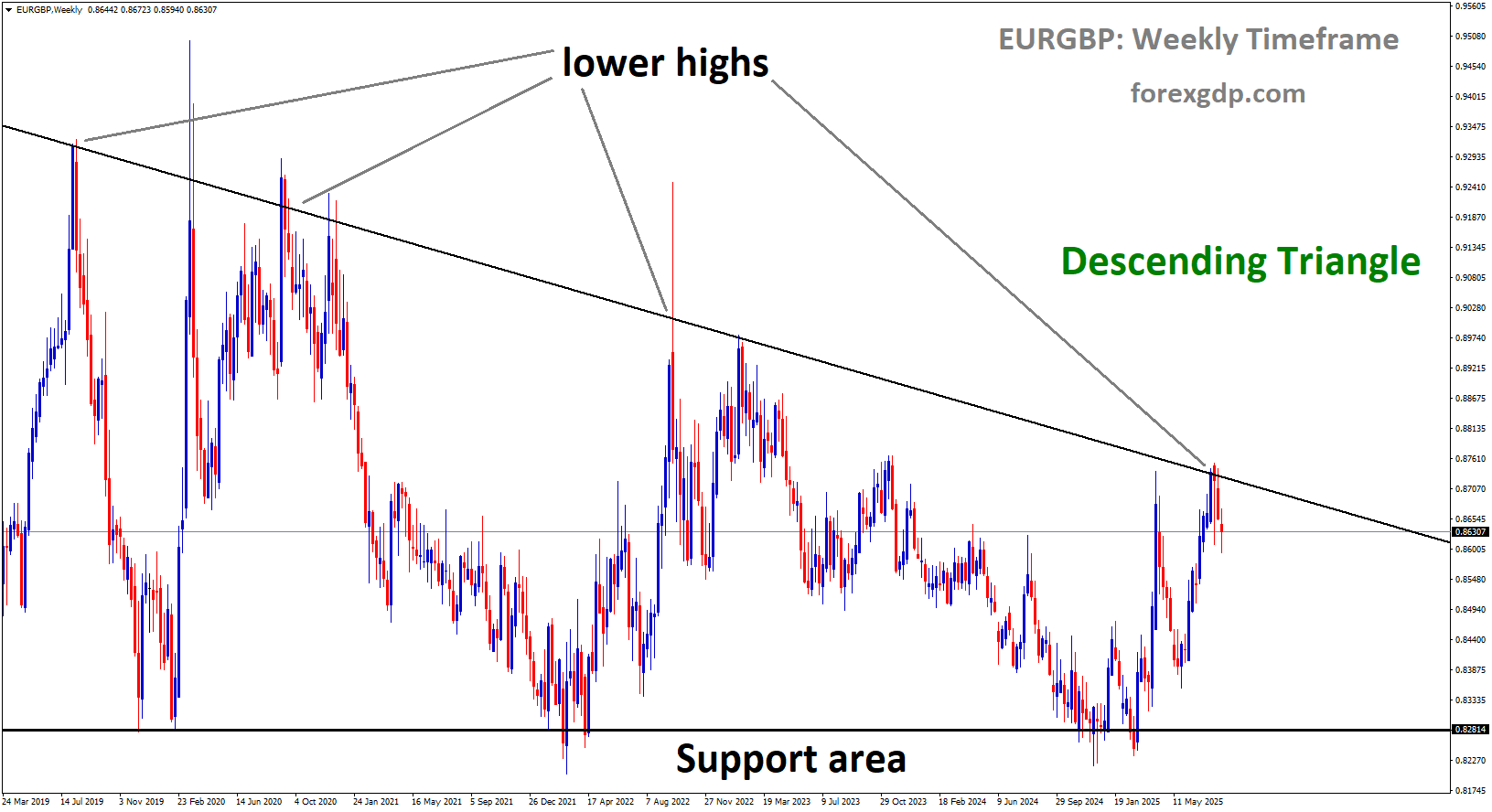
EURGBP is moving in a descending triangle pattern, and the market has reached the lower high area of the pattern
Final Summary
The Euro’s recent attempt to recover against the Pound highlights how closely currency markets are tied to global politics, investor emotions, and economic signals. While the Euro did manage to regain some ground, the overall trend still leans bearish due to ongoing uncertainties. Hopes for peace in Ukraine provided a short-lived boost, but lasting strength will only come with real progress and stability.
For now, the Pound continues to hold an edge, thanks to relatively stronger resilience and investor trust. The Euro, meanwhile, remains sensitive to every headline about negotiations, global meetings, and political statements. In this way, the Euro-Pound battle is more than just numbers on a screen—it’s a reflection of the complex mix of politics, economics, and human psychology shaping the world today.
BTCUSD Whipsaws as Traders React to Shifting U.S. Inflation Signals
Bitcoin has always been known for its volatility, but the past week has been a perfect reminder of just how unpredictable this digital asset can be. After hitting a brand-new all-time high, it didn’t take long for things to turn the other way, leaving traders and investors both excited and cautious at the same time. Let’s break down what really happened, why it happened, and what it could mean for the road ahead.
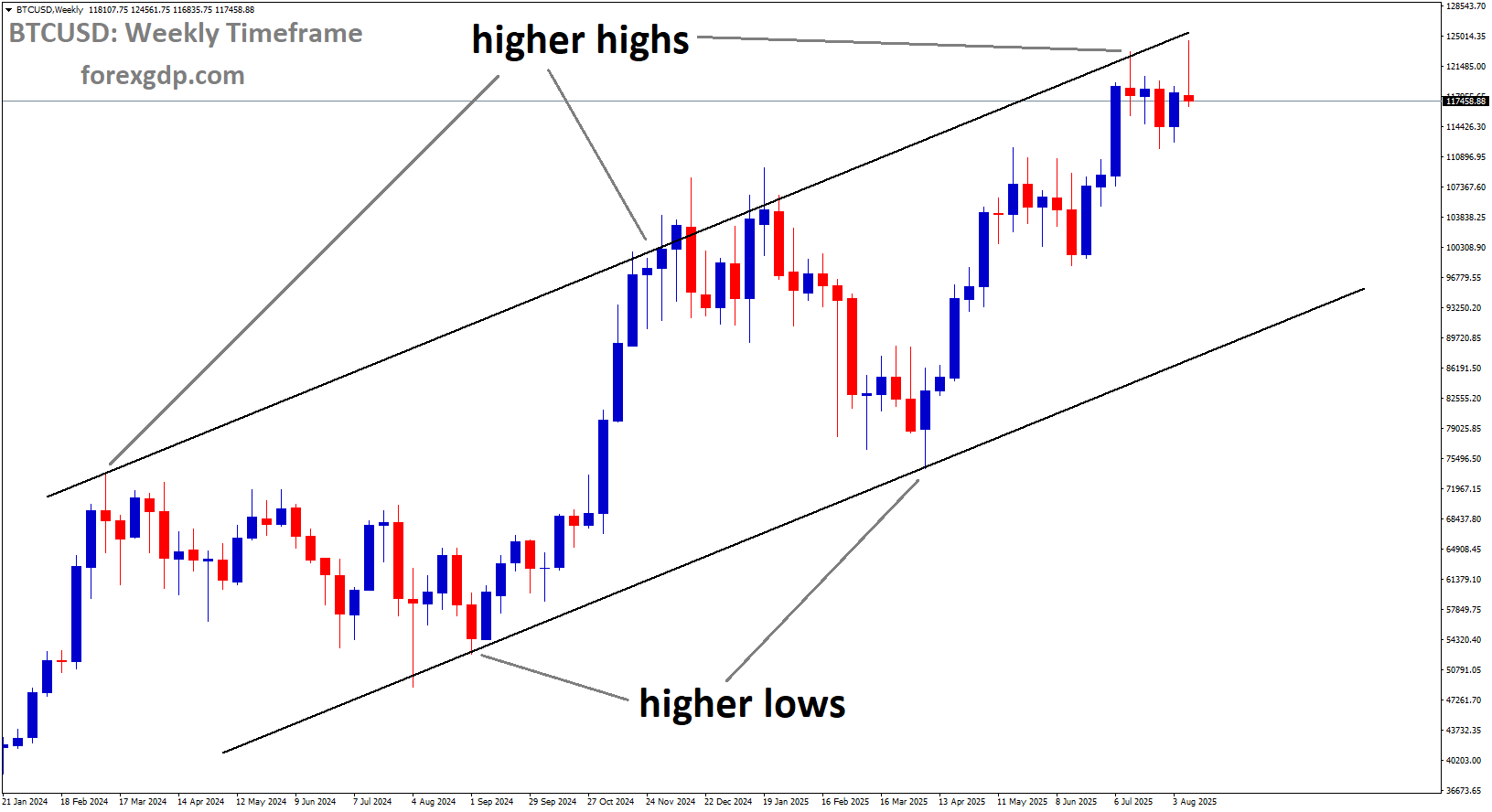
BTCUSD is moving in an Ascending channel, and the market has reached a higher high area of the channel
The Rollercoaster Week for Bitcoin
Bitcoin surged to a fresh all-time high, crossing into record territory before quickly reversing course. The move was heavily influenced by U.S. inflation data, which initially sent a wave of optimism through global markets. When inflation numbers came in softer than expected, investors started betting on potential Federal Reserve rate cuts. This fueled Bitcoin’s upward momentum as risk assets across the board saw renewed interest.
But things changed fast. Later in the week, fresh economic data suggested inflation might be creeping back up. This was enough to pull the brakes on the rally. The same optimism that had carried Bitcoin to the skies suddenly shifted to caution, and the price dropped significantly in a matter of hours.
This kind of rapid change isn’t unusual for Bitcoin, but what made it particularly interesting this time was the scale of the reaction. Billions of dollars in trading positions were wiped out almost overnight, showing just how quickly the mood can swing in the crypto space.
Why Inflation News Matters for Bitcoin
Bitcoin may not be directly tied to government monetary policy, but it’s no secret that inflation data and interest rate expectations play a big role in its price movements. When inflation looks like it’s cooling down, investors tend to expect rate cuts, and this makes risk assets like Bitcoin more attractive.
On the other hand, when inflation data hints at rising costs, investors fear tighter monetary policy. This creates a “risk-off” environment where assets like Bitcoin are often sold off in favor of safer investments.
This past week, we saw both sides of the coin play out in real time. A softer inflation reading gave Bitcoin wings, but a stronger-than-expected producer price index report quickly clipped them.
Billions Lost in Liquidations
One of the most dramatic effects of this sudden shift in sentiment was the mass liquidation of long positions. In simple terms, a long position is when traders bet that the price will keep going up. When the market moves the other way, these positions are often automatically closed by exchanges to prevent further losses.
This week, nearly $2 billion worth of long positions were liquidated as Bitcoin’s price tumbled. For many traders, it was a painful reminder of the risks of using leverage in such a volatile market. The sharp drop created what’s known as a “long squeeze,” where the forced selling of positions pushes the price down even further.
If anything, this event highlights just how risky aggressive trading strategies can be in the crypto world. Even the strongest rallies can turn on a dime, catching many off guard.

Big Players Are Still Buying
Despite the turbulence, one thing has remained consistent—large institutional and corporate interest in Bitcoin continues to grow. Over the past few years, more and more companies have been adding Bitcoin to their balance sheets as part of a treasury strategy.
Recent reports show that hundreds of companies and even some governments now collectively hold over a million and a half Bitcoins. This trend has been steadily increasing, with more entities adopting Bitcoin as a long-term asset rather than a short-term trading play.
In fact, several major firms recently announced new Bitcoin purchases, reinforcing the idea that the long-term outlook for BTC remains strong. These large-scale buys also help provide a degree of price support during volatile times.
Institutional Inflows Keep Rising
Data from the past week revealed that institutional investors put more than half a billion dollars into Bitcoin-related investments. While this isn’t as high as the record-breaking inflows seen earlier in the year, it’s still a healthy sign of ongoing demand.
This kind of steady inflow is crucial for Bitcoin’s future, as it signals that big money continues to see value in the asset, regardless of short-term fluctuations.
Positive Developments Around the Globe
While traders were focused on price charts, some big news developments took place that could shape Bitcoin’s long-term journey.
One of the most notable stories was a U.S.-based Bitcoin company completing a major merger with a healthcare firm. Their plan? To build one of the largest Bitcoin treasuries in existence, with a goal of eventually holding over a million BTC. Moves like this show that some businesses are going all-in on Bitcoin, treating it as a reserve asset similar to gold.
Meanwhile, in Hong Kong, regulators announced new rules designed to improve the safety of cryptocurrency trading platforms. This includes stricter oversight of how exchanges handle customer funds, especially after several high-profile failures in recent years. The city has also been experimenting with stablecoin regulations and positioning itself as a hub for digital asset innovation in Asia.
These developments, while technical in nature, point to a broader trend—governments and institutions around the world are increasingly taking Bitcoin and other digital assets seriously. And for investors, that’s a positive sign of maturing markets.
What This Means for Bitcoin’s Future
So, what can we take away from this whirlwind week? First and foremost, Bitcoin’s volatility isn’t going anywhere. It remains an asset that can swing dramatically in response to economic data, market sentiment, or global news. For short-term traders, this means both big opportunities and big risks.
But beyond the daily ups and downs, the long-term story for Bitcoin continues to look strong. Institutional adoption is growing, corporate treasuries are holding more BTC, and governments are slowly but surely building regulatory frameworks. Each of these factors points toward greater legitimacy and stability for Bitcoin in the years ahead.
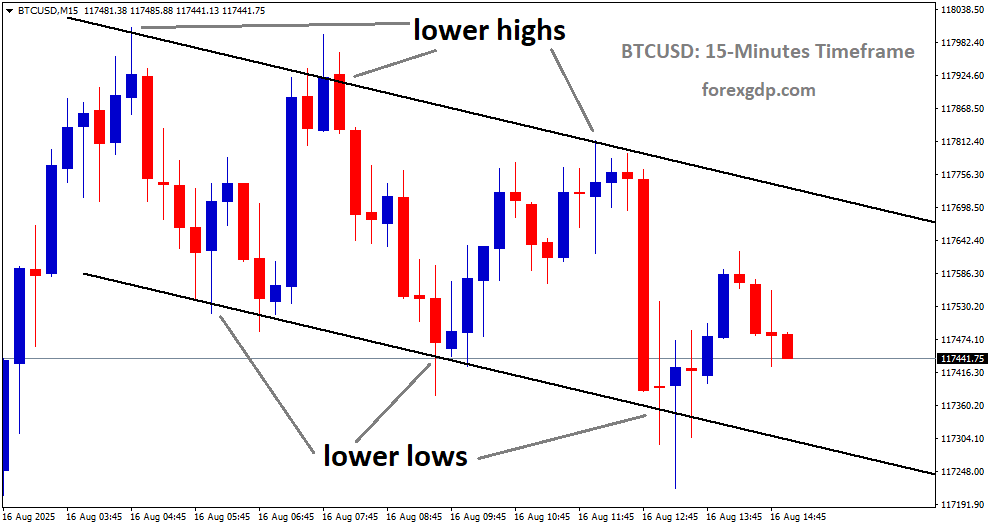
BTCUSD is moving in a descending channel
Of course, the journey won’t be smooth. Investors should be prepared for sharp pullbacks and market uncertainty along the way. But if history is any guide, Bitcoin has shown an incredible ability to recover and climb to new heights after every major correction.
Final Summary
Bitcoin’s record-breaking surge followed by a sudden pullback has once again proven how unpredictable this digital asset can be. Driven by U.S. inflation data, billions in trading positions were wiped out almost overnight, leaving many traders rethinking their strategies. Yet, despite the chaos, institutional and corporate demand remains strong, with large firms and even governments continuing to accumulate Bitcoin.
Meanwhile, positive regulatory developments in regions like Hong Kong, along with major corporate moves in the U.S., are shaping a stronger foundation for Bitcoin’s future. While the short-term picture may be uncertain, the long-term outlook still points to wider adoption, stronger investor confidence, and an asset that refuses to be ignored.
Bitcoin is not just surviving the turbulence—it’s evolving through it.
Don’t trade all the time, trade forex only at the confirmed trade setups
Get more confirmed trade signals at premium or supreme – Click here to get more signals, 2200%, 800% growth in Real Live USD trading account of our users – click here to see , or If you want to get FREE Trial signals, You can Join FREE Signals Now!