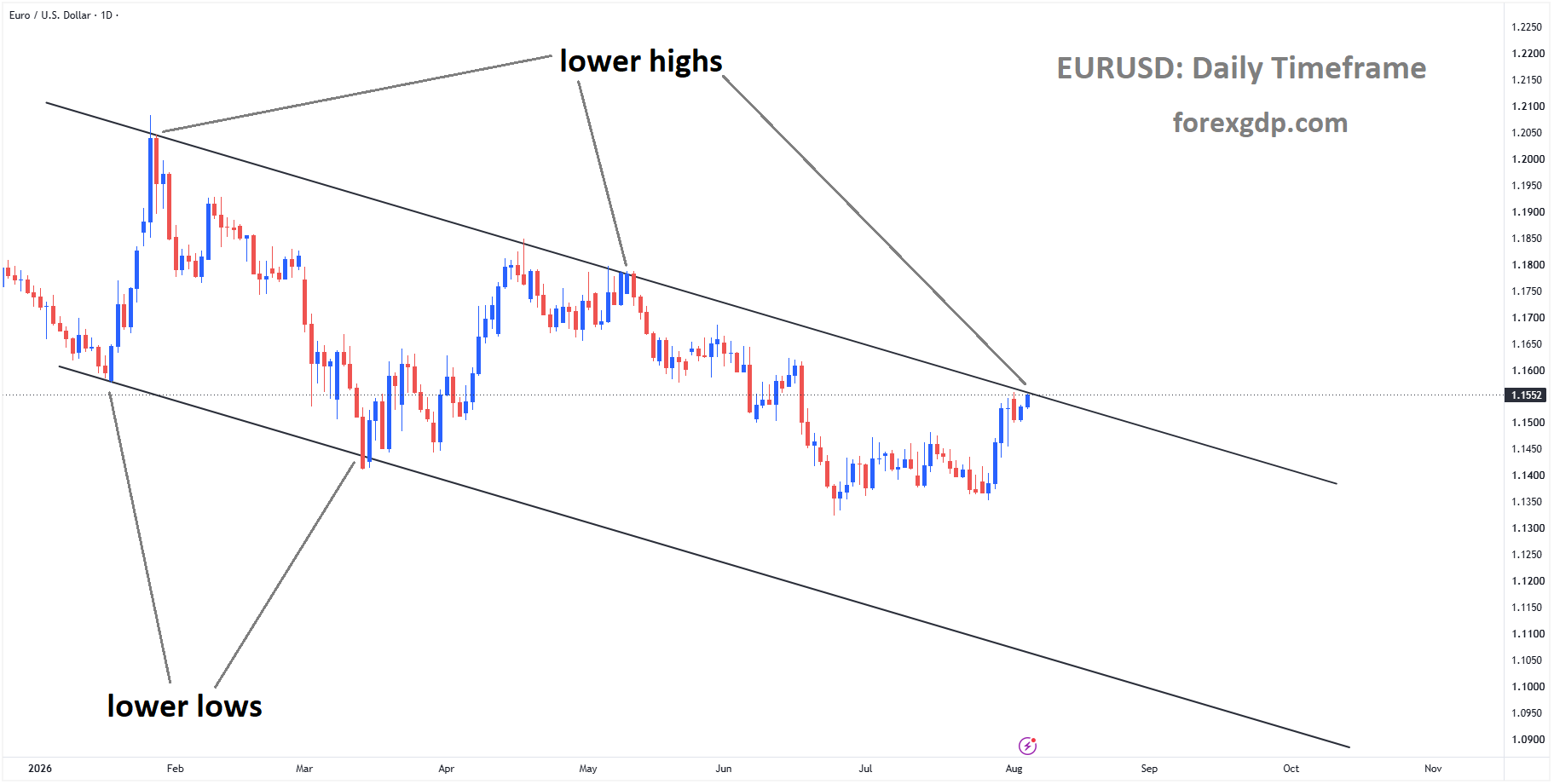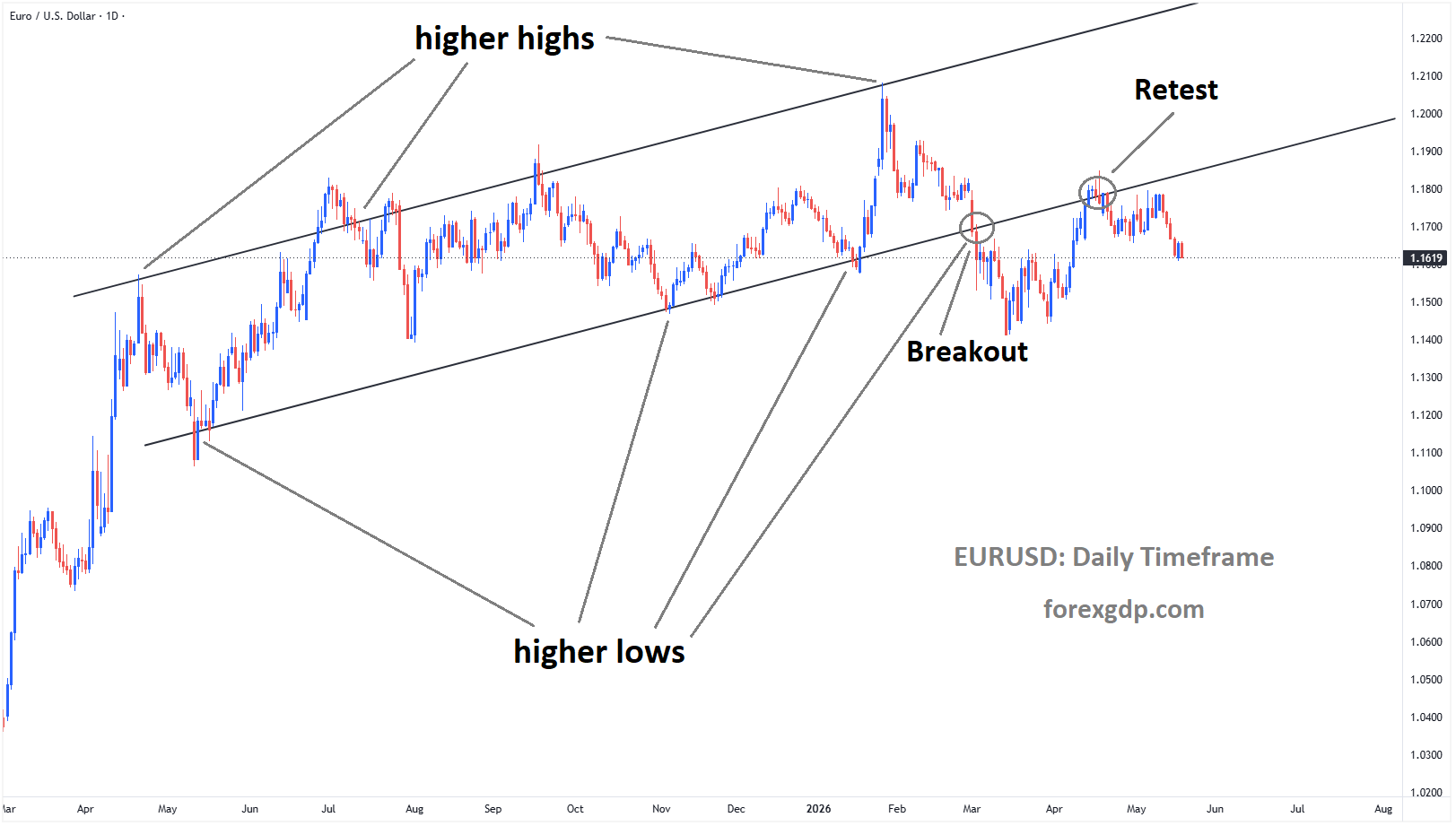
EURUSD is falling from the retest area of the broken ascending channel
EURUSD Pulls Lower as Energy Price Spike Clouds Eurozone Outlook
The Euro weakened against the US Dollar on Tuesday as investors reacted to ongoing geopolitical tensions and the continued rise in global oil prices. After reaching highs above 1.1660 on Monday, the EUR/USD currency pair moved lower and drifted toward the 1.1630 area during the trading session.
The decline reflects growing concerns about the economic impact of elevated energy costs, especially for the Eurozone, which relies heavily on imported crude oil. At the same time, uncertainty surrounding the relationship between the United States and Iran continues to keep financial markets cautious.
Euro Loses Strength Against the US Dollar
The Euro started the week with some positive momentum, briefly climbing above the 1.1660 mark against the US Dollar. However, those gains faded quickly as investors shifted their focus back to global risks and inflation concerns.
By Tuesday, the shared European currency was trading lower, showing signs of renewed weakness. Market sentiment turned cautious as traders weighed the possibility of prolonged instability in the Middle East and its effect on energy markets.
The US Dollar, which is often considered a safe-haven currency during uncertain times, gained support from this cautious mood. As a result, the Euro struggled to maintain its earlier recovery.
Rising Oil Prices Continue to Hurt the Eurozone Outlook
One of the biggest factors putting pressure on the Euro is the sharp increase in oil prices. Since the conflict involving Iran intensified, crude oil prices have surged significantly, raising fears about inflation and slower economic growth.
Brent Crude oil remained above the $107 level, while West Texas Intermediate (WTI) hovered near $103. These levels are considerably higher than before the conflict began, with oil prices rising more than 30% overall.
Higher oil prices are especially problematic for the Eurozone because many European economies depend heavily on imported energy. When oil becomes more expensive, businesses and consumers across Europe face higher costs for transportation, manufacturing, and daily living expenses.
This creates additional pressure on inflation at a time when many countries are already struggling with elevated prices. Persistent inflation can weaken consumer spending and slow economic growth, making it more difficult for the Euro to recover strongly.
Concerns About Inflation Remain Strong

Inflation remains one of the key concerns for investors and policymakers around the world. Rising energy prices are often passed on to consumers through higher costs for goods and services, affecting everything from fuel to food prices.
For the Eurozone, this situation is particularly challenging. Economic growth in several European countries has already been fragile, and another surge in inflation could make conditions even tougher.
Investors worry that prolonged high oil prices may force businesses to cut spending or delay investments. Consumers may also reduce their purchases if living costs continue to rise.
These concerns have reduced confidence in the Euro and encouraged investors to move toward safer assets, including the US Dollar.
US-Iran Negotiations Offer Limited Hope
Although tensions remain high, there are still some hopes that diplomatic talks between the United States and Iran could prevent the situation from becoming worse.
US President Donald Trump stated on Monday that a planned attack on Iran had been postponed because “serious negotiations” were currently taking place. His comments briefly eased fears in financial markets and prevented a sharper drop in the Euro.
However, many investors remain skeptical about the chances of a successful agreement. Reports suggest that major disagreements still exist between the two sides, particularly regarding Iran’s nuclear program.
The uncertainty surrounding these negotiations continues to create volatility across global markets. Traders are closely monitoring every update for signs of either progress or further escalation.
Why the US Dollar Benefits During Global Uncertainty
The recent movement in the EUR/USD pair also highlights the strong role of the US Dollar during periods of geopolitical stress.
Whenever global tensions increase, investors often move their money into assets considered safer and more stable. The US Dollar is one of the world’s most trusted reserve currencies, making it a common choice during uncertain times.
This demand strengthens the Dollar and puts downward pressure on other currencies, including the Euro.
In addition, the US economy is generally viewed as more resilient to energy shocks than the Eurozone because the United States produces a significant amount of its own oil. Europe, on the other hand, remains more vulnerable to rising import costs.
Energy Costs Could Shape Future Euro Performance
The future direction of the Euro may largely depend on how oil prices and geopolitical developments evolve in the coming weeks.
If tensions between the US and Iran ease and oil prices begin to fall, the Euro could regain some strength. Lower energy prices would reduce inflation concerns and improve confidence in the Eurozone economy.
On the other hand, if negotiations fail or the conflict escalates further, oil prices could continue rising. That would likely increase pressure on European economies and make it harder for the Euro to recover against the Dollar.
Investors are expected to remain cautious until there is greater clarity on both the geopolitical situation and the outlook for global energy markets.
Market Focus Remains on Geopolitical Headlines
Financial markets are currently highly sensitive to political developments related to the Middle East. Any new statements from US or Iranian officials have the potential to move currencies, commodities, and stock markets quickly.
Traders are paying close attention to diplomatic discussions, military developments, and changes in oil supply expectations. These factors are likely to remain major drivers of the EUR/USD pair in the near term.
At the same time, inflation trends and central bank decisions will also continue influencing investor sentiment. Rising energy costs have made inflation a more complicated issue for policymakers worldwide.
Summary
The Euro weakened against the US Dollar after failing to hold gains above 1.1660, with the EUR/USD pair slipping toward 1.1630. Rising oil prices and uncertainty surrounding the US-Iran conflict have increased pressure on the Eurozone economy and strengthened demand for the US Dollar.
Crude oil prices remain significantly higher than before the conflict, adding to inflation fears and raising concerns about slower economic growth in Europe. Although diplomatic talks between the United States and Iran have offered some hope, investors remain cautious due to ongoing disagreements between both sides.
For now, the Euro’s outlook will likely depend on whether geopolitical tensions ease and whether energy prices begin to stabilize.
GBPUSD retreats from recent highs as rising UK unemployment pressures Sterling
The British Pound continued to lose ground against the US Dollar on Tuesday, moving closer to the 1.3400 level after reaching highs near 1.3450 a day earlier. The weaker movement came as fresh UK employment data showed signs of a slowing labour market, creating additional pressure on the Pound.
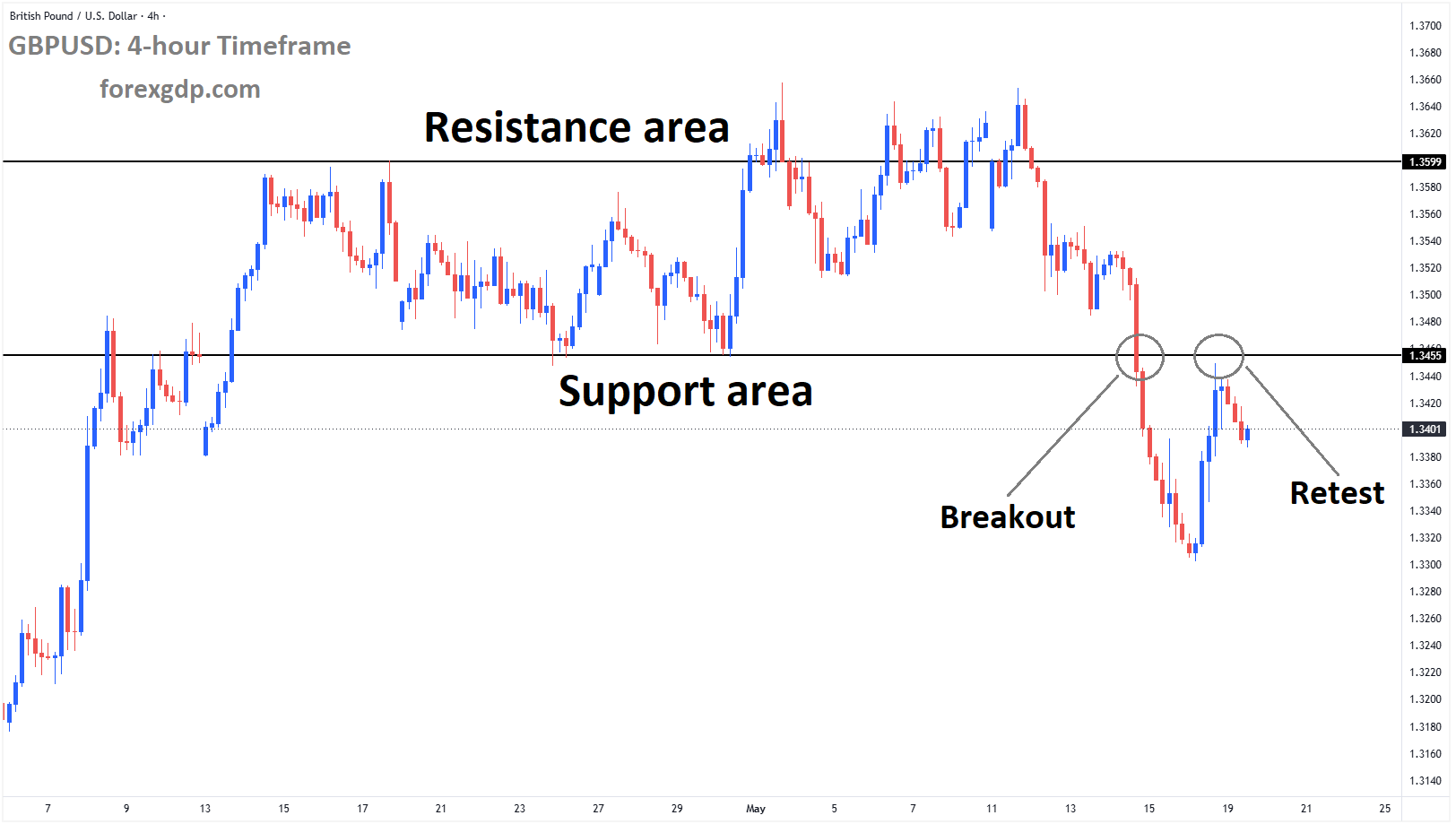
GBPUSD is falling from the retest area of the broken box pattern
At the same time, the US Dollar remained under some pressure due to growing optimism surrounding a possible peace agreement involving Iran. The softer demand for the Dollar helped limit larger losses for the GBP/USD pair despite disappointing economic figures from the United Kingdom.
UK Labour Market Shows Signs of Weakness
New data released by the UK Office for National Statistics revealed that the country’s labour market weakened during the three months leading up to March. The unemployment rate climbed to 5%, slightly above market expectations of 4.9%.
The rise may appear small, but it signals that more people are struggling to find work in an already challenging economic environment. Investors and economists closely monitor employment figures because they provide insight into the overall health of the economy.
Another worrying sign came from the increase in jobless benefit claims. The number of people applying for unemployment-related support jumped by 26,500 in April. This was significantly higher than the previous month’s increase of 4,900.
The sharp rise in claimants suggests that businesses may be slowing hiring plans or cutting jobs as economic uncertainty continues. These figures increased concerns that the UK economy could face further weakness in the coming months.
Wage Growth Adds Pressure on the Bank of England
While the labour market showed signs of cooling, wage growth moved in the opposite direction. Average Earnings Including Bonus rose at an annual rate of 4.1% during the three months to March, compared to 3.9% previously.
Higher wage growth can create additional inflation pressure because businesses often pass rising labour costs on to consumers through higher prices. This creates a difficult situation for the Bank of England.
The central bank has been trying to manage inflation while also supporting economic growth. Strong wage increases may prevent policymakers from easing monetary conditions too quickly, even as unemployment rises.
This combination of slower employment growth and persistent wage inflation creates uncertainty for financial markets. Investors are now trying to determine whether the Bank of England will prioritize controlling inflation or supporting the weakening economy.
Political Uncertainty Adds More Pressure on Sterling
Beyond economic data, political developments in the United Kingdom are also weighing on the British Pound.
Prime Minister Keir Starmer is facing growing political pressure following the Labour Party’s disappointing performance in recent local elections. The results have raised questions about his leadership and long-term political stability.
Political uncertainty often affects currency markets because investors prefer stable governments and predictable economic policies. Any doubts about leadership or future fiscal plans can reduce confidence in a country’s currency.
Attention has also turned toward Great Manchester mayor Andy Burnham, who is considered one of the strongest possible alternatives within the Labour Party. Burnham has attempted to calm market concerns by supporting the government’s current borrowing limits and promising fiscal discipline.
His comments helped reduce fears that future political changes could lead to higher government spending or increased borrowing. However, uncertainty surrounding the political landscape continues to keep pressure on the Pound.
US Dollar Remains Weak Despite Global Uncertainty
Although the Pound weakened after the UK jobs report, the US Dollar also struggled to gain strong momentum.
One major reason is the improving outlook surrounding Iran-related tensions. Reports suggesting progress toward a possible nuclear agreement have raised hopes that geopolitical risks in the region could ease.
US President Donald Trump stated on Monday that he paused a potential military attack due to progress in negotiations. His comments increased optimism that a broader conflict may be avoided.
As hopes for peace improved, Oil prices moved lower from recent highs. US Treasury yields also declined, reducing support for the Dollar.
The US Dollar often benefits during periods of global uncertainty because investors view it as a safe-haven asset. However, when geopolitical tensions ease, demand for the Dollar can weaken as investors shift toward riskier assets.
This softer Dollar environment helped prevent the GBP/USD pair from falling more sharply despite the disappointing UK economic data.
Thin US Economic Calendar Keeps Focus on Global Events

The first half of the week features a relatively light economic calendar in the United States, leaving traders focused mainly on geopolitical headlines and broader market sentiment.
Without major US economic reports driving market direction, investor attention remains centered on developments involving Iran, movements in Oil prices, and expectations surrounding central bank policy.
Currency markets are also watching for signals from Federal Reserve officials regarding future interest rate decisions. However, falling Treasury yields suggest that investors currently expect a more cautious approach from the Fed.
For now, global political developments appear to be having a stronger impact on the Dollar than domestic economic data.
Investors Remain Cautious Ahead of Further Economic Signals
Market participants are now waiting for additional economic reports from both the UK and the US to gain a clearer understanding of future currency direction.
In the UK, investors will continue monitoring inflation, employment trends, and consumer activity to assess whether economic conditions are worsening. Any signs of continued weakness could increase pressure on the Pound.
At the same time, stronger wage growth and persistent inflation may complicate the Bank of England’s next policy decisions. This creates uncertainty about the future path of interest rates.
In the United States, traders are likely to keep a close eye on geopolitical developments and any new economic signals that could influence Federal Reserve expectations.
The balance between weak UK economic data and a softer US Dollar is currently keeping GBP/USD movements relatively contained, though volatility could increase as new information emerges.
Summary
The British Pound moved lower against the US Dollar after weak UK labour market data increased concerns about the country’s economic outlook. Rising unemployment and a sharp jump in jobless benefit claims added pressure on Sterling, while strong wage growth complicated the Bank of England’s policy outlook.
Political uncertainty in the UK also continued to weigh on investor confidence following recent election setbacks for the Labour Party.
Meanwhile, the US Dollar remained subdued as hopes for a peace agreement involving Iran reduced demand for safe-haven assets. Falling Oil prices and lower US Treasury yields further limited Dollar strength.
With few major US economic reports scheduled in the near term, financial markets are expected to remain highly sensitive to geopolitical developments and upcoming economic data from both sides of the Atlantic.
USDJPY Jumps Higher With Japanese Yen Under Pressure From Rising Geopolitical Risks
The USD/JPY currency pair continued its strong upward movement on Tuesday, extending gains for the seventh day in a row. The pair also recorded positive movement in eight out of the last nine trading sessions, showing strong momentum in favor of the US Dollar.

USDJPY is moving in an ascending channel, and the market has rebounded from the higher low area of the channel
During the European trading session, USD/JPY moved above the 159.00 level and reached its highest point in nearly three weeks. A mix of global tensions, economic uncertainty, and expectations surrounding US interest rates helped support the continued rise of the pair.
Rising Global Tensions Strengthen the US Dollar
One of the main reasons behind the recent strength in the US Dollar is the ongoing geopolitical uncertainty in the Middle East. Investors often move toward the US Dollar during periods of global instability because it is widely considered a safe-haven currency.
Recent comments from US President Donald Trump added to market uncertainty. Trump stated that he had delayed a planned attack on Iran after requests from Qatar, Saudi Arabia, and the United Arab Emirates. While this initially created some hope for a peaceful resolution, Trump also made it clear that the US military remains ready for action if negotiations fail.
This mixed messaging has kept investors cautious. Many market participants remain doubtful that tensions between the US and Iran will ease anytime soon, especially due to ongoing disagreements related to Iran’s nuclear program and concerns surrounding the Strait of Hormuz.
The Strait of Hormuz is one of the world’s most important oil shipping routes. Any disruption in this area can affect global energy supplies and increase fears about rising inflation worldwide.
Higher Oil Prices Add to Inflation Concerns
As tensions in the Middle East continue, oil prices have remained elevated near their monthly highs. Rising energy prices often lead to higher inflation because fuel and transportation costs affect many parts of the economy.
These inflation concerns are important because they influence expectations around future actions by the US Federal Reserve. Investors now believe there is a stronger possibility that the Fed could keep interest rates higher for longer or even raise rates again later this year.
According to market expectations tracked by the CME Group FedWatch Tool, traders currently see a nearly 50% chance of at least one additional interest rate increase before the end of the year.
Higher interest rates generally support the US Dollar because they make US-based investments more attractive to global investors seeking better returns.
Federal Reserve Expectations Continue to Drive Demand
Expectations surrounding the Federal Reserve remain one of the biggest factors supporting the US Dollar. Even after a slight pullback earlier this week, the greenback quickly regained momentum.
Investors are closely watching incoming economic data and statements from Fed officials for clues about future monetary policy decisions. Strong inflation concerns and resilient economic conditions in the United States continue to support the idea that the Fed may maintain a more aggressive stance.
This outlook has encouraged traders to keep buying the US Dollar against other major currencies, including the Japanese Yen.
Market attention is also turning toward the release of the Federal Open Market Committee (FOMC) meeting minutes scheduled for Wednesday. These minutes could provide further insight into how policymakers view inflation, economic growth, and future rate decisions.
Any signs that Fed officials remain concerned about inflation could further strengthen the US Dollar in the near term.
Japanese Yen Faces Pressure Despite Positive GDP Data

While the US Dollar has gained support from global uncertainty and interest rate expectations, the Japanese Yen has struggled due to concerns about Japan’s economic outlook.
Interestingly, Japan recently released stronger-than-expected first-quarter GDP data, showing that the economy expanded faster than analysts had predicted. Under normal circumstances, stronger economic growth could help strengthen the local currency.
However, the positive GDP figures were not enough to offset broader concerns affecting the Japanese Yen.
Investors remain worried about the economic impact of rising energy costs and ongoing global tensions. Since Japan relies heavily on imported energy, higher oil prices can create additional pressure on the country’s economy.
These concerns have weakened demand for the Yen and helped push USD/JPY higher.
Intervention Fears Could Limit Further Gains
Despite the recent rally in USD/JPY, traders remain cautious because of the possibility of intervention by Japanese authorities.
Japan has previously stepped into the currency market to support the Yen when rapid declines became a concern. Officials in Tokyo closely monitor excessive currency volatility, especially when the Yen weakens too quickly against the US Dollar.
Speculation about another possible intervention may prevent traders from making overly aggressive bets against the Japanese currency.
This creates a situation where USD/JPY may continue to find support, but sharp upward movements could still face resistance if authorities decide to act.
Investors Stay Focused on Upcoming Economic Signals
Financial markets are currently balancing several major factors at once. On one side, geopolitical risks and inflation concerns continue to support the US Dollar. On the other side, fears of intervention and upcoming economic data could influence future market direction.
The release of the FOMC minutes will likely play a major role in shaping expectations around US monetary policy. Investors will carefully study the document for any hints about how Fed officials view inflation risks and the future path of interest rates.
At the same time, developments in the Middle East remain a major source of uncertainty. Any escalation or signs of easing tensions could quickly impact market sentiment and currency movements.
Why USD/JPY Remains in Focus
The USD/JPY pair is one of the most closely watched currency pairs in the global financial market because it reflects both US economic strength and Japan’s monetary environment.
The current rally highlights how strongly global events can influence currency markets. Safe-haven demand for the US Dollar, rising inflation fears, and expectations for tighter US monetary policy have all contributed to the pair’s recent gains.
Meanwhile, Japan continues to face economic challenges tied to energy imports and a weaker domestic currency.
For now, the balance appears tilted in favor of the US Dollar, although traders remain alert for possible changes in central bank policy or government intervention.
Final Summary
USD/JPY continued its strong upward trend for the seventh straight day as global tensions and rising expectations for higher US interest rates boosted demand for the US Dollar. Ongoing uncertainty surrounding the Middle East conflict and concerns about inflation supported the greenback’s safe-haven appeal.
At the same time, the Japanese Yen remained under pressure despite stronger economic growth data from Japan. Concerns about energy costs and broader economic risks outweighed the positive GDP report.
Investors are now waiting for the upcoming FOMC meeting minutes and further geopolitical developments, both of which could play an important role in determining the next direction for the currency pair.