

Every trader loves to complicate things. They pile their charts with moving averages, MACD lines, RSI levels, and even some indicators they can’t pronounce. And then, when the trade goes wrong, they scratch their heads, blaming the “market manipulation.” But here’s the ugly truth: indicators lag. They whisper secrets about the past but tell you nothing about the future. That’s why in trading, price action is king.
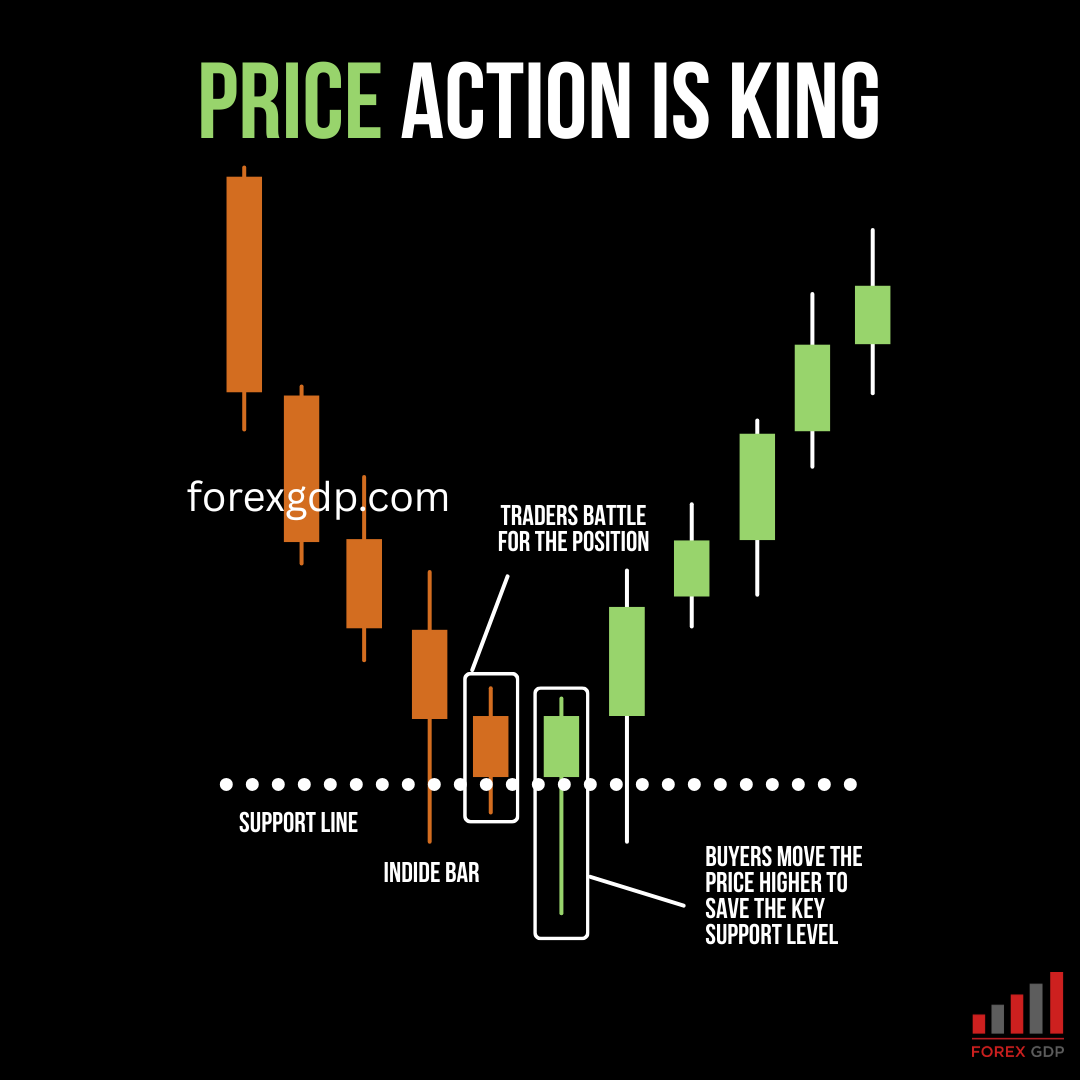
Price action is raw, clean, and brutally honest. It’s the footprints of buyers and sellers fighting it out in real time. When you strip away the noise, the candles reveal everything. But of course, most traders don’t want to accept that because it means they have to face the market without a crutch. Tough, right? Well, let’s break down why price action is the only tool you should trust—and why ignoring it might just drain your account faster than you can say “stop-loss.”
Why Indicators Will Always Fail You
Indicators are like a rearview mirror. They show you where the car has been, not where it’s going. The MACD cross? By the time it happens, the market already moved. The RSI hitting overbought? News flash—it can stay overbought for weeks while you sit there confused.
Price action, on the other hand, gives you the raw story as it unfolds. No lag, no sugar-coating. You see who’s winning the battle: buyers or sellers. Every candlestick is a tiny war, and together they build the battlefield map. Trusting indicators over this? That’s like checking yesterday’s weather forecast to decide whether to carry an umbrella today. Ridiculous, isn’t it?
The Candlestick Language Traders Ignore
Think of candlesticks as emojis of the market. They express fear, greed, hesitation, and aggression. A long wick? That’s rejection. A big body? That’s conviction. An inside bar? That’s uncertainty. Yet, so many traders ignore these signals and rely on colorful squiggly lines.
Learning this language doesn’t take a PhD. It just takes patience. But traders don’t want patience—they want shortcuts. That’s why they drown themselves in indicators, missing the story candles are screaming at them. Price action isn’t complicated; it’s simple. The problem is, traders hate simplicity. They don’t trust it.
Support and Resistance: The Real Battlefield
If price action is the king, then support and resistance are the kingdom’s walls. These levels are where battles happen. Buyers defend, sellers attack, and the outcome decides the next trend. Ignore them, and you’re trading blind.
How many times have you seen the price bounce off a level, only to kick yourself later thinking, “I should have noticed that”? It happens all the time. That dotted line on the chart isn’t just decoration—it’s where money is made or lost. Support and resistance aren’t theories. They’re psychology etched on the chart.
The Power of Inside Bars
Inside bars are like whispers before a storm. They show hesitation, a pause before the next big move. Traders battle silently within that tiny range, waiting for one side to break. And when it breaks, it often explodes.
Yet, most traders ignore inside bars because they’re not flashy. They’d rather wait for some overhyped indicator signal. That’s their downfall. The market already showed its hand in that quiet little inside bar, but they were too busy staring at lagging data. Ignoring it is like ignoring a ticking bomb under your chair.
Why Traders Keep Losing With Price Action
Ironically, even traders who know price action still lose. Why? Because they overcomplicate it. They try to find “perfect patterns,” waiting for textbook formations. Guess what? The market doesn’t read textbooks. It bends, twists, and fakes you out.
Instead of mastering the basics, traders chase perfection. They forget that trading isn’t about being right all the time; it’s about survival. Price action works, but only if you respect its simplicity. The moment you demand perfection, you lose.
The Trap of Confirmation Bias
Here’s another painful truth: most traders only see what they want to see. If they’re bullish, every candle suddenly looks like a “bullish signal.” If they’re bearish, they magically spot bearish signs everywhere. That’s not trading; that’s daydreaming.
Price action demands objectivity. It doesn’t care about your bias, your gut feeling, or your hopes. It reflects the market’s reality. But too many traders bend reality to match their emotions. And guess what? The market punishes that arrogance every single time.
Why Price Action Is Hard to Master
If price action is so powerful, why do most traders fail with it? Simple—it’s brutally honest. It doesn’t give you comfort. There’s no magic indicator flashing buy or sell. You have to read, interpret, and decide. That responsibility scares people.
Think of it like learning to ride a bike without training wheels. It’s risky, you’ll fall, and it hurts. But eventually, you get it. Price action is the same. Most traders give up too early, preferring to cling to the comfort of indicators, even though they know deep down those indicators are lying.
The Role of Market Psychology


Every candle on your chart is a mirror of human emotion: fear, greed, panic, and hope. Price action is just psychology painted in red and green. When you understand this, trading stops being about lines and patterns—it becomes about people.
That’s why support holds. That’s why resistance breaks. It’s not magic. It’s human behavior repeating itself. The sad part? Most traders don’t want to think about psychology. They’d rather pretend the market is a machine. But it’s not. It’s just people like you and me, pushing prices around with emotions.
The Ugly Truth About Price Action Gurus
Let’s be honest. The internet is full of so-called “price action gurus.” They promise you secret candle patterns that will make you rich. Spoiler alert: there are no secrets. Candles are candles. Patterns are patterns. The only secret is discipline.
These gurus feed on trader desperation. They sell the dream of “never losing again” with magical setups. But the truth is, price action is simple, and anyone can learn it. You don’t need a $2,000 course. You just need time, patience, and a willingness to face the brutal honesty of the market.
How to Actually Use Price Action
Forget the textbooks. Forget the gurus. Here’s how you actually use price action: strip your chart clean, mark key support and resistance, and watch how candles behave around those levels. That’s it. No rocket science.
You’ll see battles unfold in real time. You’ll see fakeouts, rejections, and breakouts. And slowly, you’ll build an instinct for it. But remember, instinct doesn’t come overnight. It comes from watching, failing, and learning. There’s no shortcut—just hard, unglamorous practice.
The Danger of Overtrading With Price Action
Here’s where most traders blow it. They fall in love with price action, seeing “signals” everywhere. Every tiny candle wick becomes a trade. And just like that, their account bleeds dry.
Price action isn’t about trading every move. It’s about waiting for the right one. Like a hunter waiting for the prey, not firing at every leaf that moves. If you overtrade, even the king (price action) won’t save you. Discipline matters more than setups.
The Reality of Price Action Trading


Here’s the cold, hard reality: price action won’t make you rich overnight. It won’t eliminate losses. It won’t guarantee success. What it does give you is clarity. It strips away the lies indicators tell and shows you the market’s raw story.
But clarity isn’t comfort. It’s harsh, sometimes confusing, and always humbling. If you can accept that, price action becomes your most reliable ally. If not, well, keep chasing indicators. The market doesn’t care either way.
Conclusion
At the end of the day, trading is simple, but traders love to complicate it. Indicators will betray you, gurus will mislead you, and your own emotions will sabotage you. But price action—the king—never lies. It’s raw, honest, and brutally real.
The question is: are you willing to face the truth? Or will you keep hiding behind colorful lines, pretending you’re in control? The market doesn’t wait. The candles are speaking. The only question is—are you listening?
FAQs
1. Why is price action better than indicators?
Because indicators lag while price action shows you the real-time market story.
2. Can beginners learn price action easily?
Yes, but only if they keep it simple and avoid overcomplicating patterns.
3. Do price action strategies guarantee profit?
No, they give clarity, not certainty. Discipline is what makes the difference.
4. Is price action reliable in all markets?
It works best in liquid markets like forex, stocks, and commodities where psychology plays out clearly.
5. Why do traders still use indicators if price action is better?
Because indicators give comfort and false confidence, even if they fail most of the time.