Weekly Forecast Video on Forex, BTCUSD, XAUUSD
Stay ahead in the markets with our detailed analysis of gold and forex trade setups for this upcoming week, Sep 29 to Oct 03.
XAUUSD Pushes Higher as Inflation Data Fuels Fed Cut Speculation
Gold has been capturing attention again, showing strength as traders grow more confident about potential policy easing from the Federal Reserve. Even with mixed signals coming from the labor market and consumer sentiment, optimism around inflation trends is helping the precious metal shine. Let’s dive deeper into why gold is back in the spotlight, what’s driving market mood, and what to watch in the coming weeks.
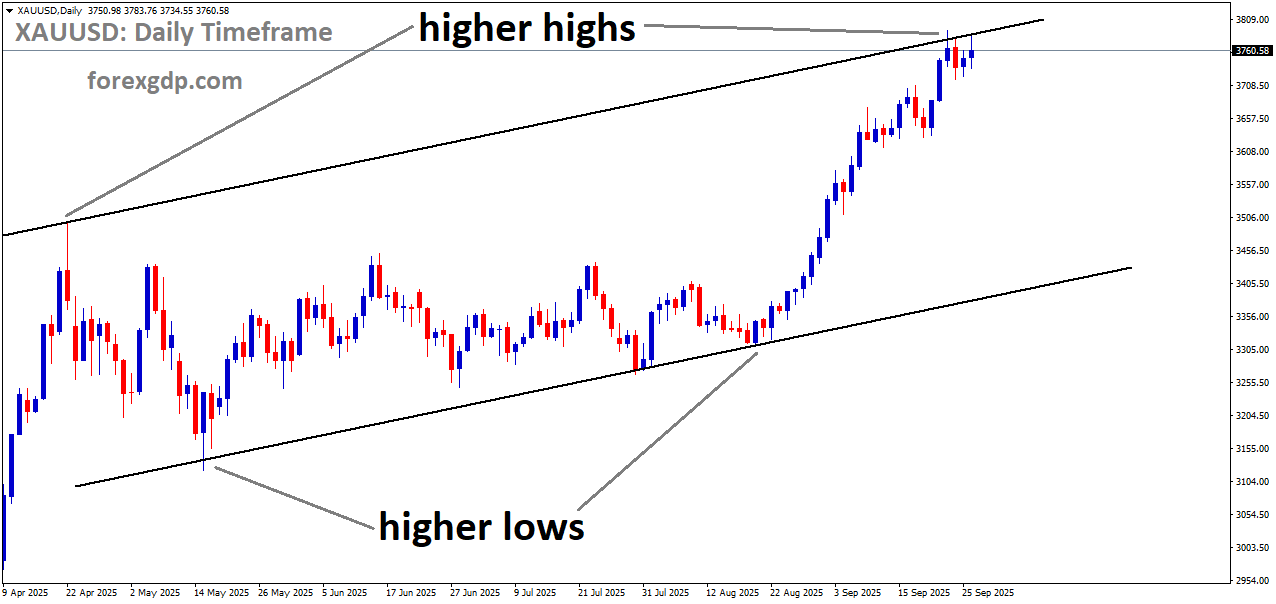
XAUUSD is moving in an uptrend channel, and the market has reached a higher high area of the channel
Why Gold Is Back in Demand
Gold often performs well when markets sense easier monetary policy is on the horizon. Right now, traders are betting that the Federal Reserve could lean more dovish, especially since the Fed’s preferred inflation gauge — the core Personal Consumption Expenditures (PCE) Price Index — remains under 3%. That’s significant because it keeps expectations alive that interest rates may be cut again before the end of the year.
A softer inflation outlook usually lowers the appeal of holding cash, which in turn makes gold more attractive as an alternative asset. The recent PCE data aligned with forecasts, showing that while the cost of living has crept up, inflation isn’t running out of control. This balance is fueling hopes that the Fed will continue to support growth with rate adjustments rather than tightening policy further.
The Role of Consumer Sentiment and Labor Market Concerns
Consumer Confidence Is Still Shaky
The University of Michigan’s Consumer Sentiment Index recently dropped, highlighting that households remain uneasy about higher prices and job security. Even though inflation expectations for the long term have cooled, people aren’t entirely convinced that their day-to-day expenses are easing quickly enough. This kind of cautious consumer mood often keeps gold supported, as uncertainty pushes investors toward safe-haven assets.
Fed Officials Acknowledge Fragile Jobs Data
Adding to the cautious outlook, some Fed officials have openly noted signs of weakness in the labor market. Governor Michelle Bowman pointed out that job growth seems fragile, while inflation outside of tariff impacts is still close to target. Meanwhile, Richmond Fed President Thomas Barkin emphasized that consumer spending remains healthy across income groups. This mix of concerns and reassurances creates a cloudy picture, but one where gold finds support since uncertainty typically boosts demand for safe assets.

Global Trade and Policy Moves Add Extra Spice
It’s not just inflation and jobs data shaping the outlook. Tariffs are back in the headlines after US President Donald Trump imposed fresh duties on imports of pharmaceuticals, furniture, and other goods. Moves like these can increase economic uncertainty and potentially stoke inflation pressures in certain sectors, which again makes gold attractive to investors looking for stability.
At the same time, these trade measures keep global markets on edge, and when uncertainty rises, gold often benefits as a hedge against unpredictable outcomes.
The Week Ahead: Why Traders Are Watching Closely
Looking forward, all eyes are on upcoming US data releases and Fed commentary. Several reports are expected to influence sentiment:
-
ADP National Employment Report: Offers an early look at private sector job growth.
-
ISM Manufacturing PMI: Signals the health of the manufacturing sector, which often reflects broader economic momentum.
-
Initial Jobless Claims: A weekly measure of unemployment support applications that hints at labor market trends.
-
Nonfarm Payrolls (NFPs): The most watched labor market report, providing insight into overall job creation and wage growth.
Together, these reports will give traders clues about whether the Fed is likely to follow through on easing expectations or if caution might delay further moves.
How Market Forces Are Interacting Right Now
Gold’s latest rise also comes alongside some interesting market dynamics. The US dollar has slipped, losing ground against other major currencies, which naturally helps gold since it’s priced in dollars. At the same time, Treasury yields have been climbing, but that hasn’t been enough to discourage gold buyers.
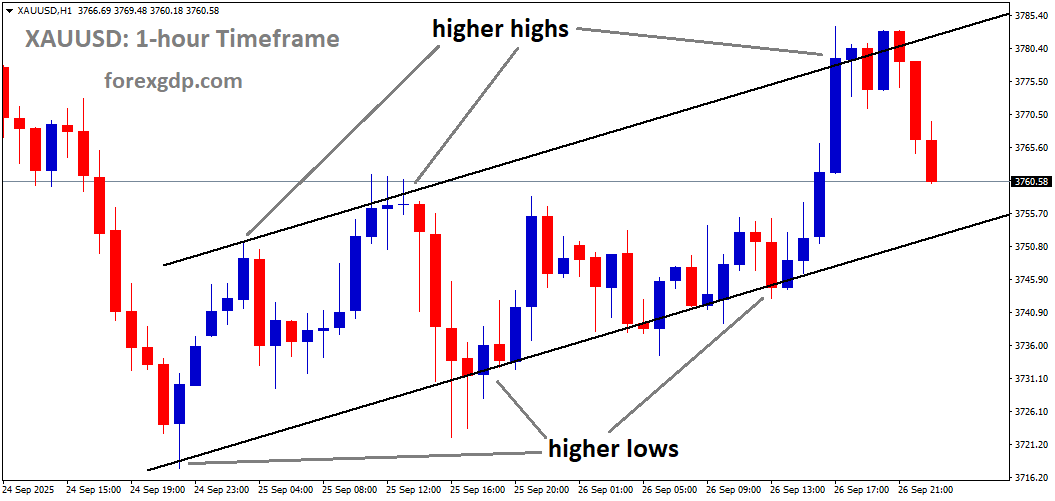
XAUUSD is moving in an uptrend channel, and the market has fallen from the higher high area of the channel
This mix — a weaker dollar, steady inflation expectations, and investor appetite for safe havens — is giving gold a supportive backdrop even as yields edge up. For many traders, the key is whether inflation continues cooling while the job market avoids sharp deterioration. If that balance holds, gold could remain strong for months ahead.
What Traders Are Thinking About Fed Moves
The CME FedWatch Tool shows that traders currently see high chances of a rate cut in October, with another one possible in December. These expectations are a big reason why gold is maintaining momentum despite other market pressures. Every time inflation data comes in softer or labor market signals appear weaker, it strengthens the case for the Fed to provide more support — and gold tends to rally on those prospects.
Final Summary
Gold is enjoying renewed strength as investors grow more confident about the Federal Reserve’s dovish stance. The latest PCE inflation data staying under 3% reassured markets that inflation isn’t spiraling, leaving the door open for potential rate cuts later this year.
Meanwhile, shaky consumer sentiment, fragile labor market signals, and new trade tariffs have only added to the uncertainty that typically benefits gold. With major US economic reports lined up in the days ahead, traders are paying close attention to see if these dovish bets hold firm.
In short, gold’s current rise isn’t just about inflation or jobs alone. It’s the combination of cooling price pressures, cautious consumer outlook, trade policy shifts, and central bank expectations all working together. For now, that mix has created a strong environment for the precious metal — and investors are watching closely to see if the momentum continues.
EURUSD rises as soft PCE inflation boosts market confidence in Fed cuts
When it comes to global financial markets, even the smallest shift in economic data can spark big reactions. Recently, a fresh wave of optimism has spread among traders and investors as the latest US inflation figures opened the door wider for potential interest rate cuts by the Federal Reserve. At the same time, the Euro is trying to hold its ground despite ongoing geopolitical tensions in Europe. Let’s dive into what’s happening, why it matters, and what could be around the corner.
Why Softer US Inflation is Fueling Rate Cut Expectations
The Federal Reserve’s preferred measure of inflation—the core Personal Consumption Expenditures (PCE) Price Index—remains under the 3% mark. This single detail is enough to set the stage for major shifts in monetary policy.
When inflation cools down, the Fed has more room to reduce interest rates without risking runaway prices. And right now, traders are betting heavily that cuts are coming. Market probability tools show confidence levels rising sharply, with expectations now close to 90% that the Fed will ease rates before the year ends.
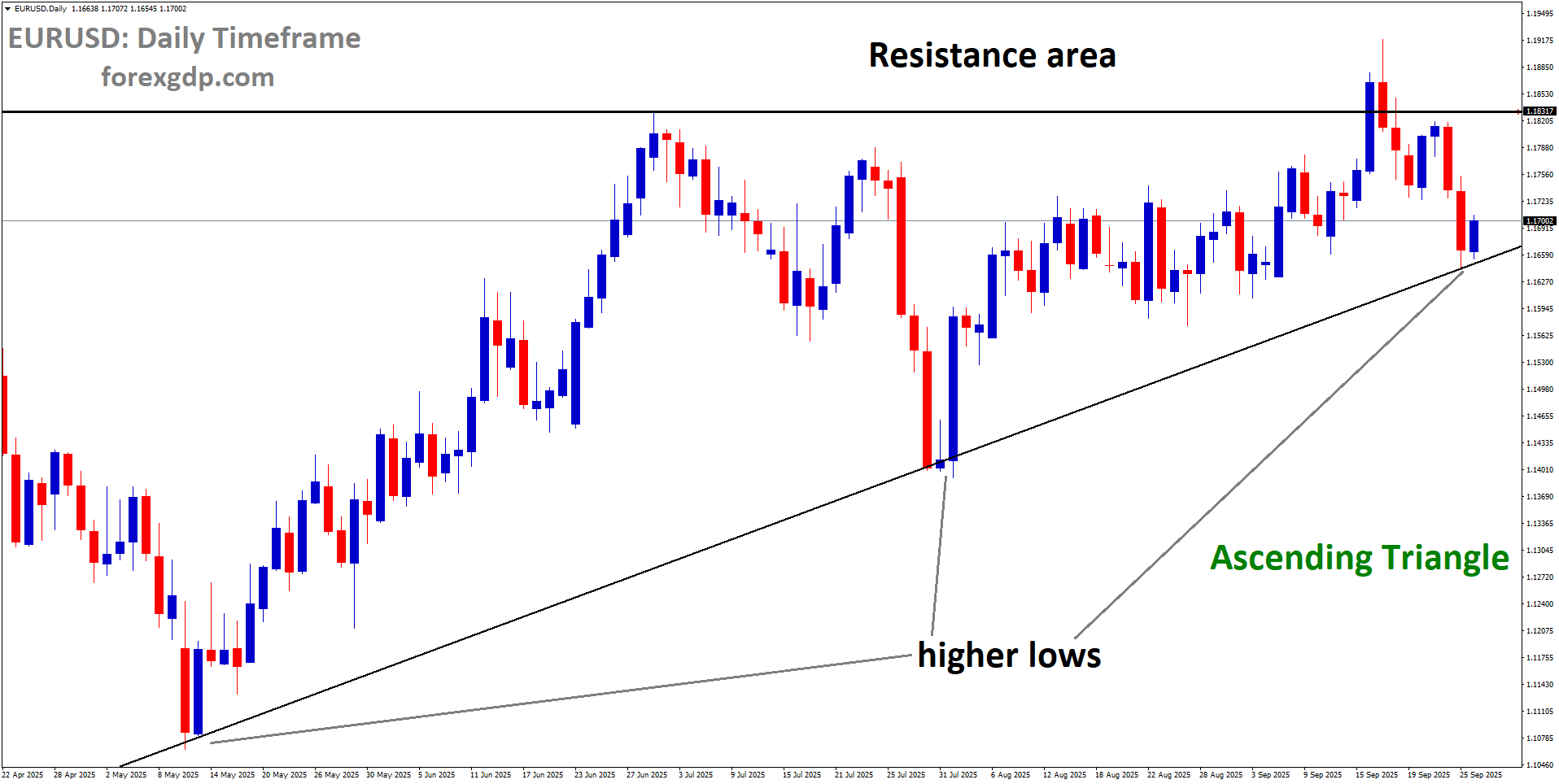
EURUSD is moving in an Ascending Triangle pattern
Fed Officials’ Cautious Tone
Despite the optimism, not all Fed voices are completely relaxed. Michelle Bowman, a Fed Governor, noted that the labor market looks fragile. If conditions worsen, she hinted that policymakers may need to act faster to support jobs and growth. On the other side, Richmond Fed’s Thomas Barkin raised concerns that both inflation and unemployment are moving in troubling directions, even if the risks remain somewhat contained.
So, while the data points toward easing, the Fed’s internal discussions still reflect caution. This means markets may continue to react strongly to every speech or hint from central bank officials.
The Euro’s Balancing Act: Between Geopolitics and Data
Across the Atlantic, the Euro is facing a different set of challenges. While traders cheered the possibility of lower US rates—which typically weakens the dollar and helps the Euro—geopolitical tensions are creating headwinds.
Rising NATO–Russia Tensions
Reports suggest that NATO has privately warned Russia about potential actions in response to airspace violations. Officials are even prepared to intercept aircraft if needed. The situation is particularly tense after an incident involving Estonia, which European leaders reportedly view as a deliberate move from Moscow.
Such developments weigh heavily on market sentiment. Currencies like the Euro are sensitive to uncertainty, and any escalation could limit its ability to gain ground against the dollar, even if US policy shifts become more favorable.
Eurozone Economic Calendar
Beyond politics, Europe also has its own packed schedule ahead. Key indicators like business climate, consumer confidence, and inflation readings are all set for release. Traders will pay special attention to German retail sales and Eurozone inflation figures, since both are critical to understanding how well the region is navigating its economic challenges. On top of that, multiple European Central Bank (ECB) officials are expected to speak, which often adds extra volatility.

Key Data and Events Traders Are Watching Next
The coming week promises to be busy, and markets will be buzzing with updates from both sides of the Atlantic.
In the United States:
-
ADP National Employment Report – A snapshot of private sector job growth.
-
ISM Manufacturing PMI – A key measure of US factory activity.
-
Initial Jobless Claims – Weekly insight into labor market health.
-
Nonfarm Payrolls (NFP) – The headline event that usually moves markets the most.
In the Eurozone:
-
Economic Sentiment Indicator – Gauging business and consumer outlooks.
-
Flash PMIs – Early indicators of economic performance.
-
Inflation Figures – Vital for the ECB’s next policy steps.
-
German Data Releases – Retail sales and inflation numbers will be in focus.
With so many reports on the calendar, traders are preparing for sharp moves in currency markets, particularly in pairs like EUR/USD.
Other Factors Shaping Market Sentiment
Beyond inflation and jobs data, a few other developments are worth noting.
Consumer Sentiment in the US
The University of Michigan’s final September survey showed weaker consumer confidence than expected. People are slightly less optimistic about near-term inflation, which could support the Fed’s view that price pressures are easing.
Trade Policy Moves
The US administration recently announced new tariffs on a wide range of imports, including pharmaceuticals, furniture, and heavy trucks. These measures could stir trade tensions and affect business costs, which in turn may feed into broader economic outlooks.
European Inflation Expectations
The ECB’s Consumer Expectations Survey revealed that households in the Eurozone see inflation at about 2.8% one year from now. Interestingly, the longer-term five-year outlook ticked slightly higher, suggesting people are still wary that inflation might not fully settle back to the central bank’s 2% target.
What All This Means for Traders and Investors
So, what’s the big picture? Right now, markets are juggling a mix of optimism and caution:
-
Optimism comes from cooling inflation in the US, which boosts the likelihood of rate cuts that could fuel growth and provide relief to borrowers.
-
Caution stems from fragile labor market signals, ongoing geopolitical tensions in Europe, and mixed consumer sentiment data.
For anyone keeping an eye on the Euro or the US dollar, the next few weeks are critical. Currency traders in particular will be laser-focused on upcoming job reports and inflation data, as these will guide expectations for central bank moves.
Final Summary
The stage is set for an eventful period in global markets. Softer US inflation has made investors increasingly confident that the Federal Reserve will cut interest rates by year-end, with bets rising to nearly 90%. Still, Fed officials remain cautious, pointing to fragile labor conditions and ongoing concerns about inflation trends.
Meanwhile, the Euro is holding steady but faces challenges from both geopolitics and its own economic data releases. With tensions between NATO and Russia flaring and a full slate of economic reports on the horizon, the shared currency’s path remains uncertain.
The coming weeks will bring critical updates on jobs, manufacturing, consumer confidence, and inflation across the US and Eurozone. For traders and investors, this means staying alert and ready to adapt as new data and central bank signals shape the road ahead.
GBPUSD finds momentum with Greenback retreating on inflation and survey signals
The currency market has been buzzing recently, especially around the British Pound (GBP) and the US Dollar (USD). After a couple of days of weakness, the Pound finally managed to stabilize and even show a little strength. While the movement itself may not sound too dramatic, what’s happening behind the scenes is much more interesting. Economic reports, inflation data, and comments from the US Federal Reserve are shaping the tone of the market right now. Let’s dive into what’s going on and why it matters for anyone keeping an eye on GBP/USD.
Why the Pound Staged a Comeback
The British Pound had been under pressure for two straight days, falling to its weakest level in weeks. But things shifted after fresh data came out of the US. The key factor here was the US Personal Consumption Expenditures (PCE) Price Index, which is the Federal Reserve’s preferred way of tracking inflation.
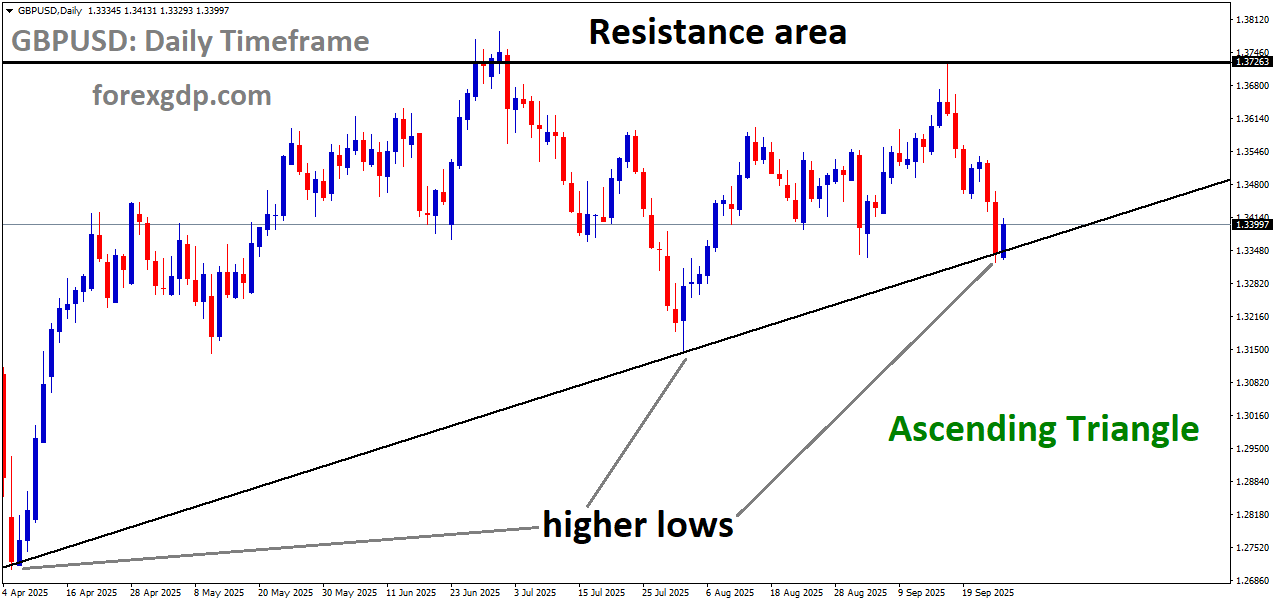
GBPUSD is moving in an Ascending Triangle pattern
The results? Pretty much what everyone expected. The numbers weren’t shocking or overly strong, which meant the US Dollar lost some of its recent momentum. With the Greenback (another term for the US Dollar) cooling off a bit, the Pound had room to breathe and claw back some of its recent losses.
The currency market often works like a balance scale. When the Dollar gains too much, the Pound naturally feels the weight. But when US data softens that pressure, Sterling finds the chance to bounce back.
What the Inflation Numbers Really Mean
The inflation story is at the center of everything right now. The core PCE Price Index, which strips out food and energy prices to give a cleaner view of underlying inflation, rose by 0.2% for the month. That matched expectations perfectly and showed no sign of surprising strength.
On a yearly basis, this same measure held steady at 2.9%. That’s still above the Federal Reserve’s long-term target of 2%, but it’s not accelerating in a way that would cause panic. The headline PCE, which includes all categories, ticked up slightly but also stayed in line with forecasts.
For the everyday person, this basically tells us that inflation in the US is easing but still sitting a little higher than policymakers would like. And when inflation is moving gradually instead of sharply, central banks don’t feel the need to make sudden moves with interest rates.
How US Consumers Are Holding Up
One interesting part of the report wasn’t just about inflation itself, but also about consumer activity. Personal income in the US rose by 0.4%, and personal spending jumped by 0.6%. That means Americans are still earning more and spending more, even as inflation remains a factor.
Why is this important? Because the US economy depends heavily on consumer demand. If people are shopping, traveling, and generally spending money, it signals strength in the economy. And that, in turn, influences how confident the Federal Reserve feels about its policies.

Fed Officials Weigh In
Of course, it’s not just the data that moves markets. What policymakers say afterward often carries just as much weight. Richmond Fed President Thomas Barkin made some notable comments that traders paid close attention to.
He pointed out that the labor market, while showing signs of softening, isn’t in free fall. In fact, the slower growth in the supply of workers might actually help prevent unemployment from spiking too fast. In simple terms, the job market is cooling, but not collapsing.
Barkin also made it clear that the Fed is in “wait and see” mode. The future path of interest rates will depend on what new data shows in the coming months. While inflation is still higher than the Fed would like, he suggested that policymakers may now need to tilt a bit more toward protecting jobs and supporting employment.
This kind of balanced approach—between inflation and employment—is at the core of the Fed’s mission.
The Bigger Picture for GBP/USD
So, where does all this leave the Pound against the Dollar? In the short run, the easing of US Dollar strength gave Sterling some breathing room. But the longer-term story is still tied to how the two economies compare.
-
If US inflation keeps softening and the Fed signals patience, the Dollar could lose some of its edge.
-
On the other hand, if UK economic data remains shaky, the Pound might struggle to build lasting momentum.
Traders and investors often look for any hint of change in tone—whether it’s from inflation numbers, spending data, or central bank speeches. That’s why even a modest bounce like this one grabs attention.
What to Keep an Eye On Next
Markets never sit still for long, so the question is: what happens from here? The focus will stay on upcoming economic reports from both sides of the Atlantic. Things like UK growth figures, job market updates, and US inflation data will continue to set the tone.
It’s also worth keeping track of central bank commentary. Even small shifts in wording can signal bigger changes down the road. For example, if more Fed officials echo Barkin’s view about giving extra weight to employment, it could mean fewer rate hikes ahead.
Final Summary
The British Pound managed to steady itself after a rough patch, thanks largely to US inflation data that matched forecasts and cooled off the Dollar’s recent surge. With consumer spending in the US staying strong and Fed officials signaling a careful, data-driven approach, the immediate pressure on Sterling eased.
For now, the GBP/USD pair is benefiting from that breathing space, but the outlook still depends on how future reports and central bank actions unfold. In the world of currencies, nothing is ever static, and the Pound’s recovery is just one chapter in an ongoing story driven by inflation, spending, and policymaker decisions.
USDJPY retreats after inflation signals and trade tensions weigh on dollar strength
The currency market often reflects a blend of economic data, policy decisions, and global headlines. Recently, the USD/JPY currency pair has been in focus after a strong two-day rally pushed it to its highest level in nearly two months. But just as quickly as it climbed, the pair began to lose steam, giving traders and investors a moment to pause and reassess.
So, what’s behind this shift? Let’s dive deeper into the recent movements, the role of US inflation data, Japan’s price trends, and the return of trade-policy headlines that are rattling global markets.
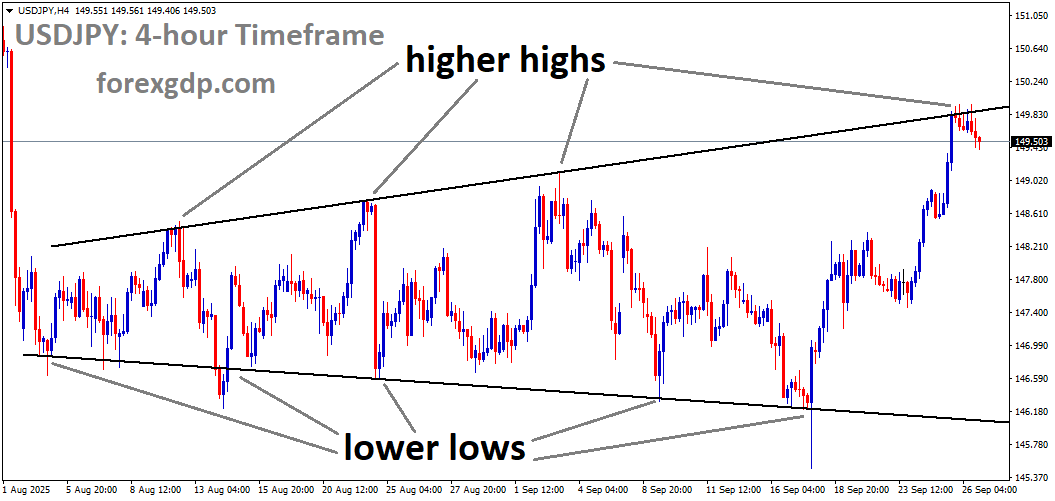
USDJPY is moving in an expanding channel, and the market has reached a higher high area of the channel
The US Dollar Loses Momentum After a Strong Run
The US Dollar had been riding high, supported by economic data and expectations surrounding Federal Reserve policies. But the rally faced resistance as traders digested fresh updates on inflation and global trade.
The US Dollar Index (DXY), which measures the Greenback against a basket of other major currencies, cooled off after hitting a three-week high. The retreat highlighted how sensitive markets are to economic releases and political headlines. Even though the US Dollar has been strong overall, short-term fluctuations like this remind us that no trend goes in a straight line.
US Inflation Data: What Traders Noticed
One of the biggest pieces of news came from the Personal Consumption Expenditures (PCE) inflation report. This indicator is closely watched because it’s the Federal Reserve’s preferred gauge of inflation.
-
Core PCE Inflation rose by 0.2% month-over-month in August, perfectly in line with forecasts.
-
On a yearly basis, core inflation held steady, showing that underlying price pressures are not heating up further.
-
The broader headline PCE index ticked higher but still showed signs of stabilization.
For investors, the key takeaway is that inflation remains persistent but not alarming. It’s not enough to push the Fed into a panic, but it’s also not easing fast enough to take pressure off completely. This balance keeps traders cautious about how much higher interest rates could go and whether they’ll stay elevated for longer.
Consumer Sentiment Adds Another Layer
Alongside inflation data, the University of Michigan’s Consumer Sentiment Index slipped slightly. People’s expectations about inflation over one and five years also dipped, which signals that while consumers still feel the pinch, they’re starting to believe price pressures might ease gradually.
When consumers become more confident that inflation is under control, it can change spending behavior and even influence how policymakers think about interest rates.

Japan’s Inflation Picture: A Subtle Slowdown
While the US is grappling with sticky inflation, Japan’s economy tells a slightly different story. Data out of Tokyo showed consumer prices rising, but at a steady pace rather than accelerating.
-
Inflation in Japan held at 2.5% year-on-year.
-
When stripping out volatile food and energy costs, the pace of increase actually slowed compared to the prior month.
This moderation hints that Japan is still facing inflation, but not at the levels worrying other major economies. For the Japanese Yen, this plays an interesting role. A steady but not overly high inflation rate may not push the Bank of Japan to make major policy changes immediately. Still, the Yen found some strength against the US Dollar as global uncertainty weighed on the Greenback.
Tariff Headlines Resurface and Shake Confidence
Beyond inflation numbers, geopolitical and trade-policy developments reentered the spotlight. Traders were reminded just how quickly political decisions can unsettle markets.
The announcement of new US tariffs covering a wide range of imported goods—from pharmaceuticals to furniture—added a fresh layer of uncertainty. Whenever trade tensions rise, investors often become cautious, reducing risk exposure and shifting funds into safer assets. This time was no different.
The renewed focus on tariffs didn’t just affect trade-related companies; it also dampened demand for the US Dollar. When risk appetite fades, currencies like the Japanese Yen, often seen as a safe haven, gain appeal.
What It Means for Traders and Investors
Putting all these pieces together, the story of the USD/JPY isn’t just about charts and numbers. It’s about narratives shaping sentiment in the global economy.
-
The US Dollar: Strong overall but vulnerable to pauses when inflation and sentiment data don’t deliver big surprises.
-
The Japanese Yen: Benefiting from global uncertainty and still supported by moderate domestic inflation.
-
Trade Policy: A wildcard that can quickly shift the mood of markets, reminding everyone that politics and economics are tightly linked.
For anyone watching these currencies, the lesson is clear: staying updated on data releases is important, but so is paying attention to the bigger picture of trade relations and investor psychology.
Final Summary
The recent pullback in the USD/JPY pair shows how complex and interconnected global markets have become. A mix of inflation data, consumer sentiment, and trade-policy headlines all played a role in shifting momentum.
-
In the US, inflation remains steady but persistent, leaving the Federal Reserve in a careful balancing act.
-
In Japan, inflation is present but not surging, keeping monetary policy decisions cautious.
-
On the global stage, new tariff measures reminded everyone that economic headlines don’t exist in isolation—they ripple across currencies, stocks, and commodities.
For traders and observers alike, the message is simple: the market doesn’t just respond to numbers, it responds to stories. And right now, the story of USD/JPY is one of caution, adjustment, and watching what happens next in both Washington and Tokyo.
USDCAD Struggles: Loonie Attempts to Stabilize but Pressure Persists
The Canadian Dollar (CAD), often called the Loonie, found itself under heavy pressure recently even though there were hints of strength in the country’s economy. While Canada’s Gross Domestic Product (GDP) numbers gave the currency a small boost, the overall tone in global markets left the CAD struggling against its major counterpart, the US Dollar (USD).
Let’s break down what’s really going on, why the Loonie is feeling the heat, and what traders and investors are keeping an eye on going forward.
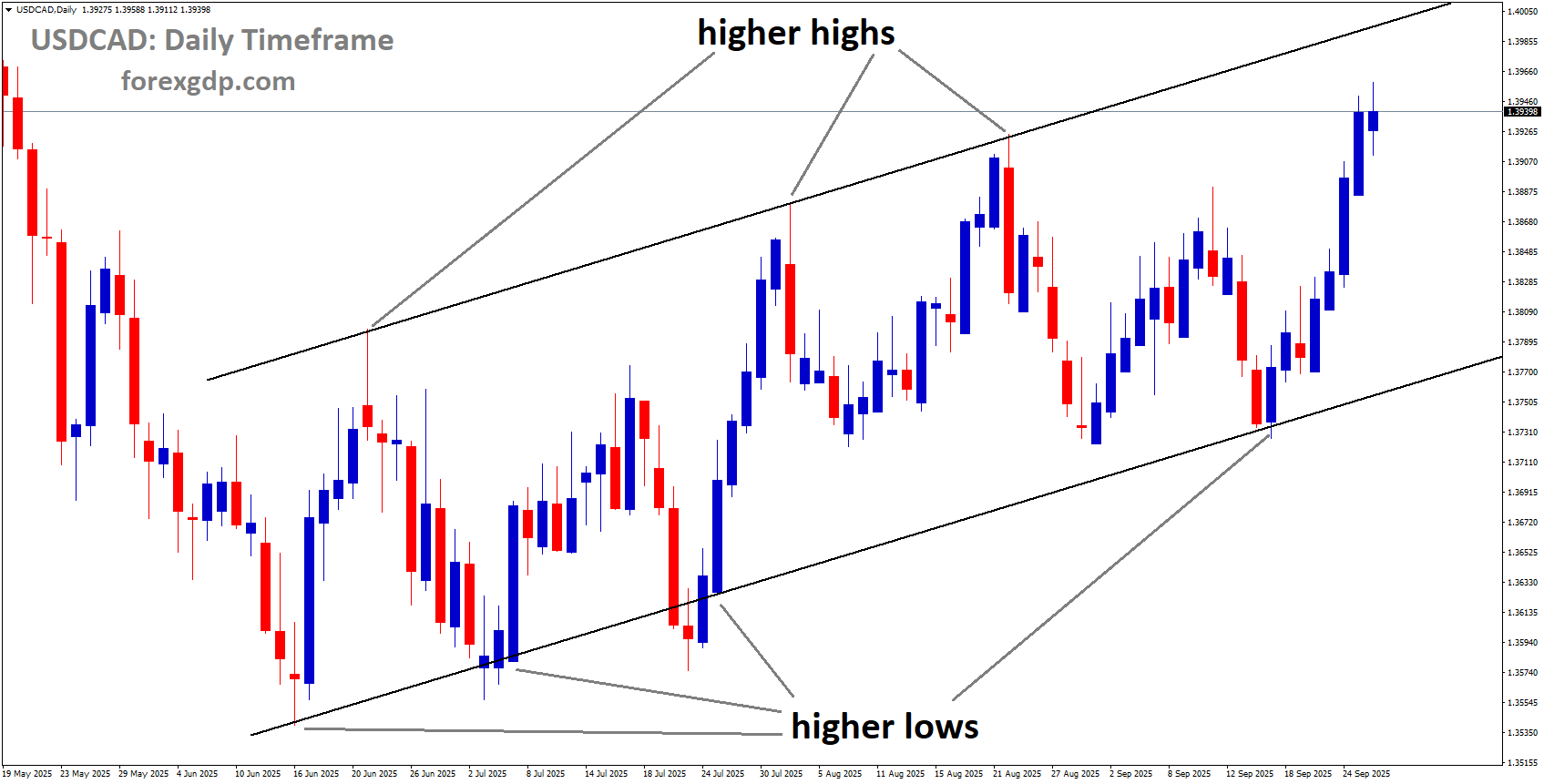
USDCAD is moving in an uptrend channel
A Tough Week for the Canadian Dollar
The Canadian Dollar slowed its losses on Friday but still touched lows not seen in almost five months. This highlights how much the currency has been battling against a stronger US Dollar.
Even though the Loonie managed to push back slightly at the end of the week, the bigger picture shows a currency under stress. Global investors have been leaning heavily toward the US Dollar thanks to its safe-haven appeal, and that’s left the Canadian Dollar on the weaker side.
Canada’s Economy Shows a Bit of Life
One of the rare bright spots for the CAD came from domestic data. Canada’s GDP for July showed growth of 0.2%, bouncing back from the contraction in the previous month. This rebound offered a hint of optimism, signaling that the Canadian economy still has resilience despite global uncertainty.
However, while the GDP figures did stop some of the bleeding, they weren’t enough to spark a real turnaround. Traders saw the data as positive but not powerful enough to change the overall market sentiment that continues to favor the US Dollar.
Why the US Dollar Is Still Dominating
The US Dollar has remained strong for several reasons, and that strength naturally weighs on the Canadian Dollar. Let’s look at the main drivers behind this momentum.
US Inflation in Focus
The US Personal Consumption Expenditure (PCE) Price Index came out largely in line with expectations. This measure is closely watched because it’s the Federal Reserve’s preferred gauge of inflation. Even though the numbers weren’t shocking, they confirmed that inflation is still running hotter than the Fed’s long-term goal.
Interest Rate Speculation
Investors are betting that the Federal Reserve will cut interest rates again in October. Current market expectations show a high probability of another 0.25% reduction. While rate cuts often weaken a currency, the USD has managed to remain firm because global investors see it as a safe option in uncertain times.
Market Sentiment Favors the Greenback
Even when the data isn’t extraordinary, the US Dollar benefits from its role as the world’s reserve currency. Whenever uncertainty grows, investors tend to flock to the Greenback, making it harder for currencies like the CAD to gain ground.

What’s Next for the Canadian Dollar?
The near-term outlook for the CAD remains cautious. A few key factors will shape where the Loonie goes from here.
Upcoming US Jobs Report
The next big test for markets will be the US Nonfarm Payrolls (NFP) report, scheduled for release next Friday. This jobs data is one of the most influential pieces of economic news for currency markets. Strong results could reinforce the Fed’s careful approach to interest rates, while weaker numbers might encourage faster rate cuts.
Either way, the outcome will likely ripple across global currencies, including the Canadian Dollar.
Canada’s Economic Path
While the July GDP growth was encouraging, Canada will need more consistent signs of strength to boost its currency. Consumer spending, energy exports, and employment figures will all play an important role in determining whether the CAD can stage a real comeback.
The Bigger Picture for Traders and Investors
When we step back, the story of the Canadian Dollar right now is about global forces outweighing local strength. Even though Canada’s economy is showing some resilience, the overwhelming demand for the US Dollar continues to overshadow these gains.
For traders, this means keeping a close eye not just on Canadian data but also on what’s happening south of the border in the United States. The Fed’s policies, inflation trends, and labor market results are all crucial to understanding how the USD/CAD pair will behave in the coming weeks.
Final Summary
The Canadian Dollar may have slowed its decline on Friday, but it’s still feeling the weight of a dominant US Dollar. A rebound in Canada’s GDP offered a glimpse of hope, yet the bigger drivers remain tied to US economic data and Federal Reserve decisions.
With another US jobs report just around the corner and markets leaning heavily toward the Greenback, the Loonie’s path looks uncertain. While local economic growth provides some stability, global market sentiment continues to favor the US Dollar, leaving the Canadian Dollar stuck in a challenging position.
USDCHF Slips from Highs While Markets Eye Inflation Signals Ahead
When it comes to the currency market, the US Dollar often sits at the center of attention. Recently, though, the greenback has been struggling to hold onto its gains. After hitting higher levels earlier in the week, the currency started pulling back as cautious market sentiment kept investors on edge. While strong economic reports from the United States initially fueled optimism, concerns about the Federal Reserve’s next moves and divided opinions among policymakers are keeping traders guessing. Let’s break down what’s happening and why the Dollar has been on such a roller coaster ride.
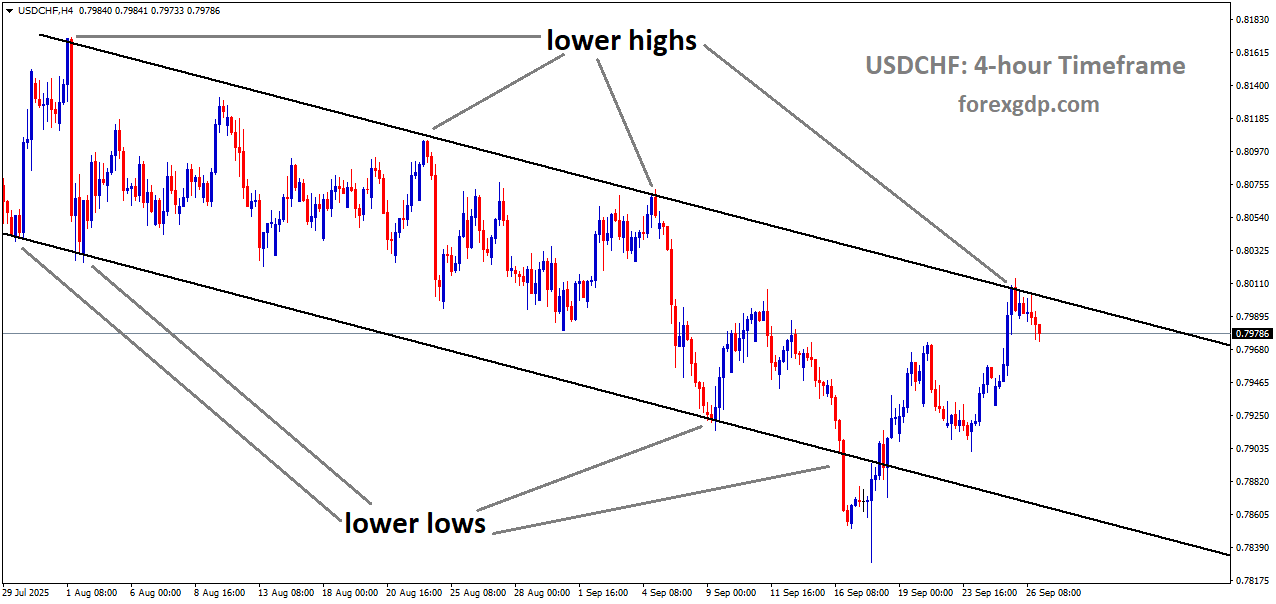
USDCHF is moving in a downtrend channel
Stronger US Data Gave the Dollar a Boost
The Dollar’s recent rise came on the back of surprisingly strong economic numbers. Many investors had been worried that the US economy was losing steam, but fresh data told a different story.
-
Growth Is Back on Track
The Commerce Department revealed that the US economy grew at an annual rate of 3.8% in the second quarter. This was a major jump compared to the initial estimate of 3.3% and an even bigger turnaround from the small contraction seen in the first quarter. For many, this showed that the economy wasn’t slowing down as quickly as feared. -
Jobs Market Shows Resilience
Another positive surprise came from the labor market. Weekly jobless claims dropped to their lowest level in nearly two months. This suggested that layoffs weren’t as widespread as many had expected, hinting at a stronger employment outlook. -
Business Spending Rebounds
Durable goods orders also bounced back, pointing to healthier business investment. Companies appeared more willing to spend on long-lasting equipment, which is often seen as a sign of confidence in future growth.
Altogether, these reports painted a picture of an economy that remains robust despite global uncertainty. Naturally, this gave the Dollar a lift as investors believed the US still had one of the strongest foundations among major economies.
The Fed’s Mixed Messages Keep Markets Nervous
While the economic numbers were encouraging, the bigger question is what the Federal Reserve will do next. And on this front, there’s little agreement.
-
Calls for More Easing
Some policymakers, like San Francisco Fed President Mary Daly, stressed the need for further easing. Her argument was simple: supporting employment should remain a priority, and lowering interest rates could help businesses and households cope better. -
Warnings Against Aggressive Cuts
On the other side, officials like the Chicago Fed President urged caution. They warned that slashing rates too aggressively could backfire, especially with inflation still a concern. -
Political Pressure Adds to the Mix
To complicate things even further, political influence has started creeping in. Fed member Miran, appointed by the Trump administration, pushed strongly for a half-point cut in the upcoming October meeting. That kind of pressure puts the central bank in a tricky position, as it must balance political expectations with economic realities.

This mix of voices has left investors in limbo. Without a clear signal from the Fed, markets are reacting cautiously, and that uncertainty is limiting the Dollar’s ability to sustain gains.
All Eyes on Inflation Data
The next big clue for markets will come from inflation numbers. The Personal Consumption Expenditures (PCE) Price Index—the Fed’s preferred measure of inflation—is due to be released soon.
-
What’s Expected
Analysts expect headline inflation to climb slightly to 2.7% in August, up from 2.5% in July. Core inflation, which strips out food and energy prices, is forecast to stay steady at 2.9%. -
Why It Matters
If inflation comes in higher than expected, it could strengthen the case for the Fed to stay cautious about cutting rates too quickly. On the other hand, if inflation remains contained, the argument for easing becomes stronger.
This release is critical because it could shape the Fed’s tone for the rest of the year. Investors are waiting to see whether the central bank leans more toward supporting growth or fighting inflation.
What This Means for the Dollar Moving Forward
So where does the Dollar stand now?
-
Short-Term Uncertainty
In the immediate term, the Dollar is likely to remain volatile. Strong economic numbers are supportive, but without clarity from the Fed, traders are hesitant to push the currency much higher. -
Global Comparisons Matter
Another factor is how other economies are performing. If Europe or Asia show weaker growth, the US Dollar could still benefit simply because it looks like the safer bet. But if other economies start showing signs of strength, the Dollar’s edge may narrow. -
Investor Sentiment Is Key
Ultimately, the Dollar’s path will depend heavily on investor confidence. If markets believe the Fed has inflation under control and that growth can continue, the currency could find more stability. If not, we may see more pullbacks.
Final Summary
The US Dollar’s journey over the past week shows just how sensitive it is to both economic data and policy signals. Strong GDP growth, resilient job numbers, and improving business investment initially boosted confidence. Yet, disagreements within the Federal Reserve and political pressure have kept markets cautious. With inflation data just around the corner, the Dollar’s next move will likely hinge on whether price pressures remain in check or begin to heat up again.
For now, traders and investors are stuck balancing optimism about the economy with uncertainty about the Fed’s direction. That tug-of-war explains why the Dollar, despite strong fundamentals, has been unable to hold onto all its recent gains.
USD Index Holds Firm as Traders Await Key Inflation Data
The currency market has been buzzing lately, with the US Dollar showing impressive strength against major peers, especially the Japanese Yen. While many factors play into the daily ups and downs of global currencies, some recent economic updates from the United States and Japan have really captured attention. Let’s break down what’s been happening and why investors are keeping a close eye on the upcoming data releases.
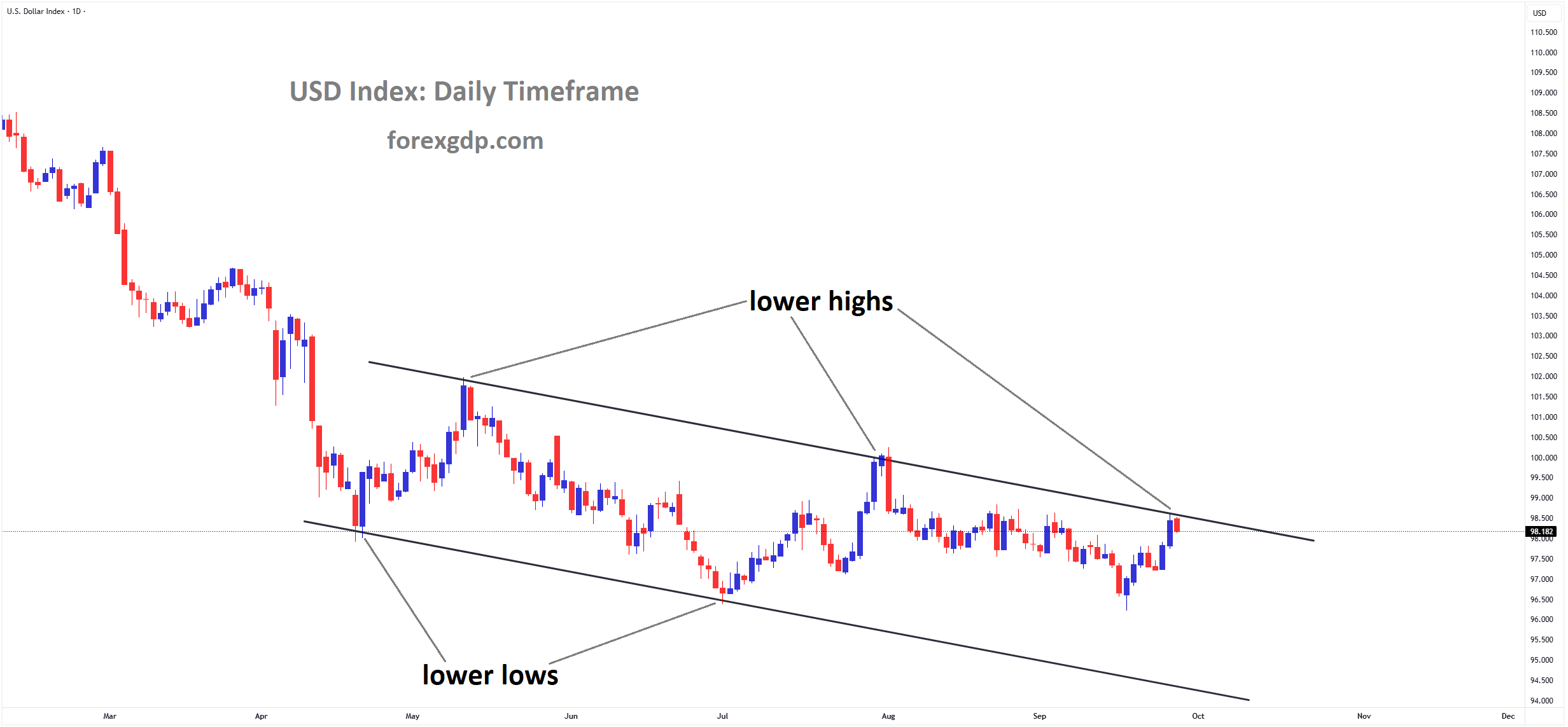
USD Index market price is moving in a downtrend channel, and the market has reached the lower high area of the channel
Why the Dollar Is Showing Strength
The US Dollar has been holding its ground after a run of surprisingly strong economic reports. These fresh updates gave the Greenback an extra push, especially since they came at a time when many traders were expecting softer results.
One of the big highlights was the US GDP growth numbers. The Commerce Department revised the second quarter’s growth from 3.3% to 3.9%, which is a solid jump from the contraction earlier in the year. That kind of progress signals that the American economy is handling challenges much better than many feared.
Adding to that optimism, jobless claims fell to their lowest level since midsummer. Fewer people filing for unemployment benefits is generally a good sign that the labor market remains strong. On top of this, durable goods orders also bounced higher, another indication that businesses are still investing and consumers are still spending.
Together, these factors gave traders more confidence in the Dollar. A healthy economy tends to support a stronger currency, and the data has been painting exactly that picture.
The Fed’s Dilemma: To Cut or Not to Cut
The Federal Reserve’s next moves are always a hot topic in financial circles, and the recent numbers have made things more complicated. Strong economic growth and solid employment figures don’t exactly justify rushing into interest rate cuts.
However, the conversation within the Fed isn’t one-sided. Several officials have been openly sharing their different perspectives:
-
Chicago Fed President Austan Goolsbee warned about the risks of cutting rates too quickly. He emphasized the need to make decisions based on more than just payroll growth.
-
San Francisco Fed President Mary Daly took a slightly more flexible stance, hinting that a modest rate cut could still be on the table.
-
Stephen Miran, one of the newer voices, pushed even harder, suggesting that a significant rate cut should happen as soon as next month.
These mixed opinions show just how divided policymakers are. Some want to act cautiously, while others believe easing rates could support longer-term stability. This uncertainty keeps markets on edge because rate decisions directly affect currency movements, borrowing costs, and investor sentiment.
Japan’s Side of the Story
While the US has been releasing stronger-than-expected data, Japan has been dealing with the opposite. The Japanese Yen has stayed weak, partly because of softer inflation numbers coming from Tokyo.
Inflation in Japan hasn’t been keeping pace with expectations, which reduces pressure on the Bank of Japan to tighten monetary policy. When a country’s central bank doesn’t raise interest rates, it often weakens the currency compared to peers where rates are higher. This is exactly what we’ve been seeing with the Yen.
So, while the Dollar benefits from strong US figures, the Yen’s struggles are making the difference between the two currencies even more noticeable.

Why the PCE Prices Index Matters
The next big event on traders’ radar is the release of the US Personal Consumption Expenditures (PCE) Prices Index. This report is one of the Federal Reserve’s favorite measures of inflation, and it often influences how they shape monetary policy.
Here’s why it’s such a big deal:
-
Headline Inflation: Analysts expect it to tick slightly higher compared to the previous month. A rise here would confirm that inflationary pressures are still lingering in the economy.
-
Core Inflation: This number, which excludes food and energy, is expected to remain steady. It’s watched closely because it provides a clearer view of underlying price trends without short-term volatility.
If the PCE report shows inflation running hotter than expected, the Fed may feel more pressure to hold off on rate cuts. On the flip side, if inflation looks under control, those who favor easing rates may have stronger arguments.
What This Means for Traders and Investors
All these moving parts create an interesting setup for anyone watching the Dollar, the Yen, or the broader financial markets. Right now, the Dollar is enjoying support from positive data, but future direction will depend heavily on the Fed’s response to upcoming inflation numbers.
For investors, this means:
-
Stronger Dollar Outlook: As long as US economic indicators keep surprising to the upside, the Dollar is likely to stay in demand.
-
Market Sensitivity: Any small change in inflation data or Fed commentary could spark quick movements in currency markets.
-
Opportunities and Risks: While some may see strength in the Dollar as an investment opportunity, others may remain cautious given how quickly sentiment can shift.
Final Summary
The past week has shown just how powerful economic data can be in shaping currency markets. The US Dollar has been lifted by stronger GDP growth, low jobless claims, and resilient business activity. At the same time, the Japanese Yen has been struggling under softer inflation, creating a sharp contrast between the two.
Now, all eyes are on the upcoming PCE Prices Index. This single report could either reinforce the Dollar’s current momentum or shift the conversation toward future rate cuts. With Federal Reserve officials split on the path ahead, the markets are likely to stay lively in the coming days.
At the end of the day, the Dollar’s strength reflects more than just numbers—it captures the balance between economic resilience, inflation concerns, and central bank strategy. For traders and investors, staying alert and understanding these factors will be key to navigating what comes next.
AUDUSD edges higher with RBA meeting in view and USD under pressure
The Australian Dollar (AUD) has been finding its footing once again, helped by a softer US Dollar (USD) and a mix of economic factors playing out on both sides of the globe. With investors carefully watching central bank moves and upcoming data, this week is shaping up to be an important one for currency markets.
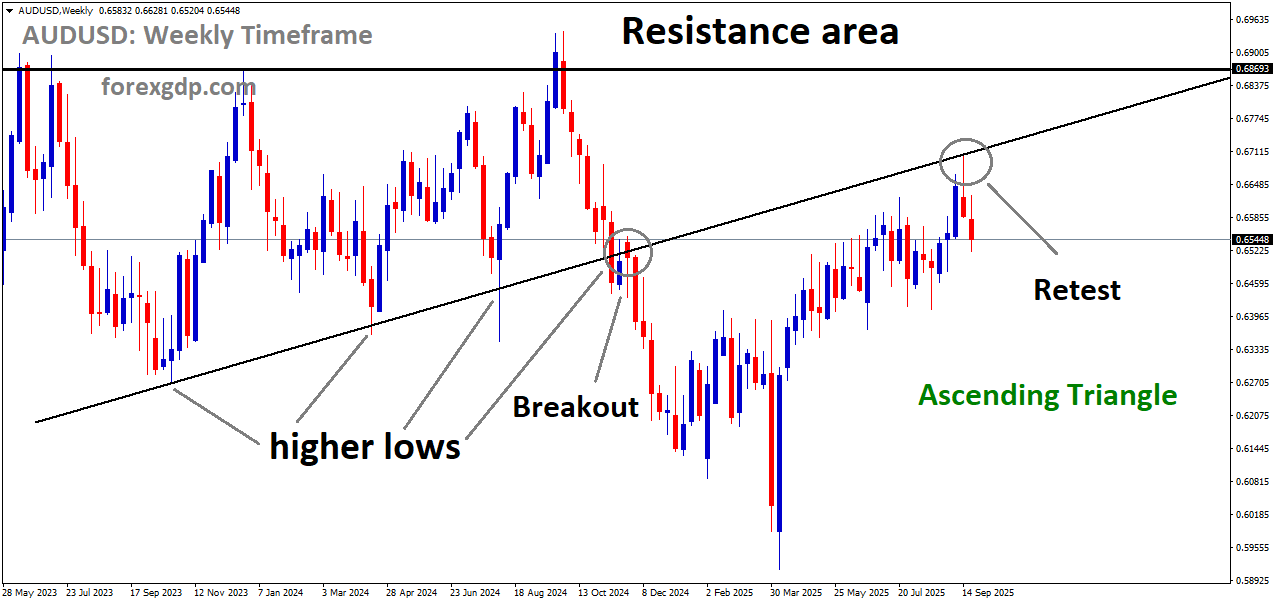
AUDUSD is falling from the retest area of the broken Ascending Triangle pattern
Let’s break down what’s been driving the Aussie higher, what’s going on with the US economy, and why traders are keeping a close eye on the Reserve Bank of Australia (RBA) and the US labor market.
Why the Australian Dollar Is Recovering
The AUD has recently regained ground after a tough run, and one of the key reasons behind this rebound is the performance of the US Dollar. When the USD weakens, the AUD often benefits, and that’s exactly what we’re seeing now.
The latest figures from the US on Personal Consumption Expenditures (PCE) inflation came in largely as expected. That might not sound exciting, but in the world of forex, “in-line with forecasts” can have a big impact. It signaled that inflation is cooling at a steady pace without giving the Federal Reserve fresh reasons to turn aggressive.
At the same time, American consumer confidence has taken a small dip, as shown in surveys from the University of Michigan. When people feel less positive about the economy and inflation expectations ease, demand for the US Dollar often softens. These two factors combined gave the Aussie the room it needed to climb back after hitting multi-week lows.
The Role of the Reserve Bank of Australia (RBA)
Now, the spotlight shifts to the RBA’s upcoming monetary policy decision. The big question on everyone’s mind is whether the RBA will adjust interest rates or keep them steady.
Market Expectations
Most economists and investors expect the RBA to hold interest rates where they are. A recent survey of economists pointed to an overwhelming consensus that the cash rate will remain unchanged. Futures markets are also pricing in very little chance of a rate cut this time around. Instead, attention is turning to Australia’s next round of inflation data, which will arrive later this year.
Diverging Opinions from Major Banks
Interestingly, not all financial institutions agree on what the RBA’s next move might look like in the months ahead. Some of the country’s biggest banks, including ANZ, CBA, and Westpac, are leaning toward the idea that rate cuts could come before the year is out, especially if inflation continues to cool.
On the other hand, NAB is taking a much longer view, suggesting that the first rate cut may not come until well into 2026. Their reasoning lies in persistent price pressures in certain areas, such as services, as well as surprisingly strong household spending.

For the RBA, it’s a balancing act: support economic growth without letting inflation flare back up. Whatever the decision, it’s going to have a big impact on how the AUD performs in the coming months.
The US Side of the Story
While Australia waits for its central bank decision, the US is preparing for another important moment: the Nonfarm Payrolls (NFP) report.
Why NFP Matters
The NFP is one of the most closely watched pieces of US economic data. It shows how many jobs were created (or lost) in a given month, and it’s often seen as a reflection of the overall health of the economy. Strong numbers usually boost the US Dollar because they suggest the economy can handle higher interest rates, while weak numbers can have the opposite effect.
This week, economists are predicting a modest rebound in job growth compared to the previous month. If the data shows strength, the Dollar could regain some lost ground. But if the figures disappoint, the AUD might get another boost.
How Investors Are Reading the Situation
When we put it all together, the AUD’s performance right now comes down to a mix of expectations and reality. On one hand, traders see inflation cooling in the US and slightly weaker consumer confidence, which takes pressure off the Fed. On the other hand, the RBA is being cautious, choosing to wait for more data before making any big decisions.
This combination has left the AUD in a stronger position than just a few days ago. But it also means that upcoming events—like the RBA’s policy meeting and the US jobs report—are going to be critical in deciding whether this momentum lasts or fades away.
Final Summary
The Australian Dollar’s rebound shows just how sensitive currency markets are to shifts in economic data and central bank decisions. Right now, the softer US Dollar has given the Aussie a chance to climb back from recent lows, helped along by steady inflation figures and weaker consumer sentiment in the US.
All eyes are now on the RBA, which is expected to keep rates steady but faces pressure from both sides—those calling for cuts later this year and those warning that inflation still needs watching. At the same time, the US labor market will provide the next big clue about the Dollar’s direction with the upcoming Nonfarm Payrolls report.
For traders and investors, this is a waiting game with high stakes. The balance between economic resilience and inflation control will decide not just where the AUD/USD pair moves next, but also how broader markets react in the weeks ahead.
NZDUSD regains momentum after sharp slide, Dollar pause gives Kiwi some relief
The New Zealand Dollar (NZD) has recently found some support against the US Dollar (USD) after days of pressure. While the Kiwi is holding slightly firmer, its recovery looks fragile, especially with global factors continuing to weigh on currency movements. Let’s break down what’s happening, why it matters, and what traders are waiting for in the near term.
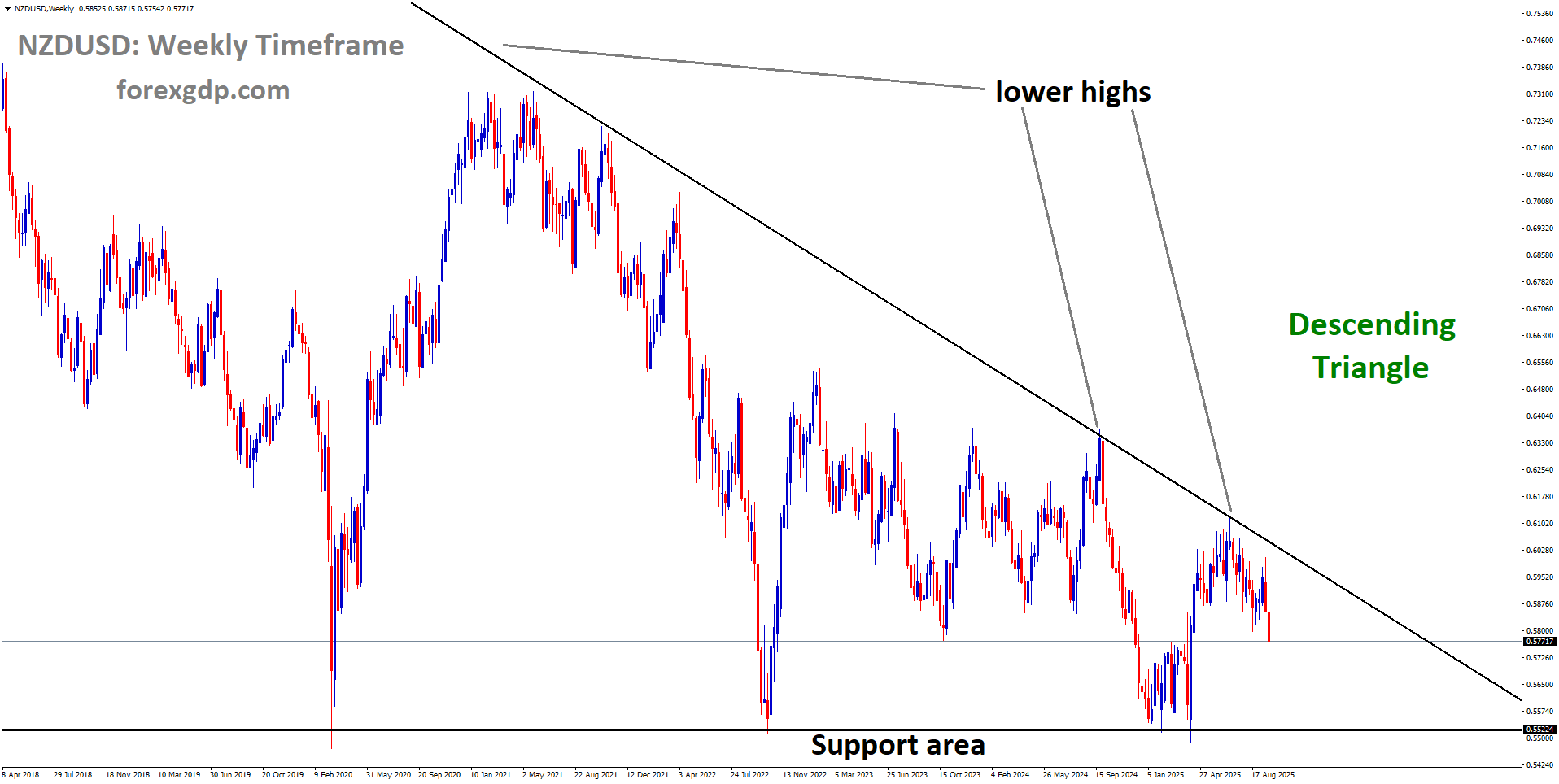
NZDUSD is moving in a descending triangle pattern
The Pause in USD Strength
Over the last few weeks, the US Dollar has been riding a strong wave. It climbed to multi-week highs as investors placed their bets on a resilient US economy and the possibility that the Federal Reserve may not be in a hurry to cut interest rates.
But now, that momentum seems to have slowed. Instead of charging higher, USD bulls are taking a step back, waiting for more information before making their next move. This “breather” in the Dollar’s run has given the NZD some space to regain lost ground.
One of the key reasons behind this pause is the anticipation of the US Personal Consumption Expenditure (PCE) Price Index data. Since it’s the Fed’s preferred inflation gauge, markets are treating this upcoming report as a big deal. If inflation stays sticky, it could give the Fed reason to delay rate cuts, which usually supports the Dollar. On the flip side, if inflation shows more cooling, the USD could soften, giving pairs like NZD/USD a chance to bounce higher.
Strong US Data Keeps Investors Cautious
Even though the USD has stepped back temporarily, it’s not in free fall. That’s because recent US economic numbers have been surprisingly solid.
-
GDP Growth: The US economy grew faster than originally estimated in the second quarter. Instead of slowing down, growth was revised higher, pointing to continued strength.
-
Durable Goods Orders: Businesses are still spending on big-ticket items, which is usually a sign of confidence.
-
Jobless Claims: Fewer Americans are filing for unemployment benefits, showing that the labor market remains strong.
All of this suggests that the US economy isn’t cooling as quickly as some expected. A strong economy gives the Fed less urgency to slash rates aggressively, which indirectly helps the USD maintain strength.
For the Kiwi Dollar, this is a challenge. Whenever the USD shows resilience, NZD/USD faces resistance in pushing higher.

Risk Sentiment and the Kiwi Dollar
The New Zealand Dollar is often called a “risk-sensitive” currency. That means its performance is closely tied to how investors feel about global risk. When markets are optimistic, the Kiwi tends to rise. When fear takes over, it usually falls as money flows into safer assets like the USD.
Right now, global risk appetite is under pressure:
-
Equity Market Weakness: Stock markets across regions are showing a cautious tone. Investors are trimming their risk exposure, which indirectly weighs on the NZD.
-
Geopolitical Uncertainty: Tensions in global trade and politics, including fresh tariffs and rising conflicts, are making traders nervous. The more uncertainty there is, the more investors lean toward safe-haven currencies like the USD.
So even though the Kiwi is seeing some support at the moment, the overall environment isn’t making things easy for it.
What’s Happening in New Zealand?
While global events dominate headlines, developments in New Zealand also matter for the Kiwi. Recently, expectations have grown that the Reserve Bank of New Zealand (RBNZ) could move toward more interest rate cuts in the coming months.
If the RBNZ does cut rates, it would make the NZD less attractive compared to the USD, where the Fed is still holding a firmer stance. This difference in monetary policy outlook—known as “policy divergence”—is another factor keeping the Kiwi capped.
In short, while the USD is strong because of America’s resilience, the NZD faces the opposite pressure because of New Zealand’s softer economic backdrop and the possibility of easier policy ahead.
The Bigger Picture for Traders
At this point, the NZD/USD is in a tug of war. On one side, the Dollar’s pause is offering some relief for the Kiwi. On the other, strong US data, weak global risk appetite, and RBNZ rate cut expectations are all limiting how far the pair can rise.
That’s why traders are keeping their eyes on upcoming US data releases. The PCE inflation report in particular is likely to set the tone for the next big move. If it shows inflation cooling, the NZD/USD could get some extra lift. If it confirms sticky inflation, USD bulls might come back stronger, pushing the Kiwi lower again.
Final Summary
The NZD/USD pair has managed to recover slightly after hitting its lowest levels in months, but the path ahead looks challenging. The temporary pause in the US Dollar’s rally has allowed the Kiwi some breathing room, yet the underlying pressures remain. Strong US economic data, a cautious global mood, and expectations of more rate cuts in New Zealand continue to weigh on the NZD’s outlook.
In the coming days, the market’s focus will be on the US PCE Price Index. This key inflation reading could decide whether the Dollar resumes its climb or eases further. For now, traders are in a wait-and-see mode, and the NZD/USD is caught in the middle of this uncertainty.
BTCUSD under pressure after sudden liquidation storm rattles crypto traders
The cryptocurrency world has always been known for its fast-moving trends and sudden changes, and the past week has been no exception. Bitcoin, the leading digital currency, has been struggling under mounting pressures, with billions in positions being liquidated and global events adding more weight on traders’ decisions. While short-term uncertainty has rattled investors, the bigger picture continues to reveal a mix of challenges and opportunities that could shape Bitcoin’s next direction.
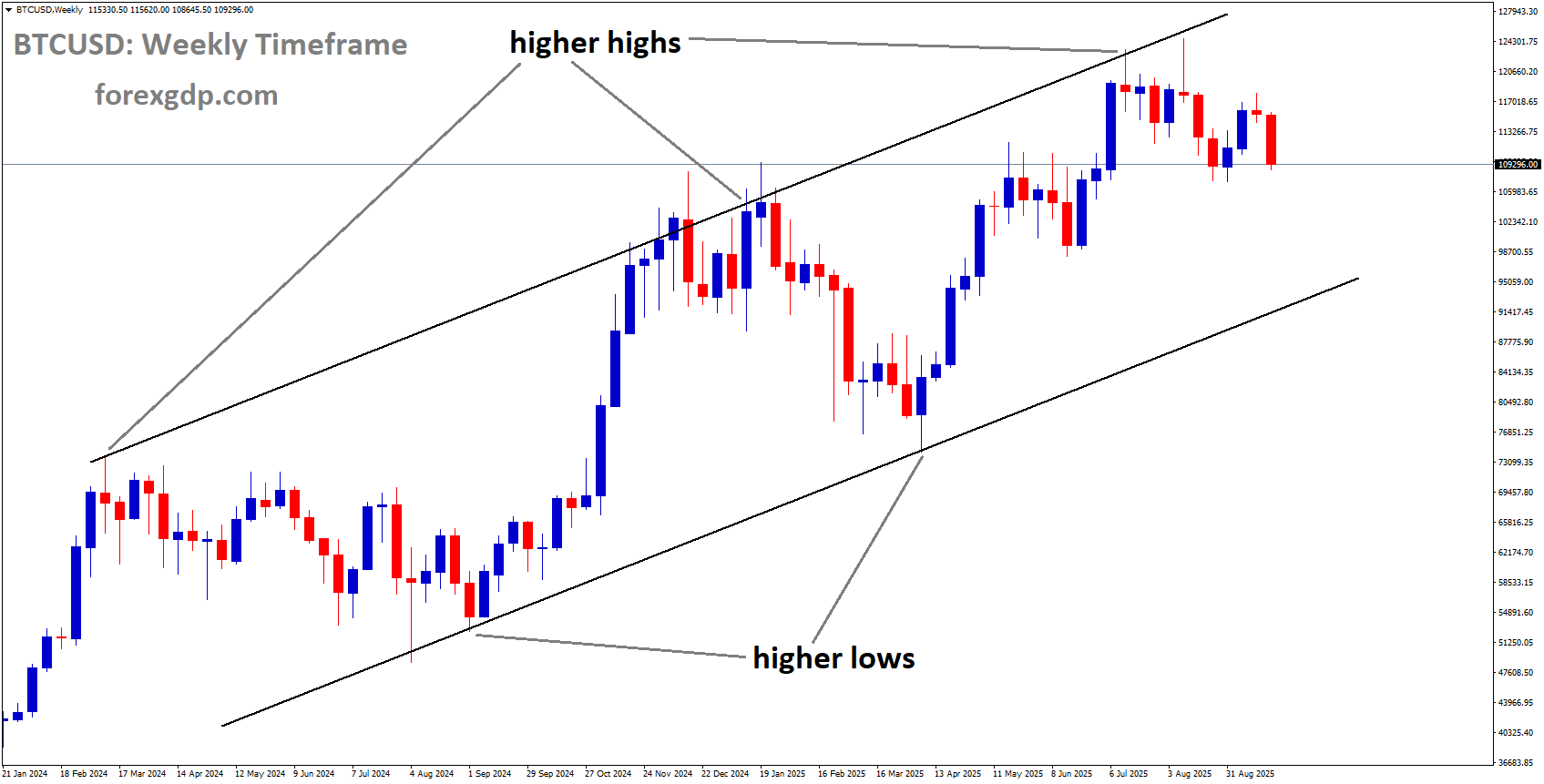
BTCUSD is moving in an uptrend channel, and the market has fallen from the higher high area of the channel
Massive Wave of Liquidations Hits the Market
One of the most striking developments this week has been the wave of liquidations that shook the crypto market. Traders entered the week with high expectations, but things quickly turned sour as billions in long positions were wiped out in a single day. This was the largest liquidation event of the year so far, showing how quickly optimism can turn into fear when momentum shifts.
When the first liquidation hit, the market became even more unstable. Fear started to creep in, and more long positions were closed as Bitcoin slipped further. With billions more lost by midweek, traders were forced to rethink their strategies. The sudden shake-up sent shockwaves across the crypto community, reminding everyone that overconfidence in such a volatile market can backfire quickly.
What stood out most was the imbalance—far more long trades were liquidated compared to short ones. This highlighted just how bullish traders had become, only to be caught off guard by rapid declines. It serves as a reality check that even in strong uptrends, risk management is key.
The Role of Fear and Market Sentiment
Markets are not just about numbers—they’re also about emotions. This week, fear became the dominant mood across the crypto space. Indicators that measure overall sentiment showed a sharp drop, reflecting a growing sense of caution among investors.
When traders see billions being liquidated and headlines filled with uncertainty, many step back and reduce their exposure. That hesitation often snowballs, leading to more selling and further downward pressure on prices. It’s a cycle that has played out many times before in the world of cryptocurrencies.
The bigger question is how long this cautious mood will last. Fear-driven markets can recover quickly once confidence returns, but they can also linger if external pressures keep building.
Why Global Events Are Shaping Crypto Trends
The performance of Bitcoin is not just about crypto itself—it’s deeply tied to what’s happening globally. This week, the cautious approach from the U.S. Federal Reserve combined with rising geopolitical tensions weighed heavily on the market.

Federal Reserve’s Careful Position
The Federal Reserve recently cut interest rates but signaled that it’s not ready to make aggressive moves going forward. Chair Jerome Powell emphasized the need to balance inflation risks with employment concerns. This message dampened expectations for quick, repeated cuts, strengthening the U.S. dollar and reducing demand for riskier assets like cryptocurrencies.
For Bitcoin, which often benefits when investors look for alternatives to traditional assets, the Fed’s cautious stance worked against it. Instead of seeing an inflow of money, many traders preferred to wait on the sidelines.
Geopolitical Conflicts Add to Pressure
On top of the Fed’s message, ongoing global conflicts added another layer of uncertainty. Tensions such as the Russia-Ukraine war and the conflict in Gaza continue to weigh on investor confidence. Whenever geopolitical risks rise, financial markets tend to lean toward safer options. Unfortunately for crypto, this usually means less appetite for speculative assets like Bitcoin.
The September Effect: A Historical Hurdle
Another factor making traders uneasy is the so-called “September effect.” Historically, September has been one of the weakest months for Bitcoin. Data shows that returns during this month often turn negative, making investors cautious no matter how strong the market looked before.
This year, while Bitcoin showed slight gains earlier in the month, many remain on guard because of this historical trend. It’s not a guarantee that September will always be negative, but patterns like this often influence trader psychology. That alone can drive more conservative behavior and reduce bullish activity.
Institutional Interest Shows Mixed Signals
Institutional demand has played a huge role in shaping Bitcoin’s price over the past few years. This week, however, signs of weakening demand surfaced. Reports showed that Bitcoin-focused exchange-traded funds (ETFs) experienced significant outflows, breaking a multi-week streak of positive inflows.
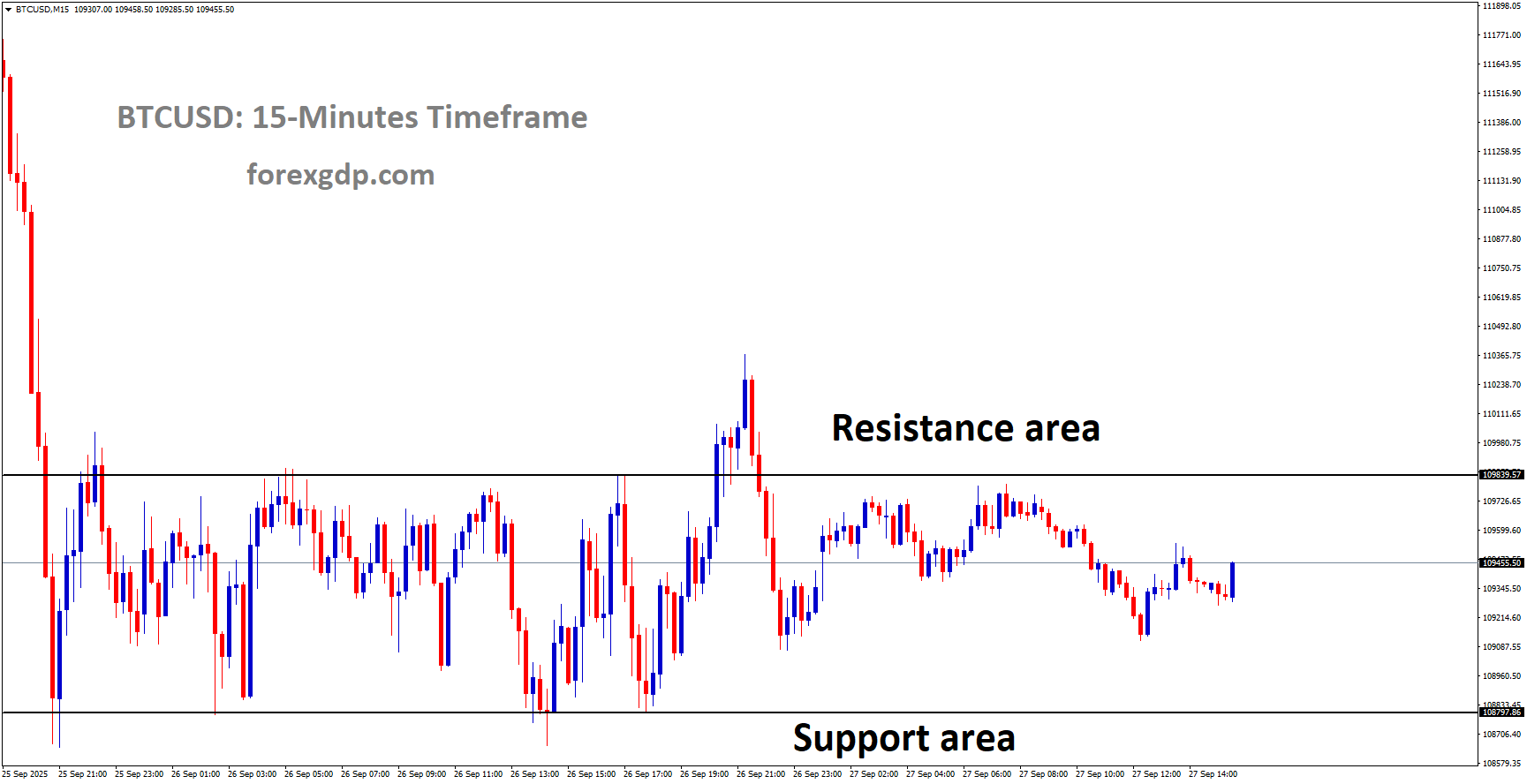
BTCUSD is moving in a box pattern
This decline suggests that some larger players are pulling back, possibly waiting for more favorable conditions before re-entering. If these outflows continue, Bitcoin could remain under pressure in the near term.
On the flip side, not all institutions are turning away. Some companies continue to see the dips as opportunities. Major firms and investment companies have added thousands of Bitcoin to their holdings recently, signaling long-term confidence even amid short-term volatility. This ongoing corporate accumulation shows that while institutions may not all be buying aggressively right now, belief in Bitcoin’s future remains intact.
Regulatory Clarity on the Horizon
While short-term pressures dominate headlines, there are also some positive developments worth paying attention to. In the United States, the Senate Finance Committee has scheduled a hearing to discuss how digital assets should be taxed.
For many investors, this move represents a step toward more clarity in the regulatory space. Clearer rules can encourage broader adoption and make institutions more comfortable with larger investments in Bitcoin and other cryptocurrencies. Though regulation often sparks debate in the crypto community, having a structured framework can help the market mature and attract long-term stability.
Final Summary
This week has highlighted both the strengths and vulnerabilities of Bitcoin. On one hand, the largest liquidation of the year showed just how fragile overly bullish markets can be. Rising fear and global uncertainties have kept investors on edge, leading to short-term declines. On the other hand, corporate buying and the promise of regulatory clarity provide reasons to remain optimistic about the long-term outlook.
Bitcoin continues to sit at the intersection of global finance, influenced by everything from central bank policies to international conflicts. For traders, the lesson is clear: while short-term turbulence may shake confidence, the bigger story of adoption, institutional involvement, and regulatory progress is still unfolding. Those who navigate carefully and focus on the long view may find that volatility, as challenging as it feels, is simply part of Bitcoin’s ongoing journey.
Don’t trade all the time, trade forex only at the confirmed trade setups
Get more confirmed trade signals at premium or supreme – Click here to get more signals, 2200%, 800% growth in Real Live USD trading account of our users – click here to see , or If you want to get FREE Trial signals, You can Join FREE Signals Now!