

Forex trading is often glamorized as a high-tech battlefield where only the smartest algorithms win. You hear phrases like “AI-powered systems,” “automated bots,” or “predictive analytics” and start to think — maybe you need a PhD in computer science just to place a trade. But here’s the honest truth: Forex trading doesn’t require predictive algorithms to be successful.
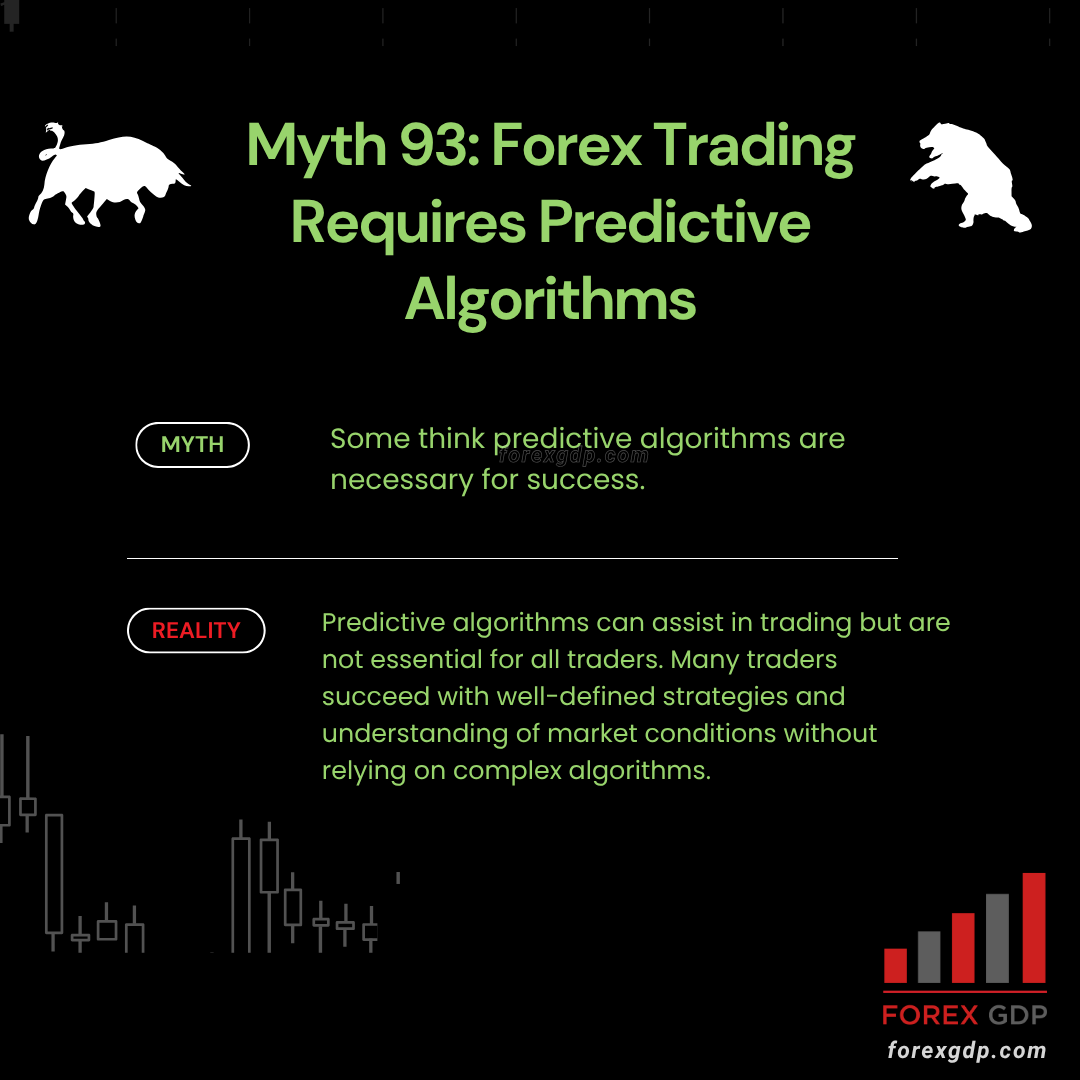
Let’s break down this myth and get real about what it actually takes to thrive in the forex world.
What’s the Deal With Predictive Algorithms in Forex?
Predictive algorithms are often sold as the holy grail of trading. These systems try to forecast where the market will go using historical data, complex formulas, and even artificial intelligence.
Sure, that sounds cool. But let’s be honest—just because something is high-tech doesn’t mean it’s necessary or even effective for everyone.
The Hype vs The Reality
It’s easy to believe that the more complex your setup, the more likely you are to succeed. After all, big hedge funds use algorithms, right? So should you.
But here’s the catch: those institutions have teams of data scientists, endless capital, and access to lightning-fast trading infrastructure. Unless you’ve got a Wall Street-level operation running in your basement, algorithms won’t give you the same edge.
Why You Don’t Need Predictive Algorithms to Succeed
You don’t need to predict the future to win in trading. Let that sink in.
Forex is More About Probabilities Than Predictions
Here’s a secret: even the best traders don’t always know where the market is going. What they do know is how to read conditions, manage risk, and stay consistent.
Instead of trying to predict, think in terms of probabilities. Ask yourself: “Given this setup, what’s the likelihood that price will move in my favor?” That’s a more sustainable approach than hoping an algorithm will tell you the future.
Simple Strategies Can Outperform Complex Systems
Let’s be real — sometimes the simplest tools work the best. A solid trading plan based on basic price action, support and resistance, and fundamental analysis can go a long way.
Plenty of successful traders use nothing more than a handful of indicators, a clean chart, and a good understanding of market psychology.
The Danger of Over-Reliance on Algorithms
Chasing the dream of a “magic algorithm” can distract you from learning the real skills that make a difference in trading.
False Sense of Security
When you rely too heavily on algorithms, you start believing the system will do the work for you. But markets change. What worked yesterday might not work tomorrow.
And when the algorithm fails? You’re left without the knowledge to adapt.
You Lose the Human Element
Trading is part art, part science. It’s not just about numbers and charts — it’s about interpreting emotion, momentum, and timing. A computer can crunch data, but it can’t feel fear in the market the way a human can.
When you take yourself completely out of the decision-making process, you lose that instinctive edge.
What Really Makes a Forex Trader Successful
Let’s shift the spotlight back to the basics — because that’s where real success is born.
Consistent Strategy Beats Fancy Tools
A strategy that you understand, trust, and follow consistently will always outperform a complicated system you barely comprehend. Consistency is everything in forex.
Stick with what you can repeat. Simplicity doesn’t mean weakness — it often means strength.
Risk Management Is the Real MVP
No matter how great your entry system is, you will have losing trades. That’s just part of the game.
What separates the winners from the losers is how they handle those losses. Smart risk management — using stop-losses, proper lot sizing, and controlling emotions — is far more valuable than a predictive algorithm.
Building Trading Skills That Actually Matter
Let’s talk about what you should focus on if you want to succeed in forex.
Understanding Market Structure
Learn to read the flow of the market. Support, resistance, trends, reversals — these are the building blocks of every price movement.
It’s like learning a new language. The more fluent you are, the better you’ll navigate every twist and turn.
Mastering Trading Psychology
Your mindset can make or break you. Fear, greed, impatience — they all sneak in when real money’s on the line.
Train yourself to think long-term, accept losses as part of the process, and stay emotionally neutral in every trade.
When Are Algorithms Actually Useful?
Okay, so are predictive algorithms totally useless? Not exactly.
They Work for Some — But Not All
If you’re a quant trader, a programmer, or someone who enjoys crunching data and building models, then sure — predictive algorithms can be part of your edge.
But for the average retail trader? They’re usually more of a distraction than a solution.
They’re Tools, Not Crystal Balls
Algorithms can help automate parts of your trading or filter out noise. But they’re not psychic. You still need a solid foundation, a strategy, and the discipline to follow through.
Use them wisely — but don’t worship them.
Why Experience Trumps Technology
Technology changes fast, but experience sticks with you.
The Power of Screen Time
The more time you spend watching price move, the more patterns you start to notice. You begin to “feel” the rhythm of the market.
That kind of intuition can’t be coded into a machine.
Learning From Mistakes

Algorithms don’t learn from emotional mistakes — but you do. Every loss, every misstep, teaches you something valuable if you’re willing to pay attention.
That’s how you grow into a real trader.
Stop Chasing Perfection and Start Building Discipline
Too many traders are obsessed with finding the perfect system. Here’s the truth: it doesn’t exist.
Every System Has Flaws
There’s no strategy that wins 100% of the time. What matters is how you handle the times it doesn’t.
Instead of chasing perfection, build consistency. Develop routines. Stick to your plan. That’s where real progress happens.
Discipline Over Everything
If you can follow your rules when things get tough, you’ve already won half the battle. Predictive algorithms can’t give you that discipline — only experience and self-awareness can.
Why Most Traders Quit — And How You Can Avoid It
Let’s be honest, most traders throw in the towel after a few losses. Why?
They Expect Quick Wins
The internet sells forex like it’s a get-rich-quick scheme. But real trading is slow, boring, and repetitive. It’s about surviving the long game, not hitting home runs overnight.
They Don’t Develop Core Skills
Many new traders skip the learning phase and go straight to buying a “magic indicator” or bot. Without foundational skills, they’re setting themselves up for failure.
You can avoid this by committing to learning the process — not just chasing profits.
The Importance of Crafting Your Own Trading Style
There’s no “one-size-fits-all” in forex. You’ve got to find what works for you.
Copying Others Doesn’t Always Work
What works for a scalper in Tokyo might be a disaster for a swing trader in London. The point is: you need to develop your own rhythm, strategy, and comfort zone.
Learn from others — but don’t try to be them.
Make It Personal
Your trading should fit your personality, your schedule, and your risk tolerance. When it does, you’ll find it much easier to stay consistent — and that’s the real key to success.
So, Do You Need Predictive Algorithms in Forex Trading?
Let’s close this out with a straight answer: no, you don’t.
Are they helpful in certain cases? Sure. Can they work if you know how to use them? Absolutely. But they’re not essential. You don’t need to be a data scientist to make money in forex.
What you do need is patience, consistency, and a commitment to mastering the basics.
Conclusion
Trading isn’t about being flashy. It’s about being effective.
Forget the myth that you need some futuristic algorithm to succeed. Focus on building a strategy that fits you, manage your risk like a pro, and show up every day with discipline and patience.
That’s how real traders win — not with code, but with commitment.
FAQs
What is a predictive algorithm in forex?
A predictive algorithm in forex is a system designed to forecast future price movements based on historical data and technical indicators. It’s typically used in automated or algorithmic trading strategies.
Can beginners use predictive algorithms effectively?
Most beginners struggle with predictive algorithms because they’re complex and require advanced knowledge. It’s better to start with simple strategies and focus on learning the basics first.
Are manual strategies better than automated ones?
Not necessarily better — just different. Manual strategies give you more control and help you build essential skills, while automated strategies can reduce emotional decision-making. The key is finding what suits your style.
How can I trade forex successfully without using algorithms?
Stick to proven strategies like price action, support/resistance, and trend trading. Focus on risk management, journal your trades, and improve your psychology. These are the real pillars of trading success.
Do professional traders use algorithms?
Some do, especially in hedge funds or proprietary firms. But many successful independent traders rely on manual strategies, solid fundamentals, and experience over fancy tech.