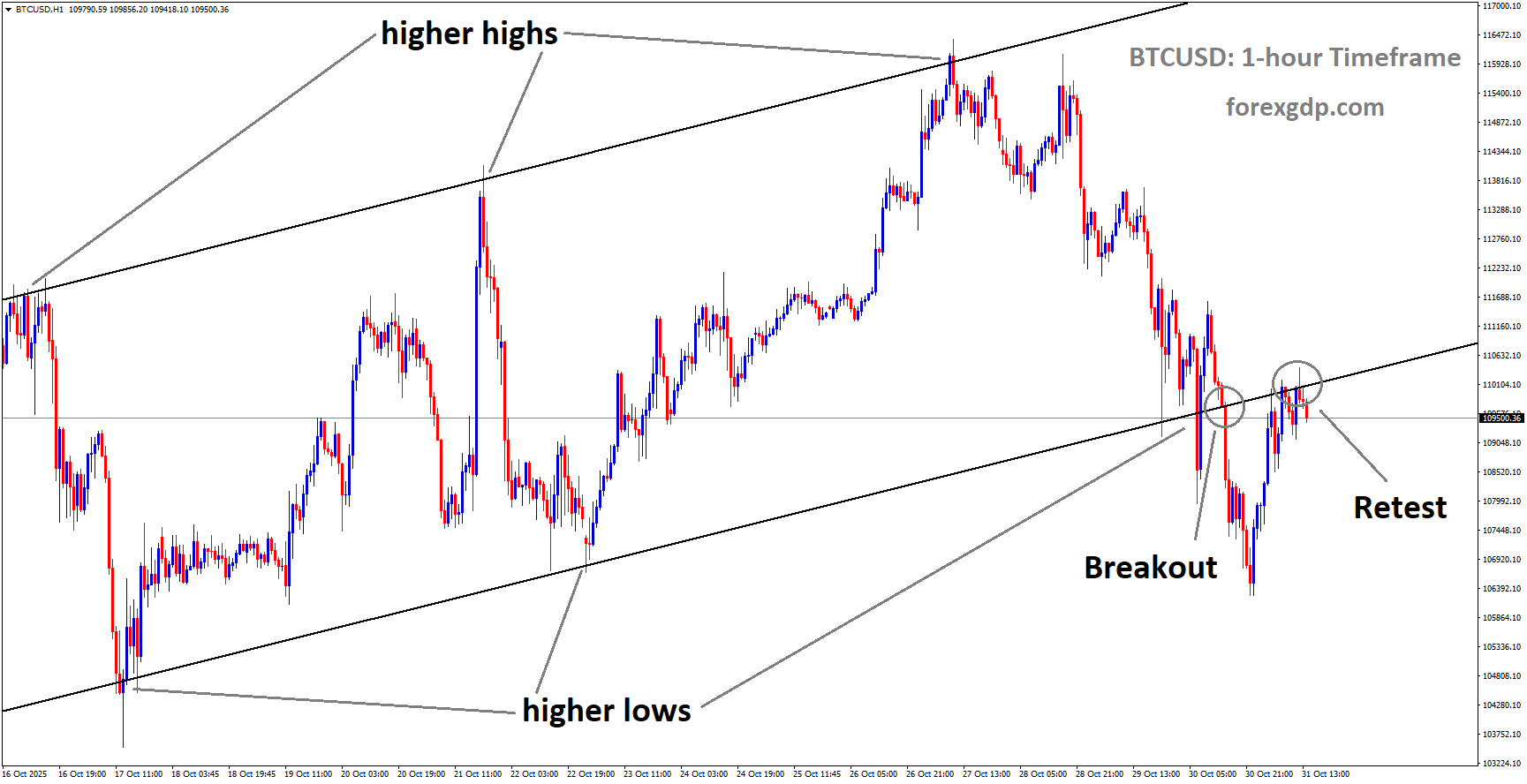
BTCUSD reached the retest area of the broken uptrend channel
When U.S. President Donald Trump met Chinese President Xi Jinping in South Korea, it wasn’t just another diplomatic event—it was a moment the entire world was watching. The two leaders came together at a time when trade tensions between Washington and Beijing had reached alarming levels. These tensions had caused ripples across global markets, shaken investor confidence, and even influenced emerging industries like cryptocurrency and technology manufacturing.
The meeting was designed to break the ice, cool the rising economic friction, and find a common path forward for both nations. While neither leader expected miracles overnight, there was a shared sense of optimism that meaningful progress could be achieved. Their discussions centered on reducing tariffs, improving cooperation, and creating a more stable environment for international trade.
This wasn’t just about trade; it was about restoring global confidence. Investors, business leaders, and everyday consumers had all been affected by the ongoing uncertainty between these two economic powerhouses. The world wanted answers—and both leaders seemed ready to provide them.
Signs of Hope in Tariff Negotiations
Before formal talks even began, President Trump signaled that there had already been progress behind the scenes. He expressed confidence that the meeting would pave the way for stronger ties and a long-term economic partnership between the United States and China. The White House later confirmed that the discussions went well, describing them as “productive and forward-looking.”
Both nations had valid concerns. For the United States, the focus was on protecting its domestic industries and reducing dependency on Chinese imports. For China, it was about maintaining its export momentum while avoiding economic retaliation that could slow down its growth. Despite their differing priorities, the tone of the meeting was cooperative rather than confrontational—a refreshing change from the months of heated exchanges that had preceded it.
According to U.S. officials, Trump appeared to soften his earlier stance on imposing additional tariffs on Chinese goods. This was seen as a signal of de-escalation and a willingness to compromise. A more balanced approach to trade policy could ease the pressure on global markets and benefit industries that depend on international collaboration, including technology and energy.
Meanwhile, China showed readiness to open up its markets in specific sectors and ease restrictions that had previously strained relations. There were talks about allowing increased American agricultural imports and revisiting export policies on certain industrial materials. While these may seem like small steps, in diplomatic terms, they marked significant progress toward rebuilding mutual trust.
Economic Friction and Its Global Ripple Effects
The U.S.-China trade war didn’t just affect these two countries—it shook the world economy. The uncertainty surrounding tariffs and trade policies led to fluctuations in global markets and disruptions in the supply chain. Businesses dependent on imported components found it difficult to plan production, while exporters faced unpredictable demand.
One of the unexpected victims of these tensions was the cryptocurrency industry. The instability caused investors to panic, and digital assets like Bitcoin saw wild price swings. Even though cryptocurrencies are decentralized, global economic fear can still influence their value. Traders and investors often look at political and economic developments to gauge market direction, and this summit gave them a glimmer of stability.
Beyond the digital market, industries like manufacturing, agriculture, and technology also felt the pinch. American companies that rely on materials or equipment from Asia faced higher costs due to import duties. Likewise, Chinese exporters struggled with reduced demand from the U.S. market. Smaller economies in Southeast Asia were also caught in the middle, as their production networks were intertwined with both major powers.
Trade tensions even affected innovation. Restrictions on rare earth exports from China—materials crucial for developing electronics, AI hardware, and renewable technologies—created a sense of urgency among global manufacturers. These resources are the backbone of modern technology, and any disruption in supply could slow down advancements across multiple industries.
This situation made it clear that a prolonged trade conflict could do more harm than good. Both sides had too much to lose, and neither wanted to risk triggering a global economic downturn. That’s why direct dialogue between Trump and Xi was so essential.
A Strategic Shift Toward Cooperation
One positive takeaway from the meeting was the acknowledgment that cooperation, not confrontation, is the path forward. Trump’s administration recognized the importance of maintaining stable trade channels with China, especially in areas like technology and agriculture. At the same time, China showed flexibility by reviewing its trade practices and signaling openness to new deals.
This diplomatic thaw reflected a broader understanding: in a globalized world, no country operates in isolation. Economic health, innovation, and employment are all interconnected. The U.S. and China, being the two largest economies, have an enormous influence on global prosperity. A strained relationship between them doesn’t just harm their own citizens—it affects millions worldwide.
The meeting also underscored the growing importance of strategic communication. In past months, both sides had exchanged sharp remarks through media and official statements, escalating tension unnecessarily. The face-to-face discussions in South Korea helped reset that narrative. Diplomacy, when handled with sincerity, can achieve more than threats or economic penalties ever could.
The Bigger Picture: Why This Meeting Matters
It’s easy to see this summit as just another headline about trade negotiations, but its implications run much deeper. The cooperation between the U.S. and China can determine the direction of global growth in the coming decade. From climate change solutions to technology innovation and global supply chains, both nations play vital roles.
If the understanding reached in South Korea holds steady, it could lead to a new era of economic partnership. Businesses could regain confidence, investors could return to long-term planning, and markets could stabilize. More importantly, it would set an example for how dialogue can resolve complex global challenges without resorting to conflict.
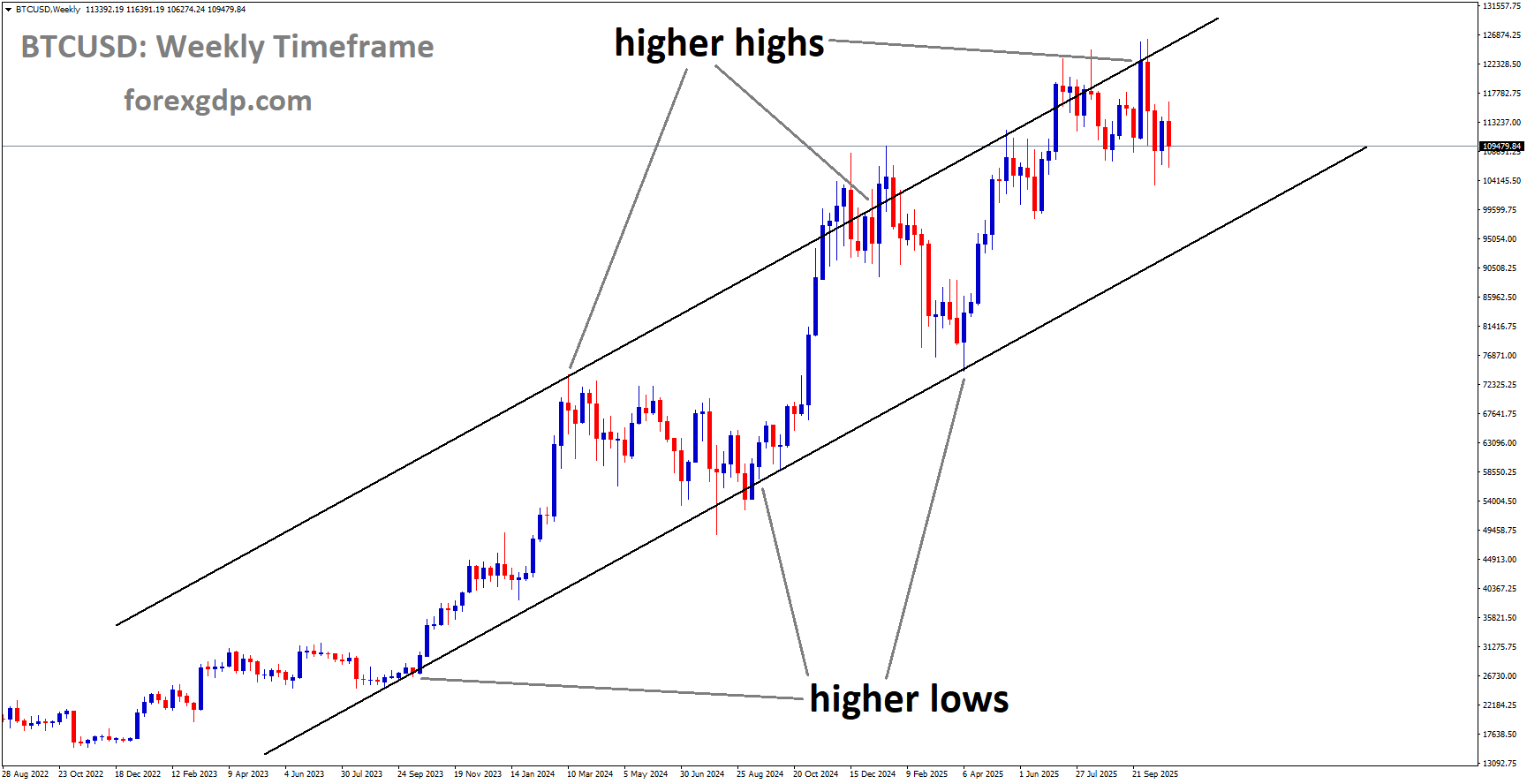
BTCUSD is moving in an uptrend channel
However, optimism must be balanced with caution. While both leaders signaled positive intentions, real progress will depend on consistent follow-through. Agreements on paper are only as good as the actions that back them up. For now, the world waits to see whether this diplomatic momentum continues—or fades away as just another temporary truce.
Final Summary
President Donald Trump’s meeting with Chinese President Xi Jinping in South Korea marked a significant moment in global diplomacy. At a time of rising economic uncertainty, both leaders showed willingness to cooperate and ease tensions that had unsettled markets worldwide. Their talks hinted at possible trade compromises, policy adjustments, and renewed commitment to long-term stability.
While no single meeting can solve years of complex trade disputes, this summit offered hope. It reminded the world that progress begins with dialogue—and that even the biggest economic rivals can find common ground when mutual benefit is at stake. The world now watches closely, hoping this spirit of collaboration continues to shape the future of international trade.