

Money has a funny way of revealing who we really are. Put a little cash on the line and suddenly calm, rational adults turn into emotional rollercoasters. One good week feels like genius. One bad move feels personal. Investing isn’t just about charts, numbers, or market timing. It’s about behavior, discipline, and knowing when to step back before you hurt yourself financially.
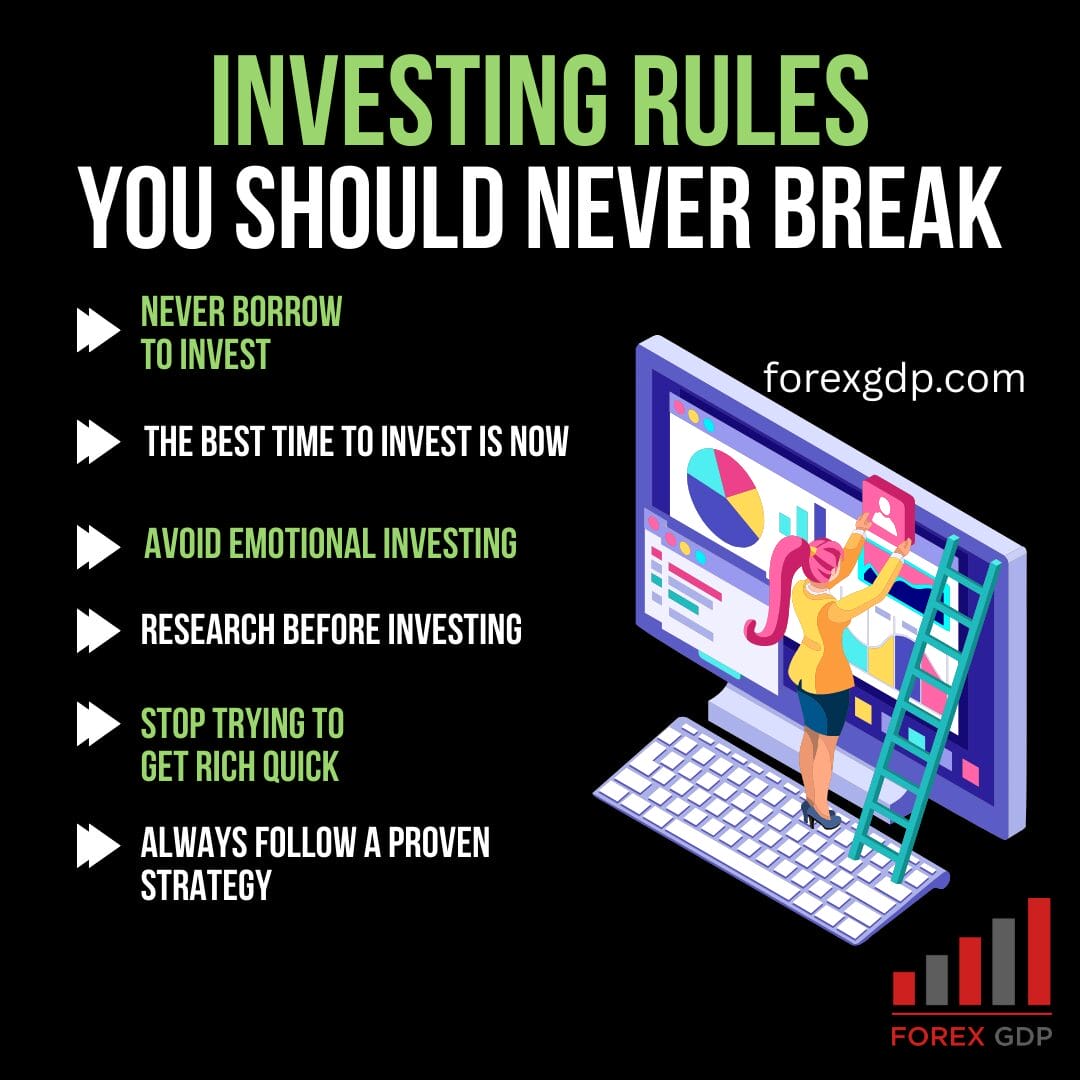
The image you’re looking at isn’t shouting flashy promises or overnight success. It’s doing the opposite. It’s reminding you of rules that sound boring, even annoying, but quietly protect you from disaster. These are the rules people usually ignore right before they lose money. Let’s talk about them like real humans, not financial robots.
The Mental Game Behind Smart Investing
Before money ever grows, the mindset behind it needs to mature. Most investment mistakes don’t come from lack of information. They come from impatience, fear, ego, and unrealistic expectations. The market doesn’t care about your feelings, your bills, or your timeline. It only responds to discipline.
Smart investing starts in your head long before it shows up in your bank account. If you don’t control your behavior, no strategy in the world will save you.
Never Borrow to Invest
Borrowing money to invest feels tempting when opportunity knocks loudly. A hot stock, a trending crypto, or a “can’t-miss” forex setup can make debt look harmless. It isn’t. Debt turns investing into gambling with someone else’s money, and the pressure changes everything.
When borrowed money is involved, every market dip feels heavier. Every loss stings more. Instead of thinking clearly, you start chasing exits and forcing trades. The market senses desperation the way sharks sense blood.
Debt Changes Your Decision-Making
Debt doesn’t just sit quietly in the background. It whispers constantly. It pushes you to make rushed choices and abandon logic. Even strong strategies collapse when panic sneaks in through financial obligation.
Borrowing adds a clock to your investments. Markets don’t respect deadlines, and forcing returns on borrowed time usually ends badly.
Freedom Comes From Investing What You Can Afford
There’s a calm confidence that comes from investing money you can afford to lose. You sleep better. You think clearer. You’re patient when others are frantic.
This freedom allows you to wait for better opportunities instead of jumping at every shiny object. Real growth loves patience, not pressure.
Avoid Emotional Investing
Emotions are expensive. Fear makes you sell too early. Greed makes you hold too long. Hope convinces you a bad trade will magically fix itself. Investing while emotional is like driving in a storm with fogged windows.

The market rewards clarity, not feelings. Emotional investors rarely follow their own plans, even if those plans were solid to begin with.
Fear and Greed Are Silent Account Killers
Fear doesn’t scream. It nudges. It convinces you to “just be safe” at the worst possible moment. Greed works the same way, whispering that this time is different.
Both emotions disguise themselves as logic. That’s why they’re dangerous. By the time you realize what happened, the damage is already done.
Detachment Is a Skill, Not a Personality Trait
You don’t need to be cold or emotionless to invest well. You just need boundaries. Setting rules before entering a trade protects you from yourself later.
Detachment is built through consistency. The more you follow your plan, the quieter emotions become.
Stop Trying to Get Rich Quick
The fastest way to lose money is chasing fast money. Every market crash is littered with people who thought they found a shortcut. Wealth doesn’t come from sprints. It’s built through steady, often boring progress.
Quick riches stories sell well because they spark hope. Reality doesn’t work that way, and the market is ruthless with dreamers who ignore fundamentals.
Shortcuts Usually Lead to Dead Ends
Get-rich-quick schemes rely on urgency and excitement. They don’t encourage research or patience. They pressure you to act now, before you think.
True investing gives you time. If something demands immediate action, it’s often hiding something ugly underneath.
Slow Growth Builds Strong Foundations
Slow growth compounds quietly. It doesn’t make headlines, but it builds resilience. Over time, consistency beats intensity every single time.
Strong portfolios aren’t built in hype cycles. They’re built through discipline that feels almost boring.
Timing, Strategy, and Research Matter More Than Luck
Luck might help once. Strategy helps repeatedly. Markets reward preparation, not guesses. The image reminds us that success isn’t about being early or late, but about being consistent and informed.
Smart investors don’t wait for perfect moments. They create habits that work in any market environment.
The Best Time to Invest Is Now


Waiting for the “right” time often means never starting. Markets are unpredictable by nature, and perfect conditions don’t exist. Time in the market usually matters more than timing the market.
Delaying investments because of fear or overthinking costs more than small market fluctuations ever will.
Waiting Feels Safe but Costs Opportunity
Sitting on the sidelines feels comfortable. There’s no risk, no loss, no stress. But there’s also no growth. Inflation doesn’t wait for confidence.
Every year you delay is a year compounding could have worked in your favor.
Consistency Beats Perfect Timing
Consistent investing smooths out volatility. You buy during highs, lows, and everything in between. Over time, the average works in your favor.
Trying to predict exact entry points often leads to missed opportunities and frustration.
Research Before Investing
Blind investing is expensive tuition. Research doesn’t guarantee success, but it dramatically reduces avoidable mistakes. Understanding what you’re putting money into creates confidence and patience.
Research turns noise into clarity. It helps you ignore hype and focus on substance.
Knowledge Builds Conviction
When you understand an investment, you’re less likely to panic during downturns. Conviction allows you to stay the course when others flee.
Without research, every dip feels like a warning sign, even when it isn’t.
Surface-Level Information Isn’t Enough
Headlines and social media opinions barely scratch the surface. Real research takes effort, time, and sometimes discomfort.
But that effort pays dividends in better decisions and fewer regrets.
Discipline Is the Backbone of Long-Term Success
Discipline isn’t exciting, but it’s powerful. It’s what separates investors who survive downturns from those who disappear. Rules exist to protect you when emotions run high and clarity runs low.
Following proven principles keeps you grounded when markets test your patience.
Always Follow a Proven Strategy
Jumping between strategies is like changing diets every week and wondering why nothing works. Consistency allows you to measure results and improve intelligently.

A proven strategy doesn’t mean perfect. It means tested, understood, and aligned with your goals.
Strategy Creates Structure
Structure removes guesswork. It tells you when to act and when to stay still. Without structure, decisions become emotional reactions.
A clear strategy turns chaos into manageable steps.
Trust Is Earned Over Time
Trusting a strategy comes from seeing it work across different conditions. That trust prevents impulsive changes during temporary setbacks.
Abandoning a plan too early is one of the most common investing mistakes.
Patience Is an Underrated Advantage
Patience doesn’t feel productive, but it’s often the most profitable action. Markets move in cycles, and those who wait usually outperform those who chase.
Impatience forces action. Patience allows opportunities to mature.
Markets Reward Those Who Can Wait
Short-term noise fades. Long-term trends remain. Patient investors benefit from compounding, dividends, and recovery cycles.
Those who panic miss rebounds they waited years to see.
Doing Nothing Is Sometimes Doing Everything Right
Not every moment requires action. Sometimes the smartest move is staying put.

Resisting unnecessary trades preserves capital and mental energy.
Final Thoughts on Playing the Long Game
Investing isn’t about brilliance. It’s about avoiding stupid mistakes long enough for good decisions to compound. The rules shown in the image aren’t flashy, but they’re powerful. They protect you from debt-fueled pressure, emotional sabotage, reckless shortcuts, and undisciplined behavior.
When you respect these principles, investing becomes less stressful and more sustainable. You stop reacting and start building. Wealth grows quietly when discipline leads and ego stays out of the way.
FAQs
1.Why is borrowing to invest considered so dangerous?
Because debt adds pressure, urgency, and emotional weight that often lead to poor decisions and forced exits.
2.Is it really bad to invest based on emotions sometimes?
Emotions cloud judgment. Even small emotional decisions can compound into large losses over time.
3.Can slow investing really outperform fast strategies?
Yes. Slow, consistent investing benefits from compounding and reduces the risk of catastrophic mistakes.
4.How much research is enough before investing?
Enough to understand what you’re investing in, why it exists, and how it behaves during market stress.
5.What if my strategy stops working?
Review it calmly. Adjust with intention, not panic. Proven strategies evolve; they aren’t abandoned overnight.