

Rethinking What a “Perfect Asset” Really Means
Every generation gets sold a different dream. One decade it’s gold, the next it’s tech stocks, then crypto rides in like a rebellious teenager promising freedom and chaos in equal measure. But if you strip away the noise, the perfect asset has always shared the same DNA. It doesn’t scream for attention. It doesn’t beg you to time the market. It quietly works, day after day, whether you’re paying attention or not.
The idea of a perfect asset isn’t about being flashy. It’s about being reliable when everything else feels uncertain. When markets wobble, jobs feel fragile, and inflation nibbles at savings, the perfect asset behaves like a calm adult in the room. It generates cash, grows over time, and doesn’t demand your constant emotional energy.
People often confuse excitement with quality. They chase fast gains, only to discover that fast losses travel even quicker. The perfect asset doesn’t seduce you with adrenaline. It offers something far more valuable: peace of mind. And honestly, in today’s world, that’s priceless.
Why Most Assets Fail the “Perfect” Test
Most investments look attractive on paper until real life gets involved. Stocks can crash overnight. Businesses require endless decisions. Side hustles turn into second jobs that quietly steal weekends. Even supposedly passive investments often come with hidden stress, complexity, or volatility.
The perfect asset avoids these traps. It doesn’t demand brilliance or constant intervention. You don’t need to wake up at dawn to monitor it or panic at midnight because of breaking news. It simply does what it’s designed to do.
Too many assets fail because they rely on optimism instead of structure. They depend on someone else’s behavior, market moods, or political winds. When those change, the asset collapses like a house of cards. The perfect asset is built differently. It stands even when conditions aren’t ideal.
The Quiet Power of Boring Wealth
Boring wealth doesn’t trend on social media. It doesn’t inspire screenshots or viral posts. But boring wealth pays bills, funds lifestyles, and builds legacies. It’s the kind of wealth that whispers instead of shouts.
There’s something deeply underrated about consistency. A predictable stream of income might not impress strangers, but it changes how you live. You make decisions from confidence instead of fear. You invest from strength instead of desperation. The perfect asset leans heavily into this quiet power.
Once you experience steady cash flow, speculation loses its charm. You stop gambling and start building. That’s when investing shifts from entertainment into strategy.
Consistent Cash Flow: The Backbone of Real Wealth
Cash flow is oxygen. Without it, even the most valuable asset can suffocate. A perfect asset understands this truth at its core. It doesn’t make you wait endlessly for appreciation while draining your patience. It rewards you along the way.
Consistent cash flow changes your relationship with money. Instead of hoping for future gains, you receive value in the present. That difference alone can reshape your entire financial mindset.
Why Predictable Income Beats One-Time Wins
A one-time win feels great. A predictable income feels safe. Safety might sound boring, but it’s the foundation of freedom. When income shows up regularly, life feels less fragile.
Predictable cash flow allows planning without anxiety. You can reinvest, spend, or save with intention instead of guesswork. It also creates momentum. Each payment reinforces confidence, reminding you that the system works.
Big wins are intoxicating but unreliable. Cash flow is humble and dependable. Over time, dependability always wins.
Cash Flow as Emotional Stability
Money isn’t just math. It’s deeply emotional. Irregular income keeps your nervous system on edge. You celebrate one month and panic the next. That emotional roller coaster quietly erodes decision-making.

A steady stream of income smooths those highs and lows. It creates emotional stability, which leads to better choices. You stop reacting and start thinking long-term.
The perfect asset understands human psychology. It doesn’t just pay you financially; it pays you mentally.
How Cash Flow Buys Time, Not Just Comfort
Time is the real currency. Cash flow buys it back piece by piece. When income doesn’t depend entirely on your daily labor, your schedule loosens. You regain hours that once belonged to obligation.
That time can be reinvested into health, family, learning, or simply rest. The perfect asset quietly returns something far more valuable than money: control over your life.
Long-Term Appreciation Without the Stress
Growth matters, but growth alone isn’t enough. The perfect asset grows without demanding your constant supervision. It appreciates naturally, like a tree that thickens year after year without daily encouragement.
Long-term appreciation isn’t about dramatic spikes. It’s about slow, reliable expansion. That kind of growth compounds quietly, often unnoticed until it reaches undeniable scale.
Why Patience Outperforms Brilliance
You don’t need to be brilliant to build wealth. You need patience. The perfect asset rewards those who can wait without worrying.
Short-term thinking invites mistakes. Long-term thinking allows imperfections. Appreciation over time forgives small errors and smooths out temporary setbacks.
When an asset appreciates steadily, it aligns with human reality. Life isn’t linear, and neither are markets. Patience gives both room to breathe.
Compounding as a Silent Partner
Compounding is sneaky. It works in the background while you’re busy living. The perfect asset doesn’t interrupt your life to remind you it’s growing.
Year after year, small gains stack on top of each other. Eventually, the growth feels disproportionate to the effort involved. That’s when people call it luck, forgetting that time did the heavy lifting.
Compounding rewards consistency, not intensity. That’s why it favors the perfect asset so generously.
Reducing Taxes Without Playing Games
Taxes are one of life’s certainties, but how much you pay isn’t always fixed. The perfect asset understands this and works with the system instead of fighting it.
Reducing taxes isn’t about loopholes or tricks. It’s about structure. When an asset is designed intelligently, it naturally minimizes unnecessary tax drag.
Why Tax Efficiency Is a Form of Growth


Every dollar saved in taxes is a dollar that keeps working for you. That’s growth without risk. The perfect asset quietly protects more of what it earns.
Many investors obsess over returns while ignoring taxes. That’s like filling a bucket without noticing the hole at the bottom. Tax efficiency seals that leak.
Over time, small tax advantages compound into massive differences. The perfect asset understands this math intuitively.
The Psychological Relief of Smarter Taxation
Taxes create resentment when they feel wasteful. When an asset is tax-efficient, that resentment fades. You feel aligned with the system instead of punished by it.
This psychological relief matters. It keeps you engaged and optimistic rather than bitter. The perfect asset reduces friction, not just expenses.
Passive by Design, Not by Marketing
The word “passive” gets abused. Many assets promise passivity but deliver responsibility. The perfect asset doesn’t rely on marketing buzzwords. It earns the label honestly.
True passivity means minimal ongoing effort. It means the system functions without your constant involvement. That’s rarer than people think.
The Difference Between Low Effort and No Effort
Nothing is truly zero effort. Even the perfect asset requires attention occasionally. The difference lies in frequency and intensity.
Low-effort assets respect your time. They don’t interrupt your life unnecessarily. When action is required, it’s manageable, not overwhelming.
That balance is what separates genuine passive income from disguised labor.
Why Passive Assets Protect Against Burnout
Burnout isn’t just physical. It’s financial. Managing too many moving parts drains mental energy.
A passive asset simplifies life. It reduces decision fatigue and preserves focus. Over time, this protection becomes invaluable.
The perfect asset doesn’t just make money. It preserves your capacity to enjoy it.
Tangible Value in an Intangible World
In a world increasingly dominated by digital promises, tangible value feels grounding. The perfect asset has weight. Even if it’s abstract, its value is anchored in reality.
Tangible assets resist delusion. They remind you that value should be rooted in something real, not just belief or hype.
Why Tangibility Builds Trust
Trust grows when you can point to something concrete. Tangible value provides that anchor.

When markets panic, tangibility steadies perception. You’re less likely to make irrational decisions when your asset feels real.
The perfect asset offers this psychological anchor, even during uncertainty.
Stability in a Fast-Changing Economy
Economies shift rapidly. Trends come and go. Tangible value endures.
The perfect asset doesn’t rely on cultural momentum. It relies on fundamentals. That’s why it survives transitions that destroy trend-based investments.
The Perfect Asset Mindset
Owning the perfect asset changes how you think. You stop chasing. You start selecting. You evaluate opportunities through a calmer lens.
This mindset shift is subtle but powerful. You become less reactive and more intentional.
From Speculation to Strategy
Speculation thrives on excitement. Strategy thrives on clarity.
The perfect asset encourages strategy. It rewards foresight and punishes impulsiveness less harshly.
Over time, this changes your identity as an investor. You become a builder, not a gambler.
Why Simplicity Often Wins
Complexity feels sophisticated, but simplicity scales better. The perfect asset embraces simplicity.
Fewer variables mean fewer surprises. Fewer surprises mean better sleep. That trade-off is worth far more than people admit.
Final Thoughts: Building Wealth That Actually Lasts
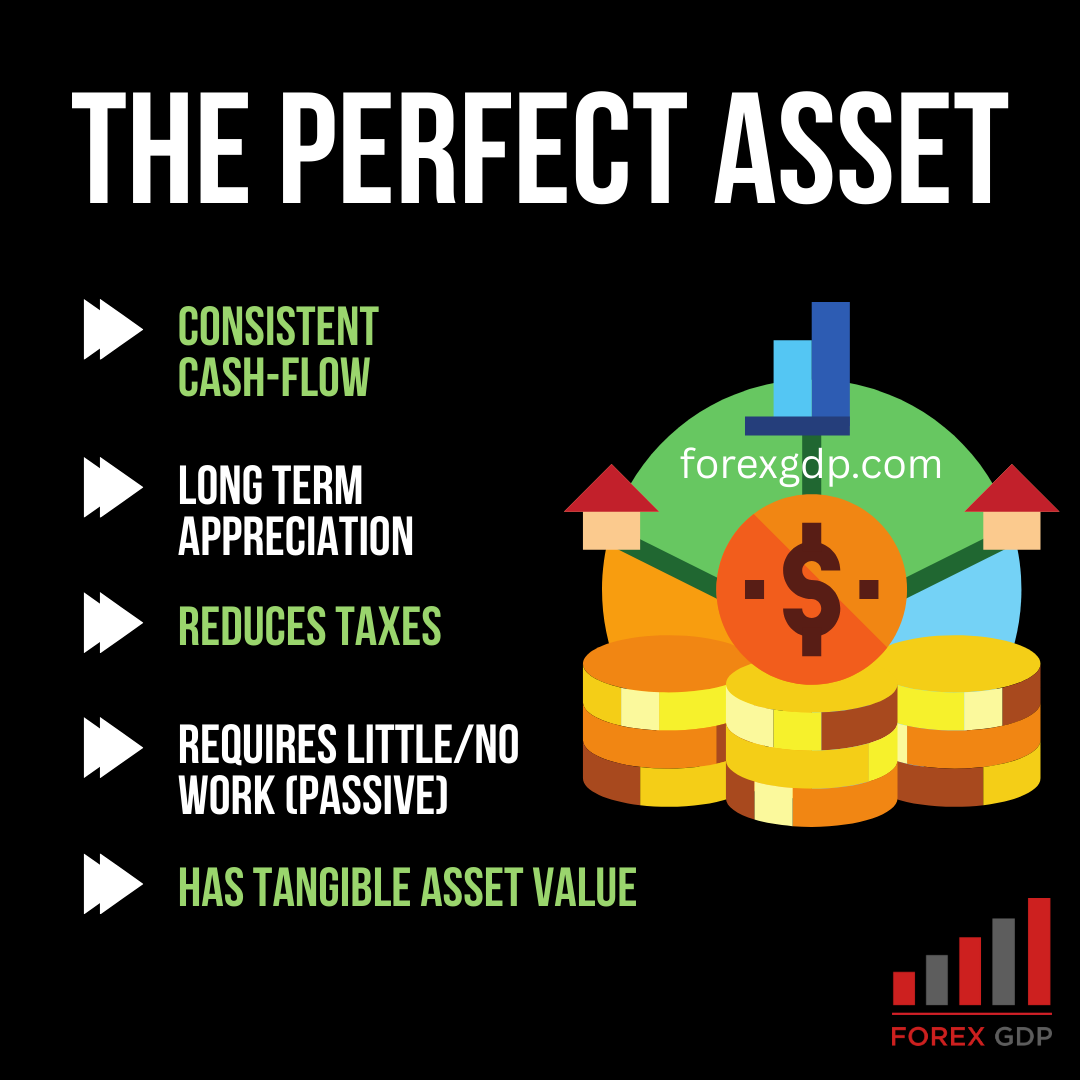
The perfect asset isn’t a fantasy. It’s a framework. Consistent cash flow, long-term appreciation, reduced taxes, minimal effort, and tangible value aren’t random benefits. They’re deliberate design choices.
When an asset aligns with how humans actually live and think, it becomes sustainable. It doesn’t exhaust you or demand constant attention. It integrates into your life instead of competing with it.
Wealth isn’t about winning once. It’s about not losing over time. The perfect asset understands that truth better than anything else.
Frequently Asked Questions
1.What makes an asset truly “perfect”?
A perfect asset balances income, growth, and stability without demanding constant involvement or emotional stress.
2.Is consistent cash flow more important than appreciation?
For most people, yes. Cash flow provides stability and flexibility, while appreciation adds long-term upside.
3.Can a passive asset really stay passive long-term?
Nothing is entirely hands-off, but well-designed assets require minimal effort compared to active investments.
4.Why does tax efficiency matter so much?
Because money lost to taxes can’t compound. Keeping more of what you earn accelerates long-term growth.
5.Are tangible assets safer than digital ones?
They often feel safer because their value is anchored in real-world demand rather than pure speculation.