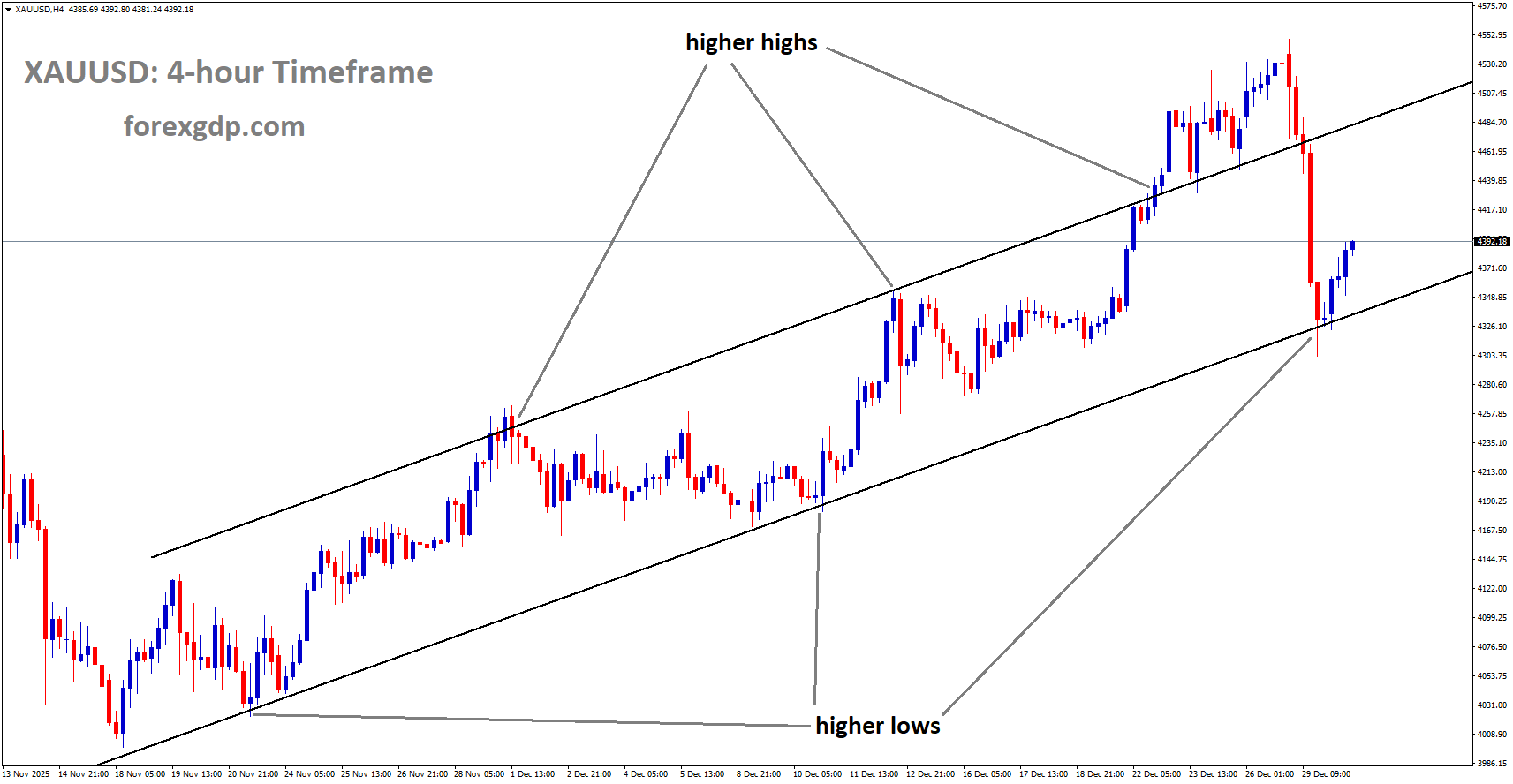
XAUUSD is moving in an uptrend channel, and the market has rebounded from the higher low area of the channel
Gold started Tuesday’s early European session on a steadier note, moving back into positive territory after a rough previous day. The rebound comes at a time when many traders are wrapping up positions, locking in gains, and adjusting portfolios before the New Year holiday period. That seasonal shift often leads to calmer markets, but it can also create sudden swings when big moves trigger a wave of reactions.
While gold recently faced strong selling pressure, several forces are still working in its favor. Expectations that US interest rates could move lower next year, along with ongoing global uncertainty, may help support demand for this classic safe-haven asset.
Why Gold Rebounded After a Sharp Drop
The recent pullback in gold was notable because it happened quickly and with a lot of momentum. When gold falls sharply in a single session, the next trading day often becomes a “rethink moment” for the market. Some traders step back in to buy after a drop, while others view the decline as an opportunity to rebalance rather than abandon gold altogether.
This kind of bounce does not always mean a full turnaround is underway. Sometimes it’s simply a mix of bargain-hunting, short-term positioning, and profit-taking cooling off after an intense selloff. Still, the fact that gold managed to regain some ground suggests buyers haven’t disappeared. Instead, they are becoming more selective about timing and price levels, especially as liquidity thins into the holidays.
How Margin Changes Can Shake the Market
One of the biggest drivers behind the recent selling was a change in trading conditions for futures contracts. The Chicago Mercantile Exchange (CME) Group raised margin requirements for gold, silver, and other metals, meaning traders must put up more cash to hold certain positions.
Why margins matter to everyday market moves
Margin rules may sound like a technical detail, but they can have real-world effects on price action:
-
Higher margins can force traders to reduce positions. If traders suddenly need more cash to maintain exposure, some will scale back.
-
It can trigger fast profit-taking. Traders who are sitting on gains may decide it’s smarter to close out rather than commit more funds.
-
It encourages portfolio reshuffling. Funds and institutions often rebalance when carrying costs or capital requirements change.
These shifts can create a chain reaction. As some participants sell to meet new requirements, prices can dip, which then prompts more selling from others who want to protect profits or reduce risk. This doesn’t necessarily reflect a change in long-term confidence in gold—it can simply be a mechanical response to new rules.
Rate-Cut Hopes and the Cost of Holding Gold
Even after a bout of selling, gold often finds support when markets believe interest rates may fall in the future. The basic reason is simple: gold doesn’t pay interest. When rates are high, investors may prefer assets that generate yield. When rates are expected to move lower, the “opportunity cost” of holding gold becomes less of a drawback.
Right now, many investors are thinking ahead to the path of US monetary policy in the coming year. If the Federal Reserve leans toward rate cuts, that can improve gold’s appeal, especially for those who use it as a long-term store of value or a hedge against uncertainty.
A market waiting for clarity from the Fed

Traders are also paying close attention to signals from the Federal Reserve, including the release of Federal Open Market Committee (FOMC) meeting minutes. These minutes can influence expectations around future decisions, not because they announce anything new, but because they reveal how policymakers discussed risks like inflation, growth, employment, and financial conditions.
When markets are already positioned around a certain narrative—like rate cuts ahead—even small shifts in tone can matter. A more cautious view could weigh on gold temporarily, while a more open stance toward easing could support it.
Geopolitics and Safe-Haven Demand
Gold has a long history as a safe-haven asset, meaning it often attracts interest when global conditions feel unstable. Recently, geopolitical tension has remained part of the market backdrop, keeping investors alert to sudden headline risk.
One developing story involved Russia accusing Ukraine of launching a drone strike targeting a Russian presidential residence in northern Russia, according to reporting from Reuters. Ukraine rejected the claims, and officials suggested the accusations were being used as justification for further military action. Situations like this can quickly impact market sentiment because they introduce uncertainty about what might happen next—whether tensions could escalate, diplomacy could stall, or broader regional risks could grow.
Gold does not need a crisis to rise, but it often benefits when uncertainty increases. For many investors, it serves as a kind of insurance—something they want to hold when confidence in the global outlook is shaky.
US Economic Data Adds Another Layer
Alongside geopolitics and Fed expectations, US economic data continues to shape market thinking. A recent report showed US pending home sales rose 3.3% month-over-month in November, building on an upwardly revised gain in October. The reading came in stronger than expected and marked the highest level since February 2023.
Housing data matters because it can influence how investors view the strength of the economy. If activity is holding up well, it may reduce urgency for aggressive rate cuts. On the other hand, if growth looks uneven or fragile, it may strengthen the case for lower rates in the future. Gold traders often respond not only to the data itself, but to what it might mean for the Fed’s next move.
Concerns About Federal Reserve Independence
Another theme in the market has been political pressure and public commentary related to interest rates. US President Donald Trump said last week that he expects the next Fed Chair to keep interest rates low and not “disagree” with him. Comments like these can raise investor concerns about the Federal Reserve’s independence.
Why does that matter for gold? Because gold often performs well when people are worried about institutional credibility, policy stability, or the risk of decisions being driven by politics instead of economic conditions. Even if no policy change happens immediately, the perception of potential influence can add to uncertainty—one of the key ingredients that can boost safe-haven demand.
What Traders Are Watching Next
With the New Year holiday period approaching, trading volumes are expected to remain lighter than usual. Thin liquidity can magnify market moves, making prices more sensitive to headlines, surprise data, or shifts in positioning.
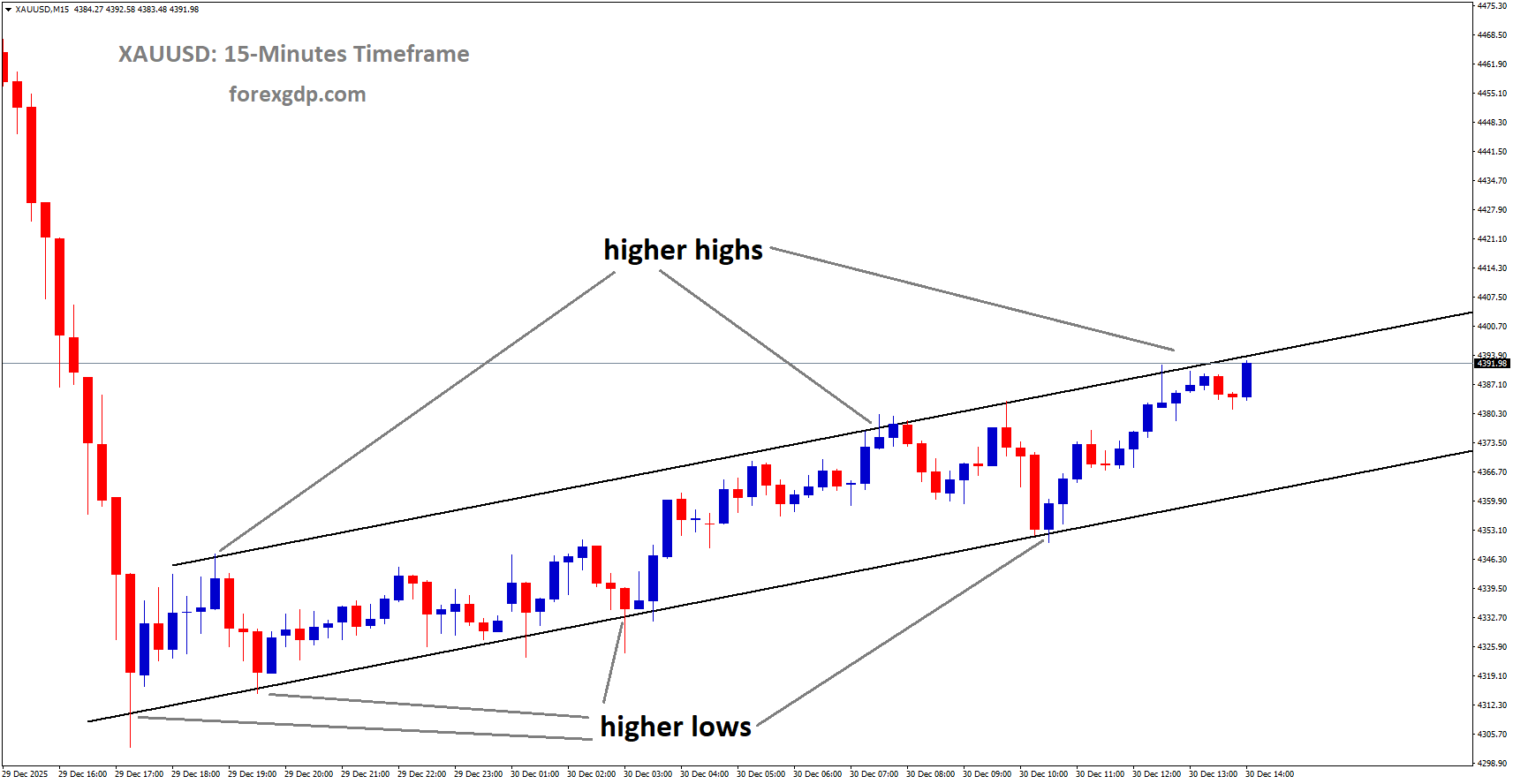
XAUUSD is moving in an uptrend channel, and the market has reached a higher high area of the channel
Here are a few key drivers traders are tracking in the near term:
-
FOMC minutes: Any hint about how policymakers view inflation and growth could sway rate expectations.
-
Rate outlook: Markets continue to weigh the likelihood of future easing, which can support gold if expectations grow stronger.
-
Geopolitical developments: New headlines can quickly change risk sentiment, especially during thin holiday trading.
-
Positioning and rebalancing: End-of-year adjustments can create abrupt moves that do not always reflect long-term trends.
Summary
Gold has steadied after a sharp selloff, supported by a mix of bargain-hunting, year-end portfolio shifts, and renewed attention to future US rate cuts. Higher margin requirements for metals futures helped spark heavy profit-taking, but expectations for lower interest rates next year could reduce the downside pressure on gold over time. Meanwhile, geopolitical tensions and concerns about policy credibility are keeping safe-haven demand in the conversation. With holiday-thinned trading and important Fed communication ahead, the next moves may depend as much on market tone and positioning as on any single headline.