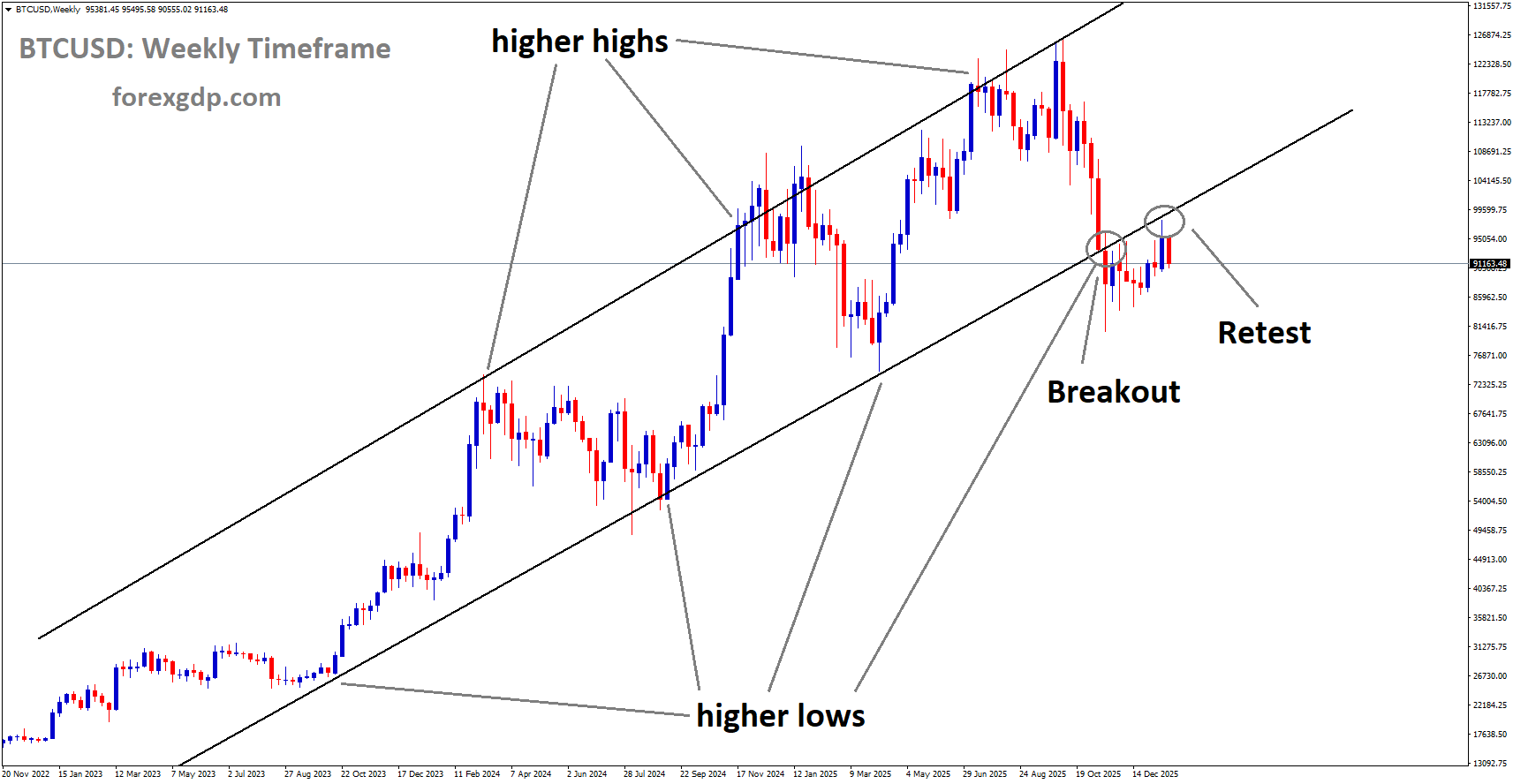
BTCUSD reached the retest area of the broken uptrend channel
BTCUSD: Why January May Be the Turning Point for Bitcoin’s Next Move
Bitcoin consolidation phases can feel stressful. Prices stop moving the way traders want. The market turns quiet, then suddenly volatile again. Many people start second-guessing their decisions, especially when headlines swing between fear and excitement.
But consolidation isn’t always a bad thing. In fact, it can be one of the most important parts of Bitcoin’s market cycle. These slower periods often act like a “reset” for the market, where short-term speculation cools down and long-term investors quietly step in.
Right now, several signs suggest January could become a key month for Bitcoin. Some analysts believe the market may be moving into a critical consolidation phase that could help form a local bottom before a stronger recovery later on.
Why Bitcoin Consolidation Feels So Uncomfortable
Consolidation is the part of the market cycle where Bitcoin stops trending clearly up or down. Instead, it moves sideways, with short bursts of price swings that don’t seem to lead anywhere.
This phase can be frustrating because:
-
Traders struggle to find clean setups
-
Investors feel unsure about whether to buy more or wait
-
Momentum fades, and excitement disappears
-
Every small move feels like it could be “the start of something” but often isn’t
Still, this discomfort has a purpose. Consolidation often shakes out emotional decisions. It forces the market to slow down and rebuild confidence before the next major move.
For investors who focus on long-term growth, consolidation can actually be useful. It creates a calmer environment for disciplined capital management, especially for people who use structured accumulation strategies instead of trying to time every move perfectly.
January’s Setup: Three Signals That Bitcoin May Be Near a Local Bottom
Analysts are watching January closely because multiple data sources are lining up in a way that has historically appeared during important consolidation periods. These signals come from three main areas:
-
Long-term market trend behavior
-
Network activity and adoption signals
-
Exchange activity showing changes in whale selling pressure
None of these signals guarantees an immediate rebound. But together, they may point to a market that is entering a healthier, more stable phase—one that often comes before a longer recovery.
Signal 1: Bitcoin Is Approaching a Long-Term Accumulation Zone
One of the first signs comes from long-term trend tracking based on moving averages. While many traders use moving averages for short-term decisions, long-term investors often look at them differently.
Instead of asking, “Is Bitcoin bullish or bearish today?” the bigger question becomes:
Is Bitcoin undervalued compared to its long-term trend?
According to insights shared by the on-chain analytics platform Alphractal, Bitcoin has historically entered strong long-term accumulation zones when its price falls below a wide range of daily moving averages. This range includes short-term averages and stretches out to very long cycle averages.
In simple terms, this setup often happens when Bitcoin becomes “oversold” compared to its long-term path. When price drops under many key averages at once, it can create what some investors view as a safer accumulation region for long-term buying.
At the moment, Bitcoin has already fallen below most of these averages since last November. The one major level still holding is the longest cycle moving average being tracked in this model.
Alphractal suggests that if Bitcoin moves below that final long-term average, it could enter what they describe as one of the strongest historical zones for steady accumulation strategies like dollar-cost averaging (DCA).
Why This Matters for Long-Term Investors
Even if Bitcoin does fall into this zone, it doesn’t automatically mean the market will reverse immediately. Historically, these conditions can last for months. That’s important because it sets expectations the right way.
This kind of environment is often less about catching the exact bottom and more about positioning gradually during a period when risk-to-reward becomes more attractive for long-term holders.
For disciplined investors, the value here is psychological as much as financial. A structured plan helps remove emotion from the process and avoids the trap of making decisions based on fear or hype.
Signal 2: Bitcoin Network Growth Is Extremely Low (And That Can Be a Turning Point)
The second signal comes from on-chain activity, specifically Bitcoin network growth. At first glance, low network growth sounds negative. If fewer new users are joining and activity is slowing down, it may feel like interest is fading.
But in Bitcoin’s history, this type of slowdown has often happened during consolidation periods—right before the market begins building strength again.
Swissblock, an investment fund and market intelligence provider, reported that Bitcoin’s network growth has dropped to levels not seen in years. At the same time, liquidity in the market appears to be weakening, meaning there’s less easy money flowing around.
This combination—weak activity and low liquidity—can create the conditions for a slow accumulation phase. It’s the kind of environment where hype disappears, but serious long-term positioning begins.
Swissblock pointed to a similar situation in 2022. During that period, network growth was also low, and liquidity was weak. Bitcoin spent time consolidating while network growth slowly began to recover. That recovery in adoption helped support the next meaningful market move.
The Key Piece Still Missing: Stronger Adoption Signals
Swissblock’s view also comes with an important reminder: a real recovery needs proof of renewed demand. Network growth must eventually rise again for the next major move to become sustainable.
In other words, consolidation alone isn’t enough. The market also needs signs that new users, new activity, and fresh interest are returning.
If network growth starts improving while the market remains stable, it can create a powerful setup for the next cycle. That’s why low growth isn’t always bearish—it can sometimes mark the quiet stage before momentum returns.
Signal 3: Whale Selling Pressure on Exchanges Has Dropped
The third signal comes from exchange data, especially behavior from large holders, often called whales.
When whales send large amounts of Bitcoin to exchanges, it can increase selling pressure. That doesn’t always mean they will sell immediately, but it often signals that supply is being positioned closer to the market.
Recently, analysts tracking CryptoQuant data noticed that whale flows into exchanges have dropped sharply over the past month, with a strong shift visible on Binance in particular.
Large inflows from transactions in the range of 100 BTC to over 10,000 BTC have fallen significantly compared to the heavy activity seen in late November 2025.
This matters because when whales reduce exchange deposits, it often means one of two things:
-
They are not looking to sell aggressively right now
-
They are waiting for better conditions before making big moves
Either way, reduced inflows can support a calmer market. Less sell-side pressure can make it easier for Bitcoin to stabilize, consolidate, and gradually rebuild strength.
Why Lower Whale Selling Can Support a Recovery
When selling pressure drops, the market doesn’t have to absorb as much supply. That can help prevent sharp breakdowns and can improve the odds of a steadier price structure.
It also improves confidence. Retail investors tend to feel safer when the market isn’t constantly reacting to large sell waves.

This doesn’t guarantee an immediate rally, but it can create a more supportive foundation for a future recovery—especially when combined with long-term accumulation signals and improving network trends.
What These Signals Suggest When Combined
Each signal on its own offers a useful piece of information. But the bigger picture becomes clearer when they are viewed together.
Right now, Bitcoin appears to be showing:
-
Price behavior consistent with long-term undervaluation zones
-
Network activity that matches previous accumulation phases
-
Reduced whale selling pressure on major exchanges
Together, these signals suggest Bitcoin may be entering a consolidation period that could help form a local bottom.
That doesn’t mean the market can’t drop further. It also doesn’t mean the bottom will be obvious in real time. But it does suggest the conditions are shifting toward a phase where long-term investors often become more active.
The Uncertainty Factor: Why a Perfect Bottom Call Is Still Impossible
Even with strong historical patterns, it’s important to be realistic. No dataset can predict the exact bottom price with certainty.
Bitcoin is influenced by much more than charts or on-chain activity. External events can change market behavior quickly, including:
-
Rising geopolitical tensions that impact global risk appetite
-
The return of tariff-related pressure that affects investor confidence
-
Policy uncertainty tied to changes in leadership at the U.S. Federal Reserve
These factors can shift sentiment across all markets, including crypto. And when sentiment changes fast, Bitcoin can react sharply in either direction.
That’s why disciplined investors often focus less on “calling the bottom” and more on managing risk through position sizing, time-based accumulation, and long-term conviction.
Summary: What January Could Mean for Bitcoin’s Next Phase
Bitcoin’s consolidation phases may feel slow and uncomfortable, but they often play an important role in the bigger market cycle. January is shaping up to be a key period because multiple signals are pointing toward a possible local bottom formation.
Long-term accumulation conditions appear to be developing, network growth is at unusually low levels that have historically preceded recovery phases, and whale selling pressure on exchanges has dropped significantly. Together, these trends suggest Bitcoin may be entering a healthier consolidation stage that can support a future rebound.
Still, no signal can guarantee an exact bottom, and broader economic and geopolitical uncertainty remains a major wildcard. For investors, the real advantage often comes from staying disciplined, managing risk carefully, and focusing on long-term strategy rather than short-term noise.
XAGUSD Could Jump Suddenly as Industrial Silver Demand Heats Up
Silver is back in the spotlight, and not just because it has been trending among investors. A new wave of attention is coming from a bold prediction by Robert Kiyosaki, the well-known author of Rich Dad Poor Dad. He believes the silver market is heading for a sudden and dramatic jump, driven by something he says the market is ignoring: real-world scarcity.

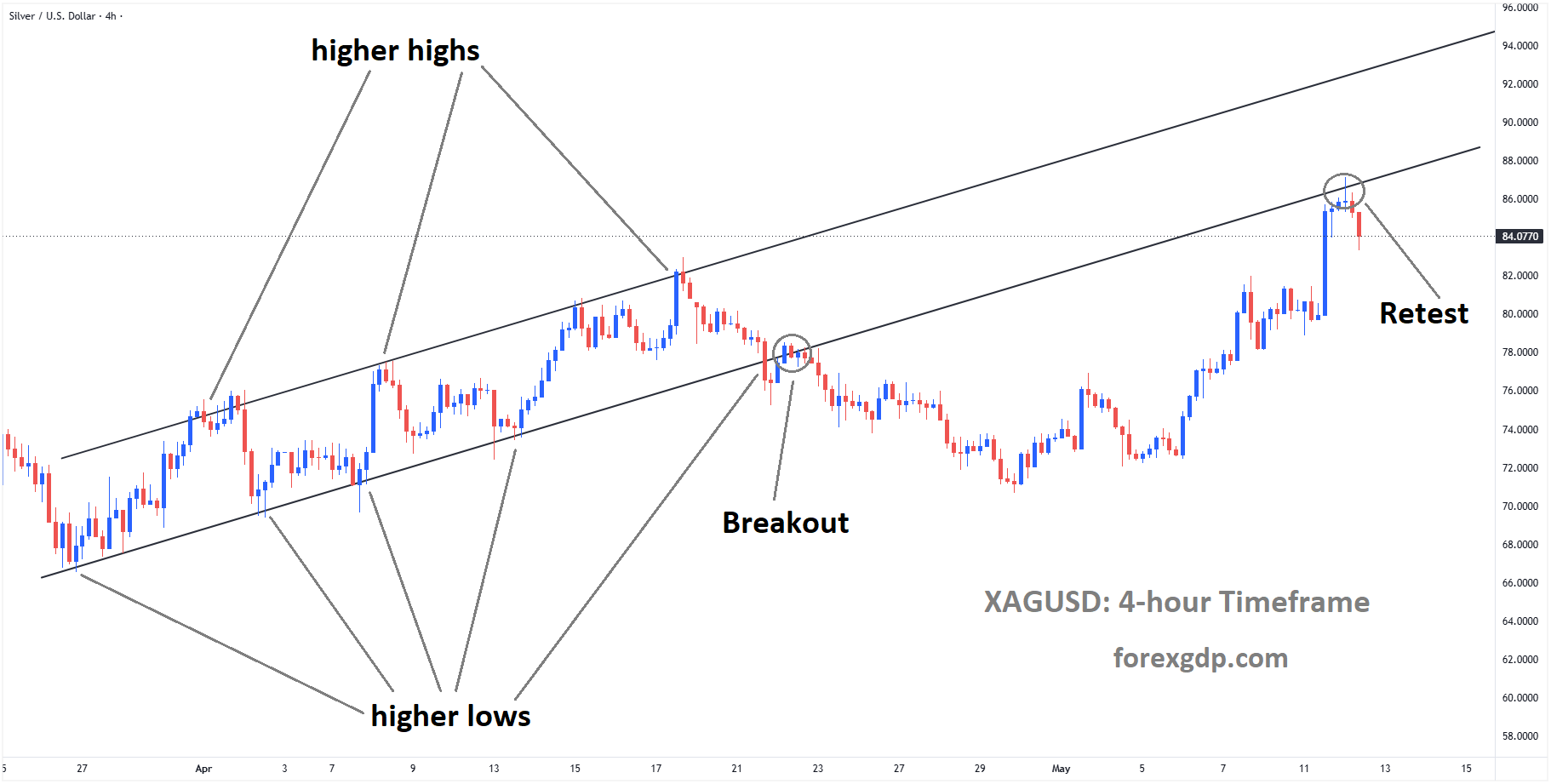
XAGUSD is moving in an uptrend channel, and the market has reached a higher high area of the channel
According to Kiyosaki, silver is not simply moving because of hype or short-term trading. He argues the metal is becoming harder to source at the exact moment industries need more of it than ever. Whether you agree with his price forecast or not, the bigger question remains: is silver truly being underpriced compared to how important it has become?
Why Robert Kiyosaki Thinks Silver Is Mispriced
Robert Kiyosaki shared his outlook on social media in mid-January 2026, saying he expects silver to surge quickly and sharply. His argument is simple: supply is tightening, demand is rising, and the market hasn’t fully caught up.
Kiyosaki’s message was direct and attention-grabbing. He claimed silver could “gap up” to a much higher level in a very short time, suggesting the market is not properly reflecting how difficult it may become to get physical silver.
This type of statement naturally gets people talking, because silver is not just another investment asset. It is also a working metal—one that gets used up in manufacturing and technology. That’s what makes the conversation different from typical commodity chatter.
The “Physical Silver” Story Behind the Prediction
One of the key ideas behind Kiyosaki’s claim is that physical silver supply is becoming strained. This isn’t about paper trading or digital contracts. It’s about the real metal that factories and manufacturers need to keep production running.
Silver is mined, refined, shipped, and then used in products across the world. When supply chains get tight, the problem doesn’t stay in one industry. It spreads.
In Kiyosaki’s view, the silver market is facing a structural shortage, meaning the gap between supply and demand isn’t a temporary issue that will quickly fix itself. He suggests it could be a longer-term imbalance that becomes more obvious over time.
Tesla and the Silver Shortage Rumor
Kiyosaki tied part of his prediction to a claim that Tesla is struggling to secure enough silver. That detail immediately caught attention because Tesla is one of the world’s most watched companies, and it sits at the center of several major industrial trends.
However, it’s important to separate what has been claimed from what has been officially confirmed. Tesla has not released a public statement verifying that it cannot obtain silver. So for now, this part of the story remains unconfirmed.
Still, the fact that people are even discussing silver procurement problems at major manufacturers shows how serious the issue could be if supply continues tightening.
Why Silver Matters More Than Many People Realize
A lot of people think of silver mainly as a precious metal, something that sits next to gold in the investing world. But silver has another identity that may be even more important today: it’s an industrial workhorse.
Silver is widely used in:

-
Electric vehicles
-
Solar panels
-
Electronics and semiconductors
-
Medical tools and specialized equipment
-
Advanced electrical components
Unlike some raw materials that can be replaced easily, silver is often used because it has unique properties that make it hard to substitute without sacrificing performance.
Silver’s role in clean energy and electronics
As the world builds more renewable energy systems and smarter electronics, silver demand naturally grows. Solar technology, for example, relies on silver in key components. And as electric vehicles become more common, demand pressure doesn’t go away—it increases.
This is one reason silver bulls argue the market is not just in a trend, but in a long-term shift.
Export Restrictions and Global Supply Pressure
Another reason silver supply fears are growing is the mention of export controls. Reports suggest that China has started requiring government licenses for silver exports beginning in early 2026. Even without diving into politics, this kind of policy change can have a big impact.
When a major supplier tightens control over exports, it can cause disruptions far beyond its borders. Manufacturers and buyers may rush to secure supply, while others worry about future availability.
This topic gained even more attention when Elon Musk reacted publicly, warning that silver is needed in many industrial processes. That kind of statement matters because it signals that industrial leaders are paying attention—not just traders.
Whether or not the restrictions create immediate shortages, the fear of reduced supply alone can shift how buyers behave. And in commodity markets, perception often influences demand just as much as reality.
Why Some Analysts Say the $107 Forecast Is Speculative
Kiyosaki’s prediction has drawn interest, but it has also brought plenty of skepticism. Many market watchers see the exact target and the short timeline as unrealistic.
That doesn’t mean silver can’t rise, but a sharp move in a matter of days is difficult to predict with confidence. Even in markets known for volatility, forecasting a specific price jump on a specific day is often viewed as more dramatic than dependable.
This is where the conversation splits into two groups:
-
Those who focus on the long-term fundamentals
-
Those who question the credibility of bold short-term calls
The Controversy Around Kiyosaki’s Market Predictions
Robert Kiyosaki is widely known for his views on money, investing, and financial independence. He has a loyal following, and many people respect his ability to spark discussion around financial topics.
At the same time, critics often point out that he has made multiple dramatic warnings about major crashes in past years that did not play out as expected. This history has made some investors cautious about taking his exact forecasts literally.
Still, even skeptical observers admit that his central point about silver demand is worth watching. Whether or not the market jumps exactly the way he predicts, the bigger issue remains: silver is essential, and global demand is not slowing down.
Silver’s Volatility: Opportunity and Risk
Silver has a reputation for sharp moves. It can rise fast, fall quickly, and surprise both bullish and bearish investors. This is one reason institutional analysts often warn retail traders to be careful.
When silver becomes a hot topic online, it can attract emotional decision-making. People may buy out of fear of missing out, or panic-sell during pullbacks. That cycle can be rough for anyone who isn’t prepared for sudden swings.
Why retail investors get caught off guard
Silver tends to move in bursts, especially when headlines about supply shortages or industrial demand go viral. That makes it easy for newcomers to assume the move will continue smoothly upward, when in reality it may not.
This is why many professionals focus less on dramatic daily predictions and more on the broader forces shaping the market.
The Long-Term Bull Case: Supply Limits vs. Rising Demand
Even if you ignore bold forecasts and online debates, silver still has a strong fundamental story behind it.
On the supply side, mine output is not always quick to respond to higher demand. Mining projects take time, refining capacity can be limited, and geopolitical issues can complicate global distribution.
On the demand side, silver isn’t just being bought as a store of value. It is being consumed by industries that rely on it to function. That kind of demand is different because it doesn’t disappear easily.
This combination—tight supply and steady industrial use—is why many long-term investors believe silver could remain important for years, not weeks.
What to Watch Next in the Silver Market
The most important thing isn’t whether a single price target is hit on a specific day. The bigger story is whether silver scarcity becomes visible in real-world supply chains.
Some signs investors and industry watchers may pay attention to include:
-
Changes in export policies from major suppliers
-
Manufacturing delays linked to material shortages
-
Rising competition between industrial buyers and investors
-
Increased public statements from major companies about sourcing issues
If those signals continue to build, silver may remain a headline commodity, especially as the world pushes deeper into electrification and renewable energy.
Why This Story Matters Beyond Investing
Silver isn’t just an “investment metal” anymore. It sits at the intersection of technology, manufacturing, and global supply chain stability. That makes it relevant to far more people than traders and commodity specialists.
If industrial silver supply tightens further, it could affect production costs and timelines in industries that are shaping the future—electric vehicles, clean energy, electronics, and more.
So even if you never plan to buy silver, this market is still worth watching. It may tell us a lot about where global demand is heading, and how prepared supply chains really are.
Summary: Silver Scarcity, Industrial Demand, and a Market Under Pressure
Silver is drawing renewed attention after Robert Kiyosaki predicted a sudden surge, arguing that the market is ignoring tightening physical supply. While his exact forecast remains controversial and highly speculative, the broader issues behind it are real: silver is critical for modern industry, demand continues to rise, and global supply pressures may be increasing. With export restrictions and growing industrial dependence on silver, the metal’s long-term outlook remains a major topic across both manufacturing and investing circles.
EURUSD climbs fast with the Dollar under pressure as EU-US tensions heat up
The EUR/USD pair has gained strong momentum over the past two days, rising more than 1% and moving toward the middle of the 1.1700s. This jump comes as the US Dollar weakens broadly, with investors reacting quickly to renewed political tension and trade uncertainty coming from Washington.
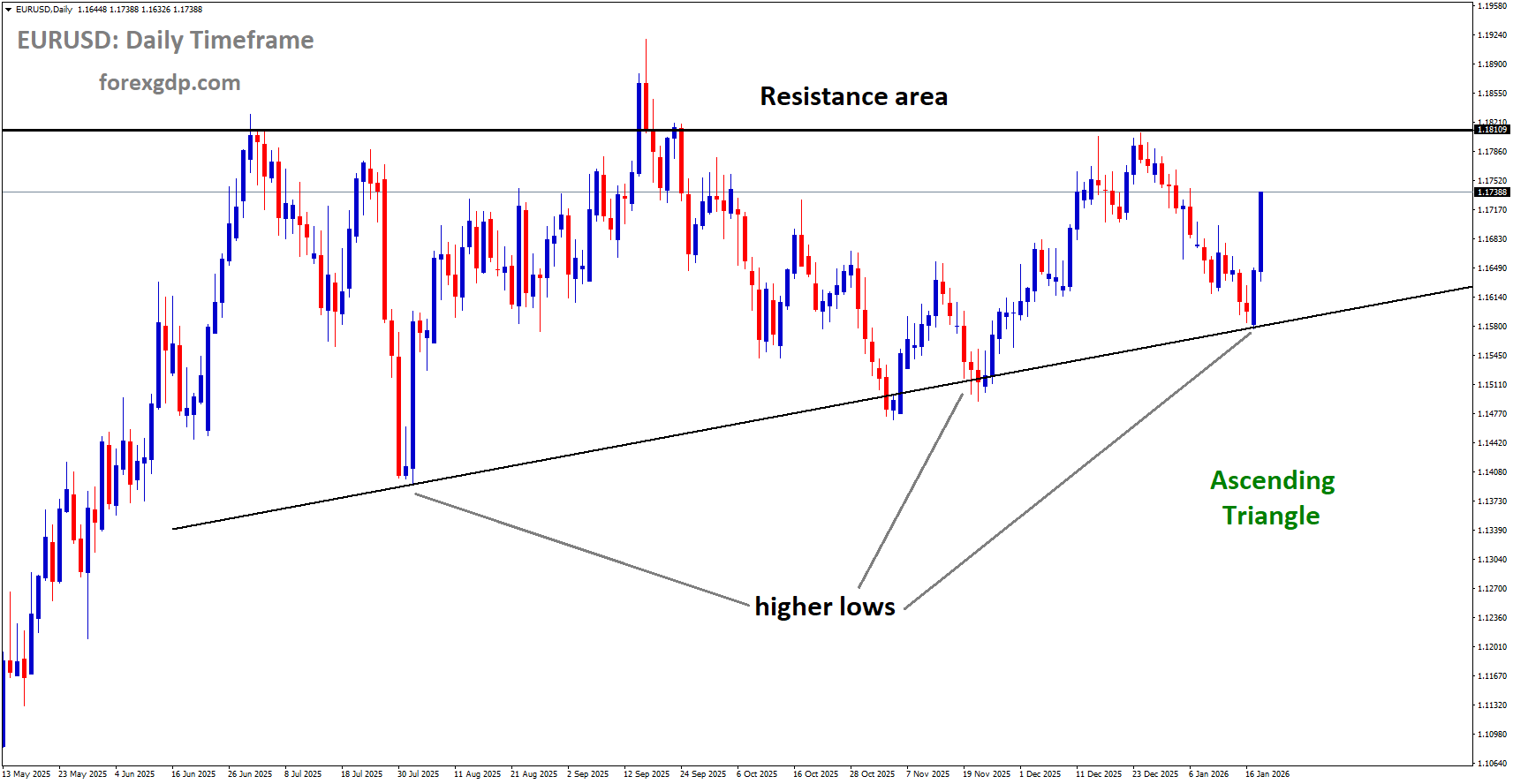
EURUSD is moving in an Ascending Triangle pattern
At the center of the latest market reaction is US President Donald Trump’s fresh threat of additional tariffs on European countries. The message has sparked what many traders are calling a “Sell America” move, where investors reduce exposure to US assets and shift toward alternatives. It feels similar to the reaction that followed the so-called “Liberation Day” moment earlier this year, when markets were caught off guard by sudden changes in US policy direction.
This time, the Euro is benefiting from that shift, as traders move away from the Dollar and into currencies seen as more stable in the short term.
A New Round of Tariff Tension Hits Global Sentiment
Markets do not like surprises, especially when those surprises involve trade policy. President Trump’s latest remarks have added a fresh layer of uncertainty to an already sensitive global environment. According to reports, the US is considering extra tariffs on European countries that oppose his plan to annex Greenland, a political issue that has quickly grown into something much larger.
This is not just about one decision or one country. Investors are looking at the bigger picture: a growing trade conflict between long-time Western partners.
As the tension builds, global sentiment has turned cautious. Many traders are moving into a more defensive mindset, which often leads to a stronger demand for safer or more predictable assets. However, in this case, the US Dollar is not playing its usual “safe haven” role. Instead, it is facing pressure because the uncertainty is coming directly from the US side.
Why the “Sell America” Trade Is Back in Focus
The phrase “Sell America” is used when investors begin pulling money out of US markets due to concerns about economic policy, political instability, or declining trust in long-term decision-making. When this happens, it can affect several key areas at once, including the US Dollar and US government bond yields.
Right now, that shift appears to be underway again. Investors are selling the Dollar, and there are signs that confidence in US authorities is being tested. Some analysts describe it as a gradual “de-dollarisation” trend, meaning investors are slowly reducing their reliance on the US Dollar as their main global currency choice.
This doesn’t mean the Dollar is losing its global importance overnight. But it does suggest that traders are increasingly willing to look elsewhere when US policy becomes unpredictable.
For the Euro, this is a short-term advantage. As money moves away from the Dollar, the EUR/USD pair naturally rises.
European Leaders Prepare a Response in Brussels
While US headlines are driving the immediate market reaction, Europe is not standing still. Leaders across the Eurozone are meeting in Brussels to discuss how to respond to Trump’s latest tariff threat.
The situation is delicate. Europe must balance diplomacy with strength, especially since this is happening during a time of rising global economic pressure. A trade fight between major allies is not something anyone wants, but it is also not something European leaders can ignore.
There is also a growing sense that this conflict could expand quickly if both sides continue escalating. Investors are watching closely because trade disputes often lead to higher costs for businesses, slower growth, and weaker confidence across multiple industries.
Denmark’s Position Adds Another Layer to the Story
Denmark has found itself in an uncomfortable spotlight due to the Greenland issue. Denmark’s Minister of Economy, Stephanie Lose, has said the country will keep trying to maintain dialogue with the United States. However, she also warned that if tensions keep rising, Europe will eventually respond together.
That statement matters because it signals unity. When European leaders show a coordinated stance, markets often take it seriously. A united Europe may be better positioned to negotiate, but it could also lead to a sharper standoff if the situation worsens.
German Producer Prices Fall More Than Expected
On the economic side, the Eurozone received fresh data from Germany, and it added another important piece to the puzzle.
Germany’s Producer Price Index (PPI), which tracks price changes at the wholesale and factory level, declined more than expected in December. The monthly figure fell by 0.2%, slightly worse than the market forecast of a 0.1% drop. That came after a flat reading in November.
On a yearly basis, German producer prices dropped at a pace of 2.5%, also weaker than expected. This shows that deflationary pressure is still present in parts of the German economy.
At first glance, falling producer prices might seem like bad news for the Euro. It can signal weaker demand, slower growth, or less pricing power for businesses. But markets don’t always react in a straight line.
In this case, the Euro continued to rise even after the data release, suggesting that the US Dollar’s weakness is currently the bigger driver of the currency move.
What the German ZEW Sentiment Survey Could Signal Next
Now, attention is shifting toward another key German data point: the ZEW Economic Sentiment Index. This survey measures how institutional investors and analysts feel about the German economy.
Expectations are that the index will continue improving, potentially reaching 50 in January. If that happens, it would be the strongest reading since July of last year and would mark a clear improvement from the previous months.
This matters because Germany is the largest economy in the Eurozone. If confidence in Germany rises, it often supports the Euro as well, even if inflation data remains mixed.
A strong ZEW reading could reinforce the idea that the Eurozone economy is stabilizing, at least in the eyes of professional investors.
Inflation in the Eurozone Remains Mixed
Inflation is still one of the biggest themes shaping global markets, and the Eurozone is no exception.
The final Eurozone Harmonised Index of Consumer Prices (HICP) for December was revised slightly lower, showing annual inflation at 1.9% instead of the earlier estimate of 2%. That revision suggests price pressures may be easing a bit more than previously thought.
However, the core HICP figure, which removes volatile items like energy and food, held steady at 2.3%. This is important because core inflation is often seen as a better measure of long-term trends.
Monthly inflation figures remained unchanged as well, showing steady price growth without any major surprises.
Overall, this data paints a mixed picture. Inflation is not rising sharply, but it also hasn’t disappeared. For markets, that means European policymakers may still need to stay cautious, especially when considering future economic decisions.
A Quiet US Calendar Leaves Markets Focused on Politics
While Europe has several major updates this week, the US economic calendar is unusually light. US markets are reopening after the long Martin Luther King Jr. holiday weekend, but there are not many major economic reports scheduled right away.
One of the only notable releases is the ADP report on private-sector employment. While it can influence market expectations, it often takes a back seat when bigger political stories dominate the headlines.
Instead, traders are focusing on what President Trump says next, especially with a major speech expected at the Davos forum on Wednesday. Events like Davos matter because global leaders, investors, and executives pay close attention to policy signals shared on that stage.
If Trump reinforces his tariff stance or introduces new threats, it could keep pressure on the US Dollar. On the other hand, if he shifts to a calmer tone, markets could see a quick reversal in sentiment.
Why EUR/USD Strength Could Be Temporary
Even though EUR/USD has moved higher quickly, it’s worth remembering that currency markets can change direction just as fast.
Right now, the Euro is benefiting from a combination of factors:
-
A broad decline in the US Dollar
-
Renewed trade uncertainty tied to US policy
-
A cautious global mood that is pushing investors to reduce risk
-
European leaders showing signs of coordination and response
-
Improving sentiment expectations in Germany
Still, the situation remains fragile. If trade tensions cool down or US officials offer reassurance, the Dollar could recover. At the same time, weak economic data in Europe could limit how far the Euro can rise if investors begin worrying about growth.
In other words, this move is being powered more by US weakness than by Euro strength alone.
Final Summary: What’s Driving the Euro Higher Right Now
EUR/USD has risen sharply over two days as investors react to President Trump’s latest tariff threat against European countries. The renewed tension has triggered a “Sell America” shift, pushing traders away from the US Dollar and supporting the Euro.
Meanwhile, European leaders are meeting in Brussels to discuss potential responses, while Denmark continues to call for dialogue but warns that Europe may act together if tensions escalate.
On the data side, German producer prices fell more than expected, showing continued deflationary pressure, while investors await the German ZEW sentiment survey for clues about confidence in the economy. With few major US economic releases in the near term, markets are likely to stay focused on political headlines and Trump’s upcoming speech at Davos.
GBPUSD jumps higher following fresh UK jobs report surprises
The Pound Sterling has grabbed attention in global currency markets this week, rising strongly against several major currencies. A big part of the move came after the latest UK employment report offered a mixed picture of the labor market. While the numbers were not perfect, they were steady enough to keep investors interested in the British Pound.

GBPUSD is breaking the lower high area of the downtrend channel
At the same time, the US Dollar has been losing strength, pressured by growing political tension between the United States and the European Union. The disagreement, linked to Greenland’s future and new tariff threats, has sparked fresh worries about trade relations and long-term confidence in US leadership.
Together, these two stories have created a powerful shift in momentum, helping the Pound push higher while the Dollar slides.
UK Employment Data Sends a Mixed but Supportive Message
The UK’s newest labor market report covered the three months ending in November and delivered results that were both encouraging and slightly disappointing, depending on what you focus on.
One of the biggest points investors watched was the unemployment rate. It stayed steady at 5.1%. Many market participants had expected it to fall slightly to 5.0%, so the fact that it didn’t improve added a small note of caution.
However, the hiring numbers brought a more positive surprise.
UK employers added 82,000 new workers during the period. That stands out even more when compared to the previous report, which showed a drop of 17,000 workers in the three months ending in October. In other words, the UK labor market appears to have bounced back from a short-term slowdown.
Even with unemployment not falling, the return to job growth matters because it suggests that businesses are still willing to hire, and the economy may be holding up better than some feared.
Wage Growth Cools Slightly, Shaping Interest Rate Expectations
Another key part of the report was wage growth, which plays a major role in inflation and central bank decisions.
The UK’s wage numbers showed moderate growth, with signs that pay increases are slowly cooling.
Average earnings excluding bonuses rose 4.5% over the year. That matched expectations, but it was slightly lower than the previous reading of 4.6%. Meanwhile, average earnings including bonuses rose 4.7%, which was a little higher than the expected 4.6%, but still down from the prior 4.8% reading.
Why wage growth matters so much
Wage growth is closely linked to inflation because when people earn more, they often spend more. Higher spending can keep prices elevated, especially in areas like services. For central banks like the Bank of England, this becomes important when deciding whether interest rates should stay high, fall, or rise further.
With wage growth showing signs of slowing down, investors may feel more confident that inflation pressures will ease over time. And that naturally leads to more talk about possible interest rate cuts.
Bank of England Rate Cuts Back in the Spotlight
When wage growth cools and unemployment remains stable, markets often begin to price in a more “dovish” outlook from the central bank. That simply means the Bank of England could be more open to lowering interest rates sooner rather than later.
At the moment, the UK economy is sending mixed signals. On one hand, hiring has improved and the job market is still functioning. On the other hand, unemployment isn’t dropping and wage growth is no longer accelerating.
This combination supports the idea that inflation may continue to ease, which could give the Bank of England more room to reduce rates in the coming months.
UK Inflation Data Is the Next Big Test
While the jobs report has helped move the Pound higher in the short term, the next major event for UK markets is the Consumer Price Index (CPI) report for December, due on Wednesday.
Investors are watching closely because inflation remains one of the biggest drivers of central bank policy. The expectation is that price pressures stayed broadly steady, which could reinforce the idea that inflation is not spiraling upward again.
If the CPI data shows inflation staying under control, it may strengthen the argument for interest rates to move gradually lower over time. On the other hand, if inflation rises more than expected, markets could quickly rethink how soon the Bank of England will feel comfortable cutting rates.
A Bank of England Policymaker Hints at a Faster Inflation Return to Target
Recent comments from Bank of England Monetary Policy Committee member Alan Taylor have also added to the discussion around future interest rates.
Taylor suggested that inflation could return to the Bank’s 2% target by mid-2026, sooner than earlier expectations that pointed closer to 2027. He also said that interest rates could “normalise to the neutral sooner rather than later.”
That kind of statement matters because it signals a more optimistic view of inflation cooling down faster. It also implies that the Bank of England may not need to keep borrowing costs high for as long as previously thought.
In its December meeting, the Bank of England already indicated that monetary policy could follow a “gradual downward path.” While that doesn’t guarantee immediate cuts, it supports the idea that the direction of travel is slowly shifting.
Pound Sterling Gains Strength as the US Dollar Weakens
While the UK data played a role in boosting the Pound, the other side of the story is the weakening US Dollar.
The Dollar has been sliding further as global investors react to growing political and trade tensions involving the United States and the European Union. This has fueled a broader shift away from the Dollar in the short term, giving other currencies, including the Pound, more room to rise.
The situation has become serious enough that some market observers are describing the mood as a “Sell America” trade, meaning investors are becoming more cautious about holding US assets during a period of uncertainty.
US-EU Dispute Over Greenland Sparks Trade and Confidence Concerns
The main driver behind the latest Dollar weakness is an escalating dispute between the United States and the European Union over Greenland’s future.

Over the weekend, US President Donald Trump announced new tariffs of 10% on several EU members and the United Kingdom. The move was described as retaliation for opposition to Washington’s plans to purchase Greenland, and it also left room for tariffs to rise further.
This has triggered criticism from several European leaders as well as UK Prime Minister Keir Starmer, who have spoken out against using tariff threats to push political goals.
Why this dispute is shaking markets
Trade disputes often hit markets hard because they raise fears of slower global growth. Tariffs can increase costs for businesses, disrupt supply chains, and reduce consumer demand over time.
Beyond economics, there is also a confidence issue. When tensions rise between major allies, investors worry about long-term stability. Some experts have warned that a prolonged conflict could weaken confidence in US leadership, strain relationships with key partners, and reduce the overall appeal of US investments for an extended period.
Investors Turn Their Attention to US Inflation Data
On the US side, the next major event investors are waiting for is the Personal Consumption Expenditure (PCE) Price Index data for October and November, scheduled for Thursday.
The PCE report is especially important because it is the Federal Reserve’s preferred inflation measure. Markets use it to gauge whether inflation is cooling enough for the Fed to eventually lower interest rates.
Right now, traders largely expect the Federal Reserve to keep interest rates unchanged at its next policy meeting. This view has been supported by market-based tools that track rate expectations.
Still, any surprise in the inflation data could quickly change the conversation, especially if it suggests inflation is either falling faster than expected or proving stubbornly high.
What This Means for the Pound and the Dollar Going Forward
The current currency movement is being driven by two main forces:
-
In the UK, investors are weighing steady unemployment, stronger hiring, and slightly cooler wage growth.
-
In the US, political and trade tension is weakening the Dollar while markets wait for fresh inflation data.
For the Pound Sterling, the next big question is whether UK inflation remains stable. If it does, investors may lean further into the idea that interest rates could start moving down gradually, without damaging confidence in the economy.
For the US Dollar, the biggest risk is that political disputes and tariff threats may continue to hurt investor sentiment. If the standoff with Europe grows more intense, the Dollar could remain under pressure, especially if global markets see it as a sign of deeper instability.
At the same time, upcoming US inflation numbers could either stabilize the Dollar or add to its weakness, depending on what the data reveals.
Summary: Sterling Rises as Jobs Data and Global Politics Shift the Mood
The Pound Sterling has climbed strongly after a UK employment report showed improved hiring and steady unemployment, along with signs that wage growth is cooling slightly. These details have kept investors focused on how soon the Bank of England may begin lowering interest rates.
Meanwhile, the US Dollar has weakened as political tensions rise between the United States and the European Union over Greenland, along with new tariff threats that have shaken market confidence.
With UK inflation data and US PCE inflation numbers coming next, both currencies may face more volatility as investors look for clearer direction on interest rates and global stability.
USDJPY Slips Toward 157.80 as US-EU Tensions Drag the Dollar Lower
The USD/JPY currency pair moved lower on Tuesday, drifting down to around 157.80 during the European trading session. The pair slipped by roughly 0.2%, reflecting a broader wave of US Dollar weakness that has been building momentum across global markets.

USDJPY is moving in an uptrend channel, and the market has reached the higher low area of the channel
While the Japanese Yen is showing some strength against the US Dollar, the bigger story is what’s happening on the US side. Investors are reacting to rising political tension between the United States and the European Union, along with fresh uncertainty about the future direction of US economic and foreign policy. All of this has pushed traders to step back from the Greenback, sending USD/JPY slightly lower.
At the same time, Japan’s political developments are adding their own layer of complexity. A surprise election announcement and a new tax plan from Japan’s leadership are influencing how investors view the Yen, especially ahead of a major policy decision from the Bank of Japan later this week.
Why the US Dollar Is Losing Ground Across the Board
The US Dollar has come under renewed pressure, and it’s not because of a single event. Instead, several headlines are combining to shake confidence and encourage traders to reduce their exposure to the currency.
One of the clearest signals of this weakness came from the US Dollar Index (DXY), which measures the Dollar’s strength against six major global currencies. The index dropped noticeably, showing that the decline is not limited to one currency pair—it’s a broader move.
US-EU Disputes Create Fresh Anxiety
One major reason behind the Dollar’s decline is the growing dispute between the United States and the European Union over Greenland’s sovereignty. This issue has become more than a political talking point. Markets are treating it as a potential risk to long-term diplomatic relationships between two major economic powers.
When relations between large trading partners become strained, investors often start thinking about what could happen next—new trade barriers, reduced cooperation, or prolonged instability. Even if nothing dramatic happens immediately, uncertainty alone can be enough to weaken a currency.
Tariff Threats Add Pressure
Concerns increased after reports that US President Donald Trump has issued tariff threats aimed at several EU nations and the United Kingdom. The intention, according to market discussions, is to increase pressure on European leaders over Greenland-related negotiations.
Tariff threats tend to make markets nervous for a simple reason: they can lead to retaliation, higher costs for businesses, and slower trade activity. Over time, that kind of environment can reduce confidence in the economic outlook, even before any policy is officially implemented.
NATO Comments Offer Some Relief, But Not Enough to Reverse the Trend
Despite the tension, some statements from Washington helped prevent the situation from escalating further in the eyes of investors.
US Treasury Secretary Scott Bessent, speaking at the World Economic Forum (WEF) in Davos, confirmed that the United States does not plan to withdraw from NATO. That message offered a bit of reassurance to global markets, especially those watching for any signs of major shifts in Western alliances.
Still, the Dollar continued to face selling pressure. That suggests traders remain more focused on the broader uncertainty around trade and diplomacy rather than taking comfort in one stabilizing comment.
In many cases, markets respond not only to what is said, but also to what might happen next. Even if NATO membership stays intact, ongoing disputes and aggressive trade language can still damage sentiment toward the US Dollar.
Federal Reserve Leadership Uncertainty Adds Another Layer of Risk
Another key headline pushing the Dollar lower is the growing attention on the future leadership of the Federal Reserve.
Treasury Secretary Bessent also noted that the White House may announce the successor to Fed Chair Jerome Powell as early as next week. That kind of news tends to get investors thinking quickly, because the Fed’s leadership plays a major role in shaping expectations for interest rates, inflation management, and financial stability.
Why Markets Care About the Fed Chair
The Fed Chair is not just a symbolic role. The person leading the central bank influences policy direction and communication style, both of which affect how investors position themselves.
Even if policy doesn’t change overnight, a shift in leadership can signal a new approach. Markets may worry about:
-
A faster or slower pace of policy changes
-
A different stance on inflation control
-
Less predictable messaging
-
Political influence over economic decisions
When traders feel unsure about future policy direction, they often reduce risk. In this case, that shift appears to be weighing on the Dollar and helping push USD/JPY lower.
Japanese Yen Gains Against the Dollar, But Not Against Everything
Even though USD/JPY moved down, it’s important to understand that the Japanese Yen is not strong across the board. It is outperforming the US Dollar in this moment, but it has not been consistently stronger than all major currencies.
That mixed performance comes from Japan’s own domestic situation, particularly the latest political developments.
Japan’s New Fiscal Plans Raise Questions
Japan’s Prime Minister Sanae Takaichi announced a plan that could lead to looser fiscal conditions in the country. She has vowed to suspend the consumption tax for two years, a move that could boost household spending and provide short-term economic support.
However, tax cuts and suspensions can also raise concerns about government finances over the long run. Investors may start asking:
-
Will Japan’s budget deficit widen?
-
Will government borrowing increase?
-
Will fiscal policy become more aggressive?
If markets believe fiscal policy is becoming looser, it can sometimes reduce demand for the currency, especially if investors think the central bank may need to stay supportive for longer.
Snap Election Announcement Brings Political Uncertainty to Japan
Alongside the tax news, Prime Minister Takaichi also announced plans to dissolve the lower house of parliament on January 23, signaling a snap election.
Elections can bring uncertainty anywhere, but they tend to have a stronger impact in markets when the outcome could affect economic strategy, fiscal spending, or national priorities.
For currency traders, political uncertainty often creates a cautious mood. Even if Japan’s economy remains stable, markets may wait to see how the election reshapes leadership strength and policy direction.
In the short term, this uncertainty can limit how much the Yen strengthens against other currencies, even when the US Dollar is struggling.
All Eyes on the Bank of Japan’s Policy Decision

Looking ahead, the biggest potential turning point for the Japanese Yen may arrive on Friday, when the Bank of Japan (BoJ) delivers its next monetary policy announcement.
This is a major event for Yen traders because the BoJ remains one of the most closely watched central banks in the world. Any shift in tone, policy outlook, or economic assessment can move the Yen quickly.
Why the BoJ Meeting Matters So Much
The Yen often reacts strongly to the BoJ because Japan’s monetary policy has long been a key driver of currency trends. Traders will be watching for signals about:
-
The BoJ’s confidence in Japan’s economic recovery
-
How officials view inflation and wage growth
-
Whether policy support remains necessary
-
How the BoJ responds to global uncertainty
Even small changes in wording can influence expectations and shift currency flows.
For USD/JPY, the BoJ announcement could become the next major catalyst, especially if it changes how investors compare Japan’s outlook to the United States.
Final Summary: What’s Driving USD/JPY Lower Right Now
USD/JPY has slipped toward 157.80 as the US Dollar weakens broadly, driven by rising uncertainty in global politics and shifting expectations around US policy. The ongoing disputes between the United States and the European Union over Greenland, along with tariff threats involving the EU and the UK, have hurt confidence in the Greenback. Comments from US Treasury Secretary Scott Bessent helped calm some fears about NATO, but the overall mood remains cautious.
Meanwhile, Japan’s political developments—including a snap election announcement and a planned suspension of the consumption tax—are influencing how traders view the Yen. Even with the Yen gaining against the Dollar, concerns about looser fiscal policy have limited its strength against other major currencies. The next major focus for markets is the Bank of Japan’s policy decision on Friday, which could shape the Yen’s direction in the days ahead.
Don’t trade all the time, trade forex only at the confirmed trade setups
Get more confirmed trade signals at premium or supreme – Click here to get more signals, 2200%, 800% growth in Real Live USD trading account of our users – click here to see , or If you want to get FREE Trial signals, You can Join FREE Signals Now!