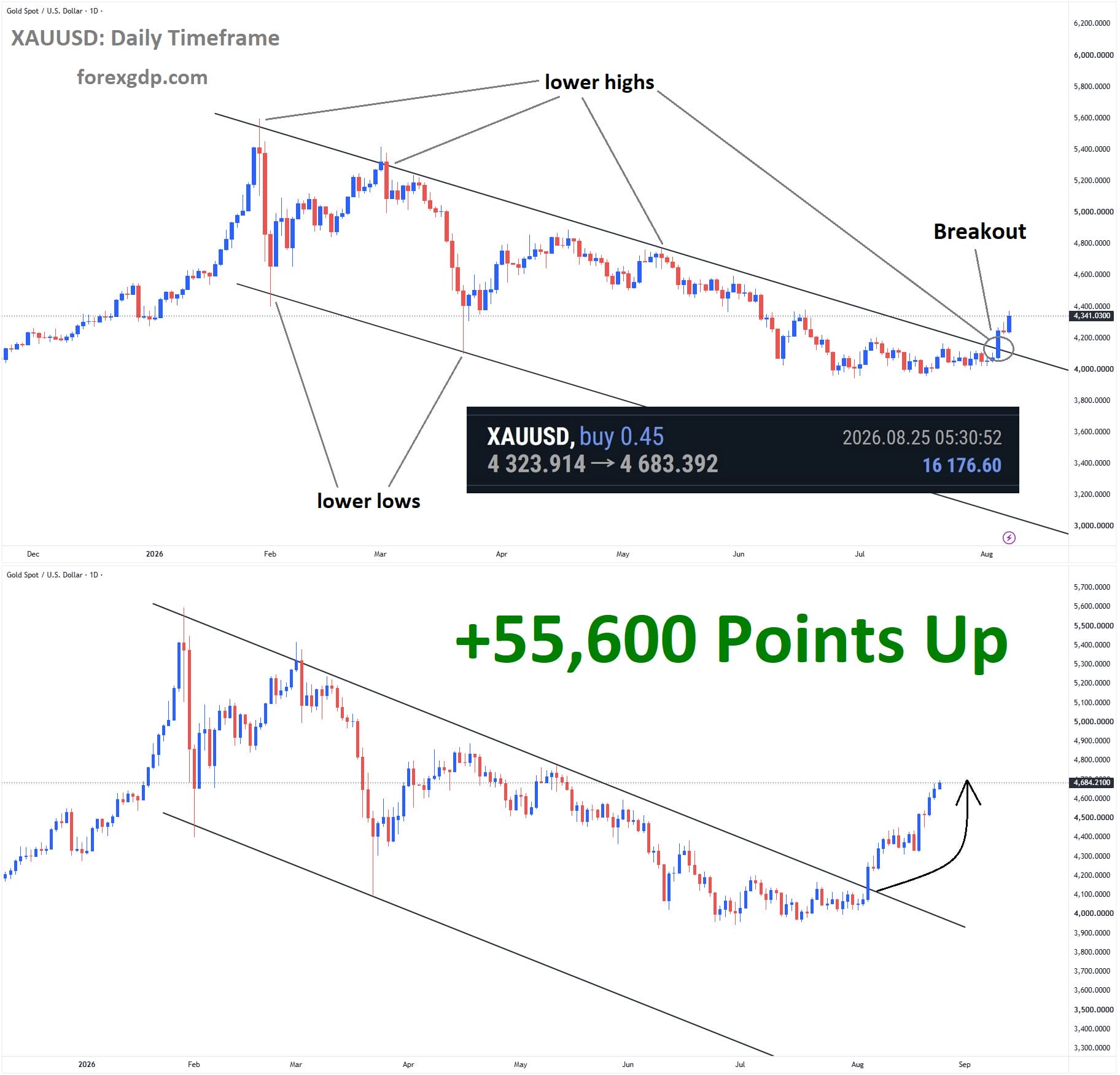
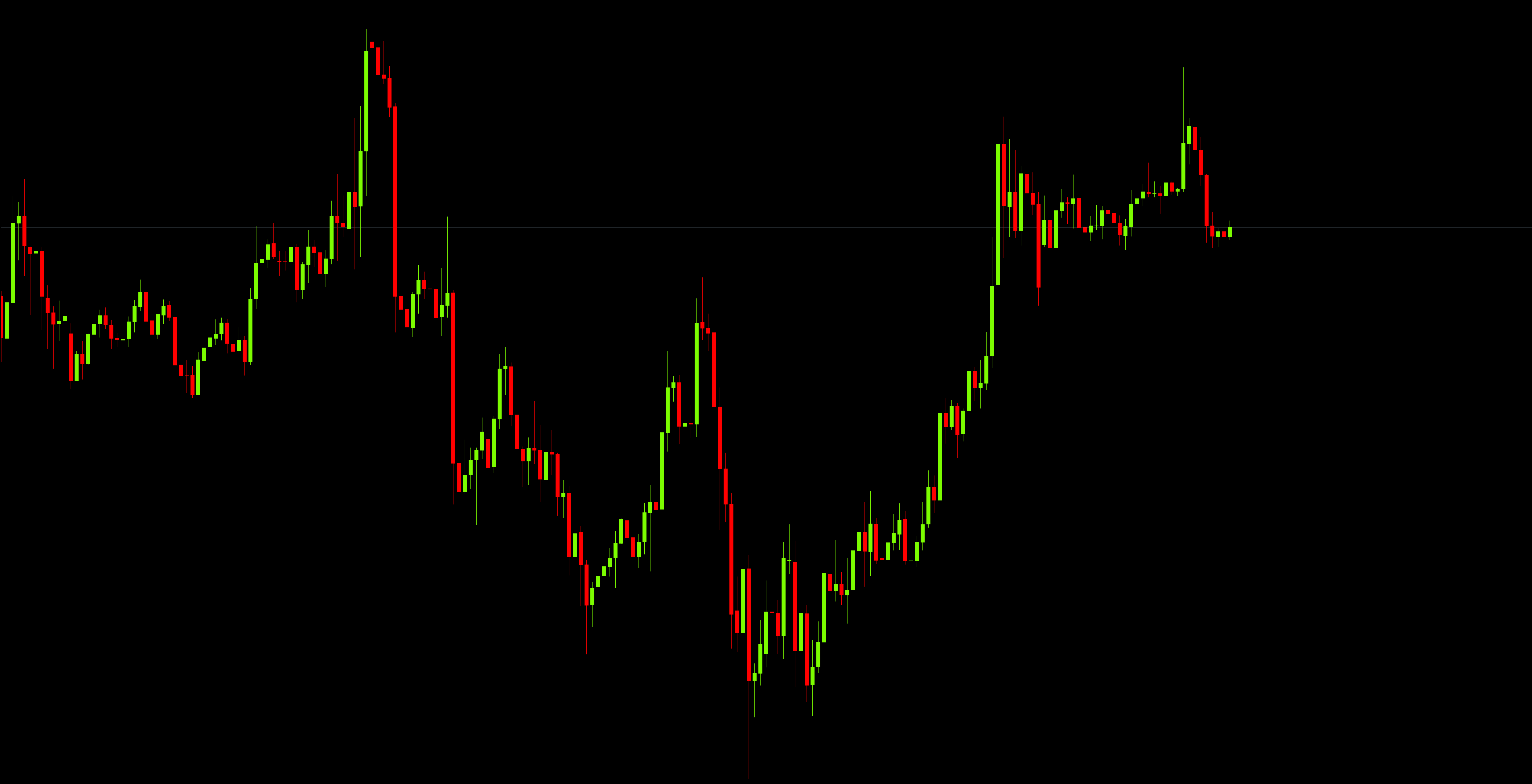
XAUUSD is breaking the higher high area of the uptrend channel
Gold prices are moving higher again, recovering part of the losses seen in the previous session. The precious metal is trading with modest gains during the European session, supported by a weaker US Dollar. Investors are increasingly expecting the US Federal Reserve to cut interest rates in the future, and this shift in expectations is helping gold regain strength.
However, while the short-term mood appears positive, traders remain cautious. Many are waiting for the upcoming US Nonfarm Payrolls (NFP) report before making larger moves. This key employment report could play a major role in shaping expectations about the Federal Reserve’s next steps and, in turn, influence gold’s direction.
Weaker US Dollar Supports Gold
Gold often benefits when the US Dollar weakens. Since gold is priced in dollars, a softer currency makes it more attractive to buyers using other currencies. Recently, the US Dollar has slipped to its lowest level in nearly two weeks, giving gold a fresh boost.
The main reason behind the weaker dollar is growing belief that the Federal Reserve may reduce interest rates more than previously expected. When interest rates fall, the dollar tends to lose strength because investors earn lower returns on dollar-based assets. This creates a favorable environment for gold, which does not pay interest but is seen as a safe store of value.
Money markets are already pricing in further easing from the Federal Reserve in 2026. This outlook has kept pressure on the dollar and provided steady support to gold prices.
Weak Economic Data Adds to Rate Cut Expectations
Recent economic data from the United States has added to speculation that the Federal Reserve may need to ease policy. The US Census Bureau reported that Retail Sales showed no growth in December. This result followed a stronger reading in November but came in below market expectations.
Retail Sales are an important measure of consumer spending, which makes up a large part of the US economy. When spending slows, it can signal weaker economic growth ahead. This latest data has led some economists to lower their growth forecasts for the fourth quarter.
At the same time, there have been signs that the US labor market is losing momentum. Slower job growth or rising unemployment could increase pressure on the Federal Reserve to support the economy through lower interest rates.
Together, these factors have strengthened the case for rate cuts, further weighing on the US Dollar and helping gold maintain its positive tone.
Concerns Over Federal Reserve Independence
Another factor affecting the dollar and supporting gold is renewed concern about the independence of the Federal Reserve.
Over the weekend, US President Donald Trump suggested that he might take legal action against his newly selected Fed chair nominee, Kevin Warsh, if interest rates were not lowered. Such comments have raised questions about political influence on the central bank.
In addition, Federal Reserve Governor Stephen Miran stated that complete central bank independence is not realistic. These remarks have added to uncertainty around future monetary policy decisions.
When investors sense political pressure on central banks, it can weaken confidence in a currency. In this case, the US Dollar has struggled to gain traction, which has indirectly supported gold.
Interestingly, comments from two regional Federal Reserve Presidents did little to help the dollar recover.
Mixed Signals from Fed Officials
Dallas Fed President Lorie Logan said that the labor market appears to be stabilizing and that downside risks are fading. She also noted that inflation has been above the Fed’s 2% target for nearly five years. According to Logan, current policy may be close to a neutral level, meaning it neither strongly supports nor restricts economic growth.
Meanwhile, Cleveland Fed President Beth Hammack said that the current interest rate is also near neutral and that the Federal Reserve is in a good position to observe how economic conditions develop. She added that rate policy could remain unchanged for some time, as inflation remains elevated and tariff-related issues are still affecting the outlook.
Despite these relatively firm comments, markets remain focused on signs of slowing growth and possible rate cuts in the future. As a result, the dollar has not found much relief.
Traders Await the Nonfarm Payrolls Report
Even though gold is showing strength, traders are not rushing to place aggressive bets. The main reason is the upcoming US Nonfarm Payrolls report.
The NFP report is one of the most closely watched economic releases in the world. It provides detailed information about job creation, unemployment, and wage growth in the United States. Strong employment data could reduce expectations for rate cuts, potentially supporting the dollar and limiting gains in gold. On the other hand, weaker data would likely strengthen the case for lower rates and further weaken the dollar.
Because of its importance, many traders prefer to wait for the report before taking major positions. This cautious approach may keep gold’s gains limited in the short term.
Safe-Haven Demand Faces Mixed Forces
Gold is often seen as a safe-haven asset, meaning investors turn to it during times of uncertainty. While concerns about the US economy and central bank independence support gold, there are also factors that may limit strong upward moves.
For example, easing tensions in the Middle East have reduced immediate geopolitical risks. When global risks decrease, demand for safe-haven assets like gold can soften.
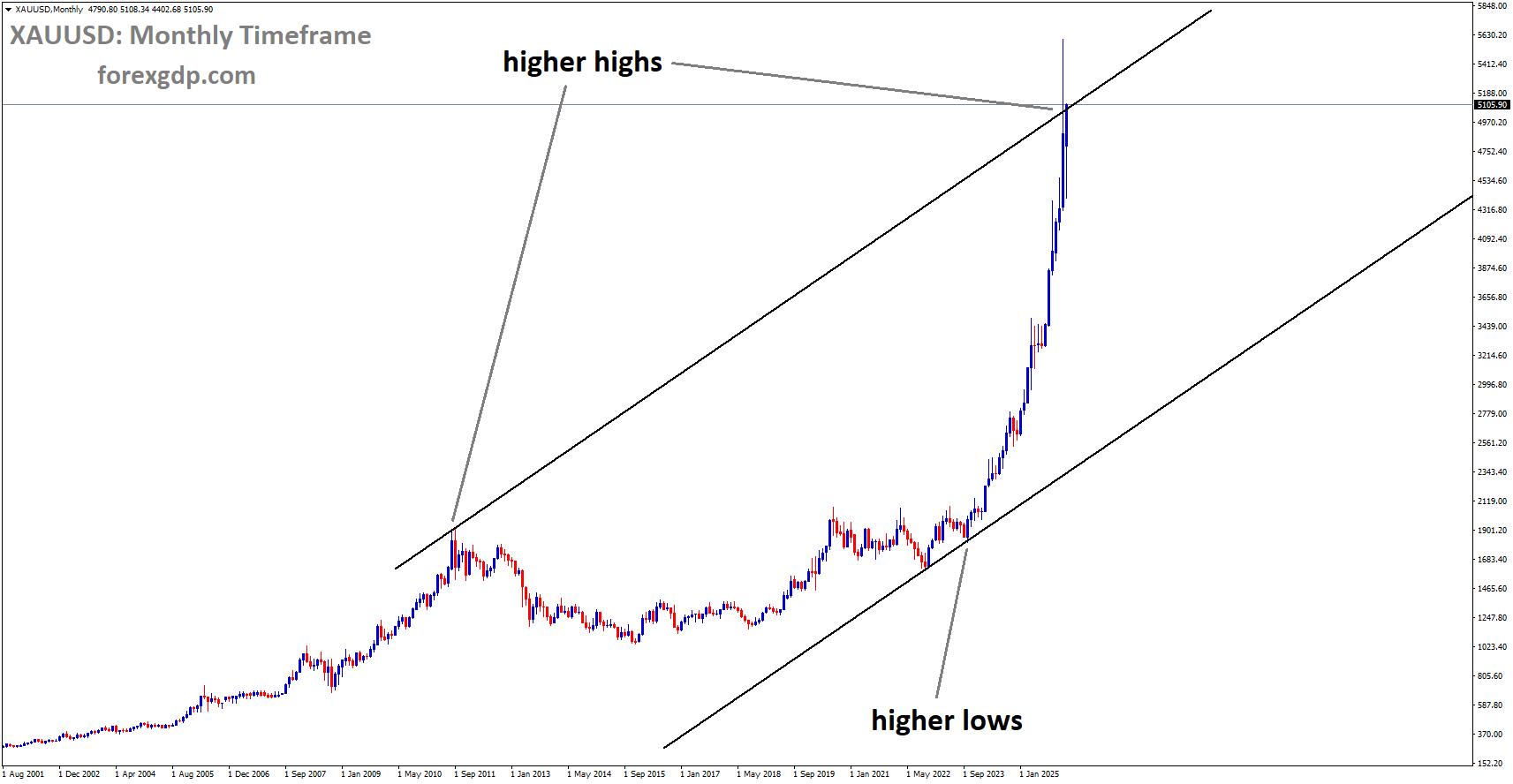
XAUUSD reached higher high area of the uptrend channel
At the same time, the overall market mood remains generally positive, which may also reduce urgent demand for defensive assets. This combination of factors could keep gold trading within a limited range until clearer signals emerge.
Investors are likely to look for strong follow-through buying before becoming more confident in a sustained upward move. Until then, gold may continue to move cautiously, influenced mainly by shifts in the US Dollar and expectations about Federal Reserve policy.
Summary
Gold has regained momentum as the US Dollar weakens on growing expectations of future Federal Reserve rate cuts. Soft economic data, including stagnant Retail Sales and signs of labor market weakness, have strengthened the case for easier monetary policy. At the same time, renewed concerns about the independence of the Federal Reserve have added pressure on the dollar.
Despite supportive factors, traders are holding back ahead of the crucial US Nonfarm Payrolls report. The outcome of this employment data will likely shape expectations for interest rates and determine the next major move in both the dollar and gold.
For now, gold remains supported but cautious, balancing economic uncertainty, central bank signals, and shifting global risk sentiment.