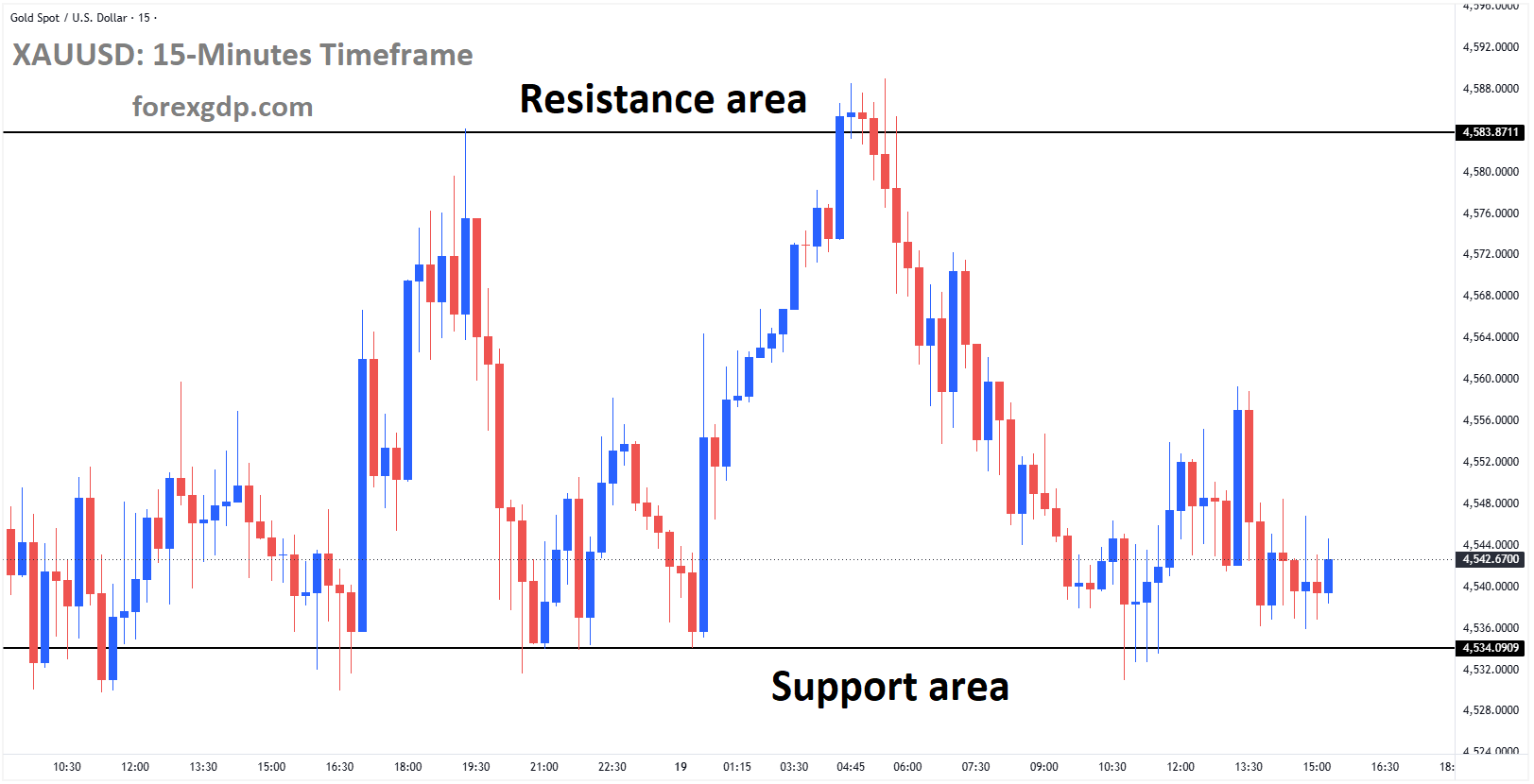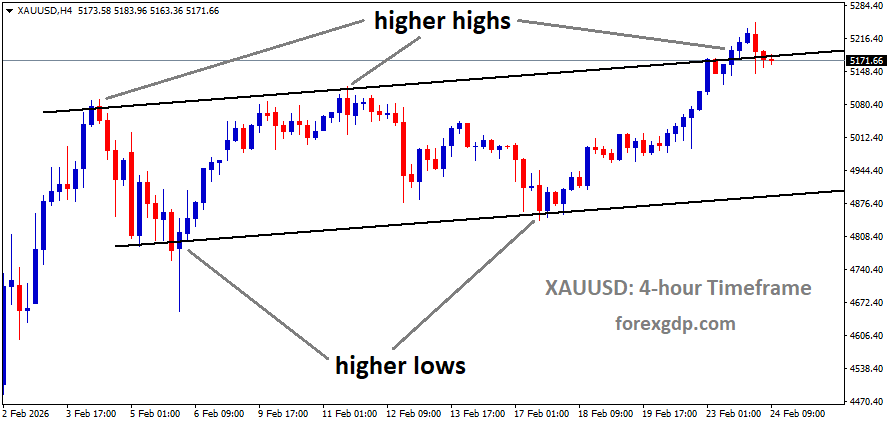
XAUUSD is moving in an Ascending channel, and the market has reached a higher high area of the channel
Gold moved higher in early Asian trading on Tuesday, climbing close to $5,230. The precious metal gained strength as investors reacted to fresh global developments, including new trade measures from the United States and rising geopolitical tensions.
Uncertainty in global markets often pushes investors toward assets that are considered safer during unstable times. Gold has long held that reputation. As concerns grow around trade policies, court rulings, and international negotiations, demand for the yellow metal appears to be rising once again.
In the coming days, traders will keep a close eye on key economic data and political talks that could shape the next move for gold.
Trade Uncertainty Returns After US Court Ruling and New Tariffs
One of the main drivers behind gold’s recent rise is renewed uncertainty in global trade. The US Supreme Court recently ruled that former President Donald Trump’s sweeping tariffs were illegal. This decision has added confusion to global trade relations, as markets try to understand what comes next.
Despite the ruling, Trump announced a fresh 15% tariff over the weekend. He shared on social media that the new levies would take effect immediately and warned that more tariffs could follow. This sudden shift in trade policy has unsettled investors.
Why Tariffs Matter for Gold
Tariffs can affect global trade flows, business confidence, and economic growth. When countries impose new trade barriers, it often leads to tension between trading partners. Companies may face higher costs, supply chains can be disrupted, and economic growth can slow down.
When uncertainty rises, investors tend to look for safer places to park their money. Gold is often seen as a hedge during such periods because it does not depend on the performance of a single economy or company. As trade tensions increase, gold demand often follows.
The latest round of tariff announcements has revived concerns about a possible escalation in global trade disputes. That fear alone is enough to push more investors toward safe-haven assets like gold.
US-Iran Talks Could Influence Market Sentiment
Another major factor influencing gold’s movement is the upcoming meeting between the United States and Iran. Officials from both countries are expected to meet in Geneva on Thursday for another round of talks.
The discussions are centered on Iran’s nuclear program. Reports suggest that the US administration believes Iran may be offering serious proposals to reduce its stockpile of highly enriched uranium. The goal is to ensure that Iran is not developing nuclear weapons.
Iran’s Foreign Minister, Abbas Araghchi, has expressed optimism, saying there is still a good chance of reaching a diplomatic solution.
How Geopolitical Tensions Affect Gold
Gold often reacts strongly to geopolitical developments. When there is tension between nations, especially involving military or nuclear concerns, investors become cautious. Any hint of conflict can quickly increase demand for gold.
If the US-Iran talks show signs of breaking down or tensions rise further, gold could benefit as investors seek protection from potential instability. On the other hand, if both sides make meaningful progress and tensions ease, some of that safe-haven demand may fade in the short term.
For now, markets are waiting for clear signals. Even small updates from the Geneva talks could cause noticeable shifts in sentiment.
All Eyes on the US Producer Price Index

Beyond political events, economic data will also play an important role in shaping gold’s direction. Traders are preparing for the release of the US Producer Price Index (PPI) report for January, scheduled for Friday.
The PPI measures the average change in prices that producers receive for their goods and services. It is considered an important indicator of inflation at the wholesale level. Both the headline and core readings are expected to show a 0.3% monthly increase.
Why Inflation Data Matters
Inflation data has a direct impact on expectations for US interest rates. If inflation comes in higher than expected, it could signal that price pressures are still strong. This might lead policymakers to keep interest rates elevated for longer.
Higher interest rates tend to support the US dollar. Because gold is priced in US dollars, a stronger dollar can make gold more expensive for buyers using other currencies. This can reduce demand and weigh on gold in the short term.
However, if inflation data comes in softer than expected, it may ease pressure on policymakers. That could weaken the dollar and provide additional support for gold.
In short, Friday’s PPI report could offer fresh direction for the market. Investors will carefully compare the actual numbers with forecasts to adjust their positions accordingly.
The Bigger Picture for Gold
Gold’s recent move toward $5,230 reflects a mix of political uncertainty and economic caution. Trade disputes, legal decisions, tariff announcements, and sensitive international negotiations are all shaping the market environment.
When multiple sources of uncertainty appear at the same time, gold often benefits. Investors value its long-standing role as a store of wealth during unstable periods.
At the same time, economic data remains crucial. Inflation readings, employment numbers, and interest rate expectations all influence the strength of the US dollar and overall investor sentiment. These factors can either amplify gold’s gains or slow its momentum.
The coming days are packed with important developments. The outcome of US-Iran talks and the US PPI data release could significantly influence the next phase of gold’s movement.
What Investors Are Watching Next
Market participants are now focusing on three key elements:

XAUUSD is moving in an uptrend channel, and the market has reached a higher high area of the channel
-
Further tariff announcements – Any expansion of trade measures could deepen global uncertainty.
-
Progress in US-Iran negotiations – Positive diplomacy could calm markets, while setbacks may increase safe-haven demand.
-
Inflation data from the United States – The PPI report will help shape expectations about future interest rate decisions.
Each of these factors has the potential to shift investor behavior quickly. Gold’s position near $5,230 shows that many are already leaning toward caution.
Final Summary
Gold has climbed near $5,230 in early Asian trading, supported by rising geopolitical tensions and renewed trade uncertainty. The US Supreme Court’s ruling on tariffs, followed by fresh tariff announcements, has unsettled global markets. At the same time, upcoming US-Iran talks in Geneva add another layer of uncertainty that could either boost or limit gold’s appeal depending on the outcome.
Looking ahead, the US Producer Price Index report will be a major focus. Inflation data could influence expectations around interest rates and the US dollar, both of which play an important role in gold’s performance.
With trade policies shifting, diplomatic talks underway, and key economic data approaching, gold remains at the center of global market attention. Investors are watching closely as each new development unfolds, knowing that even small changes in sentiment can quickly impact the precious metal’s direction.