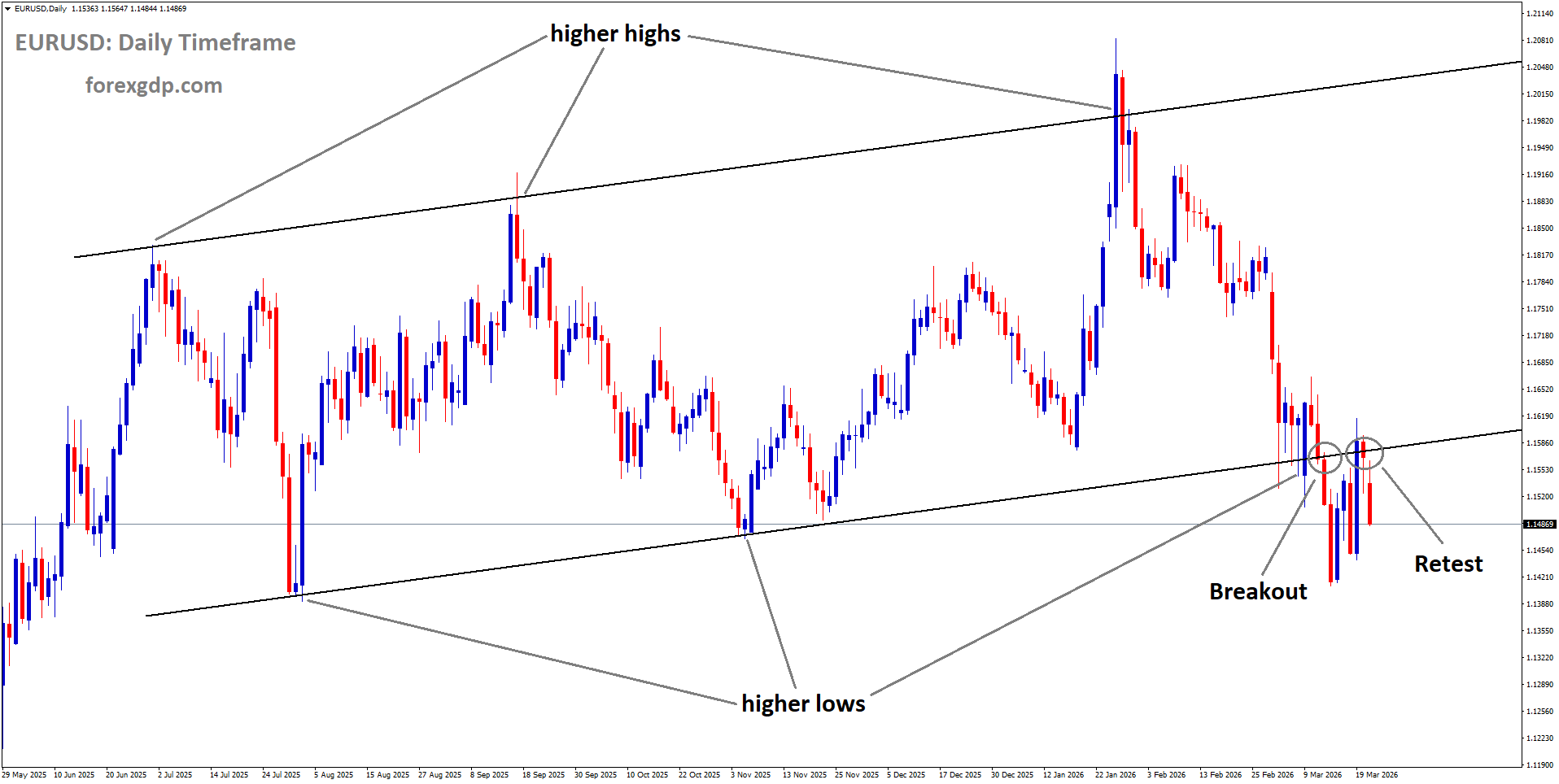
EURUSD is falling from the retest area of the broken Ascending channel
EURUSD Drops Near 1.1540 with Safe-Haven Dollar Strengthened by Global Uncertainty
The EUR/USD currency pair has recently moved lower, reflecting growing global uncertainty and shifting economic expectations. As geopolitical tensions rise and energy markets react, investors are turning toward safer assets, strengthening the US Dollar while putting pressure on the Euro. This shift highlights how global events, monetary policy expectations, and energy dynamics are closely linked in the currency market.
Rising Global Tensions Support the US Dollar
The US Dollar has gained strength as investors seek safety amid escalating tensions in the Middle East. When uncertainty increases on the global stage, traders often move their funds into assets considered more stable. The US Dollar is widely viewed as one of these safe-haven currencies.
Recent developments involving Iran and the United States have raised concerns about potential disruptions in global trade routes and energy supplies. Iran’s response to strong warnings from the US has added to the uncertainty. In particular, fears around the Strait of Hormuz—a critical route for global oil shipments—have made markets uneasy.
As a result, demand for the US Dollar has increased. This growing demand has pushed the EUR/USD pair lower, as the stronger Dollar makes the Euro relatively weaker in comparison.
Interest Rate Expectations Add to Dollar Strength
Another important factor supporting the US Dollar is the outlook for interest rates in the United States. Market participants increasingly believe that the Federal Reserve will keep interest rates steady for the rest of the year.
When interest rates remain high, or are expected to stay high, a currency often becomes more attractive to investors. This is because higher rates can offer better returns on investments tied to that currency.
Inflation expectations in the US are also rising, partly due to increasing energy costs. Higher inflation makes it less likely that the Federal Reserve will reduce interest rates anytime soon. As a result, the Dollar continues to benefit from this outlook, adding further pressure on the EUR/USD pair.
Energy Prices Weigh on the Euro
While the US Dollar is gaining strength, the Euro is facing challenges from rising energy prices. Europe relies heavily on imported energy, making its economy more sensitive to changes in global energy supply.
Impact of Supply Disruptions
Conflicts in the Middle East often lead to concerns about oil supply disruptions. Even the possibility of reduced supply can push energy prices higher. For countries that depend on energy imports, like those in the Eurozone, this creates economic pressure.
Higher energy costs can increase production expenses for businesses and reduce consumer spending power. This combination can slow economic growth, making the Euro less attractive to investors.
Uneven Global Effects
Not all economies are affected in the same way by rising energy prices. Some countries benefit from higher prices if they are energy exporters, while others face challenges if they are importers.
In this situation, the Eurozone is seen as being at a disadvantage. Economies that experience a “negative supply shock” from energy—meaning higher costs and reduced efficiency—tend to perform worse compared to those that benefit from increased energy revenues. This imbalance is one of the reasons the Euro has been under pressure.
European Central Bank Maintains a Cautious Approach

The European Central Bank (ECB) has recently decided to keep interest rates unchanged. While this decision reflects a careful approach to managing the economy, it also highlights the challenges facing the Eurozone.
The ECB has warned that rising energy prices could push inflation above its target level in the near future. This creates a difficult situation for policymakers. On one hand, higher inflation might normally require tighter monetary policy. On the other hand, economic growth risks remain, especially with increased energy costs.
Balancing Inflation and Growth
The ECB must balance two competing concerns: controlling inflation and supporting economic growth. If energy prices continue to rise, inflation could increase further. However, raising interest rates too aggressively could slow the economy even more.
This cautious stance contrasts with the Federal Reserve’s position, where higher interest rates are expected to remain in place. The difference in policy outlook between the US and the Eurozone is another factor contributing to the weaker Euro.
Market Sentiment and Currency Movements
Currency markets are heavily influenced by sentiment, and recent events have shifted investor confidence toward the US Dollar. When uncertainty rises, traders often reduce exposure to riskier assets and move toward safer options.
Safe-Haven Demand
The US Dollar benefits strongly from safe-haven demand during times of global instability. This demand can increase quickly, especially when geopolitical risks escalate. As more investors buy the Dollar, its value rises against other currencies, including the Euro.
Ongoing Volatility
The current environment suggests that volatility may continue. Geopolitical tensions, energy price movements, and central bank decisions all play a role in shaping currency trends. Even small changes in these factors can lead to noticeable shifts in exchange rates.
What This Means for the EUR/USD Pair
The recent decline in the EUR/USD pair reflects a combination of strong US Dollar demand and weakness in the Euro. These movements are not driven by a single factor but rather by a mix of global and economic influences.
Key drivers include:
- Increased demand for safe-haven assets like the US Dollar
- Expectations that US interest rates will remain steady
- Rising energy prices affecting the Eurozone economy
- A cautious monetary policy approach from the ECB
Each of these elements adds pressure to the Euro while supporting the Dollar, resulting in the downward movement of the currency pair.
Looking Ahead
The direction of the EUR/USD pair will likely depend on how current global risks evolve. If tensions in the Middle East continue or escalate further, safe-haven demand for the US Dollar could remain strong.
At the same time, energy prices will play a critical role. Continued increases could deepen economic challenges in Europe, while any easing in supply concerns might provide some relief for the Euro.
Central bank policies will also remain a key focus. Any changes in expectations regarding interest rates in either the US or the Eurozone could quickly shift market dynamics.
Summary
The EUR/USD pair has come under pressure due to a stronger US Dollar and a weaker Euro. Rising geopolitical tensions have increased demand for safe-haven assets, boosting the Dollar. At the same time, expectations that US interest rates will stay higher for longer have added further support.
On the other side, the Euro is struggling with rising energy costs and economic uncertainty. Europe’s dependence on energy imports makes it more vulnerable to supply disruptions, especially during periods of conflict. The European Central Bank’s cautious stance also reflects these challenges.
Together, these factors have created a situation where the US Dollar is gaining strength while the Euro faces ongoing pressure. The balance between global risk, energy markets, and central bank decisions will continue to shape the path of this major currency pair.
GBPUSD Under Pressure as Oil Rally and Geopolitical Risks Strengthen the US Dollar
The British Pound has come under pressure against the US Dollar, with the GBP/USD pair falling to around 1.3315 during early European trading on Monday. This movement reflects a mix of global uncertainty, rising energy costs, and shifting economic expectations in both the United Kingdom and the United States.
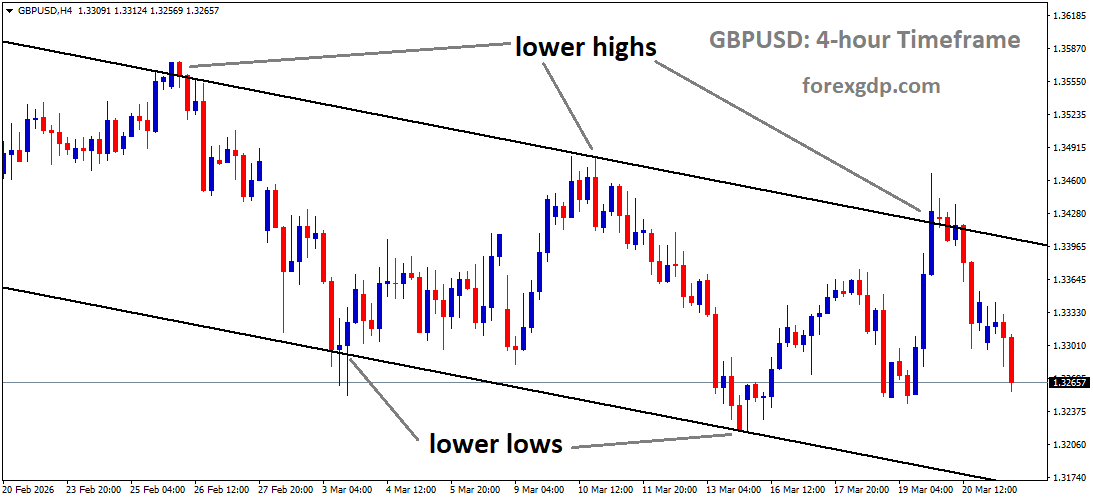
GBPUSD is moving in a descending channel, and the market has fallen from the lower high area of the channel
A stronger US Dollar, driven by its status as a safe-haven currency, is one of the main reasons behind this decline. At the same time, concerns about inflation, economic slowdown, and geopolitical risks are shaping the direction of the currency markets.
Rising Global Tensions Fuel Demand for the US Dollar
One of the biggest factors influencing the currency market right now is the escalating conflict in the Middle East. The ongoing war involving the United States, Israel, and Iran has increased uncertainty across global markets.
As tensions rise, investors often move their money into assets they consider safer. The US Dollar is widely seen as one of those safe-haven currencies. This shift in demand strengthens the Dollar and puts pressure on other currencies, including the British Pound.
The situation has become more serious with recent statements from political leaders. There have been warnings of potential military actions, including threats to strike key infrastructure if certain conditions are not met. In response, Iranian officials have indicated they are prepared to retaliate, raising fears of a broader regional conflict.
Such developments make investors cautious. When uncertainty grows, markets tend to react quickly, and currencies are often among the first to show the impact.
Oil Prices Surge and Add to Economic Pressure
Another major development is the sharp rise in oil prices. Brent crude has moved above the $100 mark, which is a significant level and has wide-reaching effects on the global economy.
Higher oil prices increase the cost of energy, transportation, and production. This leads to higher prices for goods and services, contributing to inflation. At the same time, high energy costs can slow down economic growth because businesses and consumers face higher expenses.
This combination of rising inflation and slowing growth is often referred to as stagflation. It is a difficult situation for central banks because measures to control inflation can further slow the economy, while efforts to support growth may increase inflation.
As these concerns grow, the US Dollar benefits again because investors prefer stability during uncertain times.
Bank of England Holds Rates Amid Inflation Concerns
The Bank of England recently decided to keep interest rates unchanged at 3.75%. While this decision may appear stable on the surface, it comes with important warnings.
The central bank has highlighted that the current global situation could push inflation higher in the short term. Rising energy prices, combined with supply disruptions, are expected to increase costs across the economy.
At the same time, the outlook for economic growth has weakened. Forecasts for future growth have been reduced, suggesting that the UK economy may struggle to expand at a healthy pace in the coming years.
This creates a difficult balancing act for policymakers. Raising interest rates could help control inflation but may also slow down economic activity further. On the other hand, keeping rates steady might support growth but risks allowing inflation to rise.
Weak UK Labor Market Adds to Pressure on the Pound
Recent labor market data from the UK has also played a role in weakening the Pound. Reports indicate that the unemployment rate has increased, signaling potential weakness in the job market.
A rising unemployment rate often suggests that businesses are hiring less or cutting jobs due to economic uncertainty. This can reduce consumer spending, which is a key driver of economic growth.
When economic data shows signs of weakness, investors may lose confidence in the currency. In this case, disappointing labor market figures have added to the downward pressure on GBP/USD.
Upcoming PMI Data Could Influence Market Direction

Traders are now closely watching upcoming economic data, particularly the Purchasing Managers Index (PMI) reports from both the UK and the US.
PMI data provides insight into the health of the manufacturing and services sectors. Strong readings can indicate economic expansion, while weaker numbers may suggest slowing activity.
These reports are important because they help investors understand how businesses are performing under current conditions. Any surprises in the data could lead to sudden movements in the currency market.
If the US data shows stronger economic performance compared to the UK, it could further support the US Dollar. On the other hand, better-than-expected UK data might provide some relief for the Pound.
UK Leadership Responds to Economic Risks
In response to the growing challenges, UK leaders are taking action. An emergency meeting has been scheduled to discuss the economic impact of the ongoing conflict and rising energy costs.
Key figures, including Prime Minister Keir Starmer, Bank of England Governor Andrew Bailey, and Finance Minister Rachel Reeves, are expected to attend. The focus of the meeting will likely be on how to manage inflation risks and protect the economy from external shocks.
Such high-level discussions highlight the seriousness of the situation. Governments and central banks are working to understand how global events may affect domestic economies and what steps can be taken to reduce the impact.
The Bigger Picture for GBP/USD
The recent decline in GBP/USD is not driven by a single factor. Instead, it reflects a combination of global and domestic influences.
On the global side, geopolitical tensions and rising oil prices are increasing uncertainty and pushing investors toward the US Dollar. On the domestic side, the UK faces challenges such as rising inflation, slower growth, and a weakening labor market.
These factors together create a difficult environment for the British Pound. Unless there is a clear improvement in economic conditions or a reduction in global tensions, the pressure on GBP/USD may continue.
Summary
The GBP/USD pair has weakened as a stronger US Dollar gains support from global uncertainty and safe-haven demand. Rising tensions in the Middle East and increasing oil prices are adding to inflation fears and economic risks worldwide.
At the same time, the UK faces its own challenges, including steady interest rates, rising inflation concerns, and weaker labor market data. With key economic reports on the horizon and policymakers closely monitoring the situation, the currency pair is likely to remain sensitive to both global developments and domestic economic signals.
USDJPY Edges Higher While Japanese Yen Remains Under Pressure
The USD/JPY currency pair has been gaining upward momentum for two days in a row, showing steady movement during the early Asian trading session. The pair climbed toward the mid-159 range, staying close to levels last seen in mid-2024. While the upward trend continues, traders remain cautious, and the overall sentiment suggests that buyers are not fully confident yet.
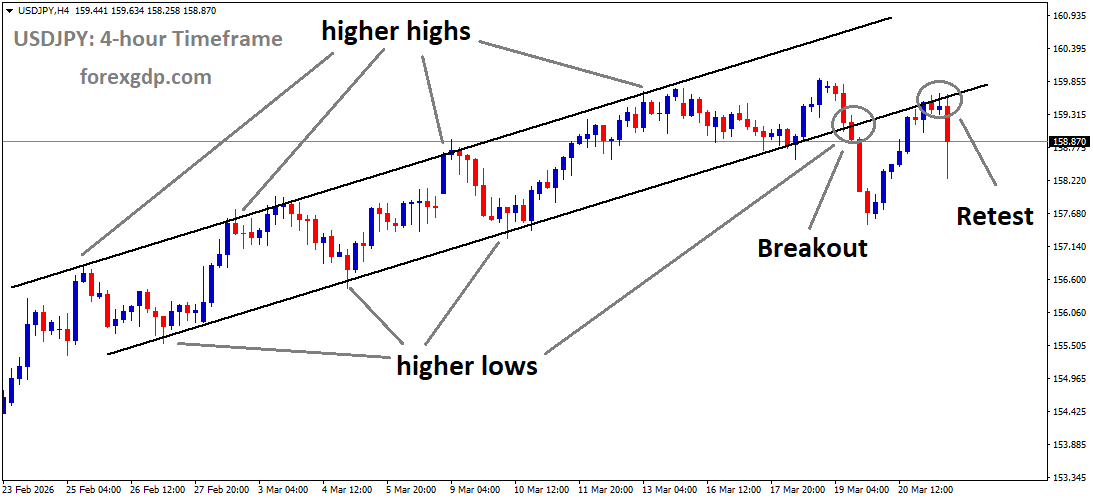
USDJPY reached the retest area of the broken Ascending channel
Several global and domestic factors are shaping the direction of this currency pair. From geopolitical developments to central bank policies, each element plays a role in influencing both the US Dollar (USD) and the Japanese Yen (JPY). Understanding these factors can help explain why the pair is moving higher, while also facing resistance at certain levels.
Geopolitical Tensions Support the US Dollar
One of the key drivers behind the recent strength of the USD is rising geopolitical uncertainty. When global tensions increase, investors often turn to safe-haven assets, and the US Dollar benefits from its long-standing position as the world’s primary reserve currency.
Recent developments in the Middle East have added to market anxiety. The situation intensified after strong statements from the United States regarding critical energy routes. Such events tend to create uncertainty in global markets, pushing investors toward assets perceived as stable and reliable. As a result, demand for the US Dollar increases.
This surge in demand supports the USD/JPY pair, as a stronger Dollar naturally pushes the pair higher. However, while geopolitical concerns are boosting the USD, they are only one part of the bigger picture.
Japan’s Response to Currency Volatility
On the Japanese side, authorities are closely watching the currency market. Officials have expressed concern about excessive fluctuations in exchange rates. Japan’s top foreign exchange authority recently stated that the government is prepared to take action if needed to stabilize the market.
Possible Intervention Measures
The mention of intervention is important. In the past, Japan has stepped in to support the Yen when it weakens too quickly. Even the possibility of such action can make traders cautious. It acts as a psychological barrier, preventing aggressive moves against the Yen.
This means that while the USD/JPY pair is rising, traders are hesitant to push it too far too quickly. The risk of sudden government action creates uncertainty, which limits strong bullish momentum.
Bank of Japan Maintains a Firm Outlook
Another factor supporting the Japanese Yen is the stance of the Bank of Japan (BoJ). The central bank has signaled that it may continue adjusting its monetary policy if economic conditions improve as expected.
Interest Rate Direction and Inflation Outlook
The BoJ has indicated that it is prepared to raise interest rates further if inflation and economic growth align with its projections. This is a notable shift from Japan’s long period of ultra-low interest rates.
Officials have also pointed out that inflation is expected to move closer to the central bank’s target in the coming months. At the same time, real interest rates in Japan remain very low, leaving room for future adjustments.
This more hawkish tone provides support to the Yen. It suggests that Japan may gradually move toward tighter monetary policy, which can strengthen its currency over time. As a result, this limits how far the USD/JPY pair can rise.
The Federal Reserve’s Measured Approach
In contrast to Japan’s evolving stance, the US Federal Reserve is taking a more cautious approach. The Fed has indicated that it may reduce interest rates at a slower pace than previously expected.
This outlook has mixed effects on the USD. On one hand, higher interest rates typically support the Dollar. On the other hand, expectations of future rate cuts can reduce its strength.
Balancing Expectations
The current projections suggest only limited rate reductions over the next few years. This creates a balanced environment where the USD remains supported but does not gain excessive strength.
Because of this, the USD/JPY pair does not move sharply in one direction. Instead, it shows gradual upward movement, influenced by both supportive and limiting factors.
Oil Prices and Their Impact on Japan
Another important element affecting the Yen is the rise in global oil prices. Japan relies heavily on imported energy, so higher oil prices can put pressure on its economy.
When energy costs increase, it can lead to higher import bills and weaken economic performance. This tends to reduce demand for the Yen, making it less attractive compared to other currencies.
Economic Pressure from Energy Costs
The recent increase in oil prices, driven partly by geopolitical tensions, has raised concerns about Japan’s economic outlook. This contributes to the Yen’s relative weakness against the US Dollar.
As a result, the USD/JPY pair finds additional support. However, this factor alone is not strong enough to drive a sharp rally, especially when balanced against intervention risks and central bank policies.
A Market Caught Between Forces
The current movement in USD/JPY reflects a balance between competing influences. On one side, the US Dollar is gaining strength from global uncertainty and safe-haven demand. On the other side, the Japanese Yen is supported by policy signals and the possibility of government intervention.
This creates a situation where the pair moves upward, but without strong conviction. Traders are carefully watching developments, both in global politics and central bank decisions.
Why Traders Remain Cautious
There are several reasons why market participants are hesitant to take strong positions:
- The risk of intervention by Japanese authorities
- Uncertainty around future interest rate changes in both countries
- Ongoing geopolitical tensions that can shift sentiment quickly
Because of these factors, the USD/JPY pair is likely to experience controlled movements rather than sharp spikes.
What to Watch Going Forward
Looking ahead, several key developments could influence the direction of the USD/JPY pair:
Central Bank Decisions
Any updates from the Bank of Japan or the Federal Reserve will be closely monitored. Changes in interest rate expectations can quickly impact currency movements.
Geopolitical Events
Ongoing tensions, especially in energy-sensitive regions, will continue to affect global markets and investor sentiment.
Government Actions in Japan
If Japanese authorities decide to step into the market, it could lead to sudden changes in the Yen’s value.
Final Summary
The USD/JPY pair is moving higher, supported by global uncertainty and strong demand for the US Dollar. At the same time, the Japanese Yen is holding its ground due to a firm policy outlook from the Bank of Japan and the possibility of government intervention.
Rising oil prices and geopolitical tensions are adding pressure to Japan’s economy, which further supports the upward movement of the pair. However, traders remain cautious, preventing aggressive gains.
Overall, the market is navigating a complex mix of factors, resulting in steady but controlled movement. The balance between Dollar strength and Yen support continues to define the current trend, making it a closely watched currency pair in global markets.
AUDUSD recovers ground as US shifts stance on Iran conflict
The AUD/USD currency pair experienced a sharp wave of volatility at the start of the week but managed to recover as global sentiment shifted. After facing early losses, the pair bounced back and hovered around the 0.7000 level. This recovery came as investors reacted to a sudden change in geopolitical developments involving the United States and Iran.
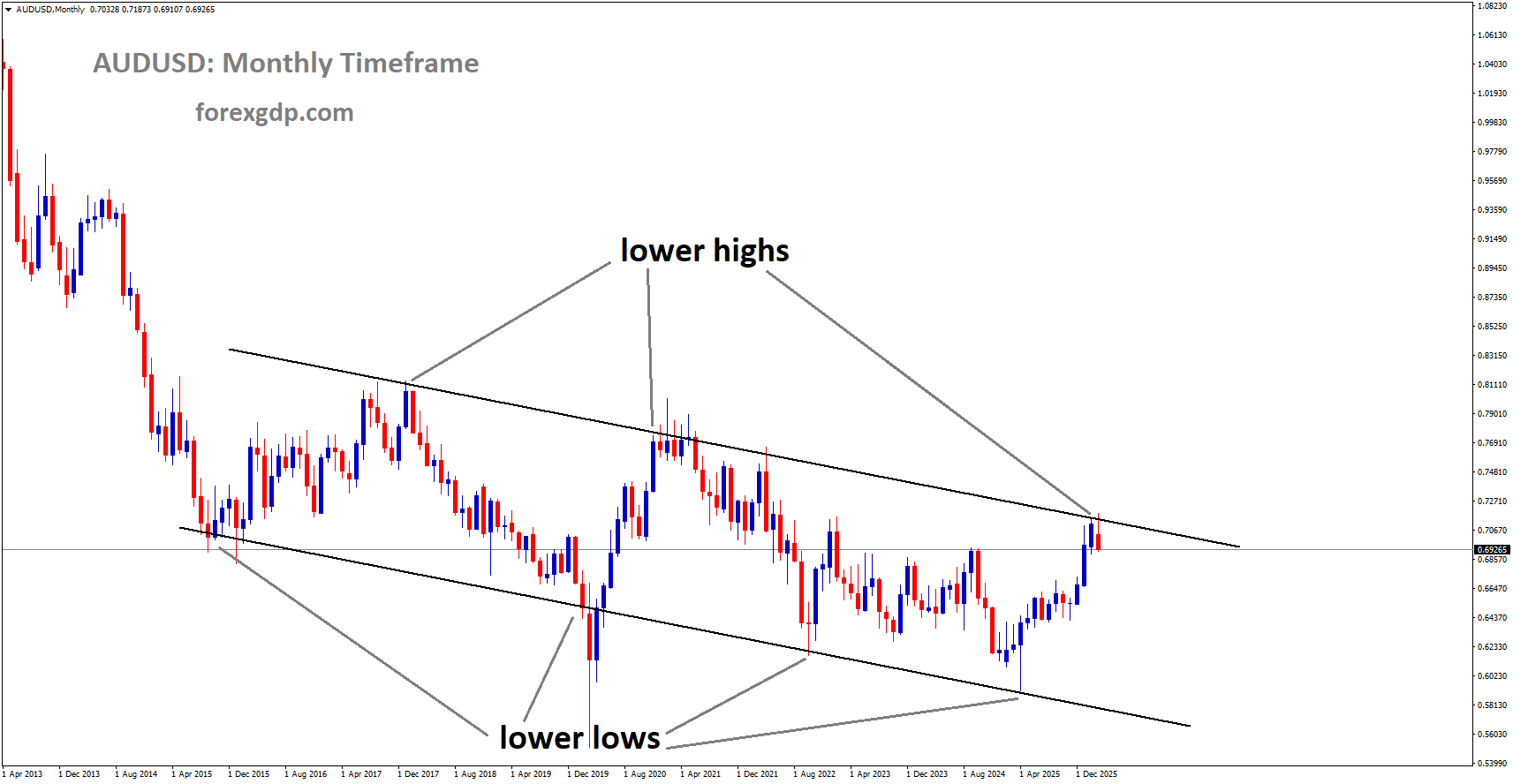
AUDUSD is moving in a descending channel, and the market has reached the lower high area of the channel
Financial markets are highly sensitive to global events, especially those linked to political tensions and military actions. In this case, a shift in tone from the United States played a key role in calming investor concerns and restoring confidence across markets.
A Sudden Shift in US Policy Changes Market Direction
The main trigger behind the improved sentiment was an announcement from US President Donald Trump. He revealed that planned military strikes on Iranian power plants would be postponed for five days. This decision marked a significant shift from earlier statements that had raised fears of immediate conflict.
Initially, markets were under pressure due to strong warnings issued over the weekend. The US had indicated that it might carry out attacks if Iran did not reopen the Strait of Hormuz within 48 hours. This waterway is one of the most important oil routes in the world, and any disruption can have wide-reaching effects on global trade and energy supply.
The postponement of military action gave investors a sense of relief. It reduced the immediate risk of escalation and allowed markets to stabilize after a tense start.
Risk Appetite Returns to Financial Markets
Investor behavior is often driven by how safe or risky they perceive the global environment to be. When tensions rise, traders tend to move toward safer assets like the US Dollar or government bonds. This is known as “risk-off” sentiment.
However, when conditions improve or fears ease, investors shift back toward higher-risk assets such as stocks and currencies like the Australian Dollar. This shift is referred to as “risk-on” sentiment.
Following the US announcement, risk appetite returned quickly. Stock markets responded positively, with major indices recovering earlier losses. Futures tied to the S&P 500 surged, signaling renewed confidence among investors.
This improvement in mood directly supported the Australian Dollar, which is often seen as a risk-sensitive currency due to Australia’s strong ties to global trade and commodities.
US Dollar Weakens as Safe-Haven Demand Falls
As investors moved away from safe-haven assets, the US Dollar began to lose its earlier strength. The US Dollar Index (DXY), which measures the currency against a basket of major global currencies, dropped after initially rising.
This shift is a typical market reaction. When uncertainty fades, demand for the US Dollar usually declines because traders feel more comfortable taking risks elsewhere.
The weakening of the Dollar helped the AUD/USD pair recover from its earlier drop. Since this pair measures the value of the Australian Dollar against the US Dollar, any decline in the Dollar can push the pair higher.
Earlier Threats Sparked Market Anxiety
Before the announcement of the delay, markets had been on edge due to escalating rhetoric between the United States and Iran. Over the weekend, strong warnings were issued, creating fears of immediate military action.
The United States had threatened to target Iran’s power infrastructure if certain demands were not met. In response, Iran signaled that it could take serious countermeasures.
These included the possibility of closing the Strait of Hormuz indefinitely and launching attacks on regional infrastructure linked to the US and its allies. Such actions would have major consequences for global energy supply and economic stability.
This exchange of threats led to a risk-averse environment early in the trading day. Investors quickly reduced exposure to risky assets, which caused the initial drop in the AUD/USD pair.
Why the Australian Dollar Reacts Strongly to Global Events

The Australian Dollar is known for reacting strongly to global developments, especially those tied to trade, commodities, and geopolitical stability. This is because Australia’s economy depends heavily on exports and international demand.
When global tensions rise, trade flows can be disrupted, which negatively impacts currencies like the Aussie. On the other hand, when conditions improve, the currency often gains strength as investors return to growth-focused assets.
In this case, the easing of tensions allowed the Australian Dollar to recover quickly. The move back toward the 0.7000 level reflects how sensitive the currency is to changes in global sentiment.
Volatility Remains a Key Feature
Even though markets have stabilized for now, volatility is likely to remain high. The situation between the United States and Iran is still uncertain, and any new developments could quickly change the direction of markets again.
Traders will continue to monitor headlines closely. Decisions related to military actions, diplomatic talks, or economic sanctions can all have immediate effects on currencies and global markets.
This kind of environment often leads to sharp price swings, as seen in the early part of the trading session. It highlights how quickly sentiment can shift based on new information.
The Bigger Picture for Investors
Events like these serve as a reminder of how interconnected global markets are. Political decisions made in one part of the world can influence currencies, stocks, and investor behavior everywhere.
For traders and investors, staying informed about geopolitical developments is just as important as understanding economic data. Sudden announcements, like the postponement of military action, can change market direction within minutes.
At the same time, the reaction of the AUD/USD pair shows how markets often overreact to uncertainty and then correct once clarity emerges.
Summary
The AUD/USD pair’s movement around the 0.7000 level reflects a broader shift in global sentiment. Early fears of conflict pushed markets into a cautious stance, but the decision to delay military action helped restore confidence.
As risk appetite returned, the Australian Dollar gained support while the US Dollar weakened. This combination allowed the pair to recover its losses and stabilize.
However, the situation remains fluid. Ongoing tensions and potential developments could continue to drive volatility in the days ahead. Investors will need to stay alert as markets respond to every new update on the global stage.
NZDUSD Falls as Geopolitical Risks Climb and New Zealand Faces Negative Rating Shift
The NZD/USD currency pair started the week on a weaker note, drifting lower during the early hours of Monday’s Asian trading session. The pair moved closer to the 0.5830 level as a mix of geopolitical uncertainty and economic developments put pressure on the New Zealand Dollar.
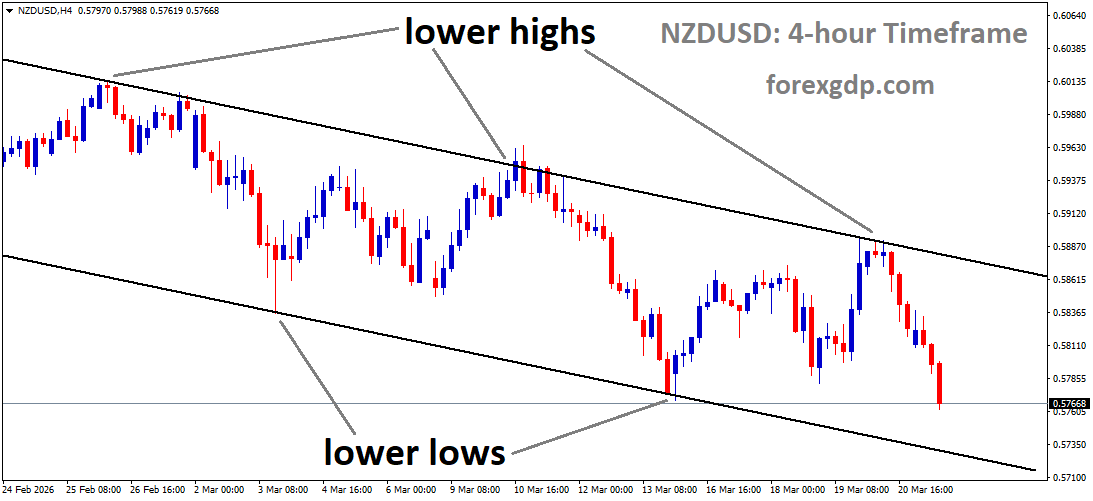
NZDUSD is moving in a descending channel, and the market has fallen from the lower high area of the channel
This movement reflects how global events and economic outlooks can quickly influence currency markets, especially when risk sentiment shifts in favor of safer assets like the US Dollar.
Geopolitical Tensions Drive Demand for Safe-Haven Assets
One of the main reasons behind the decline in NZD/USD is the rise in geopolitical tensions in the Middle East. When uncertainty increases on the global stage, investors tend to move their money into assets considered safer and more stable. The US Dollar is often seen as one of these safe-haven currencies.
Recent developments involving Iran have added to the tension. Iranian officials stated that they could completely shut down the Strait of Hormuz if the United States takes military action against its energy infrastructure. This warning has raised concerns because the Strait of Hormuz is one of the most important shipping routes for global oil supply.
Any disruption in this region could have serious consequences for global trade and energy markets. As a result, investors are becoming more cautious, reducing their exposure to riskier currencies like the New Zealand Dollar and increasing their holdings in the US Dollar.
Why the Strait of Hormuz Matters
A Key Global Trade Route
The Strait of Hormuz is a narrow but critical waterway through which a large portion of the world’s oil supply passes. It connects major oil-producing countries in the Middle East to global markets.
If this route is blocked or restricted, it could lead to supply disruptions and increased uncertainty in global markets. Even the threat of closure is enough to create volatility, as traders react quickly to potential risks.
Impact on Currency Markets
Currency markets are highly sensitive to global events. When risks rise, currencies linked to smaller or export-driven economies, like New Zealand, often come under pressure. On the other hand, the US Dollar tends to strengthen because of its role as a global reserve currency.
This shift in investor behavior is one of the key factors behind the recent drop in the NZD/USD pair.
Economic Outlook Adds Pressure on the Kiwi
In addition to geopolitical concerns, the New Zealand Dollar is also facing pressure from changes in its economic outlook. Fitch Ratings recently revised New Zealand’s outlook to negative, signaling concerns about the country’s future economic performance.
What a Negative Outlook Means
A negative outlook from a major ratings agency like Fitch does not mean an immediate downgrade, but it does suggest that risks are increasing. It indicates that the country’s economic conditions could worsen if certain challenges are not addressed.
This kind of news can reduce investor confidence. When confidence declines, demand for the country’s currency may weaken, leading to downward pressure.
Investor Sentiment Shifts
Currency values are heavily influenced by how investors feel about a country’s economic stability and growth prospects. A weaker outlook can make investors more cautious, encouraging them to move funds into more stable markets.
In this case, the combination of global uncertainty and domestic economic concerns has made the New Zealand Dollar less attractive compared to the US Dollar.
The Role of US Policy and Global Influence

Another layer of uncertainty comes from the stance of the United States. Reports indicate that US leadership has issued a firm warning to Iran, setting a short deadline related to shipping activity in the Strait of Hormuz.
Such developments increase the risk of escalation, which can have ripple effects across global markets. The US plays a major role in international trade and finance, so its actions often influence investor behavior worldwide.
As tensions rise, the US Dollar benefits not only from its safe-haven status but also from its central role in the global financial system.
Market Reactions Reflect Broader Uncertainty
The movement of the NZD/USD pair is not happening in isolation. It reflects a broader pattern seen across financial markets when uncertainty increases.
Risk-Off Environment
When investors become cautious, markets enter what is often called a “risk-off” phase. During this time, traders tend to sell assets that are considered risky and move into safer alternatives.
Currencies like the New Zealand Dollar, which are tied to global trade and economic growth, often weaken in such environments. Meanwhile, the US Dollar typically strengthens.
Short-Term Volatility
The current situation suggests that volatility may remain elevated in the short term. As new developments emerge, especially regarding geopolitical tensions, currency markets are likely to react quickly.
Even small changes in headlines or statements from key players can lead to noticeable movements in exchange rates.
What to Watch Going Forward
Several factors will likely influence the direction of the NZD/USD pair in the coming days and weeks.
Geopolitical Developments
Any updates related to the Middle East situation, particularly involving Iran and the Strait of Hormuz, will be closely watched. Escalation could further boost demand for safe-haven currencies.
Economic Signals from New Zealand
Investors will also pay attention to economic data and policy decisions from New Zealand. Any signs of improvement could help stabilize the currency, while further negative developments may add pressure.
Global Market Sentiment
Overall risk sentiment will continue to play a key role. If markets remain cautious, the US Dollar may continue to outperform, keeping the NZD/USD pair under pressure.
Final Summary
The NZD/USD pair has weakened at the start of the week, moving closer to the 0.5830 level as global tensions and economic concerns weigh on the New Zealand Dollar. Rising uncertainty in the Middle East, particularly involving Iran and the Strait of Hormuz, has pushed investors toward safer assets like the US Dollar.
At the same time, a negative outlook for New Zealand’s economy has reduced confidence in the Kiwi, adding further pressure. Together, these factors highlight how both global events and domestic conditions can shape currency movements.
As the situation develops, traders and investors will remain focused on geopolitical updates, economic signals, and overall market sentiment to gauge the next direction for the NZD/USD pair.
BTCUSD holds near 68K while global tensions trigger cautious market sentiment
Bitcoin has started the week on uncertain ground, hovering around the $68,500 level as global developments weigh heavily on investor sentiment. While the cryptocurrency has shown resilience in recent months, the current environment reflects growing caution across financial markets. Rising geopolitical tensions, combined with mixed signals from institutional investors, are creating a challenging backdrop for the world’s largest digital asset.
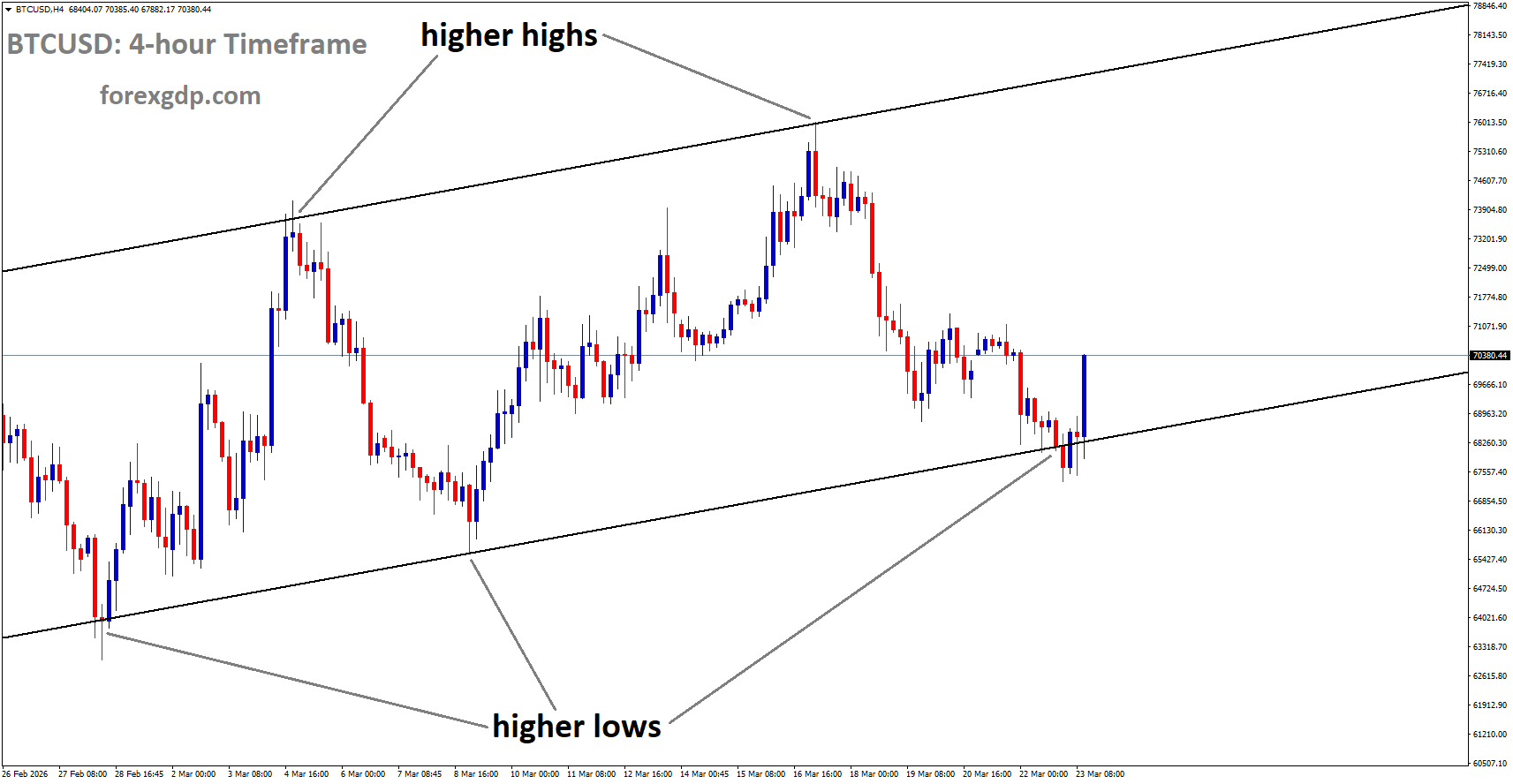
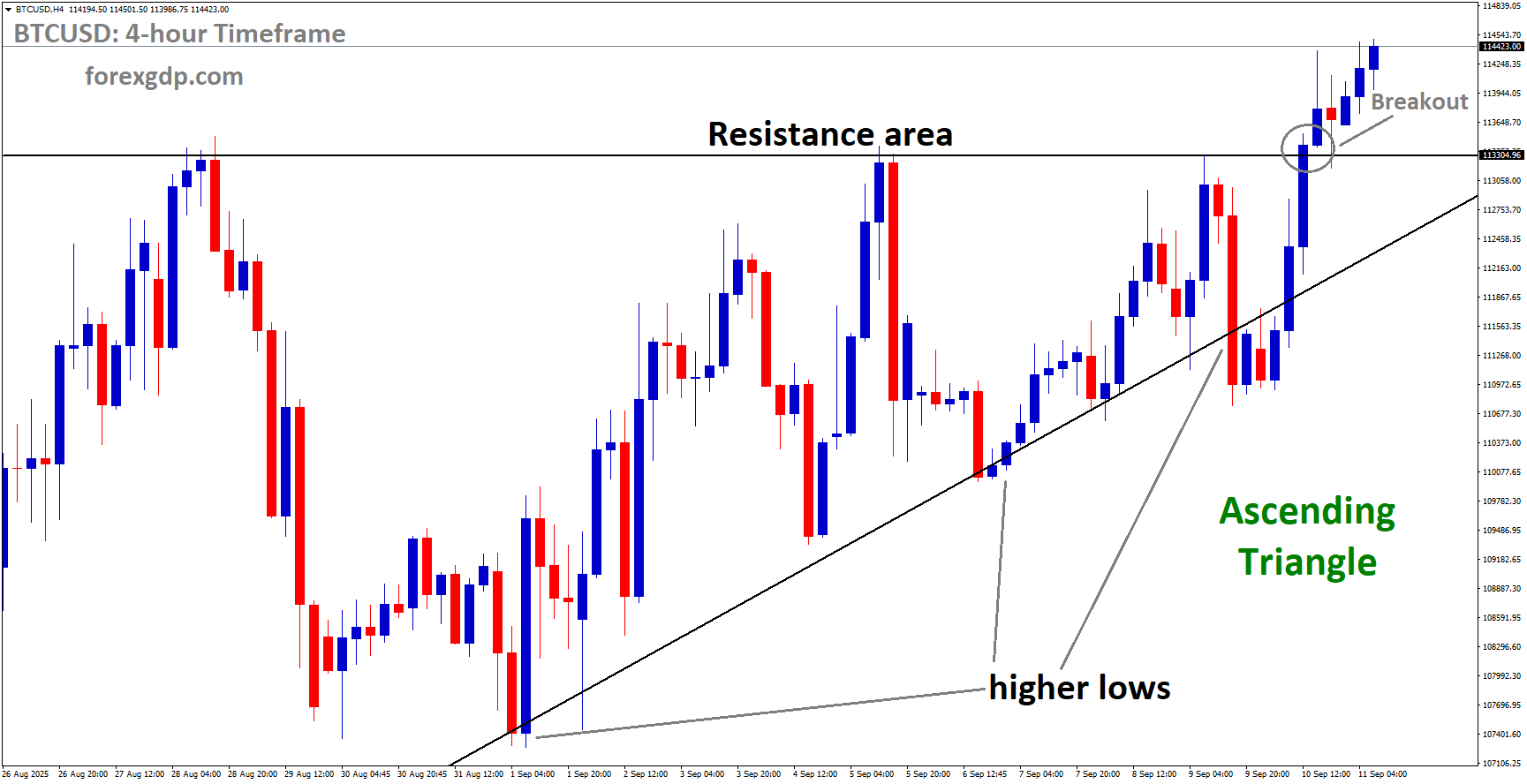
BTCUSD is moving in an uptrend channel, and the market has rebounded from the higher low area of the channel
Rising Global Tensions Impact Investor Mood
Over the weekend, Bitcoin experienced a noticeable decline, dropping close to 4% and ending the previous week with a loss of more than 6%. This downward movement comes at a time when global uncertainty is increasing, particularly due to escalating tensions between the United States and Iran.
The situation intensified after strong statements and warnings were exchanged between the two countries. The United States issued a firm demand related to the Strait of Hormuz, a critical global oil route, along with threats targeting energy infrastructure. Iran responded with its own warnings, raising concerns about potential disruptions in the Gulf region.
Such developments often have a direct impact on financial markets. When uncertainty rises, investors tend to move away from riskier assets. Bitcoin, despite its growing reputation as a store of value, is still widely seen as a risk-sensitive asset in times of global stress.
This shift in sentiment has not only affected cryptocurrencies but also traditional markets. Asian stock markets and US equity futures opened the week on a weaker note, reflecting widespread caution among investors.
Fear Takes Hold Across Financial Markets
One of the clearest signs of declining confidence is the sharp drop in the Fear and Greed Index, a widely used indicator that measures market sentiment. The index has fallen into the “extreme fear” zone, signaling that investors are becoming increasingly nervous.
When fear dominates the market, traders often reduce their exposure to volatile assets. This behavior can lead to lower trading volumes and downward price pressure. In Bitcoin’s case, this shift is evident in its cautious movement below key levels and the overall slowdown in upward momentum.
It is important to understand that sentiment plays a major role in cryptocurrency markets. Unlike traditional assets, Bitcoin is highly influenced by investor psychology. News events, global conflicts, and economic uncertainty can quickly change the direction of the market.
Institutional Investors Show Signs of Caution
Another important factor shaping Bitcoin’s current position is the behavior of institutional investors. Over the past week, US-listed spot Bitcoin exchange-traded funds (ETFs) recorded a modest inflow of $95.18 million. While this may seem positive at first glance, a deeper look reveals a more cautious approach.
Slowing Inflows Reflect Hesitation

The inflows into Bitcoin ETFs suggest that institutional interest is still present, but it is not as strong or confident as before. Instead of large, consistent investments, the market is seeing smaller and more careful allocations.
This change in behavior often indicates uncertainty. Large investors, such as hedge funds and asset managers, tend to adjust their strategies based on global conditions. When risks increase, they may choose to wait rather than make aggressive moves.
Consecutive Outflows Raise Concerns
Adding to the cautious outlook, Bitcoin ETFs experienced three straight days of outflows toward the end of the week. This trend suggests that some institutional investors are beginning to pull back.
Outflows can be an early warning sign. They indicate that investors are either taking profits or reducing exposure due to concerns about future market conditions. If this pattern continues, it could lead to further pressure on Bitcoin’s price in the coming weeks.
Bitcoin’s Position in a Risk-Off Environment
Bitcoin’s recent performance highlights its sensitivity to global risk trends. In times of stability, the cryptocurrency often attracts investors looking for growth opportunities. However, during periods of uncertainty, it can behave more like a high-risk asset.
Why Risk-Off Sentiment Matters
A “risk-off” environment occurs when investors prioritize safety over returns. In such situations, money typically flows into assets considered more stable, such as government bonds or cash.
Bitcoin, despite its long-term potential, is still viewed as volatile. As a result, it may face selling pressure when investors shift their focus toward preserving capital.
Market Reaction to Geopolitical Events
Geopolitical tensions have historically influenced financial markets in significant ways. Events that threaten global trade, energy supply, or economic stability tend to increase uncertainty. This uncertainty leads to cautious behavior, reduced risk-taking, and often lower asset prices.
In the current scenario, concerns about disruptions in the Middle East are adding to an already complex global landscape. This is contributing to the cautious tone seen across both crypto and traditional markets.
What Investors Are Watching Next
As the situation continues to develop, investors are closely monitoring several key factors that could influence Bitcoin’s direction.
Geopolitical Developments
The ongoing tensions between major global players remain a critical factor. Any escalation or resolution could quickly impact market sentiment. Positive developments may restore confidence, while further conflict could deepen the current cautious mood.
Institutional Activity
The behavior of institutional investors will also play a major role. Continued outflows from Bitcoin ETFs could signal growing concern, while renewed inflows may indicate a return of confidence.
Broader Market Trends
Bitcoin does not operate in isolation. Movements in stock markets, currency markets, and global economic indicators all influence its performance. A stable or improving macro environment could support Bitcoin, while continued uncertainty may keep pressure on prices.
Final Summary
Bitcoin is currently navigating a challenging phase marked by global uncertainty and cautious investor behavior. Rising tensions in the Middle East have triggered a risk-off sentiment across markets, leading to reduced confidence and increased volatility.
While institutional interest remains present, recent trends suggest a more careful and defensive approach. The combination of modest ETF inflows and consecutive outflows highlights a shift in strategy among larger investors.
At the same time, broader market sentiment has turned negative, with fear becoming a dominant force. This has created a difficult environment for Bitcoin, which is still viewed as a risk-sensitive asset during times of uncertainty.
Looking ahead, the direction of Bitcoin will largely depend on how global events unfold and whether investor confidence can recover. For now, the market remains cautious, with participants closely watching for signs of stability or further disruption.
Don’t trade all the time, trade forex only at the confirmed trade setups
Get more confirmed trade signals at premium or supreme – Click here to get more signals, 2200%, 800% growth in Real Live USD trading account of our users – click here to see , or If you want to get FREE Trial signals, You can Join FREE Signals Now!