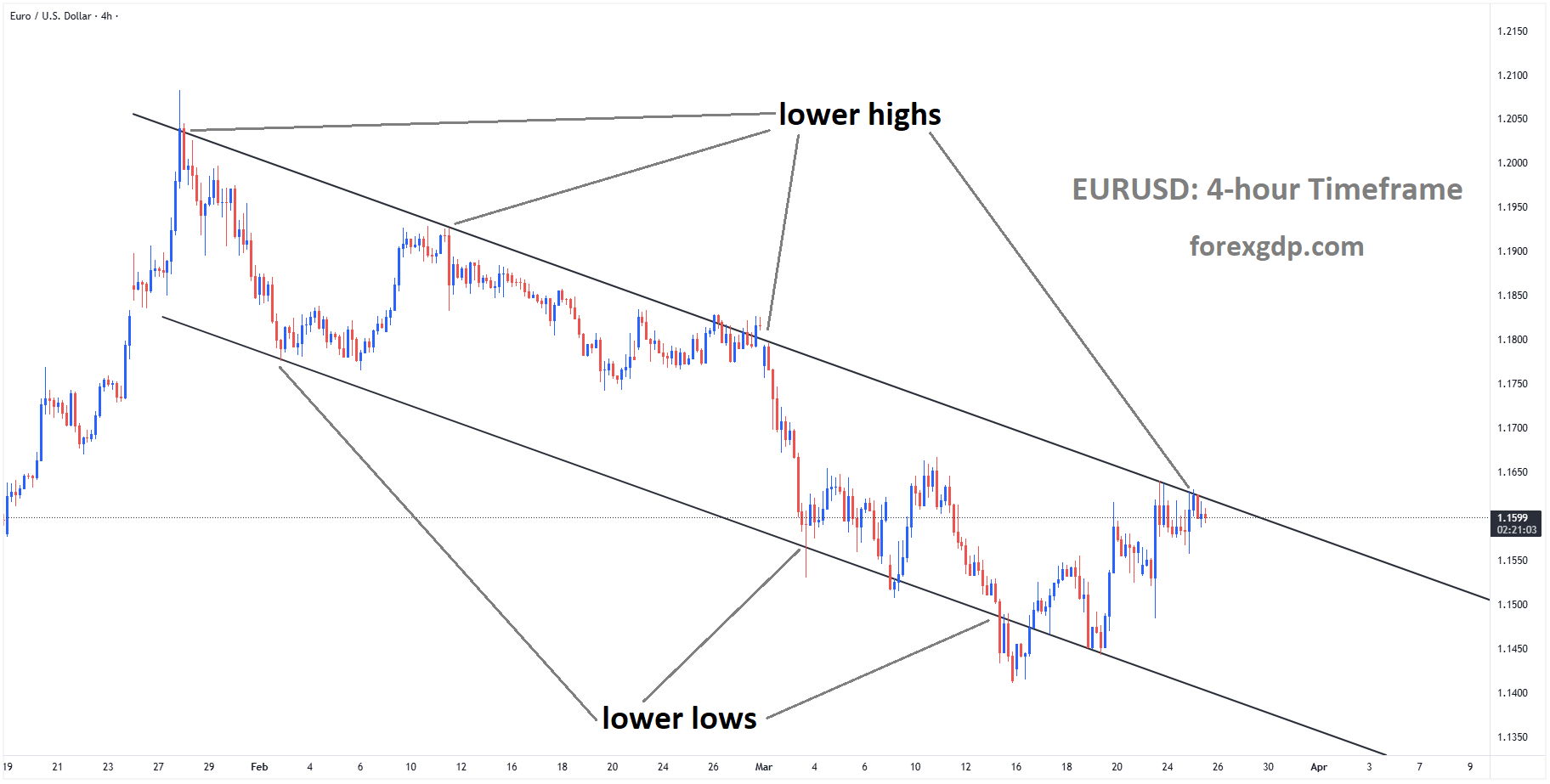
EURUSD is moving in a descending channel, and the market has reached the lower high area of the channel
EURUSD Struggles Around 1.1600 with US-Iran Tensions Keeping Markets on Edge
The EUR/USD currency pair has been under pressure for the second straight day, reflecting a mix of global uncertainty and shifting economic expectations. While there are early signs of diplomatic engagement between the United States and Iran, the US Dollar continues to hold firm, supported by its reputation as a safe-haven currency during uncertain times.
At the same time, growing concerns about energy prices and inflation in Europe are adding another layer of complexity. These combined factors are influencing how traders and policymakers view the near-term outlook for both the Euro and the US Dollar.
US Dollar Strength Persists Amid Uncertainty
One of the key drivers behind the recent movement in EUR/USD is the strength of the US Dollar. Even though there are reports suggesting that the United States is exploring diplomatic solutions with Iran, investors are still cautious.
In times of global tension, the US Dollar often benefits because it is seen as a stable and reliable asset. This safe-haven appeal becomes stronger when geopolitical risks remain unresolved or unpredictable.
Recent developments show that the US government is attempting to reduce tensions in the Middle East through diplomacy. Reports indicate that a detailed peace proposal has been shared with Iran, aiming to bring an end to ongoing hostilities. This plan is said to include multiple steps designed to encourage dialogue and reduce conflict.
Despite these efforts, the market response has been limited. The reason is simple: uncertainty still exists. Investors tend to wait for clear outcomes rather than react strongly to early-stage negotiations.
Diplomatic Efforts Between the US and Iran
There is growing attention on the possibility of renewed talks between Washington and Tehran. According to reports, discussions are focused on a temporary ceasefire that could last about a month. The idea behind this pause is to create a window for more formal negotiations.
Interestingly, Pakistan appears to be playing a key role as a mediator. Messages between the two sides are reportedly being passed through diplomatic channels, which suggests that communication is active, even if not fully public.
Mixed Signals from Both Sides
While some sources suggest progress, Iranian officials have publicly denied that any major breakthrough has been reached. However, behind the scenes, there are indications that dialogue is ongoing.
There is also speculation that representatives from both countries could meet in person in the near future. If this happens, it could mark an important step toward easing tensions.
Ongoing Security Concerns
Despite the diplomatic efforts, the situation remains fragile. Reports indicate that Iran has launched missiles targeting Israel as well as locations linked to US forces in the region, including bases in Kuwait, Bahrain, and Jordan.
These developments highlight the gap between diplomatic discussions and real-world events. Even as talks continue, military actions are still taking place, keeping the overall risk level high.
This combination of diplomacy and conflict creates uncertainty, which tends to support the US Dollar and put pressure on risk-sensitive currencies like the Euro.
European Central Bank Faces Growing Challenges
While geopolitical tensions are influencing the US Dollar, the Euro is also dealing with its own set of challenges. Attention is now turning to the European Central Bank (ECB) and how it plans to respond to current economic conditions.
A key event on the calendar is the ECB Watchers’ Conference, where policymakers are expected to discuss the impact of global risks on the Eurozone economy.
Analysts believe that ECB officials will emphasize a cautious and flexible approach. Instead of making strong commitments, they are likely to focus on incoming data before deciding on future actions.
Focus on Data and Flexibility
The ECB has made it clear that it prefers a data-driven strategy. This means decisions will depend on how economic indicators evolve, including inflation, growth, and external risks.
Given the uncertain global environment, this approach allows the central bank to adjust its policies as needed. However, it also means that markets may not get clear guidance in the short term.
Rising Energy Prices Raise Inflation Concerns
One of the biggest concerns for the Eurozone right now is the potential impact of rising energy prices. ECB policymaker Olaf Sleijpen has warned that higher costs for oil and gas could lead to broader inflation across the economy.
This is especially important because Europe has already experienced an energy-driven inflation surge in recent years. The current situation raises the question of whether a similar pattern could repeat.
Faster Transmission to Inflation
Sleijpen noted that energy price increases might feed into overall inflation more quickly than they did during the 2022 crisis. This means that households and businesses could feel the impact sooner, affecting spending and economic activity.
While the ECB cannot directly control energy prices, it does have tools to respond if inflation starts to spread more widely. Policymakers are particularly focused on what are known as second-round effects, where initial price increases lead to higher wages and further inflation.
Waiting for Clear Signals
For now, the ECB is taking a wait-and-see approach. Officials want to gather more information before making any major policy moves. This cautious stance reflects the complexity of the current situation, where multiple factors are influencing the economic outlook.
Why EUR/USD Remains Under Pressure
The recent weakness in EUR/USD can be traced to a combination of factors rather than a single cause.
On one side, the US Dollar is benefiting from its safe-haven status and continued global demand. Even with signs of diplomacy, the overall level of uncertainty remains high, supporting the Dollar.
On the other side, the Euro is facing headwinds from rising energy costs and concerns about inflation. The ECB’s cautious approach, while understandable, may also limit support for the currency in the short term.
When these elements come together, they create a challenging environment for EUR/USD, leading to the recent downward movement.
What to Watch Next
Looking ahead, several key developments could influence the direction of the EUR/USD pair.
First, any progress in US-Iran negotiations will be closely watched. A clear agreement or reduction in tensions could reduce demand for safe-haven assets like the US Dollar.
Second, updates from the ECB will play a crucial role. If policymakers signal stronger action to address inflation, it could provide support for the Euro.
Third, energy prices will remain a major factor. Continued increases could add pressure on the Eurozone economy and shape the ECB’s response.
Final Summary
The EUR/USD pair is currently shaped by a mix of geopolitical tension and economic uncertainty. The US Dollar remains strong due to its safe-haven appeal, even as diplomatic efforts between the United States and Iran continue in the background.
At the same time, the Euro is facing challenges from rising energy prices and inflation concerns. The European Central Bank is taking a cautious approach, waiting for clearer data before making decisions.
With ongoing military developments in the Middle East and uncertain economic conditions in Europe, the market remains sensitive to new information. The balance between risk, diplomacy, and policy decisions will continue to guide the direction of EUR/USD in the days ahead.
GBPUSD under pressure as UK inflation fails to lift the Pound
The GBP/USD currency pair has recently struggled to maintain upward momentum, facing renewed selling pressure after failing to move higher. A mix of global uncertainty, steady inflation data from the United Kingdom, and increasing demand for the US Dollar has kept the pair under pressure.
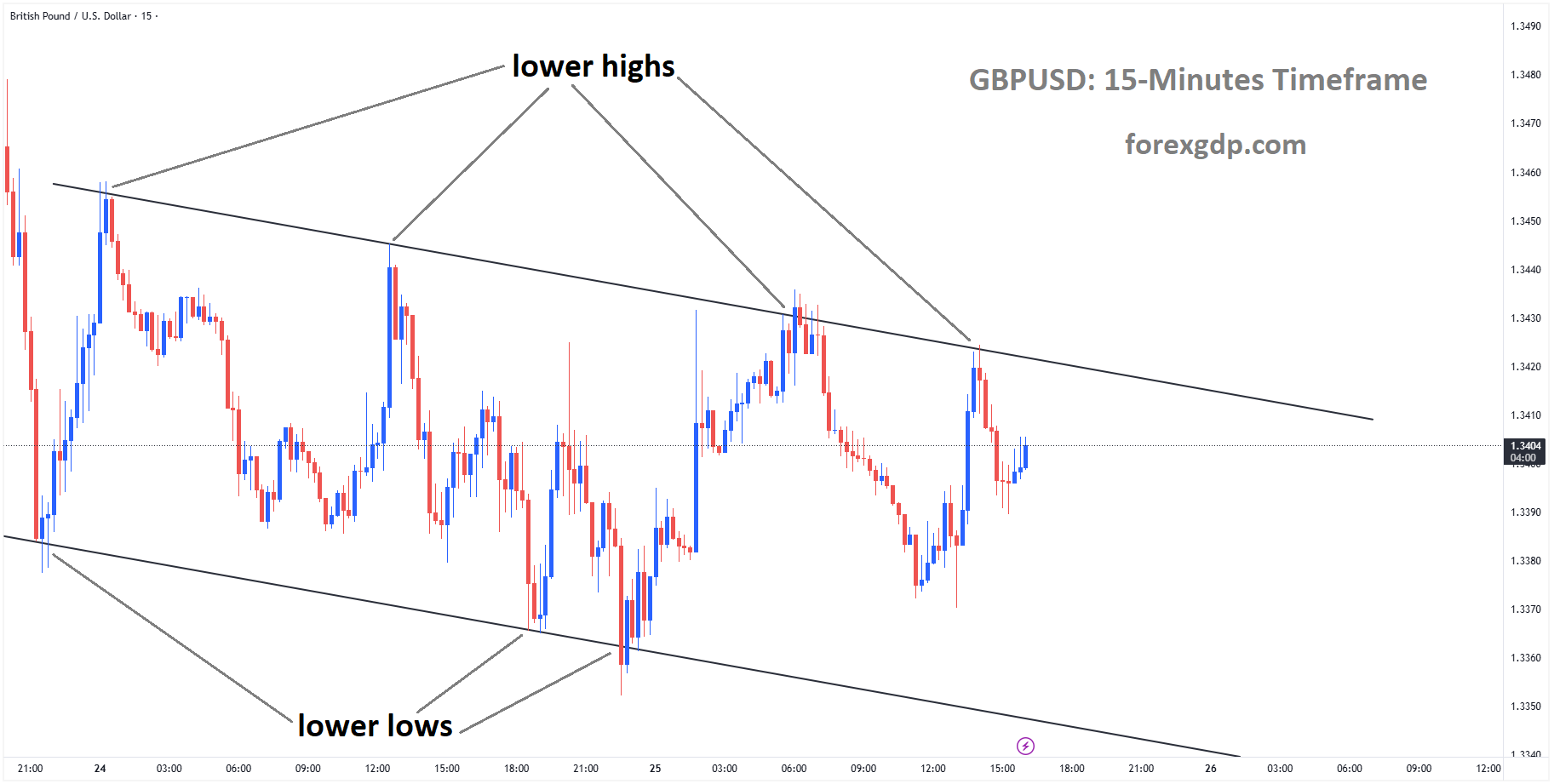
GBPUSD is moving in a descending channel, and the market has fallen from the lower high area of the channel
While the British Pound showed some resilience earlier, broader market conditions have shifted focus toward the US Dollar as a safer option. This has created a challenging environment for GBP/USD, leaving traders cautious about the pair’s near-term direction.
UK Inflation Data Offers Limited Support
The latest inflation data from the United Kingdom has done little to change the current trend. According to the Office for National Statistics, consumer prices rose by 3.0% over the past year in February. This figure matched both the previous month’s reading and what analysts had expected.
At first glance, stable inflation might seem like a positive sign. However, the market reaction was muted. Traders were already anticipating this outcome, which meant the data did not bring any surprises strong enough to move the currency significantly.
Core Inflation Shows Slight Increase
A closer look at the numbers reveals that core inflation, which excludes food and energy prices, increased slightly to 3.2% from 3.1% in January. This suggests that underlying price pressures are still present in the UK economy.
This rise supports the Bank of England’s cautious stance on inflation. The central bank has been signaling that it may need to keep a close eye on rising prices and possibly take action if inflation remains persistent.
However, despite this indication of ongoing inflation concerns, the British Pound did not gain much strength. The reason lies in broader global factors that are currently dominating market sentiment.
Rising Demand for the US Dollar
One of the key reasons behind the weakness in GBP/USD is the renewed demand for the US Dollar. In times of uncertainty, investors often turn to the Dollar as a safe-haven asset. This trend has become more noticeable recently due to increasing geopolitical tensions.
Global Conflicts Fuel Market Caution
The ongoing tensions in the Middle East have added a layer of uncertainty to global markets. Although there have been discussions about a possible temporary ceasefire between the United States and Iran, the situation remains unstable.
Military activity continues in the region, with reports of ongoing strikes and increased troop deployment. These developments have kept investors on edge, encouraging them to shift their funds into safer assets like the US Dollar.
As a result, the Dollar has gained strength, making it more difficult for the British Pound to maintain its position against it.
Expectations Around US Interest Rates
Another factor supporting the US Dollar is the growing belief that the Federal Reserve may continue to take a firm approach toward inflation. There is increasing speculation that interest rates in the United States could remain higher for longer or even rise further if inflation does not ease.
Higher interest rates generally make a currency more attractive to investors because they offer better returns. This has further boosted demand for the US Dollar, adding downward pressure on GBP/USD.
Bank of England Maintains a Watchful Stance
While the US Dollar has been gaining strength, the Bank of England is also keeping a close eye on inflation developments in the UK. The central bank has hinted that it may consider raising interest rates in the near future if inflation risks increase.
Inflation Concerns Linked to Global Events
The situation in the Middle East has raised concerns about potential disruptions to energy supplies. This could lead to higher energy prices, which would push inflation higher not just globally, but also in the UK.
The Bank of England is aware of these risks and has indicated that it is prepared to act if necessary. This has helped prevent the British Pound from falling too sharply, as traders remain cautious about betting heavily against it.
Limited Impact on Market Direction
Despite this supportive backdrop, the Pound has not been able to gain strong momentum. This is mainly because the global environment continues to favor the US Dollar.
Investors are balancing two key forces: the possibility of tighter monetary policy in the UK and the stronger appeal of the US Dollar due to global uncertainty. For now, the latter seems to be having a greater influence on the market.
Why GBP/USD Remains Under Pressure
The current movement in GBP/USD reflects a combination of local and global factors. While the UK economy shows signs of stable inflation, it is not enough to counter the broader demand for the US Dollar.
Key Drivers Behind the Trend
Several factors are contributing to the pair’s recent performance:
Stable but unspectacular UK inflation data
Continued geopolitical tensions affecting global risk sentiment
Strong demand for the US Dollar as a safe-haven asset
Expectations of firm monetary policy in the United States
Together, these elements have created a challenging environment for the British Pound.
Cautious Market Sentiment
Traders are currently taking a cautious approach. While there is some support for the Pound due to potential policy action from the Bank of England, the risks from global uncertainty are making investors hesitant.
This cautious sentiment means that any recovery in GBP/USD may face resistance unless there is a clear shift in market conditions.
What Could Influence the Pair Next?
Looking ahead, several developments could play a role in shaping the direction of GBP/USD.
Changes in Global Tensions
If geopolitical tensions begin to ease, it could reduce demand for the US Dollar and provide some support for the British Pound. On the other hand, any escalation in conflicts could further strengthen the Dollar.
Central Bank Decisions
Both the Federal Reserve and the Bank of England will continue to influence the pair. Any signals about future interest rate changes could lead to noticeable movements in the currency market.
Economic Data Releases
Upcoming economic reports from both the UK and the US will also be important. Stronger data from the UK could help the Pound recover, while solid US data may continue to support the Dollar.
Summary
The GBP/USD pair is currently facing downward pressure as global uncertainty and strong demand for the US Dollar outweigh stable economic signals from the UK. While inflation in the UK remains steady and slightly elevated, it has not been enough to boost the British Pound significantly.
Geopolitical tensions and expectations around US interest rates are playing a major role in shaping market sentiment. At the same time, the Bank of England’s cautious stance is helping to limit losses for the Pound.
For now, the balance of forces favors the US Dollar, keeping GBP/USD under pressure. Future movements will largely depend on how global events unfold and how central banks respond to ongoing economic challenges.
USDJPY gains momentum while Yen struggles despite BoJ tightening signals
The USD/JPY currency pair has been gaining strength, hovering near the 159.00 level during early European trading hours on Wednesday. This upward movement reflects a mix of global political developments, central bank signals, and shifting economic pressures. While the US Dollar shows resilience, the Japanese Yen faces challenges from rising energy costs and ongoing uncertainty in international relations.
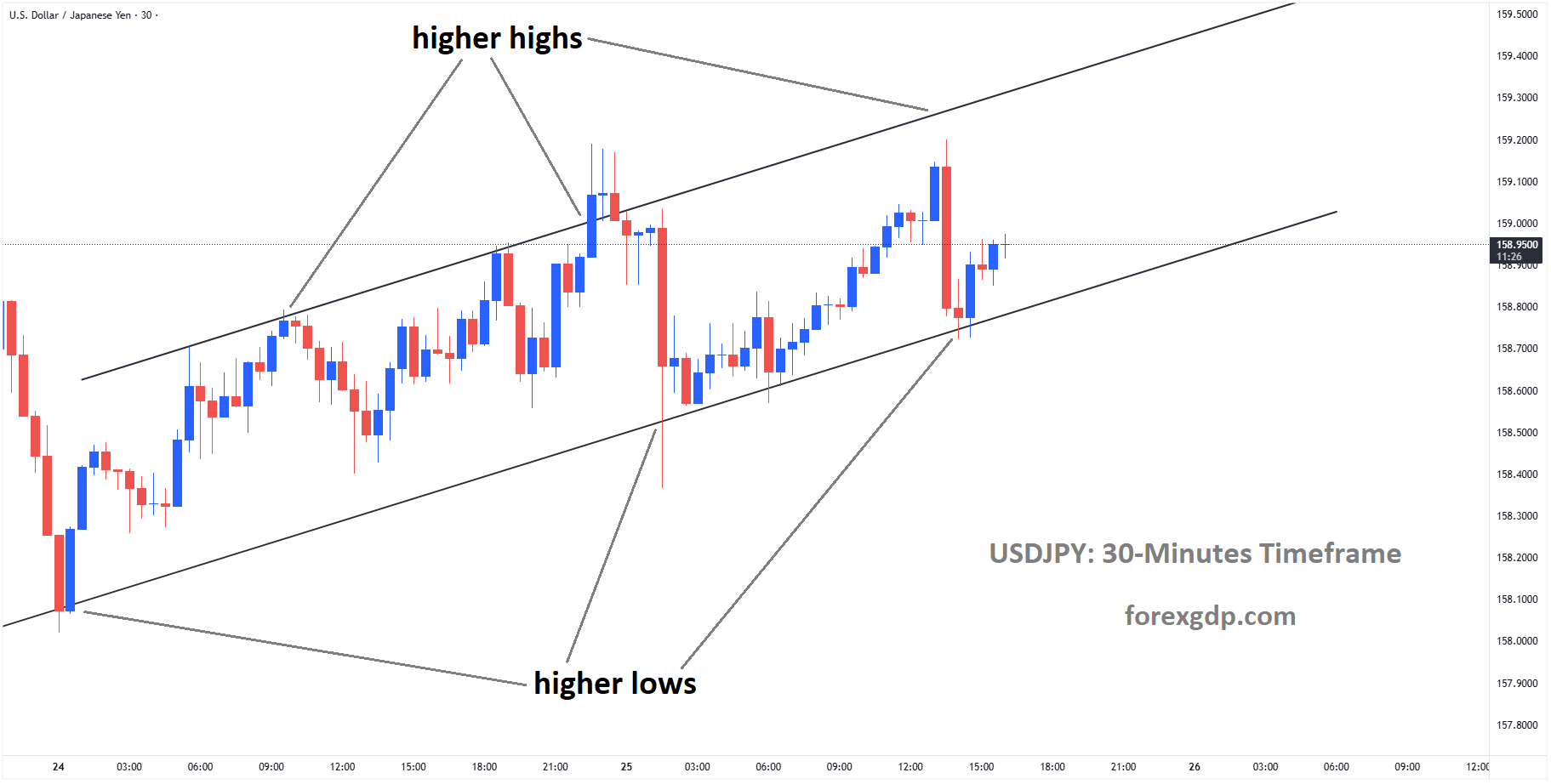
USDJPY is moving in an uptrend channel, and the market has rebounded from the higher low area of the channel
Understanding what is driving this movement requires looking at several interconnected factors, including geopolitical tensions, central bank policies, and inflation concerns in both the United States and Japan.
Rising Geopolitical Tensions Weigh on the Yen
One of the main reasons behind the weakening of the Japanese Yen is the sharp increase in energy prices. These rising costs are largely driven by escalating tensions in the Middle East. When geopolitical risks increase, energy markets often react quickly, leading to higher oil and gas prices.
Japan, which relies heavily on imported energy, is particularly sensitive to such changes. As energy becomes more expensive, it puts pressure on Japan’s economy and weakens its currency. This creates an advantage for the US Dollar in the USD/JPY pair.
At the same time, traders are closely watching developments related to potential peace talks between the United States and Iran. Any progress or setback in these discussions can quickly influence market sentiment. Recently, there were signs that negotiations might be moving forward, with reports suggesting that the US had presented a detailed settlement proposal.
However, the situation remains highly uncertain. Fresh reports of military activity, including missile launches targeting Israel and locations hosting US forces, have added to the tension. This uncertainty keeps markets on edge and continues to impact currency movements.
Federal Reserve Signals a Steady Approach
Another key factor supporting the US Dollar is the stance of the Federal Reserve. Fed Governor Michael Barr recently indicated that interest rates may need to remain unchanged for a longer period before any cuts are considered.
This cautious approach is mainly due to ongoing inflation concerns. Despite efforts to control rising prices, inflation in the United States is still above the central bank’s target level. On top of that, geopolitical risks—especially those linked to the Middle East—add another layer of uncertainty to the economic outlook.
By signaling that interest rates will likely stay steady, the Federal Reserve is reinforcing confidence in the US Dollar. Higher or stable interest rates tend to attract investors, as they offer better returns compared to currencies with lower rates. This helps explain why the Dollar is gaining strength against the Yen.
Bank of Japan Maintains a Hawkish Tone
While the Yen is currently under pressure, there are signs that the Bank of Japan may take steps to support its currency. Minutes from the central bank’s January meeting reveal that policymakers are increasingly open to raising interest rates.
Several members highlighted the need to act in a timely manner to address rising inflation. They also pointed out that a weaker Yen is contributing to higher prices, especially for imported goods like energy and food.
This shift in tone is important because Japan has maintained very low interest rates for a long time. If the Bank of Japan moves forward with rate hikes, it could help strengthen the Yen and limit further gains in the USD/JPY pair.
However, any policy changes will depend on how economic conditions evolve. The central bank is likely to proceed carefully, balancing the need to control inflation with the risk of slowing down economic growth.
Inflation Pressures and Currency Impact
Inflation is playing a central role in shaping the outlook for both currencies. In the United States, persistent inflation is pushing the Federal Reserve to remain cautious. In Japan, rising prices are becoming a growing concern, especially as the weaker Yen increases the cost of imports.
For Japan, this creates a difficult situation. On one hand, higher inflation may justify raising interest rates. On the other hand, tightening monetary policy too quickly could harm economic recovery.
For the US, the challenge is slightly different. The economy has shown resilience, but inflation remains above the desired level. This is why the Federal Reserve is choosing to hold rates steady rather than rush into cuts.
These contrasting approaches between the two central banks are a major driver of the USD/JPY exchange rate.
Market Focus on Future Developments
Looking ahead, traders are likely to keep a close eye on several key developments. Geopolitical events in the Middle East will remain a major influence, especially any updates related to US-Iran negotiations.
At the same time, statements from central bank officials will continue to shape market expectations. Any hints of policy changes from the Federal Reserve or the Bank of Japan could lead to noticeable shifts in the currency pair.
Economic data will also play a role, particularly inflation figures and indicators of economic growth. These data points help central banks decide their next steps and give traders clues about future movements.
The Balance Between Risk and Opportunity
The current situation highlights how global events and policy decisions are closely linked in the currency market. The US Dollar is benefiting from stable interest rates and investor confidence, while the Japanese Yen is facing pressure from rising energy costs and geopolitical uncertainty.
However, this balance could change quickly. If tensions ease or if the Bank of Japan takes stronger action, the Yen could regain strength. On the other hand, continued uncertainty and steady US policy could keep the Dollar in a strong position.
For traders and investors, this means staying alert to both economic signals and global news.
Summary
The USD/JPY pair is moving higher as a result of several combined factors. Rising energy prices linked to Middle East tensions are weakening the Japanese Yen, while the US Dollar is supported by the Federal Reserve’s decision to keep interest rates steady. At the same time, the Bank of Japan is showing signs of a more proactive approach toward inflation, which could influence the Yen in the future.
Geopolitical developments, central bank policies, and inflation trends will continue to shape the direction of this currency pair. As the situation evolves, market participants will remain focused on these key drivers to better understand what lies ahead.
USDCAD strengthens as traders favor the dollar on risk concerns and policy outlook
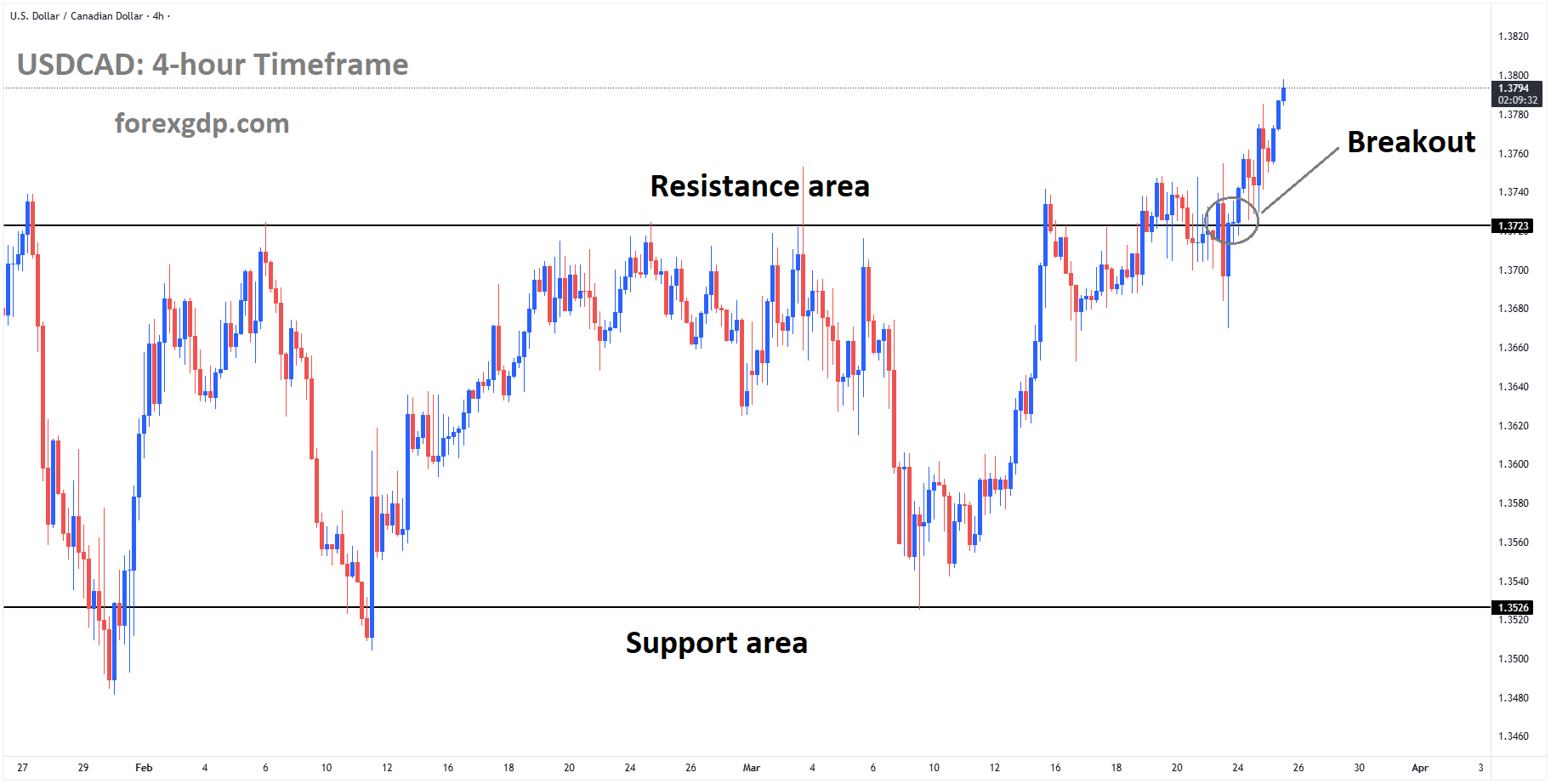
The USD/CAD currency pair has been gaining upward momentum, trading near the 1.3775 level during the early European session on Wednesday. This movement reflects a mix of global uncertainty, shifting expectations around interest rates, and changes in commodity prices. Together, these factors are influencing how traders view both the US Dollar and the Canadian Dollar.
Rising Demand for the US Dollar Amid Global Uncertainty
The US Dollar is strengthening against the Canadian Dollar, largely driven by its status as a safe-haven currency. When global risks increase, investors often move their funds into assets they consider more stable, and the US Dollar is one of the top choices.
Recent developments in the Middle East have added to this sense of uncertainty. Reports of missile activity involving Iran, Israel, and locations hosting US military forces have raised concerns about the stability of the region. These tensions are not just local issues—they have global implications, especially for financial markets.
Investors tend to react quickly to such news. As uncertainty rises, confidence in riskier assets can fall, leading to a stronger demand for safer options like the US Dollar. This shift in sentiment is one of the main reasons behind the USD/CAD pair moving higher.
Ongoing Middle East Tensions Keep Markets on Edge
The situation in the Middle East remains complex and unpredictable. Iran’s military actions, including missile launches targeting various locations, have added to existing tensions. These developments are closely watched by traders around the world.
At the same time, there are efforts to ease the situation through diplomacy. The US government has shown interest in reaching an agreement with Iran to reduce hostilities. However, progress appears uncertain. Iranian officials have expressed preferences for engaging with specific US representatives in future talks, which adds another layer of complexity to the negotiations.
Diplomatic Challenges and Their Impact
Diplomatic discussions are rarely straightforward, especially in regions with long-standing conflicts. Differences in negotiation preferences and strategies can slow down progress. As long as these uncertainties remain, financial markets are likely to stay cautious.
This ongoing uncertainty supports the US Dollar because investors prefer stability during unclear situations. As a result, currencies like the Canadian Dollar may face pressure, especially when combined with other influencing factors.
Oil Prices and Their Influence on the Canadian Dollar
Another key factor affecting the USD/CAD pair is the movement in crude oil prices. Canada is one of the world’s largest oil exporters, and its currency is closely tied to the performance of the oil market.
Recently, oil prices have shown signs of weakness as traders wait for more clarity on the geopolitical situation. When oil prices fall, it often leads to a weaker Canadian Dollar. This happens because lower oil revenues can impact Canada’s economic outlook.
Why Oil Matters for CAD
The Canadian economy relies heavily on energy exports. When oil prices are strong, the country benefits from increased income and improved trade balances. This usually strengthens the Canadian Dollar.
On the other hand, when oil prices decline, the opposite effect can occur. Reduced demand or uncertainty in the energy market can weigh on the currency. In the current environment, cautious sentiment around oil is contributing to the weaker performance of the CAD.
Shifting Expectations Around US Interest Rates
Interest rate expectations are another major driver behind currency movements. In the United States, recent comments from Federal Reserve officials have influenced how traders view future policy decisions.
Federal Reserve Governor Michael Barr recently noted that interest rates may need to remain steady for some time. This statement reflects ongoing concerns about inflation, which continues to stay above the central bank’s target level.
Higher or stable interest rates tend to support the US Dollar because they offer better returns for investors holding dollar-denominated assets. This makes the currency more attractive compared to others.
Market Expectations Are Changing
Market-based indicators suggest that expectations for future rate moves are evolving. There is now a growing possibility that interest rates could increase later in the year, while expectations for rate cuts have decreased compared to earlier forecasts.
This shift is important because it changes how investors position themselves. When the market begins to expect tighter monetary policy, demand for the US Dollar often rises. This adds further support to the USD/CAD pair.
Combined Forces Driving USD/CAD Higher
The recent strength in USD/CAD is not the result of a single factor but rather a combination of influences working together.
Geopolitical tensions are increasing demand for safe-haven assets.
Oil price weakness is putting pressure on the Canadian Dollar.
Interest rate expectations are supporting the US Dollar.
Each of these elements reinforces the others, creating a strong upward push for the currency pair.
Market Sentiment Remains Key
At its core, currency movement often comes down to sentiment. Right now, the overall mood in the market leans toward caution. Traders are closely watching news related to the Middle East, central bank decisions, and commodity markets.
Any changes in these areas could quickly shift the balance. For example, progress in peace talks could reduce demand for safe-haven assets, while a rebound in oil prices could strengthen the Canadian Dollar.
What Traders Are Watching Next
Looking ahead, several key developments will likely influence the direction of USD/CAD:
Updates on diplomatic efforts between the US and Iran
Any further military or geopolitical developments in the Middle East
Movements in global oil prices
Signals from the Federal Reserve regarding interest rates
These factors are interconnected, and changes in one area can have ripple effects across the market.
Traders will continue to monitor these events closely, adjusting their positions as new information becomes available.
Summary
The USD/CAD pair is currently trending higher due to a mix of global uncertainty, weaker oil prices, and changing expectations around US interest rates. Tensions in the Middle East are boosting demand for the US Dollar as a safe-haven currency, while declining oil prices are weighing on the Canadian Dollar.
At the same time, signals from the Federal Reserve suggest that interest rates may remain elevated, adding further support to the US Dollar. Together, these factors are shaping the current movement in the currency pair.
As global events continue to unfold, the direction of USD/CAD will depend on how these key influences evolve in the coming days.
USDCHF gains momentum near 0.7900 while geopolitical risks strengthen the Dollar
The USD/CHF currency pair has recently shown a modest upward movement, drawing attention from market observers around the world. This shift reflects a mix of global political tensions, economic signals, and central bank actions that are influencing both the US Dollar and the Swiss Franc. While the movement may appear small on the surface, the underlying reasons tell a much larger story about how global events shape currency behavior.
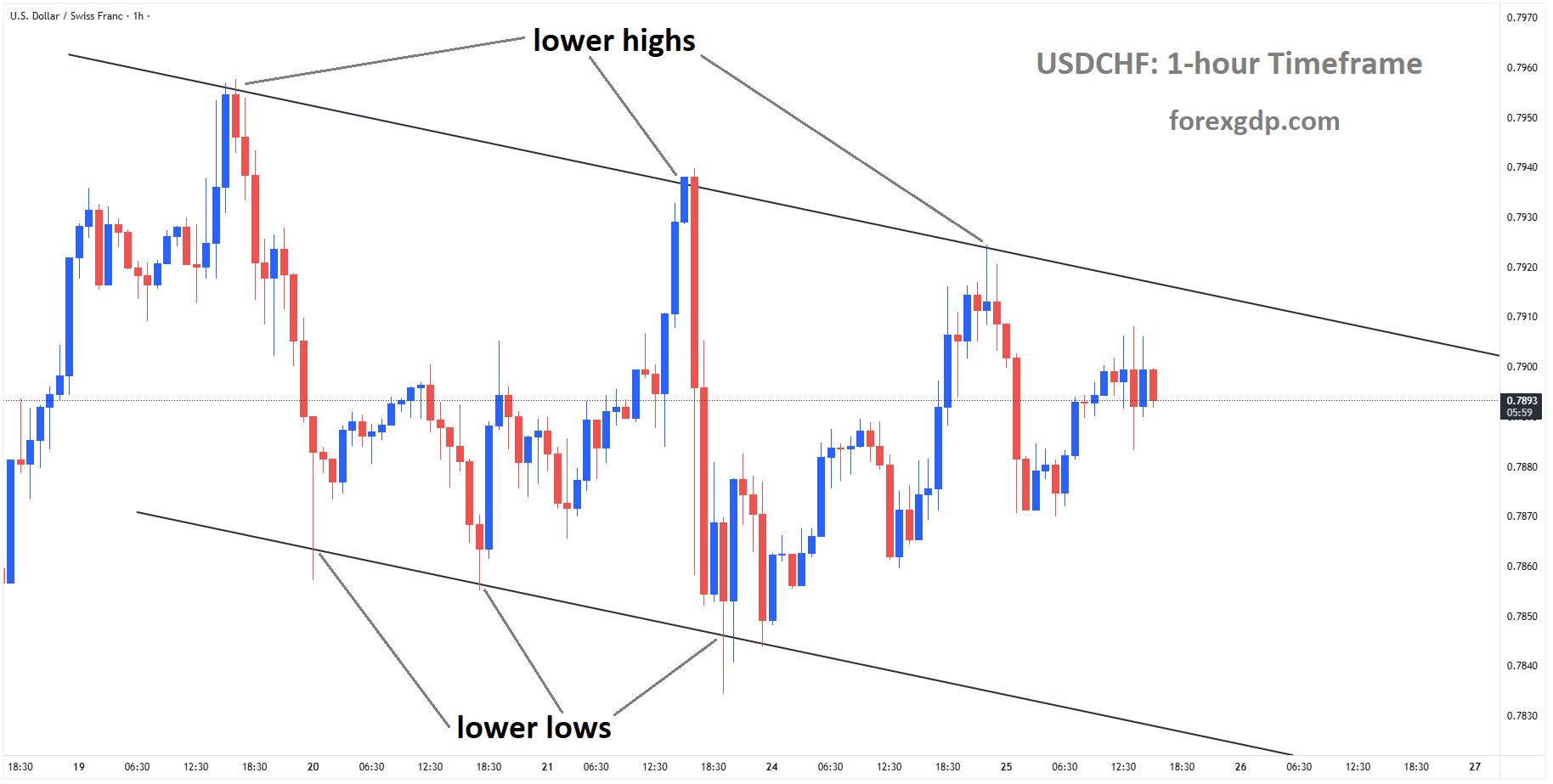
USDCHF is moving in a descending channel, and the market has fallen from the lower high area of the channel
Rising Geopolitical Tensions Support the US Dollar
One of the main factors behind the recent strength of the US Dollar is the ongoing conflict in the Middle East. Tensions involving the United States, Israel, and Iran continue to create uncertainty across global markets. In such situations, investors often look for safer assets, and the US Dollar is widely seen as one of the most reliable options.
This demand for safety helps support the value of the Dollar. As uncertainty grows, many investors move their funds into US-based assets, increasing demand for the currency. This trend has helped push the USD/CHF pair higher, with the exchange rate moving closer to the 0.7895 level during recent trading sessions.
At the same time, conflicting signals from political leaders have added another layer of complexity. Iran has firmly denied engaging in direct discussions with the United States about ending the conflict. However, comments from US leadership suggesting that Iran may be willing to seek peace have created a sense of cautious optimism in the market.
This mix of tension and hope has kept investors alert, influencing how they position themselves in currency markets.
Market Sentiment Improves Despite Uncertainty
Even with ongoing geopolitical risks, there are signs that overall market sentiment is improving. Stock markets in Asia have shown gains, and futures linked to major US indices have also moved higher. This suggests that investors are becoming more comfortable taking on risk, even while keeping a close eye on global developments.
A positive market mood often reduces the demand for safe-haven currencies like the Swiss Franc. As investors shift toward riskier assets such as stocks, currencies like the US Dollar can still benefit if they are seen as stable and reliable.
This balance between risk-taking and caution is playing a key role in shaping the USD/CHF pair. While the Dollar gains support from global uncertainty, the Franc faces pressure as investors move away from traditional safe havens.
US Economic Data Adds Another Layer
Recent economic data from the United States has also influenced the currency market. The latest Purchasing Managers’ Index (PMI) data for March showed a slowdown in the services sector. Since the services industry is a major part of the US economy, any sign of weakness can affect overall economic expectations.
The slowdown in services activity has weighed on the broader Composite PMI, which combines both manufacturing and services data. This indicates that economic growth may not be as strong as previously expected.
However, despite this softer data, the US Dollar has managed to stay firm. This highlights how global factors, such as geopolitical tensions, can sometimes have a stronger impact on currency movements than domestic economic data.
In this case, the safe-haven appeal of the Dollar appears to be outweighing concerns about economic performance.
Swiss Franc Faces Pressure from Central Bank Signals
While the US Dollar has found support, the Swiss Franc has been under pressure. A key reason for this is the stance of the Swiss National Bank (SNB), which has made it clear that it is ready to act if the Franc becomes too strong.
The SNB has a history of stepping into currency markets to prevent excessive appreciation of the Swiss Franc. A stronger Franc can make Swiss exports more expensive and hurt the country’s economy. To avoid this, the central bank may intervene by selling the Franc and buying foreign currencies.
SNB’s Strategy to Control Currency Strength
The SNB Chairman recently emphasized the bank’s readiness to take action if needed. This includes what is often referred to as “stealth intervention,” where the bank quietly influences currency markets without making large public announcements.
This approach helps the SNB manage the Franc’s value without causing sudden market disruptions. However, the mere possibility of intervention is often enough to influence investor behavior.
When traders believe that a central bank may act to weaken its currency, they are less likely to buy it aggressively. This reduces demand for the Swiss Franc and contributes to its decline against other currencies, including the US Dollar.
Impact on USD/CHF Movement
As a result of these signals from the SNB, the Swiss Franc has weakened against several major currencies. This has provided additional support for the USD/CHF pair, helping it move higher even when other factors might have limited its rise.
The combination of a stronger Dollar and a softer Franc creates a clear upward push for the pair.
A Delicate Balance Between Risk and Safety
The current movement in USD/CHF reflects a delicate balance between risk and safety in global markets. On one hand, geopolitical tensions are driving demand for the US Dollar. On the other hand, improving market sentiment is reducing the appeal of traditional safe havens like the Swiss Franc.
This creates a unique situation where both currencies are influenced by different forces at the same time. The Dollar benefits from its role as a global reserve currency, while the Franc faces pressure from central bank policies and changing investor preferences.
What to Watch Moving Forward
Several factors will continue to shape the direction of the USD/CHF pair in the coming days and weeks:
Geopolitical Developments
Any updates related to the Middle East conflict will have a direct impact on market sentiment. Signs of escalation could boost the US Dollar further, while progress toward peace may reduce its safe-haven appeal.
Central Bank Actions
The SNB’s approach to managing the Swiss Franc will remain a key factor. Any signs of intervention or stronger warnings could keep the Franc under pressure.
Economic Indicators
Future economic data from the United States, especially related to growth and employment, will influence expectations for the Dollar. Strong data could add further support, while weaker numbers may limit gains.
Global Market Mood
The overall appetite for risk in financial markets will also play an important role. A strong appetite for risk may weaken the Franc further, while a shift toward caution could support it.
Final Summary
The recent rise in the USD/CHF pair highlights how global events, economic data, and central bank policies come together to shape currency movements. Ongoing tensions in the Middle East have strengthened the US Dollar by increasing demand for safe assets, while improving market sentiment has reduced the appeal of the Swiss Franc.
At the same time, signals from the Swiss National Bank have added pressure on the Franc, as the bank remains ready to act against excessive currency strength. Even with softer economic data from the United States, the Dollar has held firm due to its global importance.
As these factors continue to evolve, the USD/CHF pair will remain sensitive to both political developments and economic signals, reflecting the complex nature of today’s financial markets.
Don’t trade all the time, trade forex only at the confirmed trade setups