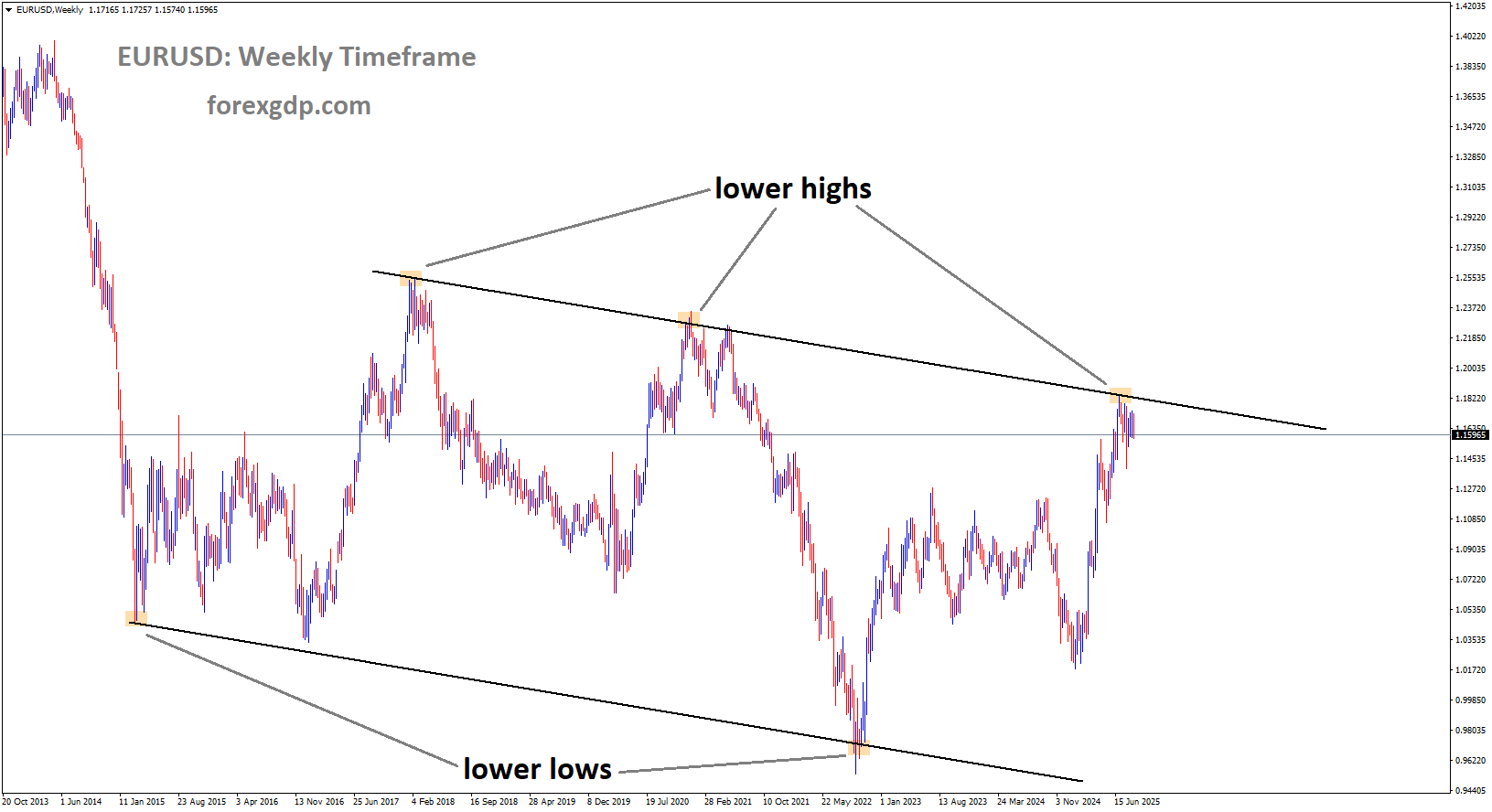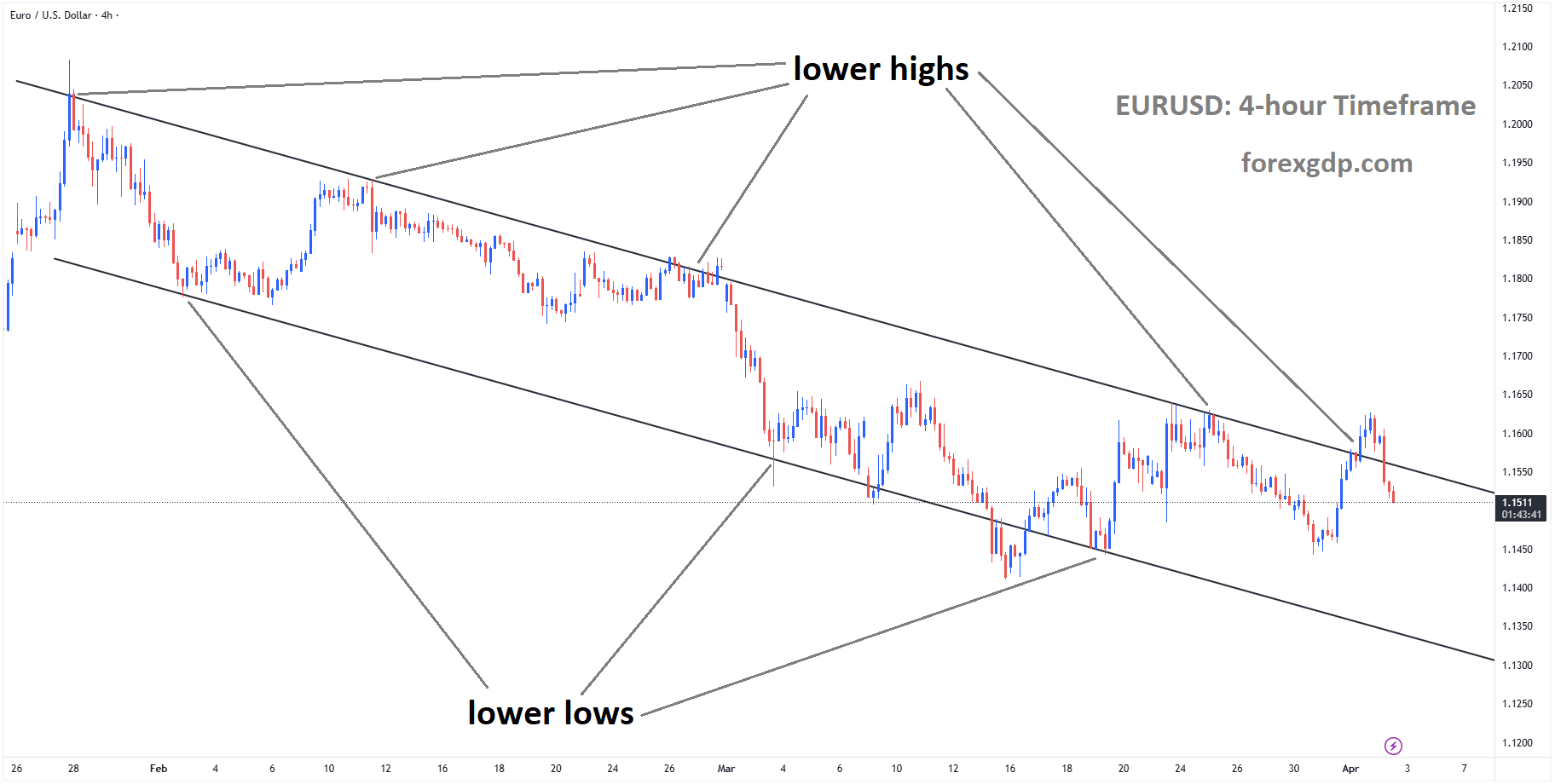
EURUSD is moving in a descending channel, and the market has fallen from the lower high area of the channel
EURUSD Retreats as Early Signs of Middle East Peace Lose Momentum
The EUR/USD currency pair has come under fresh pressure, falling close to the 1.1530 level during Thursday’s European trading session. After showing signs of recovery over the past two days, the pair has once again turned downward. This shift reflects growing concerns in global markets, especially surrounding geopolitical tensions and economic developments in the United States.
A mix of renewed uncertainty in the Middle East, stronger-than-expected US economic data, and rising oil prices has created a challenging environment for the Euro while supporting the US Dollar.
Rising Geopolitical Risks Shift Market Sentiment
Investor sentiment has recently taken a cautious turn as fears surrounding the Middle East conflict resurface. Earlier optimism about a possible ceasefire between the United States and Iran had briefly improved market confidence. However, those hopes have quickly faded.
Fresh statements from US President Donald Trump have added to the tension. He indicated that the United States could intensify military actions against Iran within the next few weeks. The warning included potential strikes on key infrastructure, such as electric power facilities, if negotiations fail.
This development has raised concerns that the conflict may drag on longer than expected. As a result, investors are moving away from riskier assets and seeking safer options, a trend commonly known as a “risk-off” environment.
In such conditions, the US Dollar typically benefits due to its status as a safe-haven currency. This shift in sentiment has played a major role in pushing the EUR/USD pair lower.
Strong US Economic Data Boosts the Dollar
Alongside geopolitical factors, recent economic data from the United States has further strengthened the Dollar. Two key reports released for March showed better-than-expected performance, reinforcing confidence in the US economy.
Employment Growth Shows Resilience
The ADP Employment Change report revealed that private sector employment increased by 62,000 jobs in March. While this figure was slightly below the previous month’s reading of 66,000, it comfortably exceeded market expectations of 40,000.
This data suggests that the US labor market remains stable, even amid global uncertainties. A steady job market often supports consumer spending and overall economic growth, which in turn strengthens the national currency.
Manufacturing Sector Expands Steadily
The ISM Manufacturing PMI also delivered encouraging results. The index came in at 52.7, slightly higher than both expectations and the previous reading. Since a value above 50 indicates expansion, this data points to continued growth in the manufacturing sector.
Together, these reports have increased confidence in the US economy, making the Dollar more attractive to investors.
Euro Faces Pressure from Rising Oil Prices

While the US Dollar gains support, the Euro is facing challenges from another direction—rising oil prices.
The ongoing tensions in the Middle East have pushed oil prices higher due to fears of supply disruptions. This creates a difficult situation for the Eurozone, which relies heavily on imported energy to meet its needs.
Why Higher Oil Prices Hurt the Euro
When oil prices rise, countries that depend on imports must spend more on energy. For the European Union, this means higher costs for businesses and consumers alike. Increased energy expenses can slow down economic growth and reduce competitiveness.
In addition, higher import costs can weaken the trade balance, as more money flows out of the region to pay for energy. This tends to put downward pressure on the Euro.
Market Mood Turns Defensive
The overall market mood has shifted noticeably in recent sessions. Earlier optimism about easing geopolitical tensions had encouraged investors to take on more risk. However, the latest developments have reversed that trend.
A defensive stance now dominates the market, with investors prioritizing safety and stability. This environment favors the US Dollar while weighing on currencies like the Euro.
Key Drivers Behind the EUR/USD Decline
Several factors are working together to push the EUR/USD pair lower:
- Geopolitical uncertainty: Renewed fears of prolonged conflict in the Middle East are driving demand for safe-haven assets.
- Stronger US data: Positive economic indicators are boosting confidence in the US economy.
- Rising oil prices: Higher energy costs are negatively impacting the Eurozone economy.
- Shift in sentiment: Investors are moving away from risk and toward safer investments.
Each of these elements reinforces the downward pressure on the Euro while supporting the US Dollar.
What This Means for Currency Markets
The recent movements in EUR/USD highlight how quickly market conditions can change. Currency values are influenced not only by economic data but also by geopolitical events and global sentiment.
When uncertainty increases, safe-haven currencies like the US Dollar often gain strength. At the same time, currencies tied to regions facing economic challenges or external pressures may weaken.
For traders and investors, this environment requires close attention to both political developments and economic indicators.
Summary
The EUR/USD pair has resumed its downward movement, falling near 1.1530 as global uncertainty rises. Renewed tensions in the Middle East have shifted market sentiment toward caution, boosting demand for the US Dollar. At the same time, stronger US economic data has reinforced confidence in the American economy.
Meanwhile, the Euro is facing additional pressure from rising oil prices, which increase costs for the energy-dependent Eurozone. The combination of geopolitical risks, economic strength in the US, and higher energy prices has created a challenging backdrop for the Euro.
As long as uncertainty remains elevated and the Dollar continues to benefit from safe-haven demand, the EUR/USD pair may remain under pressure in the near term.
USDJPY edges closer to 160 as ongoing Iran crisis shakes global market sentiment
The USD/JPY currency pair has once again moved higher, reflecting growing uncertainty in global markets. As investors shift toward safer assets, the US Dollar has gained strength against the Japanese Yen. This movement has pushed the pair close to an important level that often draws attention from Japanese authorities.
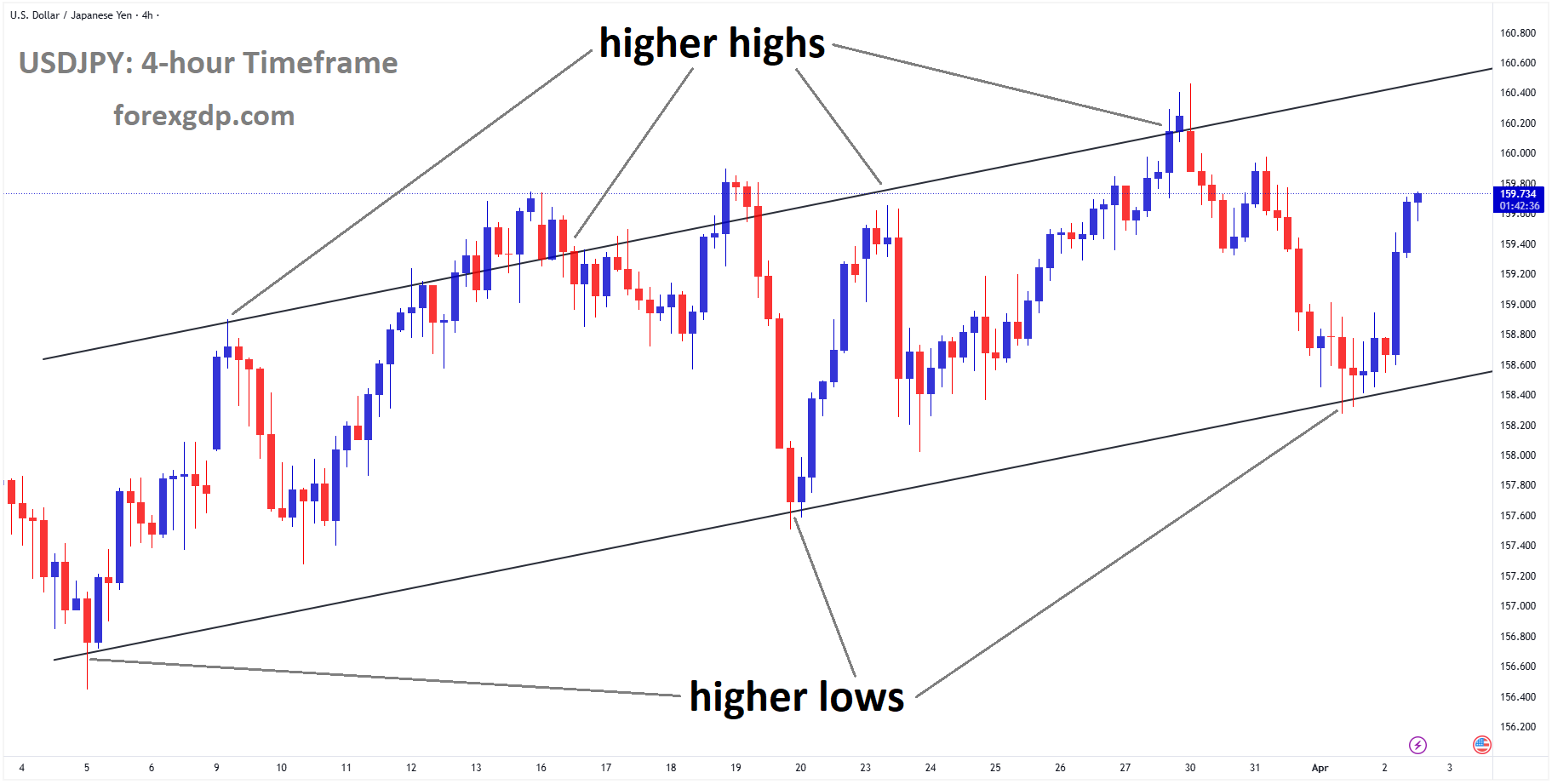
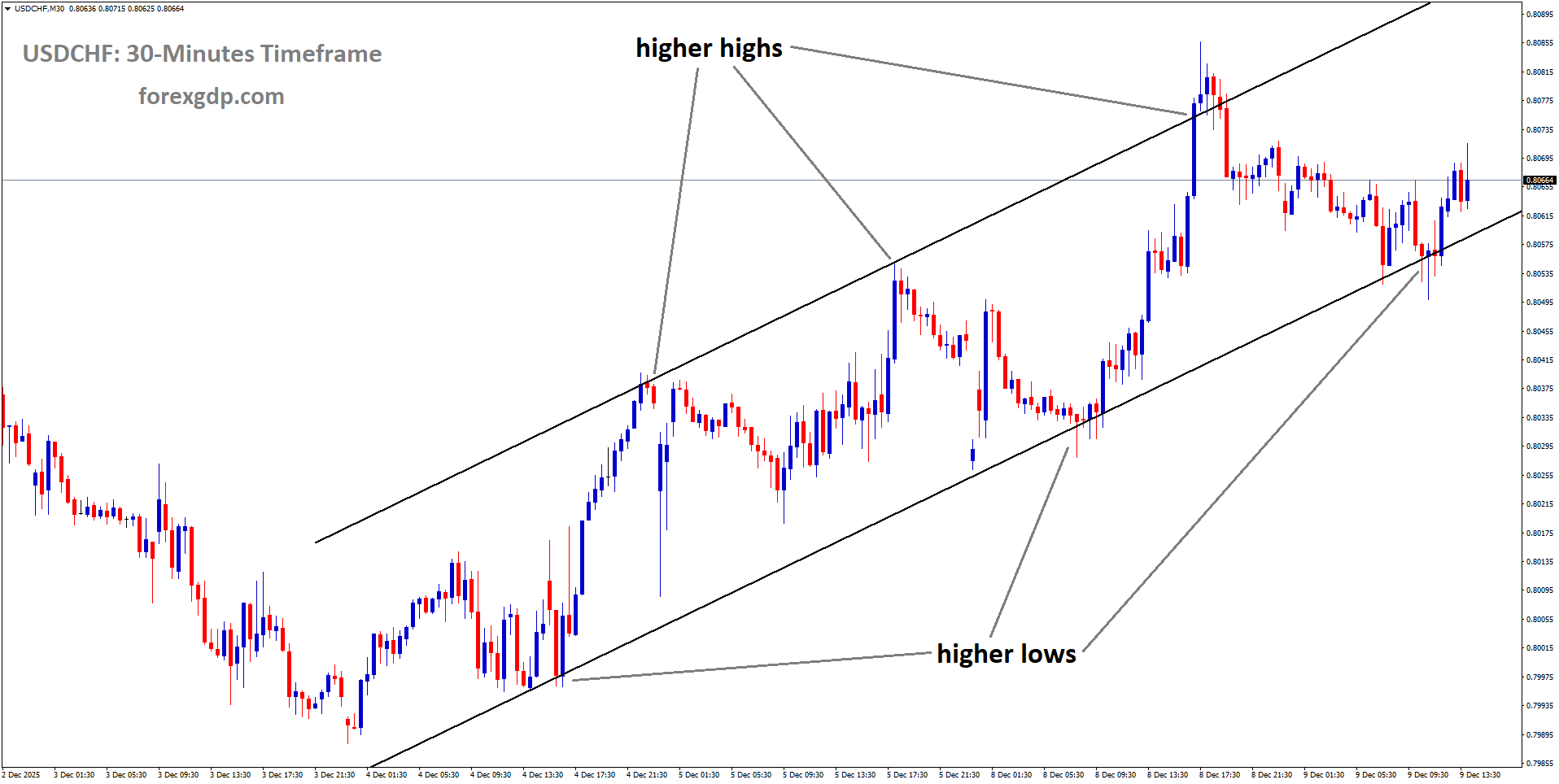
USDJPY is moving in an ascending channel, and the market has rebounded from the higher low area of the channel
The recent rise comes after a mix of geopolitical tension, market sentiment shifts, and policy signals from Japan. Together, these factors are shaping the direction of the currency pair and raising questions about what could happen next.
Rising Global Tensions Support the US Dollar
One of the main drivers behind the Dollar’s strength is the current risk-off mood in global markets. When uncertainty increases, investors tend to move their money into assets considered safer. The US Dollar often benefits from this behavior because it is widely seen as a global reserve currency.
Recent developments in the ongoing conflict involving Iran and Israel have added to market anxiety. Instead of calming tensions, strong political statements have increased concerns about further escalation. Investors were hoping for signs of a possible resolution, but those expectations were quickly pushed aside.
As a result, many market participants have turned to the Dollar for safety. This has helped the USD/JPY pair climb, reversing earlier losses and pushing it back toward higher levels.
USD/JPY Moves Closer to a Key Level
The USD/JPY pair recently rebounded after dipping earlier in the week. It found support and quickly regained momentum, climbing toward the 160.00 mark. This level is widely seen as significant because it has historically triggered reactions from Japanese authorities.
Approaching this level increases the chances of official comments or even direct action. The Japanese government closely watches rapid movements in the Yen, especially when they are driven by speculative trading rather than economic fundamentals.
The closer the pair gets to 160.00, the more attention it attracts. Traders become cautious, knowing that any sudden move from authorities could quickly change the market direction.
Japan Signals Readiness to Act
Japanese officials have recently made it clear that they are paying close attention to currency movements. Statements from key policymakers suggest that they are concerned about excessive volatility and speculative trading.
Authorities have emphasized that they are ready to take action if needed. This includes the possibility of direct intervention in the currency market to support the Yen. Such interventions are not common, but they are used when movements are seen as too rapid or disconnected from economic reality.
These warnings are not just symbolic. In the past, Japan has stepped in to stabilize its currency when it weakened too quickly. This history adds weight to the current statements and keeps traders alert.
Why the Yen Is Under Pressure

The Japanese Yen has been facing pressure for several reasons. One major factor is the difference in monetary policy between Japan and the United States.
While the US has maintained relatively higher interest rates, Japan has kept its policy more accommodative. This difference makes the Dollar more attractive to investors seeking better returns. As a result, money flows into Dollar-denominated assets, increasing demand for the currency.
At the same time, Japan’s economic approach focuses on supporting growth and maintaining stability. This often leads to a weaker Yen compared to other major currencies.
Global uncertainty adds another layer to this dynamic. Although the Yen is traditionally seen as a safe-haven currency, the current environment has favored the Dollar instead.
Market Timing and Intervention Strategy
Japanese authorities do not intervene randomly. They carefully choose the timing to maximize the impact of their actions. One common strategy is to step in during periods of lower trading activity.
When fewer participants are active in the market, even a moderate intervention can create a strong effect. This can help push the currency in the desired direction more efficiently.
Upcoming market conditions may provide such an opportunity. Holidays and key economic events can reduce liquidity while increasing volatility. This combination creates an environment where intervention could be more effective.
For example, when major markets are closed or operating with reduced participation, price movements can become sharper. If authorities act during these moments, their influence is often more noticeable.
The Role of Economic Events
Economic data releases also play an important role in shaping currency movements. Key reports from the United States can increase volatility in the USD/JPY pair.
When major data is released, such as employment figures, traders react quickly. This can lead to sudden changes in price direction. If these movements align with existing trends, they can push the pair even closer to critical levels.
At the same time, increased volatility can create uncertainty. This makes it harder for traders to predict short-term movements and increases the risk of sharp reversals.
What Traders Are Watching Now
Market participants are closely monitoring several factors at once. These include geopolitical developments, policy signals from Japan, and economic data from the United States.
Each of these elements can influence the direction of the USD/JPY pair. When combined, they create a complex environment where sudden changes are possible.
Traders are particularly focused on how close the pair gets to the 160.00 level. Any movement near this point tends to attract attention and can lead to increased market activity.
At the same time, official comments from Japanese authorities are being watched carefully. Even a small change in tone can shift expectations and impact trading decisions.
Potential Scenarios Ahead
There are a few possible paths the market could take in the near term. If global tensions remain high, the Dollar may continue to strengthen. This could push the USD/JPY pair even higher.
However, if Japanese authorities decide to act, the situation could change quickly. Intervention often leads to sharp movements in the opposite direction, catching some traders off guard.
Another possibility is a period of consolidation. The pair may move within a narrower range as traders wait for clearer signals from economic data or policy decisions.
The balance between these factors will determine the next major move.
Summary
The recent rise in USD/JPY reflects a mix of global uncertainty, strong demand for the US Dollar, and ongoing pressure on the Japanese Yen. As the pair approaches a key level, the risk of intervention from Japan increases.
Geopolitical tensions have played a major role in driving market sentiment, pushing investors toward safer assets. At the same time, differences in monetary policy continue to support the Dollar.
Japanese authorities have made it clear that they are ready to act if necessary, adding another layer of caution to the market. With important economic events ahead and potential changes in liquidity, the coming days could bring increased volatility.
All eyes remain on how the pair behaves near critical levels and whether policymakers decide to step in.
EURJPY Pauses Near 184 While Traders Watch ECB and BoJ Signals
The EUR/JPY currency pair is currently moving within a narrow range near the 184.00 level, reflecting a cautious mood among investors. Market participants are holding back from making strong moves as they wait for clearer signals from two major central banks: the European Central Bank (ECB) and the Bank of Japan (BoJ). Both institutions are navigating uncertain economic conditions, and their next policy steps could shape the direction of the currency pair in the coming weeks.
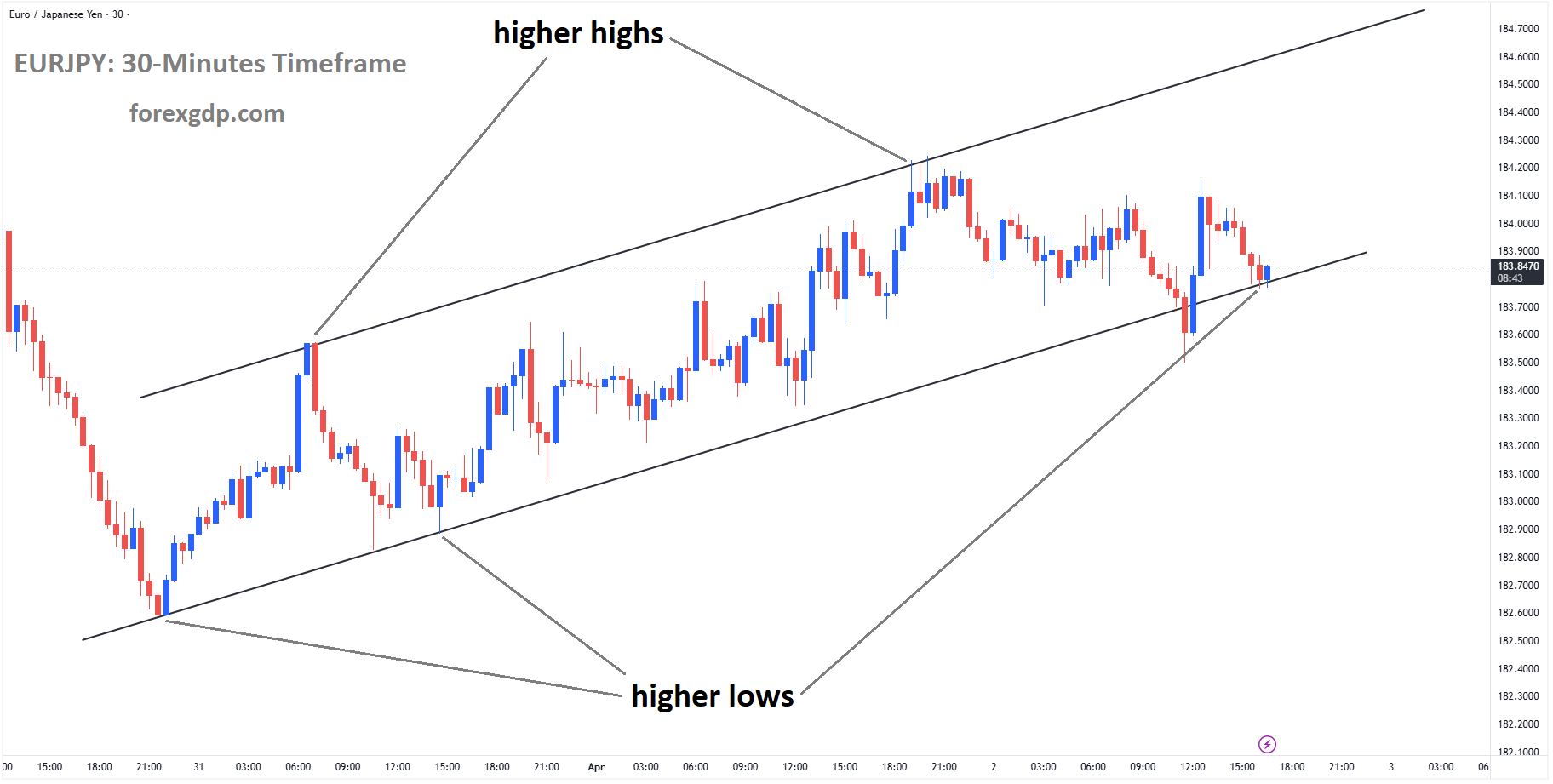
EURJPY is moving in an ascending channel, and the market has reached the higher low area of the channel
This period of stability in EUR/JPY is not a sign of inactivity but rather a pause before potential changes. Traders are closely watching comments from policymakers, inflation trends, and global developments that could influence interest rate decisions.
ECB Signals Keep Markets on Edge
The European Central Bank has recently taken a more alert stance toward inflation risks. Several officials have suggested that the upcoming April policy meeting remains open to different outcomes, including the possibility of an interest rate hike.
One of the key voices supporting this cautious approach is Joachim Nagel, a senior ECB policymaker and head of Germany’s Bundesbank. He indicated that raising interest rates in April cannot be ruled out. His reasoning is tied to growing concerns about inflation, which appears to be gaining strength again.
Nagel emphasized that each passing day adds to inflation risks, especially in the current global environment. Rising oil prices, partly driven by geopolitical tensions in the Middle East, are contributing to higher costs across the economy. This has made it harder for inflation to settle at desired levels.
Changing Inflation Landscape
The recent shift in inflation expectations is one of the main reasons why ECB officials are reconsidering their approach. Earlier, there was hope that inflation would gradually decline, allowing for a more relaxed policy stance. However, new developments have changed that outlook.
Higher energy prices are feeding into broader inflation, affecting transportation, production, and consumer goods. As a result, the ECB is now facing a more complex situation where it must balance economic growth with price stability.
Gediminas Simkus, another ECB policymaker, highlighted the need for caution. He pointed out that the situation is evolving quickly, and it is too early to make firm predictions about the April decision. His comments reflect a broader uncertainty within the central bank.
Market Reaction to ECB Outlook

The mixed signals from ECB officials have kept investors in a wait-and-see mode. While some see a potential rate hike as supportive for the euro, others are concerned about the impact on economic growth.
This uncertainty is one of the main reasons why EUR/JPY is trading sideways. Without a clear direction from the ECB, traders are hesitant to take strong positions.
Bank of Japan Keeps Tightening Option Open
On the other side, the Bank of Japan is also signaling that it is not done adjusting its monetary policy. After years of maintaining an ultra-loose approach, the BoJ has started to shift its stance as inflation shows signs of picking up.
In its latest policy statement, the BoJ made it clear that further tightening remains possible if the economy continues to perform as expected. This marks a significant change from its earlier position, where maintaining stimulus was the primary focus.
Rising Inflation Concerns in Japan
Japan has long struggled with low inflation, but recent trends suggest that price pressures are building. Higher oil prices are again playing a role here, increasing costs for businesses and consumers.
Toichiro Asada, a newly appointed member of the BoJ, recently noted that rising energy prices are contributing to upward inflation risks. His comments suggest that the central bank is becoming more attentive to these developments.
This shift in tone indicates that the BoJ is preparing for a gradual move toward tighter monetary conditions. While any changes are likely to be cautious, even small adjustments could have a noticeable impact on the Japanese yen.
Impact on the Yen
The possibility of tighter policy in Japan is an important factor for the EUR/JPY pair. A stronger yen could limit the upside for the pair, especially if the ECB also moves toward higher interest rates.
However, the timing and pace of any changes from the BoJ remain uncertain. This adds another layer of complexity for traders trying to predict the next move.
Why EUR/JPY Is Moving Sideways
The current stability in EUR/JPY reflects a balance of opposing forces. On one side, the ECB is considering tightening policy due to rising inflation risks. On the other side, the BoJ is also opening the door to similar actions.
When both currencies are influenced by potential policy shifts, it often leads to a period of consolidation. Traders prefer to wait for clearer signals before making decisions.
Key Factors Keeping the Pair Range-Bound
Several elements are contributing to the lack of strong movement:
- Uncertainty around central bank decisions: Both the ECB and BoJ have not committed to a clear path yet.
- Global economic concerns: Geopolitical tensions and rising energy prices are adding to market caution.
- Balanced expectations: Investors see potential for both currencies to strengthen, which limits directional moves.
This combination creates a situation where neither the euro nor the yen has a clear advantage, leading to sideways trading.
What Investors Are Watching Next
Looking ahead, the focus will remain on central bank communications and economic data. Any new information that provides clarity on policy direction could trigger movement in EUR/JPY.
ECB April Meeting
The upcoming ECB meeting is a key event. Investors will be looking for signals on whether a rate hike is likely and how the central bank views inflation risks.
BoJ Policy Updates
Similarly, any updates from the BoJ regarding its stance on monetary tightening will be closely monitored. Even subtle changes in language can influence market expectations.
Global Developments
External factors such as oil prices and geopolitical events will also play a role. These elements can impact inflation and, in turn, central bank decisions.
Summary
The EUR/JPY pair is currently holding steady near 184.00 as investors wait for clearer guidance from the European Central Bank and the Bank of Japan. Both central banks are facing rising inflation concerns, partly driven by higher oil prices and global tensions.
ECB officials have signaled that a rate hike remains possible, while the BoJ is keeping the option of further tightening open. This creates a balanced situation where neither currency has a strong directional push.
As a result, the pair is moving within a tight range, reflecting uncertainty and cautious market sentiment. The next major moves will likely depend on upcoming policy decisions and economic developments, making this a critical period for traders and investors alike.
GBPJPY edges higher from lows but stays pressured under 211.00 on global unrest
The GBP/JPY currency pair is once again under pressure, reflecting a mix of global uncertainty, rising energy costs, and shifting investor sentiment. While the British Pound struggles due to economic worries, the Japanese Yen is gaining support as a safe-haven currency. However, the situation is far from straightforward, as multiple factors continue to influence the direction of this currency pair.
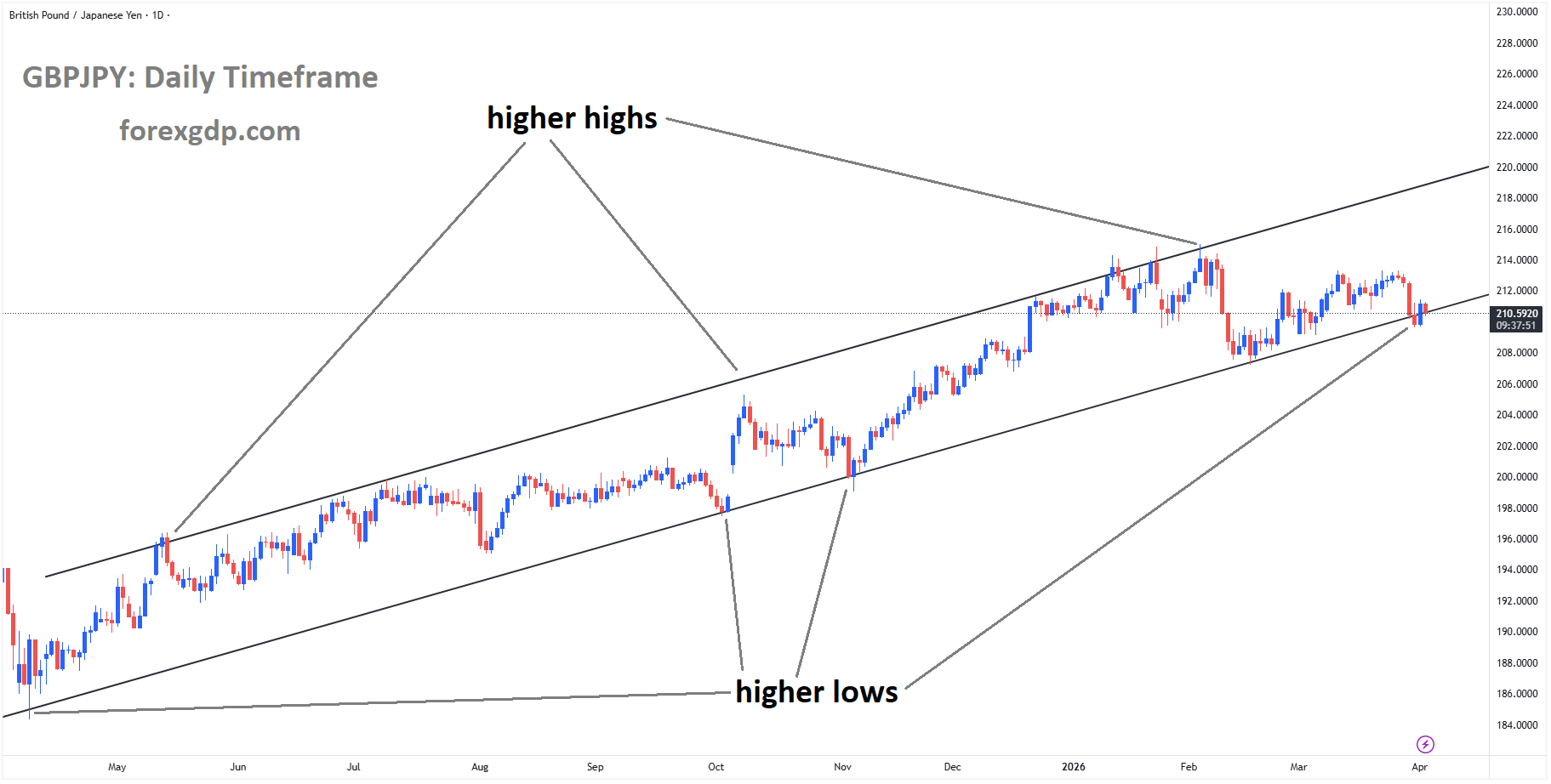
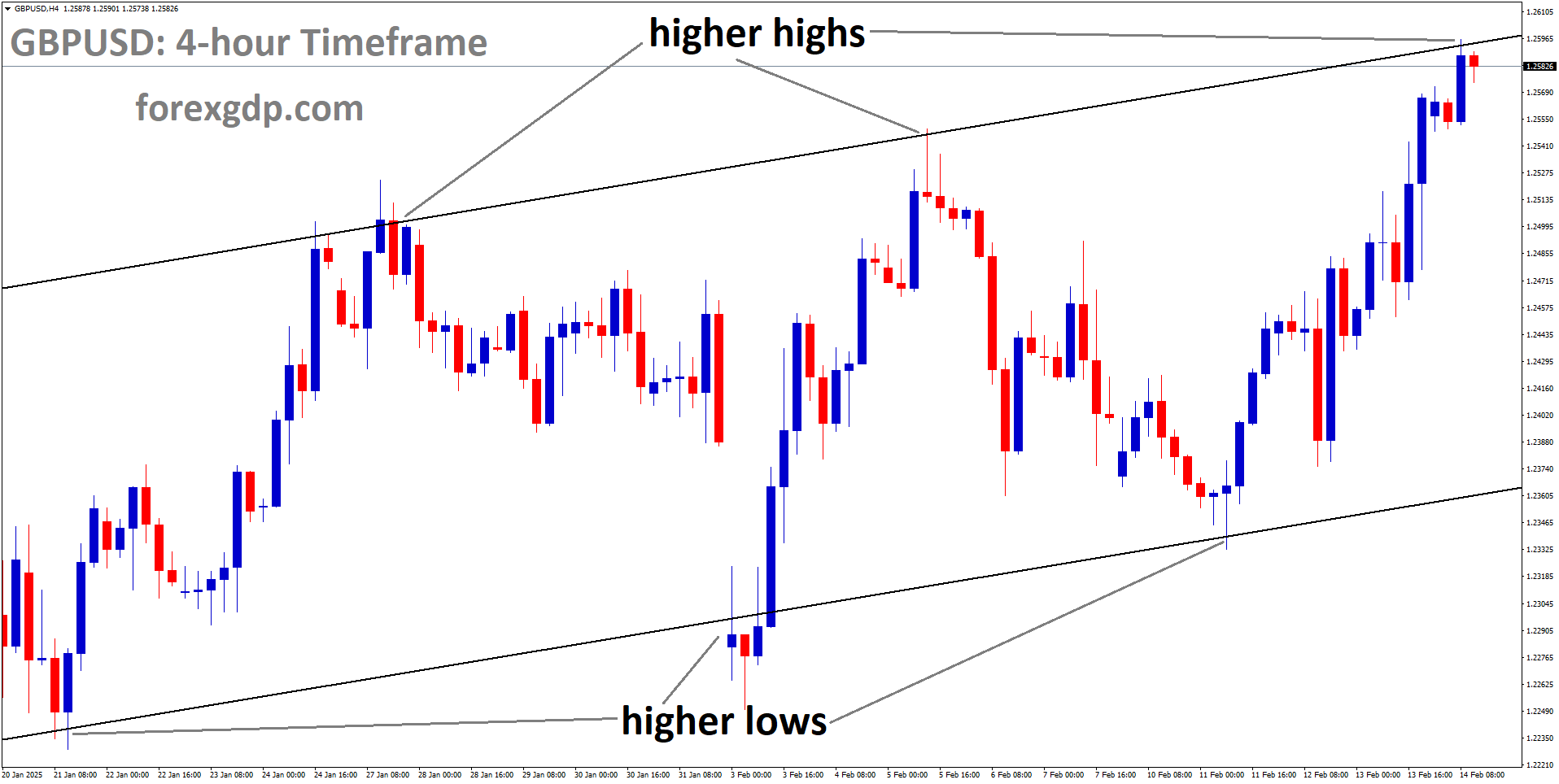
GBPJPY is moving in an Ascending channel, and the market has reached the higher low area of the channel
Why GBP/JPY Is Losing Momentum
The recent movement in GBP/JPY shows a clear shift in market sentiment. After a short-lived recovery, the pair has started to move lower again. This decline is largely driven by a combination of geopolitical risks and economic concerns.
One of the key reasons behind the downward movement is the fading hope for easing tensions in the Middle East. When investors feel uncertain about global stability, they often move their money into safer assets. The Japanese Yen is one such asset, known for its stability during times of crisis. As demand for the Yen increases, GBP/JPY naturally faces selling pressure.
At the same time, the British Pound is not offering much support. Economic worries in the UK are growing, especially due to rising energy prices. This combination makes it difficult for the currency pair to maintain upward momentum.
Impact of Middle East Tensions on Currency Markets
Global events often play a major role in currency movements, and the current situation in the Middle East is a clear example. Rising tensions involving Iran have made investors more cautious.
Increased Risk of Conflict
Recent statements from global leaders have reduced hopes for a peaceful resolution. There are growing concerns that the conflict could expand further, especially with reports suggesting that additional countries may become involved. This raises the possibility of disruptions in key oil supply routes, including the Strait of Hormuz.
Such developments tend to make investors nervous. As a result, they move away from riskier currencies like the British Pound and shift towards safer options like the Japanese Yen.
Shift Toward Safe-Haven Assets
In times of uncertainty, the Yen often benefits from increased demand. This is because Japan has a strong financial system and a history of stability. Investors see it as a reliable place to store value during uncertain times.
This shift in investor behavior directly impacts GBP/JPY, pushing the pair lower as the Yen strengthens.
Rising Oil Prices and Their Economic Impact
Another major factor affecting GBP/JPY is the sharp rise in oil prices. This increase is closely linked to geopolitical tensions and concerns about supply disruptions.
Pressure on the UK Economy
Higher oil prices can create serious challenges for the UK economy. As energy costs rise, businesses and households face increased expenses. This can slow down economic growth and reduce consumer spending.
There are also concerns about inflation. When energy prices go up, the cost of goods and services often follows. This puts pressure on the Bank of England, which must balance inflation control with economic growth.
Concerns About Monetary Policy
The Bank of England has hinted at the possibility of raising interest rates. While this might help control inflation, it could also slow down the economy further. Higher borrowing costs can reduce investment and spending, adding to existing economic pressures.
Because of this, investors are becoming cautious about the Pound’s outlook, contributing to its weakness against the Yen.
Japanese Yen Strength and Its Limitations
While the Yen is gaining strength due to its safe-haven appeal, there are also factors that could limit its rise.
Inflation and Growth Concerns in Japan
Japan is also facing challenges, especially with rising energy costs. As an energy-importing country, higher oil prices can hurt its economy. Increased costs may slow growth while pushing inflation higher.
This creates a difficult situation for the Bank of Japan. Policymakers must decide how to handle rising inflation without damaging economic recovery.
Uncertainty Around Interest Rate Changes
The Bank of Japan has been cautious about changing its interest rate policy. While there is some expectation of future adjustments, uncertainty remains. This limits how much the Yen can strengthen, as investors wait for clearer signals.
Possibility of Market Intervention
Another factor to consider is the risk of government intervention. If the Yen strengthens too quickly, Japanese authorities may step in to stabilize the currency. This possibility can prevent excessive gains and add another layer of complexity to the market.
A Balancing Act Between Risk and Opportunity

The current situation for GBP/JPY is shaped by a delicate balance of opposing forces. On one side, global uncertainty and rising oil prices are supporting the Yen. On the other side, economic concerns in both the UK and Japan are creating mixed signals.
Investor Sentiment Remains Key
Market sentiment plays a major role in determining currency movements. As long as geopolitical tensions remain high, demand for safe-haven currencies like the Yen is likely to continue.
However, any signs of easing tensions could quickly change the picture. Investors may shift back toward riskier assets, giving the Pound a chance to recover.
Watching Central Bank Decisions
Decisions from both the Bank of England and the Bank of Japan will be closely watched. Changes in interest rate policies or economic outlooks can have a strong impact on currency values.
For now, uncertainty remains the dominant theme, keeping GBP/JPY under pressure.
Final Summary
GBP/JPY is currently influenced by a mix of global tension, rising energy costs, and economic uncertainty. The Japanese Yen is benefiting from its safe-haven status as investors move away from riskier assets. Meanwhile, the British Pound is struggling due to concerns about inflation and economic growth in the UK.
Rising oil prices are adding pressure on both economies, making the outlook even more complex. While the Yen is gaining strength, its upside may be limited by domestic challenges and policy uncertainty in Japan.
Overall, the direction of GBP/JPY will largely depend on how global tensions evolve and how central banks respond to ongoing economic pressures.
USDCHF stalls near key level as Switzerland inflation data surprises markets
The US Dollar showed steady strength against the Swiss Franc during Thursday’s trading session, even as fresh inflation data from Switzerland added a new layer of complexity to the market. While the Swiss Franc attempted to gain some ground, broader global concerns and cautious investor sentiment helped keep the US Dollar supported.
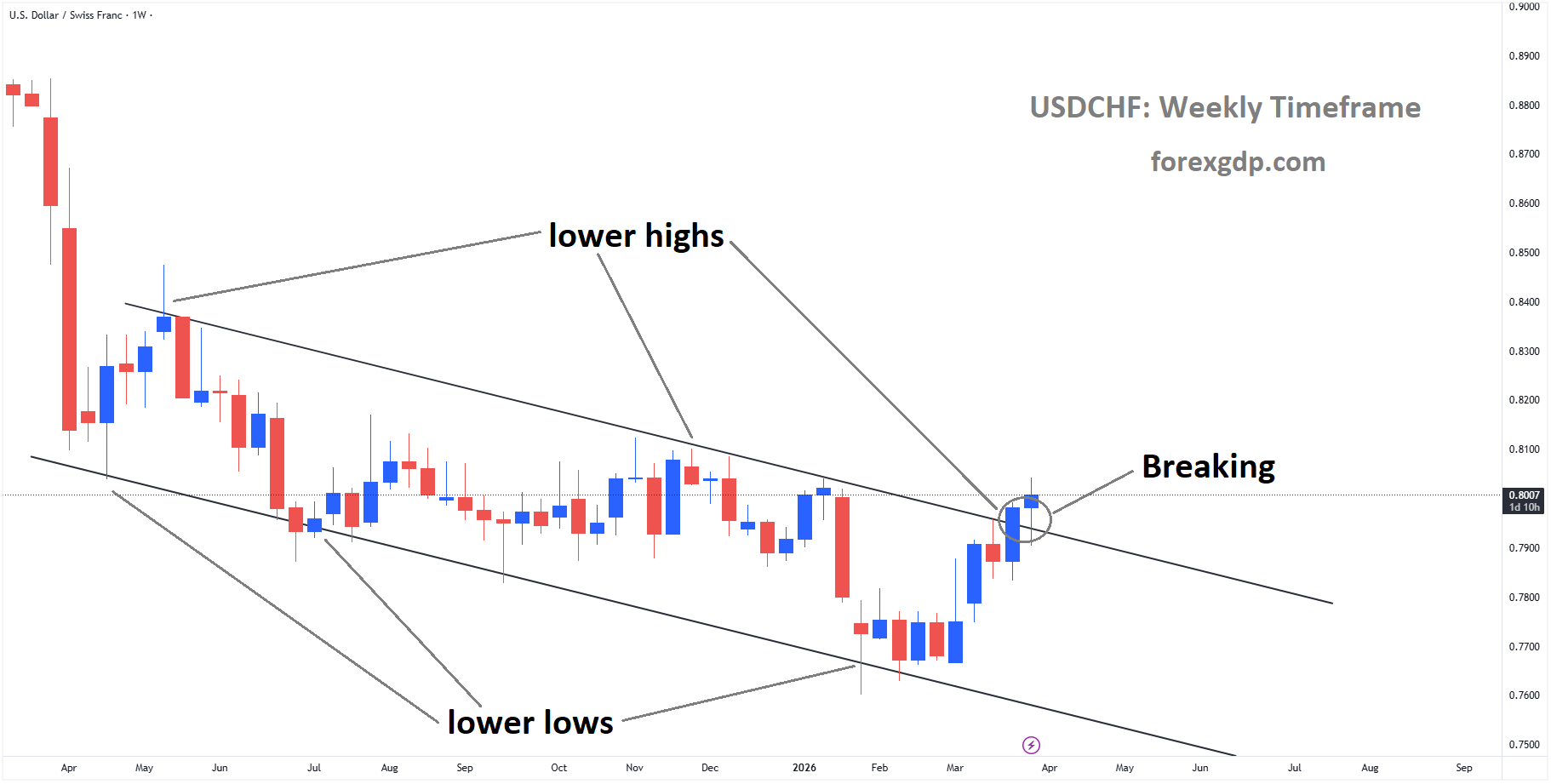
USDCHF is breaking the lower high area of the descending channel
This mix of economic data and geopolitical tension created a tug-of-war between the two currencies, with neither side making a decisive move.
Swiss Inflation Picks Up but Misses Expectations
Switzerland’s latest inflation data revealed a modest increase in consumer prices. According to official figures, the Consumer Price Index (CPI) rose to 0.3% year-on-year in March, up from 0.1% in February. This marked the highest level of inflation seen in the country over the past year.
However, the rise was still below what many analysts had expected. Forecasts had pointed toward a stronger increase of around 0.5%, meaning the actual data fell short of market hopes.
On a monthly basis, inflation also slowed. Prices increased by 0.2% compared to February, which again was lower than expectations. This softer data suggests that while inflation is rising, it is not doing so at a strong or consistent pace.
What Is Driving Swiss Inflation?
A key factor behind the recent increase in prices is the cost of energy, particularly heating oil. Global tensions and supply concerns have pushed energy prices higher, and Switzerland has felt the impact.
This rise in energy costs has lifted overall inflation, even though other parts of the economy remain relatively stable. It highlights how external factors, such as geopolitical events, can influence domestic price levels.
Impact on Swiss National Bank Policy
The increase in inflation, even if modest, could play an important role in shaping the Swiss National Bank’s (SNB) next steps. For some time, there has been pressure on the SNB to consider cutting interest rates again, possibly even moving deeper into negative territory.
However, rising inflation reduces the urgency for such action.
Why Higher Inflation Matters
When inflation is very low, central banks often lower interest rates to encourage spending and investment. But if inflation starts to rise, even slightly, it can ease the need for aggressive monetary easing.
In this case, the recent uptick in Swiss inflation may give the SNB more room to pause and assess the situation instead of rushing into further rate cuts.
This shift in expectations has offered some support to the Swiss Franc. A central bank that is less likely to cut rates tends to strengthen its currency, as investors see better returns from holding it.
US Dollar Remains Supported by Risk Aversion
Despite the Swiss Franc finding some support from inflation data, the US Dollar continued to hold its ground. The main reason for this strength lies in the broader mood of the market.
Investors are currently leaning toward caution, often described as “risk-off” sentiment. In such times, the US Dollar is seen as a safe and reliable currency.
What Is Driving Market Caution?
Recent developments in global politics have played a major role in shaping investor sentiment. A speech by US President Donald Trump added to uncertainty rather than calming markets.
Instead of signaling a quick resolution to ongoing tensions, the speech included strong and aggressive language regarding Iran. This shift in tone surprised many investors, especially after earlier suggestions of a possible easing of conflict.
As a result, markets reacted with concern.
Equity markets saw noticeable declines, while commodities like crude oil moved higher. At the same time, demand for safe-haven assets increased, giving the US Dollar a boost.
Swiss Franc Faces Limited Upside
Although the Swiss Franc is also traditionally viewed as a safe-haven currency, its gains have been more limited in this situation.
One reason is that the US Dollar tends to benefit more strongly during periods of global stress, especially when uncertainty is linked to US foreign policy or global energy markets.
Additionally, the softer-than-expected inflation data in Switzerland has capped the Franc’s upward momentum. While inflation is rising, it is not strong enough to trigger a clear shift in monetary policy expectations.
A Balance Between Support and Pressure
The Swiss Franc is currently caught between two opposing forces:
- Support from rising inflation and reduced pressure on the SNB
- Pressure from global risk aversion favoring the US Dollar

This balance has kept the currency from making significant gains, even when conditions might otherwise support it.
The Psychological Barrier in Currency Movement
During the trading session, the currency pair attempted to move beyond a key psychological level but struggled to hold above it. Such levels often act as important markers for traders, influencing buying and selling decisions.
When a currency pair fails to stay above a certain level, it can signal hesitation in the market. In this case, it reflects uncertainty about whether the Swiss Franc can sustain a stronger position against the US Dollar.
Broader Market Reactions
The impact of recent events has not been limited to currencies alone. Several other areas of the financial markets have also reacted:
- Stock markets experienced declines as investors reduced risk exposure
- Oil prices increased due to concerns about supply disruptions
- Safe-haven assets, including the US Dollar, saw stronger demand
These interconnected movements show how global events can quickly influence multiple markets at once.
What Traders Are Watching Next
Looking ahead, traders and investors will be closely monitoring both economic data and geopolitical developments.
On the economic side, any new inflation figures or central bank signals from Switzerland will be important. A stronger rise in inflation could further support the Swiss Franc, while continued softness may limit its gains.
On the global front, developments related to geopolitical tensions will remain a key driver of market sentiment. Any signs of escalation or resolution could quickly shift the balance between risk and safety.
Summary
The recent movement between the US Dollar and the Swiss Franc highlights the complex interaction between economic data and global events. Swiss inflation has increased, offering some support to the Franc and reducing pressure on the Swiss National Bank to cut rates further. However, the rise in inflation has not been strong enough to fully change market expectations.
At the same time, growing geopolitical uncertainty has pushed investors toward safer assets, strengthening the US Dollar. This risk-averse mood has limited the Swiss Franc’s ability to gain ground, even with supportive domestic data.
As markets continue to react to both economic signals and global developments, the balance between these two currencies is likely to remain sensitive and closely watched.
AUDUSD Falls Back with Fresh Middle East Concerns Weighing on Markets
The Australian Dollar has come under pressure in recent trading sessions, losing ground against major global currencies. This decline reflects a broader shift in market sentiment, where investors are moving away from riskier assets and seeking safer options. A mix of geopolitical tensions and anticipation around key economic data has created an environment of caution across global markets.
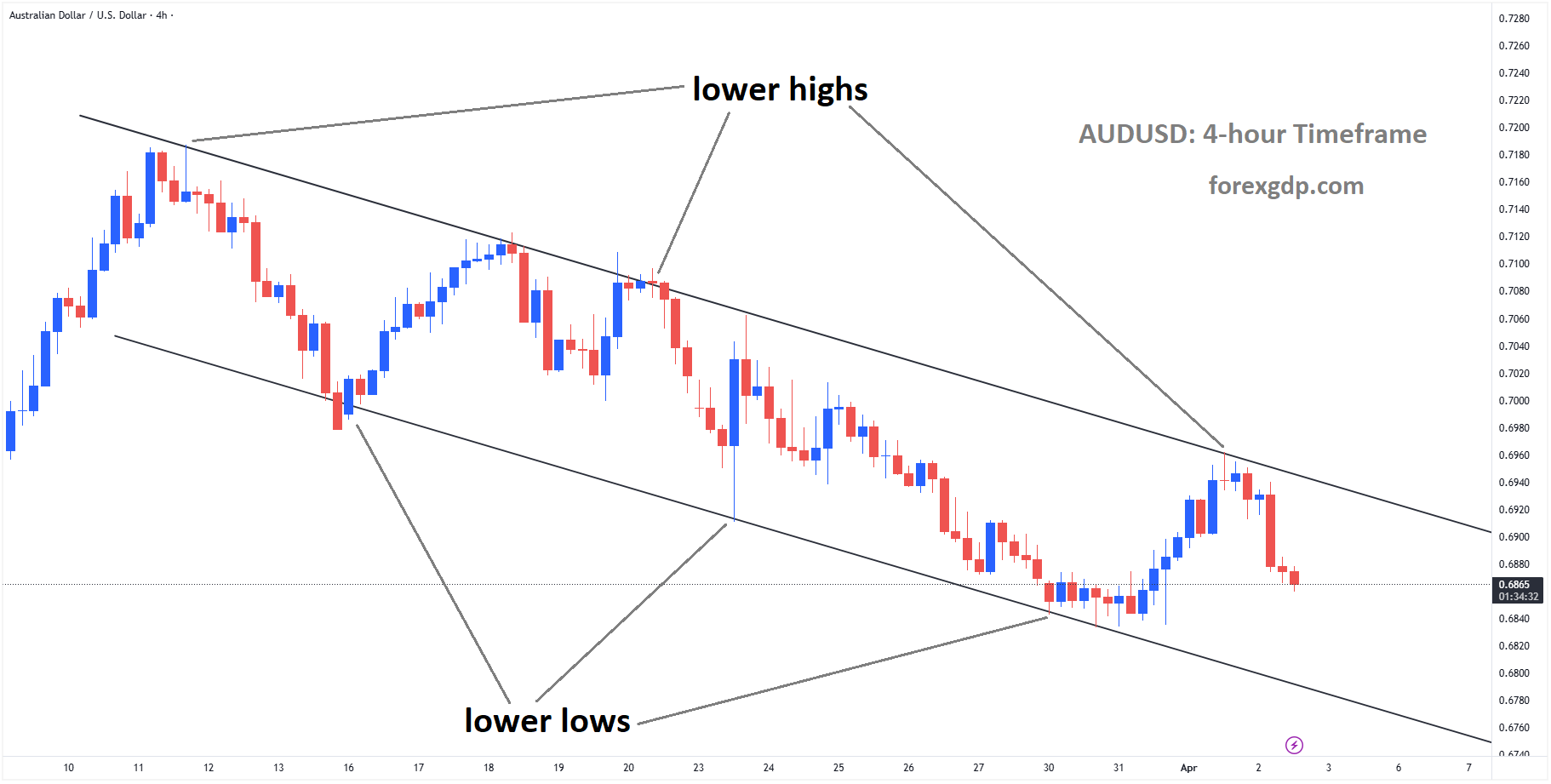
AUDUSD is moving in a descending channel, and the market has fallen from the lower high area of the channel
During Thursday’s European session, the Australian Dollar weakened notably against the US Dollar. This drop highlights how sensitive the currency is to global developments, especially when uncertainty increases. The shift in mood has been driven largely by renewed concerns about ongoing conflicts in the Middle East.
Rising Geopolitical Tensions Trigger Risk-Off Mood
Global markets have been unsettled by fresh fears that the conflict in the Middle East may continue for a longer period than previously expected. Earlier optimism about a possible ceasefire has faded, replaced by concerns that tensions could escalate further.
Statements from US leadership have played a key role in this shift. Strong warnings about potential military actions and threats directed toward Iran have added to the sense of instability. These developments have made investors more cautious, as prolonged conflict can disrupt global trade, energy supplies, and economic growth.
When such geopolitical risks rise, financial markets often react quickly. Investors tend to reduce exposure to assets that are considered risky, such as commodities and currencies tied to economic growth. The Australian Dollar, which is closely linked to global trade and demand for resources, is particularly vulnerable in such situations.
Why the Australian Dollar Is Sensitive to Global Sentiment
The Australian economy relies heavily on exports, especially commodities like iron ore and coal. Because of this, the Australian Dollar is often seen as a “risk-sensitive” currency. When global growth is strong and markets are optimistic, the currency tends to perform well.
However, when uncertainty increases, the opposite happens. Investors become cautious and move their money into safer assets. This shift reduces demand for the Australian Dollar, causing its value to fall.
Impact of Global Trade Concerns
Concerns about a prolonged conflict can disrupt supply chains and reduce global demand. This directly affects countries like Australia, which depend on steady trade flows. As a result, any sign of instability in key regions can quickly influence the currency.
Investor Behavior in Uncertain Times
During periods of uncertainty, investors often follow a predictable pattern. They sell assets that are seen as risky and buy those considered safe. This behavior amplifies the downward pressure on currencies like the Australian Dollar.
US Dollar Gains Strength as Safe-Haven Demand Rises
While the Australian Dollar has weakened, the US Dollar has gained strength. This is a common pattern during times of global uncertainty. The US Dollar is widely regarded as a safe-haven currency, meaning investors turn to it when they want to protect their capital.
As tensions in the Middle East increased, demand for the US Dollar rose. This pushed its value higher against a basket of major currencies. The strength of the US Dollar further contributed to the decline of the Australian Dollar, as the two currencies often move in opposite directions.
What Makes the US Dollar a Safe Haven
The US Dollar benefits from several factors that make it attractive during uncertain times:
- The size and stability of the US economy
- Strong financial markets
- High global demand for US assets
These factors give investors confidence that their money will be relatively safe, even during periods of global instability.
Stock Markets Reflect Growing Caution
The shift toward a risk-off mood is not limited to currencies. Stock markets have also shown signs of weakness. Major equity futures, including those linked to US indices, have declined, reflecting reduced appetite for risk.
When stock markets fall, it often signals that investors are becoming more cautious about future economic conditions. This caution can spread across different asset classes, including currencies, commodities, and bonds.
The decline in equity markets reinforces the broader trend of investors seeking safety. It also highlights how interconnected global markets are, with developments in one region quickly influencing sentiment worldwide.
Focus Turns to US Economic Data
While geopolitical tensions are a major driver of current market movements, economic data also plays a crucial role. Investors are closely watching upcoming US employment data, particularly the Nonfarm Payrolls (NFP) report.
This report provides important insights into the health of the US labor market. It shows how many jobs were added or lost over a given period and is considered one of the most influential economic indicators.
Why the NFP Report Matters

The NFP report can have a significant impact on financial markets because it influences expectations about interest rates. A strong labor market may lead to higher interest rates, while weaker data could suggest a more cautious approach from policymakers.
For currency markets, this is especially important. Interest rate expectations can drive capital flows between countries, affecting exchange rates. A stronger US outlook could further support the US Dollar, putting additional pressure on currencies like the Australian Dollar.
What Investors Are Looking For
Market participants will be paying close attention to several key aspects of the report:
- Job creation numbers
- Wage growth
- Unemployment rate
These details will help investors understand the direction of the US economy and what it might mean for future monetary policy.
Shifting Expectations and Market Volatility
The combination of geopolitical tensions and upcoming economic data has created a volatile environment. Markets are reacting quickly to new information, and sentiment can change rapidly.
Earlier optimism about a possible resolution in the Middle East had briefly supported riskier assets. However, the return of uncertainty has reversed that trend. This highlights how fragile market confidence can be when major global issues remain unresolved.
The Role of News and Announcements
In today’s fast-moving markets, news headlines can have an immediate impact. Statements from political leaders, updates on conflicts, and economic data releases all play a role in shaping investor sentiment.
As a result, currencies like the Australian Dollar can experience sharp movements within a short period. Traders and investors must stay alert and adapt to changing conditions.
Summary
The recent decline of the Australian Dollar reflects a broader shift toward caution in global financial markets. Rising tensions in the Middle East have increased uncertainty, prompting investors to move away from riskier assets. At the same time, the US Dollar has strengthened as demand for safe-haven assets grows.
Stock markets have also shown signs of weakness, reinforcing the risk-off mood. Meanwhile, attention is turning to key US economic data, particularly the Nonfarm Payrolls report, which could influence future interest rate expectations.
Together, these factors highlight the complex and interconnected nature of global markets. The direction of currencies like the Australian Dollar will depend not only on economic fundamentals but also on how geopolitical events and investor sentiment evolve in the coming days.
Don’t trade all the time, trade forex only at the confirmed trade setups
Get more confirmed trade signals at premium or supreme – Click here to get more signals, 2200%, 800% growth in Real Live USD trading account of our users – click here to see , or If you want to get FREE Trial signals, You can Join FREE Signals Now!