
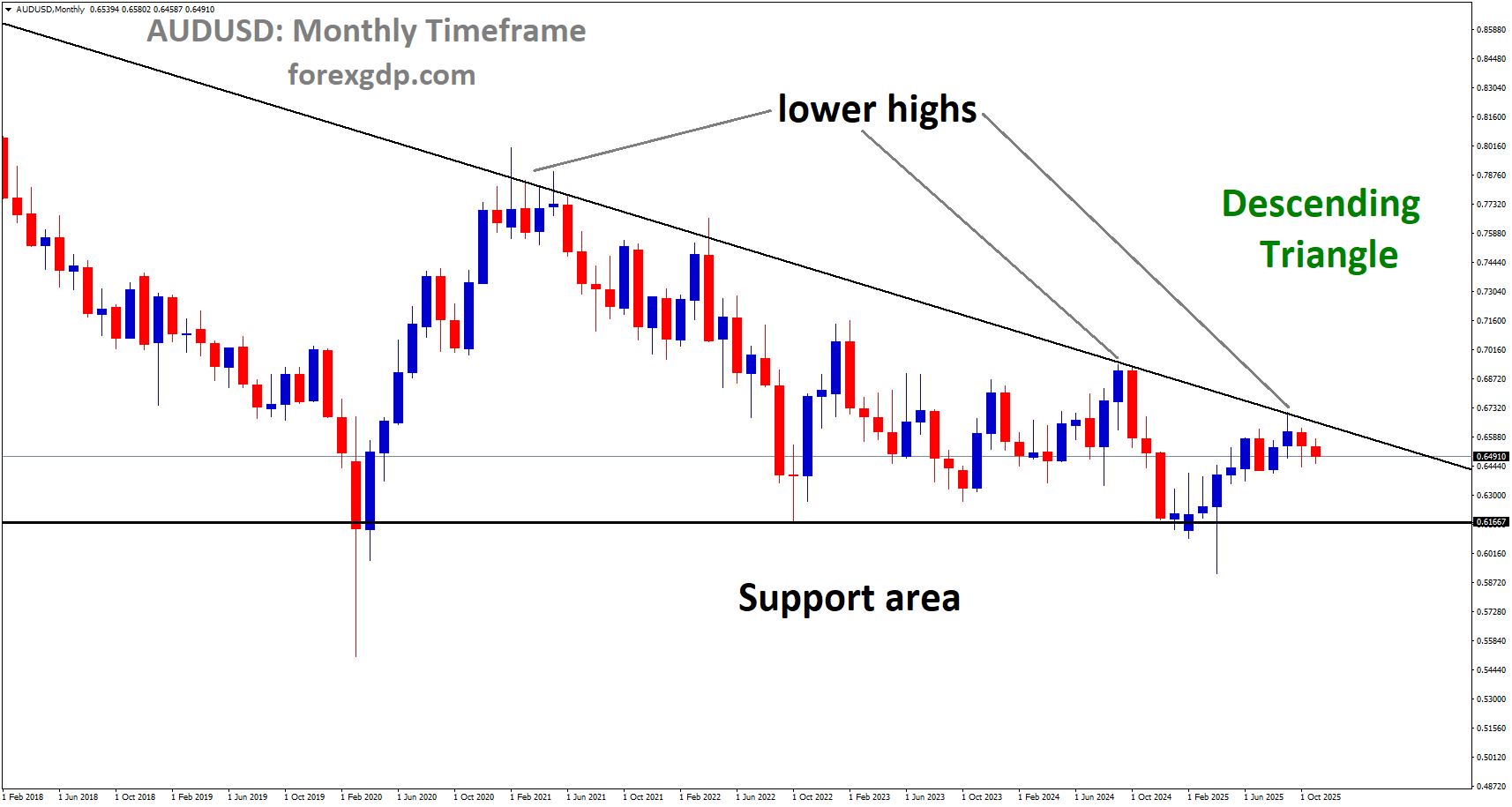
AUDUSD is moving in a descending triangle pattern, and the market has reached the lower high area of the pattern
AUDUSD Declines with Market Jitters Rising and Fed Policy Relief Uncertain
When global markets turn nervous, currencies tied closely to economic cycles often feel the pressure first. That’s exactly what has been happening with the Australian Dollar, which has been sliding as investors move away from riskier assets. In this article, we’ll explore the changing mood in global markets, how Australia’s wage and job data influence the country’s economic path, and why the US Dollar continues to hold firm.
Understanding the Decline in the Australian Dollar
The Australian Dollar has been losing ground recently, and much of that weakness comes from what’s happening across global financial markets. When investors grow worried about the future, they usually sell assets considered “risky” and shift toward safer alternatives. Unfortunately for the AUD, it’s often grouped among the currencies that get hit the hardest during these shifts.
One of the biggest triggers behind this recent risk-off mood has been a sharp drop in equity markets. Concerns have been building around the valuations of companies tied to artificial intelligence, an industry that has seen massive excitement and rapid growth over the past few years. But when markets begin to question whether these valuations are sustainable, the reaction spreads quickly. Investors pull back, uncertainty grows, and that caution spills into currency markets as well.
Australia’s Exposure to Global Trends
Australia is deeply connected to global economic trends because of its heavy reliance on commodity exports. Commodities like iron ore, coal, and natural gas make up a large portion of the country’s income from trade. During times of global optimism, this benefits Australia greatly. But when uncertainty rises, demand expectations can weaken, leaving currencies like the AUD more vulnerable.
In other words, when global markets get shaky, the Australian Dollar often gets caught in the crossfire—even if domestic conditions remain stable.
Australia’s Steady Wage Growth and What It Means for Policy
Despite this global volatility, Australia’s domestic data has been relatively stable. The latest Wage Price Index shows wages growing at a steady pace, rising 0.8% in the third quarter. On an annual basis, wages are up 3.4%, matching expectations.

These numbers give us an important glimpse into the broader economic picture. Wage growth that is steady—not surging or collapsing—typically signals that inflation pressures are manageable but still present. For the Reserve Bank of Australia, this creates a reason to stay cautious and avoid any sudden policy changes.
A More Balanced View from the RBA
Just recently, the RBA Minutes revealed that the central bank is leaning toward a more balanced stance. Rather than preparing for immediate action, the bank appears comfortable with holding interest rates steady for a longer period—provided the data continues to show stability.
This balanced approach makes sense when you consider the other economic indicators coming out of Australia. For example, recent labour market figures show encouraging momentum. The unemployment rate dropped to 4.3%, down from 4.5%, and employment expanded significantly with over 42,000 new jobs created. These are strong numbers that suggest the economy is still performing better than expected.
Because of this resilience, markets see very little chance of the RBA cutting rates in the near term. Current projections reflect only a small expectation of any policy easing in the upcoming months.
Why the US Dollar Is Staying Strong
While the Australian Dollar has been under pressure, the US Dollar has been holding steady. A major reason for this is the shifting expectations around future Federal Reserve decisions. Not long ago, many investors were confident that the Fed would begin cutting interest rates soon. But that confidence has faded.
The closer we get to key economic reports, the more cautious markets are becoming. The US Dollar Index remains elevated as traders wait for upcoming labour data, especially the Nonfarm Payrolls report. These job numbers are closely watched because they help the Fed gauge whether the economy is still strong enough to maintain current interest rate levels.
Right now, expectations for a rate cut at the Fed’s next meeting have fallen sharply. This shift alone adds support to the US Dollar, since higher interest rates generally attract more foreign investment.
What Fed Officials Are Saying
Several Federal Reserve officials have recently shared their thoughts on the economic outlook, and their tone has been cautious. Thomas Barkin noted that although the labour market seems more balanced, it’s still unclear whether inflation is falling fast enough to meet the Fed’s target. Meanwhile, Vice Chair Philip Jefferson emphasized that the risks to employment are now becoming more significant, calling for a slower, more careful approach to any policy adjustments.
Their comments highlight an important theme: uncertainty. And whenever uncertainty grows, currencies like the USD tend to benefit because they are seen as safe havens.
Recent US Job Data Adds to the Caution
Recent jobless claim numbers in the US show a slight increase, and the ADP employment report has pointed to modest job losses. These signals, although not dramatic, suggest that the labour market may be losing some momentum. That makes the upcoming data releases even more important in shaping market expectations.
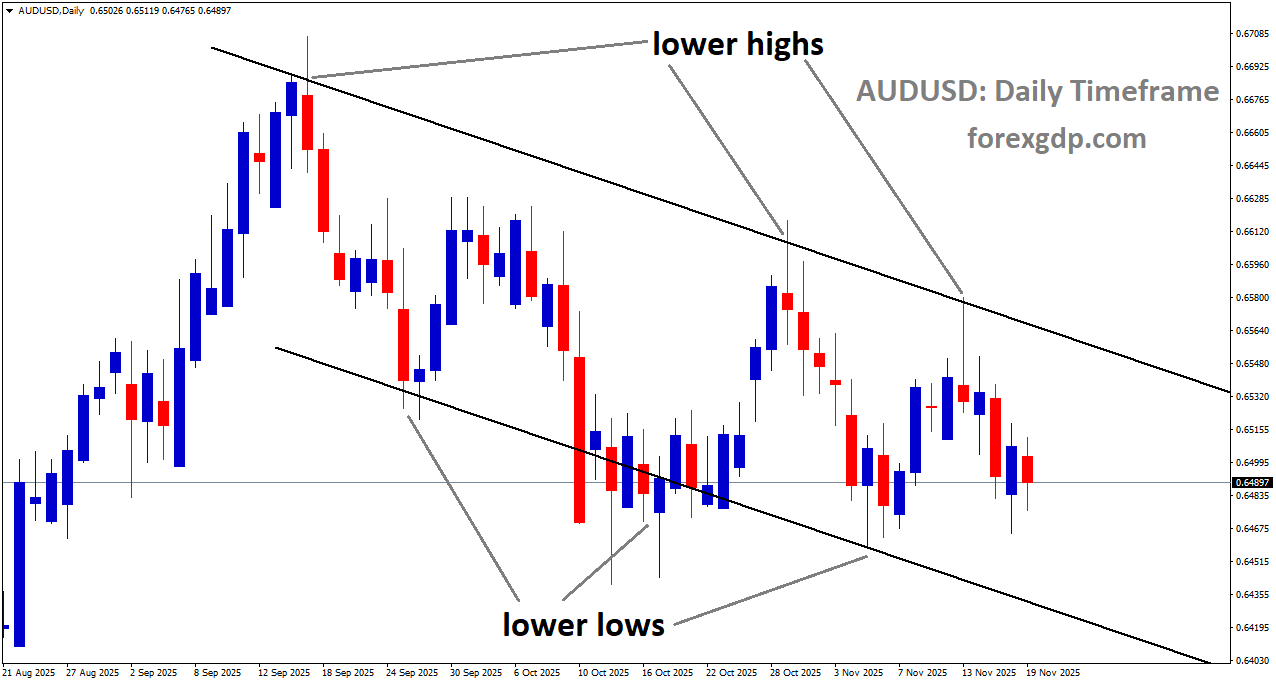
AUDUSD is moving in a descending channel, and the market has fallen from the lower high area of the channel
Political tensions have also added a layer of unpredictability. Comments from US President Donald Trump about potentially removing the Fed Chair created additional volatility, reminding investors that markets don’t respond only to economic figures—political developments matter too.
What This All Means for the AUD/USD Outlook
With so many moving parts influencing both currencies, the AUD/USD pair is navigating a complicated environment. On one side, global uncertainty and market pullbacks are weighing on the Australian Dollar. On the other, steady domestic data helps prevent deeper losses.
Meanwhile, the US Dollar benefits from shifting expectations around Federal Reserve policy, giving it a firm footing for now.
Final Summary
The recent decline in the Australian Dollar is closely tied to the drop in global equity markets and rising investor caution. Australia’s stable wage and labour market data provide some support, contributing to a more measured stance from the Reserve Bank of Australia. However, the broader market environment continues to favor the US Dollar, which remains firm as expectations for Federal Reserve rate cuts fade. As investors watch upcoming economic data from both countries, the currency pair is likely to remain sensitive to shifts in market sentiment and policy outlooks.
BTCUSD Under Pressure – Could a Major Shakeout Be Ahead?
Bitcoin has been going through a tough patch lately. If you’ve been watching the crypto space, you’ve probably noticed the steady drop and are wondering — what’s causing it, and is this just another dip or something more serious?
Why Bitcoin Is Falling: More Than Just a Market Dip
Bitcoin doesn’t move in a vacuum. What we’re seeing now is a mix of global market trends, cooling interest from big players, and low liquidity — all stacking up to push prices lower.
Let’s unpack these one by one.
1. The World Is Playing It Safe Again
One of the biggest drivers behind Bitcoin’s recent decline is what’s happening on a global scale. Investors around the world are shifting back into “risk-off” mode — basically, they’re getting nervous and pulling their money out of high-risk assets like crypto.
What’s Causing This Shift?
-
The U.S. dollar is getting stronger, which usually pulls money away from riskier assets like Bitcoin.
-
Stock markets are sending mixed signals, which adds to the uncertainty.
-
Liquidity — or the amount of money flowing around the financial system — is getting tighter. When there’s less money to go around, people tend to get more conservative with their investments.
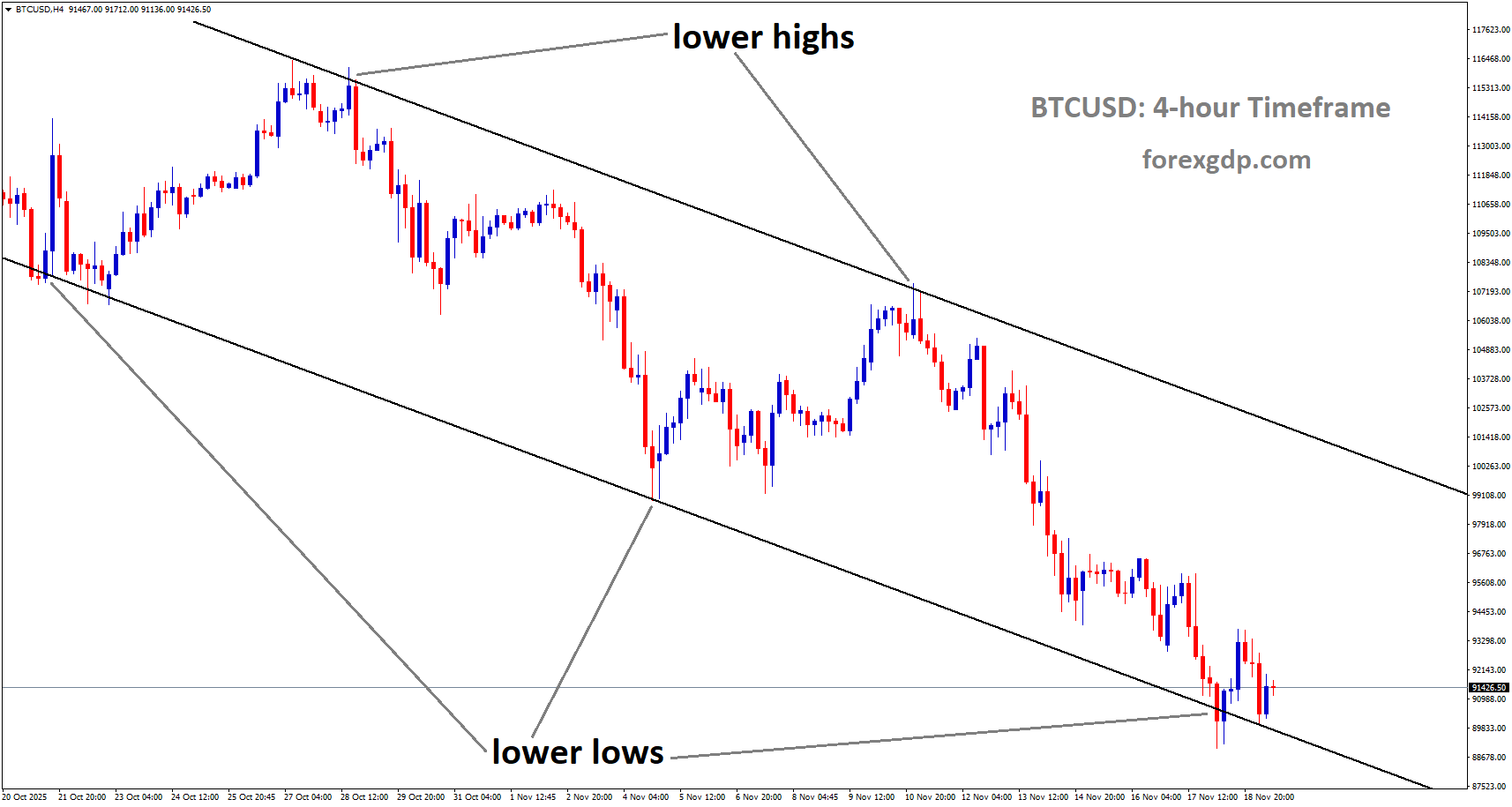
BTCUSD is moving in a descending channel, and the market has reached the lower low area of the channel
And Bitcoin? It’s one of the first places that feels the pressure. That’s because it’s still considered one of the riskiest assets. When people start playing it safe, crypto is usually the first thing to go.
2. Bitcoin ETFs Aren’t Getting the Same Love
Earlier this year, one of the big reasons Bitcoin was climbing was the excitement around spot ETFs (Exchange-Traded Funds). These made it easier for big investors — like hedge funds and financial institutions — to get into Bitcoin.

At first, money was flowing in fast. But recently, that enthusiasm has cooled off.
Here’s What’s Happening:
-
Daily inflows into these ETFs have slowed down.
-
Overall demand from institutions isn’t as strong.
-
Without that steady buying pressure, it’s easier for the price to fall when selling picks up.
Think of it like this: when demand dries up, there’s less support holding Bitcoin up. So any push downward feels a lot stronger than it would if buyers were still jumping in.
3. There’s Just Not Enough Liquidity Right Now
Liquidity might sound like a technical term, but it’s really simple: it’s about how much money is moving through the market and how easy it is to buy and sell without affecting the price too much.
Right now, liquidity is thin. That means:
-
Fewer stablecoins (like USDT and USDC) are entering the market.
-
There’s less new capital coming into futures and other trading markets.
-
Trading conditions are choppy — small moves can turn into big ones fast.
So what does this mean for Bitcoin? Every time someone sells, especially in large amounts, the price can drop more than expected because there’s just not enough buy pressure to absorb it.
In simple terms: fewer buyers + more sellers = faster drops.
4. Bearish Momentum Is In Control
While we’re not diving into complex technicals, it’s worth mentioning that Bitcoin’s recent price action has been consistently negative.
The trend has been marked by:
-
Lower highs on each small bounce.
-
Heavy selling days followed by weak recoveries.
-
Overall, the momentum just isn’t on the side of buyers right now.
These kinds of patterns build on themselves. As prices drop, more people get nervous and sell, adding more pressure. Until something changes in the broader environment or sentiment shifts, it’s hard to shake that downward momentum.
What’s Holding Bitcoin Back Right Now
So, when you zoom out, here’s the picture:
-
The global market isn’t in a good place for risky assets.
-
Institutional interest, which once propped up Bitcoin, is no longer as strong.
-
Liquidity is low, making every move more dramatic.
-
Bearish trends are reinforcing the sell-off.
That’s not to say Bitcoin is done for. It’s gone through many tough stretches before — and bounced back stronger. But for now, these combined factors are making it hard for Bitcoin to find stable ground.
Looking Ahead: What Might Help Bitcoin Recover
While things feel heavy at the moment, it’s not all doom and gloom. Markets are always changing, and several things could help turn the tide:
-
A return of institutional demand could bring some much-needed buying strength.
-
Improved liquidity conditions — more money flowing in — would help stabilize prices.
-
Global markets shifting out of risk-off mode would give Bitcoin and other cryptos room to breathe.
Of course, no one can predict exactly when or how those changes will happen. But these are the key signs to watch for if you’re waiting for a recovery.
Quick Recap: Why Bitcoin Is Struggling
To sum everything up:
-
Global markets are in a cautious phase, which hurts Bitcoin.
-
ETF excitement has cooled, and institutional buyers are pulling back.
-
Liquidity is low, which makes every sell-off feel even worse.
-
Bearish momentum continues to weigh down price action.
All of these are feeding into each other, creating the conditions we’re seeing today. It’s not just about charts or a single event — it’s a combination of economic forces and investor behavior shaping the market.
Final Thoughts: What This Means for You
If you’re holding Bitcoin or thinking about entering the market, it’s important to understand what’s really going on behind the scenes. It’s easy to get caught up in price drops and fear-based headlines, but the bigger picture tells a more complete story.
This kind of pullback isn’t new. Bitcoin has always been volatile. And just as it’s gone through sharp declines in the past, it’s also seen powerful rebounds when conditions improve.
EURUSD drops as Eurozone inflation slowdown triggers fresh selling
The Euro has been under pressure recently, and the latest economic updates from the Eurozone and the United States have added more weight to the currency’s struggle. With the Euro touching new weekly lows, many traders and observers are paying close attention to how shifting economic conditions may continue shaping the EUR/USD pair.
The Euro Faces Fresh Weakness as Inflation Softens
The Euro began losing ground after another failed attempt to recover, slipping toward new weekly lows. Updated Eurozone inflation data confirmed that price growth is slowing down, bringing inflation levels closer to the European Central Bank’s preferred target.
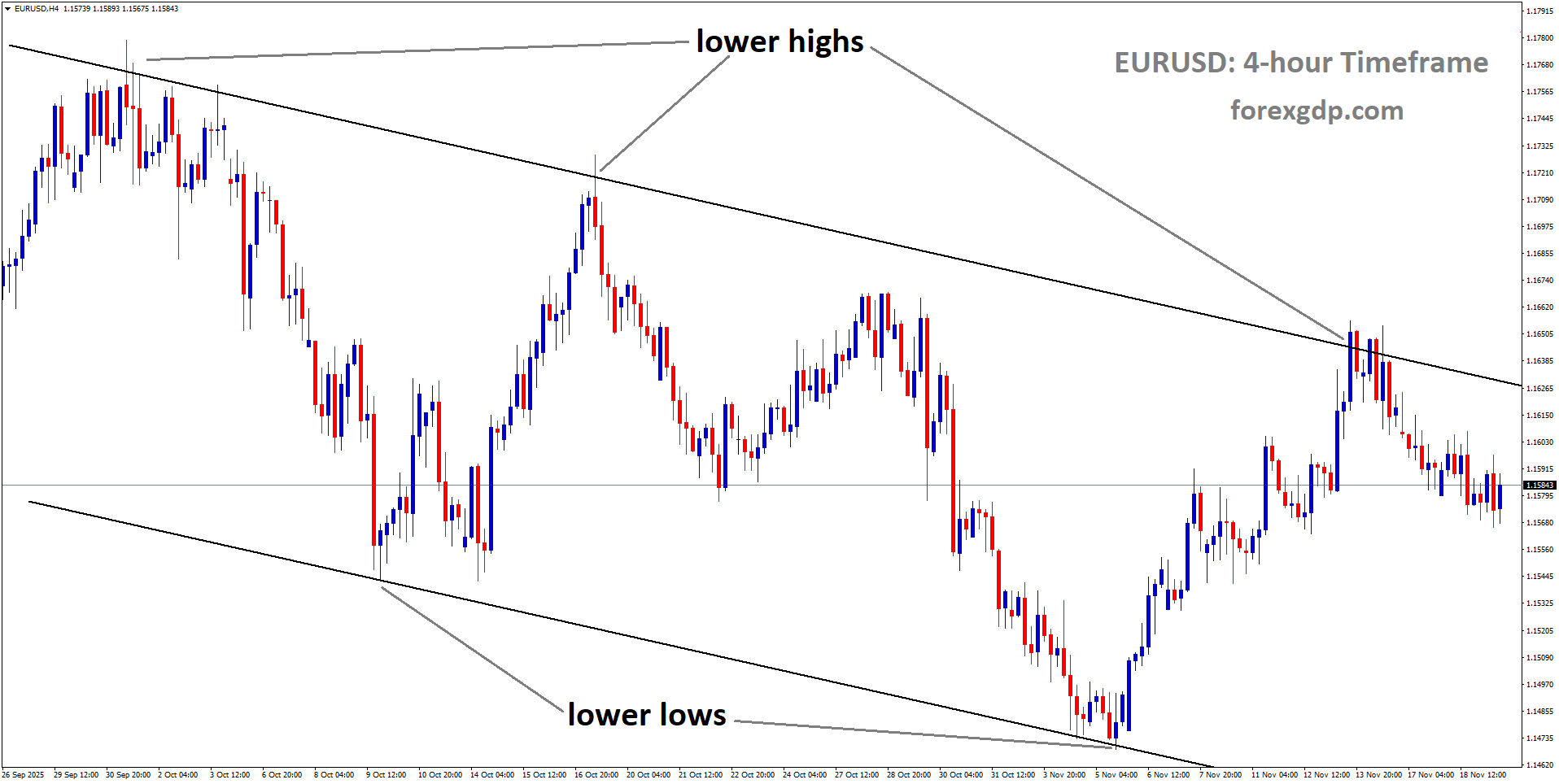
EURUSD is moving in a descending channel, and the market has fallen from the lower high area of the channel
Eurostat’s latest report showed that consumer prices rose slightly on a monthly basis in October, but yearly inflation eased compared to the previous month. This suggests that inflation is cooling across the region, something the ECB has been aiming for. Core inflation, which removes items like food and energy, also rose only modestly. This indicates that underlying price pressures are not intensifying and adds to the overall narrative of easing inflation.
With softer inflation and an uncertain market environment, the Euro remains vulnerable, especially whenever investors turn cautious and seek safety.
Risk Aversion Boosts the US Dollar
One of the biggest reasons behind the Euro’s current struggle is the broader risk-off environment dominating global markets. When investors worry about economic or geopolitical uncertainty, they typically move toward safer options—and the US Dollar is often the first choice.
Even though the latest US economic data hasn’t been particularly strong, the Dollar continues to attract buyers because safety matters more than short-term data. Concerns about global growth and financial volatility are creating enough pressure to push investors toward the USD.
Another factor supporting the Dollar is the ongoing debate over future Federal Reserve decisions. While some economic reports point to a cooling US labour market, the Fed is still cautious about shifting its policies too quickly. This conservative approach helps keep the Dollar supported even when economic indicators come in weaker than expected.
US Labour Data Shows Weakness, Stirring Policy Speculation
Recent labour market data from the US indicated a loss of momentum. Initial Jobless Claims rose higher than anticipated, showing that more people are filing for unemployment benefits. Continuing Claims also increased, suggesting that workers are finding it harder to re-enter the job market.

The ADP Employment Change report added to the story by showing that businesses reduced staff on average over several weeks. Although slightly better than the previous reading, the numbers still signal a cooling labour environment.
Normally, a weaker labour market might pressure the Dollar, but the current global risk environment keeps it supported. Investors remain more focused on safety rather than specific economic figures. Even so, this labor market weakness has increased expectations for a possible Federal Reserve rate cut in December. However, Fed officials say they need more evidence before making any decisions, which keeps the market in a state of uncertainty.
What to Watch: Fed Minutes and the Nonfarm Payrolls Report
Market attention is now turning toward upcoming data releases that could influence market sentiment. The minutes of the Federal Reserve’s recent meeting are expected to offer a clearer picture of how officials are thinking about future policy steps. While these minutes may provide helpful insights, traders are largely waiting for a more influential release.
The biggest event on the calendar this week is the US Nonfarm Payrolls report. Because last month’s data was delayed, this report carries even more significance. The job numbers will offer a deeper look at the strength of the labour market and may help shape expectations regarding future monetary policy.
Strong job growth could reduce expectations for rate cuts and strengthen the Dollar further. Weak numbers, on the other hand, could add pressure on the Fed to shift toward easing, possibly giving the Euro some support if overall risk sentiment improves.
Market Mood Keeps Pressuring the Euro
Right now, the Euro continues trading near its weekly lows as the global mood stays cautious. Equity markets have been under pressure, and risk-sensitive assets like the Euro tend to struggle when fear dominates the environment.
Recent US factory data did show a modest rebound, but it wasn’t enough to meaningfully influence the Dollar or shift market sentiment. Traders are more focused on ongoing uncertainty rather than isolated data points.
Until major updates such as the Nonfarm Payrolls report provide clearer direction, the Euro is likely to remain under pressure. Sentiment, rather than economic strength, is playing the biggest role in the currency’s recent movement.
Final Summary
The Euro’s downturn reflects a combination of cooling Eurozone inflation and a strong risk-off environment that continues to support the US Dollar. Even though US labour data shows signs of weakness, uncertainty around future Federal Reserve decisions helps maintain Dollar strength. As global markets remain cautious, the Euro is struggling to gain traction, and upcoming US economic data will likely determine the next significant move in the EUR/USD pair.
GBPUSD weakens while UK inflation slowdown weighs on sentiment
The Pound Sterling has been under pressure lately, especially after the latest inflation update from the United Kingdom. With fresh economic data shaping expectations for the coming months, both traders and long-term investors are paying close attention to how the currency reacts. Let’s break down what’s happening, why it matters, and what market watchers are focusing on next.
The UK’s Cooling Inflation Sparks Market Reactions
The big driver behind the recent drop in the Pound is the new Consumer Price Index (CPI) report for October. The Office for National Statistics confirmed that inflation in the UK continues to slow at a steady pace. Headline inflation eased to 3.6% year-on-year, slipping from the previous 3.8%. Core inflation, which removes more unstable categories such as food and energy, also softened slightly to 3.4%.
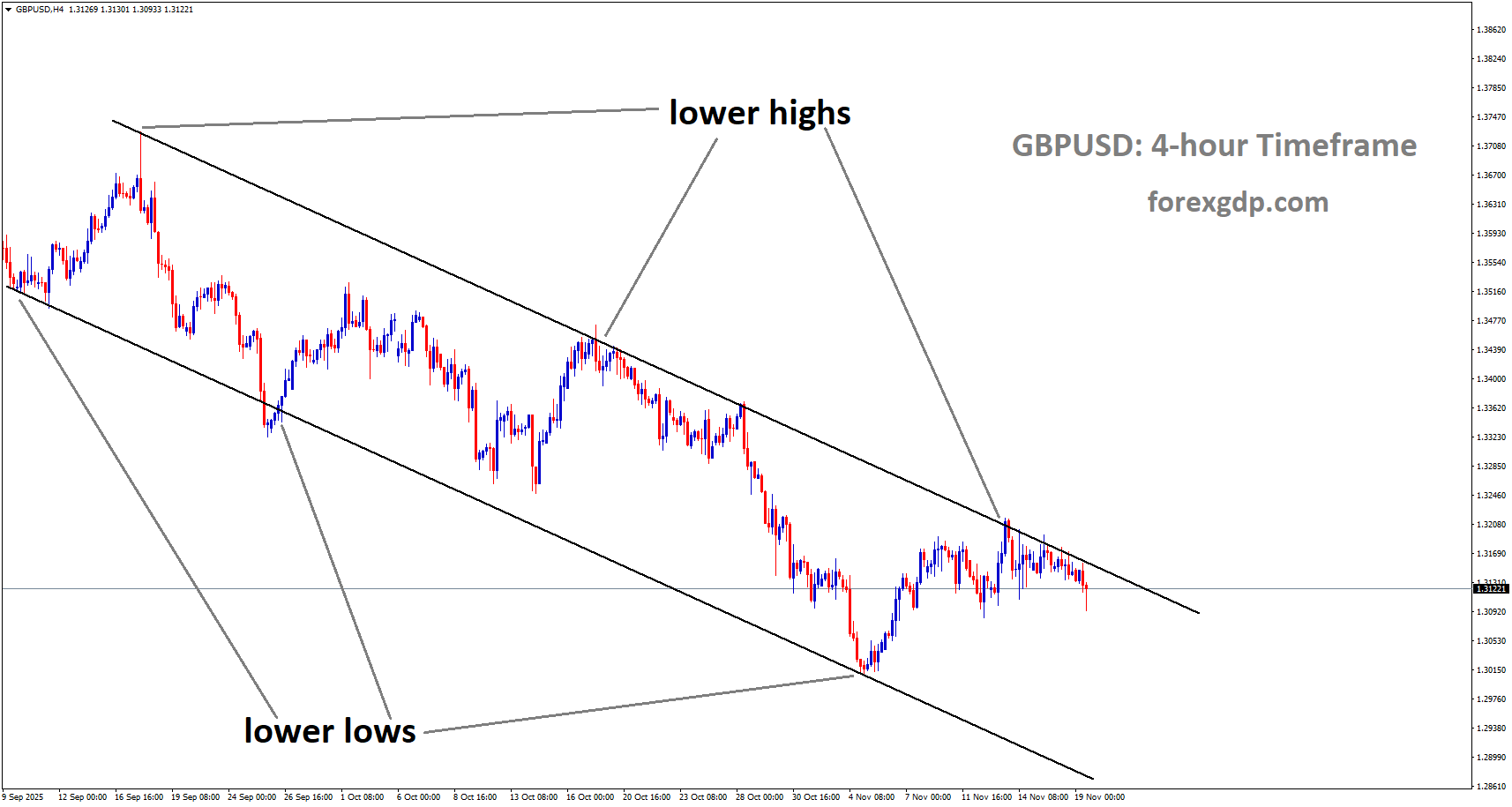
GBPUSD is moving in a descending channel, and the market has reached the lower high area of the channel
While these numbers were broadly expected, the details of the report still influenced market sentiment. One of the most notable shifts came from the services sector, where inflation cooled from 4.7% to 4.5%. The services category matters a lot because it reflects domestic price pressures—an area central banks watch closely when deciding future interest rate decisions.
The slight cooling trend gives the Bank of England room to consider trimming interest rates soon. Before the inflation data was released, traders were already leaning toward expecting a cut in December. After the report came out, expectations strengthened even further, with market participants becoming more confident that the BoE might take action sooner rather than later.
Growing Expectations of a Softer Monetary Policy Path
Over the past few months, the UK economy has shown signs of losing momentum. The labour market, once incredibly resilient, has started to display cracks. The latest employment data covering the three months to September revealed softer hiring activity and a slowdown in wage growth. These developments add support to the argument that the BoE may need to ease conditions to prevent the economy from stalling further.
Comments from Bank of England policymakers have also nudged market expectations in a dovish direction. This week, Swati Dhingra, a member of the Monetary Policy Committee, highlighted that disinflation in services is likely to continue. She suggested that interest rates should move toward a neutral level—meaning a point where they neither stimulate nor hold back the economy. Her remarks added to the momentum that was already building around the possibility of a rate cut.
Looking ahead, investors will keep their eyes on upcoming domestic data such as October’s Retail Sales and the first round of November’s Purchasing Managers’ Index readings. These reports will offer more insight into how consumers and businesses are coping with ongoing economic pressures.
Market Mood Shifts as the Pound Falls Against the US Dollar
The Pound has slipped sharply against the US Dollar, trading near the lower end of its recent range during Wednesday’s European session. While the weaker UK inflation data triggered much of this downward move, the broader strength of the US Dollar has amplified the decline.
The US Dollar Index climbed to fresh weekly highs, supported by cautious sentiment ahead of high-impact US economic reports. Investors are preparing for the release of the latest Nonfarm Payrolls figures, which are scheduled for Thursday. The data is known for causing strong moves in currency markets since it reveals the health of the US labour market—one of the key inputs for Federal Reserve policy.
Economists are expecting a moderate increase in job creation, with forecasts pointing to about 50,000 new positions. The unemployment rate is projected to remain stable at 4.3%. Wage growth is also being closely watched, as higher earnings can contribute to inflationary pressures.
As Thursday’s release approaches, the market is becoming more cautious. Fed officials have been discussing softer hiring trends recently. Christopher Waller, a member of the Federal Reserve Board, said earlier this week that the central bank might need to continue lowering interest rates in December if hiring remains subdued. He mentioned that some companies are pulling back on recruitment as they shift resources toward technology investments, and that many households are reducing spending. These signs hint at cooling economic activity.
Meanwhile, traders are dialing back expectations of a rate cut from the Fed next month. Tools that track market pricing show the probability of a December cut falling significantly from where it was last week. This shift helps support the US Dollar and adds more pressure on the Pound.
What Investors Are Watching Next
In addition to Thursday’s labour market report, another important item on the calendar is the release of the Federal Open Market Committee Minutes. These records provide a look into the discussions and concerns of Fed officials during their latest meeting, where they opted to lower rates by a quarter of a percentage point. Traders read these minutes carefully to understand how policymakers are thinking and what conditions might trigger more changes in policy.

Back in the UK, the next batch of economic indicators could influence how strongly expectations build around a Bank of England rate cut. Retail spending and business surveys will reveal more about the state of economic activity heading into the end of the year.
With both sides of the Atlantic preparing for key data releases, currency markets may remain volatile in the short term. The balance between cooling inflation in the UK and shifting expectations about US policy will likely guide how the Pound moves in the coming days.
Final Summary
The Pound Sterling is under pressure after the latest UK CPI report confirmed that inflation continues to ease. While this trend suggests the Bank of England may soon feel comfortable cutting interest rates, it also weakens the Pound as investors adjust their expectations. At the same time, the US Dollar is gaining strength ahead of key US labour market data and the release of the Fed’s meeting minutes. With central bank decisions and fresh economic indicators on the horizon, both UK and US markets are poised for further shifts, and traders will be watching upcoming data closely to determine the next direction for major currencies.
USDJPY Faces Pressure with Market Caution Rising Over BoJ’s Next Move
When the Japanese Yen starts making headlines, you know the global market is going through a moment of uncertainty. This week, the Yen is drawing extra attention, not because of dramatic moves, but because investors are watching it closely for clues about what might come next. Safe-haven demand, shifting expectations around central banks, and questions about Japan’s economic direction are all playing a part.
The Yen Picks Up Safe-Haven Interest as Traders Play It Cautious
The Japanese Yen naturally attracts attention when global sentiment becomes uneasy. Even though the Yen had a slight lift mid-week, it’s still hovering near levels last seen about nine months ago. What’s interesting is that this modest rise has little to do with strong Japanese economic data and more to do with global uncertainty.
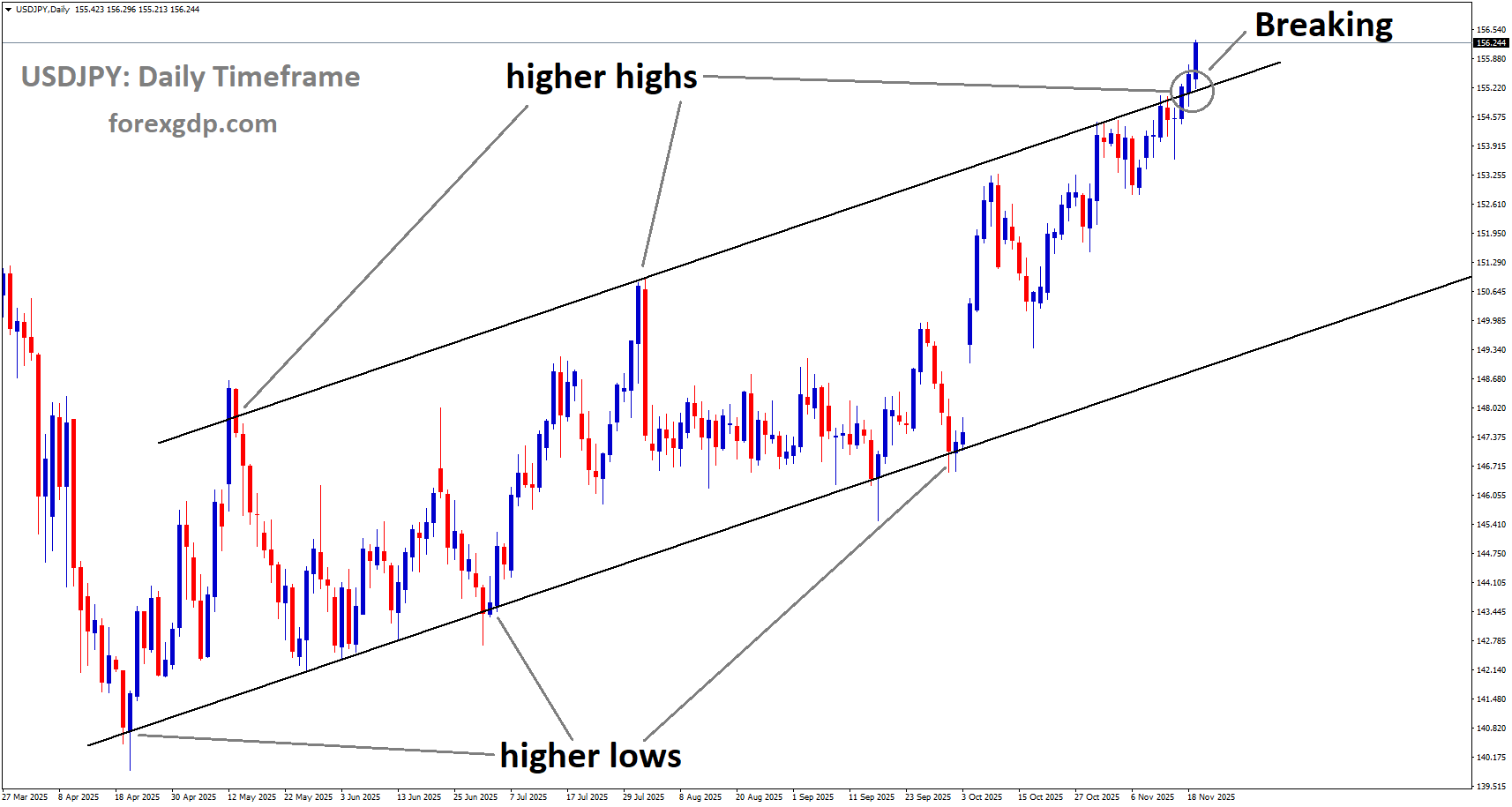
USDJPY is breaking the higher high area of the uptrend channel
A softer US Dollar is helping the Yen a bit. Concerns surrounding the US economy have pushed the Dollar lower, giving the Yen some breathing room. Investors are treading carefully, waiting for new clues from major economic releases. Whenever big reports are due, traders tend to shift toward safe-haven assets, and the Yen is usually one of the first places they look.
But beyond the global mood, something else is happening: speculation that Japanese authorities might step in to support their currency. When the Yen weakens too much, the government often hints at intervention. Even the fear of such intervention is enough to keep traders from pushing the Yen dramatically lower.
BoJ Policy Uncertainty Keeps Yen Bulls From Going All In
One of the biggest forces shaping the Yen right now is uncertainty over what the Bank of Japan plans to do next. While other major central banks have been adjusting interest rates, Japan’s path is much less predictable. And a lot of that uncertainty comes from the government’s own stance.
Government Spending Plans Raise New Questions
A group of lawmakers from the ruling Liberal Democratic Party recently proposed a massive supplementary budget—more than ¥25 trillion—to support Prime Minister Sanae Takaichi’s economic stimulus efforts. Large spending plans create concerns about increased government debt, and that ripple can reach the currency market.
The rise in yields on long-term Japanese government bonds reflects these concerns. When debt supply expectations increase, yields tend to climb, and higher yields can influence currency movements, though in Japan’s case, the relationship is not always straightforward.
Prime Minister Takaichi Prefers Low Interest Rates
Another interesting layer is the Prime Minister’s perspective on interest rates. She has repeatedly emphasized that Japan is still at risk of slipping back into deflation. She wants inflation driven by wage growth—not just rising costs of essentials. Because of this, she has urged the Bank of Japan to work closely with the government to support the economy.
Most importantly, she has expressed discomfort with the idea of raising interest rates too early. When a country’s leader signals resistance to tighter monetary policy, investors pause. If the government wants affordable borrowing and expanded fiscal support, aggressive rate hikes by the BoJ become unlikely. That creates mixed signals for Yen traders who would normally expect a stronger currency when rate hikes are on the horizon.
Market Participants Remain Alert as Intervention Fears Linger
Even with all this policy uncertainty, there’s still one major factor that keeps the Yen from falling further: the possibility of currency intervention. Japan has stepped into the market several times in past years when the Yen weakened too quickly. While no official action has been taken recently, the tone of government commentary suggests they’re watching closely.
This alone can stabilize the currency. Traders become wary of taking large bearish positions when they think a sudden official move could catch them off guard. At the same time, risk-off sentiment in the global market adds a layer of support. When investors get nervous, they tend to shift funds toward safer assets, and the Yen traditionally fits that role.
But even with this safe-haven appeal, not everyone is rushing into the Yen. Many prefer to wait until the Bank of Japan offers clearer signals about its long-term plan. Until then, the currency will likely remain sensitive to both political statements and global mood swings.
US Economic Outlook Adds More Uncertainty to the Mix
Across the Pacific, traders are closely watching incoming US data. A series of delayed economic reports means the market hasn’t had fresh updates on the state of the US economy—especially the labor market. Signs of weakening employment could influence the Federal Reserve’s next decisions, and that makes this week particularly important.

Several US Federal Reserve officials have made cautious comments. Vice Chair Philip Jefferson noted that the central bank needs to proceed slowly. Meanwhile, Governor Christopher Waller discussed the growing case for future cuts. When Fed officials sound careful, traders start adjusting their expectations, and that can affect the Dollar—and by extension, the Yen.
Why the FOMC Minutes Matter This Week
Market participants are especially focused on the minutes from the Federal Open Market Committee meeting. These minutes offer insights into how Fed members view the economic landscape and what they may be considering for future policy moves. Even subtle hints can influence the Dollar’s strength.
A weaker Dollar usually helps the Yen, but with so many mixed signals on both sides, traders are hesitant to commit to major positions until they see how the Fed is leaning.
All Eyes on US Labor Data Next
Right after the minutes, attention shifts to the US Nonfarm Payrolls report. This report shapes expectations about economic strength, wage pressure, and future central bank policy. Strong job numbers can lift the Dollar, while weaker data typically does the opposite. Because of this, the USD/JPY pair often reacts sharply to the release.
Final Summary
The Japanese Yen is sitting at the center of several overlapping forces, creating a landscape filled with both caution and opportunity. Safe-haven demand is offering some support, but uncertainty over Japan’s policy direction, government spending plans, and the Bank of Japan’s stance on interest rates is preventing stronger gains. At the same time, global factors—especially the outlook for the US economy and upcoming Federal Reserve communications—are shaping market sentiment.
Intervention fears, shifting investor confidence, and anticipation of key economic reports are keeping the Yen in a tight and unpredictable range. For now, traders seem content to wait, watch, and react to upcoming signals, making the next few days especially important for understanding where the Yen may head next.
USDCHF trades resiliently around 0.8000 as investors look toward the next FOMC insights
When a currency pair rises for several days in a row, traders naturally start asking what’s behind the move and whether it can keep going. That’s exactly the case with USD/CHF right now. After touching its lowest level in nearly a month, the pair has been gaining momentum for four straight days, drawing attention from anyone keeping an eye on the forex market.
Below, let’s break down the key factors moving the pair, what’s happening in the broader global environment, and what traders are watching in the days ahead.
Why USD/CHF Has Been Climbing Again
The USD/CHF pair has been showing notable strength this week, pushing back above the important 0.8000 region after recovering from last week’s lows. This recovery has not come out of nowhere—several underlying forces have been working together to support the move.
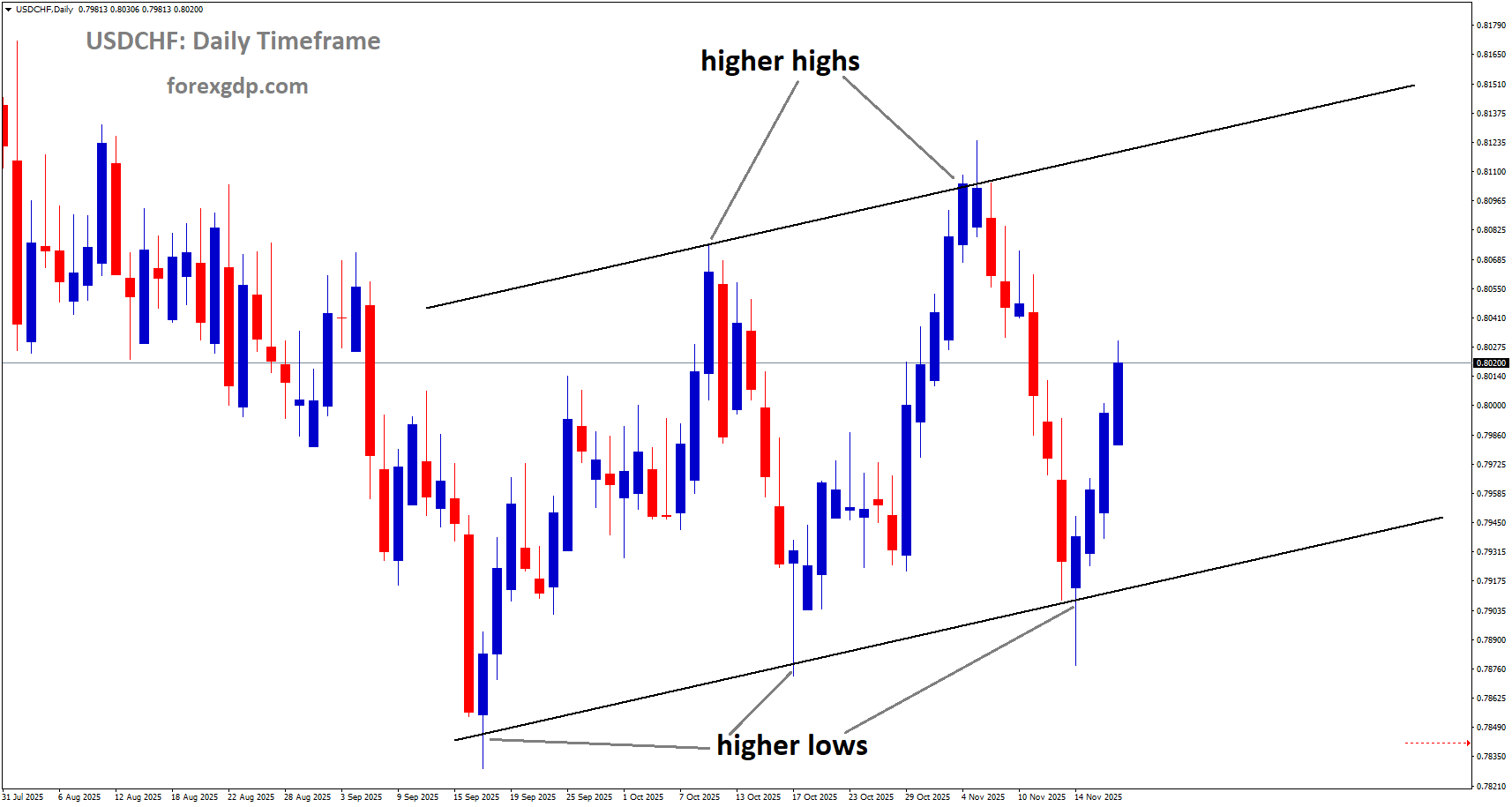
USDCHF is moving in an uptrend channel, and the market has rebounded from the higher low area of the channel
At the center of this recovery is a combination of weakening data out of Switzerland and shifting expectations around the US Dollar. Even without diving into technical charts, understanding the fundamentals gives us a clear picture of why buyers are stepping back into the market.
Swiss Economic Struggles Are Weighing on the Franc
One of the biggest factors boosting USD/CHF right now is the recent data showing that Switzerland’s economy contracted in the third quarter. This is significant because it marks the first time in more than two years that the Swiss economy has shrunk.
Switzerland often benefits from being seen as a stable, export-driven economy. But when its economic activity slows—especially unexpectedly—it tends to weaken the Swiss Franc. Many investors reduce exposure to the currency when economic signals turn negative, and that’s exactly what has been happening.
Why Weak GDP Matters
A drop in GDP doesn’t just show that growth stalled—it tells investors that business activity, exports, and overall demand have cooled. For a currency like the CHF, which is often supported by confidence in Switzerland’s strong fundamentals, this kind of data can have an immediate impact.
Because of this, traders have shifted out of the Franc this week, giving the USD/CHF pair an extra push higher.
US Dollar Firmness Adds Fuel to the Move
While the Swiss Franc has been under pressure, the US Dollar has found support of its own. The USD has been holding near its highest levels in a week, thanks largely to changing expectations about what the US Federal Reserve might do next with interest rates.
Recently, traders have been reducing their expectations for another rate cut in December. When investors believe the Fed will avoid cutting rates sooner than expected, the Dollar generally benefits. Higher or steady interest rates tend to make the USD more attractive to global investors.
This shift in expectations has created a supportive environment for the USD/CHF pair, adding to the momentum already created by Switzerland’s soft GDP numbers.
But US Dollar Strength Isn’t Guaranteed
Even though the Dollar has been performing well, it doesn’t mean the upward trend is completely secure. In fact, there are still several major concerns weighing on USD sentiment.
One of the biggest issues is the economic uncertainty surrounding the prolonged US government shutdown. This is now the longest shutdown ever, and extended periods of federal disruption often raise fears about slowing economic activity. Businesses, consumers, and markets all react to uncertainty, and in this case, the US economic outlook has become cloudier.
Because of this, many traders are still cautious about betting too heavily on the USD. No one wants to get caught on the wrong side of the market if the economic data starts to deteriorate.
FOMC Minutes Take Center Stage
All eyes are now on the upcoming release of the Federal Open Market Committee (FOMC) meeting minutes. Traders will be combing through these details to get a better sense of how the Fed views the economy and what its next steps might be.
If the minutes suggest the Fed is leaning toward more cuts in the near future, that could take some strength out of the USD. On the other hand, if the Fed strikes a more confident tone, traders may continue supporting the Dollar.
Either way, the release is expected to inject some volatility into the market.
Safe-Haven Flows Could Limit Further Upside
While USD/CHF has enjoyed strong upward momentum, there are still factors that could slow or limit further gains.
The market’s overall mood has recently shifted into a more cautious tone. When fears rise globally—whether from economic concerns, geopolitical risks, or weakening data—safe-haven currencies like the Franc tend to attract renewed interest.
On top of this, expectations around future Swiss National Bank (SNB) decisions are also playing a role. Many analysts believe the SNB may keep its policy rate unchanged at 0% in December, even as inflation forecasts rise. This reinforces the Franc’s appeal as a safe, steady currency.
When investors start looking for protection during uncertain times, CHF demand often increases. This is one reason why the upside for USD/CHF may not be unlimited, even with the pair’s recent rally.
What Traders Are Watching Next
In addition to the FOMC minutes, another major event on the calendar this week is the delayed release of the US Nonfarm Payrolls (NFP) report for September. This report is a key indicator of labor market strength, and investors will be paying close attention to any signs of cooling.

Recent data has suggested that the US labor market may be losing some momentum. If the NFP report confirms a slowdown, it could influence expectations for Fed policy and impact USD demand immediately.
With both the FOMC minutes and the NFP report landing this week, traders should be prepared for more movement in the USD/CHF pair as the market reacts to fresh information.
Final Summary
The recent rise in USD/CHF is driven by a mix of weaker Swiss economic data and steadying sentiment around the US Dollar. Switzerland’s surprise economic contraction has pulled the Franc lower, while shifting expectations around Federal Reserve policy have helped keep the USD supported.
At the same time, uncertainty in the US economy and renewed global caution continue to hang over the markets, limiting how far the pair can climb without fresh data. With FOMC minutes and the September NFP report both due this week, traders should expect more meaningful developments that could influence the direction of USD/CHF in the days ahead.