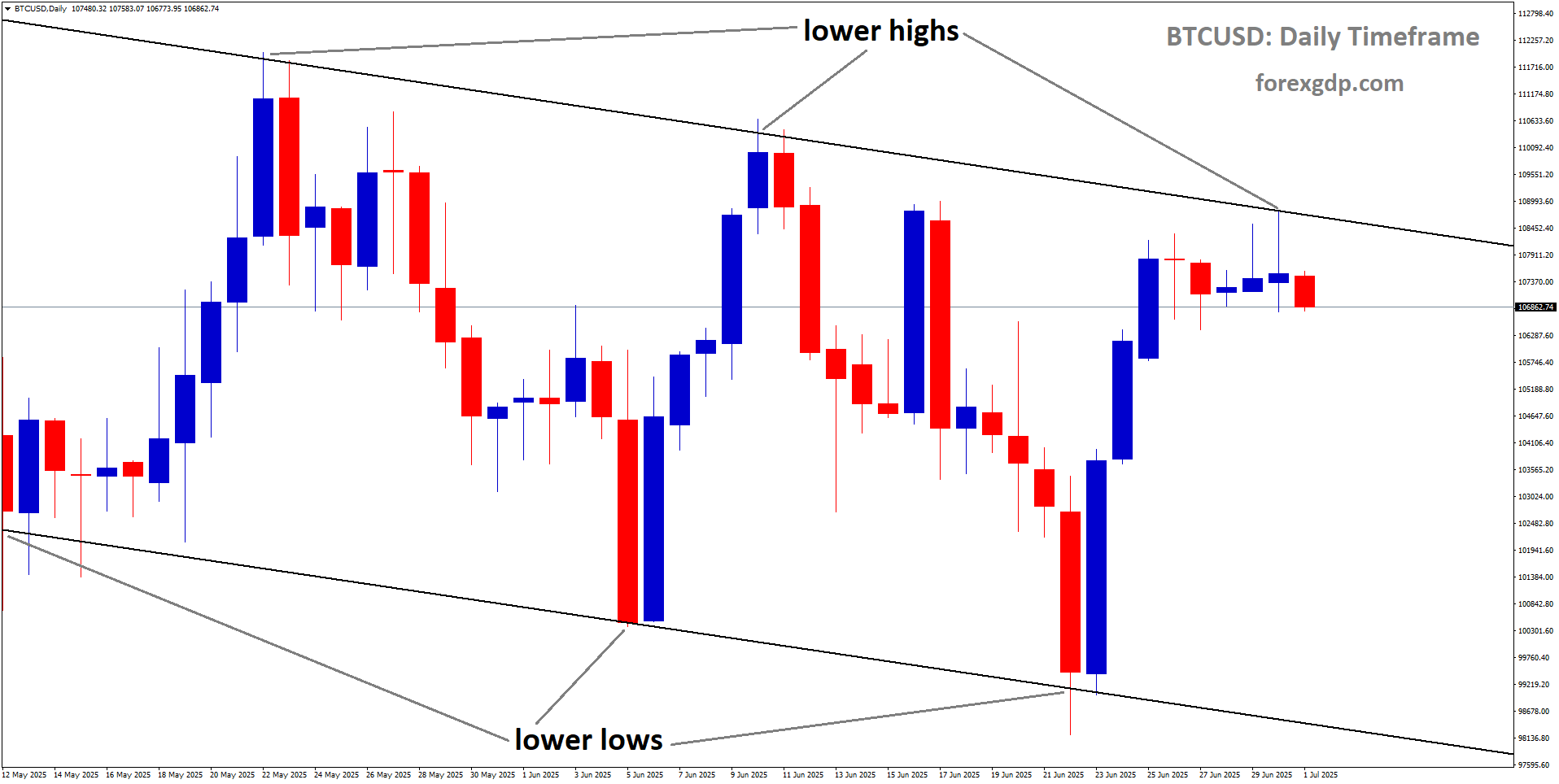
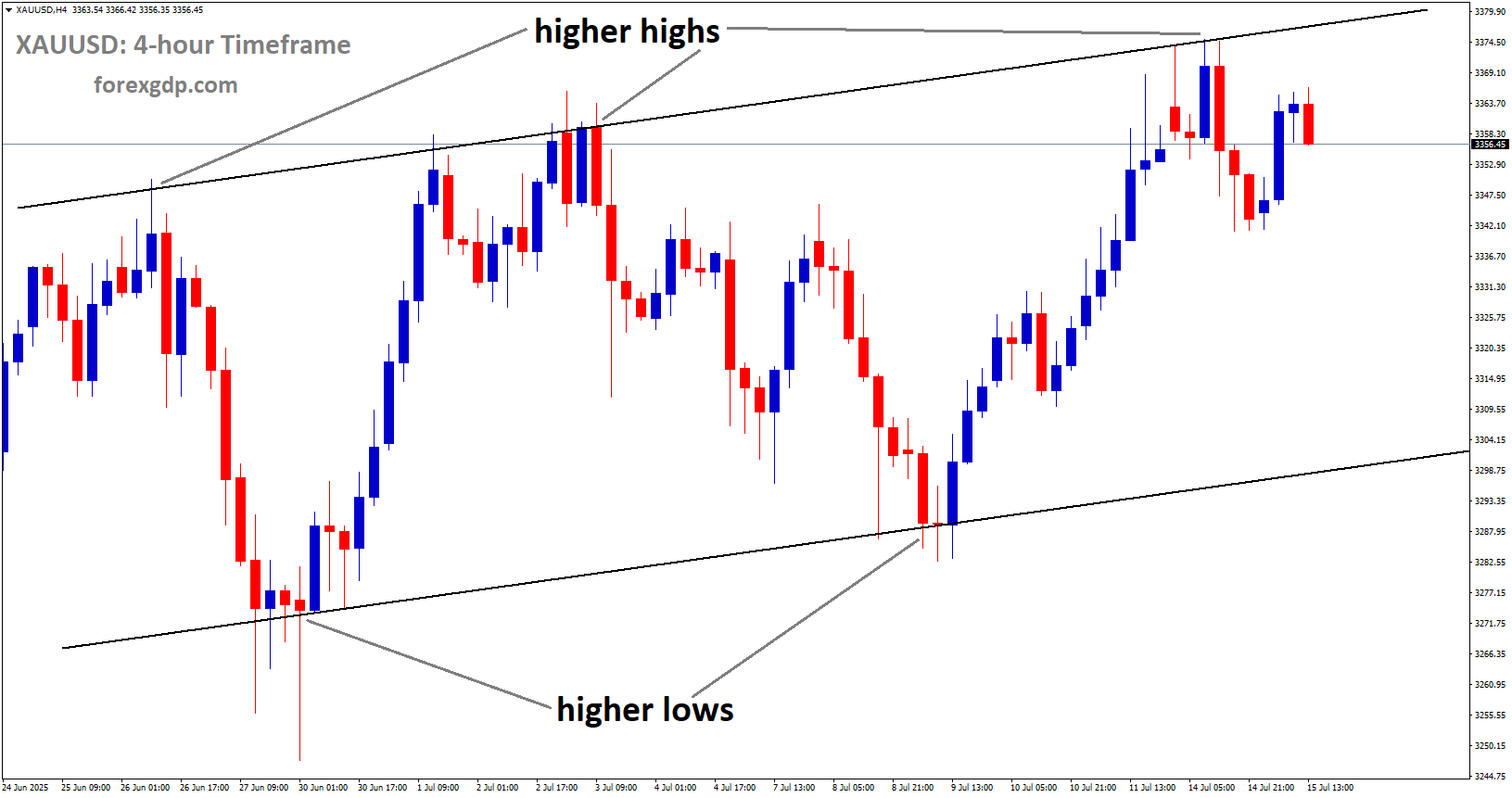
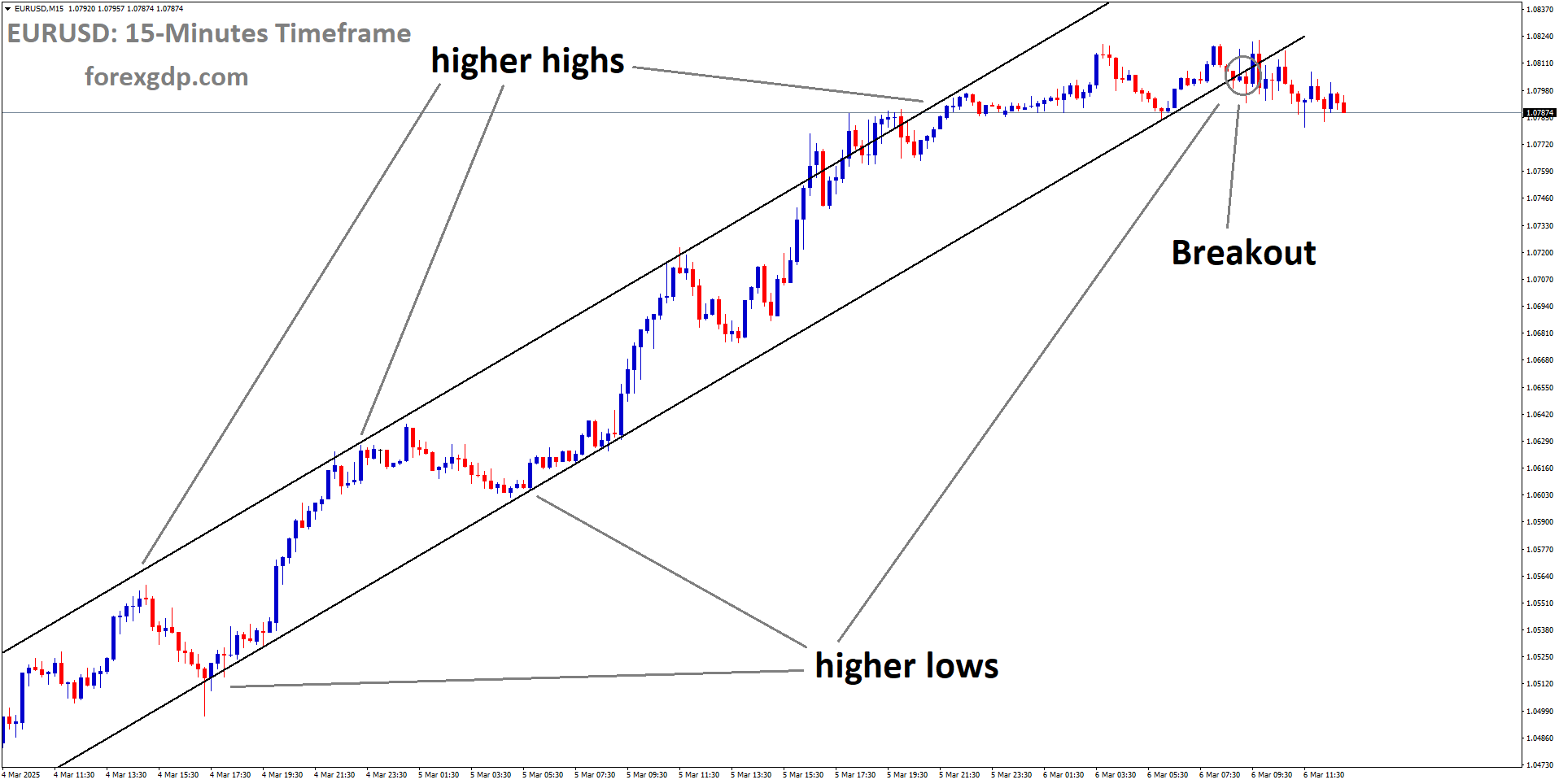
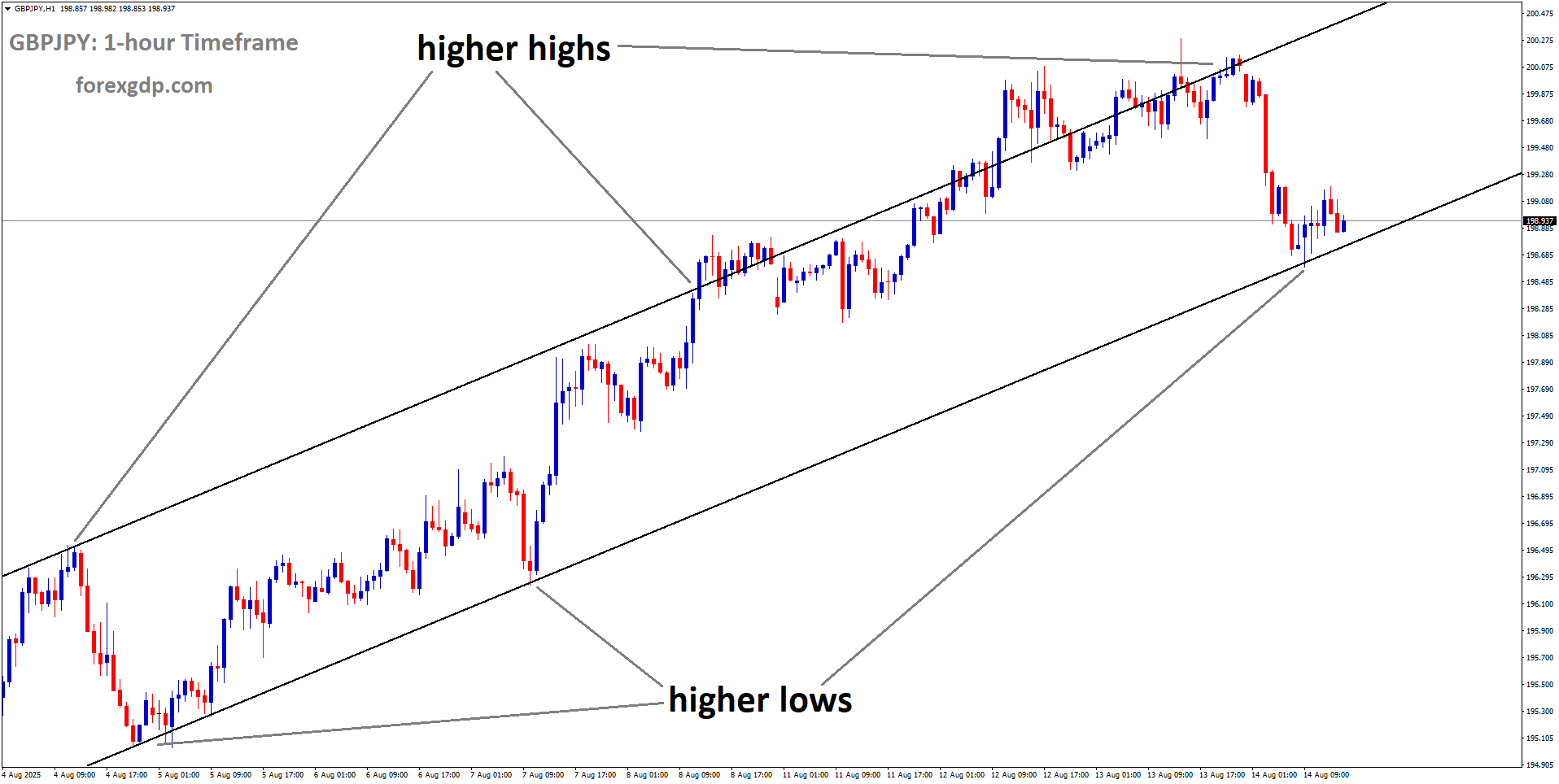
USDJPY is breaking the lower high area of the descending triangle pattern
USDJPY Under Pressure as Japan’s Cautious Tone Clouds BoJ Policy Outlook
The Japanese Yen has been under pressure lately, struggling to find strength against the U.S. Dollar. Investors are watching closely as Japan’s leaders emphasize caution about raising interest rates, while global economic sentiment leans toward optimism after the end of the U.S. government shutdown. The combination of Japan’s loose fiscal outlook and America’s shifting economic expectations has left the Yen in a weak position for now.
Japan’s Government Signals Caution: “Don’t Rush the Rate Hike”
Prime Minister Sanae Takaichi has made it clear that Japan’s priority is to protect its fragile economic recovery rather than push for aggressive monetary tightening. She recently commented that the government will continue working closely with the Bank of Japan (BoJ) to ensure inflation is driven by wages rather than rising living costs. In other words, Japan wants “good inflation,” not one caused by expensive imports or food price spikes.
This message signals a preference for keeping interest rates low for longer, something that typically weakens a country’s currency. When rates stay low, investors often look elsewhere for higher returns—leading to less demand for the Yen.
Adding to this, Takuji Aida, an economist chosen for Prime Minister Takaichi’s new growth strategy panel, suggested that the BoJ should avoid any rate hike in December. He believes Japan’s economy likely contracted in the third quarter and needs more support before tightening monetary policy.
Japan is also preparing to roll out a new economic stimulus package later this month. The draft emphasizes the government’s focus on boosting sustainable growth and achieving stable prices before considering any policy tightening. This reflects a clear preference for a cautious, growth-first approach—a stance that continues to keep the Yen under pressure.
How U.S. Developments Are Adding More Weight to the Yen
While Japan leans on monetary support, developments in the United States have also influenced Yen movement. The U.S. Senate recently voted to pass legislation reopening the federal government, putting an end to what was the longest government shutdown in American history.
This resolution brought a wave of global optimism, with investors moving away from safe-haven currencies like the Yen and into riskier assets such as stocks and emerging-market currencies. The Yen tends to perform best in uncertain times—so when global risk appetite improves, it often weakens.
However, not everything looks bright in the U.S. economy. Economists estimate that the prolonged shutdown may have shaved 1.5% to 2% off U.S. quarterly GDP growth. This economic slowdown has increased expectations that the Federal Reserve (Fed) may adopt a more dovish stance, meaning it could consider cutting interest rates to support growth.
Lower interest rates in the U.S. usually weaken the Dollar, but since Japan’s rates are even lower—and not expected to rise soon—the Yen doesn’t gain much benefit. Instead, the gap between U.S. and Japanese policy expectations keeps the Yen pinned near its weaker levels.
Inside the Bank of Japan: Divided Views and Cautious Optimism
The BoJ’s October meeting summary recently revealed mixed opinions among policymakers. Some members acknowledged that the time for a rate hike could be approaching, especially as Japan begins to see more stable inflation trends. But others remained hesitant, arguing that economic momentum still isn’t strong enough to justify higher borrowing costs.
This internal debate shows how delicate Japan’s recovery remains. While inflation is finally picking up after years of stagnation, the BoJ wants to ensure it’s sustainable and supported by higher wages—not just by external price pressures.
At the same time, speculation is rising that Japanese authorities might intervene in the foreign exchange market to prevent the Yen from weakening too sharply. In the past, such intervention has been used to stabilize the currency during periods of extreme volatility. Still, for now, the government seems more focused on long-term economic health than short-term exchange rate management.
Global Risk Sentiment and the Road Ahead for the Yen
Looking forward, the Yen’s direction will likely depend on a few key factors. One is global risk appetite. If investors continue to feel confident about the U.S. economy and global growth, they’ll have less reason to seek safety in the Yen.
Another major influence will be the Federal Reserve’s tone in upcoming speeches. Markets are closely watching for clues about whether the Fed will cut rates in December. If that happens, the Dollar might soften slightly—but unless Japan shifts its own policy, the Yen’s overall trend may stay weak.
Japan’s upcoming economic stimulus plan could also shape the narrative. If the package delivers strong support for households and businesses, it could improve domestic growth prospects and give the Yen a modest lift. But if investors interpret it as another signal of continued government spending and low rates, the currency might stay under pressure.
In addition, any signs of foreign exchange intervention by Japanese officials could cause short-term volatility. Traders often react strongly to rumors or confirmation that authorities are stepping in to defend the Yen, even if only temporarily.
Final Summary
The Japanese Yen’s current weakness reflects a mix of local caution and global confidence. Japan’s leaders want to support the economy without moving too quickly on rate hikes, while the Bank of Japan remains split on when to tighten policy. Meanwhile, the U.S. economy’s reopening optimism and ongoing expectations of slower Fed action are shaping global investor behavior.
For now, the Yen’s story is one of patience and balance. Japan’s focus on steady growth and wage-driven inflation suggests that interest rate hikes will come slowly, if at all, in the near term. Until stronger signs of domestic momentum appear—or global markets turn risk-averse again—the Yen is likely to remain on the softer side.
In short, Japan’s currency stands at a crossroads: caught between a government determined to nurture recovery and a global market eager for risk. How these forces play out in the coming months will decide whether the Yen finds its footing—or continues to drift lower.
EURUSD weakens while markets watch for progress on U.S. budget talks
The Euro is going through a quiet and cautious phase. It recently dipped slightly but remains within the same range seen earlier this week. Traders and investors seem hesitant to take big positions as they wait for key economic updates from both Europe and the United States. The financial markets are moving slowly, reflecting the uncertainty surrounding the next moves from central banks and policymakers.
One of the main reasons for this subdued tone is the ongoing anticipation of new data from the US economy and the possible decisions from the Federal Reserve in December. The Fed’s next step could significantly influence global markets, including the Euro and the US Dollar pair. With employment figures showing weakness and inflation showing signs of cooling, expectations are rising that the Fed might decide to cut interest rates again.
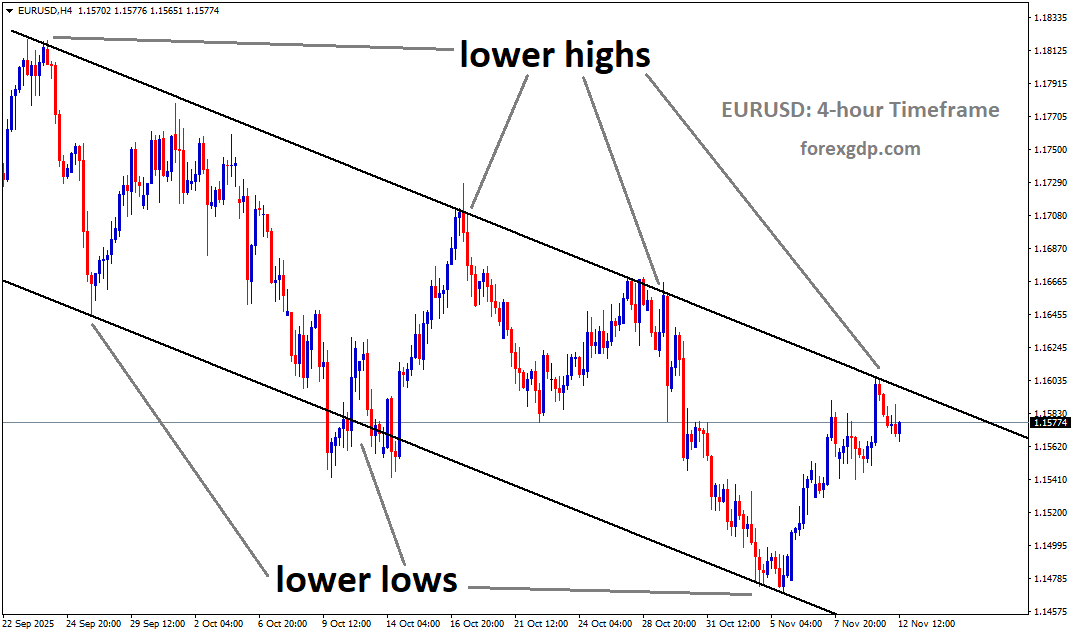
EURUSD is moving in a descending channel, and the market has reached the lower high area of the channel
At the same time, European traders are paying attention to Germany’s inflation data, which confirmed a moderate rise in consumer prices. This signals that the European Central Bank’s approach to maintaining stable prices remains on track, even though growth in the region remains fragile.
Germany’s Inflation Data: Stability Amid Economic Challenges
Germany, the largest economy in Europe, released its latest inflation data, confirming that price growth in October remained under control. The Harmonized Index of Consumer Prices (HICP) showed that inflation was consistent with earlier estimates and stayed close to the European Central Bank’s long-term target for price stability.
This stable reading is seen as a positive sign for the ECB, suggesting that the current monetary policy stance—keeping rates steady after a long period of tightening—continues to work as intended. Wholesale prices also increased slightly, reflecting some cost pressures, but nothing alarming enough to trigger a policy shift.
Even though inflation is moderating, economic sentiment in Germany remains mixed. A recent survey showed that investors and analysts have slightly less optimism about the German economy than they did a month ago. The sentiment index slipped, indicating that people are still worried about sluggish growth and ongoing global uncertainty. However, there are small signs of improvement in current conditions, suggesting that the worst might be over for now.
The US Employment Picture and Fed Rate Cut Expectations
Across the Atlantic, the situation in the United States adds another layer of complexity to the Euro’s performance. The latest employment figures revealed that the private sector shed jobs in recent weeks. This decline reflects ongoing weakness in the labor market and strengthens the case for another interest rate cut by the Federal Reserve at its upcoming December meeting.
For investors, this data sends a clear signal: the Fed’s main focus may shift from fighting inflation to supporting employment and economic growth. As a result, the US Dollar has shown mild weakness this week, providing a small lift to the Euro. When markets expect lower interest rates in the US, the Dollar typically loses some strength, giving other major currencies, including the Euro, room to gain ground.
Federal Reserve officials are expected to make several public comments in the coming days, and traders will pay close attention to their tone. Any hint of a softer stance or confirmation that a rate cut is coming could influence global currency markets and shape the Euro’s next move.
Market Sentiment: A Balancing Act Between Hope and Caution
The broader market mood this week reflects a careful balancing act between hope for easier monetary policy and caution about the overall economic outlook. Many investors are choosing to stay on the sidelines, waiting for more clarity before making big moves. The Euro, therefore, continues to trade within familiar territory, lacking the momentum for a decisive breakout.
In Europe, optimism about inflation easing is tempered by worries about slower growth and reduced business confidence. In the United States, weaker employment data reinforces the idea that the Fed will need to support the economy more aggressively. Together, these developments are shaping a market environment where traders remain alert but hesitant.
The interplay between the Euro and the Dollar continues to hinge on how each region’s central bank reacts to new data. If the Fed signals that more rate cuts are on the way, the Dollar could weaken further, potentially boosting the Euro. However, if European growth fails to recover meaningfully, the Euro may struggle to sustain any significant upward momentum.
Global Economic Landscape: Unsettled but Stabilizing
Looking beyond short-term movements, both Europe and the United States are trying to find a new balance after years of inflation, rate hikes, and volatile growth. Inflation in most advanced economies is gradually cooling, which allows central banks to shift their focus toward growth and employment.
Germany’s steady inflation numbers suggest that price pressures are no longer a major threat, but sluggish demand continues to limit growth potential. Meanwhile, the US economy, although still resilient, shows early signs of slowing, particularly in the job market.
This transition phase creates uncertainty but also opportunity. For currency traders, it means the coming months could bring more clarity and direction once central banks finalize their policy decisions. For investors, it’s a reminder to stay flexible and ready for changes in the economic environment.
What’s Next for the Euro and the Global Market
In the coming days, speeches from top European Central Bank and Federal Reserve officials will attract a lot of attention. These policymakers are likely to comment on the latest data and may offer subtle hints about future policy directions. Traders will be listening closely for clues that could influence the Euro’s performance in the near term.

At the same time, upcoming data releases from both sides of the Atlantic—covering employment, consumer spending, and inflation—will be crucial in shaping expectations. If the data confirms that inflation continues to cool and growth remains modest, the case for rate cuts will grow stronger.
For now, the Euro remains caught between two forces: cautious optimism in Europe and softening conditions in the United States. How these dynamics play out in the next few weeks will determine whether the Euro can gain more strength or continue moving sideways.
Final Summary
The Euro’s recent movements reflect a broader story of economic transition and investor caution. With Germany’s inflation showing stability and the US labor market signaling weakness, both the European Central Bank and the Federal Reserve face crucial decisions ahead.
Investors are watching closely to see how policymakers balance growth concerns with inflation management. While the Euro has shown resilience, its future direction depends heavily on how the global economy evolves and how the Fed’s December decision unfolds.
In simple terms, the market is waiting for clarity. The Euro may not be soaring right now, but it’s holding steady—positioned for potential moves once the fog of uncertainty clears.
GBPUSD dips lower after soft UK reports boost confidence in BoE policy shift
The British Pound Sterling (GBP) is having a tough time lately. It’s been losing ground against most major currencies, with only the Japanese Yen performing worse. The reason? Traders and investors are increasingly convinced that the Bank of England (BoE) will likely cut interest rates in December.
Over the past few months, the UK economy has shown signs of cooling, and the latest employment data has added more weight to expectations of an upcoming rate cut. According to recent reports, the UK labor market is weakening, and this has given markets a clear signal that the BoE might shift toward a more accommodative stance.
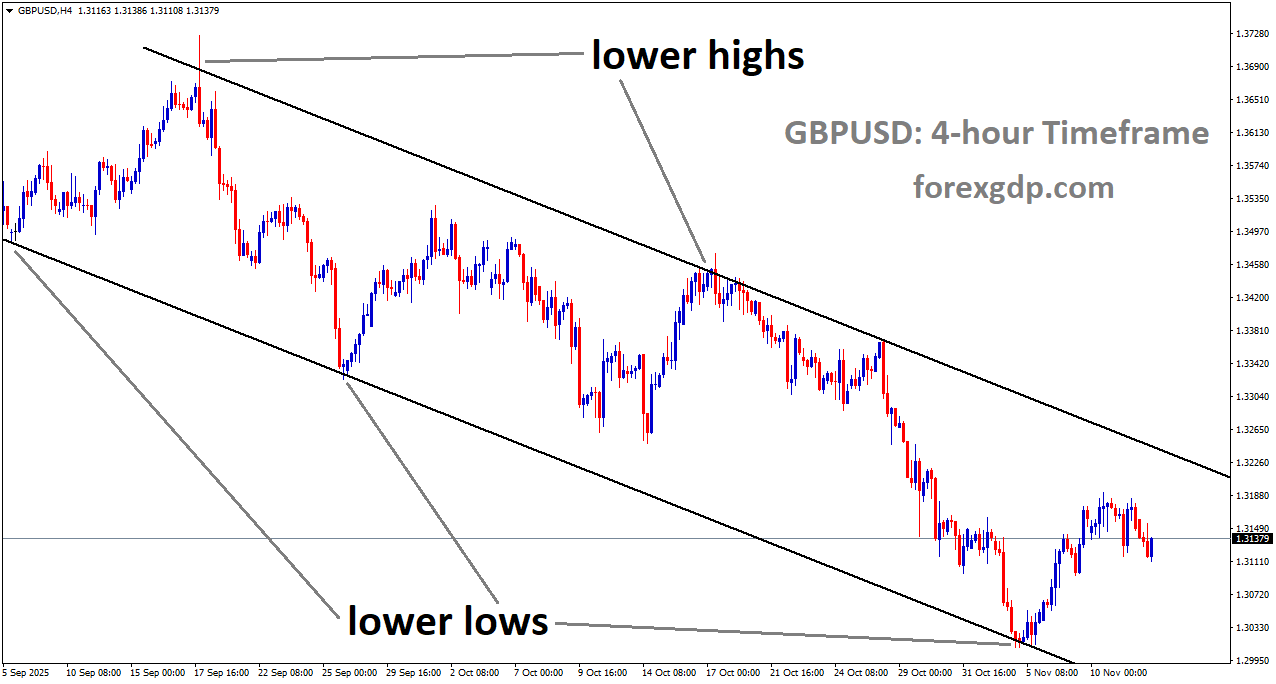
GBPUSD is moving in a descending channel, and the market has rebounded from the lower low area of the channel
In simple terms, the central bank could soon make borrowing cheaper in an effort to support economic growth. Traders are now betting on an additional 20 basis point rate reduction before the end of the year, reflecting the growing confidence that the UK’s tightening cycle is nearing its end.
UK Employment Data Sparks Concerns
The latest UK employment report painted a rather grim picture. For the first time since early 2024, the total number of employed people has fallen. Employers cut around 22,000 jobs, signaling that businesses are starting to feel the pinch of slower economic activity.
The unemployment rate has also risen to 5%, marking its highest level since 2021. This jump in joblessness reflects a clear shift in the labor market, suggesting that companies are becoming more cautious about hiring amid softer demand and persistent economic uncertainty.
Adding to the concern is the slowdown in wage growth. Average earnings excluding bonuses grew by only 4.6% over the last three months—the slowest pace in more than three years. Sluggish wage growth often means that households will have less disposable income to spend, further dampening the economy.
These developments have led many economists to argue that the BoE’s fight against inflation is essentially over. With prices already easing and employment conditions weakening, maintaining high interest rates could do more harm than good by pushing the economy closer to stagnation.
BoE Policymakers Split on the Next Step
While the market expects rate cuts soon, not everyone at the Bank of England agrees with that direction. Megan Greene, one of the BoE policymakers, recently spoke at a financial event in London, where she stressed the importance of keeping interest rates steady for a bit longer.
She pointed out that inflation in the UK remains somewhat stubborn and that cutting rates too quickly could lead to renewed price pressures. In her view, monetary policy should remain restrictive until there’s clear evidence that inflation is fully under control.
Greene also expressed optimism that the current weakness in employment and wage growth could be temporary. She believes that once economic conditions stabilize, both job creation and pay growth could begin to recover gradually.
Her comments, however, haven’t changed market sentiment much. Traders still see a rate cut as almost inevitable, given the broader slowdown in economic activity.
US Dollar Regains Strength as Fed Turns Dovish
While the British Pound has been under pressure, the US Dollar (USD) has seen a mild recovery after touching its weekly lows. The US Dollar Index, which measures the dollar’s value against major global currencies, inched higher as investors reassessed their positions following recent market movements.
The American currency had dropped earlier in the week amid growing expectations that the Federal Reserve (Fed) could also start cutting interest rates soon. The reasoning behind this shift is similar to what’s happening in the UK—a cooling labor market.
According to the ADP Employment data, US employers have been reducing payrolls steadily, with an average of more than 11,000 job cuts per week over the past month. This shows that the world’s largest economy is also beginning to slow, and the Fed may need to step in with policy adjustments to support growth.
Currently, traders are betting that the Fed could cut rates by 25 basis points in its upcoming December meeting. This growing belief has softened the dollar temporarily, although it has regained some strength due to profit-taking and cautious optimism about the US government’s recent actions.
Signs of Stability: US Government Reopens
Adding to the improving sentiment around the dollar is the reopening of the US government, which had faced one of the longest shutdowns in history. The passage of a new funding bill through the Senate has provided much-needed relief to financial markets.
This development has restored some confidence among investors, who now believe that government operations will stabilize, preventing any immediate economic disruptions. The reopening is also expected to support short-term growth, as key public services and contracts resume their normal pace.
Although the labor market remains soft, the resolution of the shutdown is a positive step that could strengthen the overall economic outlook in the coming weeks.
What It All Means for the Pound Sterling
In the grand scheme of things, the British Pound’s weakness is tied to the broader picture of slowing growth and shifting central bank policies. With the BoE likely to follow a path similar to the Fed—moving from tightening to easing—the market is adjusting expectations accordingly.
Investors are now closely watching upcoming UK inflation and wage data, which could either confirm or challenge the idea of a December rate cut. If inflation continues to fall and the job market weakens further, the BoE may have little choice but to act.
On the other hand, if there’s a surprise rebound in employment or wages, policymakers like Megan Greene may find more support for keeping rates unchanged. For now, however, the momentum clearly favors the dovish camp.
Final Summary
The Pound Sterling is struggling as investors anticipate a December interest rate cut from the Bank of England, following a series of weak economic indicators. Rising unemployment, slowing wage growth, and softer inflation expectations have pushed traders to believe that monetary easing is imminent.
Meanwhile, the US Dollar has managed to stabilize despite its own challenges, as expectations grow that the Federal Reserve could also begin reducing rates soon. The recent reopening of the US government has added a layer of optimism to the American outlook, helping the dollar recover slightly.
In essence, global markets are in a transitional phase. Central banks that once raised interest rates aggressively to control inflation are now preparing to shift gears. For the British Pound, this means continued volatility until clearer signals emerge from the BoE’s December meeting.
The weeks ahead will be crucial—both for policymakers trying to balance inflation and growth, and for traders looking to position themselves ahead of what could be a significant turning point in the global financial landscape.
NZD/USD stays muted as rate cut fears and soft data weigh on sentiment
The New Zealand Dollar (NZD) continues to hover just below the 0.5670 mark against the US Dollar (USD), showing little sign of strong movement in either direction. For traders and investors, the Kiwi’s lack of momentum isn’t exactly surprising. Recent economic data from New Zealand has painted a mixed picture, creating uncertainty around the Reserve Bank of New Zealand’s (RBNZ) next steps.
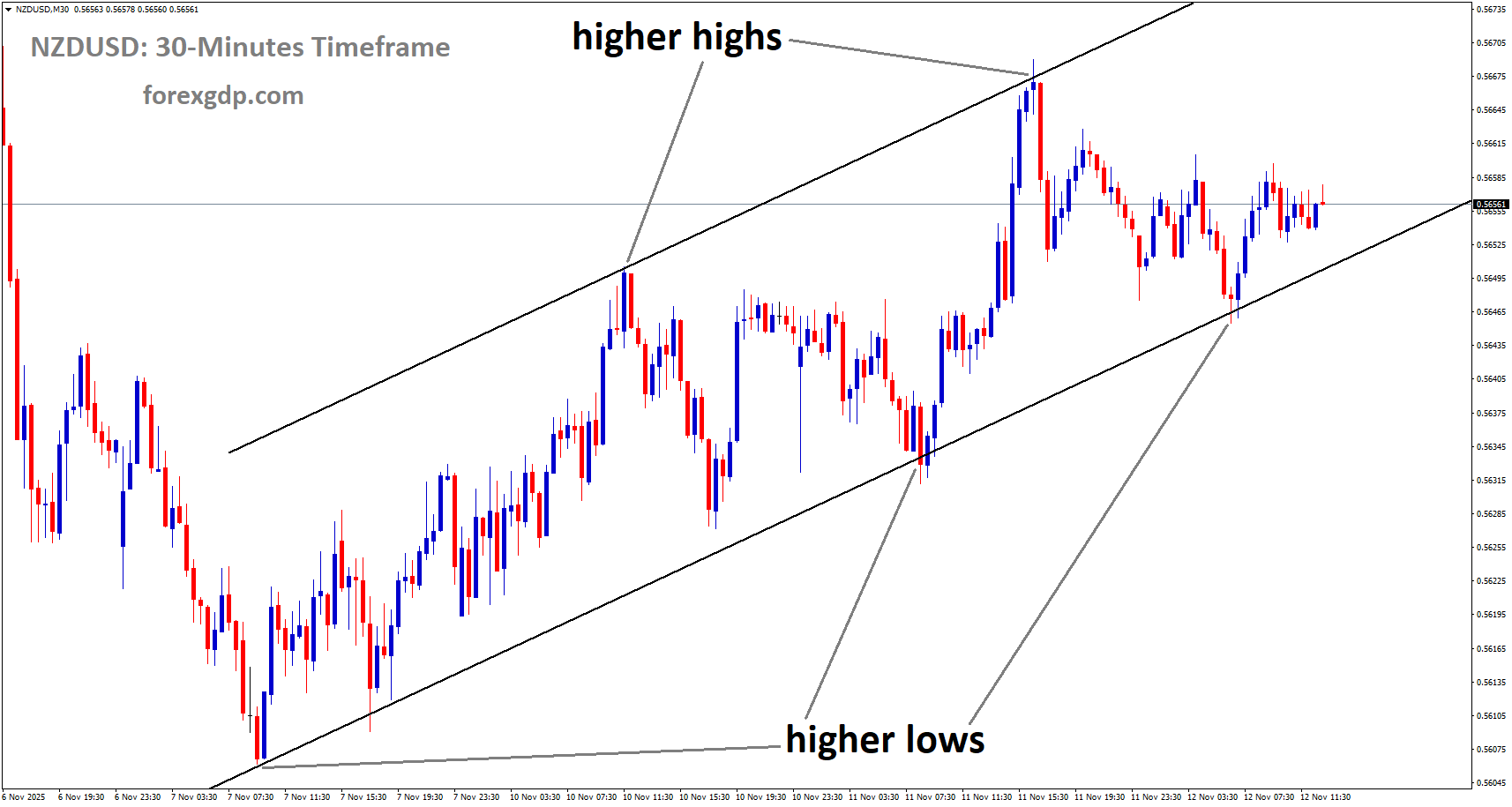
NZDUSD is moving in an uptrend channel, and the market has rebounded from the higher low area of the channel
Right now, market participants are increasingly convinced that the central bank could announce a rate cut as early as December. This growing expectation is putting steady downward pressure on the NZD, limiting any attempts to rebound. Even when the US Dollar is on the defensive, the Kiwi finds it difficult to gain traction — and that tells a lot about how fragile the sentiment around New Zealand’s economy currently is.
Weak Economic Data Keeps Traders Cautious
Inflation and Employment Data Raise Concerns
Earlier this week, the RBNZ’s latest Inflation Expectations report revealed that price growth expectations for the upcoming quarter remained flat at 2.8%, unchanged from the previous period. While that figure might sound stable, it actually reflects a deeper challenge. Despite consumer prices rising faster than expected in recent months, businesses and households don’t see inflation picking up any further — which could indicate weaker demand ahead.
Adding to the concern is the latest employment report, which showed a noticeable slowdown in job creation during the third quarter. The unemployment rate climbed to 5.3%, the highest in nearly a decade. This combination of stagnant inflation expectations and a weakening labor market gives the RBNZ more reason to consider easing monetary policy soon.
When an economy shows signs of slowing, central banks often step in with rate cuts to stimulate activity. That’s exactly what traders are expecting the RBNZ to do in December. However, the anticipation of a rate cut also tends to weaken a country’s currency because lower interest rates reduce the potential return for foreign investors holding assets denominated in that currency.
So, while rate cuts might support New Zealand’s domestic economy in the long run, they’re acting as a short-term burden for the Kiwi.
US Dollar Faces Its Own Struggles
Disappointing Jobs Data in the United States
Interestingly, the New Zealand Dollar isn’t just dealing with internal pressures — it’s also reacting to developments across the Pacific. The US Dollar has been on a downward path of its own, following weaker-than-expected employment data in the United States.
The latest ADP Employment figures revealed that American businesses shed jobs in late October, with an average loss of around 11,000 positions per week. This downturn comes at a time when investors were hoping for stronger labor numbers to keep the US economy’s growth story intact. Instead, these disappointing figures have increased speculation that the Federal Reserve might follow a similar route to the RBNZ — by cutting interest rates in December.
When both currencies are under pressure for similar reasons — weaker economic data and possible rate cuts — the exchange rate often ends up fluctuating within a narrow range. That’s precisely what’s happening now between the NZD and USD.
Why the Greenback’s Weakness Matters for NZD
Normally, when the US Dollar loses ground, currencies like the NZD benefit. A weaker USD makes riskier assets and currencies more appealing. But in this case, the Kiwi’s own set of problems is canceling out that potential advantage. Investors aren’t confident enough in New Zealand’s outlook to take on more risk, even with the US Dollar softening.
As a result, instead of seeing a sharp rebound, the NZD is stuck in limbo — trading sideways and struggling to move significantly higher or lower. Until clearer economic signals emerge, traders are likely to remain cautious.
Investor Sentiment and Market Outlook
What Traders Are Watching Next
The focus for the coming weeks is firmly on the RBNZ’s December policy meeting. Markets are currently pricing in a strong chance of a rate cut, but the final decision will depend on upcoming data releases. Any surprise improvement in employment numbers or inflation data could delay such a move, providing short-term relief for the NZD.
However, if the economic slowdown deepens — especially if consumer spending weakens or business confidence drops further — a rate cut would almost be inevitable. Traders know this, and that’s why the Kiwi remains under constant selling pressure.
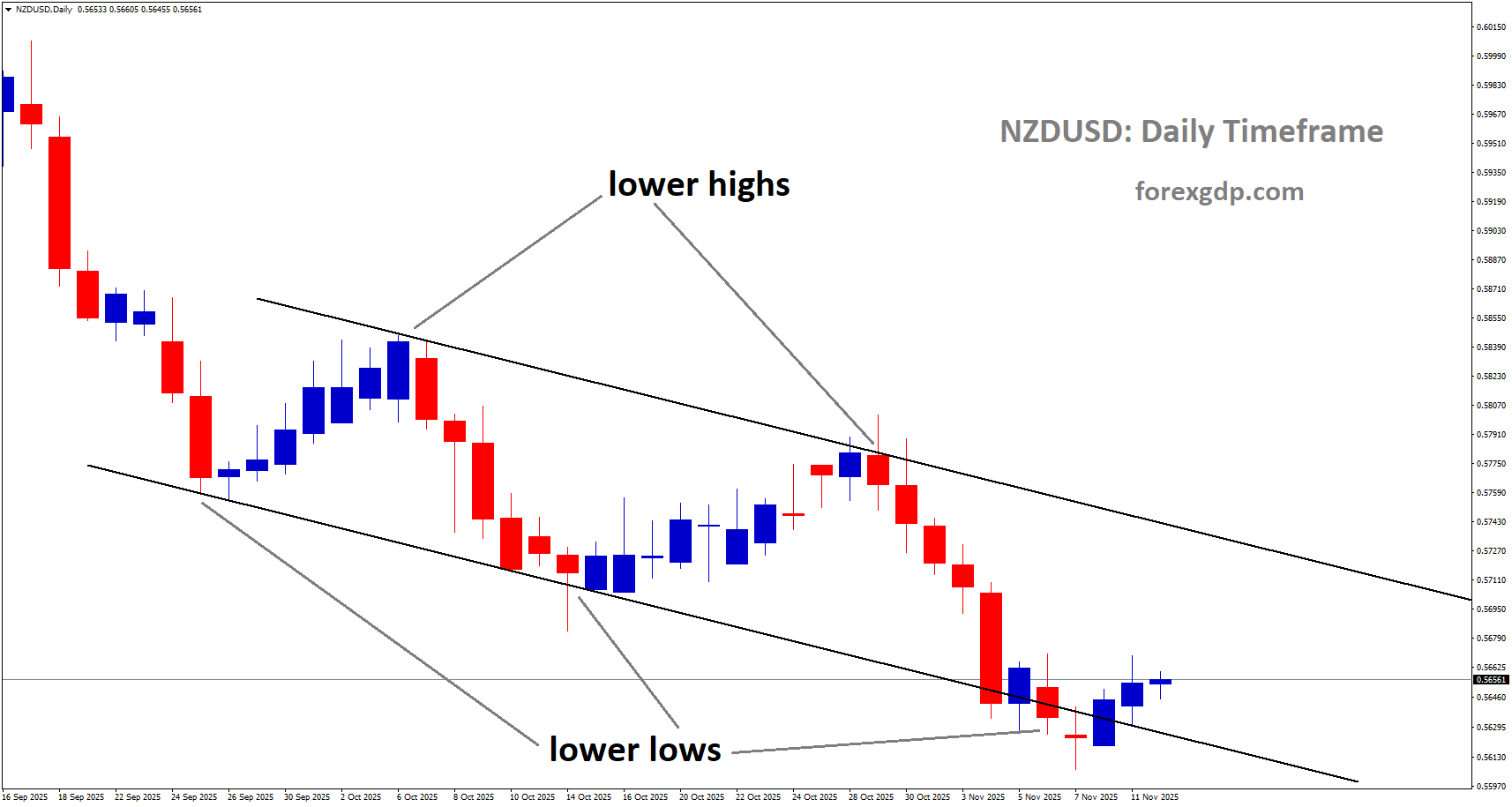
NZDUSD is moving in a descending channel, and the market has reached the lower low area of the channel
In the United States, attention is also shifting toward the Federal Reserve’s next steps. If the Fed signals that it plans to ease policy to support growth, the USD could weaken further. Yet, since both countries are facing similar macroeconomic challenges, neither currency seems to have a clear advantage over the other right now.
The Broader Market Mood
Beyond New Zealand and the US, global market sentiment is also playing a role. Investors are becoming increasingly cautious amid slowing global trade and uncertainty about major economies’ growth paths. This broader sense of hesitation tends to hurt smaller, risk-sensitive currencies like the NZD more than safe-haven assets.
So, even though the Kiwi’s decline isn’t dramatic, it reflects a cautious, wait-and-see attitude among global investors who prefer stability over potential risk right now.
Final Summary
The New Zealand Dollar’s ongoing struggle against the US Dollar highlights how much economic sentiment can influence currency markets. While the Kiwi is weighed down by expectations of an RBNZ rate cut and weaker employment data, the US Dollar isn’t exactly thriving either, facing its own set of challenges from disappointing job figures and speculation of a Federal Reserve rate cut.
For now, both currencies are trapped in a tug-of-war, with neither able to take control. The Kiwi’s short-term direction will likely depend on how strongly the RBNZ reacts to recent data and whether global risk appetite improves. Until then, traders should expect the pair to remain under pressure, reflecting the uneasy balance between two economies facing slower growth and cautious central banks.
In essence, this is a period of uncertainty — one where patience, observation, and adaptability will matter far more than quick reactions.
EURGBP Extends Strength as German Inflation Keeps Euro Steady
The EUR/GBP currency pair has been drawing attention recently, maintaining a strong position after the release of Germany’s latest inflation figures. While the market continues to digest the numbers, investors are watching closely to see how the European Central Bank (ECB) and the Bank of England (BoE) will respond in the coming months. Let’s take a deeper look into the factors driving this movement, why it matters, and what could come next for both the Euro and the British Pound.
Germany’s Inflation Data Keeps the Euro Supported
Germany, the largest economy in the Eurozone, released its Harmonized Index of Consumer Prices (HICP) for October, showing a 2.3% year-on-year increase—exactly what analysts had expected. On a monthly basis, inflation stayed steady at 0.3%, signaling that while price growth has slowed from its peak, it’s still stable enough to keep the European Central Bank cautious about easing too quickly.
This consistent inflation rate suggests that price pressures in Germany remain manageable, giving the ECB room to hold its policy steady for now. Inflation staying near target helps support the Euro, as investors see stability in both prices and policy direction.

Why the German Data Matters
Germany’s inflation figures are crucial not only because of its economic size but also because they serve as a benchmark for the entire Eurozone. When Germany’s inflation stabilizes, it gives policymakers across Europe a clearer picture of the region’s economic health.
In this case, the data confirmed that inflation is cooling but not collapsing, keeping expectations balanced between avoiding a premature rate cut and ensuring growth remains intact.
ECB’s Steady Tone Boosts Confidence in the Euro
While the ECB has adopted a cautious stance, its tone has helped boost investor confidence in the Euro. Policymaker Francois Villeroy de Galhau remarked that despite political uncertainties, the French economy remains resilient. He also mentioned that high household savings, driven by concerns about the public deficit, are helping cushion the economy.
Even so, he acknowledged that both domestic and international uncertainties are slightly weighing on overall growth, trimming about 0.5% from GDP. Despite that, his comments reflected a broader message: the Eurozone economy is stable enough to weather challenges without immediate policy intervention.
The Market’s Take on ECB Policy
Traders believe that the ECB will keep interest rates unchanged for now, focusing instead on monitoring inflation trends and economic growth. The stability in the Eurozone’s largest economies—like Germany and France—has reassured markets that the ECB won’t need to rush into rate cuts.
This steady policy outlook supports the Euro’s strength against the British Pound, especially as the UK faces growing uncertainty over its own economic direction.
Pressure Builds on the British Pound as BoE Faces Rate Cut Expectations
While the Euro enjoys steady support, the British Pound (GBP) has been under pressure due to mounting expectations of a Bank of England rate cut. Several major financial institutions, including Morgan Stanley, Citigroup, and UBS Global Research, have revised their forecasts and now anticipate a 25 basis point reduction in December.
Such expectations have naturally weakened the Pound, as lower interest rates typically make a currency less attractive to investors seeking higher returns.
Megan Greene’s Warning on UK Policy
Adding to the uncertainty, BoE policymaker Megan Greene recently expressed doubts about whether the UK’s current monetary policy is restrictive enough. She pointed out that wage settlements for next year remain high, suggesting that inflation pressures could persist longer than desired.
Greene’s remarks signaled that while inflation has come down, it may still be too early to declare victory. She emphasized that managing inflation risks should remain the top priority for the BoE. This cautious tone contrasts with market expectations for a December rate cut, creating mixed signals that have left investors divided.
Balancing Growth and Inflation in the UK
The BoE finds itself in a challenging position. On one hand, the UK economy shows signs of slowing growth, which would normally encourage policymakers to lower rates. On the other hand, persistent inflation, particularly driven by wages and services, makes cutting rates risky.
This delicate balancing act has led to increased volatility in the Pound, with investors unsure whether the BoE will choose to prioritize growth or inflation control in the months ahead.
EUR/GBP Outlook: What Could Happen Next
The EUR/GBP pair has benefited from the contrast between a steady Eurozone outlook and a more uncertain UK environment. As long as the ECB maintains a firm but cautious policy stance and the BoE faces pressure to ease, the Euro may continue to hold the upper hand.
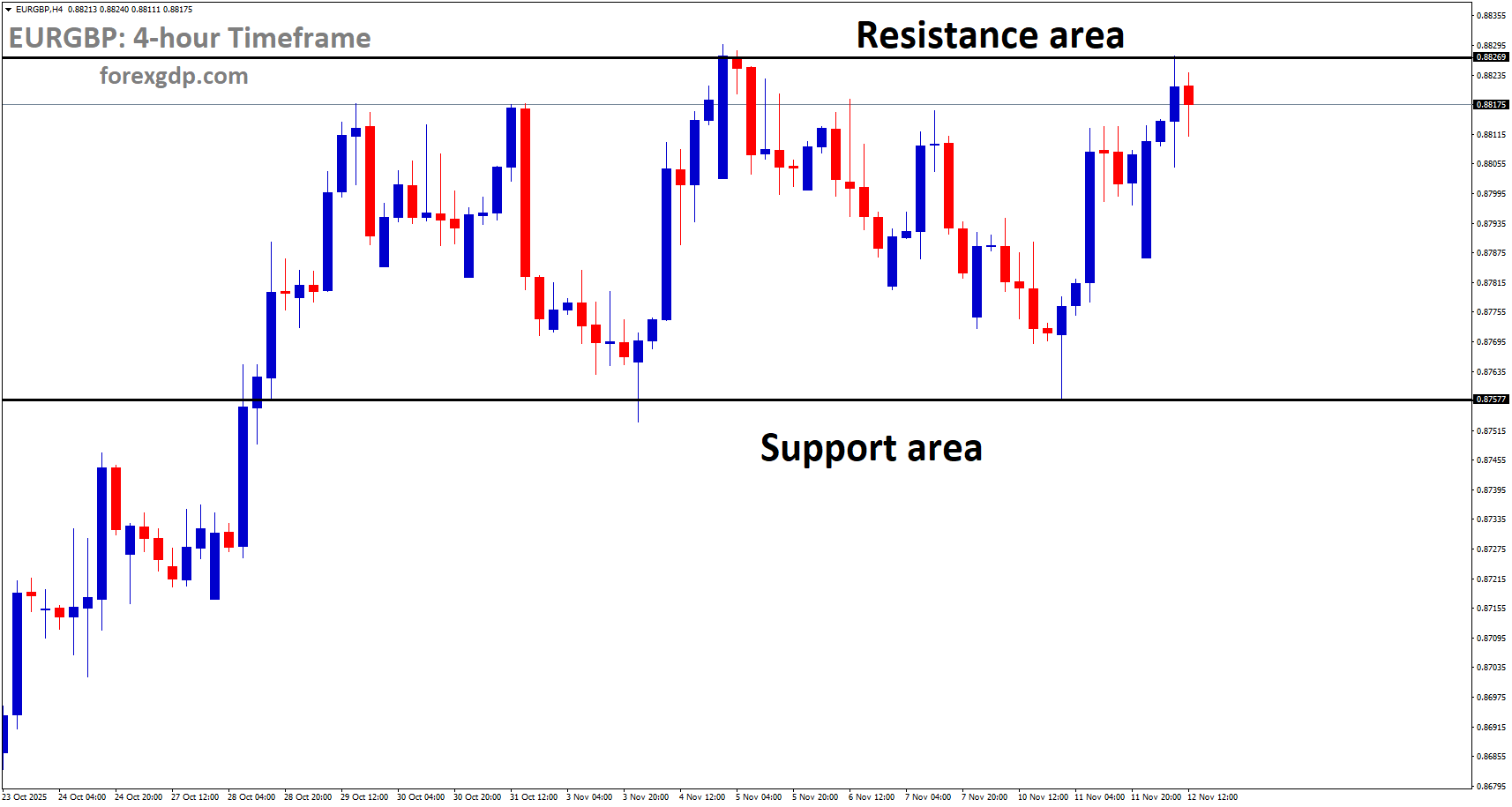
EURGBP is moving in a box pattern, and the market has reached the resistance area of the pattern
However, the picture could shift quickly if either side surprises the market with new data or policy decisions.
Factors to Watch Moving Forward
-
Upcoming Inflation Reports – Any surprises in Eurozone or UK inflation could sway central bank expectations dramatically.
-
BoE’s December Meeting – If the BoE holds rates instead of cutting, the Pound could recover some ground.
-
Eurozone Growth Trends – If growth weakens more than expected, it might force the ECB to revisit its current stance.
-
Geopolitical Developments – Political uncertainty in Europe or the UK could create short-term volatility for both currencies.
Ultimately, the EUR/GBP trend will depend on how each central bank handles the balance between supporting growth and controlling inflation.
Final Summary
The EUR/GBP pair remains firm, supported by steady inflation data from Germany and a cautious, stable outlook from the European Central Bank. Meanwhile, the British Pound faces headwinds as investors bet on possible rate cuts from the Bank of England.
Germany’s inflation staying at 2.3% year-on-year reassures markets that the Eurozone’s price stability is under control, helping the Euro maintain strength. On the UK side, doubts voiced by BoE’s Megan Greene about the effectiveness of current policies highlight ongoing concerns over inflation and wages.
For now, the Euro enjoys the advantage as the Pound struggles to find direction amid policy uncertainty. But as both regions continue to release new economic data and central banks refine their strategies, traders should stay alert — the balance between the two currencies could still shift in unexpected ways.