
Global oil markets have been thrown into turmoil once again, as geopolitical tensions in the Middle East continue to escalate. A recent statement by US President Donald Trump about the interception of an Iran-flagged cargo ship has added a new layer of uncertainty, sending oil prices sharply higher and unsettling financial markets worldwide.
The situation highlights how closely global energy supplies are tied to political developments, especially in regions that play a critical role in transporting oil and gas.
Why Oil Prices Are Rising So Quickly
Oil prices saw a sudden jump after news broke that the US Navy had seized a cargo vessel linked to Iran. This move raised fears of further conflict and disruptions to energy supplies. As a result, the Brent crude benchmark climbed more than 6%, reaching around $96 per barrel.
This sharp increase came just days after prices had dropped. Earlier, Iran had indicated that the Strait of Hormuz—a vital shipping route—would remain open during a temporary ceasefire. That announcement had briefly calmed markets and led to a decline in oil prices.
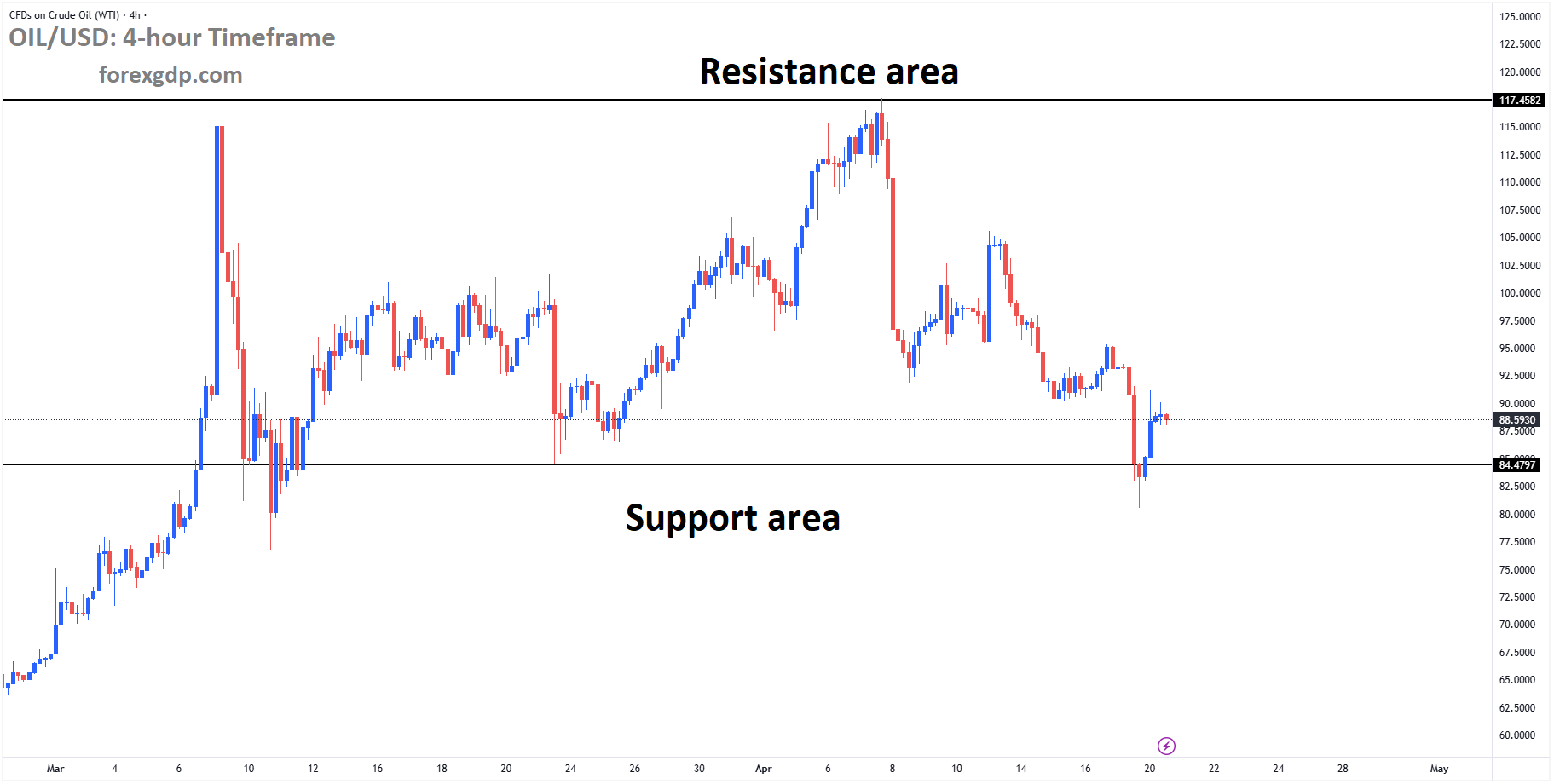
Crude Oil is moving in a box pattern.
However, the situation changed quickly. Iran later reversed its position and declared that the strait would be closed again, warning that any approaching vessels could be targeted. This sudden shift reignited concerns and caused prices to surge once more.
The rapid ups and downs show how sensitive energy markets are to political statements and military actions. Even a single announcement can trigger major price swings.
The Strategic Importance of the Strait of Hormuz
The Strait of Hormuz is one of the most critical waterways in the world. Roughly 20% of global oil and liquefied natural gas passes through this narrow channel. Any disruption in this route can have immediate and widespread effects on energy supplies.

For many countries, especially in Asia, this route is essential. A large portion of their energy imports depends on shipments that pass through the strait. When access is restricted, the impact is felt almost instantly in the form of higher prices and supply shortages.
The ongoing tensions between the US and Iran have turned the strait into a focal point of global concern. Military actions, threats, and counter-threats have made it difficult for shipping companies to operate normally. This has added pressure to an already strained energy market.
Uncertainty Around Diplomatic Talks
Amid the rising tensions, there have been efforts to restart negotiations. The United States has announced plans to send representatives for talks, with Vice-President JD Vance expected to lead the delegation.
However, Iran’s response has been unclear. State media has suggested that there are currently no plans to participate in these discussions, though officials have not provided a final position. This uncertainty has made it even harder for markets to predict what might happen next.

Crude Oil is moving in a descending channel, and the market has reached the lower high area of the channel.
Analysts believe that much of the market movement is being driven by statements from both sides rather than actual changes on the ground. The constant back-and-forth has created a situation where traders react quickly to news, even if the real impact on supply is not immediate.
Some experts say that the situation is unfolding in real time, with both sides using actions and statements as part of a broader negotiation strategy.
Market Reactions Around the World
Financial markets have shown mixed reactions to the ongoing crisis. In Europe, major stock indices such as the FTSE 100, Germany’s DAX, and France’s CAC 40 opened lower, reflecting concerns about rising energy costs and economic uncertainty.
In contrast, Asian markets showed some resilience earlier in the day. Japan’s Nikkei index and South Korea’s Kospi both posted modest gains. However, the overall mood remains cautious, as investors try to assess the long-term impact of the situation.
Oil markets, in particular, have been highly volatile. Prices have moved sharply up and down since the conflict began, reflecting the uncertainty surrounding supply routes and geopolitical developments.
A Growing Global Energy Crisis
The conflict has triggered a broader energy crisis, affecting countries around the world. As oil prices rise, the cost of fuel increases, leading to higher transportation and production costs. This, in turn, affects the prices of goods and services.
Some countries are already facing fuel shortages, especially those heavily dependent on imports through the Strait of Hormuz. Governments in parts of Asia have taken emergency measures to conserve energy. These include encouraging remote work, reducing working hours, and even declaring temporary holidays.
In some regions, universities have closed early, and businesses have adjusted their operations to reduce energy consumption. Public campaigns have also been launched to encourage people to limit the use of air conditioning and other energy-intensive appliances.
Even countries with relatively strong reserves are feeling the pressure. China, for example, is taking steps to manage rising fuel costs and prevent sudden price increases for consumers.
Impact on Airlines and Transportation
The rise in oil prices has had a direct effect on the aviation industry. Jet fuel costs have increased significantly, forcing airlines to rethink their operations.
Some airlines have announced cost-cutting measures, while others are preparing for possible flight reductions. Industry experts warn that if fuel supplies remain disrupted, flight cancellations could become more common.
The International Energy Agency has also raised concerns about fuel availability. There are warnings that certain regions could face shortages if the current situation continues, which would further disrupt travel and trade.
Shifting Market Sentiment
Despite the ongoing developments, there is a sense that markets are becoming less reactive to verbal statements and more focused on actual actions. Investors and traders appear to be growing cautious, waiting for concrete developments rather than reacting immediately to every announcement.

Crude Oil is moving in a box pattern, and the market has fallen from the resistance area of the pattern.
This shift reflects a broader understanding that not all statements lead to immediate changes on the ground. However, the situation remains unpredictable, and any significant move could quickly change market sentiment again.
Summary
The recent surge in oil prices highlights the deep connection between global energy markets and geopolitical events. Tensions in the Strait of Hormuz have once again shown how a single region can influence energy supplies worldwide.
With ongoing uncertainty around military actions and diplomatic talks, markets are likely to remain volatile. Countries are already feeling the impact through higher fuel costs and supply challenges, while industries such as aviation face growing pressure.
As the situation continues to evolve, the focus will remain on whether tensions ease or escalate further. The outcome will play a key role in shaping global energy trends in the weeks ahead.