

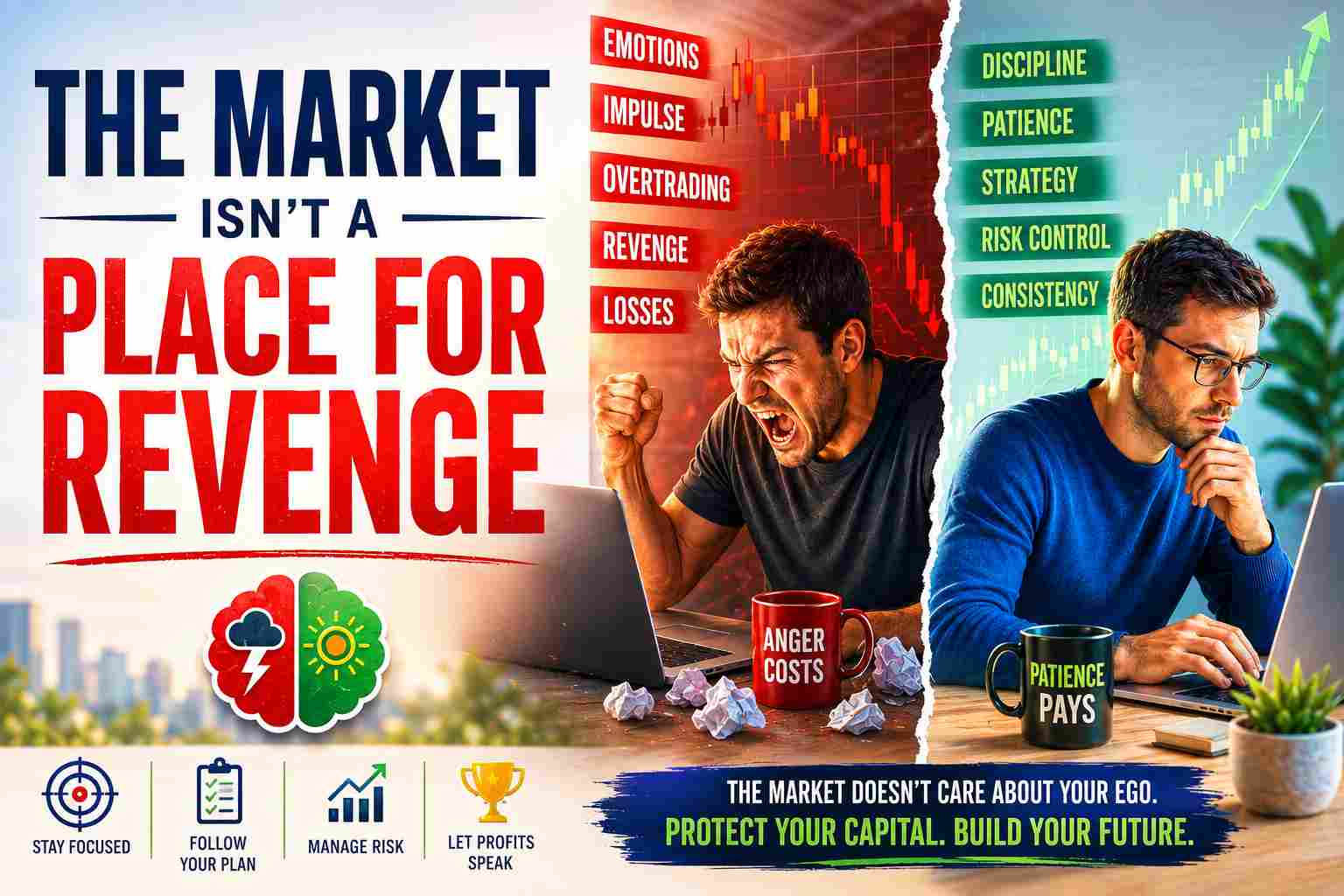
“The market isn’t a place for revenge.” That quote sounds simple, but it carries a powerful lesson for every Forex trader. Many people enter the market hoping to make quick money, but once losses appear, emotions begin controlling decisions. Traders become angry, impatient, and desperate to recover money immediately. That emotional reaction is called revenge trading, and it destroys countless trading accounts every year.
Forex trading is not just about indicators and charts. It is mostly about psychology. A trader who cannot control emotions will eventually make poor decisions, even with a good strategy. The market rewards discipline, patience, and consistency, while emotional trading usually leads to bigger losses and stress.
What Is Revenge Trading?
Revenge trading happens when traders open impulsive trades after losing money. Instead of following proper analysis, they trade emotionally to recover losses quickly. The trader feels frustrated and wants immediate redemption from the market.
This behavior often leads to:
- Overtrading
- Bigger lot sizes
- Ignoring stop losses
- Entering random trades
- Breaking trading rules
At that point, trading stops being logical and becomes emotional gambling.
Why Traders React Emotionally
Most traders take losses personally. A losing trade feels like failure instead of a normal part of trading. The ego becomes involved, and traders begin thinking emotionally instead of strategically.
The reality is harsh but simple: the market does not care about your feelings. It does not know your goals, your strategy, or your financial situation. Prices move based on supply and demand, not personal emotions.
Human psychology also makes trading difficult. The brain naturally wants to recover losses quickly. That creates emotional pressure, and emotional pressure creates reckless decisions.
The Dangerous Cycle of Revenge Trading
Revenge trading usually follows a predictable pattern. First, a trader experiences a loss. Then frustration appears. Instead of stepping away and calming down, the trader enters another trade immediately.
The second trade is often larger because the trader wants to recover losses faster. Unfortunately, emotional decisions usually create more losses. Anger grows stronger, and discipline disappears completely.
Soon the trader begins forcing trades without proper setups. One bad decision turns into several bad decisions, and the account balance drops quickly. Many traders destroy weeks or months of progress in only a few emotional hours.
Why the Market Punishes Emotional Traders
The Forex market rewards patience, not desperation. Emotional traders chase every movement because they feel pressure to win immediately. Professional traders wait calmly for high-quality setups.
Emotions weaken judgment. Angry traders ignore risk management and focus only on recovering losses. Fear causes hesitation, while greed encourages unnecessary risk. Once emotions take control, analysis becomes weak and inconsistent.
Trading emotionally is like driving through a storm without visibility. Eventually, mistakes become unavoidable.
Signs You Are Revenge Trading
There are several warning signs that show emotions are controlling your trading decisions:
- Increasing lot sizes after losses
- Refusing to leave the charts
- Ignoring trading plans
- Entering trades without confirmation
- Feeling desperate to recover money quickly
If these habits appear frequently, revenge trading is likely becoming a serious problem.
How Revenge Trading Affects Mental Health
Revenge trading damages more than trading accounts. It also affects mental health. Constant stress and anxiety begin controlling daily life. Traders become obsessed with charts, profits, and losses.
Confidence slowly disappears after repeated emotional mistakes. Traders begin doubting their strategies and second-guessing every decision. Sleep quality often becomes worse, and frustration affects relationships with family and friends.
Trading should be approached like a professional business. Once emotions dominate the process, the experience becomes mentally exhausting.
How Professional Traders Handle Losses
Professional traders understand that losses are part of the business. They do not panic after one losing trade because they focus on long-term consistency instead of short-term emotions.
Experienced traders usually:
- Follow strict risk management
- Accept losses calmly
- Keep emotions controlled
- Trade with patience
- Focus on probability instead of perfection
Their goal is survival and consistency, not emotional satisfaction.
Ways to Stop Revenge Trading
The first step is accepting that losses are normal. No strategy wins every trade. Once traders understand this emotionally, they react more calmly during losing periods.
Using strict risk management is also essential. Risking only a small percentage per trade reduces emotional pressure significantly. Smaller losses are easier to handle mentally.
Taking breaks after losses is another powerful habit. Walking away from the charts helps emotions calm down before another trade is placed. A clear mind usually makes better decisions.
Keeping a trading journal can also improve discipline. Writing down emotions, mistakes, and trade reasons helps traders identify destructive patterns and improve self-awareness over time.

The Importance of Discipline
Discipline is more important than intelligence in Forex trading. Many smart people fail because they cannot control emotions. Meanwhile, disciplined traders often survive long term even with simple strategies.
Consistency matters more than excitement. Successful traders follow routines, respect risk management, and avoid emotional decisions. They understand that patience is often more profitable than constant action.
In Forex trading, emotional control is a superpower.
Conclusion
“The market isn’t a place for revenge” is one of the most important lessons any trader can learn. Forex trading rewards calm thinking, discipline, and patience, while emotional behavior usually creates financial destruction.
Revenge trading may feel tempting after losses, but it almost always leads to bigger mistakes. The market cannot be controlled emotionally, and trying to fight it usually ends badly.
Successful traders understand that protecting their mindset is just as important as protecting their money. Losses are temporary, but emotional decisions can create lasting damage. In the end, the real battle in Forex trading is not against the market. It is against your own emotions.
Traders who master patience, discipline, and emotional control give themselves a real chance of surviving difficult market conditions and building long term profitability over time.