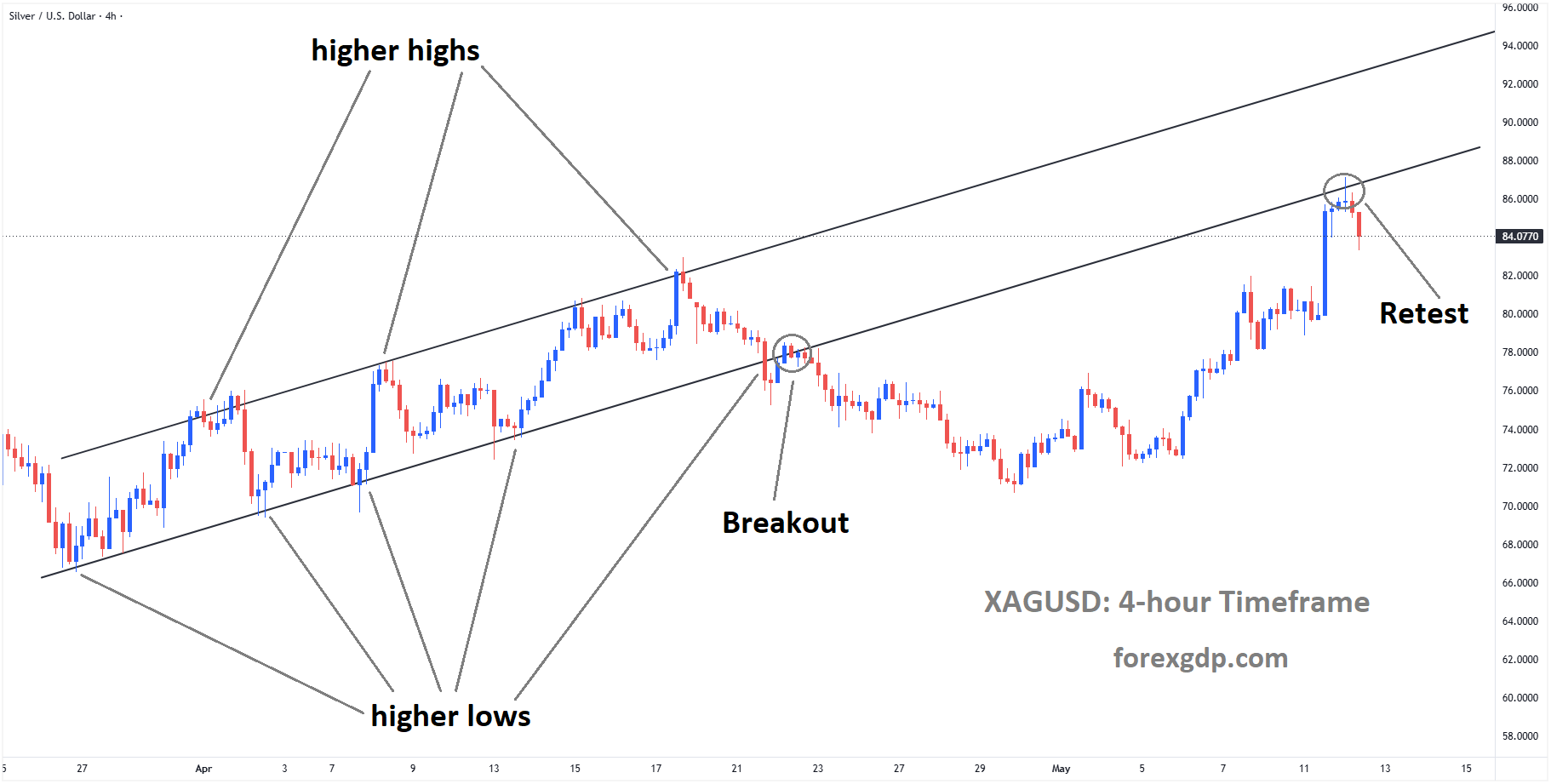
XAGUSD reached the retest area of the broken Ascending channel
XAGUSD Extends Bullish Momentum Ahead of Major US Economic Update
Silver prices continued to stay firm near the $86.50 level during Tuesday’s Asian trading session, extending a rally that has lasted for almost a week. The precious metal has shown impressive resilience even as global energy prices remain elevated and investors prepare for major economic and political developments in the coming days.
Market participants are closely watching the upcoming US Consumer Price Index (CPI) report for April, which could play a major role in shaping expectations around inflation and monetary policy. At the same time, growing tensions in the Middle East and an important meeting between US President Donald Trump and Chinese President Xi Jinping are keeping investors cautious.
Silver has managed to hold onto its recent gains even though oil prices remain high. Normally, rising energy prices increase inflation concerns, which can create pressure on non-yielding assets like silver. However, the metal has continued to attract attention due to broader uncertainty in global markets.
Oil prices have remained supported because of fears that military tensions between the United States and Iran could escalate once again. Reports suggest that President Donald Trump has become increasingly frustrated with the progress of discussions involving Iran. Some officials close to the administration reportedly believe the US could seriously consider restarting major military operations in the region.
These concerns are important for global markets because any renewed conflict in the Middle East could threaten the Strait of Hormuz, one of the world’s most important oil shipping routes. Nearly 20% of the global energy supply passes through this narrow waterway, making it critical for international trade and energy stability.
If disruptions occur in the region, oil prices could rise further, increasing inflation pressure worldwide.
Why Higher Oil Prices Matter for Silver
Silver is often viewed as both a precious metal and an industrial asset. Because of this dual role, it reacts to several economic factors at the same time.
Higher oil prices usually lead to increased transportation and manufacturing costs across the global economy. This pushes inflation expectations higher. When inflation remains elevated, central banks may avoid cutting interest rates or easing monetary policies too quickly.
That situation can sometimes limit gains for assets like silver because higher interest rates increase the attractiveness of yield-generating investments such as bonds. However, silver can also benefit during periods of uncertainty, especially when investors seek safer assets to protect against inflation and geopolitical risks.
The current market environment reflects this balance. While elevated oil prices could create challenges for precious metals, ongoing geopolitical tensions and uncertainty surrounding inflation continue to support investor demand for silver.
Investors Await Key US CPI Inflation Report
One of the biggest events for financial markets this week is the release of the US CPI data for April. The inflation report is scheduled to be published at 12:30 GMT and is expected to provide important clues about the direction of the US economy.
Economists expect headline inflation to rise to 3.7% year-over-year, compared to the previous reading of 3.3%. If inflation comes in higher than expected, markets could react strongly as it may influence future decisions from the Federal Reserve.
How Inflation Data Could Impact Silver
Inflation data is closely connected to precious metals because it affects interest rate expectations. If inflation remains stubbornly high, the Federal Reserve may choose to keep interest rates elevated for longer than expected.
In many cases, higher interest rates reduce the appeal of non-yielding assets such as silver and gold. However, persistent inflation can also increase demand for precious metals as investors look for ways to preserve purchasing power.
This creates a complicated environment for silver traders. Strong inflation numbers could create short-term volatility, while long-term uncertainty may continue to support the metal.
Investors are therefore paying close attention not only to the headline inflation figure but also to any signs that price pressures are becoming more widespread across the economy.
Trump-Xi Meeting Could Shape Global Market Sentiment
Beyond inflation data, another major focus for investors is the expected meeting between President Donald Trump and Chinese President Xi Jinping during the May 13–15 period.
The relationship between the United States and China remains one of the most influential factors for global markets. Any developments from talks between the two leaders could affect investor confidence, international trade expectations, and overall market sentiment.
Importance of US-China Relations for Silver
Silver prices are often sensitive to changes in global economic conditions because the metal is heavily used in industrial sectors such as electronics, solar panels, electric vehicles, and manufacturing.
If the Trump-Xi discussions lead to improved trade relations or positive economic cooperation, industrial demand expectations for silver could strengthen further. On the other hand, signs of rising tensions between the two countries may increase uncertainty and encourage safe-haven buying.
Because both nations play major roles in the global economy, even small developments from the meeting could influence commodity markets, currencies, and investor risk appetite worldwide.
Geopolitical Risks Continue to Support Precious Metals
Global uncertainty remains one of the strongest supporting factors for precious metals. Investors are currently balancing several major risks at the same time, including inflation concerns, geopolitical tensions, energy market disruptions, and international political developments.
The possibility of renewed military action involving Iran has added another layer of caution to the market. Any escalation in conflict could affect global supply chains, energy costs, and broader economic stability.
Precious metals like silver often benefit during uncertain periods because they are viewed as stores of value. While market conditions remain volatile, investors continue to monitor geopolitical headlines closely.
Summary
Silver prices remain steady near the $86.50 level as investors prepare for a busy week filled with important economic and political events. Despite pressure from elevated oil prices and inflation concerns, the metal has maintained strong momentum due to ongoing global uncertainty.
The upcoming US CPI report could significantly influence expectations around inflation and Federal Reserve policy, while the anticipated meeting between Donald Trump and Xi Jinping may shape broader market sentiment.
At the same time, tensions in the Middle East continue to raise concerns about energy supply disruptions and global economic stability. As a result, silver remains at the center of investor attention as markets navigate a mix of inflation risks, geopolitical uncertainty, and shifting global dynamics.
EURUSD Retreats as Fragile Market Sentiment and Economic Worries Weigh on Euro
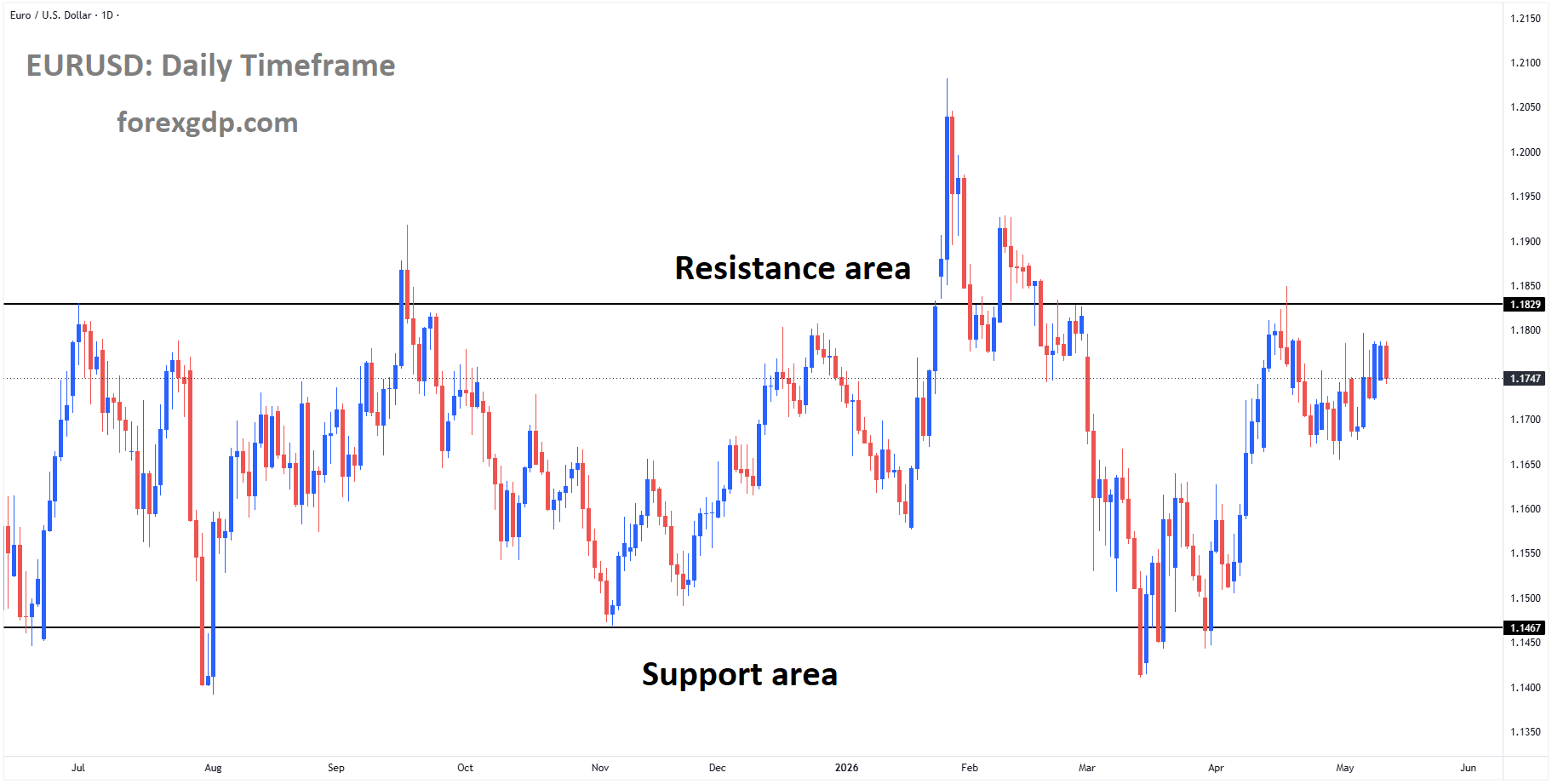
The EUR/USD currency pair moved lower on Tuesday, falling below the 1.1750 level after failing to hold gains near 1.1790 during Monday’s trading session. The decline came as investors turned more cautious due to rising geopolitical tensions involving Iran and growing demand for the US Dollar as a safe-haven asset.
EURUSD is moving in a box pattern, and the market has reached the resistance area of the pattern
At the same time, fresh economic data from Germany delivered mixed signals about the health of Europe’s largest economy, offering little support to the Euro. Traders are also waiting closely for upcoming US inflation figures, which could influence expectations for future decisions by the Federal Reserve.
Safe-Haven Demand Boosts the US Dollar
The US Dollar gained strength after concerns resurfaced about the stability of the ceasefire between the United States and Iran. Investors became more nervous after comments from US President Donald Trump suggested that the ceasefire was under pressure and could potentially collapse.
Reports from CNN, citing individuals close to the administration, indicated that the US government may be seriously considering restarting military operations if tensions continue to rise. These developments increased uncertainty in global markets and encouraged investors to move toward safer assets, including the US Dollar.
In times of geopolitical instability, the Dollar often benefits because it is viewed as one of the world’s safest and most reliable currencies. This renewed demand placed pressure on the Euro and pushed EUR/USD lower.
Euro Struggles Despite Improved Investor Sentiment
Economic data released by Germany’s ZEW Institute showed a mixed picture for the country’s economy. Investor confidence improved compared to the previous month, but concerns about current economic conditions remained strong.
The ZEW Economic Sentiment Index rose to -10.2 in May from -17.2 in April. Analysts had expected the figure to fall further, so the improvement came as a positive surprise. The data suggests that institutional investors are becoming slightly more optimistic about Germany’s economic outlook over the coming months.
However, the report also showed that perceptions of the current economic situation weakened further. The index measuring present conditions dropped to -77.8, marking its lowest level in five months. This result highlighted that many investors still believe the German economy is struggling in the short term.
Because of these mixed signals, the Euro failed to gain momentum. While future expectations improved slightly, ongoing weakness in current conditions continued to limit confidence in the shared European currency.
Investors Focus on US Inflation Data
Another major factor influencing market sentiment is the upcoming release of the US Consumer Price Index (CPI) report. Investors are closely watching the data because inflation remains one of the biggest concerns for the Federal Reserve.
Economists expect annual consumer inflation to rise to 3.7% in April, which would mark the highest reading since September 2023. Core inflation, which excludes food and energy prices, is also expected to increase slightly to 2.7% from 2.6% in March.
These figures remain above the Federal Reserve’s long-term inflation target of 2%, meaning policymakers may continue to keep interest rates elevated for longer than previously expected.
Higher interest rates generally support the US Dollar because they increase returns on Dollar-based investments. If inflation data comes in stronger than expected, it could further strengthen the Dollar and add more pressure on EUR/USD.
Market Caution Remains High
Financial markets have become increasingly sensitive to geopolitical headlines and economic indicators. Traders are balancing concerns about global conflicts with expectations for central bank policy decisions.
The situation in the Middle East has added another layer of uncertainty to an already cautious market environment. Any sign of worsening tensions could continue to support demand for safe-haven assets.
At the same time, economic growth concerns in Europe are making it difficult for the Euro to attract strong buying interest. Germany’s economy, which plays a major role in the Eurozone, continues to face challenges from weak industrial activity, slow consumer demand, and broader global uncertainty.
Federal Reserve Expectations Continue to Drive Currency Markets
Currency markets remain heavily influenced by expectations surrounding the Federal Reserve’s next moves. Investors are trying to determine whether the central bank will maintain high interest rates for an extended period or eventually begin easing monetary policy.
Recent economic data from the United States has shown resilience in consumer spending and employment, while inflation remains stubbornly above target. This combination has reduced expectations for rapid interest rate cuts.
As a result, the US Dollar has stayed relatively strong against major currencies, including the Euro. Traders believe that if inflation remains elevated, the Fed may continue taking a cautious approach toward lowering rates.
This outlook contrasts with Europe, where economic growth remains weaker and confidence levels are still fragile. The differing economic conditions between the US and the Eurozone continue to shape the direction of EUR/USD trading.
Germany’s Economic Outlook Still Faces Challenges
Although investor sentiment improved modestly in May, Germany’s economy still faces several obstacles. Manufacturing activity has remained soft, energy costs continue to affect businesses, and global trade uncertainties are limiting growth momentum.
The weak current conditions index in the ZEW survey reflects these ongoing difficulties. Many investors believe the economy has yet to fully recover from previous slowdowns and external pressures.
The European Central Bank also faces a difficult balancing act. Policymakers must support economic growth while also managing inflation pressures within the Eurozone. This uncertain policy environment has contributed to cautious trading around the Euro.
Traders Await Fresh Direction
For now, market participants are likely to remain cautious ahead of key US inflation data and further geopolitical developments. Any major surprise in inflation numbers or unexpected headlines from the Middle East could quickly influence market sentiment and currency movements.
The EUR/USD pair remains sensitive to shifts in risk appetite, central bank expectations, and economic performance on both sides of the Atlantic. With uncertainty still elevated, volatility in currency markets may continue in the near term.
Summary
EUR/USD moved lower after failing to sustain gains near 1.1790, with the US Dollar gaining support from renewed geopolitical concerns surrounding Iran and increased safe-haven demand. Mixed German economic data failed to provide enough support for the Euro, despite a modest improvement in investor sentiment.
Markets are now turning their attention to upcoming US inflation figures, which could play a major role in shaping expectations for Federal Reserve policy. As investors monitor inflation trends, geopolitical risks, and economic conditions in Europe, the US Dollar continues to hold a stronger position against the Euro.
GBPUSD Drops Sharply as Keir Starmer Faces Rising Political Pressure and Dollar Strengthens
The British Pound continued to lose strength against the US Dollar on Tuesday as investors moved their money toward safer assets amid growing geopolitical tensions in the Middle East and rising political uncertainty in the United Kingdom.
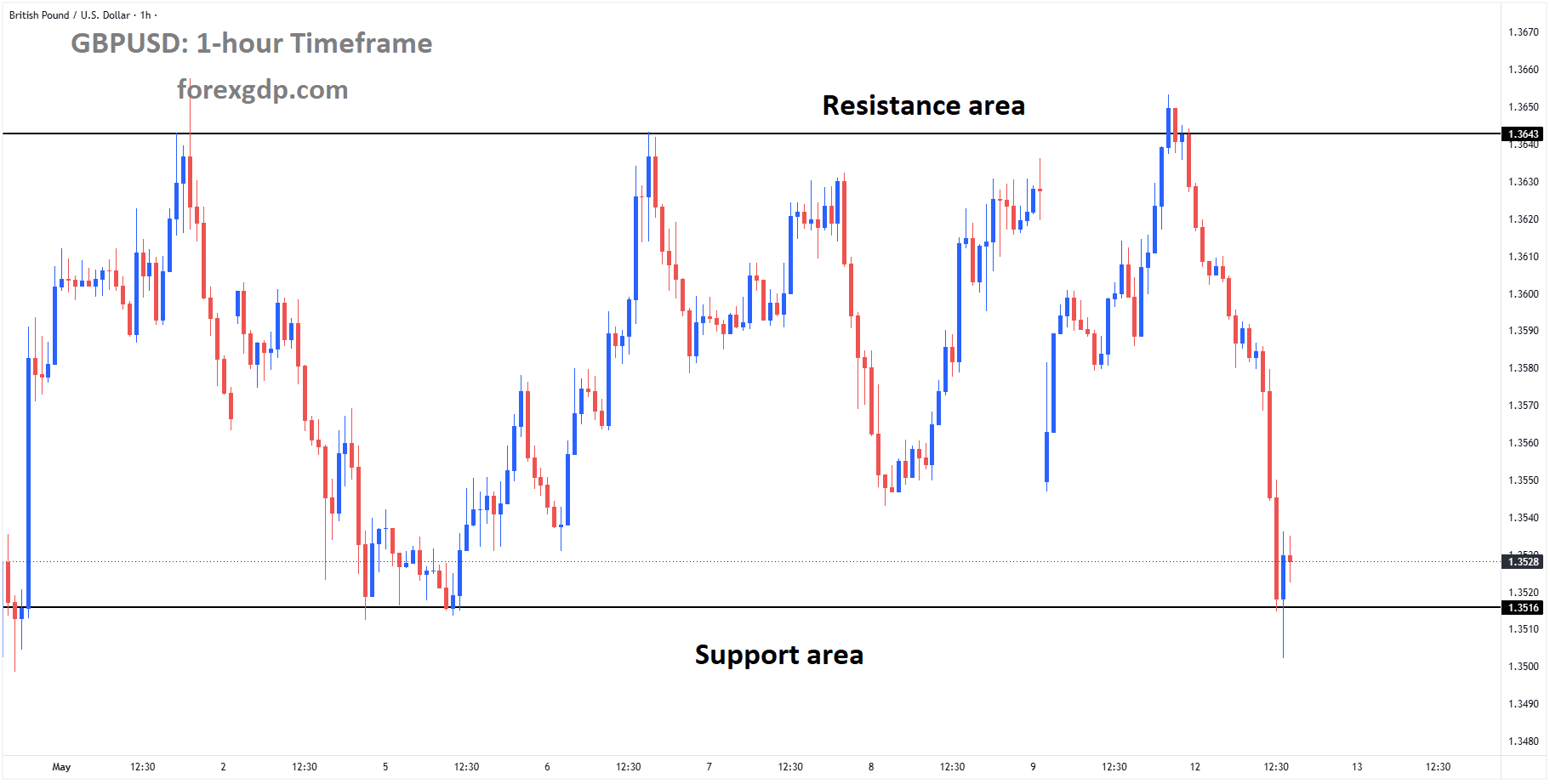
GBPUSD reached the support area of the box pattern
The GBP/USD currency pair dropped to around 1.3530, marking a noticeable decline during the trading session. A stronger US Dollar, combined with concerns over the UK’s political and economic outlook, added pressure on the Pound.
Investors Turn to the US Dollar During Global Uncertainty
One of the main reasons behind the Pound’s weakness is the renewed tension between the United States and Iran. Investors often react quickly when geopolitical risks rise, and this time was no different.
Reports from CNN suggested that US President Donald Trump has become increasingly frustrated with Iran during ongoing discussions aimed at reducing conflict in the region. At the same time, some officials within the US administration are reportedly considering the possibility of restarting major military operations.
This situation has increased fear and uncertainty across financial markets. During periods like these, investors usually move their money into assets considered safer and more stable. The US Dollar is widely seen as one of the world’s leading safe-haven currencies, which means demand for it tends to rise during global crises.
As a result, the US Dollar Index, which measures the strength of the Dollar against several major currencies, moved higher and reached around 98.30. The stronger Dollar naturally pushed the Pound lower against it.
Inflation Data in Focus for the United States
Another important factor influencing market sentiment is the upcoming release of US inflation data. Investors are closely watching the latest Consumer Price Index (CPI) figures, which are expected to show that inflation increased in April.
Current market expectations suggest headline inflation may rise to 3.7% from the previous 3.3%. Core inflation, which excludes food and energy prices, is also expected to edge slightly higher.
These numbers matter because they could shape future decisions by the Federal Reserve. If inflation remains stubbornly high, the Fed may decide to keep interest rates elevated for a longer period. Higher interest rates generally strengthen the US Dollar because they make US assets more attractive to global investors.
The possibility of tighter monetary policy in the United States has already encouraged many traders to favor the Dollar over other currencies, including the British Pound.
Political Pressure Builds on Keir Starmer
While global developments are strengthening the US Dollar, the Pound is also facing domestic pressure from political instability inside the United Kingdom.
The Labour Party recently suffered heavy losses in local elections across England, as well as parliamentary setbacks in Scotland and Wales. Following these disappointing results, more than 70 Labour Members of Parliament reportedly called on Prime Minister Keir Starmer to resign.
The growing political tension has created uncertainty about the future direction of the UK government. Financial markets typically dislike uncertainty because it becomes harder to predict future economic policies and spending plans.
Investors are now worried that if Starmer were replaced, a new leader might introduce more aggressive government spending policies. Such measures could place additional strain on the UK’s public finances, especially at a time when economic growth remains fragile.
Concerns About Government Spending Impact the Pound
Market analysts believe that fears surrounding fiscal policy are also weighing heavily on the British currency.
According to Reuters, investors are concerned that a change in political leadership could lead to looser fiscal rules and larger public spending commitments. While increased government spending can sometimes support economic growth, it can also increase borrowing and debt levels.
Financial institutions such as Commerzbank have warned that a chaotic political transition or major changes to fiscal policy could create further downside risks for the Pound.
Currency traders tend to react negatively when they believe a country’s finances may become harder to manage in the future. This is especially true when economic growth is already showing signs of slowing down.
UK Economic Data Could Be the Next Major Driver
Investors are also preparing for the release of the UK’s preliminary Gross Domestic Product data for the first quarter. The figures are expected later this week and could play a major role in determining the Pound’s next move.
Economists currently expect the UK economy to grow by 0.6% during the quarter, compared to just 0.1% in the previous period. While this would represent an improvement, markets remain cautious.
A weaker-than-expected GDP reading could raise concerns that the UK economy is losing momentum. Slower economic growth often weakens a country’s currency because it may reduce investor confidence and limit future interest rate increases.
If the GDP report disappoints, pressure on the Pound could increase further, especially while the US Dollar continues to benefit from safe-haven demand and strong economic expectations.
Market Sentiment Remains Fragile
The overall mood in financial markets remains cautious as investors balance several major risks at the same time. Rising geopolitical tensions, uncertainty surrounding US inflation, and political instability in the UK are all influencing trading activity.
For now, the US Dollar appears to be benefiting the most from the current environment. Its status as a safe-haven asset, combined with expectations of higher US interest rates, continues to attract investor demand.
Meanwhile, the British Pound faces multiple challenges both at home and abroad. Political uncertainty, concerns about fiscal policy, and questions over economic growth are all contributing to the currency’s recent weakness.
Summary
The British Pound came under pressure as investors moved toward the safety of the US Dollar following renewed tensions between the United States and Iran. Growing concerns over UK politics also added to the negative sentiment surrounding the Pound.
Markets are now closely watching upcoming US inflation data and the UK’s GDP figures, both of which could significantly influence currency movements in the coming days. While the Dollar remains supported by safe-haven demand and expectations of prolonged higher interest rates, the Pound continues to struggle with political uncertainty and economic concerns.
USDJPY Climbs as Japanese Yen Weakens Before Key US Inflation Report
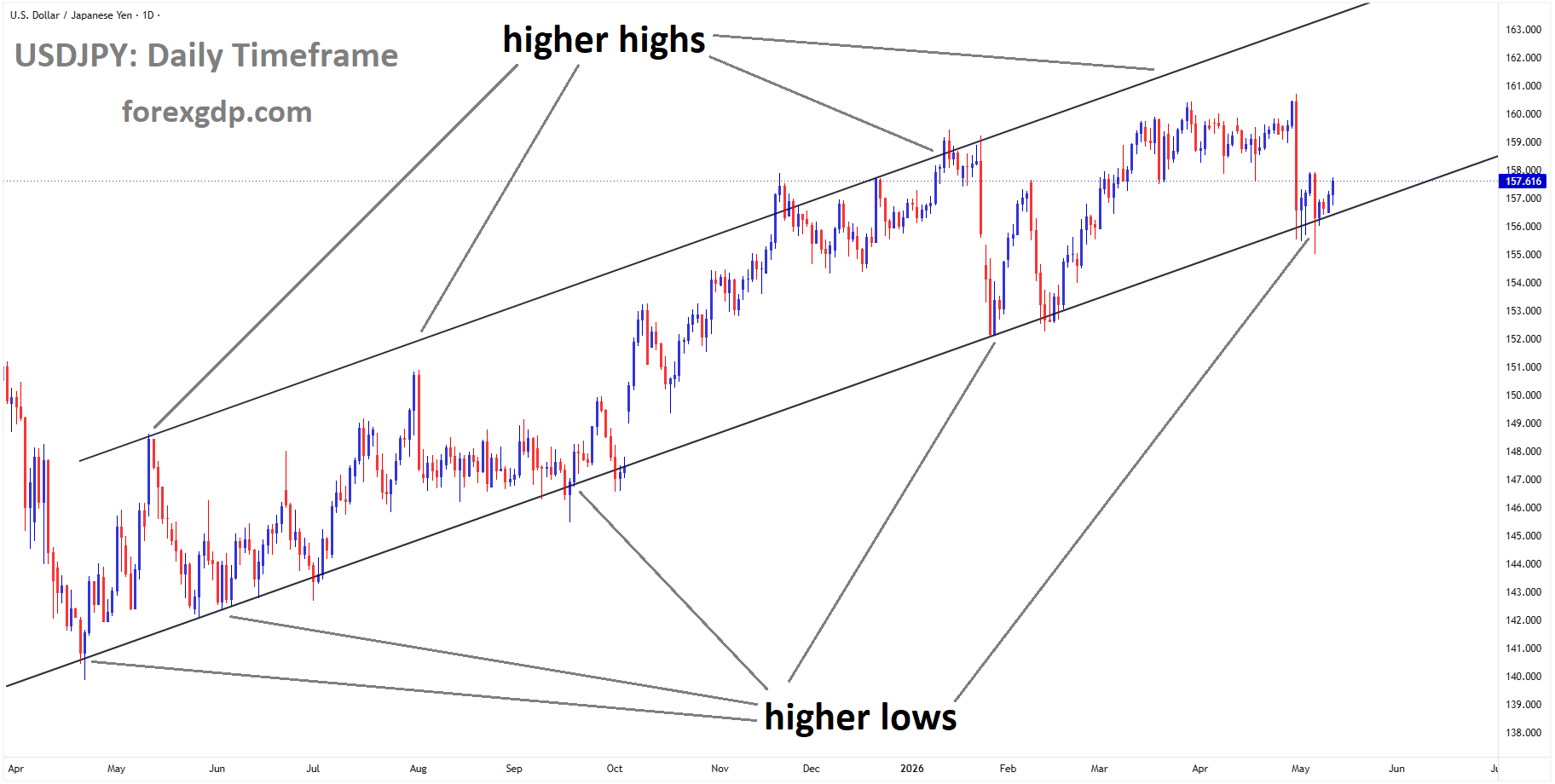
The USD/JPY currency pair moved higher during early European trading on Tuesday, reaching around 157.55 as investors reacted to growing geopolitical tensions and fresh economic expectations from the United States. The stronger US Dollar continued to put pressure on the Japanese Yen as traders closely watched global developments and prepared for important inflation data from the US later in the day.
USDJPY is moving in an ascending channel, and the market has reached the higher low area of the channel
The recent movement in the currency market reflects a mix of political uncertainty, inflation concerns, and fears of possible intervention from Japanese authorities.
Rising Middle East Tensions Increase Demand for the US Dollar
The US Dollar gained support after reports suggested that tensions between the United States and Iran could become more serious. According to media reports, advisers close to former US President Donald Trump said he is considering the possibility of renewed military action involving Iran.
Trump also reportedly commented that the current ceasefire situation is on “massive life support” after Iran submitted a new counterproposal regarding efforts to reduce hostilities. These developments increased concerns that the conflict could continue for a longer period.
Whenever geopolitical risks rise, investors often move their money toward assets considered safer and more stable. The US Dollar usually benefits during these periods because it is widely viewed as a global safe-haven currency. As a result, demand for the Dollar increased, helping USD/JPY move higher.
Investors Focus on US Inflation Data
Another major factor supporting the US Dollar is the upcoming release of the US Consumer Price Index (CPI) inflation report for April. Investors around the world are paying close attention to this data because it may influence future decisions from the US Federal Reserve.
The market expects headline inflation to rise to 3.7% in April compared to 3.3% in March. Much of this increase is linked to higher energy prices, which have climbed because of the ongoing conflict in the Middle East.
At the same time, core inflation, which excludes food and energy prices, is also expected to move slightly higher from 2.6% to 2.7%.
Higher inflation could create additional pressure on the Federal Reserve to keep interest rates elevated for a longer period. This possibility often strengthens the US Dollar because higher rates can attract foreign investment into US assets.
Why Inflation Matters for Currency Markets
Inflation plays a major role in determining the strength of a currency. When inflation remains high, central banks may avoid cutting interest rates too quickly. In the United States, traders are carefully watching whether inflation is slowing enough for the Federal Reserve to begin reducing rates later this year.
If inflation comes in stronger than expected, the Fed may decide to delay any potential rate cuts. That could further boost the US Dollar and support the USD/JPY pair.
On the other hand, weaker inflation data could reduce some of the Dollar’s recent strength. Investors would then reassess expectations for future Fed policy decisions.
Japanese Yen Faces Additional Pressure
While the US Dollar has gained support, the Japanese Yen has remained under pressure for several reasons. One major issue is the continued difference between US and Japanese monetary policies.
Japan has maintained a relatively loose monetary environment compared to the United States. This gap in interest rate expectations has encouraged investors to favor the Dollar over the Yen in recent months.
However, Japanese officials are becoming increasingly concerned about excessive weakness in their currency. A weaker Yen can increase import costs and place pressure on consumers and businesses inside Japan.
Japan and the US Continue Currency Discussions
Japan’s Finance Minister Satsuki Katayama said on Tuesday that both Japan and the United States confirmed their close cooperation regarding currency market movements.
These comments are important because they suggest that Japanese authorities remain highly focused on exchange rate stability. Investors are now more alert to the possibility of intervention if the Yen weakens too rapidly.
Last week, Japan’s top foreign exchange official Atsushi Mimura also warned that further intervention could still happen if necessary. Such statements are often viewed by markets as verbal warnings aimed at slowing excessive currency movements.
Intervention Concerns Could Limit Further Gains
Although USD/JPY continues to rise, fears of direct intervention from Japanese authorities may limit stronger upward movement.
Currency intervention happens when a government or central bank enters the foreign exchange market to buy or sell its own currency in order to influence its value. Japan has a history of stepping into the market during periods of sharp Yen weakness.
Traders remain cautious because sudden intervention can create large and fast market swings. Even speculation about possible action from Japanese authorities can affect trading decisions.
This means that while the US Dollar currently has strong support from geopolitical risks and inflation expectations, the pair may face resistance if intervention fears increase further.
Market Sentiment Remains Highly Sensitive
The overall direction of USD/JPY in the near term will likely depend on several key factors:
US Inflation Results
The CPI report could significantly influence expectations surrounding future Federal Reserve policy decisions. Stronger inflation may strengthen the Dollar further, while softer numbers could reduce bullish momentum.
Geopolitical Developments
Any new headlines involving the US and Iran could quickly affect investor sentiment. Escalating tensions generally favor safe-haven assets like the US Dollar.
Japanese Government Actions
Comments or direct intervention from Japanese officials may impact the Yen’s performance. Traders are closely watching for signs that authorities may take stronger action to stabilize the currency.
Summary
USD/JPY moved higher near 157.55 as growing geopolitical tensions in the Middle East increased demand for the US Dollar. Investor attention is also centered on the upcoming US inflation report, which could shape expectations for future Federal Reserve interest rate decisions.
At the same time, the Japanese Yen remains under pressure due to policy differences between the US and Japan. However, concerns about possible intervention from Japanese authorities may limit additional gains in the currency pair.
With inflation data, geopolitical risks, and central bank expectations all influencing the market, traders are preparing for continued volatility in the days ahead.
USDCAD Jumps Higher While Markets Turn Defensive Before Key US CPI Report
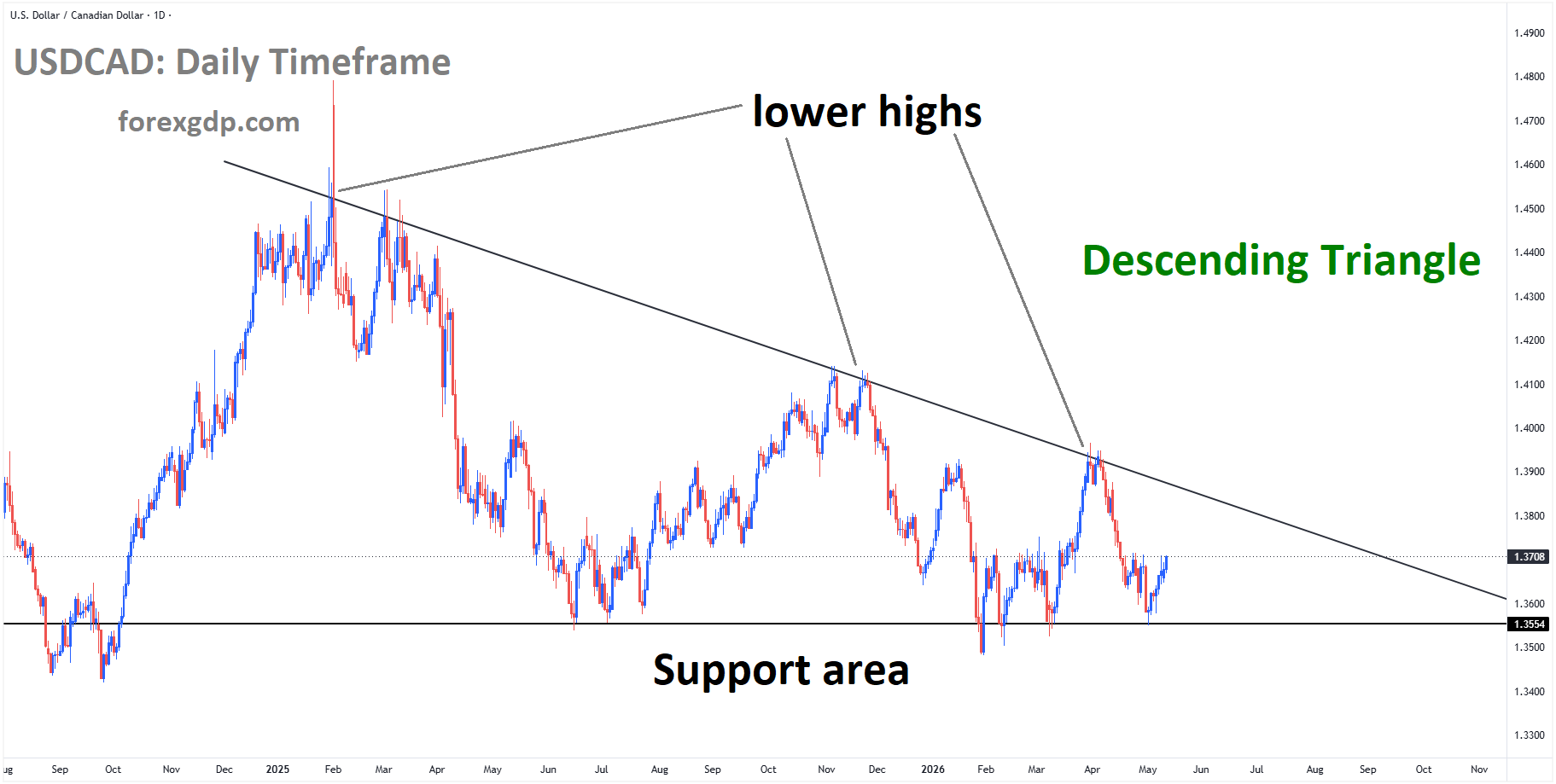
The USD/CAD currency pair moved higher on Tuesday, climbing above the 1.3700 level and approaching its strongest point in nearly three weeks. The rise came as global investors turned cautious due to increasing geopolitical tensions in the Middle East and growing anticipation surrounding the upcoming US inflation report.
USDCAD is rebounding from the support area of the descending triangle pattern
While the US Dollar gained strength across financial markets, the Canadian Dollar managed to avoid deeper losses thanks to rising crude oil prices. The mixed forces created a sharp but controlled move in the USD/CAD exchange rate.
Rising Geopolitical Risks Push Investors Toward the US Dollar
One of the biggest drivers behind the latest market movement is the growing uncertainty surrounding the Middle East. Investors are increasingly worried about the possibility of renewed conflict involving the United States and Iran.
Market sentiment weakened after comments from US President Donald Trump suggested that the current ceasefire situation remains unstable. According to reports, the ceasefire is now considered to be on “life support,” raising fears that major military operations could return soon.
Additional reports indicated that peace discussions are not expected to make meaningful progress before an important meeting later this week between President Trump and Chinese President Xi Jinping. This has added another layer of uncertainty to already nervous financial markets.
Whenever geopolitical risks rise, investors often move their money into safer assets. The US Dollar is widely viewed as one of the world’s safest currencies during periods of uncertainty. As a result, demand for the Greenback increased sharply, helping the USD/CAD pair move higher.
Investors Focus on Upcoming US Inflation Data
Apart from geopolitical concerns, traders are also paying close attention to the upcoming US Consumer Price Index (CPI) report.
The inflation report is expected to play a major role in shaping market expectations around the US economy and future monetary policy decisions. Economists believe that annual consumer inflation likely accelerated in April, mainly due to rising energy costs linked to the ongoing conflict involving Iran.
Forecasts suggest that headline inflation may rise to 3.7% year-over-year, compared to 3.3% recorded in March. Core inflation, which excludes food and energy prices, is expected to increase at a slower pace from 2.6% to 2.7%.
A stronger inflation reading could support the US Dollar even further because it may influence expectations surrounding future interest rate decisions by the Federal Reserve. Investors usually become more cautious ahead of major inflation data releases, and that cautious mood often benefits the US currency.
Canadian Dollar Finds Support From Higher Oil Prices
Although the Canadian Dollar weakened against the US Dollar, rising oil prices helped prevent a steeper decline.
Canada is one of the world’s major oil exporters, meaning that higher crude prices generally support the country’s economy and currency. As oil prices rise, Canada’s export revenues often improve, creating a positive effect on the Canadian Dollar.
Recent gains in crude oil markets came after fears that tensions in the Middle East could disrupt global energy supplies. The Strait of Hormuz, one of the world’s most important oil shipping routes, remains a key focus for traders. Any disruption in that region could significantly impact global oil flows.
With oil prices moving sharply higher, the Canadian Dollar received some support despite the stronger US Dollar environment. This balance helped limit the overall weakness of the Loonie during Tuesday’s trading session.
Lack of Canadian Economic Data Keeps Focus on External Factors
Another reason behind the Canadian Dollar’s weaker performance is the absence of major domestic economic reports from Canada.
Without fresh Canadian economic data to influence market direction, traders largely focused on external developments such as US inflation expectations, geopolitical tensions, and oil price movements.
This left the Canadian Dollar more vulnerable to shifts in overall market sentiment and US Dollar strength. In contrast, the United States had multiple market-moving factors attracting investor attention, giving the Greenback a stronger position.
Global Market Mood Remains Cautious
Financial markets continue to trade cautiously as uncertainty remains elevated across several fronts.
Investors are currently dealing with concerns over international conflicts, inflation pressures, energy supply risks, and global economic stability. These conditions are encouraging traders to reduce risk exposure and move toward safer investments.
The US Dollar has benefited from this environment because it is commonly seen as a stable store of value during periods of market stress. At the same time, commodity-linked currencies like the Canadian Dollar remain sensitive to changes in oil prices and global trade conditions.
The combination of safe-haven demand for the US Dollar and rising oil prices supporting the Canadian Dollar has created a complex trading environment for the USD/CAD pair.
What Traders Are Watching Next
Looking ahead, the upcoming US inflation report will likely become the next major catalyst for currency markets.
A stronger-than-expected inflation reading could increase expectations that US interest rates may remain elevated for longer, which would likely provide additional support to the US Dollar.
On the other hand, if inflation data comes in lower than expected, some pressure could ease from the Greenback, potentially allowing the Canadian Dollar to recover some ground.
Investors will also continue monitoring developments in the Middle East closely. Any escalation in tensions could further strengthen safe-haven demand for the US Dollar while also influencing global oil prices.
Summary
The USD/CAD pair strengthened significantly as rising geopolitical tensions and investor caution boosted demand for the US Dollar. Concerns surrounding the Middle East conflict and uncertainty ahead of the US inflation report created a risk-averse mood across financial markets.
At the same time, higher oil prices helped support the Canadian Dollar and limited deeper losses. Since Canada relies heavily on oil exports, stronger crude prices continue to provide important support for the country’s currency.
With inflation data and geopolitical developments remaining in focus, traders are expected to stay cautious in the near term as markets search for clearer direction.
USDCHF Edges Higher as Weak Swiss Franc Meets Growing Focus on US Inflation Report
The USD/CHF currency pair moved higher on Tuesday as investors shifted toward safer assets following renewed geopolitical tensions in the Middle East. The US Dollar gained strength against the Swiss Franc, pushing the pair closer to the 0.7815 level during trading.
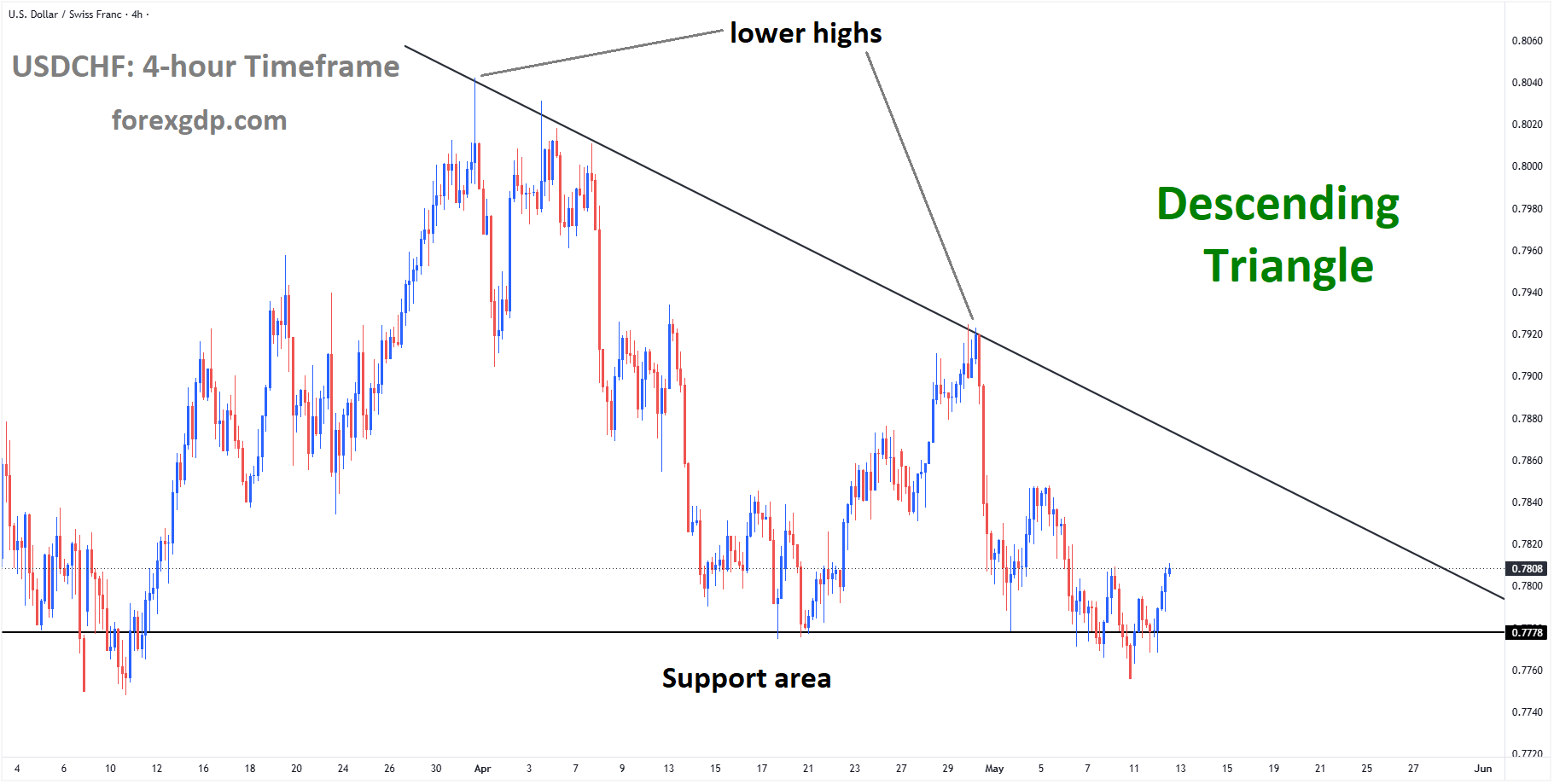
USDCHF is rebounding from the support area of the descending triangle pattern
Growing concerns about global stability helped boost demand for the US Dollar, while expectations surrounding US inflation data and future Federal Reserve policy also played an important role in market sentiment.
Rising Geopolitical Risks Support the US Dollar
Investor confidence weakened after fresh comments from former US President Donald Trump regarding the situation between the United States and Iran. Trump reportedly said that the ceasefire between the two countries was on “life support,” raising fears that tensions could escalate again.
Reports from CNN also suggested that members of the US administration are increasingly discussing the possibility of restarting major military operations. These developments created uncertainty in financial markets and encouraged traders to move toward safer currencies.
The US Dollar often benefits during periods of global uncertainty because it is considered one of the world’s main safe-haven assets. When geopolitical risks rise, investors usually reduce exposure to riskier investments and increase holdings in assets viewed as more stable.
This shift in sentiment helped lift the US Dollar against several major currencies, including the Swiss Franc.
US Dollar Index Moves Higher
The US Dollar Index, commonly known as the DXY, also strengthened during the session. The index measures the value of the US Dollar against a basket of major global currencies.
The stronger performance of the Dollar reflects growing expectations that the Federal Reserve may maintain a tighter monetary policy for a longer period. Investors are becoming more cautious about expecting quick interest rate cuts, especially if inflation in the United States remains elevated.
A stronger Dollar usually supports the USD/CHF pair because the Swiss Franc weakens relative to the Greenback.
Focus Turns to US Inflation Data
Financial markets are now closely watching the upcoming release of the US Consumer Price Index (CPI) data for April. The inflation report is expected to provide important clues about the future direction of Federal Reserve policy.
Economists expect annual inflation to rise to 3.7%, compared to the previous reading of 3.3%. Core inflation, which excludes food and energy prices, is also expected to increase slightly.
If inflation numbers come in higher than expected, investors may believe that the Federal Reserve will keep interest rates elevated for a longer time. That scenario would likely provide additional support for the US Dollar.
On the other hand, weaker inflation data could reduce pressure on the Fed and potentially limit further Dollar gains.
Federal Reserve Expectations Remain Important
The Federal Reserve’s approach to monetary policy continues to be one of the biggest drivers for currency markets. Over the past several months, traders have been trying to predict when the central bank may begin lowering interest rates.
However, persistent inflation and strong economic data have made policymakers more cautious. Several Fed officials have signaled that they are willing to keep borrowing costs higher until inflation moves closer to the central bank’s long-term target.
This cautious approach has strengthened the US Dollar in recent weeks, especially against currencies backed by more dovish central banks.
Swiss Inflation Remains Low
While the US faces concerns about sticky inflation, Switzerland continues to experience relatively low price pressures.
Recent economic data showed that Swiss inflation increased for the second month in a row. Annual inflation reached 0.6% in April after rising from 0.3% in March. Although the increase suggests some recovery in consumer prices, inflation still remains well below the Swiss National Bank’s target level.
Core inflation in Switzerland actually slowed to 0.3%, showing that underlying price pressures remain weak.
These figures suggest that inflation is still under control in Switzerland, reducing the need for aggressive policy tightening from the Swiss National Bank.
SNB Continues to Resist Swiss Franc Strength
The Swiss National Bank has repeatedly signaled that it does not want excessive strength in the Swiss Franc. A stronger Franc can hurt Swiss exports and weaken economic growth because Swiss goods become more expensive for foreign buyers.
According to analysts from MUFG, the Swiss Franc has struggled since the beginning of the Middle East conflict partly because the SNB has made its position very clear regarding currency appreciation.
SNB Governor Martin Schlegel recently played down concerns about rising inflation and stated that medium-term inflation pressures had “hardly changed.” His comments reinforced expectations that the central bank remains comfortable with its current policy stance.
This softer approach has limited support for the Swiss Franc even during periods of market uncertainty, which would normally benefit safe-haven currencies like CHF.
Energy Risks Could Change the Outlook
Although the Swiss National Bank currently appears comfortable with inflation levels, analysts believe the situation could change if geopolitical tensions continue to worsen.
One major concern is the Strait of Hormuz, a critical global shipping route for oil exports. Any prolonged disruption in the region could push global energy prices significantly higher.
Higher oil and energy prices would likely increase inflation pressures worldwide, including in Switzerland. If inflation begins rising more aggressively, the SNB may eventually be forced to adopt a more hawkish position.
MUFG economists believe that under such a scenario, the Swiss National Bank could consider tighter monetary policy in the months ahead.
Markets Begin Pricing in Possible SNB Rate Hike
Money markets are already starting to reflect the possibility that the SNB may raise interest rates before the end of the year.
While current inflation remains relatively low, traders understand that global events can quickly change the economic outlook. Rising energy costs, supply disruptions, or prolonged geopolitical instability could all increase inflationary pressures in Switzerland.
As a result, expectations surrounding future SNB decisions may continue to evolve depending on developments in the Middle East and global commodity markets.
USD/CHF Outlook Remains Tied to Global Events
The future direction of USD/CHF will likely depend on several major factors in the coming weeks. Investors are paying close attention to geopolitical developments, US inflation data, Federal Reserve policy expectations, and signals from the Swiss National Bank.
For now, stronger demand for the US Dollar and cautious positioning by the SNB are supporting the currency pair. However, changing inflation trends and energy market risks could eventually alter the balance between the two currencies.
Summary
USD/CHF moved higher as geopolitical tensions in the Middle East increased demand for the US Dollar. Investors sought safer assets after concerns emerged about the stability of the US-Iran ceasefire, helping strengthen the Greenback.
At the same time, markets are preparing for important US inflation data that could shape expectations for future Federal Reserve policy. Strong inflation numbers may further support the Dollar if traders believe interest rates will stay elevated for longer.
In Switzerland, inflation remains relatively weak, and the Swiss National Bank continues to resist excessive strength in the Swiss Franc. Still, rising global energy risks could eventually force the SNB to adopt a more aggressive stance if inflation pressures begin to grow.
Don’t trade all the time, trade forex only at the confirmed trade setups