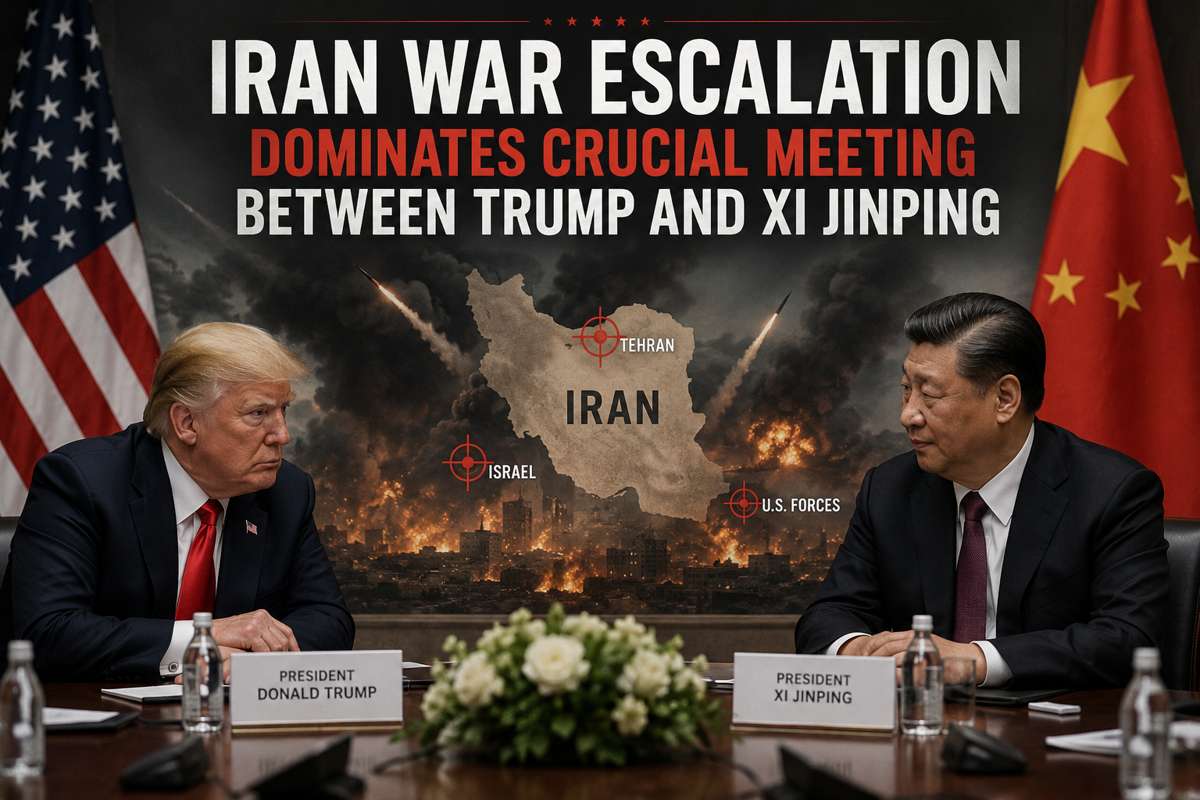
U.S. President Donald Trump is preparing for high-level talks with Chinese President Xi Jinping in Beijing at a time when the ongoing conflict involving Iran continues to shake global politics and economic stability. The visit marks Trump’s first trip to China since 2017 and comes during a period of growing international concern over the long-running war involving the United States, Israel, and Iran.
Although both leaders are expected to discuss trade and economic ties, the Iran conflict is likely to dominate the discussions. The war has already caused major disruptions across the Middle East, affected global shipping routes, and raised fears of wider instability. Washington hopes China can use its close relationship with Tehran to help reduce tensions, but experts believe Beijing may not fully support the U.S. position.
Rising Pressure Over the Iran Conflict
More than a month after a fragile ceasefire was announced, diplomatic efforts have shown little progress. The conflict has already taken thousands of lives and reshaped political alliances throughout the Middle East. At the same time, it has increased concerns about the global economy because of disruptions in energy supplies and international shipping.
The United States has repeatedly demanded that Iran end its nuclear activities and stop threatening shipping through the Strait of Hormuz. This narrow waterway is one of the most important energy routes in the world, with a large portion of global oil and liquefied natural gas shipments passing through it before the conflict began earlier this year.
Iran, however, has placed several conditions on any peace agreement. Tehran wants compensation for damage caused by the war, the removal of U.S. restrictions on Iranian ports, and an end to fighting in several areas linked to the conflict, including Lebanon. Israel continues to battle Hezbollah forces there, which Iran supports.
Trump has strongly rejected Iran’s demands, calling them unacceptable and insisting that Tehran must step back from actions that threaten regional stability.
Why China’s Role Matters
China has become one of Iran’s closest international partners in recent years. It remains a major buyer of Iranian oil and has maintained strong diplomatic ties with Tehran even as tensions with the West have increased.
Because of this relationship, the Trump administration believes China could influence Iran’s decisions. U.S. Secretary of State Marco Rubio recently stated that Washington wants Beijing to take a more active role in convincing Iran to reduce its military and political activities in the Persian Gulf.
Rubio also warned that any direct support for Iran by China could damage U.S.-China relations. According to him, the issue is expected to come up during discussions involving trade and broader economic cooperation between the two countries.
The United States has also emphasized the importance of keeping shipping routes open. American officials said both countries had previously agreed that no nation should be allowed to impose tolls or restrictions on traffic passing through the region. Iran has threatened such measures in recent months, raising fears of further disruptions to global trade.
Strait of Hormuz Remains a Global Concern
The Strait of Hormuz continues to be one of the biggest pressure points in the conflict. The waterway is critical for global energy transport and international supply chains.
Recent shipping data showed that several oil tankers linked to China and Japan successfully passed through the strait despite ongoing tensions. A Chinese supertanker carrying millions of barrels of Iraqi crude reportedly crossed the route this week, highlighting Beijing’s continued dependence on Middle Eastern energy supplies.
Japanese-linked tankers have also continued operations through the channel. Before the conflict began, Japan depended heavily on Gulf nations for the vast majority of its oil imports, making stability in the region extremely important for Tokyo.
Meanwhile, reports suggest that some countries are exploring shipping arrangements connected to Iran’s deals with Iraq and Pakistan. Analysts believe these agreements could strengthen Tehran’s influence over the waterway and increase its control over trade routes that are essential for global commerce.
The uncertainty surrounding the Strait of Hormuz has become a major issue for governments and businesses worldwide. Any serious disruption could affect fuel supplies, transportation networks, and industrial production in many countries.
Political Risks for Trump at Home
The conflict is also creating political challenges inside the United States. Rising inflation and concerns about global instability are putting pressure on the Trump administration ahead of upcoming midterm elections.
Many voters are closely watching how the administration handles the crisis. Economic uncertainty caused by the conflict could influence public opinion and affect support for Republicans in November.
Trump’s decision to seek China’s help reflects growing concerns in Washington that the situation may continue for months unless a broader diplomatic breakthrough is achieved. However, balancing pressure on Iran while maintaining stable relations with China remains a difficult task.
New Alliances Are Emerging in the Middle East
The war has also accelerated changes in political relationships across the Middle East. Several recent reports suggest countries in the region are quietly adjusting their alliances in response to the conflict.
Israel recently claimed that Prime Minister Benjamin Netanyahu made a secret trip to the United Arab Emirates earlier this year for discussions with UAE President Sheikh Mohammed bin Zayed. Israeli officials described the meeting as an important step forward in relations between the two countries.
The UAE later denied that the visit took place, rejecting reports of undisclosed agreements. Still, ties between Israel and several Gulf nations have grown stronger in recent years, especially since the signing of the Abraham Accords during Trump’s earlier presidency.
Iran has warned Gulf countries against cooperating too closely with Israel. Iranian Foreign Minister Abbas Araqchi issued a strong statement criticizing any regional efforts that could deepen divisions or increase support for Israeli military actions.
At the same time, reports have emerged of military operations involving Gulf nations beyond their borders. Sources indicated that Saudi fighter jets targeted Iran-backed militias in Iraq, while retaliatory actions reportedly came from Kuwait as well. These developments suggest the conflict is becoming more regional in nature, involving several countries directly or indirectly.
Nuclear Concerns Continue to Drive Negotiations
One of the central issues in all discussions remains Iran’s nuclear program. The United States has repeatedly stated that preventing Iran from developing nuclear weapons is its top priority.
Vice President JD Vance recently said negotiations are making progress but stressed that the administration’s main goal is ensuring Iran can never obtain a nuclear weapon. According to him, any agreement must include strong protections and guarantees that satisfy Washington’s security concerns.
Iran continues to deny that it is seeking nuclear weapons and insists its nuclear activities are for peaceful purposes. However, distrust between both sides remains extremely high, making negotiations difficult.
Diplomatic talks have repeatedly stalled, and neither side appears ready to fully compromise on its key demands. This has left the international community uncertain about whether a lasting peace agreement can be reached anytime soon.

Final Summary
Trump’s visit to China comes at a critical moment for global politics and economic stability. The Iran conflict has already changed alliances across the Middle East, disrupted key trade routes, and increased international tensions.
Washington hopes China can use its influence to push Iran toward compromise, but major differences remain between all sides involved. At the same time, growing regional military activity and continued concerns over Iran’s nuclear program are adding more pressure to an already unstable situation.
As world leaders search for solutions, the outcome of these discussions could shape the future of Middle East diplomacy, global trade, and international security for years to come.
Don’t trade all the time, trade forex only at the confirmed trade setups
Get more confirmed trade signals at premium or supreme – Click here to get more signals, 2200%, 800% growth in Real Live USD trading account of our users – click here to see , or If you want to get FREE Trial signals, You can Join FREE Signals Now!