
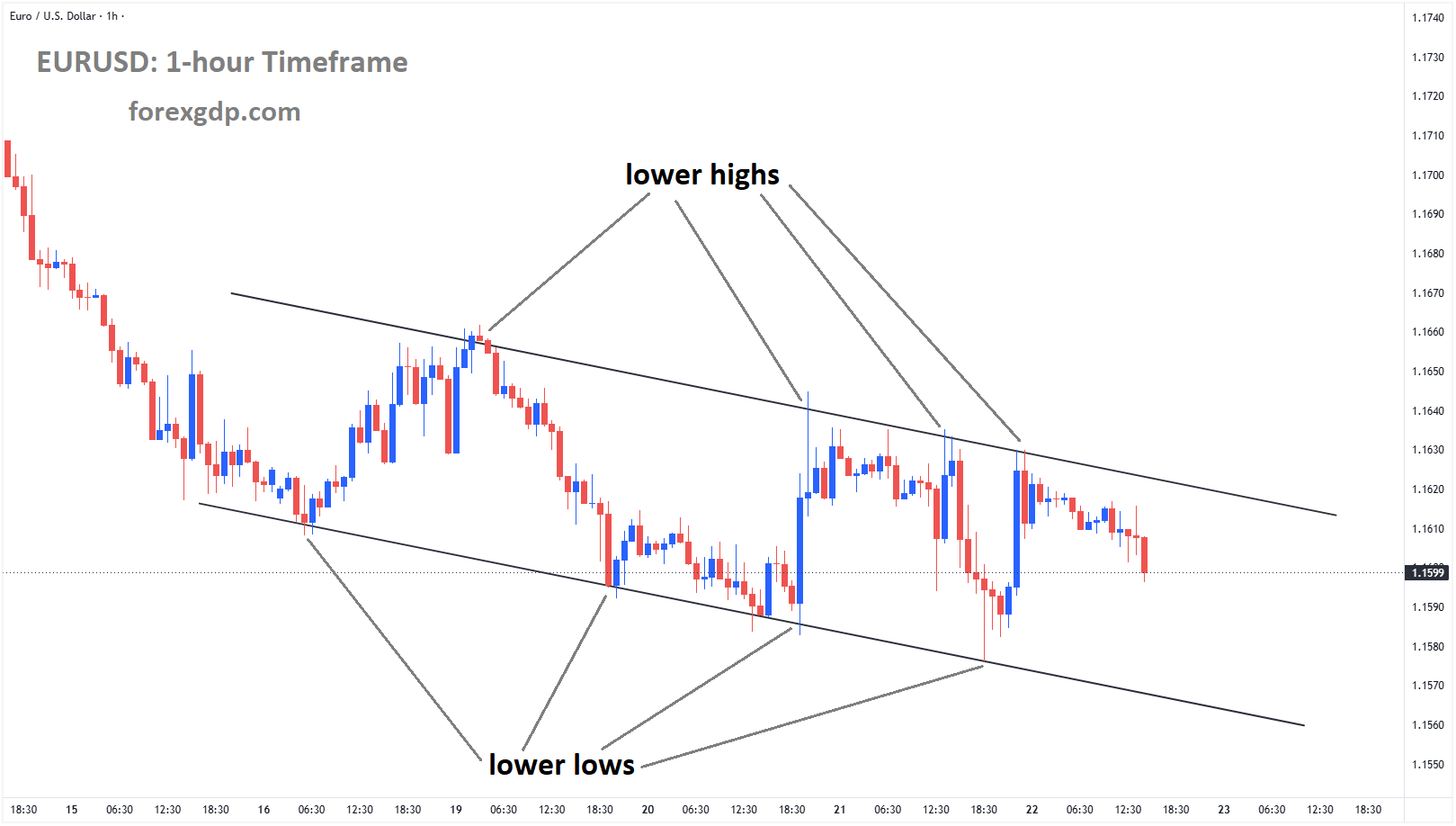
EURUSD is moving in a descending channel, and the market has fallen from the lower high area of the channel
EURUSD Weakens Below Key Level With Markets Concerned About US-Iran Peace Efforts
The EUR/USD currency pair moved slightly lower during Friday’s early European trading session, with the pair trading near 1.1615. The Euro continued to weaken against the US Dollar as investors remained cautious about global developments, especially the uncertain situation surrounding the ongoing talks between the United States and Iran.
Market participants are also waiting for important economic reports from Germany and the United States later in the day. Germany’s IFO business sentiment surveys and the Michigan Consumer Sentiment Index in the US are expected to provide fresh clues about economic conditions and investor confidence.
Uncertainty Around US-Iran Talks Keeps Markets Careful
One of the biggest factors influencing market sentiment is the continuing uncertainty surrounding the US-Iran ceasefire discussions. Although some reports suggested that progress had been made, traders are still unsure whether the two sides are moving toward a real agreement.
Iranian officials recently stated that the latest proposal from the United States helped reduce some differences between both sides. However, major disagreements still remain. Comments from Iran’s Supreme Leader regarding the country’s uranium reserves added more uncertainty to the situation. At the same time, disagreements related to shipping tolls in the Strait of Hormuz created additional concerns for global markets.
The Strait of Hormuz is one of the world’s most important oil shipping routes. Any disruption in that region could affect global energy supply and raise geopolitical risks. Because of this, investors are paying close attention to every development related to the negotiations.
Safe-Haven Demand Supports the US Dollar
The US Dollar continued to receive support as traders looked for safer assets during uncertain times. In global markets, the Dollar is often considered a safe-haven currency, especially when geopolitical tensions increase.
Earlier this week, US President Donald Trump warned that military action could resume if Iran refuses to accept US conditions. These remarks increased concerns that tensions in the Middle East may continue for longer than expected.
Whenever geopolitical risks rise, investors often reduce exposure to riskier assets and move funds into safer investments. This shift generally strengthens the US Dollar and creates pressure on currency pairs like EUR/USD.
The cautious mood in financial markets has therefore limited the Euro’s ability to recover against the Greenback. Even though losses remain modest for now, traders appear unwilling to take aggressive positions until there is more clarity about the geopolitical outlook.
ECB Rate Decision Remains in Focus
Apart from geopolitical developments, investors are also closely watching the European Central Bank and its future interest rate plans.
According to reports from Reuters, the possibility of an ECB rate hike in June is becoming increasingly likely. Policymakers have continued to express concerns about high energy prices and persistent inflation pressures across the Eurozone.
The ECB decided to leave interest rates unchanged during its April meeting, but discussions about a possible rate increase were already taking place at that time. Officials indicated that a June move could happen if inflation risks remain elevated.
However, while expectations for June appear strong, the outlook for July remains uncertain. Analysts believe the ECB may avoid giving strong guidance about additional rate hikes after June. This cautious approach could help prevent markets from expecting a rapid series of rate increases.
Energy Prices Continue to Influence ECB Thinking
One of the key reasons behind the ECB’s cautious but hawkish stance is the continued pressure from energy costs. Rising energy prices have remained a major concern for European policymakers because they directly affect inflation across the region.
Higher energy costs can increase transportation expenses, manufacturing costs, and household bills. As a result, inflation can stay elevated for longer periods, forcing central banks to maintain tighter monetary policies.
ECB officials are therefore trying to balance two challenges at the same time. On one side, they want to control inflation through higher interest rates. On the other side, they must avoid slowing economic growth too aggressively.
This balancing act is likely to remain an important theme for the Euro in the coming months.
Key Economic Data Could Shape Market Direction
Investors are also preparing for fresh economic reports that could influence short-term market sentiment.
Germany’s IFO surveys are expected to provide insight into business confidence in Europe’s largest economy. Stronger results may support the Euro by signaling improving economic conditions, while weaker numbers could add pressure on the shared currency.
In the United States, traders are waiting for the Michigan Consumer Sentiment Index. This report measures how consumers feel about the economy and future financial conditions. Consumer confidence is closely linked to spending activity, which remains a major driver of economic growth.
If the US data comes in stronger than expected, the Dollar could gain additional support. On the other hand, weaker figures may reduce some of the Greenback’s recent strength.
Traders Remain Focused on Global Risk Sentiment
At the moment, broader market sentiment continues to play a major role in EUR/USD movements. Investors are carefully balancing geopolitical risks, central bank expectations, and economic data releases.
The mixed signals from the US-Iran discussions have created a cautious environment where traders prefer defensive positioning. Until clearer progress emerges in the negotiations, safe-haven demand for the US Dollar may remain elevated.
Meanwhile, the European Central Bank’s policy outlook continues to support expectations of tighter monetary policy, but uncertainty about future rate decisions is limiting stronger gains for the Euro.
Summary
EUR/USD traded slightly lower near 1.1615 as investors remained cautious during Friday’s European session. Ongoing uncertainty surrounding US-Iran ceasefire talks boosted demand for the US Dollar, which is widely viewed as a safe-haven asset during periods of geopolitical tension.
At the same time, expectations for a possible ECB rate hike in June continue to support the Euro, although uncertainty about future policy moves beyond June is keeping traders careful. Rising energy costs remain a major concern for the ECB as it tries to control inflation without damaging economic growth.
With important economic data from Germany and the United States still ahead, market participants are likely to remain focused on both geopolitical developments and central bank signals in the near term.
GBPUSD Slides Lower as Weak UK Shopping Data Hurts Pound Demand
The GBP/USD currency pair moved lower during early European trading on Friday, falling close to the 1.3420 level. The British Pound remained under pressure after disappointing economic data from the United Kingdom raised concerns about the strength of consumer spending and the overall economy.
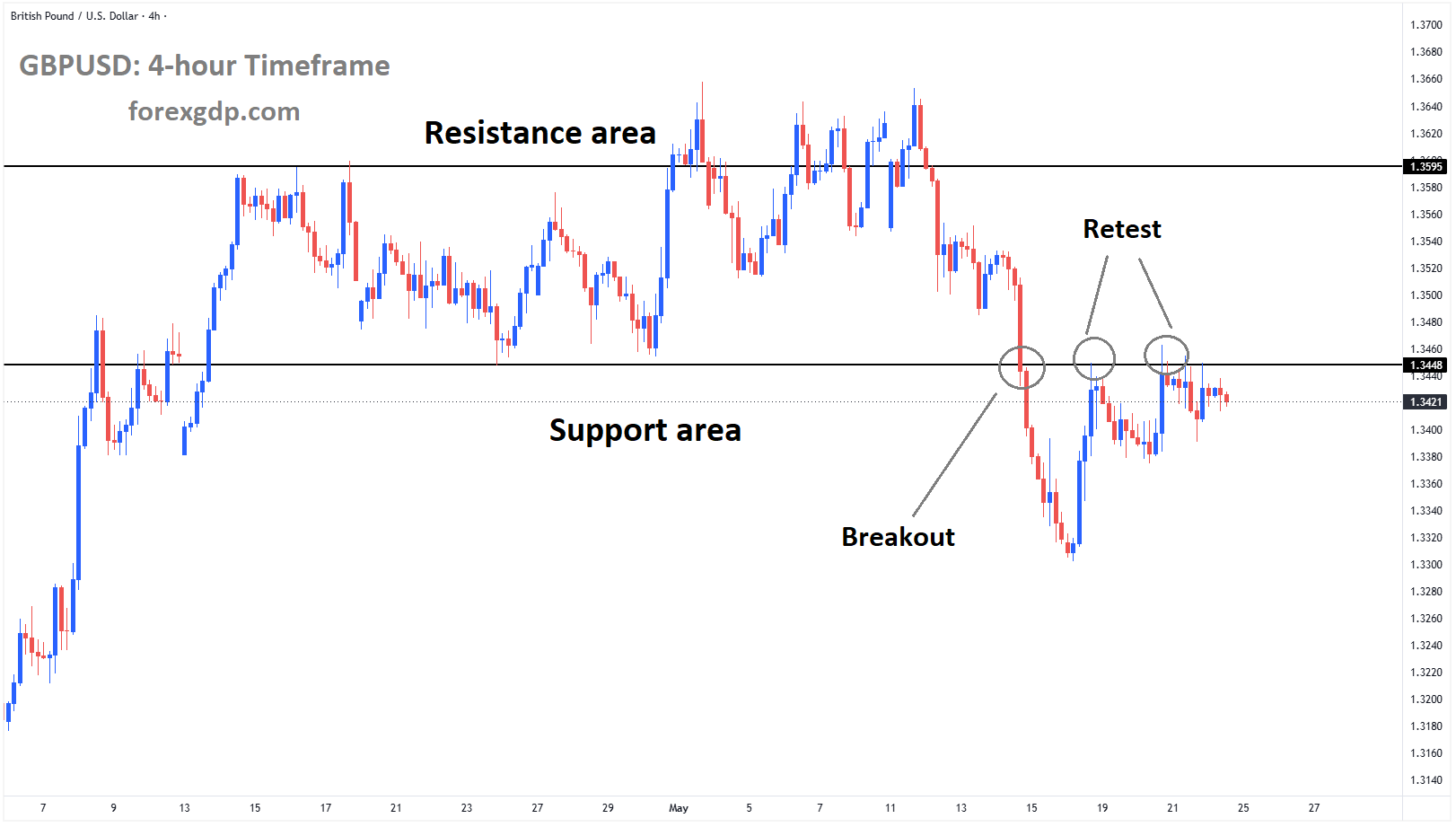
GBPUSD is falling from the retest area, broken box pattern
At the same time, attention in the United States shifted toward political and monetary developments as President Donald Trump prepared to officially swear in Kevin Warsh as the new Chair of the Federal Reserve. The combination of weak UK data and growing focus on the US Federal Reserve helped support the US Dollar while pushing the Pound lower.
UK Retail Sales Decline More Than Expected
Fresh data released by the Office for National Statistics showed that UK Retail Sales dropped sharply in April. Retail Sales fell by 1.3% on a monthly basis, a much steeper decline than economists had predicted.
Markets had expected a smaller fall of around 0.6%, making the actual result a negative surprise for investors. The March figure was also revised higher to show a 0.6% increase, which made April’s drop appear even more significant.
Retail Sales are considered one of the most important indicators of consumer activity because they reflect how much people are spending in shops and online. When spending weakens, it can signal slowing economic growth and rising pressure on households.
The weaker data suggested that British consumers may be becoming more cautious due to ongoing economic uncertainty and higher living costs.
Core Retail Sales Also Miss Expectations
The report also revealed disappointing figures for Core Retail Sales, which exclude auto fuel purchases. This measure is often watched closely because it gives a clearer picture of underlying consumer demand.
Core Retail Sales fell by 0.4% in April compared to the previous month. Analysts had expected a smaller decline of around 0.3%. In March, the same figure had shown a slight increase.
The yearly figures were also weaker than expected. Annual Retail Sales growth came in at 0%, compared to 1.4% previously. Economists had forecast growth of around 1.3%.
These numbers highlighted a slowdown in spending momentum across the UK economy. Many traders interpreted the report as a sign that consumers are becoming more careful with their spending decisions.
British Pound Faces Additional Pressure
The Pound was already struggling before the Retail Sales report because recent economic indicators from the UK have shown signs of weakness.
Earlier data showed UK inflation easing more than expected, reducing pressure on the Bank of England to continue raising interest rates aggressively. At the same time, the unemployment rate unexpectedly climbed to 5.0%, adding to concerns about the health of the labor market.
The combination of slower inflation, rising unemployment, and weaker consumer spending has caused traders to rethink expectations for future Bank of England policy decisions.
Many investors had previously expected the central bank to keep interest rates higher for longer or even raise them further later in the year. However, the latest economic data has reduced confidence in that outlook.
As a result, the British Pound has lost momentum against the US Dollar and other major currencies.
Traders Watch Consumer Sentiment Data in the US
Investors are also focusing on upcoming economic data from the United States. Later on Friday, markets will closely monitor the release of the Michigan Consumer Sentiment Index.
This report measures how confident American consumers feel about the economy and their personal financial situation. Strong consumer confidence can support economic growth because people tend to spend more when they feel optimistic.
If the data comes in stronger than expected, it could provide additional support for the US Dollar. On the other hand, weaker sentiment figures may limit further gains in the currency.
The US economy has remained relatively resilient compared to several other major economies, which has helped maintain demand for the Dollar in recent months.
Kevin Warsh Set to Take Over as Fed Chair
Another major development attracting market attention is the transition at the Federal Reserve.
According to reports from Reuters, President Donald Trump is expected to host a swearing-in ceremony for Kevin Warsh, who has been selected as the new Chair of the Federal Reserve.
Warsh will replace Jerome Powell, whose term officially expired on Friday. Powell will continue serving temporarily until Warsh formally assumes leadership of the central bank.
The appointment is important because investors closely watch any change in Federal Reserve leadership. The Fed plays a central role in setting interest rates and guiding US monetary policy, both of which have a major impact on global financial markets.
Market participants will be looking for clues about how Warsh may approach inflation, interest rates, and economic growth once he takes office.
US Dollar Gains Support From Policy Stability
The US Dollar has remained relatively firm as traders assess the leadership transition at the Federal Reserve. Currency markets generally prefer stability and clear policy direction, especially during periods of economic uncertainty.
Investors are waiting to see whether the new Fed Chair will continue policies similar to those followed under Jerome Powell or introduce a different approach.
Any signals suggesting that US interest rates may stay elevated for longer could continue to support the Dollar. This would make it harder for currencies like the British Pound to recover in the short term.
The Dollar has also benefited from its status as a safe-haven currency during times of uncertainty in global markets.
What Traders Are Watching Next

Currency traders are expected to remain focused on several key factors in the coming days.
In the UK, investors will continue monitoring economic reports for signs of whether consumer spending and labor market conditions improve or weaken further. Any additional soft data could increase pressure on the Pound.
In the United States, attention will remain on Federal Reserve developments and incoming economic indicators. Consumer sentiment, inflation data, and comments from policymakers could all influence the direction of the US Dollar.
The balance between UK economic weakness and US policy expectations is likely to remain a major driver for GBP/USD movements in the near term.
Summary
The GBP/USD pair moved lower after weaker-than-expected UK Retail Sales data increased concerns about the strength of the British economy. Falling consumer spending, softer inflation, and rising unemployment have reduced expectations for further Bank of England tightening, placing pressure on the British Pound.
Meanwhile, the US Dollar gained support as markets focused on the upcoming leadership transition at the Federal Reserve, where Kevin Warsh is set to replace Jerome Powell as Fed Chair. Investors are now watching upcoming US economic data and future Fed policy signals for further direction in the currency markets.
USDJPY Climbs Higher as Weak Japan Inflation Pressures the Yen
The USD/JPY currency pair moved higher during Friday’s early Asian trading session, reaching close to 159.10. The move came after fresh inflation data from Japan showed slower price growth, putting pressure on the Japanese Yen. At the same time, the US Dollar stayed firm as investors continued to react to the latest comments from the Federal Reserve.
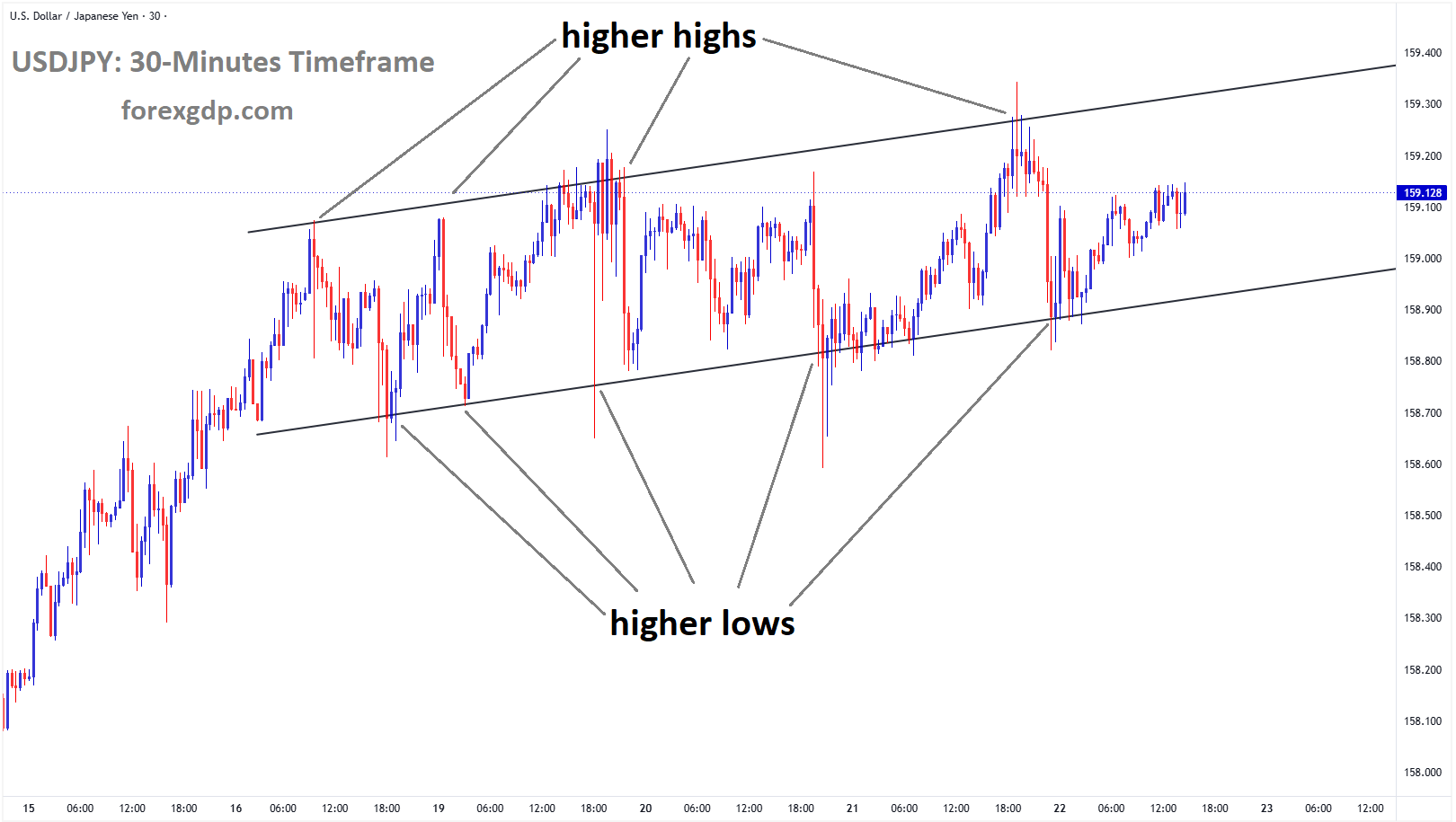
USDJPY is rebounding from the higher low area of the ascending channel
Markets are now watching upcoming US economic reports, especially the Michigan Consumer Sentiment Index, which could influence the next move for the US Dollar.
Japan Inflation Slows Further in April
New data released by Japan’s Statistics Bureau showed that inflation in the country slowed again in April. Japan’s National Consumer Price Index (CPI) increased by 1.4% compared to the same period last year. This was slightly lower than the 1.5% increase recorded in March.
Core inflation, which removes fresh food prices and is closely monitored by the Bank of Japan, also rose by 1.4% year-over-year. This marked the slowest pace of core inflation growth in four years.
The weaker inflation figures immediately affected the Japanese Yen, causing it to lose strength against the US Dollar. Investors often view lower inflation as a sign that central banks may avoid aggressive policy tightening, which can reduce support for a currency.
Why Inflation Matters for the Japanese Yen
Inflation is one of the key factors guiding the Bank of Japan’s monetary policy decisions. For years, Japan struggled with low inflation and weak consumer spending. Recently, the central bank started shifting away from its ultra-loose monetary policy as inflation moved closer to its target.
However, the latest data suggests that inflation pressure may not be strong enough yet to support a rapid tightening cycle.
Still, many analysts believe inflation in Japan could rise again in the coming months. Several global factors continue to increase costs for businesses and consumers.
Rising Oil Prices Add Pressure
Higher energy prices remain one of the biggest concerns for Japan’s economy. Since Japan imports much of its energy supply, rising oil costs can quickly increase transportation and production expenses across many industries.
As companies face higher operating costs, they may pass those expenses on to consumers through higher prices.
Supply Chain Disruptions Continue
Geopolitical tensions in the Middle East are also creating supply chain problems. Shipping delays and increased transportation costs are affecting global trade, including Japanese imports.
Because of these disruptions, businesses in Japan may continue raising prices on everyday goods, potentially pushing inflation higher later this year.
Bank of Japan Expected to Raise Rates Again
Despite the softer inflation report, many market participants still expect the Bank of Japan to continue adjusting its monetary policy.
The central bank is widely expected to raise its short-term policy rate at its June meeting. Analysts believe the rate could move from 0.75% to 1.0% as officials attempt to normalize policy after years of extremely low interest rates.
The Bank of Japan is carefully studying economic data before making its next decision. Inflation, wage growth, consumer spending, and global economic risks will all play important roles in shaping policy.
A rate increase could provide some future support for the Japanese Yen, although traders remain cautious due to uncertainty surrounding inflation trends.
Federal Reserve Maintains a Hawkish Tone
While Japan’s inflation data weakened the Yen, the US Dollar continued receiving support from the Federal Reserve’s latest policy signals.
Minutes from the Federal Open Market Committee (FOMC) meeting released earlier this week showed that many Fed officials remain worried about inflation in the United States.
According to the meeting notes, several policymakers believe interest rates may need to stay high for longer. Some officials even suggested that another rate hike could become necessary if inflation does not move closer to the Fed’s 2% target.
This hawkish stance helped strengthen the US Dollar against major global currencies, including the Japanese Yen.
Concerns Over Global Inflation Remain
Federal Reserve officials also expressed concerns about growing inflationary risks linked to geopolitical tensions, especially the ongoing conflict involving Iran.
Wars and international conflicts often affect global energy markets, trade routes, and commodity supplies. These disruptions can increase costs for businesses worldwide, creating additional inflation pressure.
As a result, investors are becoming more cautious about the possibility of inflation staying elevated for longer than expected.
This environment tends to favor the US Dollar because higher interest rates in the United States can attract global investors seeking stronger returns.
Traders Focus on Upcoming US Data
Market attention is now turning toward the release of the US Michigan Consumer Sentiment Index. The report measures consumer confidence and provides insight into household spending trends and economic expectations.
Strong consumer confidence could further support the US Dollar by reinforcing expectations that the US economy remains resilient despite higher interest rates.
On the other hand, weaker data could reduce some of the recent momentum behind the Dollar.
Currency traders are expected to closely monitor both economic data and comments from central bank officials in the coming days.
USD/JPY Outlook Remains Sensitive to Central Banks
The USD/JPY pair remains highly influenced by the policy direction of both the Federal Reserve and the Bank of Japan.
The Fed’s commitment to controlling inflation through higher interest rates continues supporting the US Dollar. Meanwhile, uncertainty surrounding Japan’s inflation outlook is limiting strength in the Japanese Yen.
If the Bank of Japan signals more aggressive tightening in future meetings, the Yen could recover some ground. However, if inflation continues slowing, pressure on the currency may remain.
At the same time, any signs that US inflation is cooling could weaken expectations for further Federal Reserve tightening, potentially affecting the Dollar’s recent gains.
Final Summary
USD/JPY climbed near 159.10 after weaker inflation data from Japan reduced support for the Japanese Yen. Japan’s core inflation slowed to its weakest pace in four years, raising questions about the speed of future Bank of Japan policy changes.
Meanwhile, the US Dollar stayed strong after Federal Reserve officials signaled that interest rates may need to remain elevated if inflation continues above target. Ongoing geopolitical tensions and rising energy costs are also keeping global inflation concerns alive.
Investors are now waiting for fresh US economic data and further signals from central banks to better understand the next direction for the currency markets.
AUDUSD under pressure as weak labor data cools expectations of RBA tightening
The Australian Dollar moved lower against the US Dollar during Friday’s Asian trading session, with the AUD/USD pair falling near the 0.7140 level. The decline came after disappointing employment figures from Australia raised concerns about the country’s economic momentum and reduced expectations for further interest rate increases from the Reserve Bank of Australia (RBA).
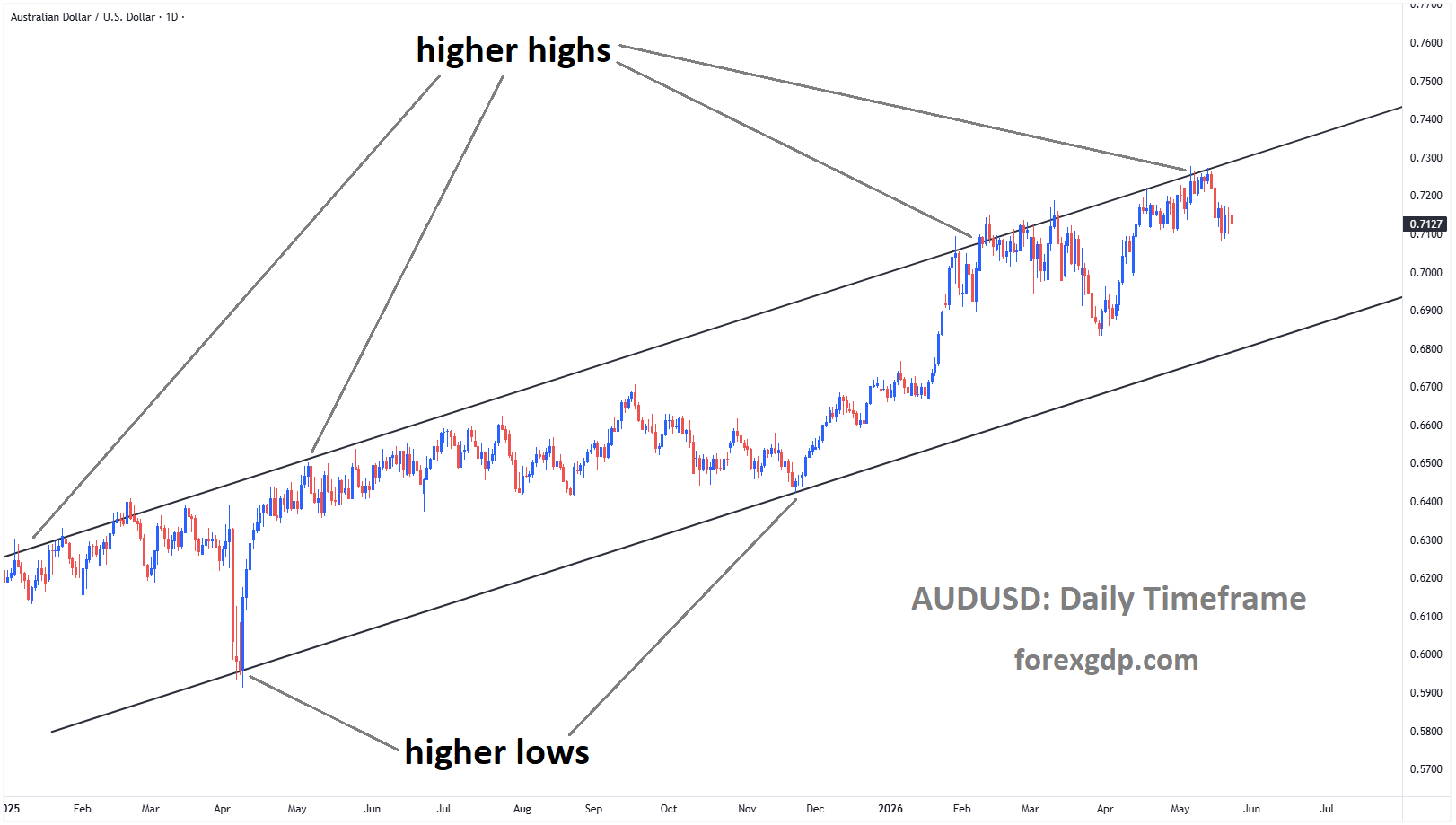
AUDUSD is falling from the higher high area of the ascending channel
At the same time, global investors continued to watch developments in the Middle East, especially ongoing discussions surrounding a possible peace agreement between the United States and Iran. These geopolitical developments are also influencing currency market sentiment and keeping traders cautious.
Australian Unemployment Rate Reaches Highest Level Since 2021
Australia’s latest labor market data became the main reason behind the Australian Dollar’s weakness. The country’s unemployment rate climbed to 4.5% in April, marking its highest level in nearly four and a half years.
The increase surprised many market participants, as economists had expected the labor market to remain more stable. A rising unemployment rate is often viewed as a sign that economic activity may be slowing down. When fewer people are employed, consumer spending can weaken, which may eventually impact overall economic growth.
For the Reserve Bank of Australia, this latest data adds another reason to remain cautious about tightening monetary policy further. Central banks usually raise interest rates when inflation remains too high or when economic growth is strong. However, softer employment conditions can reduce the need for additional rate hikes because policymakers may want to avoid putting more pressure on businesses and households.
As a result, financial markets quickly adjusted their expectations for future RBA decisions. The possibility of another interest rate increase at the bank’s June meeting dropped sharply after the employment report was released.
Markets Scale Back Expectations for RBA Rate Hikes
Before the unemployment figures were published, some traders still believed there was a chance that the RBA could raise interest rates again later this year. However, the latest labor market numbers changed that outlook significantly.
Interest rate swaps showed that investors now see only a very small chance of another rate hike at the upcoming June meeting. This shift reflects growing confidence that the central bank may prefer to pause and observe how the economy develops over the next few months.
The RBA has already maintained a careful approach in recent meetings, balancing concerns over inflation with signs that economic growth is slowing. The latest rise in unemployment may strengthen the argument for keeping rates unchanged for a longer period.
A softer outlook for interest rates generally weakens a currency because higher interest rates tend to attract foreign investment. When expectations for future rate increases decline, investor demand for that currency can also fall.
US Dollar Holds Firm Ahead of Consumer Sentiment Data

While the Australian Dollar faced pressure from domestic economic data, the US Dollar remained relatively steady ahead of the release of the Michigan Consumer Sentiment Index later on Friday.
This report is closely followed because it offers insight into how American consumers feel about the economy, inflation, and future financial conditions. Consumer confidence plays an important role in economic activity because stronger sentiment can support spending and growth.
If the report shows that American consumers remain optimistic, the US Dollar could receive additional support. On the other hand, weaker sentiment data may create some pressure on the greenback.
For now, investors appear cautious as they wait for more economic signals from the United States.
Middle East Developments Continue to Influence Markets
Beyond economic data, geopolitical developments remain another important factor affecting global financial markets. Traders are closely monitoring efforts to secure a possible agreement between the United States and Iran aimed at reducing tensions in the Middle East.
Iranian officials stated on Thursday that no final agreement has yet been reached with the United States. However, they noted that progress has been made and differences between both sides have narrowed.
Despite these positive signs, several major issues still remain unresolved. Iranian Supreme Leader Mojtaba Khamenei reportedly emphasized that uranium enrichment and Tehran’s control over the Strait of Hormuz continue to be major sticking points in negotiations.
The Strait of Hormuz is one of the world’s most important oil shipping routes. Any tensions involving this region can influence global energy markets and investor sentiment. Because of this, traders remain highly sensitive to any headlines related to the negotiations.
US Officials Remain Cautiously Optimistic
US Secretary of State Marco Rubio also commented on the ongoing discussions, saying there are “some good signs” that progress is being made toward ending the conflict. However, he warned against becoming overly optimistic too early.
His comments reflected the broader mood in financial markets, where investors are hopeful about diplomatic progress but remain aware that negotiations can still face unexpected obstacles.
Geopolitical uncertainty often affects demand for safe-haven assets such as the US Dollar. During periods of uncertainty, investors tend to move money into assets that are viewed as more stable. This dynamic can support the US Dollar while putting pressure on currencies considered more sensitive to global risk sentiment, including the Australian Dollar.
Investors Remain Focused on Economic and Political Signals
The AUD/USD pair is currently being influenced by a combination of domestic economic weakness in Australia and broader global uncertainty. Rising unemployment in Australia has weakened expectations for further monetary tightening from the RBA, reducing support for the Australian Dollar.
At the same time, uncertainty surrounding Middle East negotiations continues to shape market sentiment and support cautious trading behavior. Investors are now waiting for fresh economic data from the United States and further geopolitical updates that could influence currency movements in the coming days.
Summary
The Australian Dollar weakened against the US Dollar after Australia reported a higher-than-expected unemployment rate, raising doubts about future interest rate hikes from the Reserve Bank of Australia. Financial markets have sharply reduced expectations for additional policy tightening, putting pressure on the AUD/USD pair.
Meanwhile, global investors continue to monitor developments in the Middle East, especially negotiations between the United States and Iran. Although both sides have signaled progress, important disagreements still remain unresolved. Alongside upcoming US economic data, these geopolitical developments are likely to remain key drivers for currency markets in the near term.
NZDUSD Dips as Safe-Haven Demand Rises During US-Iran Negotiations
The NZD/USD currency pair moved slightly lower during Friday’s early European trading session, drifting close to the 0.5870 level. The New Zealand Dollar, often called the Kiwi, faced pressure as investors turned toward the US Dollar for safety amid growing uncertainty in global markets.
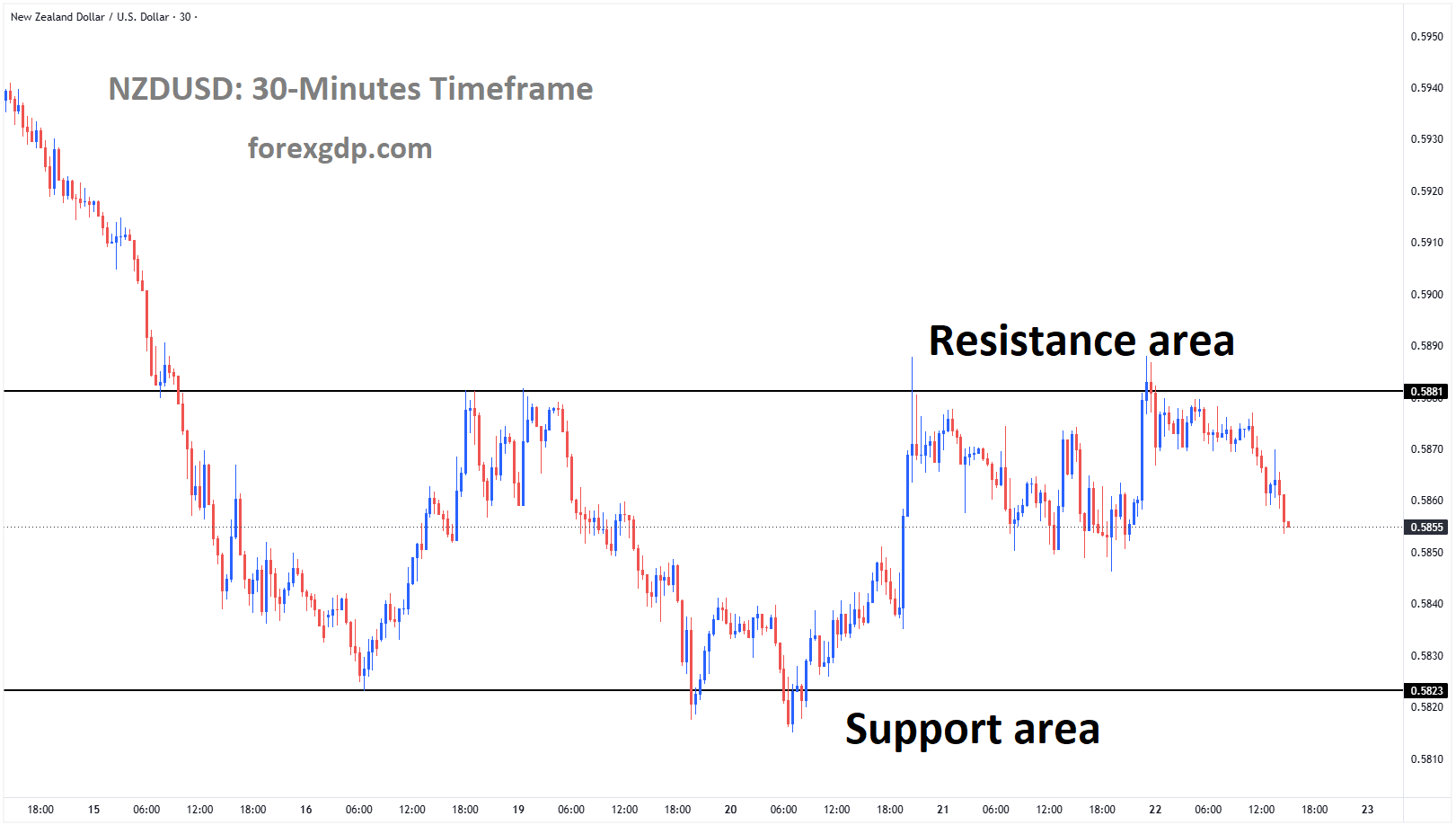
NZDUSD is moving in a box pattern, and the market has fallen from the resistance area of the pattern
Ongoing tensions in the Middle East and uncertainty surrounding talks between the United States and Iran continue to influence investor sentiment. At the same time, expectations surrounding interest rate decisions from both the US Federal Reserve and the Reserve Bank of New Zealand are also shaping market direction.
Middle East Tensions Keep Investors Cautious
One of the key reasons behind the weaker New Zealand Dollar is the rising demand for the US Dollar as a safe-haven asset. Investors usually move toward safer currencies during periods of geopolitical instability, and the current situation involving the US and Iran is increasing market caution.
Talks between Washington and Tehran are still underway, with both countries reportedly exchanging messages and draft proposals in an effort to create a formal agreement that could help reduce tensions. Pakistan has also played a role in helping mediate discussions between the two sides.
Even though negotiations are continuing, major disagreements remain unresolved. Iranian officials recently stated that no final agreement has been reached with the United States, although they admitted that differences between the two sides have become smaller.
Key Issues Still Unresolved
Several important topics continue to prevent a breakthrough in negotiations. According to reports, Iran’s uranium enrichment program remains one of the biggest obstacles in the talks. Another sensitive issue is Tehran’s position regarding control over the Strait of Hormuz, a strategically important route for global oil shipments.
Because these issues remain unsettled, financial markets continue to react cautiously. Investors are worried that any failure in negotiations could increase tensions further, potentially affecting global energy supplies and economic stability.
This uncertainty has helped strengthen the US Dollar while putting pressure on risk-sensitive currencies such as the New Zealand Dollar.
Federal Reserve Expectations Support the US Dollar
Another factor boosting the Greenback is growing belief that the US Federal Reserve may keep interest rates elevated for a longer period.
Recent inflation data from the United States has shown that price pressures are not easing as quickly as many policymakers had hoped. Persistent inflation increases the possibility that the Federal Reserve may delay rate cuts or even consider additional increases if inflation remains high.
Higher interest rates generally support the US Dollar because they can attract foreign investment into US financial markets. Investors often seek higher returns, and elevated US interest rates make dollar-based assets more attractive.
Market expectations currently suggest there is still a notable possibility of another rate increase before the end of the year. This outlook continues to provide strength to the US Dollar against many global currencies, including the Kiwi.
RBNZ Expected to Keep Rates Unchanged
Attention is also turning toward the Reserve Bank of New Zealand, which is scheduled to announce its latest monetary policy decision next week.
Economists widely expect the central bank to keep its official cash rate unchanged at 2.25%. Policymakers are likely to remain cautious as they monitor inflation trends and broader economic conditions.
However, expectations for future rate increases in New Zealand are slowly growing. A recent Reuters poll showed that a slim majority of economists now believe the RBNZ could deliver one or more additional rate hikes before the end of September.
Rising Energy Costs Could Increase Inflation
One reason behind these expectations is concern over higher global energy prices. If energy costs continue rising due to geopolitical tensions or supply disruptions, inflation in New Zealand could remain elevated for longer than expected.
Central banks usually respond to stubborn inflation by maintaining tighter monetary policy. This means keeping borrowing costs higher to slow spending and reduce price pressures.
As a result, some analysts believe the Reserve Bank of New Zealand may eventually need to tighten policy further if inflation risks increase.
Still, for now, the stronger US Dollar and cautious global market mood are having a larger impact on the NZD/USD pair.
Investors Focus on Upcoming Economic Signals

Financial markets are now closely watching several important developments that could influence the next move in the NZD/USD exchange rate.
Investors will continue monitoring updates related to US-Iran negotiations, as any signs of progress or setbacks could quickly affect risk sentiment. A successful agreement could reduce demand for safe-haven assets, while further tensions could strengthen the US Dollar even more.
At the same time, upcoming comments from Federal Reserve officials and future US inflation reports will remain critical for understanding the direction of US interest rates.
In New Zealand, traders are waiting for the Reserve Bank’s policy statement and economic outlook. Any unexpected changes in tone from the central bank could influence expectations for future rate decisions and impact the Kiwi.
Market Sentiment Remains Fragile
The broader market environment remains uncertain, with investors balancing geopolitical risks, inflation concerns, and central bank policy expectations all at once.
Risk-sensitive currencies like the New Zealand Dollar often struggle during periods of uncertainty because traders prefer safer investments. On the other hand, the US Dollar tends to benefit from global caution due to its status as the world’s primary reserve currency.
Unless there is a significant improvement in geopolitical conditions or a shift in central bank expectations, the NZD/USD pair may continue facing pressure in the near term.
Final Summary
The NZD/USD pair edged lower as investors favored the US Dollar amid ongoing uncertainty surrounding US-Iran negotiations and broader geopolitical tensions. Concerns about persistent US inflation and the possibility of higher Federal Reserve interest rates also added support to the Greenback.
Meanwhile, the Reserve Bank of New Zealand is expected to leave rates unchanged at its upcoming meeting, although some economists believe further hikes may still happen later this year if inflation risks rise.
With markets remaining highly sensitive to geopolitical developments and central bank signals, traders are likely to stay cautious in the days ahead.
Don’t trade all the time, trade forex only at the confirmed trade setups
Get more confirmed trade signals at premium or supreme – Click here to get more signals, 2200%, 800% growth in Real Live USD trading account of our users – click here to see , or If you want to get FREE Trial signals, You can Join FREE Signals Now!