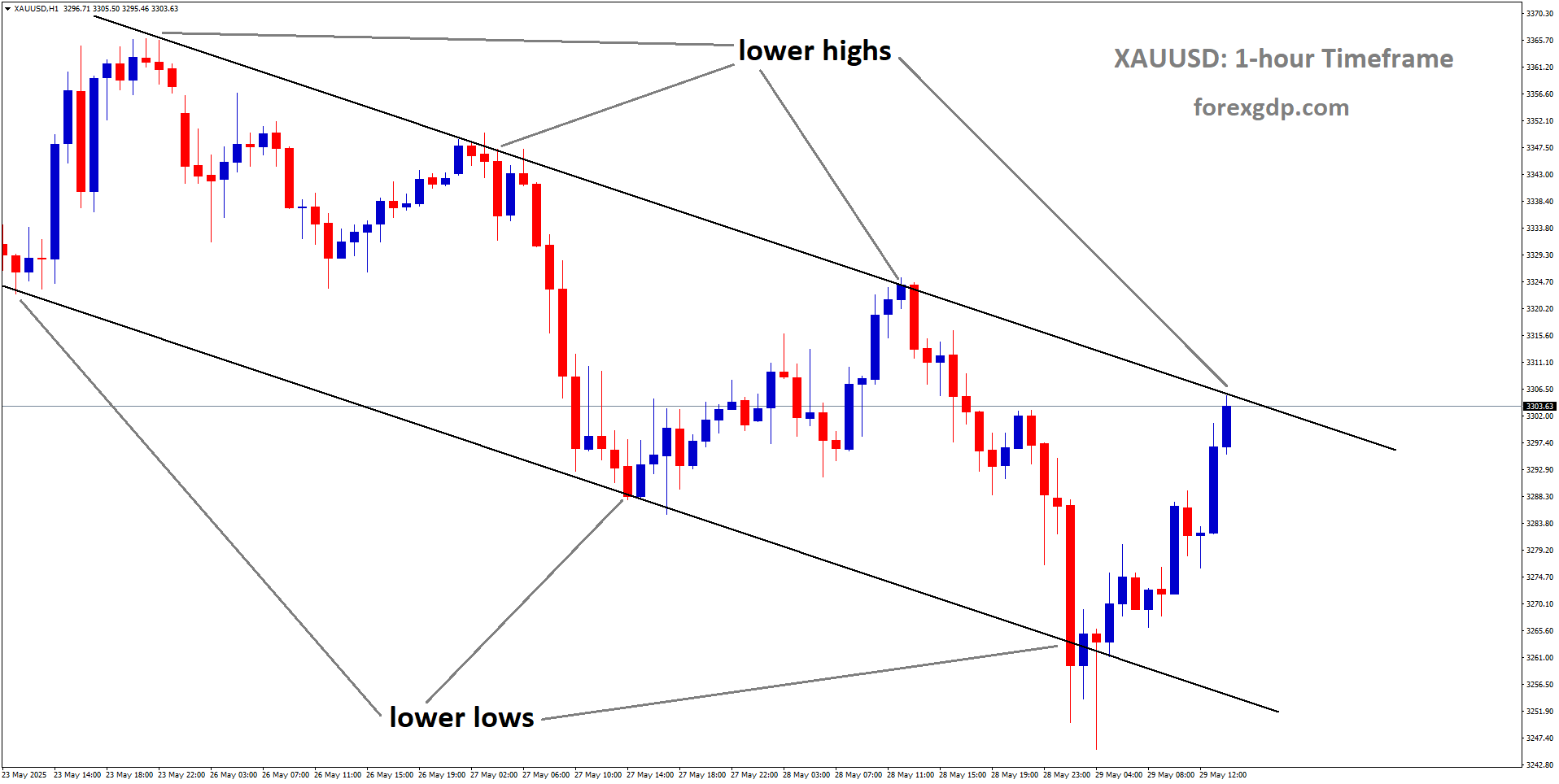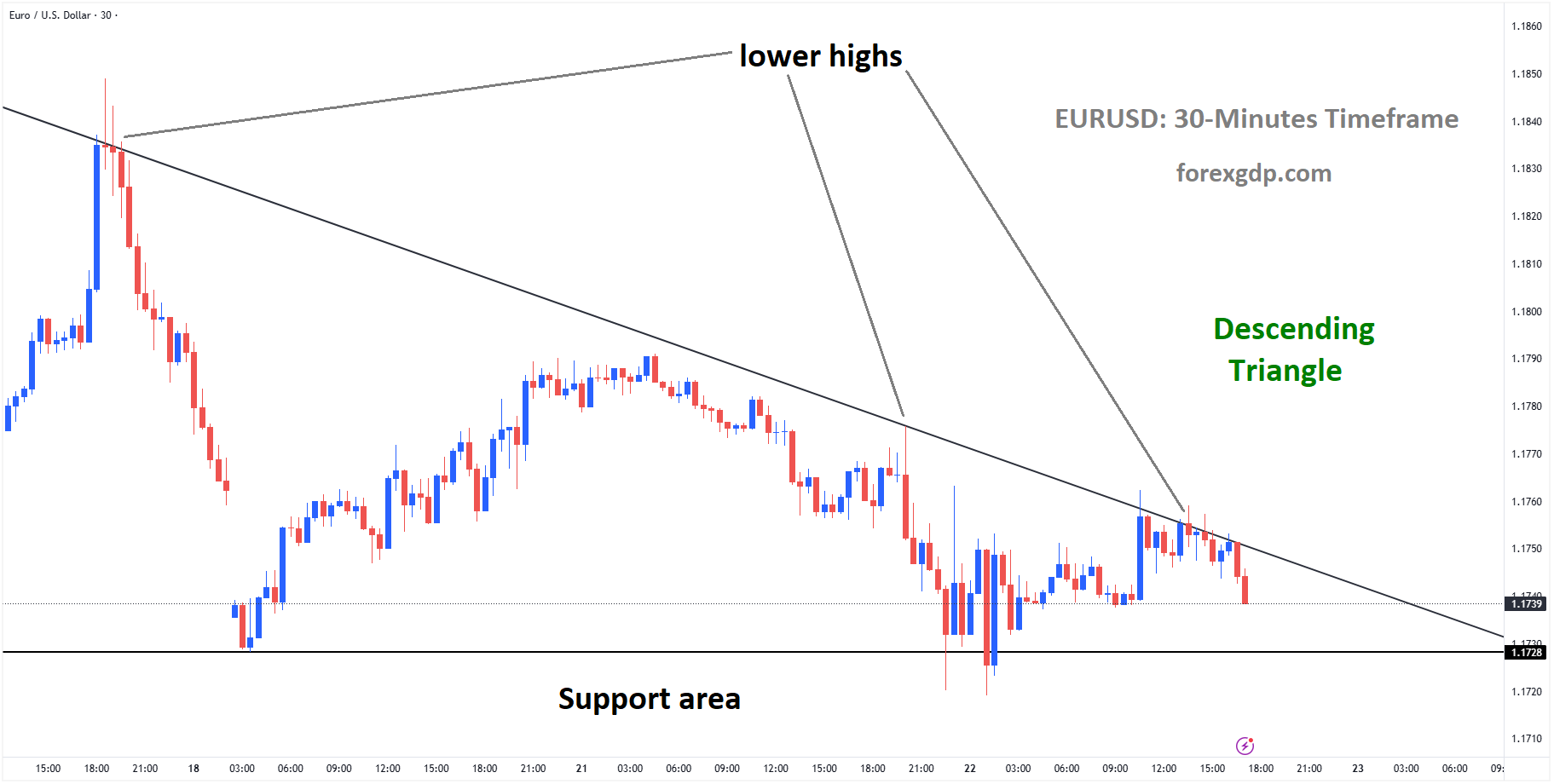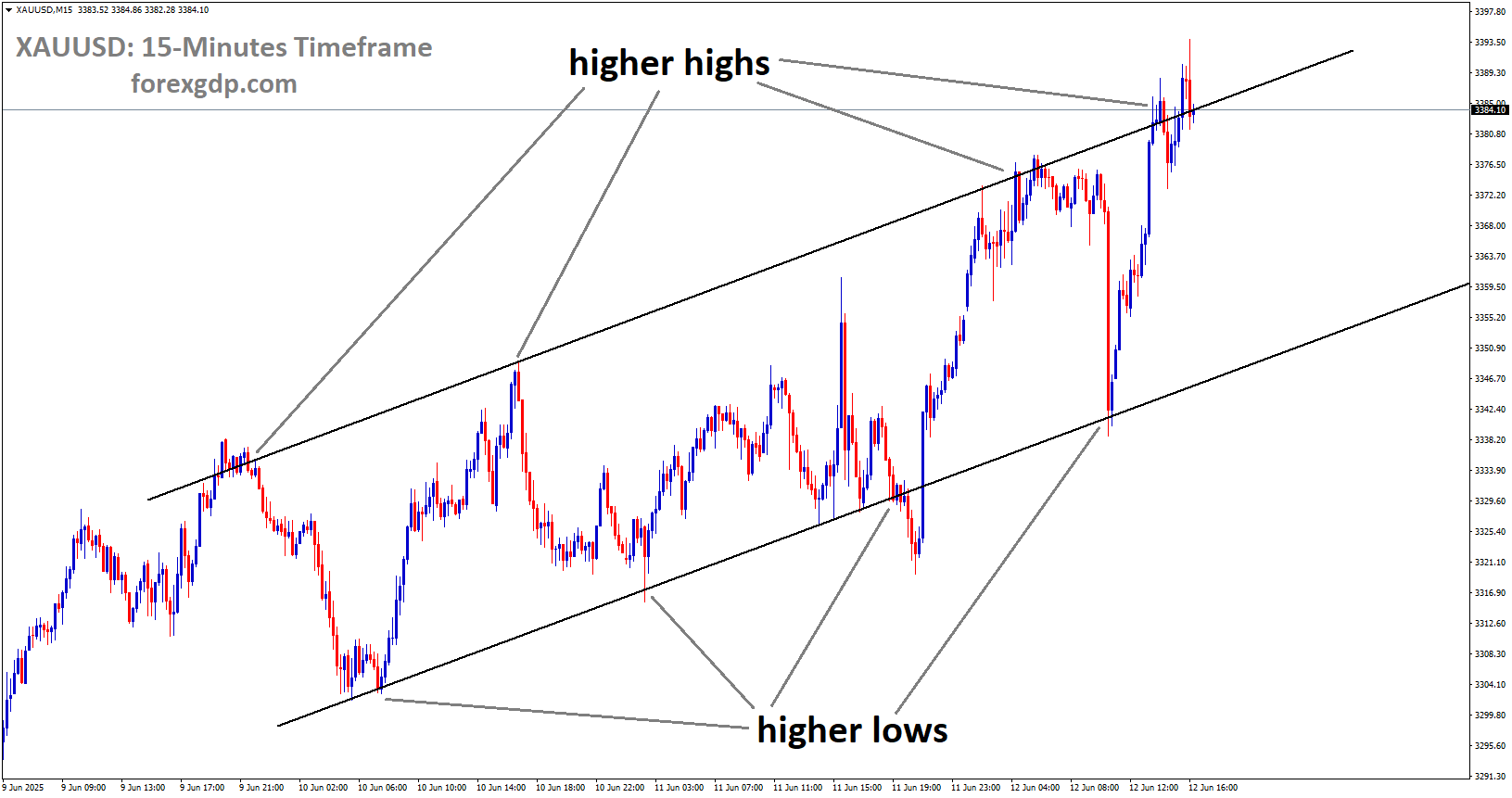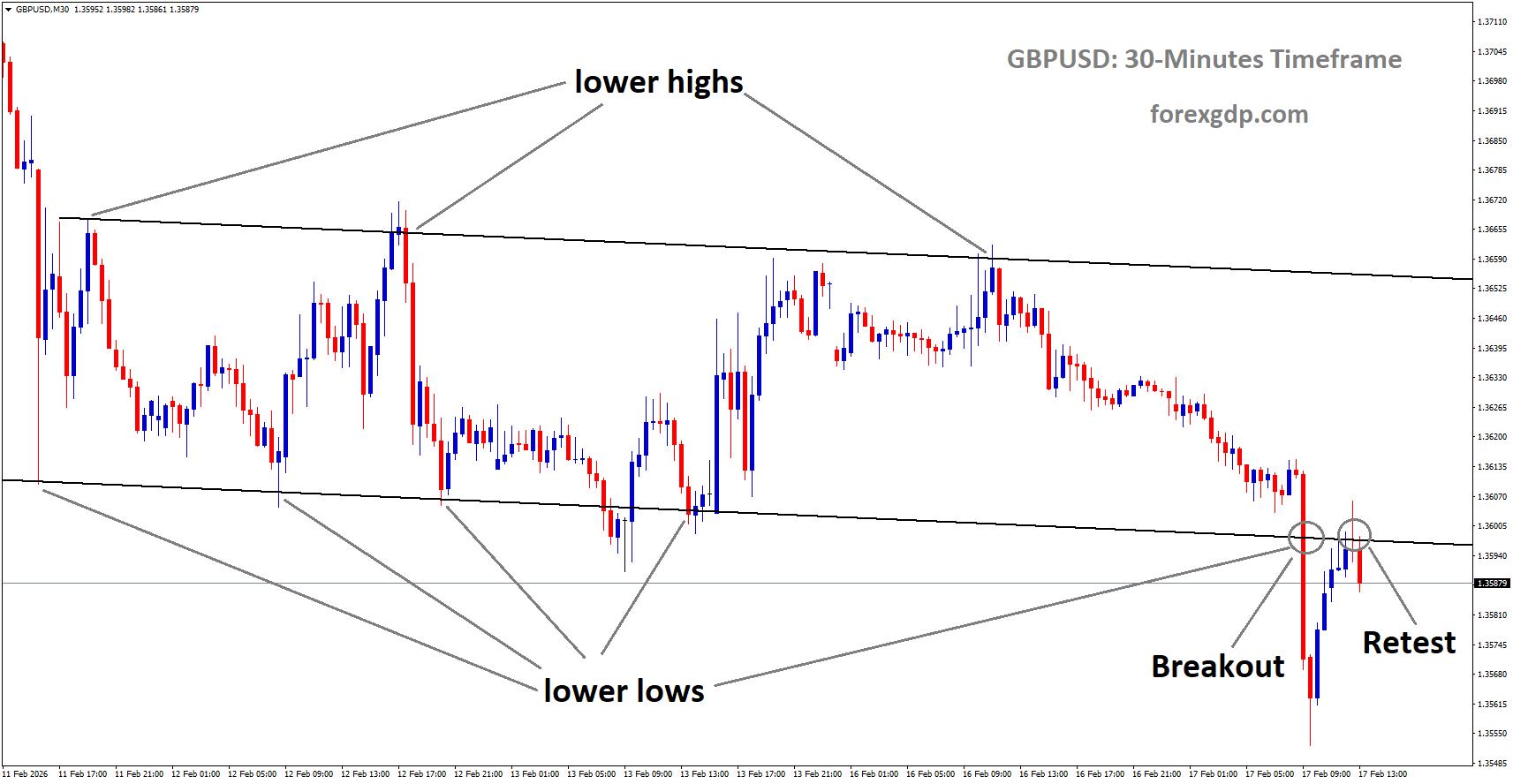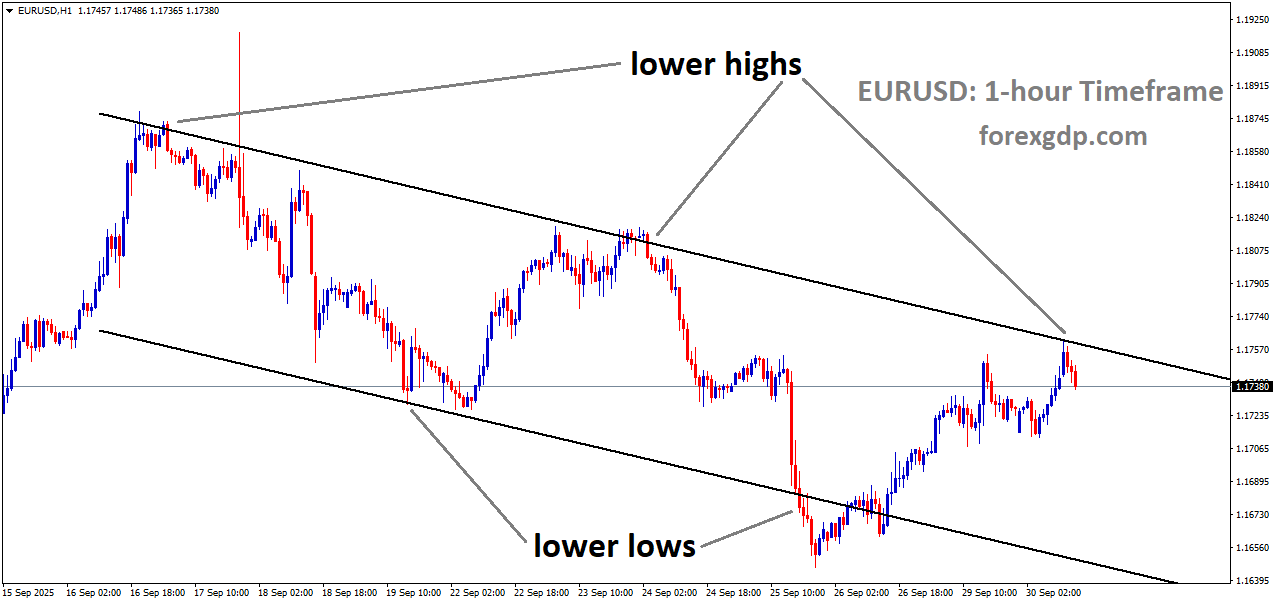
EURUSD is moving in a downtrend channel, and the market has fallen from the lower high area of the channel
EURUSD Flatlines as Investors Juggle Shutdown Uncertainty and Tariff Shockwaves
The foreign exchange market has been unusually quiet, but behind that calm surface, there’s a lot going on. The Euro has been moving sideways, unable to find strong upward momentum, while the US Dollar remains weighed down by uncertainty. Traders, investors, and even regular observers of global news are paying close attention to developments that could shake things up. Let’s break it all down in simple terms so you can understand what’s really happening with the Euro and Dollar right now.
Why the US Government Shutdown Matters to the Dollar
One of the biggest factors keeping the Dollar under pressure is the looming possibility of a US government shutdown.
When a shutdown happens, most government offices close their doors, and important reports that guide economic decisions get delayed. For example, job market data like the Nonfarm Payrolls report, which usually gives insight into how strong the US economy is, won’t be published on time. That makes investors nervous, and nervous investors often shy away from the Dollar.
Earlier this week, a meeting between President Donald Trump and congressional leaders ended without a breakthrough. Even Vice President JD Vance admitted that a shutdown was practically unavoidable. This type of political standoff doesn’t just create headlines; it influences markets worldwide. If the government closes, growth takes a hit, and confidence in the US Dollar suffers.
New Tariffs Stir Up More Uncertainty
As if the shutdown wasn’t enough, fresh trade tensions have re-entered the picture.
President Trump announced new tariffs targeting a range of imported goods. Softwood will face a 10% tariff, while items like kitchen cabinets, vanities, and upholstered foreign furniture will be hit with a hefty 25% levy. These measures add to earlier tariffs placed on trucks and certain pharmaceuticals.
So, what does this mean? Tariffs usually make imported goods more expensive, and while that might sound good for local producers, it tends to disrupt global trade flows. Whenever trade barriers rise, investors worry about slower growth, and that sense of uncertainty spills into the currency markets. Right now, that nervousness is limiting the appetite for risky assets, including the Euro.
Eurozone’s Economic Struggles Continue
While the US Dollar has its own set of problems, the Euro isn’t exactly shining either. Economic data out of Europe has been disappointing, particularly from Germany, the region’s largest economy.
-
German Retail Sales fell for the second month in a row, signaling that consumers are pulling back on spending.
-
Import Prices also dropped more than expected, pointing to weaker demand and softer inflationary pressures.
-
Consumer Confidence across the Eurozone improved slightly but still remains deeply negative.
In addition, the Services Sentiment index slipped, while industrial outlooks remain weak. None of these readings inspire confidence in the Eurozone’s economic recovery. With sluggish numbers like these, the European Central Bank (ECB) has fewer reasons to tighten its policies aggressively, and that tends to limit support for the Euro.

What’s Next for the Eurozone?
Markets are now looking ahead to fresh German inflation data and remarks from ECB President Christine Lagarde. Any sign of higher inflation could strengthen the Euro by hinting at tougher monetary policy. But if the numbers stay weak, the single currency may continue to drift without clear direction.
The Bigger Picture: Why Traders Feel Stuck
At the moment, both the Euro and the Dollar are facing their own struggles. On the one hand, the US Dollar is pressured by political drama and trade war risks. On the other, the Euro is trapped by disappointing data and slow economic recovery in its own region.
That’s why the EUR/USD pair hasn’t been making any major moves. Traders are caught between two weak narratives, waiting for a clearer signal. Some are watching closely for the US JOLTS Job Openings report and consumer confidence data. Others are holding out for inflation numbers from Europe. Until then, the market seems content to sit tight.
Why This Matters to Everyday People
It’s easy to think of currency fluctuations as something only traders worry about, but they touch everyday life too. Exchange rates influence travel costs, the price of imported goods, and even investment opportunities. When uncertainty dominates the currency market, it reflects the bigger economic picture—political risks, trade disputes, and growth worries.
Final Summary
The Euro and US Dollar are locked in a tug-of-war, each weighed down by their own challenges. The US faces a potential government shutdown and rising trade tensions, while Europe continues to battle weak economic data, particularly from Germany. With neither side showing real strength, the EUR/USD pair is stuck in a holding pattern.
Looking ahead, key economic reports and political developments will likely set the stage for the next big move. Until then, the atmosphere in the market remains cautious, and investors are bracing for more twists in the ongoing global financial drama.
GBPUSD Strengthens with Dollar Under Pressure from Political Gridlock
The global currency market never fails to keep traders and investors on their toes. This week, the spotlight is firmly on the Pound Sterling’s performance against the US Dollar. While the British currency has shown surprising strength, the factors driving this movement go far beyond simple market mechanics. From political deadlock in Washington to policy debates in London, let’s take a deep dive into why the GBP/USD pair is moving the way it is.

GBPUSD is moving in an Ascending Triangle pattern, and the market has rebounded from the higher low area of the pattern
Political Turmoil in the US: Government Shutdown Looms
One of the biggest reasons behind the Pound Sterling’s recent climb is the uncertainty hanging over the US government’s funding crisis. In Washington, lawmakers are clashing over a stopgap funding bill to prevent a shutdown. Republicans and Democrats remain at odds, with healthcare spending at the center of the dispute.
Vice President JD Vance highlighted the possibility of a shutdown, warning that Democrats are unwilling to compromise on budget issues. This political tension has sent shockwaves through financial markets, as a government shutdown could delay critical economic data releases and disrupt investor sentiment.
Why Does This Matter for the Dollar?
The US Dollar thrives when markets feel confident. However, political standoffs like these usually shake that confidence, making investors hesitant to hold onto the greenback. As a result, other currencies, such as the Pound Sterling, benefit when the Dollar weakens.
Adding to the concerns, the Labour and Commerce Departments in the US warned that a shutdown could halt the publication of crucial economic data, such as employment reports. Without these indicators, both policymakers and investors would be navigating in the dark, further reducing confidence in the Dollar.
The Bank of England’s Policy Shift: A Mixed Bag for the Pound
While US politics are boosting the Pound, developments in the UK are a little more complex. Recently, Dave Ramsden, Deputy Governor at the Bank of England (BoE), made headlines by suggesting that interest rate cuts could be on the table to support the weakening job market.
During a panel organized by the European Central Bank, Ramsden argued that wage growth is beginning to normalize and that the labor market is loosening. This, in his view, supports the broader disinflation process and could justify a softer monetary policy stance.
Impact on the Pound Sterling
Normally, the mere mention of interest rate cuts would weigh heavily on a currency, as lower rates typically mean reduced returns for investors. However, the current scenario is more nuanced. On one hand, Ramsden’s dovish stance does make the Pound less attractive compared to currencies backed by higher interest rates. On the other hand, the UK economy has been performing slightly better than expected, which cushions the blow.
For example, the latest Gross Domestic Product (GDP) figures for Q2 showed annual growth of 1.4%, stronger than earlier estimates. This indicates that while challenges remain, the UK economy isn’t slowing down as sharply as feared. This resilience provides some support for the Pound, even amid discussions of rate cuts.

Global Investors Watching Data Releases Closely
As with most currency moves, the next steps for GBP/USD will likely depend on upcoming data. In the US, all eyes are on the Job Openings and Labor Turnover Survey (JOLTS) report. This data is a key indicator of labor demand and provides insights into how confident employers are about the future.
If job openings remain steady, it could calm some fears about the US economy slowing too quickly. On the flip side, weaker data might reinforce expectations that the Federal Reserve will adopt a more cautious approach moving forward, keeping pressure on the Dollar.
What This Means for Traders and Everyday Observers
The interplay between politics in the US and monetary policy in the UK is creating a unique environment for the Pound-Dollar pair. Let’s break it down:
-
Short-Term Boost for the Pound: With US lawmakers struggling to find common ground, the Dollar is vulnerable, giving the Pound room to rise.
-
Long-Term Uncertainty in the UK: While GDP growth has surprised on the upside, signals from the BoE about potential rate cuts could create downward pressure on the Pound in the coming months.
-
Market Sensitivity to Data: Both currencies are highly reactive to upcoming data releases, meaning volatility is likely to remain high.
Why Regular People Should Care
It’s easy to think of currency movements as only relevant for traders or investors. But in reality, they affect many aspects of everyday life. For instance, exchange rates impact travel costs, international business, and even the price of imported goods. If you’re planning a trip abroad or rely on imported products, these shifts in the Pound and Dollar can directly influence your wallet.

GBPUSD is moving in an uptrend channel, and the market has rebounded from the higher low area of the channel
The Bigger Picture: Confidence and Stability Drive Markets
At its core, the story of the Pound versus the Dollar right now is about confidence. Investors and businesses seek stability, and when one currency is clouded by uncertainty, the other often benefits. The US faces a test of political unity, while the UK navigates economic policy adjustments. Both sides are walking a tightrope, and global markets are reacting in real time.
Final Summary
The Pound Sterling’s recent rise against the US Dollar is fueled by a combination of American political gridlock and cautious policymaking from the Bank of England. The looming US government shutdown undermines confidence in the Dollar, while better-than-expected UK growth numbers lend some support to the Pound. However, dovish comments from BoE officials remind us that challenges remain for the British economy.
For now, the GBP/USD pair will continue to be shaped by the tug-of-war between US political uncertainty and UK economic resilience. Traders, businesses, and even everyday consumers should keep a close watch, because the ripple effects of these developments extend far beyond the trading floor.
USDJPY Struggles to Hold Ground While Yen Gains Momentum
The Japanese Yen (JPY) has always held a special place in global finance. Often seen as a safe-haven currency, its movement reflects not only Japan’s economic health but also wider global market conditions. Recently, the Yen has been gaining strength, and many traders and investors are keeping a close eye on its performance. Let’s break down what’s happening, why it matters, and how global events are shaping the currency’s future.

USDJPY reached the retest area of the broken downtrend channel
The Bank of Japan’s Role in Shaping the Yen
When it comes to the Japanese Yen, the Bank of Japan (BoJ) is always at the center of the story. The central bank sets the tone for monetary policy, which in turn affects how investors view the Yen.
Policy Shifts and Market Expectations
The BoJ recently released its Summary of Opinions, which showed a clear divide within the bank. On one side, some policymakers are urging a quicker move toward policy normalization. On the other side, dovish voices remain cautious, pointing to uncertainty about inflation and global risks.
This tension highlights an important fact: markets believe the BoJ is moving closer to a more hawkish stance, even if slowly. For investors, this suggests that the Yen could continue strengthening, especially if the BoJ signals higher confidence in Japan’s economic outlook.
Safe-Haven Appeal
Beyond policy, the Yen has a reputation as a safe-haven asset. Whenever global uncertainty rises—whether due to politics, trade disputes, or financial instability—investors often move into the Yen. Right now, with geopolitical tensions and worries about U.S. government finances, the demand for Yen is rising again.
Economic Data and What It Tells Us
Japan’s recent economic figures haven’t painted the rosiest picture, yet they still play a big role in shaping currency flows.
Retail Sales and Consumer Spending
Retail Sales in Japan recently showed a decline compared to last year. It was the first drop since early 2022 and the biggest fall since 2021. This signals that consumer demand may be cooling, which can slow down economic recovery.

Industrial Production Struggles
Industrial Production also slipped for the second straight month. Factories and manufacturers are facing challenges, partly due to global trade tensions and tariffs. These figures suggest that Japan’s economy is under some pressure, which might normally weigh on the Yen. However, the safe-haven status of the currency often balances out weak data during uncertain times.
Global Factors Driving the Yen
Currencies don’t move in isolation. The Yen’s strength is also influenced by what’s happening outside Japan.
U.S. Federal Reserve’s Outlook
In the United States, the Federal Reserve is widely expected to cut interest rates in the near future. Lower U.S. rates tend to weaken the Dollar, making the Yen more attractive by comparison. This creates a divergence: while the Fed looks to loosen policy, the BoJ seems to be leaning toward tightening. That contrast is a key reason why the Yen has been gaining traction.
Geopolitical Concerns
From trade restrictions to rising political uncertainty, global headlines are fueling caution in financial markets. For example, discussions around tariffs, changes in import policies, and political debates in Washington add to investor nerves. During times like these, the Yen’s safe-haven role becomes even more important.
Investor Sentiment: Where Are Traders Leaning?
Market participants are carefully weighing their options. Some are betting that the BoJ could raise interest rates sooner than expected, while others remain cautious given Japan’s mixed data.
-
Speculation about a BoJ rate hike: Investors are pricing in the possibility of a modest hike later this year. Even a small move would be a big shift, as Japan has maintained ultra-low rates for years.
-
Fed cuts vs. BoJ hikes: The potential combination of U.S. cuts and Japanese tightening is creating a favorable environment for the Yen.
Traders, however, remain careful. The currency market is highly sensitive to both policy signals and sudden global developments, so any unexpected news could quickly change the Yen’s direction.
Final Summary
The Japanese Yen’s recent strength is the result of a mix of domestic and global forces. On one hand, Japan’s own economic data shows some weakness, with falling retail sales and industrial production declines. On the other hand, the BoJ’s gradual shift toward a more hawkish outlook, coupled with global uncertainty, is supporting the Yen.
At the same time, the contrast between the BoJ and the U.S. Federal Reserve is creating opportunities for the Yen to strengthen further. Add in rising geopolitical concerns, and it’s clear why many investors are turning to the Yen as both a policy play and a safe-haven choice.
In short, while Japan’s economy faces challenges, the Yen continues to benefit from its unique position in global markets. For traders and investors, this currency is more than just numbers—it’s a reflection of confidence, caution, and the ever-changing dynamics of the financial world.
USDCHF Holds Steady as U.S. Shutdown Fears Shake Market Confidence
The USD/CHF pair is currently in a cautious mood as political uncertainty in the United States continues to rise. Worries about a potential government shutdown are shaking investor confidence, leaving the currency market struggling for direction. Let’s dive deeper into what’s really happening, why traders are so concerned, and how the broader global market is reacting.

USDCHF is moving in a downtrend channel, and the market has reached the lower high area of the channel
The Shutdown Threat Looms Over Washington
The big story right now is the possibility of a partial U.S. government shutdown. Vice President JD Vance recently made headlines after signaling that such an outcome looks increasingly likely. Following his discussions with Democrats, Vance bluntly stated, “I think we’re headed to a shutdown.”
This situation has sparked tensions on Capitol Hill. Democrats are pointing fingers at Republicans, accusing them of pushing the country toward this crisis. According to them, Republicans are holding firm on earlier budget cuts, especially those targeting healthcare benefits. If both sides fail to reach a compromise soon, the funding for many government functions could run dry.
What does this mean in practice? A shutdown wouldn’t just affect government workers—it could also disrupt essential economic data releases, delay public services, and shake global investor sentiment. Markets, naturally, dislike uncertainty, and this is one of the biggest uncertainties you can have.
Why Investors Are Paying Close Attention
Investors across the globe are keeping a close eye on developments in Washington. Currencies, especially safe-haven pairs like USD/CHF, tend to react strongly to political instability. Let’s break down why this is so important right now.
Key Economic Data at Risk
The U.S. Labor and Commerce Departments have already warned that some important economic reports could be delayed if funding lapses. September’s scheduled data releases may not be published, making it harder for traders, businesses, and policymakers to gauge the health of the U.S. economy.
Economic reports like job openings, payroll figures, and inflation data are critical for financial markets. Without them, central banks such as the Federal Reserve have less clarity to guide policy decisions, and investors lose valuable insight.
The JOLTS Job Openings Report
One of the most closely watched indicators this week is the Job Openings and Labor Turnover Survey (JOLTS). Analysts expect job openings for August to come in at around 7.1 million, which is nearly unchanged from the previous month.
Why does this matter? Job openings give a snapshot of labor market strength. A robust job market often supports consumer spending, which in turn drives the U.S. economy. However, if the numbers disappoint, it could signal cracks forming in one of the economy’s strongest pillars.

The Swiss Side of the Story
While most of the focus remains on the U.S., Switzerland also plays a role in shaping the USD/CHF outlook. The Swiss Franc is traditionally seen as a safe-haven currency. That means when uncertainty rises, global investors often turn to the Franc for stability.
KOF Leading Indicator
In Switzerland, investors are awaiting the release of the KOF Leading Indicator for September. This index measures the overall outlook for the Swiss economy by combining a variety of economic indicators. The expectation is for a slight dip compared to last month.
Even a small decline could raise concerns about the momentum of Switzerland’s growth. However, compared to the uncertainty in the U.S., the Swiss economy appears more stable, and that can strengthen the appeal of the Franc.
What This Means for Traders and the Market
So, where does all of this leave traders, especially those watching USD/CHF closely?
-
Cautious Trading Environment
With so much uncertainty around U.S. politics, many traders are avoiding making big moves. The pair remains in a narrow range as investors wait for clearer signals. -
Political Risks Trump Economic Data
Even though job market data is usually a big driver for currencies, the political drama in Washington has stolen the spotlight. Until the shutdown risk is resolved, markets may pay less attention to traditional indicators. -
Safe-Haven Demand Could Rise
If a shutdown becomes reality, risk sentiment may sour, and safe-haven currencies like the Swiss Franc could gain strength. This could put more pressure on the U.S. Dollar.
Looking Ahead: What to Watch Next
The coming days are critical. Here are the main points traders and investors will be following:
-
Progress in U.S. Budget Talks: Any sign of compromise between Democrats and Republicans could calm the markets. On the other hand, more political stalemates could add to the volatility.
-
Economic Data Releases: If the government avoids a shutdown, the release of job openings data and other key reports will help shape expectations for U.S. economic growth.
-
Swiss Economic Signals: Updates from Switzerland, such as the KOF Leading Indicator, may reinforce the Franc’s safe-haven appeal if global uncertainty remains high.
Final Summary
The USD/CHF pair is caught in the middle of political drama in the United States and broader global economic uncertainty. With Vice President Vance openly signaling the likelihood of a government shutdown, markets are preparing for turbulence.
Investors are nervous, not just because of the political deadlock, but also because a shutdown could delay critical economic reports. On the other side, Switzerland remains relatively stable, and its reputation as a safe-haven makes the Franc attractive when global risks rise.
For now, traders remain cautious. Everyone is waiting to see whether Washington can avoid a shutdown or if markets will be left to navigate yet another wave of uncertainty. One thing is clear: in times like these, political headlines often matter just as much—if not more—than traditional economic indicators.
AUDUSD edges up as RBA highlights persistent price pressures
The Australian Dollar (AUD) has shown impressive resilience in recent trading sessions, and much of this strength comes from the Reserve Bank of Australia’s (RBA) latest policy announcement. The AUD/USD pair climbed higher after the RBA signaled that it is unlikely to cut interest rates in the near future. This cautious yet firm stance against inflation has fueled investor confidence in the Aussie currency.
Let’s break down why this decision is so significant, what it means for traders and investors, and how the global economic picture is shaping the outlook for the AUD/USD pair.
RBA’s Rate Decision: Why It Matters for the Aussie
The RBA decided to hold its Official Cash Rate (OCR) steady at 3.6%, a move widely expected by financial markets. What grabbed attention, however, wasn’t just the rate hold—it was the message that came with it.

AUDUSD is moving in an uptrend channel
Governor Michelle Bullock emphasized that inflation risks remain on the upside, noting that components of the Consumer Price Index (CPI) were slightly higher than expected. This means price pressures are still lingering, and the central bank is not yet ready to ease policy.
Why No Rate Cuts Yet?
Central banks usually lower interest rates to stimulate growth when inflation is under control. But in Australia’s case, inflation is still a concern. Cutting rates too early could risk fueling price increases further. That’s why the RBA is choosing to stay cautious, preferring stability over aggressive policy shifts.
This approach reassures investors that the Australian economy won’t see a flood of cheap money anytime soon, helping the AUD maintain its strength.
The U.S. Dollar Faces Its Own Setbacks
While the Australian Dollar is riding high, the U.S. Dollar (USD) is facing its own challenges. Political uncertainty in Washington has triggered doubts about the stability of the U.S. government’s fiscal position. Discussions around a possible government shutdown have added pressure to the Greenback.
The U.S. Dollar Index (DXY), which tracks the value of the dollar against major global currencies, edged lower as investors worried about the political deadlock. A weaker USD naturally boosts the AUD/USD pair, as the Aussie gains relative strength.
Upcoming U.S. Economic Data
Investors are also keeping a close eye on the JOLTS Job Openings report. This key U.S. labor market indicator provides insights into the number of job vacancies across the country. A strong reading typically supports the U.S. Dollar, as it suggests economic resilience. On the other hand, weaker data could reinforce concerns about a slowdown, weighing further on the dollar.

Why Traders Are Paying Attention to the Aussie
The AUD is often seen as a risk-sensitive currency, meaning it performs well when global investors are more confident and looking for higher returns. With the RBA holding firm against inflation, the Australian Dollar now looks attractive compared to some other major currencies where central banks are either signaling cuts or facing weak economic data.
Australia’s Economic Outlook
Australia’s economic outlook remains closely tied to global commodity demand, especially from China. Rising prices for commodities like iron ore and coal generally support the AUD. At the same time, stable domestic monetary policy adds another layer of confidence for traders betting on the Aussie.
Global Risk Sentiment
Another factor boosting the AUD/USD pair is overall market sentiment. Whenever investors shy away from uncertainty in the U.S. or Europe, they often look toward currencies backed by strong fundamentals. Right now, the Aussie fits that profile better than many of its peers.
What This Means for You as a Trader or Investor
If you’re watching the AUD/USD pair, here’s what’s important:
-
The RBA’s stance is supportive of the Aussie. By keeping rates steady and stressing inflation risks, the RBA is signaling that it won’t rush into cuts anytime soon.
-
The U.S. Dollar is under pressure. Political uncertainty and economic data risks are weakening the Greenback’s momentum.
-
Volatility is likely. The upcoming U.S. labor data release could spark short-term swings in the AUD/USD, depending on how the numbers come out compared to expectations.
Short-Term vs. Long-Term Outlook
-
In the short term, headlines around U.S. politics and economic reports will drive price action.
-
In the longer term, Australia’s inflation path and the RBA’s policy choices will be crucial in shaping the Aussie’s direction.
Final Summary
The Australian Dollar is enjoying a strong run as the RBA signals a steady hand on interest rates, despite ongoing inflation concerns. This cautious yet confident policy stance contrasts sharply with the uncertainty facing the U.S. Dollar, which is being weighed down by political risks and upcoming economic data.
For traders and investors, the AUD/USD story right now is one of relative strength. The Aussie is benefiting from stable monetary policy and strong global demand dynamics, while the U.S. struggles with its own challenges.
As the global economy continues to shift, the AUD/USD pair is likely to remain an important focal point. Whether you’re trading in the short term or looking at the longer horizon, keeping an eye on central bank policies and economic signals from both countries will be key to staying ahead of the curve.