
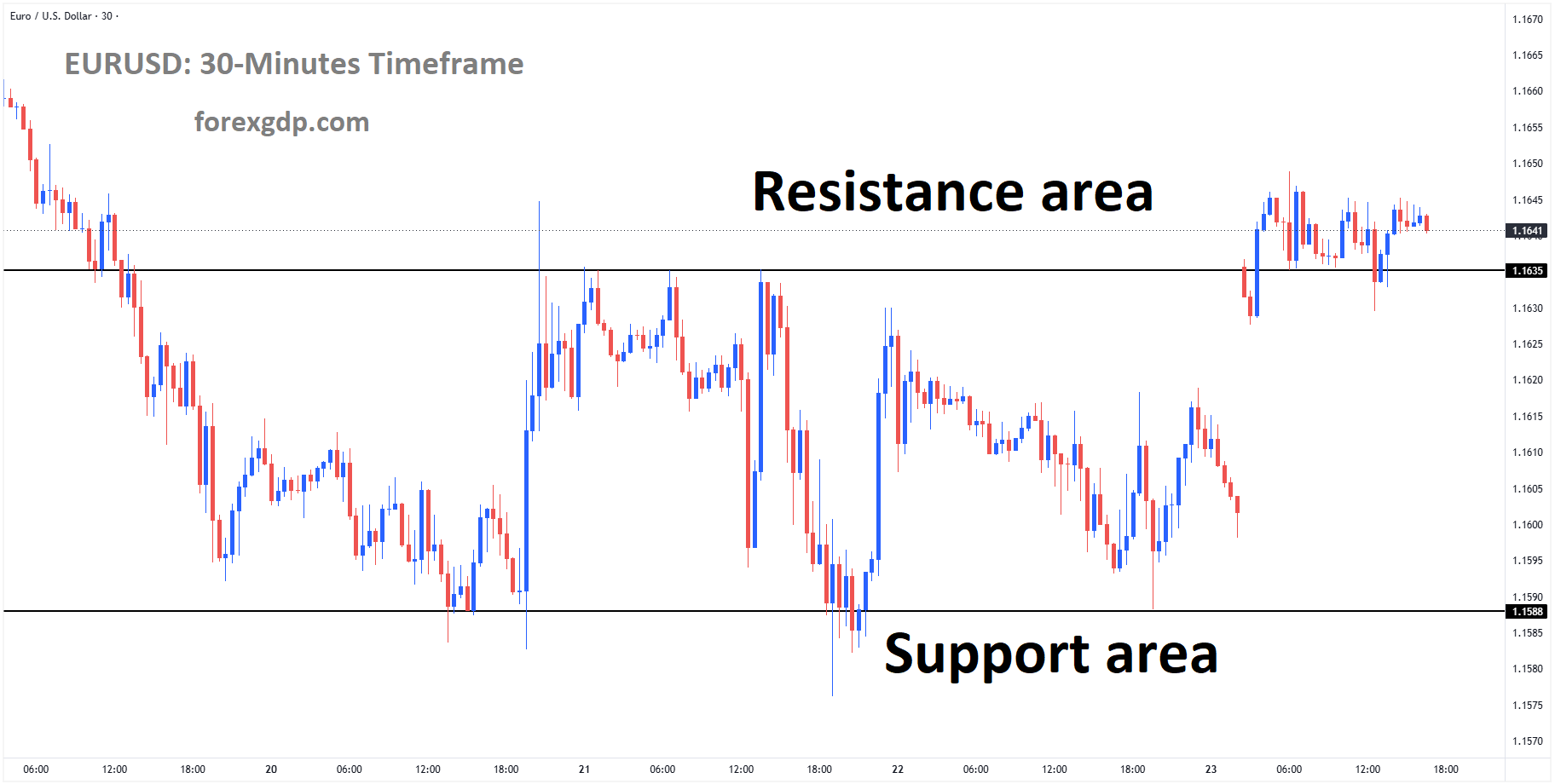
EURUSD reached the resistance area of the box pattern
EURUSD Climbs as Optimism Over US-Iran Talks Weakens Dollar Demand
The EUR/USD currency pair remained firm near the 1.1645 level during Monday’s European trading session as the US Dollar continued to struggle. Investors showed a stronger appetite for risk after growing optimism that the United States and Iran may soon finalize a major agreement.
This improving global mood reduced demand for the US Dollar, which is often treated as a safe-haven asset during uncertain times. At the same time, expectations around future interest rate decisions from both the Federal Reserve and the European Central Bank continued to shape market sentiment.
Market Confidence Improves on US-Iran Negotiation Progress
Investor confidence improved significantly after comments from US President Donald Trump suggested that negotiations with Iran were moving closer to completion.
Over the weekend, Trump stated on Truth Social that the agreement with Iran was “largely negotiated.” According to his comments, the deal includes the reopening of the Strait of Hormuz along with several other important elements. He also mentioned that final discussions were still ongoing and that more details would be announced soon.
These remarks increased expectations that both countries could reach an official agreement in the near future. Financial markets responded positively, with traders shifting toward riskier assets and away from defensive positions.
The positive mood was clearly visible in US stock futures. S&P 500 futures climbed close to 0.9%, signaling strong confidence among investors. As risk appetite increased, the demand for the US Dollar weakened further.
US Dollar Faces Pressure as Safe-Haven Demand Falls
The US Dollar Index, which measures the strength of the Greenback against a basket of major currencies, stayed near the 99.00 mark after giving up earlier gains.
The Dollar often benefits during periods of geopolitical tension because investors look for safer assets during uncertain conditions. However, hopes of a peaceful agreement between the US and Iran reduced those concerns, leading traders to move money into higher-risk investments instead.
This shift in sentiment helped the Euro maintain strength against the Dollar. The EUR/USD pair remained steady as traders continued to monitor headlines related to the negotiations.
Even though Trump later clarified that there was “no rush” to finalize the agreement, investors still believed progress was being made. His statement that time remained on Washington’s side did little to weaken overall optimism in the markets.
Falling Oil Prices Change Interest Rate Expectations
Another important development linked to the possible US-Iran agreement was the sharp decline in oil prices.
Markets believe that a successful deal could increase oil supply and ease concerns over global energy disruptions. As a result, oil prices moved lower, creating fresh expectations that inflation pressures in the United States could soften.
Lower inflation concerns often influence how central banks approach interest rates. Because of this, traders slightly reduced expectations that the Federal Reserve would raise interest rates again this year.
According to data from the CME FedWatch tool, the probability of at least one Federal Reserve rate hike this year dropped to around 57%. Just days earlier, those expectations stood near 67%.
This decline in hawkish Federal Reserve expectations added more pressure on the US Dollar and provided additional support for EUR/USD.
European Central Bank Signals Inflation Concerns

While Federal Reserve expectations became less aggressive, the situation in the Eurozone appeared somewhat different.
Several European Central Bank officials recently expressed concerns about rising inflation pressures in the region. Their comments increased expectations that the ECB may need to consider tighter monetary policy in the future.
Pierre Wunsch, a policymaker at the ECB and head of Belgium’s central bank, stated last week that the central bank would eventually need to act because the Eurozone could be at the beginning of an inflation problem.
His comments attracted attention across currency markets because they suggested that the ECB may lean toward higher interest rates if inflation continues to rise.
Diverging Central Bank Outlooks Support the Euro
The contrast between the Federal Reserve and the European Central Bank has become an important factor supporting the Euro.
On one side, investors are reducing expectations for further rate hikes in the United States due to easing oil prices and improving geopolitical conditions. On the other side, ECB officials are increasingly discussing inflation risks and the possibility of policy tightening.
This difference in outlook has encouraged traders to favor the Euro over the US Dollar in recent sessions.
The Euro also benefited from broader confidence in global markets, which reduced the appeal of defensive currencies like the Dollar.
Geopolitical Developments Remain Key for Currency Markets
Although markets reacted positively to the latest developments, traders remain cautious because geopolitical negotiations can change quickly.
Any unexpected setbacks in talks between the US and Iran could reverse the current market mood. Investors are closely watching for official announcements regarding the agreement and its final terms.
The Strait of Hormuz remains especially important because it is one of the world’s most critical oil shipping routes. Any agreement involving the reopening or stabilization of the area could have major effects on energy markets and global trade.
Because of this, both currency and commodity markets are likely to remain sensitive to new updates from Washington and Tehran.
Investors Watch Upcoming Economic Signals
Apart from geopolitical news, traders are also paying close attention to upcoming economic data and central bank comments.
Future inflation reports, employment figures, and policy speeches from Federal Reserve and ECB officials could influence expectations around interest rates even further.
If inflation in the Eurozone continues to rise while US inflation cools down, the policy gap between the ECB and the Fed could widen. That scenario may continue to support the Euro against the Dollar in the coming weeks.
However, markets remain highly data-dependent, meaning investor sentiment could shift quickly if economic conditions change.
Summary
EUR/USD stayed strong near 1.1645 as optimism surrounding a potential US-Iran agreement weakened the US Dollar. Growing confidence in global markets reduced safe-haven demand for the Greenback and encouraged investors to move toward riskier assets.
At the same time, falling oil prices lowered expectations for additional Federal Reserve rate hikes, while rising inflation concerns in the Eurozone increased speculation that the European Central Bank may eventually tighten policy further.
With investors closely monitoring geopolitical negotiations and central bank signals, the EUR/USD pair remains heavily influenced by both global risk sentiment and changing interest rate expectations.
GBPUSD Extends Bullish Momentum as Traders Pull Back From Safe-Haven Dollar
The GBP/USD currency pair opened the new week with positive momentum, rising to its highest level in more than a week during Monday’s Asian trading session. The British Pound gained strength against the US Dollar as investors reacted to global political developments and changing expectations around interest rates.
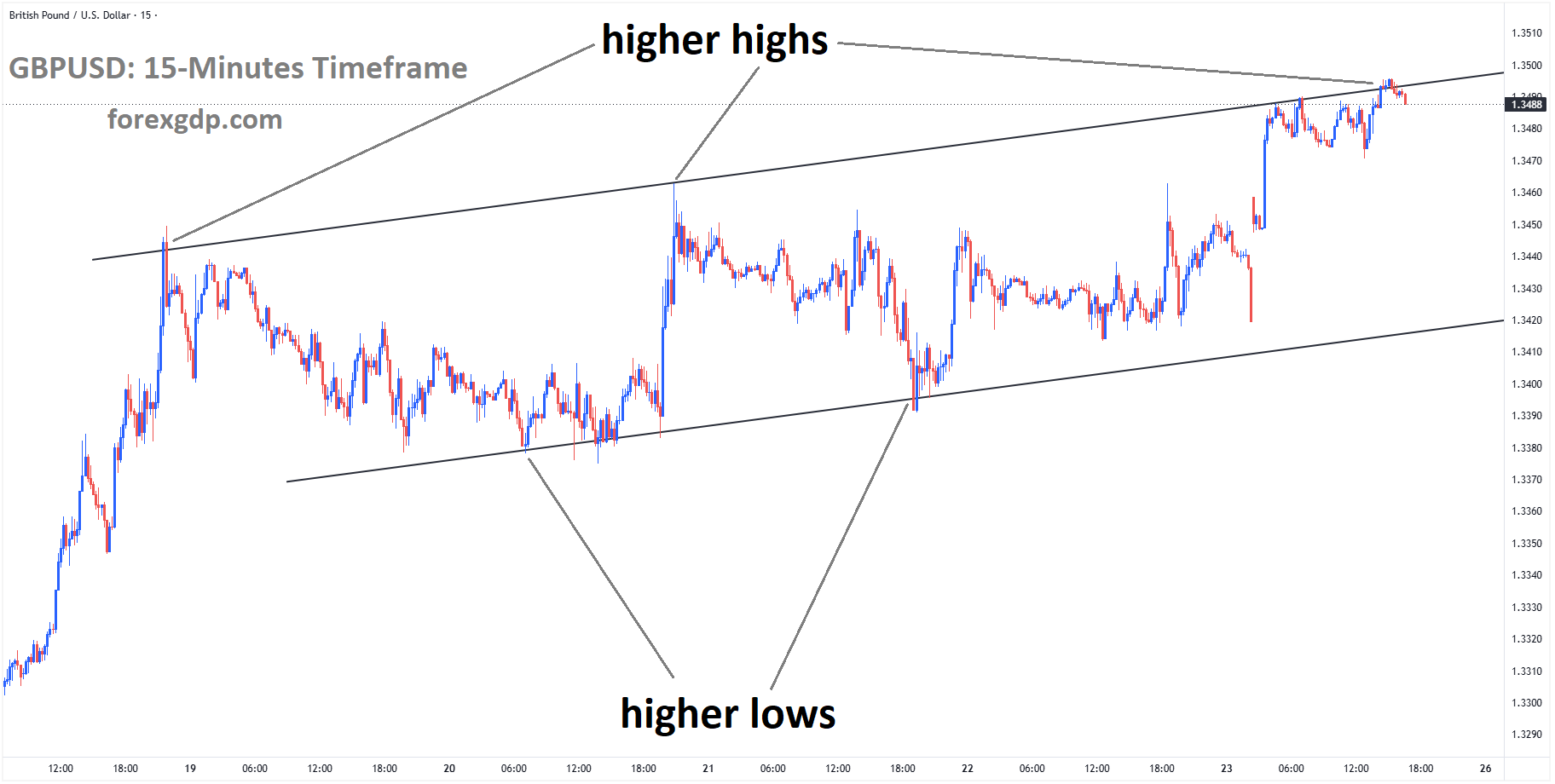
GBPUSD reached a higher high area of the ascending channel
The move higher comes after the pair touched its lowest point since early April near the 1.3300 level last week. Now, with the US Dollar losing some of its recent strength, GBP/USD has climbed back toward the important 1.3500 mark.
While the upward movement has attracted attention from traders, there are still several factors that could slow down further gains in the coming days.
Hopes for a US-Iran Peace Deal Pressure the Dollar
One of the main reasons behind the weaker US Dollar is growing optimism surrounding a possible peace agreement between the United States and Iran. Reports over the weekend increased hopes that tensions between the two countries may ease in the near future.
When geopolitical tensions begin to calm, investors often reduce their demand for safe-haven assets like the US Dollar. During uncertain times, the Dollar usually benefits because investors see it as a safer place to hold money. However, when risks appear to decrease, traders tend to move away from the Dollar and into other currencies or assets.
This shift in market sentiment helped support the British Pound and pushed GBP/USD higher.
Falling Oil Prices Add More Pressure on the US Dollar
Another important factor supporting the pair is the sharp decline in crude oil prices. Oil prices dropped to their lowest level in more than two weeks during Monday’s trading session.
Lower oil prices can reduce concerns about inflation, especially in the United States. If inflation pressures begin to ease, investors may believe the US Federal Reserve will not need to keep interest rates high for a long time.
As a result, US Treasury bond yields moved lower, adding extra pressure on the US Dollar. Lower bond yields often make the Dollar less attractive to investors seeking higher returns.
The combination of easing geopolitical fears and falling Treasury yields created a favorable environment for the British Pound to recover against the Greenback.
Markets Still Remain Cautious
Despite the positive start for GBP/USD, traders are still being careful about making aggressive bullish bets. The situation between the United States and Iran remains uncertain, and several key disagreements continue to exist.
Major issues such as Iran’s nuclear program and concerns around the Strait of Hormuz are still unresolved. These topics remain highly sensitive because they have the potential to impact global energy supplies and broader market stability.
Adding to the uncertainty, US President Donald Trump stated on Sunday that he had instructed his representatives not to rush into any agreement with Iran. His comments reminded investors that negotiations could still face delays or setbacks.
Because of this, market enthusiasm remains somewhat limited. Investors are aware that any negative headlines could quickly revive demand for the US Dollar as a safe-haven currency.
Federal Reserve Expectations Continue to Support the Dollar
Although the Dollar weakened at the start of the week, expectations surrounding future US interest rates continue to provide underlying support for the currency.
Recent US inflation data has remained relatively strong, increasing speculation that the Federal Reserve may keep monetary policy tighter for longer than previously expected.
Several influential members of the Federal Open Market Committee (FOMC) have also delivered hawkish comments in recent weeks. Their statements suggested that policymakers are still concerned about inflation risks and may prefer to maintain higher interest rates if necessary.
Investors are now fully pricing in the possibility of another interest rate increase from the Federal Reserve by January 2027. This expectation could prevent the US Dollar from falling too sharply, even if short-term sentiment remains negative.
Bank of England Outlook Creates Additional Pressure
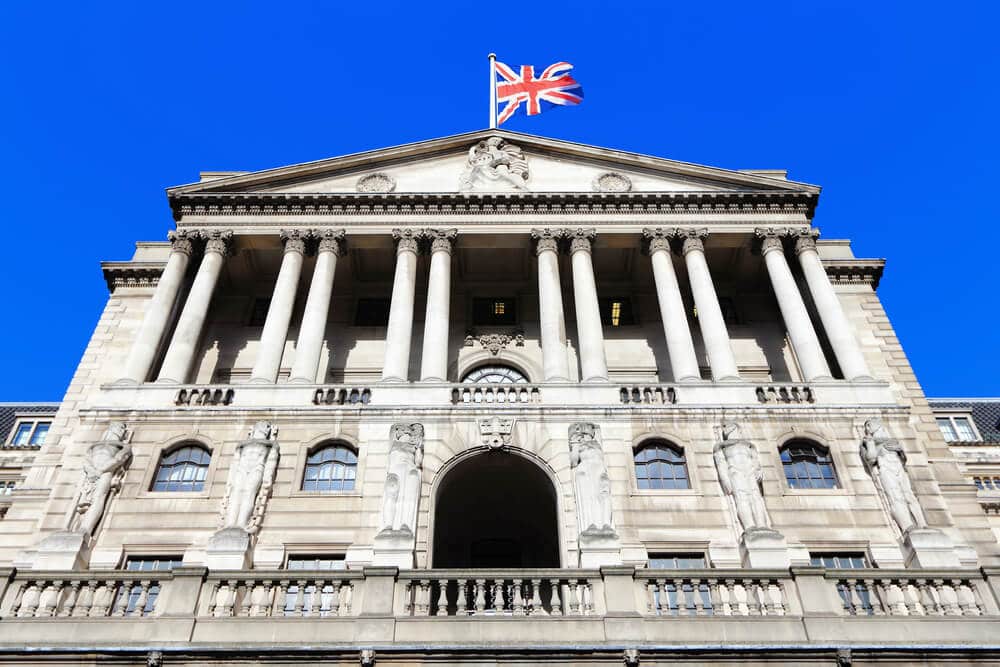
While the British Pound has benefited from Dollar weakness, expectations surrounding the Bank of England are becoming less supportive for the UK currency.
Investors have recently pushed back their forecasts for when the Bank of England might raise interest rates again. This change in outlook reflects growing uncertainty about the strength of the UK economy and future inflation trends in Britain.
If the Bank of England becomes less aggressive compared to the Federal Reserve, the Pound could struggle to maintain strong upward momentum against the Dollar over the longer term.
This difference in monetary policy expectations between the two central banks remains an important factor for currency markets.
Investor Focus Turns to Upcoming Economic Data
As the week continues, traders will closely monitor new economic data releases and comments from central bank officials. Any signs of persistent inflation in the United States could strengthen expectations for future Federal Reserve tightening.
At the same time, updates related to US-Iran negotiations will remain a key market driver. Positive developments could continue to weaken the Dollar, while renewed tensions may quickly reverse sentiment.
Investors will also pay attention to upcoming UK economic reports for clues about the Bank of England’s next move. Stronger-than-expected data could provide fresh support for the Pound, while weaker figures may limit further gains.
Summary
GBP/USD began the week on a strong note as hopes for easing geopolitical tensions and falling oil prices weakened the US Dollar. The British Pound benefited from improved market sentiment and lower US Treasury yields, allowing the pair to recover from last week’s lows.
However, uncertainty surrounding US-Iran negotiations and expectations for future Federal Reserve interest rate hikes continue to support the Dollar in the background. At the same time, softer expectations for future Bank of England tightening may also limit upside potential for the Pound.
With several important economic and political developments still unfolding, traders are likely to remain cautious as they look for clearer direction in the days ahead.
USDJPY Rebounds Strongly With Japanese Yen Under Pressure From Global Risk Fears
The USD/JPY currency pair bounced back strongly after opening the week with a bearish gap, recovering around 30 pips from its daily low. During the European trading session, the pair moved back above the important 159.00 level, showing renewed buying interest from traders despite ongoing uncertainty in global markets.
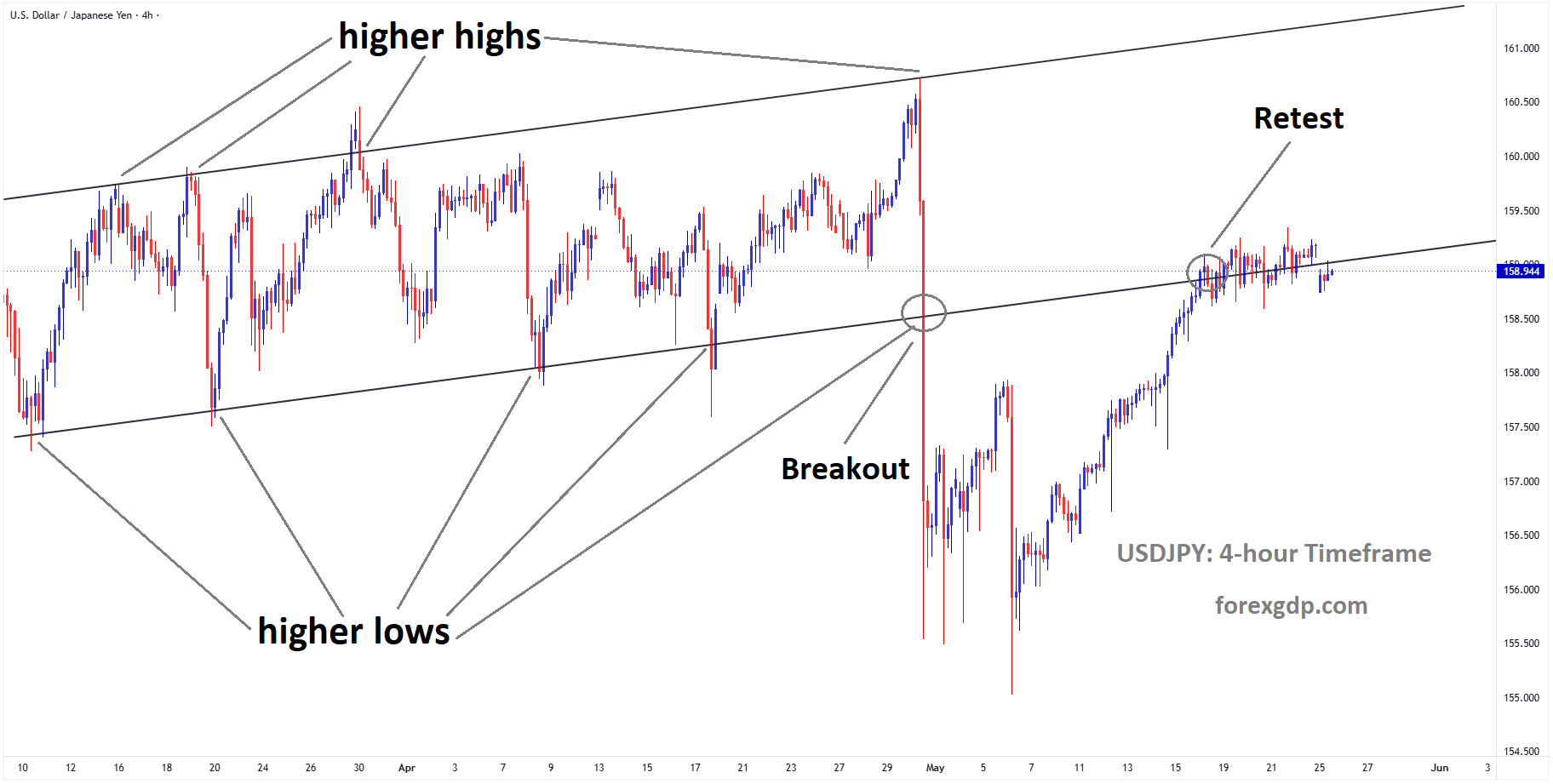
USDJPY reached the retest area of the broken ascending channel
Although the Japanese Yen initially gained some support during the market opening, concerns surrounding global energy supplies and geopolitical tensions quickly shifted sentiment. As a result, investors returned to the US Dollar, helping the USD/JPY pair regain momentum.
Mixed Iran Peace Signals Keep Markets on Edge
Global investors continue to closely monitor developments involving the United States and Iran. Over the weekend, optimism briefly improved after reports suggested that both sides could move closer to a possible agreement aimed at ending the conflict that has lasted for nearly three months.
That optimism, however, faded as disagreements between the two countries remained unresolved. Key issues such as Iran’s nuclear program and concerns surrounding the Strait of Hormuz continue to create uncertainty in financial markets.
The Strait of Hormuz is one of the world’s most important shipping routes for oil and energy supplies. Any threat to this region raises fears of supply disruptions, which can quickly affect the global economy. Investors remain cautious because prolonged instability in the region could increase energy costs and slow economic growth worldwide.
US President Donald Trump also added to market caution after stating that American representatives should not rush into any agreement with Iran. His comments signaled that negotiations could take longer than expected, leaving geopolitical risks firmly in focus.
Japanese Yen Faces Pressure From Economic Concerns
The Japanese Yen has struggled to gain strong momentum as worries about global economic conditions continue to grow. Japan relies heavily on imported energy, making the country especially vulnerable when oil supply risks increase.
Because of this, concerns surrounding possible disruptions in the Strait of Hormuz have weakened confidence in the Yen. Traders fear that higher energy costs could place additional pressure on Japan’s economy, limiting the currency’s appeal as a safe-haven asset.
This situation helped USD/JPY recover losses after the weak market opening. Buyers quickly stepped in when the pair dipped lower, showing that investors still favor the US Dollar over the Yen under current market conditions.
Federal Reserve Expectations Continue to Support the US Dollar
Another major factor supporting USD/JPY is the growing expectation that the US Federal Reserve could keep interest rates higher for longer.
Traders are increasingly pricing in the possibility of at least one additional interest rate hike by the Fed in early 2027. While the timing remains uncertain, these expectations continue to provide underlying strength to the US Dollar.
Higher interest rates generally make the Dollar more attractive because investors can potentially earn better returns from US-based assets. This often increases demand for the currency, especially when compared to countries with lower interest rates like Japan.
The Bank of Japan, meanwhile, continues to maintain a much more cautious monetary policy stance. The large gap between US and Japanese interest rates remains one of the main reasons why USD/JPY has stayed elevated in recent months.
Geopolitical Risks Limit Strong Market Optimism
Even though there have been moments of optimism regarding a possible peace agreement between the US and Iran, markets remain highly sensitive to geopolitical headlines.
Investors understand that negotiations can change quickly, and any unexpected developments could immediately affect global sentiment. As long as uncertainty continues, traders are likely to remain cautious while keeping a close watch on news from the Middle East.
The combination of geopolitical risks and economic uncertainty is creating a complex environment for currency markets. While the Dollar has managed to hold firm, investors are still balancing concerns over global growth, energy security, and international diplomacy.
Intervention Speculation Keeps Traders Careful
Despite the recent rebound in USD/JPY, traders are also aware of the possibility of intervention from Japanese authorities.
Japanese officials have previously expressed concern about excessive weakness in the Yen. Rapid currency moves can hurt businesses and increase import costs for consumers in Japan. Because of this, market participants remain cautious about pushing USD/JPY too aggressively higher.
Even rumors of potential intervention can influence trading behavior, as investors do not want to be caught on the wrong side of sudden market action. This may slow down further gains in the pair, even if the broader trend continues to favor the US Dollar.
Low Market Liquidity Adds Another Layer of Uncertainty
Trading conditions are also expected to remain relatively thin due to holidays in the United States and several European markets. Lower liquidity can sometimes lead to unpredictable price movements because fewer traders are actively participating in the market.
In such conditions, even smaller news developments can trigger larger-than-normal reactions. Traders may therefore avoid making aggressive positions until market participation returns to normal levels.
Market Sentiment Still Favors USD/JPY Strength
Despite ongoing uncertainty, the overall market backdrop continues to support the USD/JPY pair. Strong demand from dip-buyers, expectations for higher US interest rates, and concerns over global energy risks are all helping the Dollar maintain strength against the Yen.
While short-term volatility could remain high due to geopolitical developments and intervention concerns, many traders still believe the broader direction favors further upside for the pair.
The recovery above 159.00 reflects the market’s confidence that the Dollar remains relatively strong in the current environment. As long as uncertainty surrounding Iran, global energy supplies, and central bank policy continues, USD/JPY is likely to remain an important focus for currency traders worldwide.
Final Summary
USD/JPY recovered after a weak start to the week as traders returned to the US Dollar amid ongoing geopolitical uncertainty and expectations of higher US interest rates. Concerns about disruptions in global energy supplies continue to pressure the Japanese Yen, while the Federal Reserve’s policy outlook supports the Dollar.
Although hopes for a US-Iran agreement briefly improved market sentiment, unresolved tensions are still keeping investors cautious. At the same time, speculation about possible Japanese intervention may prevent overly aggressive moves higher in the currency pair.
With geopolitical risks, central bank expectations, and economic concerns all influencing market direction, USD/JPY is expected to remain highly active in the sessions ahead.
USDCAD Under Pressure as Canada’s Currency Strengthens on Iran Deal Expectations
The USD/CAD currency pair moved slightly lower during Monday’s early European trading session, with the exchange rate hovering near 1.3805. The decline came as the US Dollar weakened against the Canadian Dollar after signs of diplomatic progress between the United States and Iran improved market sentiment.
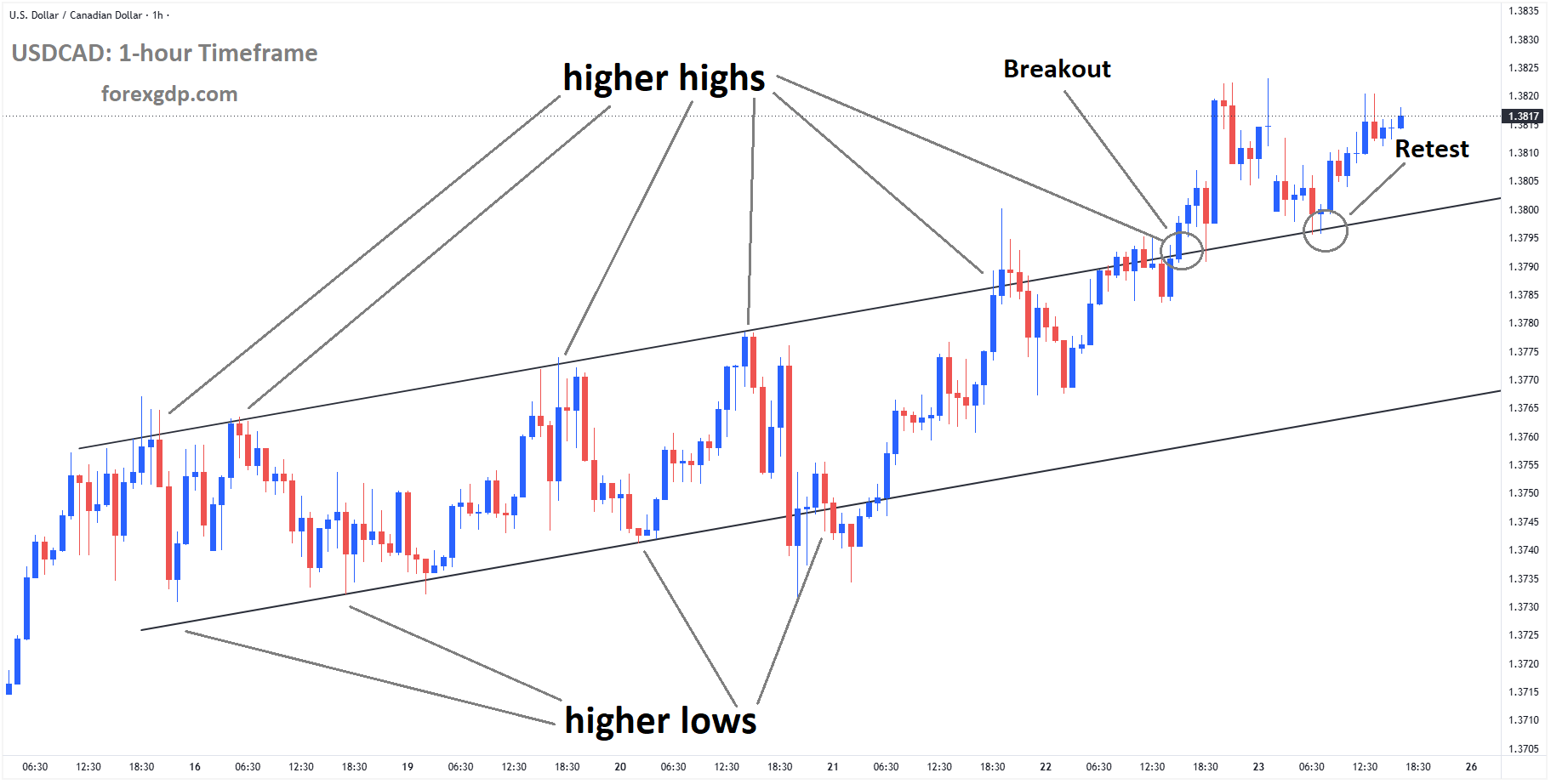
USDCAD is rebounding from the retest area of the broken ascending channel
Investors are also keeping a close watch on upcoming US inflation data later this week, while concerns about Canada’s slowing economy continue to influence the direction of the Canadian Dollar.
US-Iran Diplomacy Supports Market Confidence
The US Dollar lost some strength after comments from American officials suggested that negotiations with Iran were moving in a positive direction. US Secretary of State Marco Rubio stated that Washington is willing to continue diplomatic efforts and believes a peaceful agreement is still possible.
Rubio explained that the United States would give diplomacy every opportunity to succeed but warned that alternative actions could be considered if negotiations fail. According to him, the current framework for discussions remains strong and constructive.
Adding to the positive tone, US President Donald Trump said over the weekend that the United States and Iran had largely negotiated a memorandum of understanding aimed at securing peace and reopening the Strait of Hormuz.
The Strait of Hormuz is one of the world’s most important oil shipping routes. Any improvement in stability within the region tends to reduce global uncertainty and improve investor confidence. As fears around geopolitical tensions eased, demand for the safe-haven US Dollar softened, putting pressure on the currency.
Light Trading Conditions Limit Market Movement
Market activity remained relatively quiet due to the Memorial Day holiday in the United States. With US financial markets closed, trading volumes were lower than usual, which often results in smaller price movements across major currency pairs.
Even though the USD/CAD pair edged lower, the lack of strong market participation prevented larger moves. Traders are expected to return with greater activity later in the week once regular trading resumes and key economic reports are released.
Canadian Dollar Struggles Despite Strong Oil Environment
The Canadian Dollar, often referred to as the “Loonie,” typically benefits when oil prices stay elevated because Canada is one of the world’s major oil exporters. However, despite supportive energy market conditions, the currency failed to gain significant momentum.
This weaker reaction suggests that investors remain concerned about Canada’s domestic economy. Slowing economic growth and cooling inflation have raised doubts about the country’s overall financial strength in the near term.
Recent economic data from Canada has shown signs of softer consumer demand and weaker business activity. Inflation pressures have also eased, reducing the urgency for aggressive monetary policy decisions. These factors have limited the Canadian Dollar’s ability to fully benefit from higher oil prices.
Domestic Economic Concerns Weigh on the Loonie
Economic weakness in Canada continues to be a key issue for currency traders. While commodity-linked currencies usually perform well during periods of strong energy demand, domestic conditions can sometimes outweigh those advantages.
Investors are increasingly focused on whether Canada’s economy can maintain stable growth amid slowing inflation and cautious consumer spending. If economic data continues to weaken, expectations for future monetary policy adjustments could place additional pressure on the Canadian Dollar.
At the same time, uncertainty surrounding global economic growth also remains an important factor. Slower international demand could impact Canadian exports and further limit economic momentum.
Investors Await Key US Inflation Data

Attention is now turning toward the upcoming US Personal Consumption Expenditures (PCE) Price Index report scheduled for Thursday. The PCE report is closely watched by investors because it is one of the Federal Reserve’s preferred measures of inflation.
The data could play a major role in shaping expectations for future US monetary policy. If inflation comes in higher than expected, markets may believe that the Federal Reserve could maintain tighter policy conditions for longer.
In that scenario, the US Dollar could regain strength against the Canadian Dollar as higher interest rate expectations often attract investor demand for the Greenback.
On the other hand, softer inflation figures may increase speculation about future policy easing, which could place further pressure on the US Dollar and allow the Canadian Dollar to recover some ground.
Global Events Continue to Drive Currency Markets
Currency markets remain highly sensitive to geopolitical developments and economic reports. The latest headlines surrounding US-Iran diplomacy have already shown how quickly investor sentiment can shift.
Improved geopolitical stability generally reduces demand for safe-haven assets like the US Dollar, while rising uncertainty tends to strengthen it. As negotiations continue, traders will likely remain cautious and react quickly to any new developments.
At the same time, broader economic concerns in both the United States and Canada are expected to remain central themes for investors in the coming weeks.
Summary
The USD/CAD pair moved lower near 1.3805 as optimism surrounding diplomatic progress between the United States and Iran weakened demand for the US Dollar. Comments from US officials and signs of a possible peace agreement helped improve market sentiment and reduced safe-haven buying.
Despite strong oil market conditions, the Canadian Dollar struggled to gain major support due to concerns about Canada’s slowing economy and easing inflation. Investors are now waiting for the upcoming US PCE inflation report, which could influence the next major move for the currency pair.
With geopolitical developments, inflation trends, and economic growth concerns all shaping market sentiment, traders are expected to remain cautious in the days ahead.
AUDUSD Edges Higher as Easing Global Tensions Support Australian Dollar
The AUD/USD currency pair moved higher on Monday after recording losses for two straight sessions. During early European trading hours, the pair stayed near the 0.7170 level as the Australian Dollar gained strength from improving global market sentiment.
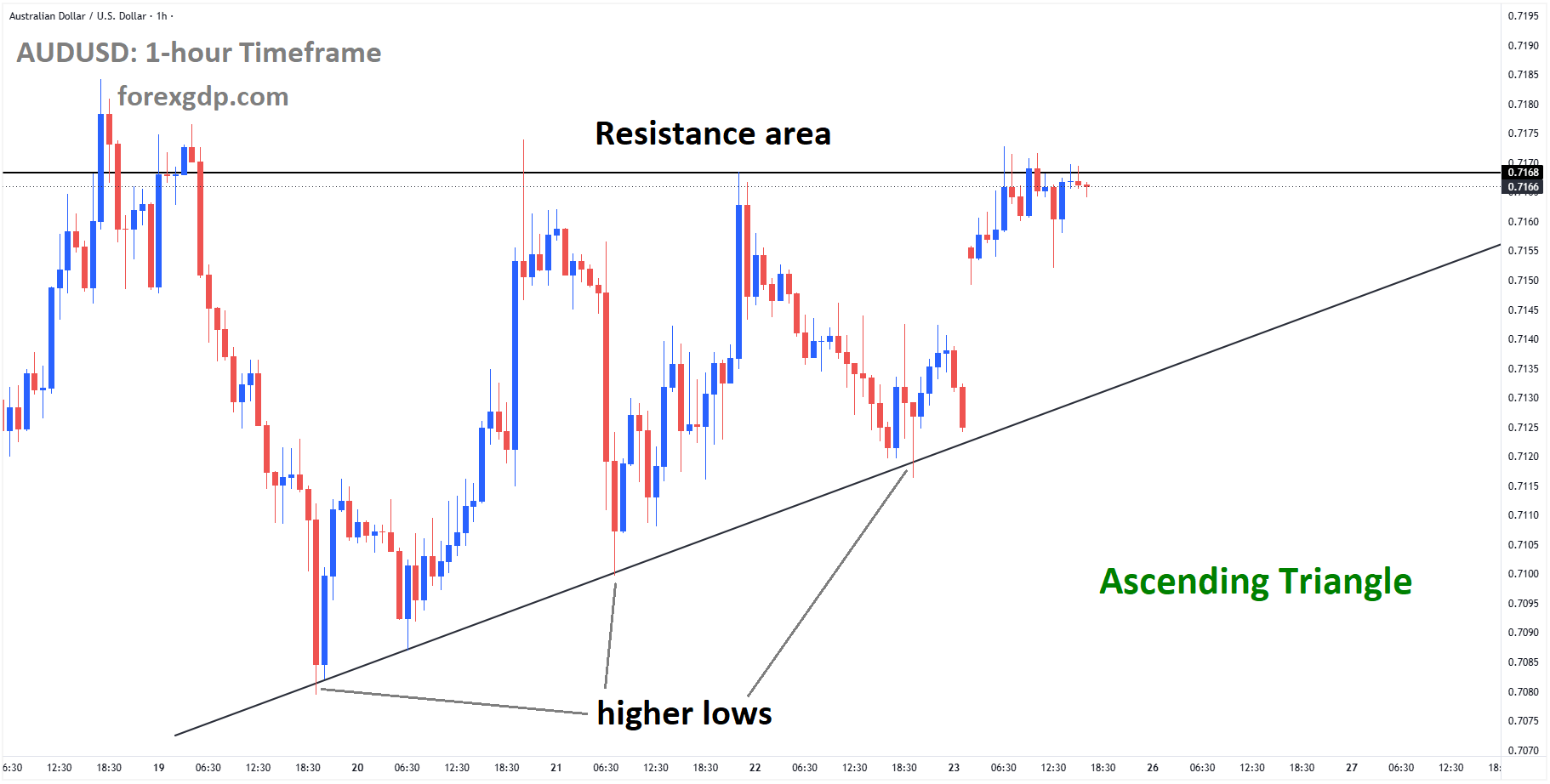
AUDUSD reached the resistance area of the Ascending Triangle pattern
One of the biggest reasons behind the move was the decline in safe-haven demand for the US Dollar. Investors became more optimistic after reports suggested that the United States and Iran are moving closer to a temporary agreement that could reduce tensions in the Middle East.
While the Australian Dollar has received short-term support from this development, there are still concerns about its future performance. Weak economic data from Australia and changing interest rate expectations may create pressure for the currency in the coming weeks.
Easing Geopolitical Tensions Support the Australian Dollar
Global investors closely monitor geopolitical events because they often influence demand for major currencies. Recently, reports emerged that the United States and Iran may be nearing an agreement focused on extending a ceasefire for 60 days.
This possible deal has improved confidence in financial markets and reduced fears of further conflict in the region. As a result, investors moved away from safe-haven assets like the US Dollar and shifted toward risk-sensitive currencies such as the Australian Dollar.
The proposed agreement reportedly includes several major developments. The Strait of Hormuz, one of the world’s most important oil shipping routes, could reopen fully for international trade. Iran may also remove mines placed in the waterway and allow unrestricted shipping traffic again. In return, the United States could lift its current blockade on Iranian ports.
These developments would help reduce concerns about disruptions in global energy supplies and international trade routes. When market uncertainty falls, currencies linked to global growth, including the Australian Dollar, often benefit.
Why the Australian Dollar Reacts to Global Sentiment
The Australian Dollar is widely considered a risk-sensitive currency. This means it tends to perform well when investors feel optimistic about the global economy and are willing to take on more risk.
Australia’s economy relies heavily on exports, commodity demand, and international trade. Because of this, global stability usually supports the country’s currency. When fears about wars, trade disruptions, or financial instability rise, investors often move money into safer assets like the US Dollar or Japanese Yen.
The recent improvement in sentiment surrounding US-Iran relations reduced some of that fear. This allowed the Australian Dollar to recover after recent weakness.
However, external optimism alone may not be enough to keep the currency strong over the longer term.
Rising Unemployment Creates Pressure on the RBA
Despite the positive global backdrop, Australia’s domestic economic data has raised fresh concerns. The latest labor market figures showed that the country’s unemployment rate unexpectedly increased in April.
Australia’s unemployment rate climbed to 4.5%, compared to 4.3% in March. This marked the highest level seen in around four and a half years.
The rise surprised financial markets and immediately changed expectations for future policy decisions by the Reserve Bank of Australia (RBA).
Fading Expectations for Interest Rate Hikes
Before the employment report was released, many investors believed the RBA could still raise interest rates again to control inflation. However, the weaker labor market data reduced those expectations sharply.
According to market pricing data from Westpac, the probability of another rate hike at the RBA’s next meeting dropped significantly. Expectations fell from 13% before the report to only 3% afterward.
This shift matters because higher interest rates usually support a country’s currency by attracting foreign investment. When markets believe rates are unlikely to rise further, the currency can lose momentum.
The weaker outlook for Australian interest rates may eventually limit gains in the AUD/USD pair, especially if the US Dollar regains strength.
US Inflation Keeps Federal Reserve Outlook Uncertain
Although the US Dollar weakened slightly due to improving global sentiment, inflation concerns in the United States continue to support the currency overall.
Persistent inflationary pressures have forced investors to reconsider expectations for future Federal Reserve policy decisions. Earlier this year, many traders expected the Fed to begin cutting interest rates. However, stronger-than-expected inflation data has pushed those expectations back.
Instead of rate cuts, some market participants are now considering the possibility of another interest rate increase later this year.
According to the CME FedWatch tool, investors are currently pricing in nearly a 41% chance that the Federal Reserve could deliver a 25-basis-point rate hike before the end of the year.
This outlook has important implications for currency markets.
Higher US Interest Rates Could Strengthen the Dollar
Interest rate expectations play a major role in determining currency strength. When investors expect higher rates in the United States, demand for the US Dollar often increases because higher yields can attract global capital.
If inflation in the US remains stubbornly high, the Federal Reserve may keep monetary policy tighter for longer than expected. That could support the Greenback and create fresh pressure on currencies like the Australian Dollar.
At the same time, Australia appears to be moving in the opposite direction. Weak employment data and softer expectations for further RBA tightening may reduce support for the AUD.
This difference between US and Australian monetary policy expectations could become a major driver for the AUD/USD pair over the coming months.
Market Focus Shifts to Economic Data and Central Banks
Investors will continue watching economic reports and central bank comments closely. In Australia, future labor market data, inflation figures, and consumer spending trends will help determine whether the RBA changes its policy outlook again.
Meanwhile, in the United States, inflation data and Federal Reserve speeches will remain key factors influencing the direction of the US Dollar.
Any further progress in US-Iran negotiations could also impact market sentiment and risk appetite globally. If tensions continue to ease, risk-sensitive currencies like the Australian Dollar may receive additional short-term support.
However, stronger US economic performance and higher interest rate expectations could still limit the pair’s upside potential.
Final Summary
The AUD/USD pair stabilized after recent losses as improving global sentiment weakened demand for safe-haven assets. Optimism surrounding a possible US-Iran agreement supported the Australian Dollar and encouraged investors to move toward risk-sensitive currencies.
Still, Australia’s rising unemployment rate has raised concerns about the strength of the domestic economy. The weaker labor market has reduced expectations for further interest rate hikes from the Reserve Bank of Australia, which may pressure the currency in the future.
At the same time, persistent inflation in the United States continues to support the US Dollar by increasing expectations that the Federal Reserve could keep interest rates higher for longer.
As markets balance global political developments with changing monetary policy expectations, the AUD/USD pair is likely to remain sensitive to both economic data and investor sentiment in the weeks ahead.
Don’t trade all the time, trade forex only at the confirmed trade setups
Get more confirmed trade signals at premium or supreme – Click here to get more signals, 2200%, 800% growth in Real Live USD trading account of our users – click here to see , or If you want to get FREE Trial signals, You can Join FREE Signals Now!